Maybe you picked up a piece of furniture at a thrift store that has seen better days. Or perhaps you’re staring at a deck that looks nothing like the fresh, beautiful wood it once was. Whatever brought you here, you’re in the right place.
Learning how to strip stain from wood might sound intimidating at first, but it’s actually one of the most rewarding DIY projects you can tackle. With the right tools, a little patience, and some clear guidance, you can breathe new life into almost any wood surface.
In this guide, we’re going to walk you through the entire process from start to finish. You’ll learn which stripping products work best, how to prepare your workspace safely, and the exact steps to remove old stain without damaging the wood underneath. We’ll also cover some common beginner mistakes so you can avoid them before they happen.
No prior experience is needed here. By the time you finish reading, you’ll feel confident enough to grab your supplies and get started on your first wood stripping project.
What You’ll Need Before You Start
Before you pick up a brush or open a can, taking five minutes to gather everything you need will save you from mid-project headaches. Here’s exactly what to grab before you get started.
Your Materials Checklist
The star of the show is a gel chemical stripper like CitriStrip Paint & Varnish Stripping Gel or SmartStrip. These gel formulas cling to surfaces without dripping, which makes them much easier to work with than liquid strippers. You’ll also need plastic scrapers or putty knives (never metal on bare wood), steel wool for scrubbing stubborn residue, odorless mineral spirits for cleanup, and sandpaper in 80, 120, and 220 grits for smoothing the surface afterward. Round out your supply list with drop cloths, plastic sheeting, and a couple of buckets.
Safety Gear You Actually Need
Don’t skip this part. Grab nitrile gloves specifically, since latex doesn’t hold up against chemical strippers. Add safety glasses, a respirator rated for organic vapors, and old long-sleeved clothing that covers your skin completely. Even gentler citrus-based products can irritate skin on contact.
Why Low-VOC Strippers Are Worth It
Citrus-based and soy-based strippers have become the go-to choice for indoor DIY projects, and for good reason. Traditional solvent-heavy strippers release harsh fumes that make indoor use genuinely risky. Products like CitriStrip offer a milder formula, lower odor, and stay active on the surface for up to 24 hours, giving you flexible working time. They’re beginner-friendly and much better suited for kitchens, living rooms, or garages with limited airflow.
Workspace Prep Matters More Than You Think
Open windows, point a fan toward the outdoors, and lay drop cloths over everything nearby. Before applying stripper to your entire piece, test it on a hidden spot first, like the underside of a drawer or the back of a leg. This one step helps you figure out the right dwell time for your specific finish and prevents surprises on visible surfaces. It’s a small move that saves beginners from costly mistakes like accidental grain damage or uneven stripping.
On the budget side, DIY stripping supplies typically run between $50 and $200 for a standard furniture piece. Compare that to the average professional furniture refinishing cost of $631 according to Angi, and the savings speak for themselves.
Chemical Stripping vs. Sanding vs. a Hybrid Approach
Not every stripping job calls for the same approach, and picking the wrong method can cost you time, money, and a whole lot of frustration. Here’s how to figure out which route makes the most sense for your project.
When Chemical Stripping Is the Better Choice
Chemical strippers are your best friend when you need to go deep. Because stain soaks into wood pores rather than just sitting on the surface, a chemical stripper is the only method that truly chases it all the way down. This matters most when you’re planning to apply a fresh coat of dark stain, since any leftover pigment hiding in the wood grain will cause blotchy, uneven color that no amount of extra stain coats will fix. Chemical stripping is also the smarter pick for intricate moldings, carved details, or furniture with lots of curves, because sandpaper simply can’t reach into tight crevices without damaging the surrounding wood.
When Sanding Alone Gets the Job Done
Sanding is perfectly sufficient for lighter jobs. If you’re working with a thin, single-coat water-based finish, a flat surface like a cabinet door, or a piece with a veneer where sanding too aggressively risks cutting straight through the wood, sanding alone keeps things simple and chemical-free. According to Bob Vila’s guide on removing stain from wood, sanding works especially well on smaller, manageable pieces where you can maintain even pressure and control throughout.
When the Hybrid Approach Wins
For most furniture and cabinet projects, combining both methods gives you the best result with the least wasted effort. Use a chemical stripper first to pull the bulk of the old finish out of the wood pores, then follow up with finish sanding at 150 to 220 grit to smooth any raised grain and remove leftover residue. As Popular Woodworking points out, stripping before sanding is often faster and safer than sanding alone on stubborn finishes.
Quick Comparison Breakdown
| Factor | Chemical Only | Sanding Only | Hybrid |
|---|---|---|---|
| Cost per project | $45 to $100 | $20 to $60 | $50 to $120 |
| Time investment | Moderate (dwell time plus scraping) | High (lots of manual labor) | Most efficient overall |
| Mess level | High (gooey sludge, fumes) | High (heavy dust) | Moderate |
| Deep stain removal | Excellent | Fair | Best |
How Surface Type Should Guide Your Choice
Flat panels like tabletops and cabinet doors handle all three methods well, though the hybrid approach gives the cleanest results before re-staining. Intricate moldings and carved details strongly favor chemical stripping, since sandpaper risks gouging raised areas and misses tight spots entirely. Butcher block countertops are a special case; stick with light sanding or a gentle hybrid approach here, since aggressive chemical strippers can raise the grain significantly and create food safety concerns you’ll need to address with a proper food-safe finish afterward.
Step-by-Step: How to Strip Wood Stain with a Chemical Stripper
Now that you’ve got your materials ready and you’ve chosen chemical stripping as your method, let’s walk through the process from start to finish. Take it one step at a time and you’ll be surprised how straightforward this actually is.
Step 1: Set Up Your Workspace
Before you even crack open the stripper, get your space ready. Lay drop cloths or old newspapers under and around your piece to protect the floor from drips and sludge. Open every window in the room and set up a fan pointing outward to push fumes outside rather than just circulating them around you. Chemical strippers, even the newer low-VOC citrus and soy-based formulas, still produce vapors you don’t want to breathe in for an extended period. Put on your chemical-resistant gloves, safety goggles, and a respirator with organic vapor cartridges before you touch anything. Getting your ventilation right at this stage is the single most important safety step you can take, so don’t rush it.
Step 2: Apply the Stripper Generously
Pour a small amount of gel stripper into a disposable container and load up an old paintbrush. Apply it in a thick, even layer across the surface, using just two or three brush strokes per section. This is the part where most beginners go wrong: they spread it thin like they’re painting a wall. A thin coat dries out too fast and loses its chemical effectiveness before it has a chance to work. A thick coat stays wet, keeps working, and gives you much better results. According to This Old House, gel formulas are especially good here because they cling to the surface without running, which is a big help on vertical surfaces like cabinet doors or chair legs.
Step 3: Wait for the Magic
Once the stripper is on, step back and let it do its job. Most products need somewhere between 10 and 30 minutes, but older or thicker stains can take longer. Some gel strippers are designed to stay active for up to 24 hours if you need multiple layers lifted at once. Watch the surface closely and you’ll notice the finish starting to bubble, wrinkle, or look like it’s pulling away from the wood. That wrinkling effect is your green light to move on to scraping. Don’t rush this step; if you start scraping too early, the stripper hasn’t fully penetrated and you’ll end up doing the job twice.
Step 4: Scrape It Off
Grab your plastic scraper and hold it at a shallow angle, around 45 degrees. Push it along the grain of the wood, not against it, to avoid scratching or gouging the surface. The softened finish and stain should lift off in satisfying chunks. Drop the sludge into a bucket as you go for easy cleanup and proper disposal later. For curved sections, spindles, or tight corners, swap the scraper for 000-grade steel wool or a stiff nylon brush. Home Depot’s wood stain removal guide also recommends these tools for detail work where a flat scraper simply can’t reach.
Step 5: Clean and Neutralize
After scraping, there will still be residue left in the wood’s pores. Dampen a rag with mineral spirits or whatever wash your product label specifies and scrub the surface thoroughly. Change rags frequently so you’re not just moving residue around. If your stripper requires a water rinse to neutralize it, do that step carefully. Then let the wood dry completely, which can take several hours or even overnight depending on humidity. Skipping proper drying leads to adhesion problems when you apply your new finish.
Step 6: Sand Smooth and Inspect
Once the wood is fully dry, give it a light sanding with 150 to 220 grit sandpaper, always moving with the grain. Chemical strippers can raise the wood fibers slightly, and this quick pass smooths everything back down without closing up the pores too much. Wipe away all the dust with a tack cloth so you’re starting clean. Then hold a light source at a low, raking angle across the surface and look for any patches where the old stain is still sitting in the grain. Spot-treat those areas with a small amount of stripper, scrape, clean, and sand again until the surface is even. At this point, your wood is ready for a fresh stain or finish.
Step-by-Step: Stripping Wood Stain by Sanding
Sanding is the most hands-on way to strip wood stain, and with the right approach it gives you excellent control over the final result. The key is working through grits in the correct order and not rushing the process.
Understanding Grit Progression
Think of grit progression like a three-step polish. You start aggressive, then get progressively smoother with each pass.
- 80 grit is your workhorse. This coarse paper cuts through old finish layers and lifts the bulk of the stain quickly. It leaves scratches behind, but that’s okay because the next grits will take care of those.
- 120 grit is your cleanup crew. It removes the scratches left by the 80-grit paper and continues leveling the surface without digging in as aggressively.
- 180 to 220 grit is your finishing pass. This leaves the wood smooth and open-pored, ready to absorb a fresh coat of stain evenly. Stopping around 220 grit is important; going finer than that can actually close up the wood pores, making it harder for new stain to penetrate properly.
Always sand with the grain, not against it, and never skip a grit. Jumping from 80 straight to 220, for example, leaves deep scratches that fine paper simply cannot remove.
Orbital Sander vs. Hand Sanding

For flat surfaces like tabletops, cabinet face frames, or drawer fronts, a random orbital sander is a genuine time-saver. It removes material quickly and its random motion pattern greatly reduces the risk of visible swirl marks. Load it with 80-grit paper for the first pass, swap to 120, then finish at 180 to 220.
Hand sanding earns its place on edges, corners, curved details, and thin veneers. Power sanders can round over crisp edges or burn through thin veneer layers in seconds. Using a sanding block wrapped in sandpaper gives you consistent pressure and much better feel in those tighter spots. A good hybrid approach is to use the orbital sander across the main flat areas, then switch to hand sanding for details and a final with-the-grain pass across the whole piece to erase any machine marks.
How to Tell When the Stain Is Fully Gone
This part trips up a lot of beginners. The goal is a consistent, even wood tone across the entire surface with no blotchy dark patches remaining. Pay extra attention to end grain, such as the edges of a tabletop or the ends of boards, because stain soaks deepest there and is the last place to fully clear.
A useful trick: wipe the sanded surface with a damp cloth or a little mineral spirits. The wet surface reveals remaining blotchiness or leftover color that dry wood hides. If you spot dark areas, keep sanding. The surface is ready when the grain is clearly visible and the color looks uniform from every angle.
Dust Management Between Grits
Dust is the enemy of a good finish, so managing it between every grit change is non-negotiable. Use a shop vacuum with a brush attachment to pull dust out of the grain after each pass. Follow that up with a thorough wipe using a tack cloth, which picks up the fine particles the vacuum misses. Never skip the tack cloth step before you assess your progress or apply any new finish; leftover dust causes bumps, poor adhesion, and uneven color. Work in a well-ventilated area and wear a dust mask throughout. According to General Finishes’ wood prep instructions, thorough surface cleaning between steps is one of the most important factors in achieving an even, professional-looking result.
When Sanding Alone Won’t Cut It
Sanding works beautifully on lighter finishes and surface-level stains, but it has real limits. If you’re dealing with heavily pigmented stains, multiple old finish layers stacked on top of each other, or deeply penetrating oil-based stains that have soaked into the wood grain, sanding alone will either take forever or remove so much wood that you damage the piece. In those situations, a chemical stripper applied first softens and lifts the bulk of the finish, leaving sanding to do what it does best: clean up the residue and smooth the surface. As covered in the chemical stripping section earlier, combining both methods is often the fastest and most thorough route for stubborn or complex projects. For a straightforward piece with a single layer of lighter stain, though, sanding alone is a perfectly solid approach, especially when you follow a proper grit progression from start to finish.
Stripping Stain from Kitchen Cabinets: What You Need to Know
Kitchen cabinets come with a few extra challenges that flat furniture pieces don’t, so it’s worth pausing before you dive in with your stripper and scraper. Follow these cabinet-specific steps and you’ll avoid the most common mistakes that leave homeowners with patchy, uneven results.
Degrease Before You Do Anything Else
This is the step most beginners skip, and it’s the one that causes the most frustration. Years of cooking send a fine mist of grease, oil, and residue onto your cabinet surfaces, and that invisible film acts like a barrier. When you apply a chemical stripper over it, the product can’t penetrate evenly, and you end up with a blotchy finish that requires you to start over.
Before you touch a stripper, mix a few drops of dish soap into warm water and scrub every surface you plan to strip. For stubborn buildup, a product like Krud Kutter cuts through grease quickly. Rinse well, let everything dry completely, and then you’re ready to move on. Properly degreasing kitchen cabinets is a simple step that makes every stage after it work better.
Use a Gel Stripper, Not a Liquid One
On vertical surfaces like cabinet doors and face frames, liquid strippers are a nightmare. They run, drip, and evaporate before they’ve had enough time to fully soften the stain. Gel-based strippers cling to the surface and stay put, which means the product keeps working through the full dwell time instead of sliding off onto your floor.
CitriStrip is a popular choice among DIYers because it’s citrus-based, produces much lower fumes than solvent-heavy alternatives, and stays active for hours. Apply it in a thick, generous layer with a chip brush, about as thick as you’d spread peanut butter, and let it sit for at least 30 minutes. You can even lay plastic wrap over it to prevent drying and extend the working time.
Getting into Moldings and Carvings
Orbital sanders are great on flat surfaces but completely useless inside decorative grooves and carved details. For those areas, gel stripper is your best friend. Apply it generously into the recesses, let it work for up to 45 minutes, and then use a detail brush, a wooden skewer, or a stiff nylon brush to work the softened stain out of the crevices. Brass-bristle brushes work well for stubborn spots. Take your time here; rushing means you’ll leave residue behind that shows up later under your new finish.
Skip the Oven Cleaner Hack
You may have seen videos online suggesting oven cleaner as a quick cabinet stripping shortcut. Please ignore them. Oven cleaner contains sodium hydroxide, which is highly caustic, and it can severely raise the wood grain, dry out the fibers, and leave chemical residue behind in a space where you prepare food. The risks are not worth it when a proper gel stripper does the job safely.
Ventilate Properly and Finish with Food-Safe Products
Kitchens don’t have great natural airflow, so remove cabinet doors and take them to a garage or a well-ventilated room to strip them. If you’re working in place, set up a box fan exhausting outward through a window and keep other windows open to create cross-ventilation. Wear a respirator with organic vapor cartridges, not just a dust mask.
Once you’ve stripped, cleaned, and sanded everything smooth, finish with a food-safe sealer or penetrating oil if your cabinets are open-grain wood. Pure tung oil, mineral oil, and food-grade waxes are all solid options. Allow the full cure time listed on the product before reinstalling the doors near your food prep areas. Rushing the cure can leave a tacky surface that attracts dust and residue, which is the last thing you want in a kitchen.
Removing Stain from Butcher Block and Cutting Boards
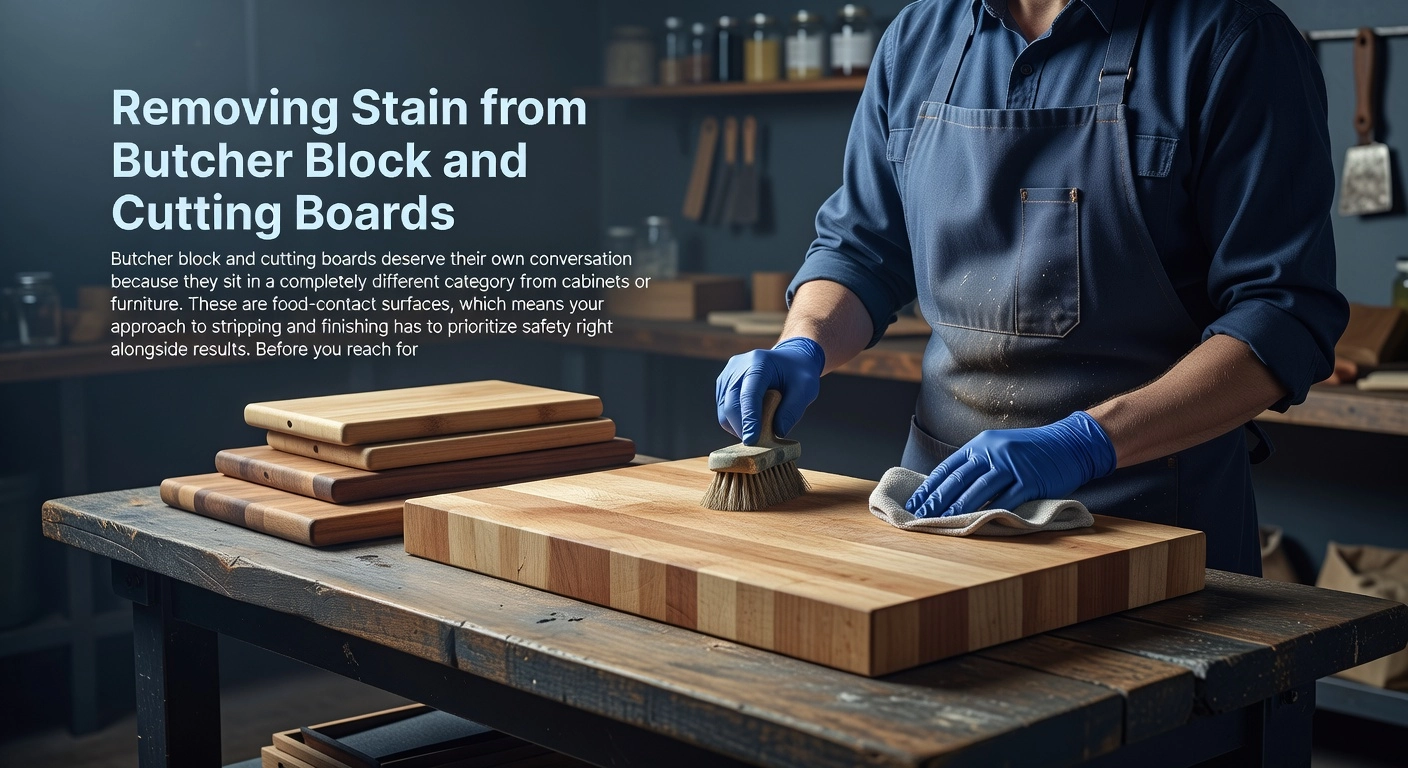
Butcher block and cutting boards deserve their own conversation because they sit in a completely different category from cabinets or furniture. These are food-contact surfaces, which means your approach to stripping and finishing has to prioritize safety right alongside results.
Surface Stains vs. Deep Stains: Know the Difference First
Before you reach for any stripper or sandpaper, take a close look at what you’re actually dealing with. Light food stains, water marks, and juice discoloration are usually surface-level and respond surprisingly well to natural methods. A baking soda paste mixed with a little warm water, scrubbed along the grain with a coarse salt and lemon half, or a light application of hydrogen peroxide can lift these marks without any chemical stripping involved at all. Work with the wood grain in small circles, let the mixture sit for a few minutes, then rinse thoroughly and allow the board to air dry upright so moisture doesn’t warp it. For most everyday staining on a well-maintained board, this is genuinely all you need.
Full stripping becomes necessary when you’re dealing with something more serious: an oil-based wood stain that has soaked deep into the grain, finish layers that have darkened or worn unevenly, or old sealers that are flaking and patchy across the surface. At that point, surface cleaning won’t reach the problem, and you need to physically or chemically remove those compromised layers to get back to fresh wood.
Sanding Is Usually Your Best Option Here
For butcher block specifically, sanding is widely recommended as the preferred stripping method, and for good reason. The surface is flat, which makes even sanding straightforward, and you finish with a clean substrate that has zero chemical residue concerns. Start with 80 to 100 grit for heavy removal, then work up through 150 and finish with 220 grit, always moving with the grain to avoid cross-grain scratches. The result is a smooth, fresh surface you can confidently finish for food contact.
If you do choose to use a gel stripper instead, thorough rinsing is non-negotiable. Rinse multiple times with clean water, then follow up with a light sand to remove any residue that has settled into the wood pores before you apply a new finish. Many people skip this step and end up with trace chemical residue on a surface they’ll use to prep food, so don’t rush it. You can find detailed guidance on safe removal approaches in this butcher block stain removal guide.
Finishing with Food-Safe Options After Stripping
Once your surface is stripped and sanded smooth, finishing correctly is just as important as the stripping itself. Food-grade mineral oil is the most accessible and commonly recommended option; it’s affordable, widely available, and completely safe for food contact. Apply it generously, let it soak in for several hours or overnight, then wipe away the excess. Walnut oil is another solid choice, as is a dedicated butcher block conditioner that blends mineral oil with beeswax or carnauba wax for added protection and a subtle sheen.
One rule to keep front of mind: never reapply a film-forming finish like polyurethane to a cutting board or food-prep surface after stripping. These coatings chip over time, trap bacteria in the cracks, and are not safe for direct food contact once the surface is compromised. Once you’ve stripped back to bare wood, commit to a penetrating oil or conditioner for ongoing maintenance, reapplying whenever the wood starts to look dry or water stops beading on the surface.
Stripping Your Old Finish to Apply 2026 Dark Wood Tones
If you’ve been eyeing those gorgeous deep, moody wood tones all over design blogs and social media lately, you’re not alone. The 2026 trend is a full-on shift toward rich, warm browns, and the gray, ashy, whitewashed looks that took over everyone’s kitchens and living rooms in the 2010s are officially on their way out. Minwax even named Special Walnut its 2026 Color of the Year, a warm, earthy medium-to-dark brown that makes natural grain pop without feeling heavy. Deep tones like Jacobean, espresso, and mahogany are following close behind, and homeowners everywhere are stripping their outdated finishes to get in on the look.
Here’s the thing though: you can’t just brush one of these rich, dark stains over your existing lighter finish and expect those results. Old varnish, polyurethane, or prior stain creates a barrier that blocks the new color from soaking evenly into the wood. The result is a blotchy, muddy mess that looks nothing like the inspiration photos. A fully stripped, neutralized, and lightly sanded surface opens up the wood grain so the stain absorbs deeply and consistently, giving you that smooth, professional-looking color from edge to edge.
The 2026 design direction also puts natural wood texture and grain front and center rather than hiding it. Two-tone approaches, where you pair a darker stained piece with lighter natural wood nearby, are hugely popular right now. That layered, grounded look only works when your stain actually interacts with the grain, which means starting with bare, clean wood is non-negotiable.
The budget case for doing this yourself is genuinely compelling. Professional furniture refinishing averages around $631, with costs running anywhere from $341 to $931 depending on the piece. A DIY strip-and-restain project typically costs between $50 and $200 in materials, covering your stripper, sandpaper, stain, topcoat, and safety gear. That’s a significant saving for a weekend project that leaves you with a result you’re proud of.
Safety Tips and Common Mistakes to Avoid
Before you open your first can of stripper, take a few minutes to review these safety guidelines and common pitfalls. Getting this part right protects both you and the wood you’re working so hard to restore.
Ventilation Comes First, Every Single Time
Even low-VOC citrus-based strippers release fumes that build up fast in enclosed spaces, causing dizziness, headaches, and respiratory irritation before you even notice it happening. When working indoors, open every window and door you can, then position a fan to exhaust air outward rather than just circulate it around the room. Set a timer and step outside for fresh air every 20 to 30 minutes without exception. This is especially important in kitchens, where the space is often compact and cleaning products are stored nearby.
Dispose of Rags the Right Way
Stripper-saturated rags cannot go straight into your household trash, particularly with solvent-based products. Bunched-up rags trap heat from oxidation, which creates a genuine spontaneous combustion risk. Instead, lay them flat on a concrete surface outdoors until they are completely dry, with no chemical smell remaining. Once fully dried, check your local guidelines before disposal; many municipalities classify this type of waste as hazardous and offer free drop-off at household hazardous waste facilities.
The Most Common Beginner Mistake
The single biggest error beginners make is applying stripper too thinly and then scraping before the finish has fully softened. This leads to gouging the wood surface and leaving stain trapped deep in the grain. Apply a thick, generous coat, cover it with plastic wrap to keep it wet longer, and wait the full recommended dwell time until you see the finish visibly bubble or wrinkle.
Never Mix Strippers with Other Products
Combining chemical strippers with bleach-based cleaners or ammonia products produces toxic fumes and dangerous chemical reactions. In a kitchen setting, where spray cleaners and degreasers are often within arm’s reach, this risk is very real. Keep your work area cleared of all other cleaning products before you begin.
Always Test a Hidden Spot First
Different wood species respond to strippers in unpredictable ways. Pine may raise grain dramatically, while oak can discolor with certain formulas. Before committing to a visible surface, apply a small amount of stripper to an inconspicuous area, like the underside of a cabinet door or the back of a furniture leg, and observe the results before moving forward.
Frequently Asked Questions
Can you strip wood stain without sanding?
Yes, absolutely. Chemical strippers can handle most of the heavy lifting without you ever picking up sandpaper. Products with a citrus or gel base are particularly good at pulling stain out of wood fibers during their dwell time. That said, a light finish sand at 150 to 220 grit afterward is still a smart move. Chemical strippers and moisture can raise the wood grain slightly, leaving a fuzzy texture that will show through your new stain if you skip this step. Think of it as a quick smoothing pass rather than a full sanding session.
How do you know when all the stain is removed?
The surface should show a consistent, uniform wood tone with no blotchy or darker patches. End grain areas are the trickiest spots because they absorb stain deeply, so pay extra attention there. One of the best tricks is raking light: hold a lamp or flashlight at a low angle across the surface rather than looking at it under overhead lighting. That low angle reveals shadows and discolored patches that are nearly invisible from above. If you spot any darker areas, hit them with another round of stripper or targeted scrubbing before moving on.
Is CitriStrip safe to use on kitchen cabinets?
CitriStrip is one of the more beginner-friendly options for kitchen environments thanks to its citrus base and lower VOC formula compared to harsher traditional strippers. It works well on vertical cabinet surfaces and does not require the same heavy-duty ventilation setup as older methylene chloride products. However, thorough rinsing and complete drying are non-negotiable before applying any new finish near food prep areas. Good airflow still matters, so crack a window and keep the space ventilated throughout the process.
How long should you wait before re-staining after stripping?
Give the wood at least 24 hours to dry after completing your chemical strip and neutralization step. The surface should look and feel consistently dry with no cool or damp spots when you press your hand against it. Humidity and airflow both affect drying time, so in a humid environment or a poorly ventilated room, err on the side of waiting longer. Rushing this step is one of the most common mistakes beginners make, and it leads to blotchy absorption and poor stain adhesion.
What is the difference between stripping stain and stripping paint?
Paint sits on top of the wood surface as a film, while stain soaks directly into the wood fibers. That difference changes how you approach the job. Paint tends to lift more cleanly and quickly with a single stripper application because it has not bonded deep into the grain. Stain, particularly oil-based stain on open-grain woods like oak or ash, often needs longer dwell times and sometimes a second chemical application to fully release. If you find stubborn color lingering after your first pass, do not panic; it just means the stain soaked in deeper and needs a bit more patience.
Final Thoughts: Strip It Right Before You Re-Stain
You now have everything you need to tackle this project with confidence. To recap quickly: reach for a gel chemical stripper when you’re dealing with deep stains, multiple layers, or large surface areas. Switch to sanding when the finish is light and you want precise control on smaller pieces like cabinet doors or tabletops. When you want the cleanest possible result, combine both methods, stripping first and finishing with a light sand.
If you’re working on kitchen cabinets or butcher block, just take the extra steps seriously. Rinse thoroughly, ventilate well, and always finish with a food-safe sealer or oil. It’s a little more careful work, but completely doable for any motivated DIYer.
The numbers make a strong case for doing this yourself. A weekend and $50 to $200 in materials compares pretty favorably to the $631 average cost of professional refinishing. With 2026 design trends pushing toward rich, warm dark tones like walnut and espresso, a fully stripped, clean surface is what delivers that polished result you’re after.
Before you buy anything, identify your surface type and pick your method from this guide. That one step sets you up for even, beautiful results from the very first pass.
Frequently Asked Questions
Can you strip wood stain without sanding?
Yes, chemical strippers can handle most of the heavy lifting without sandpaper. Gel or citrus-based products are particularly effective at pulling stain out of wood fibers during their dwell time. That said, a light finish sand at 150 to 220 grit afterward is still recommended, since chemical strippers and moisture can slightly raise the wood grain, leaving a fuzzy texture that will show through your new stain if skipped. Think of it as a quick smoothing pass rather than a full sanding session.
How do you know when all the stain has been fully removed?
The surface should show a consistent, uniform wood tone with no blotchy or darker patches. End grain areas are the trickiest spots since stain soaks deepest there, so pay extra attention to those sections. A useful trick is raking light: hold a lamp or flashlight at a low angle across the surface rather than viewing it under overhead lighting. That low angle reveals shadows and discolored patches that are nearly invisible from above. You can also wipe the surface with mineral spirits, as the wet surface exposes remaining blotchiness that dry wood tends to hide.
Is CitriStrip safe to use on kitchen cabinets?
CitriStrip is one of the more beginner-friendly options for kitchen environments thanks to its citrus base and lower VOC formula compared to harsher traditional strippers. It works well on vertical cabinet surfaces and does not require the heavy-duty ventilation setup that older methylene chloride products demand. However, thorough rinsing and complete drying are non-negotiable before applying any new finish near food prep areas. Good airflow still matters, so crack a window and keep the space ventilated throughout the process. Also remember to degrease cabinets with dish soap or a product like Krud Kutter before applying any stripper to ensure even penetration.
How long should you wait before re-staining wood after stripping?
Give the wood at least 24 hours to dry after completing your chemical strip and neutralization step. The surface should look and feel consistently dry with no cool or damp spots when you press your hand against it. Humidity and airflow both affect drying time, so in a humid environment or a poorly ventilated room, err on the side of waiting longer. Rushing this step is one of the most common beginner mistakes and leads to blotchy absorption and poor stain adhesion. Once fully dry, do a final light sand with 150 to 220 grit and wipe with a tack cloth before applying your new stain.
What is the difference between stripping wood stain versus stripping paint?
Paint sits on top of the wood surface as a film, while stain soaks directly into the wood fibers. This key difference changes how you approach the job. Paint tends to lift more cleanly and quickly with a single stripper application because it has not bonded deep into the grain. Stain, particularly oil-based stain on open-grain woods like oak or ash, often needs longer dwell times and sometimes a second chemical application to fully release. If stubborn color lingers after your first pass, it simply means the stain soaked in deeper and needs a bit more patience and possibly an additional round of stripper before moving on to sanding.
4 thoughts on “How to Strip Stain from Wood: A Complete DIY Guide”