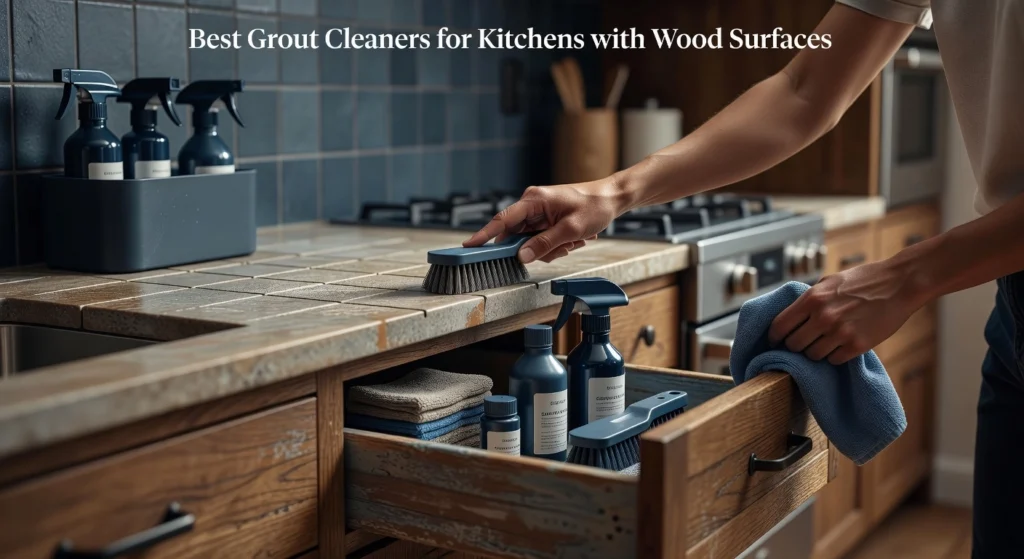

If you’ve ever stared down at your kitchen grout and wondered how it went from bright white to a shade that can only be described as “questionable,” you’re not alone. Kitchens are messy by nature, and grout has a talent for collecting every drop of sauce, splash of coffee, and smudge of who-knows-what.
But here’s where things get a little tricky. If your kitchen features wood surfaces, countertops, or flooring nearby, you can’t just grab any grout cleaner off the shelf and go to town. Some cleaners are too harsh and can warp, stain, or strip the finish right off your beautiful wood surfaces.
The good news? There are plenty of effective options that get the job done without causing collateral damage. In this list, we’re breaking down the best grout cleaners specifically suited for kitchens with wood surfaces nearby. You’ll learn what ingredients to look for, which formulas to avoid, and which products actually deliver on their promises. Whether you’re tackling everyday grime or built-up stains, we’ve got you covered.
Why Most Grout Cleaners Are Dangerous Near Wood
Here’s something most tile cleaning guides completely gloss over: the grout lines in your kitchen sit just inches from your wood cabinets, butcher block countertops, and hardwood floors. That proximity is a serious problem when you’re reaching for most commercial grout cleaners.
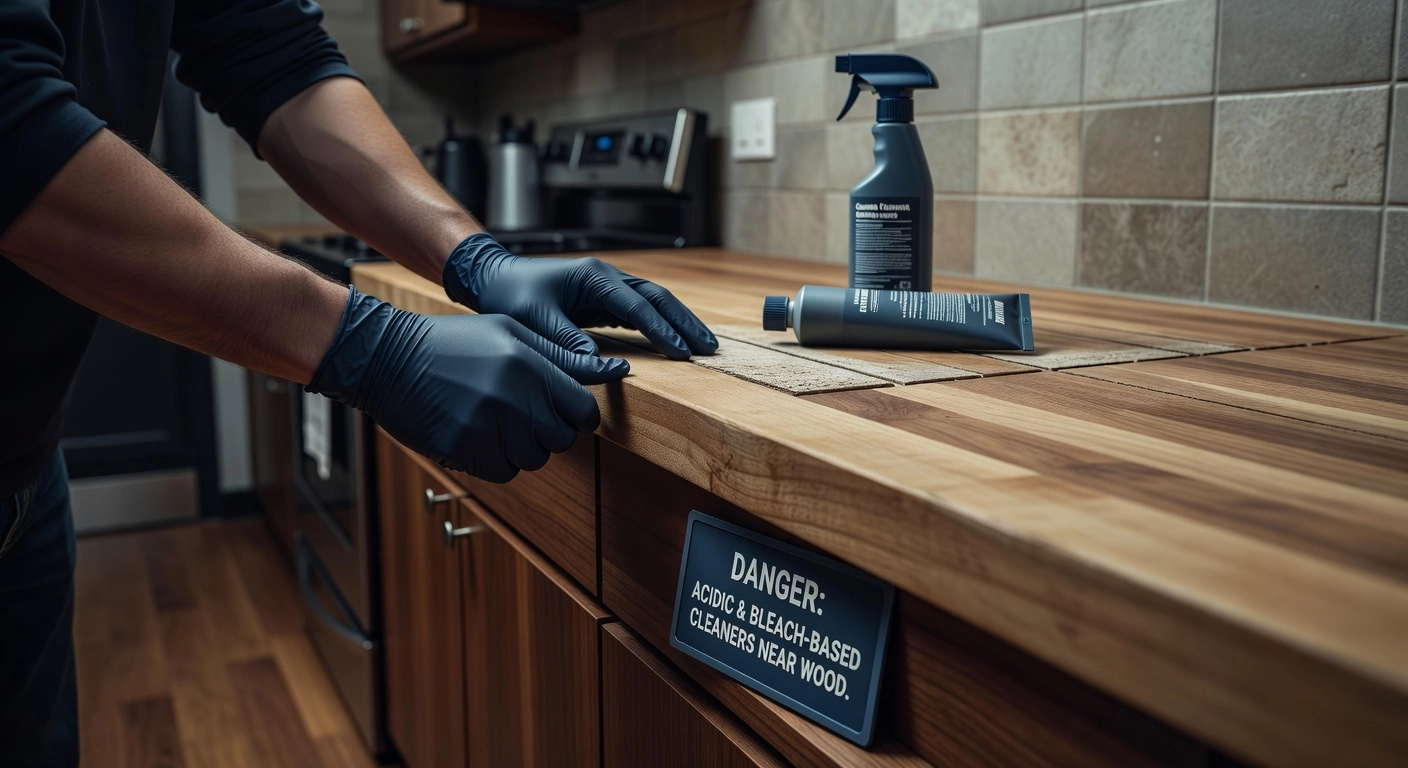
Acidic and bleach-based formulas are the biggest culprits. Acid-based grout brighteners chemically etch and dissolve the protective sealants on wood finishes, leaving behind permanent dullness, discoloration, or a stripped raw appearance. Bleach (sodium hypochlorite) causes its own brand of damage, creating white spots, uneven fading, and coating degradation on both sealed and unsealed wood. Grout cleaners that seem perfectly fine on tile can quietly wreck your butcher block or cabinet finish in the same scrubbing session.
The pH Scale, In Plain English
Think of pH as a spectrum from 0 to 14. Pure water sits at a neutral 7. Anything below 7 is acidic, and anything above 7 is alkaline. Strong grout acids often clock in between 1 and 4 on that scale, similar to battery acid territory. Those hydrogen ions aggressively break down calcium compounds in grout, which sounds great until you realize they also attack the mineral-based sealants and finishes protecting your wood surfaces just a few inches away. On the other end, highly alkaline cleaners like bleach sprays (pH 9 to 13) break down the oils and fatty acids in wood coatings, essentially stripping your finish from the inside out. Only pH-neutral products (sitting right around 7) clean without triggering either of those destructive reactions.
That Viral TikTok Hack Is Especially Risky Near Wood
You have probably seen the toilet bowl cleaner grout trick blowing up on social media. The idea is to squeeze acidic gel toilet cleaner along grout lines for dramatic whitening results. Wirecutter’s November 2025 analysis confirmed the hack does work for occasional deep cleaning, but their experts from grout manufacturers like Laticrete and Mapei warned clearly that strong-acid gels dissolve grout layers over time and damage adjacent surfaces. Near wood, the risk escalates significantly because acidic gels can splash, wick, or drip onto cabinet bases and butcher blocks, stripping finishes before you even notice.
Three Label Phrases Worth Memorizing
Before you buy any grout cleaner, flip the bottle and look for these three things: acid-free, pH-neutral, and no bleach (sometimes listed as bleach-free). Products carrying all three of those labels are formulated to clean without the chemistry that destroys wood finishes. Many common cleaners skip these safer formulations entirely, so reading labels carefully before purchasing is genuinely worth the extra 30 seconds.
Unsealed Wood Is the Most Vulnerable
Oil-finished and unsealed butcher blocks are especially susceptible because they have no hard barrier; liquids penetrate straight into the wood pores, causing swelling, deep staining, and permanent discoloration. Even polyurethane-sealed surfaces can degrade with repeated exposure. This is why timing matters: schedule your deep grout cleaning before you refresh any wood oils or sealants, not after. That way, if any cleaner contacts your wood, you can clean and re-treat the surface without locking damage underneath a fresh coat of oil.
The Best DIY Grout Cleaner That Is Safe Near Wood
Good news: you don’t need harsh chemicals to get grout looking clean again. The single best DIY grout cleaner that’s safe to use near wood surfaces is a simple paste made from baking soda and hydrogen peroxide at a 2:1 ratio (two parts baking soda to one part peroxide). In a head-to-head test by Apartment Therapy, this combo scored a 9 out of 10, outperforming both plain baking soda paste and vinegar solutions on real bathroom floor grout. Home Depot’s updated grout cleaning guide recommends a nearly identical recipe, adding just a tablespoon of mild dish soap for extra degreasing power. Unlike bleach or ammonia-based cleaners, baking soda and hydrogen peroxide are gentle enough that accidental contact with nearby wood won’t cause immediate damage, as long as you act quickly.
How to Apply It Safely Step by Step
Step 1: Mask off your wood surfaces first. Before you mix anything, run painter’s tape along every wood edge adjacent to your tile, including cabinet bases, butcher block countertop edges, and baseboards. Lay plastic sheeting or drop cloths over larger wood surfaces and secure them with additional tape. This barrier is non-negotiable, and skipping it is the most common mistake people make.
Step 2: Mix the paste fresh. Combine two parts baking soda with one part 3% hydrogen peroxide in a small bowl until you get a thick, spreadable consistency similar to toothpaste. You’ll notice it fizzing slightly; that’s the oxidizing reaction that lifts stains. Mix only what you need for one section at a time, since the fizzing action weakens quickly.
Step 3: Apply carefully to grout lines only. Use a small brush, an old toothbrush, or even a squeeze bottle to apply the paste directly onto the grout lines. Keep it off the wood edges. If any paste does contact a wood surface accidentally, wipe it away immediately with a damp microfiber cloth, then follow up with a dry towel right away. Hydrogen peroxide can have a mild bleaching effect on certain wood finishes if left to sit, so quick action matters.
Step 4: Let it dwell for 10 to 15 minutes. For lighter staining, 10 minutes is usually enough. For more embedded grime or mildew, you can extend to 30 minutes. Keep an eye on the paste during this time to make sure it isn’t spreading toward your masked wood edges.
Step 5: Scrub, rinse, and dry thoroughly. Use a stiff-bristled grout brush and scrub along the lines with moderate pressure. Wipe away the residue with a damp cloth, rinse with clean water, and dry the entire area completely, especially near any wood surfaces where moisture can cause warping or swelling over time. Remove your masking materials last and inspect the wood edges for any residue.
What Results to Expect (and When to Repeat)
Realistically, one round of this treatment will noticeably brighten dingy or yellowed grout and lift surface-level soap scum and dirt. The DIY grout cleaner test results consistently show the biggest improvement on moderately stained grout, while deeply embedded mold or severely deteriorated grout may need two or three applications. For kitchens and other wet areas, plan on treating your grout every one to three months depending on traffic and humidity. Drier, low-use areas may only need attention once or twice a year. You’ll know it’s time to repeat when the grout lines start visibly darkening or looking dull compared to the surrounding tile.
Once your grout is clean and your tile area is looking fresh, it’s the perfect moment to shift your attention to the wood surfaces nearby. Butcher block countertops and cutting boards benefit from a conditioning session after any kitchen deep clean, since cleaning activity nearby can leave the surrounding air drier or expose wood to minor moisture. A round of food-grade mineral oil or a beeswax conditioner helps seal the wood and keep it from absorbing grime, which ties neatly into the butcher block care and cutting board maintenance guides here on WoodStuffHQ as your natural next step.
Best Commercial Grout Cleaners Ranked for Wood Kitchen Safety
Sometimes DIY methods just aren’t enough, especially when you’re dealing with deeply stained grout or a large surface area. That’s when reaching for a commercial grout cleaner makes sense. But here’s the catch: not every product on the shelf is safe to use in a kitchen where wood cabinets, butcher blocks, and hardwood floors are part of the picture. Here’s a ranked breakdown of the best commercial options, specifically evaluated for how they perform around wood surfaces.
1. Black Diamond Ultimate Grout Cleaner: Best Overall for Wood Kitchens
If you have a kitchen that mixes tile floors or a tiled backsplash with wood cabinets and a butcher block countertop, Black Diamond Ultimate Grout Cleaner is the one to reach for first. Its acid-free, stone-safe formula is the key feature that sets it apart from most of the competition. Because it skips harsh acids and bleach entirely, it won’t strip sealants from your wood surfaces, etch natural stone counters, or discolor anything it accidentally touches. That matters a lot when you’re scrubbing grout lines that run right up to the base of your lower cabinets or along the edge of a wood-framed island.
In tested reviews from HGTV and other outlets, Black Diamond consistently earns high marks for lifting grease, food stains, soap scum, and general grime with a dwell time of just one to three minutes. It works on ceramic, porcelain, marble, granite, and colored or white grout without leaving residue behind, as long as you rinse properly. Some users mention a noticeable scent during application, so cracking a window is a good idea. At roughly $20 to $30 for a 32-ounce bottle, it costs more than budget options, but the formula’s versatility and wood-safe profile make it worth it for mixed-surface kitchens. This is your go-to when you want strong results without the risk.
2. Mrs. Meyer’s Clean Day Tub and Tile: Best for Eco-Conscious Homeowners
Mrs. Meyer’s Clean Day Tub and Tile Cleaner earns consistent “best overall” ratings in 2025 to 2026 tested reviews, and it’s easy to see why it’s such a strong fit for kitchens where eco-consciousness meets practical cleaning needs. The plant-based, pH-neutral formula is gentle enough to use around wood surfaces without worry, and it performs well on everyday grime, mold, and mildew on grout and tile. Testing from The Spruce’s 2026 evaluation praised it for tackling tough stains while remaining safe for broader surface use, which is exactly what you need when your tile grout sits inches from finished wood cabinetry.
One honest caveat: heavily stained grout may require more scrubbing or a second application compared to stronger formulas. If your grout has years of buildup, this might not be your one-shot solution. But for weekly or bi-weekly maintenance cleaning, it’s genuinely excellent. Prices typically run between $5 and $10 per bottle, which makes it one of the most budget-friendly options on this list. The pleasant scents (lavender is a popular choice) and thousands of positive Amazon reviews reinforce that this isn’t just marketing; it actually delivers in real kitchens. If you care about reducing chemical exposure for your family and your wood surfaces, this one checks every box.
3. Zep Grout Cleaner and Brightener: Best for Pure Tile Areas (Keep It Away From Wood)
Zep Grout Cleaner and Brightener is genuinely impressive at what it does, but what it does needs to be clearly understood before you bring it anywhere near a wood kitchen. According to its own Safety Data Sheet, Zep has a pH below 1, making it one of the most acidic cleaners on this list. That level of acidity is what makes it so effective at brightening ceramic and porcelain grout with minimal scrubbing, but it’s also exactly what makes it dangerous near butcher blocks, wood cabinets, sealed hardwood floors, or natural stone surfaces. Contact with those materials can strip finishes, etch surfaces, and cause discoloration that’s difficult or impossible to reverse.
So when should you use it? According to BHG’s testing roundup, Zep is best reserved for dedicated tile-only spaces like a utility room, a laundry room floor, or a shower with no wood elements nearby. If you’re using it in a kitchen, it should only touch grout lines that are completely isolated from any wood surface, and you should wear gloves, ensure good ventilation, and rinse the area thoroughly afterward. At $8 to $12 for a 32-ounce bottle, it’s affordable and powerful. Just treat it like the high-strength acid it is, and never let it wander near your cabinets or countertop edges.
4. Goo Gone Grout and Tile and The Pink Stuff: Best Budget Multi-Surface Options
These two products come from different angles but land in a similar sweet spot: affordable, versatile, and reasonably safe for kitchens that mix tile and wood. Goo Gone Grout and Tile Cleaner carries an EPA Safer Choice rating and is pH-neutral, which means it’s non-corrosive and safe to use on ceramic, porcelain, sealed natural stone, fiberglass, and grout without the anxiety of accidental damage to nearby wood surfaces. It handles soap scum, mold, mildew, and hard water deposits well, and its citrus scent is far more pleasant than the chemical smell you get from acidic alternatives. With over 8,000 Amazon ratings and a price point under $12, it’s a practical everyday choice for mixed-surface kitchens.
The Pink Stuff, usually found as a paste or spray, earns regular mentions in 2025 to 2026 cleaning roundups as a strong value pick for general grout and tile work. It’s an abrasive cleaner, which means it’s effective at scrubbing lighter stains off grout without harsh chemicals. However, that abrasiveness is worth noting; over-scrubbing with it can potentially roughen grout surfaces over time, and it works better for maintenance cleaning than for deep restoration of severely stained grout. At around $5 to $8, it’s one of the cheapest options available, and its multi-surface capabilities mean you can use the same product on tile, grout, counters, and some other surfaces around the kitchen. Both products are solid choices when you want something that handles grout reasonably well without putting your wood surfaces at risk.
5. Steam Cleaning: The Safest Zero-Chemical Option for Wood and Tile Kitchens
If avoiding chemicals entirely is the priority, steam cleaning is the most wood-friendly grout cleaning method available. A steam cleaner heats water to produce high-temperature vapor that penetrates grout lines and physically loosens dirt, grease, bacteria, and mold without any chemical formulas involved. Some steam cleaners claim to eliminate up to 99.9% of bacteria through heat alone, and for kitchens where food safety matters, that’s a compelling advantage.
For spaces where wood and tile share the same floor or wall, steam is particularly valuable because there’s no risk of acidic or bleach-based overspray landing on your butcher block or cabinets. That said, steam and wood aren’t a completely carefree pairing. Excessive steam or prolonged exposure can risk warping or raising the grain on unsealed or sensitive hardwood, so technique matters. The key is to work in short, swift passes along the grout lines, use microfiber pads or bonnets to absorb moisture immediately, and keep the steam nozzle directed at grout rather than adjacent wood. Entry-level steam cleaners start around $50, with more capable machines running $100 to $200 or more, making it a one-time investment that pays off over many cleaning sessions. Experts consistently recommend following a steam deep clean with grout sealing, which helps lock in the results and reduces how often you need to repeat the process.
Quick Comparison: Grout Cleaners Ranked for Wood Kitchen Safety
| Product | Wood Safe Rating | Approx. pH | Price Range | Best Use Case |
|---|---|---|---|---|
| Black Diamond Ultimate Grout Cleaner | High | Neutral (~7) | $20 to $30 | Mixed kitchens with wood, stone, and tile |
| Mrs. Meyer’s Tub and Tile | High | Neutral | $5 to $10 | Eco-friendly daily or maintenance cleaning |
| Zep Grout Cleaner and Brightener | Low | Below 1 (highly acidic) | $8 to $12 | Pure tile areas only, far from any wood |
| Goo Gone Grout and Tile | High to Moderate | Neutral | $8 to $12 | Versatile use in kitchens with wood nearby |
| The Pink Stuff (Paste) | Moderate to High | Generally mild | $5 to $8 | Budget multi-purpose scrubbing on varied surfaces |
| Steam Cleaning | High (with precautions) | N/A, no chemicals | $50 to $200 (machine) | Chemical-free deep cleaning in wood and tile spaces |
The pattern here is pretty clear: the safer a product is for wood surfaces, the more it relies on pH-neutral or plant-based chemistry rather than acids. For most wood kitchens, Black Diamond or Mrs. Meyer’s will handle the majority of your cleaning needs, with steam cleaning as the go-to for periodic deep cleans where you want zero chemical contact with your wood surfaces at all.
How to Protect Wood Cabinets and Butcher Blocks While Cleaning Grout
Now that you know which grout cleaners are safest to use near wood, the next step is making sure your cabinets and butcher block are physically protected before you start scrubbing. Even pH-neutral formulas can cause damage if they sit on raw or finished wood long enough, so taking five extra minutes to set up proper barriers is absolutely worth it.
Set Up Your Masking and Barriers First
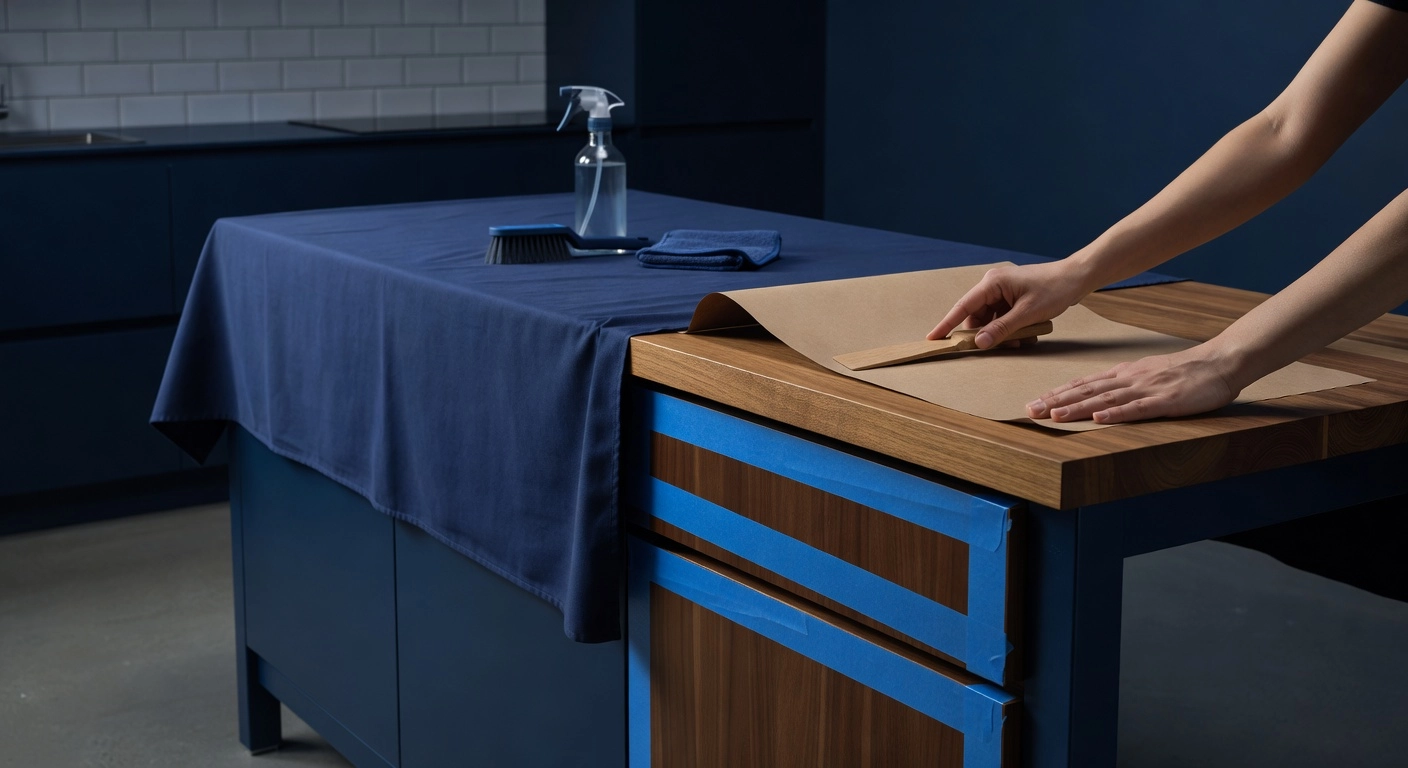
Before you open a single bottle of grout cleaner, grab your supplies: blue painter’s tape, heavy-duty plastic sheeting (1 to 3 mil thickness works well), and plastic wrap for butcher block edges. Start by pressing painter’s tape firmly along the top edge of cabinet toekicks, bases, and anywhere wood meets tile or grout. Make sure there are no gaps, because grout cleaner is surprisingly good at finding the tiniest opening and seeping through.
Once your tape is down, drape plastic sheeting over cabinet fronts and secure it with additional tape so it hangs to the floor. For butcher block countertops, plastic wrap (standard kitchen cling film) is actually ideal because it conforms tightly to oiled or curved edges without leaving adhesive residue. Cover the full perimeter of the countertop edge, not just the top surface. A quick test: mist the barriers lightly with water and check for any drips that make it through. Fix gaps before you start cleaning, not after.
Work in small sections and keep barriers in place until the cleaner is fully rinsed and the area is completely dry. According to practical DIY grouting experience near butcher block, physical masking is far more reliable than relying on a wood finish alone to repel chemicals.
Always Clean Grout Before Oiling Your Butcher Block
Here is a sequencing tip that most people get backwards: always complete your grout cleaning before you oil or condition your butcher block, never after. Freshly oiled wood has open, saturated pores that actually absorb chemicals more aggressively than dry wood does. An oil-soaked surface can pull grout cleaner deep into the wood grain, causing staining or discoloration that is very difficult to reverse. Finish your tile and grout work first, let everything dry completely, then move on to oiling as part of your post-cleaning wood care routine.
If Cleaner Accidentally Touches Wood, Act Fast
Accidents happen, especially when you are working in tight kitchen spaces. If any commercial grout cleaner contacts wood, wipe it immediately with a clean damp microfiber cloth and flush the spot several times with plain water. Do not scrub hard; blotting and rinsing is enough to dilute and remove surface chemicals. Dry the area thoroughly right away because standing moisture is just as damaging as the cleaner itself. Then inspect the surface for discoloration, softening, or raised grain. Light surface contact on an oiled finish often wipes away cleanly, but deeper penetration may need light sanding later once the wood has fully dried. Consumer Reports’ countertop maintenance guidance confirms that quick flushing is the most critical first response for chemical exposure on wood surfaces.
Inspect and Re-Oil After Every Grout Cleaning Session
Once the grout is clean and barriers are removed, take a few minutes to inspect your wood surfaces carefully. Run your hand over cabinet bases and butcher block edges and feel for rough patches, dry spots, or dullness. A simple water bead test works well here: drip a few drops of water onto the surface. If it beads up, your protective finish is still intact. If it soaks in quickly, it is time to reapply protection.
For oiled butcher block, reapply food-grade mineral oil generously, let it penetrate overnight, and wipe away any excess in the morning. High-traffic kitchen surfaces may need this monthly, and definitely after any chemical exposure during grout cleaning. For sealed or varnished cabinets, spot-check for finish dulling and touch up as needed.
For your complete next steps, check out our guide to degreasing kitchen cabinets safely to remove any lingering residue, then follow up with a full butcher block oiling routine to restore that protective barrier. That sequence, clean grout, degrease cabinets, then condition wood, keeps your entire kitchen in great shape from tile to countertop.
Simple Grout Maintenance That Reduces Deep Cleaning Frequency
The best grout cleaner in the world won’t matter much if you’re letting grime build up week after week until you need something nuclear to cut through it. Staying ahead of buildup is the real game-changer, and it’s especially important in wood-heavy kitchens where your cleaning options are already limited.
Weekly Mild Cleaning Prevents the Worst Buildup
A quick spray of pH-neutral cleaner on your grout lines once a week does more preventive work than you’d expect. Spray it on, let it sit for five minutes, give it a gentle scrub with a soft brush, and wipe it dry. That’s genuinely it. According to tips for maintaining white grout and preventing dirt buildup, consistent gentle cleaning is what separates grout that stays bright for years from grout that needs aggressive intervention every few months. The pH-neutral formula matters because it cleans without eroding the grout or stripping any sealer you’ve applied.
Sealing Is the Single Biggest Maintenance Shortcut
Cement-based grout is porous, which means it absorbs grease, food spills, and moisture like a sponge. Sealing fills those pores and creates a protective barrier that keeps contaminants on the surface where a simple wipe can remove them. In a wood-heavy kitchen, this matters even more because sealed grout lets you stick with gentler, wood-safe cleaners rather than reaching for harsh acids or bleach. Apply a penetrating sealer after thoroughly cleaning and drying the grout, let it cure for 24 to 72 hours, and reapply every six to twelve months in high-traffic kitchen zones. Test water beading to know when it’s time to reseal. As proper grout maintenance guidance confirms, sealed grout resists staining dramatically better and extends the time between deep cleans.
Smarter Grout Choices for Lower Maintenance
If you’re planning a kitchen renovation, the 2026 large-format tile trend is worth knowing about. Bigger tiles mean fewer grout lines overall, which directly translates to less surface area for dirt and mold to accumulate. It’s a simple math win for maintenance.
On the material side, antimicrobial and stain-resistant grout formulations have become far more accessible in 2025 and 2026. Epoxy grouts are non-porous by nature and require no sealing at all, while enhanced cement-based options now incorporate stain protection and antimicrobial additives. For a busy kitchen with constant food prep and spills, these newer formulations reduce staining and support the role of pH in effective tile and grout cleaning by making gentle maintenance routines genuinely sufficient.
Your Maintenance Schedule at a Glance
- Weekly: pH-neutral spray, light scrub, wipe dry
- Monthly: Thorough brush scrub along grout lines to catch emerging grime
- Quarterly: Full deep clean, sealer inspection, reseal if water stops beading
Stick to this rhythm and you’ll rarely need anything stronger than a mild cleaner near your wood surfaces.
Keeping Your Grout and Wood Kitchen in Top Shape
You’ve now got a solid game plan for keeping both your grout and your wood kitchen surfaces looking their best. To quickly recap the safest options covered in this guide: the baking soda and hydrogen peroxide paste is your go-to for a budget-friendly, non-toxic deep clean; Black Diamond Ultimate Grout Cleaner is the top commercial pick when you need extra muscle without the acid risk; and steam cleaning is your best chemical-free option for periodic deep sessions.
Before you grab any product off the shelf, always flip it over and check the label. Acid-free and pH-neutral are the two phrases you want to see before using anything near your butcher blocks or wood cabinets. Even products marketed as “gentle” can vary widely in formulation, so that label check is non-negotiable.
And no matter which method you choose, tape off and cover your wood surfaces first. A few minutes of masking saves you hours of restoration work later.
While you’re in full kitchen refresh mode, pairing grout cleaning with butcher block care and cabinet degreasing makes perfect sense. Both tasks complement each other naturally. For a complete walkthrough on conditioning and restoring your countertop, check out the butcher block countertop care guide on WoodStuffHQ.
Conclusion
Keeping your kitchen grout clean does not have to come at the expense of your wood surfaces. The right cleaner makes all the difference. Remember these key takeaways: always choose pH-neutral or wood-safe formulas, avoid bleach-heavy products near finished wood, and test any new cleaner in a small hidden area first. Consistency matters too; a quick weekly wipe-down prevents deep stains from setting in and reduces the need for aggressive scrubbing later.
Now that you know what to look for, it is time to take action. Pick one product from our list that fits your kitchen setup and give it a try this weekend. Clean grout instantly refreshes the look of your entire kitchen without a single renovation. Your floors and countertops deserve to look their best, and with the right tools, they absolutely can.
Frequently Asked Questions
Why can't I use regular grout cleaners near wood surfaces in my kitchen?
Most commercial grout cleaners contain either strong acids (pH as low as 1-4) or bleach (sodium hypochlorite), both of which are highly destructive to wood. Acidic formulas chemically etch and dissolve the protective sealants on wood finishes, while bleach breaks down the oils and fatty acids in wood coatings, stripping finishes from the inside out. Since kitchen grout lines often sit just inches from wood cabinets, butcher blocks, and hardwood floors, accidental contact with these harsh formulas can cause permanent dullness, discoloration, warping, or a stripped raw appearance.
What is the safest DIY grout cleaner to use near butcher block countertops and wood cabinets?
The safest and most effective DIY option is a paste made from two parts baking soda mixed with one part 3% hydrogen peroxide, optionally with a tablespoon of mild dish soap added for extra degreasing power. This combination scored 9 out of 10 in Apartment Therapy testing, outperforming both plain baking soda and vinegar solutions. Unlike bleach or ammonia-based cleaners, accidental contact with nearby wood won't cause immediate damage as long as you wipe it away promptly with a damp microfiber cloth.
Which commercial grout cleaner is best for kitchens that have wood surfaces nearby?
Black Diamond Ultimate Grout Cleaner is the top-rated commercial choice for mixed wood and tile kitchens. Its acid-free, pH-neutral, bleach-free formula means it won't strip sealants from wood surfaces, etch natural stone, or cause discoloration on accidental contact. It works effectively on ceramic, porcelain, marble, and granite grout with just a one to three minute dwell time, earning high marks from HGTV and other tested reviews for lifting grease, food stains, and soap scum. For a budget-friendly eco-conscious alternative, Mrs. Meyer's Clean Day Tub and Tile is also pH-neutral and plant-based, making it safe for regular maintenance cleaning around wood.
How should I protect my wood cabinets and butcher block before cleaning grout?
Before opening any grout cleaner, apply blue painter's tape firmly along the top edges of cabinet toekicks and anywhere wood meets tile or grout, ensuring no gaps are left. Drape heavy-duty plastic sheeting over cabinet fronts and secure it with additional tape. For butcher block countertops, use standard kitchen plastic wrap since it conforms tightly to oiled or curved edges without leaving adhesive residue, covering the full perimeter edge and top surface. You can also do a quick drip test by misting the barriers with water and checking for any leaks before you start cleaning. Keep all barriers in place until the cleaner is fully rinsed and the area is completely dry.
How often should I clean and seal my kitchen grout to minimize the need for harsh cleaners?
For best results, follow a tiered maintenance schedule: do a quick pH-neutral spray, light scrub, and wipe-dry routine weekly to prevent buildup; perform a thorough brush scrub along grout lines monthly to catch emerging grime; and do a full deep clean with a sealer inspection quarterly, resealing whenever water no longer beads on the surface. Sealing grout every six to twelve months in high-traffic kitchen areas is especially important because it fills the porous surface, keeps contaminants on top where they can be easily wiped away, and allows you to rely on gentler wood-safe cleaners rather than harsh acids or bleach for your regular cleaning routine.