⏱ 15 min read | 🛠 Easy | 💰 $1 | ✅ Wood-safe
You walk into a room and notice those fuzzy, dark patches creeping across your wooden furniture or floorboards. Not exactly a welcome sight, right? Mould on wood is one of those problems that can sneak up on you, and if left untreated, it can cause real damage to your home and even affect your health.
The good news is that you do not need to be a professional cleaner or spend a fortune to tackle this problem. Learning how to remove mould from wood is something any beginner can do with the right guidance, a few basic supplies, and a little bit of elbow grease.
In this step-by-step guide, we will walk you through everything you need to know. From identifying the type of mould you are dealing with, to choosing the best cleaning solution, to making sure it does not come back, we have got you covered. By the end of this post, you will feel completely confident tackling that mould head-on and getting your wood looking clean and fresh again. Let’s get started!
Why Mould on Wood Is More Serious Than It Looks
That small patch of mould creeping across your wooden cabinet or cutting board might look like a minor eyesore, but it is actually a sign of something far more serious going on beneath the surface. According to mould damage statistics from Realtime Lab, mould destroys more wood annually than fires and termites combined. Let that sink in for a moment. The threat quietly working away at your wood furniture, floors, and kitchen surfaces is bigger than two of the most feared home hazards out there.
The scale of the problem is staggering. Roughly 47% of U.S. homes already show visible mould or detectable mould odour, meaning nearly one in every two households is dealing with this issue right now. Many homeowners assume it is just surface discolouration and wipe it down with a damp cloth, not realising the problem runs much deeper.
Here is what makes mould on wood particularly tricky. Wood is porous, which means mould does not just sit on top; it sends tiny root-like structures called hyphae deep into the wood fibres over time. Once that happens, a quick surface scrub will not cut it. The mould comes right back because you never actually reached the source.
The health implications are equally concerning. The CDC links indoor mould exposure to respiratory symptoms, allergic reactions, and worsening asthma, especially in children and anyone with a compromised immune system. It is no surprise then that Google searches for “mould toxicity symptoms” have climbed by 170% over the past five years, reflecting just how many homeowners are starting to connect the dots between that fuzzy patch on their wood and the sneezing and coughing happening indoors.
The good news is that catching mould early makes all the difference.
Safety Gear and Precautions Before You Start
Before you touch that mouldy wood, taking a few minutes to gear up properly makes a real difference, both for your health and for preventing the mould from spreading further around your home.
Your Essential Protective Equipment
Think of this as your mould-fighting uniform. You will need four key items before you get started:
- N95 respirator mask: This is non-negotiable. When you disturb mould, it releases tiny spores into the air that your lungs really do not want. A standard dust mask is not enough here, so pick up a NIOSH-approved N95 respirator from your local hardware store. The CDC’s mould cleanup guidelines specifically recommend this level of protection for DIY mould removal.
- Nitrile gloves: These protect your skin from both the mould itself and the cleaning solutions you will use later. Pull them up toward your mid-forearm for better coverage.
- Safety goggles: Choose non-vented goggles that seal around your eyes. Regular glasses will not cut it since spores can still float in from the sides.
- Old clothes: Wear something you can strip off immediately afterward and toss straight into the wash. Mould spores cling to fabric easily.
Setting Up Your Workspace
Once you are suited up, prep the area itself. Start by running a HEPA-filter vacuum over the mouldy surface before applying any liquid. This captures loose spores rather than sending them swirling into the air, which a regular vacuum would actually do. Dispose of the vacuum bag in a sealed plastic bag right away.
Next, open your windows and set up a fan directed outward toward the window opening. This creates airflow that pushes spores outside rather than circulating them through your home. Where possible, close doors to other rooms to isolate the space and limit cross-contamination.
One critical safety note: never mix your cleaning solutions together. Combining vinegar and hydrogen peroxide, for example, creates peracetic acid, a compound that can seriously irritate your airways and eyes. According to the EPA’s mould remediation guidance, proper ventilation and careful handling of cleaning products are just as important as the protective gear itself. Use one solution at a time, and you will be in great shape to tackle the job safely.
When to Call a Professional Instead of DIYing It
DIY mould removal works well for small, surface-level problems, but there are clear situations where calling in a certified professional is the smarter and safer choice.
The EPA recommends professional remediation for any mouldy area larger than approximately 10 square feet, which is roughly a 3-by-3-foot patch. If you are looking at something bigger than that, the problem likely involves hidden growth, and DIY cleaning risks spreading spores further rather than eliminating them.
Take a close look at the wood itself before you start scrubbing. If it feels soft, spongy, or crumbly when you press on it, that is not surface mould anymore. That texture signals structural rot, which goes far deeper than any cleaning solution can reach. At that point, sections may need to be replaced entirely, and that is a job for a professional.
If you have cleaned the same spot two or three times and the mould keeps coming back, something is feeding it underneath, perhaps a slow leak, poor ventilation, or condensation building up inside a wall. A professional can use moisture mapping and thermal imaging to find the hidden source.
Anyone with asthma, mould allergies, or a compromised immune system should step away and let a professional handle it entirely, even for smaller patches. The spores disturbed during cleaning can trigger serious reactions.
Finally, if a musty odour lingers even after a thorough cleaning, the mould has likely penetrated deep into porous wood fibres. Surface treatments simply cannot reach it at that point, and continuing to scrub will not solve the problem.
What You Need: Tools and Materials
Before you get started, gather everything you need in one place. Having the right supplies on hand makes the whole process smoother and safer, so you are not hunting for a spray bottle mid-job with mouldy hands.
Cleaning Agents
You have three solid options here. White vinegar with at least 5% acetic acid is a favourite for good reason; it penetrates wood fibres and tackles mould at the root. Research suggests it is effective against roughly 82% of common mould species, making it a powerful natural choice. Alternatively, 3% hydrogen peroxide works well on porous wood surfaces, though it can lighten the wood slightly. For finished or sealed surfaces like kitchen cabinets, a simple mix of mild dish soap and warm water is gentle enough to get the job done without damaging the finish. Never mix vinegar and hydrogen peroxide together, as the combination creates a harsh irritant.
Application and Drying Tools
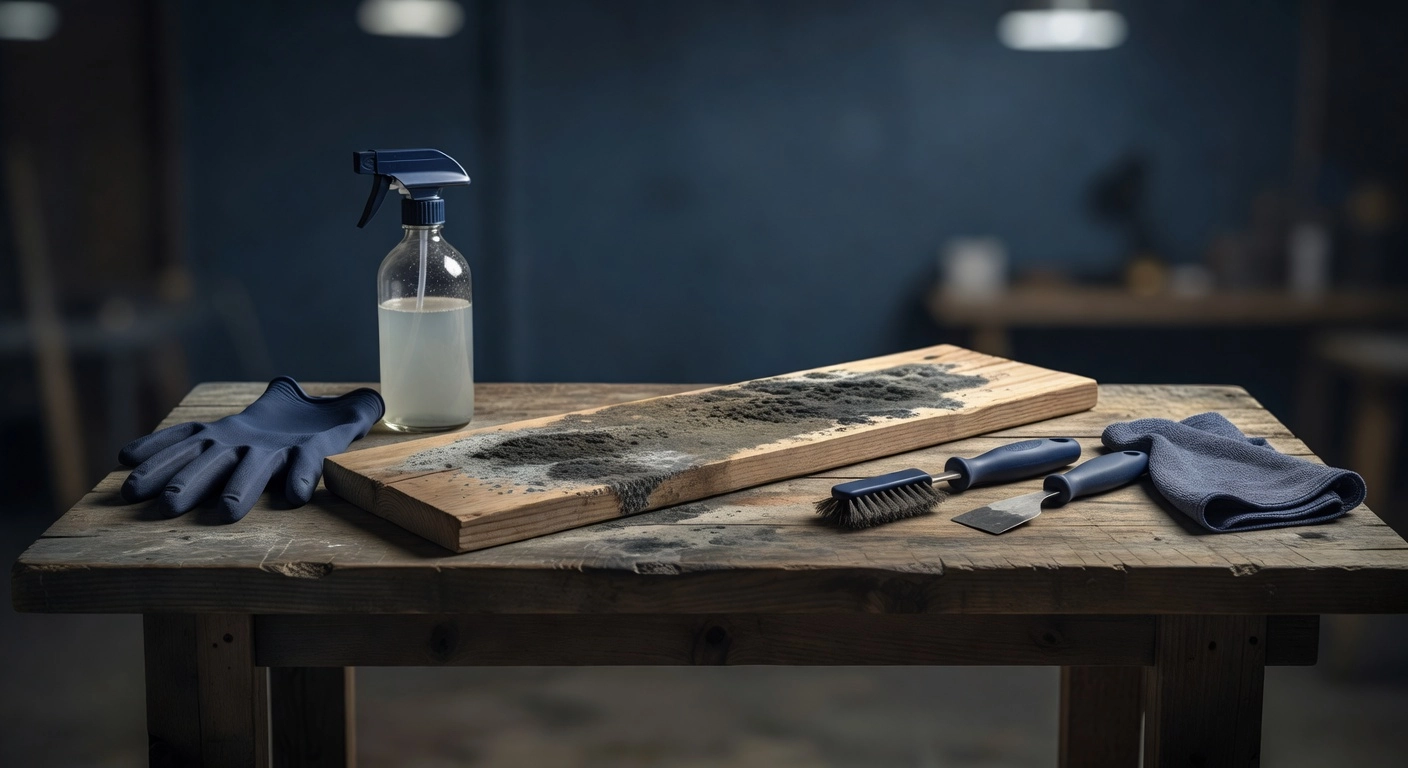
Pick up a soft-bristle brush for scrubbing along the wood grain, a few clean microfibre cloths, a spray bottle for easy application, and a plastic scraper to lift any thick buildup before you start cleaning. For drying, portable fans and a dehumidifier are your best friends. Pair these with dry towels to soak up excess moisture quickly, since leaving wood damp is basically an open invitation for mould to return.
Protective Supplies and Finishing Products
Safety gear is non-negotiable. You already know to wear your N95 mask, gloves, and goggles from the earlier section, but also grab some plastic sheeting to cover nearby surfaces and contain any loose spores. Once the wood is fully clean and dry, finish up with a food-safe mineral oil or butcher block conditioner to restore and protect kitchen wood surfaces like cutting boards and countertops.
How to Remove Mould from Wood: Step-by-Step
Now that your gear is on and your supplies are laid out, it is time to get to work. Follow these five steps carefully and you will give yourself the best possible chance of clearing that mould completely without damaging your wood in the process.
Step 1: Vacuum First, Always
Before you reach for any liquid cleaner, run a HEPA vacuum over the mouldy surface. This pulls up loose spores sitting on top of the wood and captures them in the filter rather than sending them floating through the air or deeper into the grain. Use the brush attachment and move it gently across the affected area. Seal the vacuum bag or empty the canister straight into a rubbish bag and take it outside immediately. Skipping this step and going straight to scrubbing is one of the most common mistakes people make, because it just spreads spores around rather than removing them.
Step 2: Test Your Cleaner on a Hidden Spot
Even gentle, natural cleaners can react badly with certain wood finishes, stains, or sealants. Before applying anything to the visible mouldy area, dab a small amount of your chosen cleaner onto a hidden section of the wood, like the inside of a cabinet door or the underside of a shelf. Wait a few minutes and check for any discolouration, bubbling, or finish lifting. This 30-second test can save you from accidentally stripping a beautiful stained finish on a piece of furniture you love.
Step 3: Apply Your Cleaner and Scrub With the Grain
Spray or apply your cleaner generously enough to cover the mouldy area, but stop short of soaking the wood. Too much liquid drives moisture deeper into the grain and can cause warping or swelling. Using a soft-bristled brush or cloth, work in long strokes that follow the direction of the wood grain rather than scrubbing in circles. The EPA’s mould cleanup guidance consistently emphasises thorough scrubbing combined with complete drying as the foundation of effective mould removal.
Step 4: Let the Cleaner Dwell
This step is where patience pays off. Different cleaners need different amounts of time to actually kill the mould rather than just lift surface debris. White vinegar, which is effective against roughly 82% of common mould species, needs at least one full hour of contact time to do its job properly. Hydrogen peroxide at 3% concentration needs around 10 minutes. A mild dish soap solution works differently since it does not kill mould on contact the same way, so you scrub immediately after applying rather than waiting. Set a timer so you do not rush this part.
Step 5: Wipe Clean and Dry Thoroughly
Once the dwell time is up, wipe away all residue using a clean damp cloth, then follow immediately with a dry cloth to remove as much surface moisture as possible. This is the most critical step for preventing regrowth. Point a fan directly at the wood and run a dehumidifier in the room to pull remaining moisture out of the grain. According to EPA guidelines on mould and moisture, wood needs to dry completely before any refinishing, oiling, or sealing takes place. Rushing into restoration while the wood is still damp traps moisture inside and creates the exact conditions mould loves. Give it at least 24 hours before you consider applying any protective finish or food-safe oil.
Which Cleaner Works Best for Mould on Wood
Not all mould cleaners are created equal, and picking the wrong one for your wood type can either damage the surface or leave the mould behind. Here is a plain-language breakdown of what actually works and when to use each option.
White Vinegar: The Best All-Around Natural Choice
Distilled white vinegar with at least 5% acetic acid is the go-to option for most wood mould situations. Studies show it kills or inhibits approximately 82% of common household mould species by disrupting fungal cell structures with its natural acidity. It penetrates porous wood reasonably well, which means it can reach shallow growth rather than just sitting on the surface. Vinegar is also inexpensive, non-toxic, and leaves no harmful residue behind, making it a solid first choice for raw wood, furniture, and even lightly finished surfaces.
One thing to keep in mind: vinegar is not a magic bullet for every mould strain. Some species, like certain types of Aspergillus, are more resistant to it. That is why fixing the moisture source alongside cleaning is so important, since no cleaner will prevent regrowth on its own.
Hydrogen Peroxide: Best for Stubborn Cases on Unfinished Wood
Three percent hydrogen peroxide is worth reaching for when you are dealing with porous or unfinished wood and vinegar alone has not done the job. Its oxidizing action breaks down mould cell walls and it penetrates raw wood surfaces well. The main caveat is that repeated use can slightly lighten or bleach the wood surface, so it is better suited for utility pieces than decorative furniture you care about the look of.
Dish Soap and Water: Safest for Finished and Food-Contact Surfaces
For sealed cabinets, painted wood, butcher blocks, or cutting boards, mild dish soap mixed with warm water is your safest bet. It works by lifting and removing mould mechanically rather than chemically killing it, which means it is gentle on finishes and completely safe around food prep areas. Start here before escalating to stronger options.
Why Bleach Is a Poor Choice for Wood
According to mould remediation experts, diluted bleach is generally not recommended for wood surfaces. Chlorine does not penetrate wood grain effectively, so it only addresses surface mould while leaving the roots behind. Worse, bleach introduces excess moisture into the wood, which can actually encourage further mould growth beneath the surface. Unless you are working on a non-porous surface in a well-ventilated space, stick to one of the alternatives above.
Commercial Mould Sprays: A Useful Backup
Commercial fungicides and mould-specific sprays are worth considering for stubborn or recurring cases. They are formulated with surfactants that improve penetration on wood fibres. If you plan to use one on kitchen cabinets, butcher blocks, or any food-contact surface, always check that it carries a food-safe or EPA-approved designation before applying it.
Quick comparison at a glance:
- Vinegar: Best all-around natural option for most wood types
- Dish soap and water: Best for finished, sealed, or food-contact surfaces
- Hydrogen peroxide: Best for stubborn mould on unfinished or porous wood
- Bleach: Avoid on wood entirely
- Commercial sprays: Useful backup; verify food-safe status for kitchen use
Finished vs. Unfinished Wood: Why Your Method Matters
The type of wood you are dealing with completely changes which cleaning method you should reach for, and using the wrong approach can either damage your wood or leave mould behind. Think of it this way: finished wood has a protective shield, while unfinished wood is essentially a sponge.
Finished or Sealed Wood
If your wooden cabinets have a lacquered finish or your furniture is coated with polyurethane, you are in luck. That protective layer acts as a barrier, stopping mould from burrowing deep into the wood fibres. The mould is mostly sitting on top of the surface rather than rooting itself inside, which makes it much easier to tackle.
For finished wood, all you need is a mild dish soap mixed with warm water and a soft cloth or sponge. Apply it gently, wipe away the mould, and dry the surface thoroughly straight away. That is genuinely all it takes in most cases.
What you absolutely must avoid on finished surfaces is anything abrasive. Steel wool, rough scrubbing pads, and stiff brushes scratch through the protective coating, leaving the raw wood exposed and vulnerable to moisture. Once that seal is broken, you are essentially creating the perfect conditions for mould to come back stronger.
Unfinished or Porous Wood
Raw butcher blocks, bare timber, and untreated cutting boards absorb moisture like a sponge, which means mould can push its roots deeper into the wood. Gentle dish soap will not cut it here. You need something that actually penetrates, which is where white vinegar or 3% hydrogen peroxide earns its place. Both reach further into the grain to kill mould at the source.
After cleaning and fully drying the wood, check for any lingering dark stains. If staining persists, light sanding with 120 to 220 grit sandpaper, always moving with the grain, lifts the affected layer without causing unnecessary damage. Start with 120 grit for heavier staining and finish with something finer like 180 or 220.
Here is the part many people skip, and it is the step that truly determines whether the mould comes back. After treating and drying unfinished wood, sealing or oiling the surface is not optional. It is the final protective step that closes the pores, blocks future moisture from sneaking in, and keeps mould from taking hold again. For food-contact surfaces like butcher blocks and cutting boards, a food-safe mineral oil or butcher block conditioner is your best choice.
Removing Mould from Kitchen Wood Surfaces Safely
Kitchen wood surfaces need a little extra thought when mould shows up, because you are dealing with materials that come into direct contact with your food. That changes everything about how you approach the cleanup.
For cutting boards and butcher blocks, vinegar and dish soap are your go-to cleaners, full stop. A simple solution of one part white vinegar to three or four parts water, wiped on and left for around ten minutes before rinsing, is effective against the vast majority of common mould species. Mild dish soap and warm water works well as a first pass to remove surface grime before the vinegar treatment. These non-toxic options clean effectively without leaving behind chemical residues that could end up on your food later.
Skip the bleach entirely on any food-contact surface. Even with thorough rinsing, bleach can leave residues that have no business being near your meals. The EPA actually notes that bleach is often ineffective on porous materials like wood anyway, since it may kill surface mould while leaving the roots intact. Natural options do the job more safely and more thoroughly on wood grain.
Cabinets near your sink, dishwasher, and stove are the kitchen spots most likely to develop mould problems. Steam from cooking, condensation, and minor plumbing drips create the damp, enclosed conditions that mould absolutely loves. The tricky part is that the interiors, undersides, and back corners of these cabinets can accumulate moisture for weeks without any obvious sign from the outside. Make a habit of opening cabinets and checking these hidden spots monthly, especially under the sink, so you catch problems early before they spread.
Once your butcher block or cutting board is clean and completely dry, always finish with a generous coat of food-safe mineral oil or a butcher block conditioner. Cleaning strips the natural oils from the wood, leaving the grain open and vulnerable to absorbing moisture again. Apply the oil liberally, let it soak in for at least thirty minutes, then wipe away the excess. This final step is what actually protects the surface going forward and keeps mould from getting a foothold again.
How to Restore Wood After Mould Removal
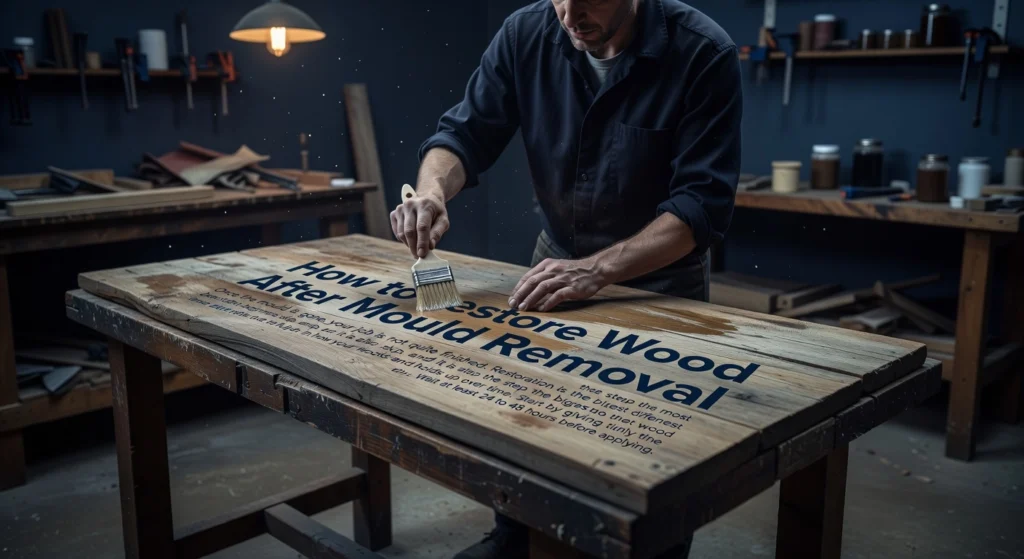
Once the mould is gone, your job is not quite finished. Restoration is the step that most beginners skip, and it is also the step that makes the biggest difference in how your wood looks and holds up over time.
Start by giving the wood time to fully dry. Wait at least 24 to 48 hours before applying any oil, conditioner, or finish. If the wood still feels cool or slightly damp to the touch, give it more time. Rushing this step is one of the most common mistakes people make, because applying oil over wood that still holds moisture can trap that moisture inside and create the exact conditions mould needs to come back. Use a fan or open a window to speed things along, and err on the side of patience here.

For unfinished kitchen wood like cutting boards, butcher block countertops, or wooden utensils, reach for a food-safe mineral oil. Apply it generously with a clean cloth, working it into the grain. This restores the moisture balance the wood lost during cleaning, and it creates a protective barrier that limits how much water the surface can absorb going forward. Reapply once a month or whenever the wood starts looking dry and thirsty.
For furniture or structural wood, a wood conditioner or beeswax-based product is usually the better choice. Match the product to your existing finish type, and test a small hidden area first. Beeswax polishes work beautifully on faded or tired-looking pieces and bring back warmth and shine without a heavy coating.
On bare or unfinished wood, a light sand with fine-grit sandpaper (around 220 grit) between restoration coats helps the oil absorb more evenly and leaves a noticeably smoother result.
Here is the part worth remembering: restoration is not just about making wood look nice again. When you fill the pores with oil or conditioner, you are actively lowering the wood’s porosity. Less porosity means less moisture absorption, and less moisture means a much harder environment for mould spores to settle and grow. Pair that with keeping your indoor humidity below 50%, and you are giving your wood real, lasting protection.
Fix the Moisture Source or Mould Will Return
Here is the hard truth: if you clean mould off your wood but ignore what caused it in the first place, you will be scrubbing that same spot again within a few weeks. Mould cannot survive without moisture, so removing the visible growth without fixing the underlying source is basically just delaying the problem. Think of it like mopping up a puddle while the tap is still running.
Find and Fix the Source First
In kitchens especially, moisture sneaks in from multiple directions. Leaking pipes under the sink are one of the most common culprits, often going unnoticed for weeks because the damage happens inside a cabinet. Poor seals around dishwashers and refrigerators can allow small but consistent amounts of water to reach nearby wood. Inadequate range hood ventilation means steam from boiling and cooking just hangs in the air and eventually settles onto cabinet surfaces. Check each of these areas carefully before you consider the job done.
Keep Humidity Under Control
Mould thrives when indoor humidity climbs above 60%. The EPA recommends keeping relative humidity between 30% and 50% to discourage growth on wood and other surfaces. A dehumidifier in problem areas like kitchens and basements makes a noticeable difference, and running your range hood or exhaust fan during and after cooking helps clear moisture-heavy air quickly. An inexpensive hygrometer lets you monitor levels so you are not guessing.
Inspect and Dry Proactively
Even when everything looks fine, do a quick check of wood near windows, under sinks, and behind appliances every couple of months. Condensation and slow leaks can build up moisture long before any visible mould appears. Most importantly, dry any spills or pooling water on wood surfaces right away. Mould can begin colonising within 24 to 48 hours of moisture exposure, so acting fast is genuinely the most effective prevention strategy you have.
Practical Tips to Prevent Mould on Wood Long Term
Prevention is honestly the best investment you can make when it comes to wood care. Once you have tackled an existing mould problem, these habits will help make sure it does not come back.
Seal unfinished wood in high-humidity areas. Any bare, unsealed wood in your kitchen or bathroom is basically an open invitation for mould. For food-contact surfaces like cutting boards and butcher blocks, reach for a food-grade mineral oil or a beeswax-based board cream. These penetrate the wood fibers and create a moisture barrier that keeps dampness from soaking in. For non-food-contact wood like cabinetry or furniture in steamy areas, a polyurethane finish gives you a harder, longer-lasting protective layer.
Store wooden items upright, not flat. This one small change makes a surprisingly big difference. When you store cutting boards and wooden utensils flat in an enclosed drawer or cabinet, moisture gets trapped on all sides with nowhere to go. Standing them upright in a rack or on the counter allows air to circulate around the whole surface, so any lingering dampness can evaporate naturally.
Dry everything thoroughly after every single use. This is especially important after cutting raw meat or working with juicy produce. Wipe down the surface with a clean towel immediately after washing, then let it air-dry completely before putting it away. Never leave a wet wooden board sitting on the counter or stacked against something.
Run your ventilation fan during and after cooking. Steam from pots and pans settles on nearby wood surfaces faster than you might think. Keep your extractor fan running for at least ten minutes after you finish cooking to pull that moisture out of the air before it has a chance to land on your cabinets or countertops.
Reapply protective oil every one to three months. A single oiling does not last forever. For heavily used items, reapply monthly. For lighter-use pieces, every two to three months is fine. A simple test: if water no longer beads on the surface, it is time to re-oil. Consistency here is what keeps wood in good shape for years, or even decades.
Quick Recap and Your Next Steps
You have covered a lot of ground in this guide, so here is a quick summary of the most important takeaways to keep in your back pocket.
Always start with your safety gear and a HEPA vacuum before any wet cleaning begins. This one step alone prevents loose spores from spreading to other surfaces. Then match your cleaner to your wood type: mild dish soap works best for finished cabinets and food-contact surfaces, while white vinegar or hydrogen peroxide is the better choice for unfinished or porous wood.
Once the mould is gone, dry the wood completely, restore it with an appropriate oil or sealant, and track down the moisture source that caused the problem. Skipping that last part means you will likely be back at square one within weeks.
If your wood feels soft, smells musty after a thorough clean, or shows deep staining that will not budge, replacement is the right call rather than repeated scrubbing.
Above all, prevention is your best long-term strategy. Regular oiling, good ventilation, and wiping up spills quickly costs almost nothing compared to a full remediation job.
Conclusion

Mould on wood is a serious issue, but as you have seen, it is absolutely something you can handle yourself. To recap the key takeaways: always identify the mould type before you start, use the right cleaning solution for your specific wood surface, protect yourself with proper safety gear, and address moisture at the source to stop mould from returning.
The sooner you act, the better. Small patches are far easier to treat than widespread growth, so do not wait until the problem gets worse.
Now it is time to put this guide into action. Grab your supplies, follow the steps, and restore your wood to its clean, fresh condition. You have everything you need to tackle this problem with confidence. Your home deserves to look and feel its best, and now you have the knowledge to make that happen.
faq_html = “””
Frequently Asked Questions
Can I use bleach to remove mould from wood?
No, bleach is not recommended for wood surfaces. While it may kill surface mould, it does not penetrate wood grain effectively, leaving the root structure intact. Additionally, bleach introduces excess moisture into the wood, which can actually encourage further mould growth. For wood, use white vinegar, hydrogen peroxide, or mild dish soap instead.
How long does it take for mould to grow on wood?
Mould can begin colonising wood within 24 to 48 hours of moisture exposure. This is why acting fast after spills or water damage is crucial. Once established, mould sends hyphae deep into wood fibres, making removal much more difficult.
Is vinegar or hydrogen peroxide better for killing mould on wood?
White vinegar is the best all-around choice for most wood surfaces, killing approximately 82% of common mould species. Hydrogen peroxide works better for stubborn mould on unfinished or porous wood, but can slightly lighten the wood surface. For finished wood or food-contact surfaces, start with mild dish soap and water.
How do I prevent mould from coming back after cleaning?
Prevention requires three key steps: fix the moisture source (leaks, poor ventilation, high humidity), keep indoor humidity below 50%, and seal unfinished wood with food-safe mineral oil or polyurethane. Also dry wood thoroughly after use and reapply protective oil every 1-3 months.
When should I replace mouldy wood instead of cleaning it?
Replace wood when it feels soft or spongy (indicating structural rot), when musty odours persist after thorough cleaning, or when mould covers an area larger than 10 square feet. Also replace if mould returns after multiple cleaning attempts, as this signals deep penetration.
Is it safe to use mouldy cutting boards after cleaning?
Yes, if properly cleaned with vinegar or dish soap, thoroughly dried, and resealed with food-safe mineral oil. However, if the board has deep stains, soft spots, or persistent odours after cleaning, replacement is safer. Always prioritise food safety over saving a damaged board.
“””
# Save to file
with open(“/mnt/agents/output/faq-schema-markup.html”, “w”, encoding=”utf-8″) as f:
f.write(faq_html)
print(“✅ FAQ Schema Markup generated successfully!”)
print(f”📄 File saved: /mnt/agents/output/faq-schema-markup.html”)
print(f”📊 Size: {len(faq_html)} characters”)
9 thoughts on “How to Remove Mould from Wood (Step-by-Step Guide)”