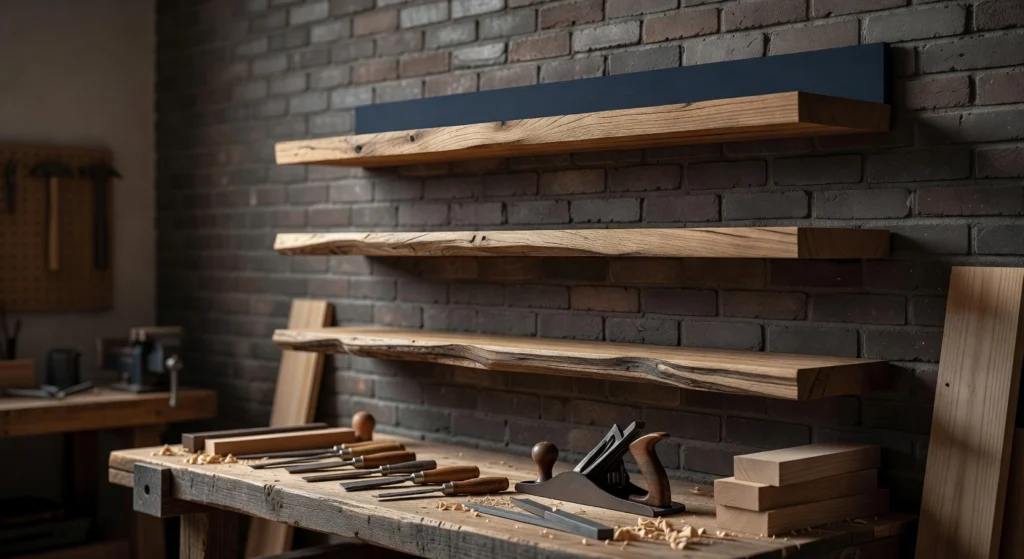

Picture this: you walk into a room and immediately notice those sleek, stylish shelves mounted on the wall, holding books, plants, and decorative pieces without a single visible bracket or support. Pretty cool, right? That’s the magic of floating shelves, and the best part is that you can build and install them yourself, even if you’ve never picked up a power tool before.
Whether you want to add storage to a cramped bathroom, display your favorite items in the living room, or finally organize that cluttered home office, wood floating shelves are one of the most rewarding DIY projects a beginner can tackle. They’re affordable, customizable, and can completely transform the look and feel of any space.
In this guide, we’re breaking everything down into simple, easy-to-follow steps so you never feel lost or overwhelmed. From choosing the right type of wood to finding studs and getting that perfectly level mount, we’ve got you covered. By the end, you’ll have all the confidence and knowledge you need to create beautiful floating shelves you’ll be proud to show off.
What Makes Floating Shelves Work
If you’ve ever wondered how floating shelves seem to magically hover on a wall with zero visible support, the secret lies in concealed mounting hardware. Most floating shelves use either hidden metal brackets or a French cleat system, which is basically two interlocking pieces of wood cut at a 45-degree angle. One piece mounts to the wall (secured into studs for real strength), and the matching piece attaches to the back of the shelf. When they lock together, the shelf sits flush against the wall with all the hardware completely out of sight. The result is that clean, airy look that makes a room feel intentional and uncluttered.
This is a big departure from traditional bracketed shelves, where L-brackets or visible supports are part of the design. Traditional shelves are more forgiving to install, but floating shelves win on aesthetics and customization. You choose the wood species, the finish, the length, and the depth to match your exact space.
That space-saving quality is a huge reason floating shelves have exploded in popularity, especially in apartments and urban homes where every square foot counts. Instead of bulky freestanding furniture, you tap into vertical wall space for books, plants, kitchen items, and decor without sacrificing floor area. The global floating shelves market reflects this demand, sitting at USD 1.38 billion in 2025 and projected to nearly double by 2032, driven largely by urbanization and the ongoing DIY home improvement boom.
Throughout this guide, we’ll walk you through everything you need to know as a beginner, covering wood selection, finishing, installation, maintenance, and repair so your shelves look great and stay sturdy for years.
Best Wood Species for Floating Shelves
Choosing the right wood species makes a huge difference in how your floating shelves look, perform, and last over time. Not all wood is created equal, and for a beginner, the options can feel overwhelming. Here is a practical breakdown of the most popular choices to help you pick with confidence.
Hardwoods vs. Softwoods: The Core Difference
White oak is the standout choice right now, and for good reason. It is dense, hard, and naturally resistant to moisture, which makes it a smart pick for kitchens and bathrooms. Its prominent straight grain with warm honey and beige tones catches the eye without being overwhelming, and it takes stains beautifully. Red oak is similar but slightly less moisture-resistant; it still performs well and costs a bit less than white oak. Walnut sits at the premium end of the spectrum, offering rich chocolate-to-espresso tones and a silky, refined grain that develops a gorgeous patina over time. It is the go-to species for anyone wanting a bold, luxurious statement shelf. According to expert shelf guides for 2026, both white oak and walnut are dominating interior design right now because they align perfectly with the trend toward warm, organic, natural materials over cold grays and synthetics.
Pine is the budget-friendly option most beginners reach for first. It is cheap, widely available, and easy to cut and sand. However, pine is a softwood, which means it dents, scratches, and compresses under moderate weight. It is perfectly fine for light decorative items like small plants or picture frames, but it will sag and show wear quickly if you load it with books or heavy dishware. Poplar sits in the middle ground. It is technically a hardwood but on the softer end, making it a solid paint-grade option that is stronger than pine without the price tag of oak or walnut.
Load-Bearing Reality by Species
This is where species selection really matters. Hardwoods like oak and walnut are denser and stiffer, which means they resist deflection over longer spans. A properly mounted white oak shelf at 1.5 to 2 inches thick can handle significantly more weight per linear foot than an equivalent pine shelf. Woodworking experts consistently recommend hardwoods for anything holding books, dishes, or frequently rearranged items. Pine and poplar shelves work better with shorter spans and lighter decorative loads, or when you add extra brackets for support.
Reclaimed Wood: Character With Considerations
Reclaimed timber is having a genuine moment in 2026. Old barn wood, factory beams, and pier planks bring instant character with their natural knots, nail holes, and weathered patina. Beyond aesthetics, reclaimed wood is already seasoned and dimensionally stable, which actually works in your favor structurally. The catch is in the finishing. Aged wood is often more porous and absorbs oils and sealants differently than fresh-cut lumber, so you will want to clean it thoroughly, stabilize any loose grain, and choose a breathable finish or penetrating oil that protects the surface while letting the patina shine through. Reclaimed floating shelves pair beautifully with rustic, industrial, and even modern minimalist styles, making them one of the most versatile and eco-conscious choices available today.
Solid Wood vs. Engineered Wood for Shelves
Now that you’ve got a sense of the best wood species to reach for, it’s worth understanding the difference between solid wood and engineered wood products, because this choice affects everything from how your shelf handles humidity to how long it lasts before needing replacement.
Engineered Wood: MDF, Plywood, and LVL
Engineered wood comes in several forms, and each has its own sweet spot for shelving projects.
MDF (Medium-Density Fiberboard) is made from compressed wood fibers, wax, and resin. It has a silky-smooth surface with no grain or knots, which makes it a painter’s dream. It’s also the most affordable option, making it popular for decorative shelves in living rooms where you’re displaying lightweight items like photo frames or small plants. The catch? It’s not great for heavy loads or damp environments.
Plywood is built from thin wood veneers glued together in alternating grain directions, which gives it surprisingly good strength and stability. It handles moderate humidity better than MDF and resists sagging under medium loads. It’s a solid middle-ground choice for kitchen utility shelves or workspaces where you want strength without the price tag of solid hardwood.
LVL (Laminated Veneer Lumber) is the heavy-hitter of engineered options. It’s incredibly strong and dimensionally stable, making it ideal for long shelf spans or situations where you need to support serious weight. It’s less common for decorative shelves since the appearance isn’t as naturally appealing, but it’s worth knowing about for functional or structural builds.
Why Solid Hardwood Wins in Kitchens and Bathrooms
High-humidity rooms are where the MDF vs. solid wood debate gets decided quickly. MDF absorbs moisture like a sponge; it swells, warps, and loses its shape, sometimes within just a few months in a bathroom or above a kitchen sink. Solid hardwood, especially species like white oak or maple with a proper sealant applied, resists that moisture absorption and holds its form far longer. If you’re building shelves anywhere near steam, splashes, or condensation, solid wood is the clear winner. You can read more about how different shelf materials compare before making your final call.
MDF’s Paint Advantage vs. Its Long-Term Weaknesses
MDF does deserve credit for one thing: it takes paint beautifully. Because the surface is so smooth and uniform, you get a flawless finish without any wood grain telegraphing through. That’s why it’s popular for bold-colored accent shelves in modern interiors.
But over time, MDF shows its limits. The edges chip easily without protective banding. It can’t be sanded down and refinished the way solid wood can; once the surface is damaged, your options are limited. Compare that to a solid oak shelf that can be lightly sanded and re-oiled years down the road, looking almost new again. For a deeper look at MDF vs. solid wood floating shelves, it’s worth reviewing the tradeoffs side by side.
Weight, Thickness, and Bracket Spacing
Material choice directly affects how you need to mount your shelf. Solid hardwood and plywood resist sagging better than MDF, which means you can space brackets slightly wider apart. A general rule of thumb is to keep bracket spacing between 16 and 24 inches, with brackets no more than 3 inches from each end. Thicker shelves, anything from 1.25 to 1.75 inches, dramatically improve load capacity regardless of material.
Quick Decision Guide
- Tight budget, dry room, decorative use: MDF works fine for light displays
- Kitchen, bathroom, or anywhere with humidity: Go with sealed solid hardwood or moisture-resistant plywood
- Heavy loads or long spans: Consider solid hardwood or LVL for maximum rigidity
- Long-term investment: Solid wood lasts decades and can be refinished; engineered options, especially MDF, may need earlier replacement
Picking the right material upfront saves you from rebuilding sooner than you planned.
How to Prep Wood Floating Shelves Before Staining
Here’s something most beginners skip entirely, and it shows. Proper prep work determines roughly 80 percent of your final finish quality, which means the staining itself is almost secondary. Get the prep right, and even a budget pine shelf can look stunning. Rush through it, and no amount of expensive stain will save you.
Sand in the Right Order (and Don’t Skip Grits)
Start with 80 grit to knock down any mill marks, rough spots, or surface imperfections. Move to 120 grit next, then finish with 180 grit. Always sand in the direction of the wood grain, never across it.
Here’s why skipping grits is such a problem. Each grit level removes the scratches left by the previous, coarser paper. If you jump straight from 80 to 180, those deeper 80-grit scratches are still sitting in the wood. The finer paper simply cannot erase them. Once stain soaks in, it pools in those scratches and makes them dramatically more visible, showing up as dark lines or swirls across your shelf. According to woodworking finishing experts at WWGOA, sanding sequence directly impacts how stain absorbs and how color appears in the final finish. Take your time here.
Use Pre-Stain Conditioner on Pine and Soft Woods
If you’re working with pine (which is one of the most common and affordable choices for floating shelves), pre-stain wood conditioner is not optional. Pine has wildly uneven pores, which means raw, unsanded or unconditioned pine absorbs stain in a blotchy, unpredictable way. Knots get extra dark, surrounding areas stay lighter, and the whole shelf looks patchy.
Pre-stain conditioner temporarily evens out the absorption rate across the surface. Brush it on, let it penetrate for about 5 to 15 minutes, wipe off the excess, and apply your stain within the recommended window. It may slightly lighten the final color, so always test on a scrap piece first.
Seal the End Grain on Shelf Edges
The cut edges of your shelves, called end grain, behave like an open sponge. Those exposed wood fibers run perpendicular to the surface and soak up stain much faster than the face of the board. Left untreated, end grain turns noticeably darker and creates uneven patches that look unprofessional. Sand the edges to a slightly finer grit than the face, and apply an extra coat of pre-stain conditioner specifically to those ends before staining.
Raise the Grain Before Your Final Sand
This step surprises a lot of beginners. After your final sanding pass, lightly wipe the surface with a damp cloth and let it dry for about 30 minutes. The moisture causes tiny wood fibers, called “whiskers,” to swell and stand up. Then do one last very light pass with 220 grit to knock them back down. If you skip this step, your first coat of stain or finish does the raising for you, leaving the surface feeling rough and fuzzy after it dries. A quick review of hardwood finishing basics confirms that controlling grain raise before finishing is a standard step that dramatically improves the smoothness of the final result.
Prep work genuinely is the most skipped step in floating shelf projects, but treating it as the main event rather than a chore will make everything that follows feel almost effortless.
Stain and Finish Options by Room and Use Case
Once your wood is properly prepped, the next big decision is choosing the right stain for the job. Not all stains behave the same way, and picking the wrong one for your wood species or room can leave you with blotchy, uneven results or a finish that just looks off.
Oil-Based vs. Water-Based: Which One Is Right for Your Shelves?
Oil-based stains penetrate deeper into the wood fiber, which makes them excellent for open-grained species like oak. They pull out rich grain contrast and give the wood a warm, natural depth that’s hard to replicate. The tradeoff is longer drying time, stronger odor, and a tendency to amber slightly over the years. Water-based stains sit closer to the surface, dry faster, and hold their color without yellowing, making them a solid choice if you want a cooler, more consistent tone. On pine, both types can be unpredictable since pine’s uneven density causes it to soak up stain in blotchy patches. That’s why using a pre-stain wood conditioner before applying either type is essential on pine. You can dig deeper into how each formula compares on different wood types with this helpful wood stain comparison chart from The DIY Playbook.
Matching Stain Colors to the Right Room
Room choice matters more than most beginners expect when picking a stain color. For living rooms, warm honey tones work beautifully because they feel inviting and pair naturally with neutral walls, cream sofas, and warm lighting. Modern kitchens lean better toward cooler gray tones, which create a sleek contrast against white or light cabinetry without fighting for attention. Bedrooms benefit most from deep walnut or espresso shades, which add richness and a calm, sophisticated atmosphere. Always test your chosen stain under the actual room’s lighting before committing. Undertones shift dramatically depending on natural versus artificial light, and a color that looks perfect in the hardware store can surprise you on the wall.
Matching Your Shelves to Existing Furniture
The easiest way to match a new shelf to existing cabinetry is to create sample boards using scraps of the exact same wood species. Apply different stain shades and layer them until you get close, letting each coat dry fully before evaluating. Hold your sample board next to the existing furniture under the room’s lighting and adjust from there. Layering two stains is often the secret to a perfect match that a single product can’t achieve alone.
Gel Stains for Tricky Woods Like Pine and Birch
If you’re working with pine or birch, gel stain is genuinely a game-changer. Its thick consistency limits how deeply it penetrates, which means it sits more evenly on the surface rather than soaking into soft spots and creating blotches. Gel stain gives beginners a much more forgiving application experience, and it can be layered for a richer, darker result. Pair it with a pre-stain conditioner for the most even finish possible. This combination removes most of the frustration that comes with staining blotch-prone softwoods.
The Real Cost Savings of DIY Staining
Here’s a number worth keeping in mind: DIY staining your floating shelves typically runs between $20 and $50 in total materials, covering your stain, conditioner, topcoat, sandpaper, and rags. Compare that to buying pre-finished solid wood units, which can cost several times more and still may not match your existing decor perfectly. Staining your own shelves gives you complete control over color, sheen level, and finish type while keeping the project budget-friendly. For a beginner willing to invest a little time, the results can look every bit as polished as anything you’d buy off the shelf.
Polyurethane, Oil, or Wax: Choosing the Right Topcoat
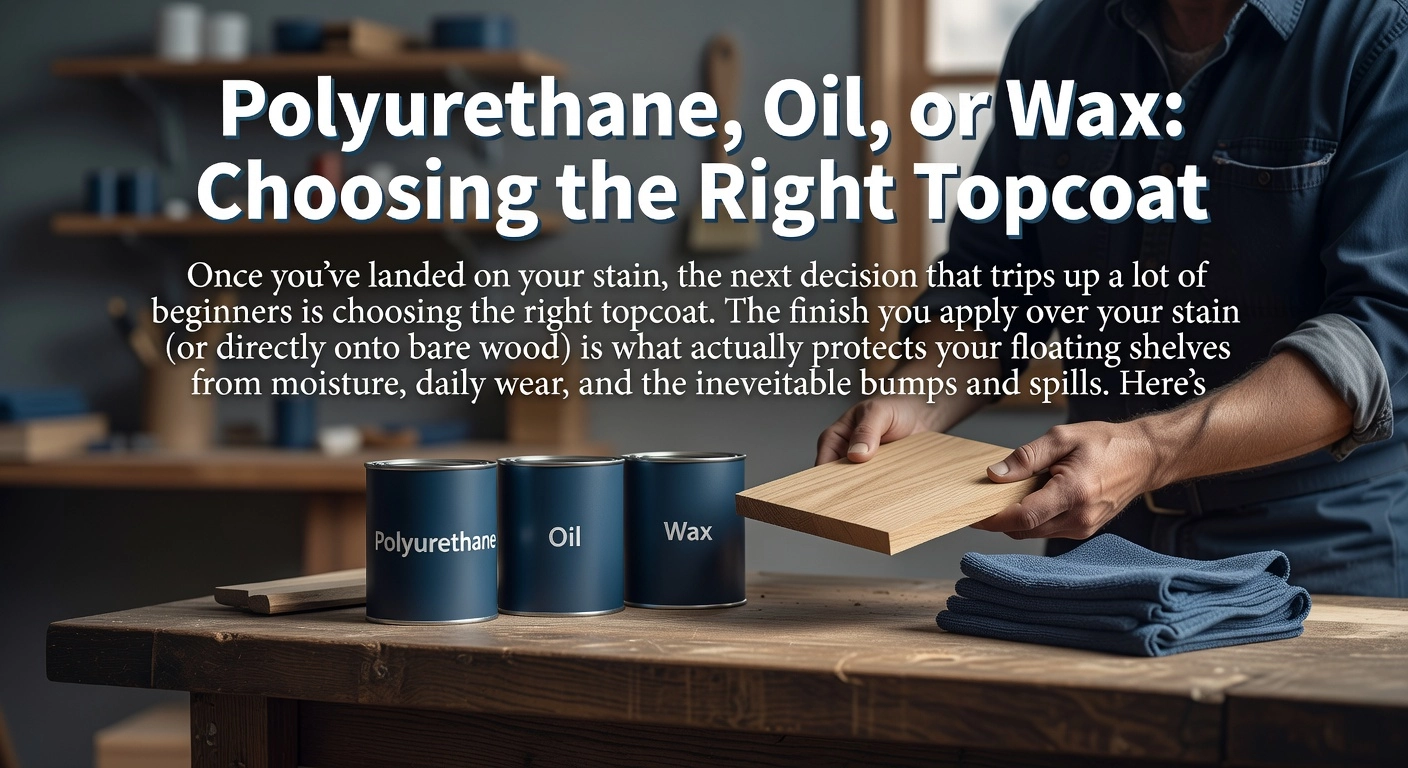
Once you’ve landed on your stain, the next decision that trips up a lot of beginners is choosing the right topcoat. The finish you apply over your stain (or directly onto bare wood) is what actually protects your floating shelves from moisture, daily wear, and the inevitable bumps and spills. Here’s how the four main options stack up.
Oil-based polyurethane is the heavy-duty classic. It builds a thick, hard film that resists scratches, chemicals, and moisture extremely well, and it adds a warm amber tone that looks especially rich on oak or walnut. The catch is the process: it dries slowly (expect 8 to 12 hours between coats), smells strong, and requires mineral spirits for cleanup. It’s a solid pick for high-traffic shelves, but it’s not the most beginner-friendly experience.
Water-based polyurethane is honestly the better starting point for most DIYers, and it’s the one we’d recommend for kitchen and bathroom floating shelves specifically. It dries clear without the amber tint, so your wood’s natural color stays true. It has low odor, cleans up with soap and water, and dries fast enough that you can apply multiple coats in a single afternoon. It forms a strong moisture-resistant barrier that handles steam, splashes, and cleaning sprays well when you apply four or more thin coats with light sanding between each one. For a beginner working in a moisture-prone space, it checks every box. You can read more about choosing a water-based polyurethane wood finish to understand what to look for on store shelves.
Hardwax oil takes a completely different approach. Rather than sitting on top of the wood as a film, it soaks directly into the wood fibers and hardens there. The result is a finish that looks and feels like bare wood, with the grain texture fully intact and no plastic-like surface layer. This is a popular choice for living room and bedroom shelves where a natural, organic look is the priority. The standout advantage for beginners is how easy spot repairs are: if a section gets scratched or worn, you simply lightly prep that area and apply a little more oil locally, without sanding down the entire shelf. You can learn more about how hardwax oil compares to polyurethane for a full breakdown of the trade-offs.
Paste wax is the most limited of the four in terms of protection. It applies easily, buffs to a soft silky luster, and smells pleasant, but it offers minimal resistance to moisture, heat, or alcohol. Wax is best reserved for purely decorative shelves in low-traffic spots, think a display shelf in a bedroom holding a few books and a plant, not a kitchen shelf holding oils and canned goods. It needs reapplication every few months and should never be used alone in any wet area.
Picking Your Sheen Level
Whichever topcoat you choose, you’ll also need to decide on sheen. Matte finishes scatter light softly, hide minor scratches and dust between cleanings, and let the natural texture of the wood take center stage. They work beautifully with hardwax oil and suit modern or minimalist rooms well. Satin is the most versatile choice for floating shelves; it adds a gentle warmth and subtle depth without looking shiny or synthetic, and it reads well under both natural and artificial lighting. Gloss amplifies grain contrast dramatically and creates a deep, wet-looking surface, but it shows fingerprints, scratches, and dust far more readily. On natural hardwoods like white oak or walnut, most designers and experienced woodworkers default to satin or matte because the goal is to highlight the wood, not compete with it.
Installation Basics: Brackets, Cleats, and Load Capacity
Once your shelves are prepped, stained, and finished, it’s time to actually get them on the wall, and this is where a lot of beginners hit a wall (pun intended). Getting the installation right matters just as much as everything that came before it.
The Two Main Installation Methods
French cleats are the go-to choice for wider, heavier shelves. The system uses two interlocking beveled pieces, one mounted to the wall with the angled edge facing up, and one attached to the back of the shelf with the angle facing down. The shelf simply hooks onto the wall piece and locks in place. Because the cleat runs the full width of the shelf, weight gets distributed evenly across a long horizontal span, which makes it excellent for shelves holding books, kitchen items, or anything on the heavier side. You can learn more about hanging with a French cleat system here if you want to see the technique in action.
Metal rod or pin brackets work differently. These involve steel or aluminum rods that mount into the wall and slide directly into holes drilled in the back of the shelf. The result is a cleaner, thinner profile with no visible hardware at all. This method works beautifully for shallower, more minimalist shelves where aesthetics take priority. The trade-off is that alignment during installation needs to be precise, since the rods must line up perfectly with your drilled holes.
Studs, Anchors, and Toggle Bolts
Always try to hit studs first. Studs are typically spaced 16 inches apart in most homes, and a shelf anchored into two studs can safely hold 90 to 100 pounds or more. Use an electronic stud finder and mark each stud edge carefully before drilling anything.
When studs do not fall where you need them, toggle bolts are your best backup option. These anchors expand behind the drywall to grip from the inside. A standard 1/8-inch toggle bolt handles roughly 30 to 55 pounds in typical drywall, while larger 1/4-inch versions can reach 70 to 100 pounds. Even so, toggle bolts work best as supplemental support alongside at least one stud connection, not as a standalone solution for heavier floating shelf loads.
Bracket Spacing and Load Guidelines
For most shelves, keep bracket spacing to a maximum of 24 to 32 inches apart, with supports placed no more than 3 inches from each end. Shelves longer than 36 inches generally need at least three brackets. If you are loading up with books, tighten that spacing and go thicker on the wood. Plants and light decor are more forgiving, but still avoid putting all the weight at the far end of the shelf since that creates leverage that stresses the wall connection.
Wood Thickness and Span
Hardwoods like white oak, walnut, and maple are stiffer and resist sagging much better than softwoods like pine. A 3/4-inch pine shelf may start to visibly bow over time if it spans more than 24 to 30 inches without support. A 1.75-inch thick hardwood shelf can comfortably handle spans up to 36 inches or slightly more. As a general rule, the deeper and longer your shelf, the thicker the wood needs to be to prevent long-term sag.
Basic Tools You Actually Need
The good news is that floating shelf installation does not require a garage full of equipment. Here is what you need:
- Stud finder to locate wall framing
- Cordless drill with pilot and mounting bits
- Level (a 4-foot level gives the most accurate results)
- Measuring tape for consistent placement
- A pencil and screwdriver bits round out the kit
Most beginners can pull this off for under $100 in tools total, and you will use every single one of these on future projects too.
How to Maintain Wood Floating Shelves Long-Term
You’ve done all the hard work building, finishing, and installing your shelves. Now let’s make sure they actually last. The good news is that wood floating shelves are surprisingly low-maintenance as long as you follow a few consistent habits.
Start with a simple cleaning routine. Dust your shelves weekly using a dry microfiber cloth. Microfiber is ideal because it traps particles instead of just pushing them around, and it won’t scratch your finish. For deeper cleaning, slightly dampen the cloth with warm water or a mild pH-neutral cleaner and wipe along the grain. Always follow immediately with a dry cloth to remove any leftover moisture. Never let water sit on wood, especially near edges or bracket points where it can seep in and cause swelling.
Stay away from all-purpose sprays. This is a mistake a lot of beginners make because those sprays seem convenient. Products containing ammonia, bleach, or alcohol can strip protective topcoats, dry out wood fibers, and leave surfaces looking dull or discolored over time. What starts as a quick clean can slowly degrade the finish you worked hard to apply. Stick to products labeled specifically as wood-safe, and when in doubt, warm water and a damp microfiber cloth will handle most everyday messes just fine.
Don’t panic over small seasonal changes. If you notice a tiny gap or very slight warping near an exterior wall, especially in a humid climate, that is wood behaving exactly as it should. Wood is a natural material that expands and contracts with shifts in temperature and moisture. These minor movements are normal and typically harmless. What causes real damage is extreme or sudden swings in humidity, not the gradual seasonal adjustments your shelves will naturally make over the year.
Re-oil or re-wax annually if your shelves have a hardwax-oil finish. These finishes are meant to be refreshed, not replaced. Once a year, clean the surface thoroughly, apply a thin coat of compatible oil or refresher product, let it absorb, then buff off any excess. This restores water resistance and scratch protection while keeping the wood nourished.
Above everything else, control your humidity. Keeping indoor humidity between 40 and 60 percent is the single most effective thing you can do to prevent cracking, splitting, and joint separation. A basic hygrometer costs very little and takes the guesswork out of it. Use a humidifier in dry winters and a dehumidifier or air conditioning in humid summers, and keep shelves away from heat vents, fireplaces, and direct sun. Get this right, and your shelves can genuinely last decades.
How to Fix Scratches, Water Rings, and Worn Finishes
Even the best-finished floating shelves pick up scratches, water rings, and dull spots over time. The good news is that most of these issues are totally fixable without replacing the shelf or calling in a professional.
Quick Scratch Repairs with Touch-Up Markers and Wax Sticks
For light surface scratches that haven’t cut through to bare wood, a wood touch-up marker or blended wax filler stick is your fastest fix. These come in multi-piece kits with several wood tones, so you can layer shades to match your shelf’s stain color closely. Clean the scratched area with a damp cloth first and let it dry completely. Then apply the marker directly into the scratch, working with the grain like you’re drawing a thin line. Blot any excess with a paper towel rather than rubbing, and buff gently to blend. For slightly deeper but still shallow scratches, a wax filler stick works better. Press it firmly into the damage, scrape off the excess flush with a plastic card, and buff smooth. Either method takes about a minute per scratch and leaves the rest of your finish untouched.
Removing White Water Rings from Polyurethane Finishes
Those cloudy white rings left by cups or wet items are moisture trapped inside the polyurethane topcoat, not in the wood itself. That means they’re usually fixable without sanding. The heat method works well here. Lay a thin, dry cloth over the ring, then press a warm iron (no steam, low setting) over it for a few seconds at a time. Check frequently and keep the iron moving. The gentle heat pulls the trapped moisture out of the finish. If the ring is stubborn, try rubbing the spot lightly with a cloth dampened with mineral spirits, then wipe clean. Always test in a hidden spot first, and make sure you’re working in a ventilated area with the mineral spirits method.
Spot-Refinishing vs. Full Sand-Down
Not every repair needs a full refinishing job. A good rule of thumb is to run your fingernail across the damage. If it barely catches and no raw wood is visible, spot-refinishing is enough. You can lightly sand just that area, blend in some stain if needed, and apply a fresh topcoat over the spot. However, if your nail catches hard, raw wood is exposed, or the surface has widespread wear and discoloration, a full sand-down is the smarter call. Trying to spot-fix heavily damaged shelves often results in noticeable patches that look worse than the original problem.
A Simple Shelf Refinishing Process
If a full refresh is needed, the process is straightforward. Start with 120-grit sandpaper to smooth out imperfections and scuff the old finish so the new coat sticks, then follow with 220-grit for a smoother surface. Always sand with the grain. Wipe away all the dust with a tack cloth and let the wood dry fully. If the color looks faded or you want to freshen it up, apply a gel stain with a foam brush, wipe the excess after a few minutes, and let it cure for at least 24 hours. Finish with two to three thin coats of polyurethane, lightly sanding with 320-grit between coats for the best adhesion and a smooth final surface.
Why Restoring Beats Replacing
Refinishing your existing floating shelves instead of swapping them out saves real money on materials and hardware. It also keeps usable wood out of the landfill, which matters more than people often realize. The growing “repair instead of replace” mindset in home improvement communities reflects exactly this kind of thinking, and floating shelves are a perfect candidate since they’re small, removable, and easy to work on. A little time and a few affordable products can make a worn shelf look brand new, and that’s a win for both your wallet and the environment.
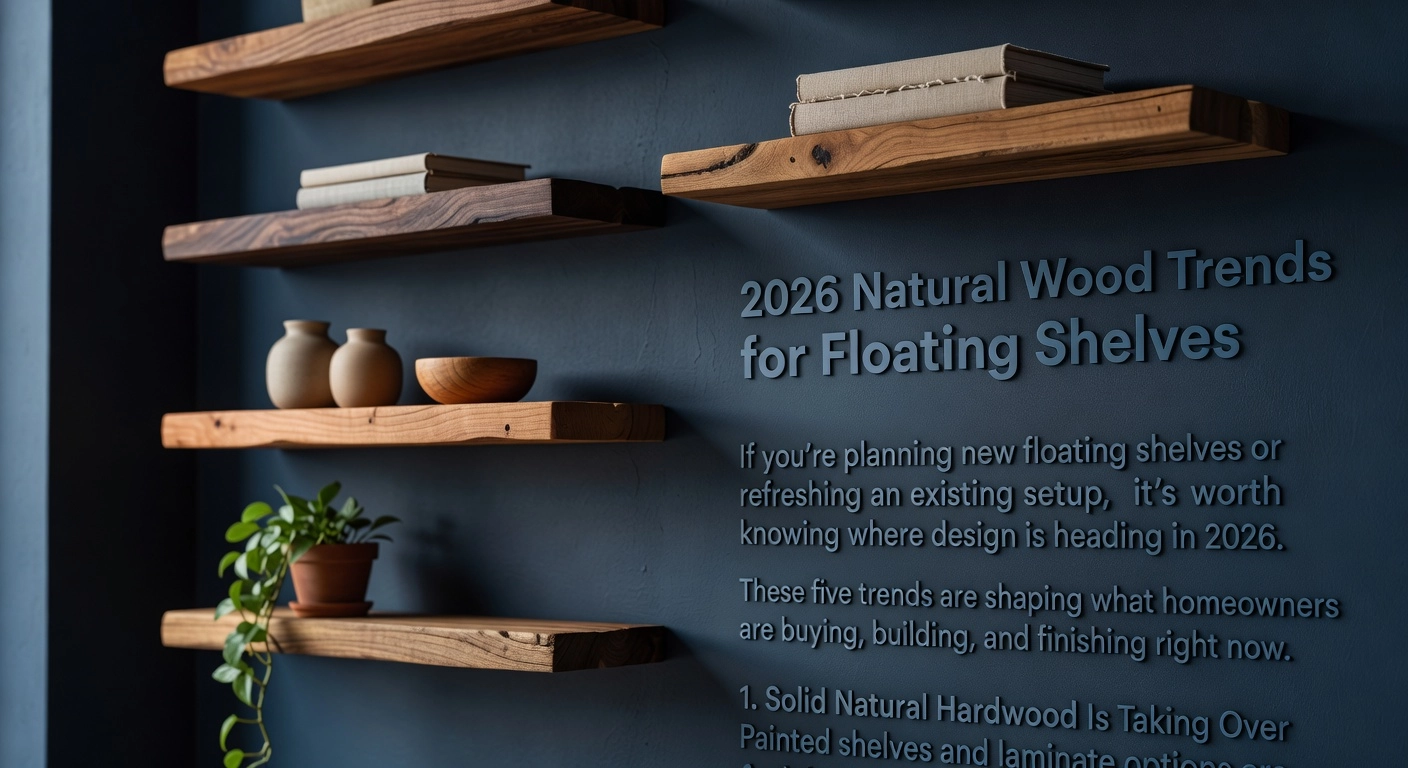
2026 Natural Wood Trends for Floating Shelves
If you’re planning new floating shelves or refreshing an existing setup, it’s worth knowing where design is heading in 2026. These five trends are shaping what homeowners are buying, building, and finishing right now.
1. Solid Natural Hardwood Is Taking Over
Painted shelves and laminate options are losing ground fast. Buyers are moving toward solid hardwood because it simply looks better, holds up longer, and ages gracefully instead of chipping or peeling. White oak has emerged as the clear frontrunner for 2026, thanks to its closed grain (which naturally resists moisture), warm neutral tones that range from beige to honey, and its ability to complement almost any decor style. Solid hardwood shelves can last 10 to 30 years with proper care, while cheaper alternatives often show wear within a few years. Walnut remains a popular choice for those who want a darker, bolder look.
2. Live-Edge Shelves as Statement Pieces
Live-edge floating shelves retain the natural outer curve of the tree slab, creating a one-of-a-kind sculptural element that no two people will have exactly alike. They work especially well as a single focal-point shelf above a sofa or along a feature wall, adding organic character to modern and transitional interiors without feeling overdone.
3. Integrated LED Lighting Under Shelf Edges
Recessed LED strip lights tucked behind or beneath shelf edges are showing up everywhere in 2026. This approach adds a warm ambient glow, highlights displayed objects, and gives even simple shelves a high-end custom feel. Warm white tones work best for a cozy, layered lighting effect.
4. Modular Arrangements Over Single Shelves
Instead of one shelf on a blank wall, designers are embracing mixed-depth modular systems with staggered lengths and varied heights. These gallery-wall-style arrangements create visual rhythm, adapt to changing needs, and feel far more intentional than a single plank.
5. Reclaimed Wood and Eco-Friendly Finishes
Sustainability is now a real purchasing factor. Reclaimed wood sourced from old barns or factories brings unique patina and character while reducing waste. Pairing reclaimed wood with water-based, low-VOC finishes keeps indoor air quality healthy and aligns with a broader eco-conscious approach to home design.
Key Takeaways for Your Floating Shelf Project
Here is a quick decision tree to carry with you as you move forward. Go with hardwood like oak or walnut in kitchens, bathrooms, and anywhere shelves will hold real weight or face humidity. Pine and budget-friendly softwoods work beautifully in living rooms and bedrooms where shelves are mostly decorative and traffic is light.
Remember that your prep and finishing work matter just as much as the build itself. Sanding properly, raising the grain, and applying the right topcoat are what keep shelves looking sharp for years, not just months. A well-applied polyurethane or oil finish at the start means maintenance later is as simple as a quick wipe-down.
When you are ready to go deeper, WoodStuffHQ has you covered with dedicated guides on staining techniques, polyurethane application, and fixing scratches or worn finishes when they eventually show up.
Whether you are buying a shelf off the shelf, building one from raw lumber, refinishing an old piece, or repairing damage, you now have a solid starting point. Take it one step at a time, and you will get great results.
Conclusion
Building wood floating shelves is one of the most satisfying DIY projects you can take on, and now you have everything you need to do it right. Remember the key takeaways: choose the right wood for your space, locate your studs before drilling, measure and level carefully, and finish with a style that complements your room.
The best part? You don’t need years of experience or expensive tools to achieve professional-looking results. With a little patience and the steps outlined in this guide, you can transform any bare wall into a functional, beautiful display.
Now it’s time to stop admiring other people’s shelves and start building your own. Head to your local hardware store, grab your materials, and take that first step. Your walls are waiting, and your finished shelves will make every bit of effort worth it.



Pingback: How to Strip Stain from Wood: Complete DIY Guide 2026