

How to clean butcher block countertops starts with daily wiping. Butcher block brings warm, rustic charm to any kitchen, but it needs food-safe care to stay looking its best
What You’ll Need Before You Start
Before you grab a sponge and start scrubbing, take two minutes to gather everything you need. Butcher block absorbs water fast, and if you’re hunting through cabinets mid-clean, that moisture is already working against you.
Household Ingredients
You probably already own most of these. For daily cleaning, all you need is mild dish soap and warm water. For sanitizing, grab white vinegar (a 50/50 mix with water works great for regular use, or go undiluted for a deeper clean).
Coarse salt paired with a cut lemon is your go-to for light stains and funky odors. Baking soda mixed into a paste tackles tougher grime, and hydrogen peroxide can help with stubborn stains or mold spots, though use it sparingly since it can lighten wood.
Tools and Conditioning Supplies
Keep a few soft cloths or microfiber towels nearby for wiping and drying. A bench scraper or spatula helps lift stuck-on food without gouging the wood.
For deeper scratches or stains, fine-grit sandpaper (180-220 grit) can restore the surface before re-oiling. Speaking of oiling, you’ll want food-grade mineral oil or a butcher block conditioner on hand. Check out the WoodStuffHQ guide to butcher block care for oiling schedules that actually work.
Sealed vs. Unsealed: Why It Matters
Not all butcher block is the same. Sealed surfaces (finished with polyurethane or similar coatings) are more forgiving with moisture. Unsealed or oil-finished surfaces are more common in food prep areas, but they absorb water quickly, which can lead to warping, cracking, or bacterial growth.
According to The Spruce’s butcher block cleaning guide, the number one rule for unsealed wood is to dry it immediately after every cleaning. Having all your supplies laid out before you start means you move quickly through each step without leaving water sitting on the surface longer than necessary.
The Daily Cleaning Routine That Protects Your Countertops
Think of this daily routine as a four-step habit that takes less than five minutes but saves you from costly repairs down the road. The sequence matters just as much as the steps themselves, so follow them in order every time you clean up after cooking.
Step 1: Scrape before you wipe. Before any water or soap touches your countertop, grab your bench scraper or a stiff spatula and gently skim the surface at a low angle. Use light, steady strokes to push crumbs, food scraps, and dried bits into a pile you can sweep away. This dry step is easy to skip, but skipping it means you’re about to drag debris across the wood with a wet cloth, which can scratch the surface or push particles into the grain.
Step 2: Wipe with soapy water, going with the grain. Dampen a soft cloth or microfiber with warm water and add just two or three drops of mild dish soap. Wipe in the direction of the wood grain using gentle, overlapping strokes.
Working with the grain instead of against it protects the wood fibers and helps lift grease and food residue more effectively. Avoid scrubbing pads, steel wool, or anything abrasive since these can scratch and dry out the wood surface over time.
Step 3: Rinse away every trace of soap. Take a second clean cloth, dampen it with plain warm water, and go over the entire surface again. Soap residue left on butcher block can attract dirt and dull the finish over repeated cleanings. A thorough rinse only takes an extra thirty seconds and makes a real difference in the long run.
Step 4: Dry it completely, right now. This is the most important step. Grab a dry towel and wipe the surface until no moisture remains. Do not let it air dry. Butcher block is porous, meaning water does not just sit on top; it soaks in.
Even a few minutes of standing water can cause the wood to swell, warp, or develop the dark water stains that are frustrating to remove later. According to 2026 kitchen remodel trends, butcher block is showing up in nearly half of kitchen island renovations, which means more homeowners need to understand exactly why immediate drying is non-negotiable.
The reason this four-step sequence works so well comes down to wood science. Butcher block absorbs liquids quickly, and each step in this routine minimizes total moisture exposur
e. Scraping keeps the wet cloth cleaner, soaping lifts the grime efficiently, rinsing removes residue before it builds up, and drying stops absorption before it starts. Make this routine automatic after every cooking session and your countertops will stay looking great for years to come.
How to Sanitize Butcher Block Countertops Safely
Cleaning and sanitizing are not the same thing, and understanding the difference can protect your family from foodborne illness. Cleaning removes visible debris, grease, and food residue from the surface. Sanitizing goes a step further by reducing harmful bacteria like E. coli and Salmonella to safe levels.
You need to sanitize any time raw meat, poultry, or seafood touches your butcher block, because those proteins carry pathogens that can seep into the wood’s pores before you even realize it. For everyday veggie chopping or bread slicing, your regular soap-and-water routine is perfectly fine.
The White Vinegar Method
White vinegar is your best friend here, and you almost certainly already have it in your pantry. Fill a spray bottle with either undiluted white vinegar for heavy-duty situations (like post-chicken prep) or a simple 50/50 vinegar-and-water solution for routine sanitizing.
Spray the entire surface generously, making sure you cover every inch, then let it sit for a full 10 minutes. That contact time is important, so resist the urge to wipe it up early. After 10 minutes, wipe it down with a clean damp cloth and dry the surface thoroughly with a dry towel right away.
The reason vinegar works so well comes down to acetic acid, which makes up roughly 5% of household white vinegar. Acetic acid disrupts bacterial cell membranes, effectively killing common kitchen pathogens on contact. The best part is that it evaporates cleanly without leaving behind any residue that could damage your wood fibers or affect food safety. You can learn more about proper butcher block cleaning techniques from tested kitchen resources.
Chemicals You Should Never Use
Some products will do more harm than good on butcher block. Bleach, ammonia-based cleaners, and most multi-surface sprays are all on the no-go list. These harsh chemicals strip the natural oils from the wood, raise the grain, cause cracking and discoloration, and can even break down the glue joints holding your block together. Abrasive scrubbing powders fall into this category too. Stick with gentle, food-safe options and your countertop will thank you.
How Often Should You Sanitize?
If your butcher block sees daily food prep, sanitize it after any raw meat contact and aim for at least once a week otherwise. For a kitchen island you use occasionally for serving or light tasks, a monthly sanitizing session or an as-needed approach after specific incidents is completely sufficient. A practical guide to butcher block countertop care reinforces this frequency as the right balance between protection and preserving your wood’s finish.
Removing Light Stains and Odors with Lemon and Salt
[Photo placeholder: Before and after images of a juice stain on butcher block countertop treated with the lemon-salt method, showing visible lifting of discoloration and refreshed wood surface.]
Once your countertop is clean and sanitized, you’ll occasionally run into a stubborn stain that soap and water just won’t budge. Before you reach for anything harsh, try this simple two-ingredient trick that’s been a trusted kitchen hack for years.
How it works: Coarse salt acts as a gentle abrasive that scrubs the wood grain without scratching it, helping dislodge embedded food particles and discoloration. At the same time, the citric acid in fresh lemon juice breaks down stain molecules and neutralizes odors. Together, they create a mild scouring paste right on your countertop surface. As you scrub, you’ll often notice a grayish, dirty residue forming, and that’s actually a good sign. That’s the grime coming out.
Follow these steps:
- Sprinkle a generous layer of coarse kosher or sea salt directly onto the stained area.
- Cut a lemon in half and press the cut side firmly onto the salt.
- Scrub in circular motions, squeezing gently to release the juice as you go.
- Let the mixture sit on the surface for about 5 minutes.
- Scrape away the residue with a plastic scraper or damp cloth.
- Wipe clean with a damp cloth, then dry the surface thoroughly and immediately.
This method works especially well on berry juice, food coloring, turmeric, and mild odors left behind by garlic or onion. These are surface-level, fresh-ish stains where the acidity can do its job quickly.
The biggest reason to try this first is that it carries almost zero risk. It’s food-safe, non-toxic, and gentle enough for regular use on both sealed and oil-finished wood. You won’t raise the wood grain, strip any protective finish, or introduce chemicals that don’t belong near food prep areas. Think of it as the starting point in your stain-removal toolkit. If the stain persists after one or two attempts, then you escalate to stronger treatments like baking soda paste or hydrogen peroxide, which we’ll cover in the next section. Most wood care experts recommend this exact progression, starting gentle and stepping up only as needed to protect the wood’s long-term integrity.
Tackling Stubborn Stains with Baking Soda and Hydrogen Peroxide
When lemon and salt aren’t cutting through a particularly stubborn mark, it’s time to bring in stronger reinforcements. Two household staples, baking soda and hydrogen peroxide, tackle the stains that everyday cleaning leaves behind. Knowing which one to use, and how to use it safely, makes all the difference for your butcher block.
The Baking Soda Paste Method
Baking soda works as a gentle abrasive that lifts stains without scratching the wood surface. To get started, mix baking soda with just enough water to form a thick, spreadable paste, roughly the consistency of toothpaste. Apply the paste directly over the stain, making sure to cover it completely, then let it sit for 10 to 15 minutes so it can draw out the residue. Using a soft cloth or brush, scrub gently while following the direction of the wood grain. Never scrub in circles, as cross-grain scrubbing can leave visible scratches. Rinse the area with a damp cloth and dry it immediately and thoroughly. This method works especially well on grease-based marks, food residue, and general stubborn spots that have had time to set into the wood.
The Hydrogen Peroxide Method
For darker organic stains like red wine, coffee, or berry juice, hydrogen peroxide is a particularly effective option for butcher block. Apply a small amount of standard 3% hydrogen peroxide (the kind sold at any drugstore) directly onto the stain. You will notice it start to fizz, which means it is actively breaking down the color-causing molecules in the stain. Let it sit and fizz for about 5 minutes, then wipe it away with a clean cloth and dry the surface completely.
One Critical Warning
Only ever use 3% hydrogen peroxide on your butcher block. Higher concentrations, including so-called food-grade versions at 35%, can bleach and lighten the wood unevenly, leaving you with a patchy surface that is difficult to fix. Stick to the standard drugstore bottle and you will be completely safe.
Re-Oil After Every Stain Treatment
Both of these methods can strip the natural oils from your wood, leaving it dry and more vulnerable to future stains and cracking. According to The DIY Playbook’s butcher block care guide, re-oiling after any deep cleaning treatment is a non-negotiable step. Once the surface is fully dry, apply food-grade mineral oil generously along the grain, let it soak in for at least 30 minutes, then wipe away any excess. This step restores the wood’s natural moisture barrier and keeps your countertop looking its best.
Fixing Deep Stains and Surface Damage with Light Sanding
Sometimes lemon, salt, baking soda, and hydrogen peroxide just aren’t enough. When a stain has worked its way deep into the wood grain, or a knife has left a noticeable gouge, light sanding is the next step. Think of it as hitting a reset button on the affected area.
When sanding makes sense: You’re ready to sand when a stain refuses to lift after multiple surface treatments, when shallow knife scratches are creating uneven texture, or when a patch of wood looks dull and discolored even after cleaning. If oil no longer absorbs evenly in a certain spot, that’s another signal the surface needs more than a wipe-down. That said, always try the gentler methods covered in the previous sections first. Sanding removes a thin layer of wood each time, so it should be a last resort, not your first move.
How to sand correctly: Grab 180 to 220 grit sandpaper, which is fine enough to lift the problem without removing too much material. The most important rule here is to sand only in the direction of the wood grain. Never sand in circles and never go against the grain. Circular or cross-grain strokes leave visible scratch marks that are actually harder to fix than the original problem. Use light, even pressure and work in small sections if you’re targeting a specific spot.
Knowing when to stop: Check your progress every 30 seconds or so by wiping away the dust with a dry cloth. You’re done when the stain has visibly lifted and the surface feels smooth and consistent under your hand, with no rough patches or low spots.
The step you cannot skip: Once you’ve finished sanding, wipe away every bit of dust with a clean, dry cloth. Then immediately apply food-grade mineral oil or a butcher block conditioner to the freshly sanded area. Freshly sanded wood is extremely porous and will absorb moisture and stains almost instantly if left unprotected. Apply the oil generously, let it soak in for at least 20 minutes, then buff off any excess.
A word of caution on frequency: Sanding is a repair technique, not a regular cleaning step. Over-sanding the same countertop gradually thins the wood, and that shortens its overall lifespan. Use it only when surface treatments have genuinely failed, and focus your ongoing routine on daily drying and monthly oiling to keep sanding needs to a minimum.
How to Oil and Condition Butcher Block Countertops
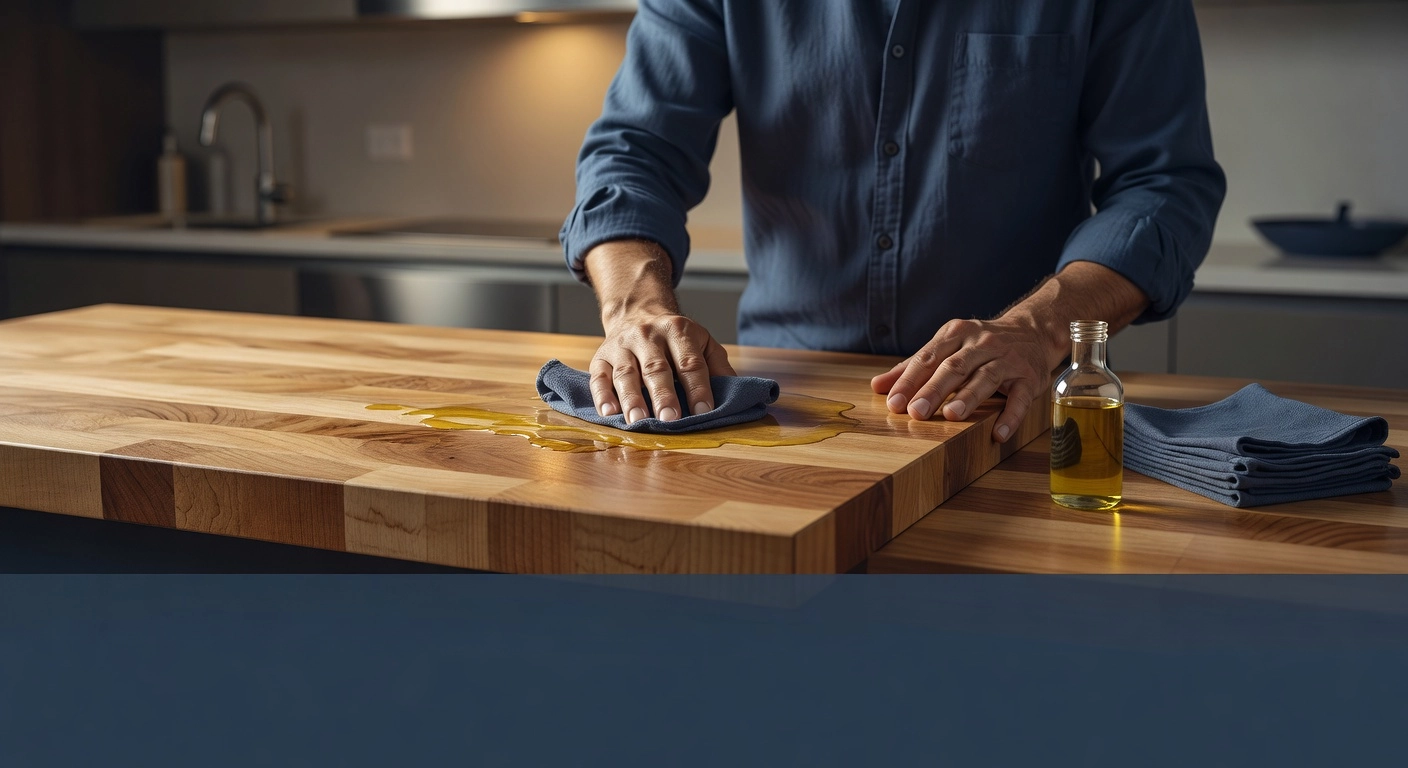
If you’ve made it through cleaning, sanitizing, and stain removal, you’ve handled the reactive side of butcher block care. Oiling is the proactive side, and for unsealed wood, it’s not optional. Without regular conditioning, the wood slowly dries out, and dry wood cracks, warps, and absorbs every spill like a sponge. Think of oiling as feeding your countertop. Skip it long enough, and no amount of cleaning will save the surface from splitting or staining permanently.
Choose the Right Oil for the Job
You have three solid options, all food-safe and beginner-friendly.
Food-grade mineral oil is the go-to choice for most homeowners. It’s affordable, odorless, colorless, and widely available at drugstores and hardware stores. Just make sure the label says “food-grade” before you buy. Walnut oil is a natural alternative that gradually hardens with repeated use, building a slightly more protective layer over time. If anyone in your household has a tree nut allergy, skip this one. Commercial butcher block conditioner combines oil with beeswax, which fills in small knife marks and adds a gentle sheen. It offers a bit more protection than plain oil alone and is a great choice once your countertop is past its initial break-in period.
One hard rule: avoid cooking oils like olive oil, vegetable oil, or canola oil. They go rancid inside the wood and create a smell no cleaning method can fix. You can read more about how to oil butcher block countertops from a trusted kitchen resource for additional product guidance.
How to Apply Oil Step by Step
- Start with a completely clean, dry surface. Any moisture left behind will prevent proper absorption.
- Pour a generous amount of oil directly onto the countertop. Don’t be stingy here.
- Spread it evenly with a clean, lint-free cloth, always working in the direction of the wood grain.
- Let it soak in for several hours or overnight for the best results.
- Wipe off any excess with a fresh cloth. The surface should feel smooth, not slick or greasy.
Know When Your Countertop Is Asking for Oil
Watch for these warning signs: the surface looks gray or ashy, water soaks straight in instead of beading up, or the wood feels rough and dry under your fingers. Any one of these means it’s time to condition right away. For a deeper dive into maintaining butcher block long-term, including frequency tips by season, that resource covers it well.
Extra Steps for Brand New Countertops
New butcher block is especially thirsty because the wood has never been saturated. Apply mineral oil three to five times during the first month, letting each coat absorb fully before adding the next. You’ll notice the wood stops soaking up oil as quickly once it’s properly saturated. After that initial phase, monthly conditioning or conditioning whenever the warning signs appear is all it takes to keep your countertop in great shape for years to come.
Food-Grade Mineral Oil vs. Walnut Oil vs. Butcher Block Conditioner
Not all oils are created equal, and picking the wrong one can mean more frequent maintenance, a potential allergic reaction, or simply wasted money. Here’s a plain-language breakdown of your three main options so you can choose with confidence.
Food-grade mineral oil is the go-to recommendation for most homeowners, and for good reason. It’s completely odorless and tasteless, so it won’t affect your food, and it’s certified safe for direct food contact under FDA standards. A bottle typically runs between $5 and $10, and one bottle covers multiple applications on a full countertop. The downside is that mineral oil doesn’t form a protective surface barrier; it soaks straight into the wood, which means the wood will keep absorbing it over time. Expect to reapply every one to four weeks depending on how heavily you use the surface and how dry your home gets in winter.
Walnut oil is a natural alternative that absorbs deeply and leaves a slight nutty scent that some people love. It conditions the wood effectively and can even harden slightly over time when exposed to light, which adds a bit of durability. However, there is one non-negotiable warning: if anyone in your household has a tree nut allergy, skip walnut oil entirely. Residue can linger in the wood grain and pose a real cross-contamination risk. It also tends to cost more than mineral oil and requires the same frequent reapplication, so most beginners are better served by sticking with mineral oil.
Butcher block conditioner is a blend of food-grade mineral oil and beeswax, sometimes with a touch of carnauba wax added in. The oil penetrates and hydrates the wood while the wax fills the grain slightly and creates a mild water-resistant layer on the surface. That wax barrier slows how quickly the wood dries out, meaning you can stretch your maintenance intervals to roughly once a month instead of weekly. It costs a bit more per bottle upfront, typically $10 to $20, but the reduced reapplication frequency balances out the price difference over time.
Our recommendation at WoodStuffHQ: start with straight mineral oil on any new or noticeably dry countertop. Apply two to four generous coats, letting each one soak in fully before wiping the excess. Once the wood looks saturated and healthy, switch to a butcher block conditioner for your ongoing monthly maintenance. Using conditioner first on very dry wood can actually work against you, since the wax component may slow the deep penetration the wood desperately needs at that stage. Think of mineral oil as the foundation and conditioner as the upkeep.
Oils You Should Never Use on Butcher Block
Here’s something that catches almost every first-time butcher block owner off guard. You finish oiling your countertop for the first time, feel great about taking care of it, and a few weeks later notice a strange sour smell that won’t go away no matter how much you clean. If that sounds familiar, there’s a good chance the culprit is sitting in your pantry right now.
Olive oil, canola oil, vegetable oil, and regular coconut oil should never be used on butcher block. They seem like obvious choices because they’re inexpensive, food-safe, and already in your kitchen. The logic feels sound: if you can eat it, it should be fine on a food prep surface. Unfortunately, that’s one of the most common beginner mistakes in butcher block care, and it’s a painful one to fix.
The problem comes down to chemistry. These cooking oils contain polyunsaturated fats that oxidize when they get trapped inside wood pores. That oxidation process produces volatile compounds with a distinctly unpleasant smell, and it also creates conditions that can encourage bacterial growth on a surface you’re using to prepare food. The wood essentially locks the oil in, and the rancidity develops from the inside out.
The telltale sign is a musty or sour odor that lingers even after a thorough cleaning. The smell often gets worse in warm or humid conditions, and no amount of soap and water will fully eliminate it once it’s set in.
If you’ve already made this mistake, the fix is straightforward but requires some effort. Sand the surface thoroughly to remove the rancid oil-soaked layer, then immediately treat the fresh wood with multiple coats of food-grade mineral oil. Wipe away the excess after each application and repeat until the wood stops absorbing it.
How Often Should You Oil Butcher Block Countertops
Now that you know what to use for oiling, the next question most beginners ask is how often. The honest answer is that it depends on a few factors, but there are some clear rules of thumb that make this easy to figure out.
For countertops you use daily for food prep, aim to oil roughly once a month. For decorative surfaces or countertops that see light use, every two to three months is usually plenty. The key signal is always how the wood looks and behaves, not just the calendar.
Seasons matter more than most people realize. Indoor heating during winter pulls moisture out of wood faster than almost anything else. During cold months, bump your oiling frequency up to every two to three weeks. In humid summer conditions, you can often stretch it back out. If you notice the wood looking dull, pale, or slightly gray around the edges, that’s the surface telling you it’s thirsty.
The simplest way to check whether your countertop needs oil is the water bead test. Sprinkle a few drops of water on the surface and watch what happens. If the water beads up and sits on top, your oil barrier is doing its job. If it absorbs into the wood within a minute or two, it’s time to oil. Run this test before and after any deep cleaning session.
Brand new countertops need the most attention upfront. Oil daily for the first week, then every few days for the rest of the first month. Once the wood is fully saturated, ongoing maintenance becomes much simpler and less frequent.
If keeping track of all this feels like a lot, the WoodStuffHQ monthly maintenance schedule covered in a later section lays out a simple routine that takes the guesswork out of timing completely.
Common Butcher Block Cleaning Mistakes to Avoid
Even with a solid cleaning and oiling routine in place, a few common habits can quietly undo all that effort. Here are the five mistakes that cause the most damage to butcher block countertops, and exactly what to do instead.
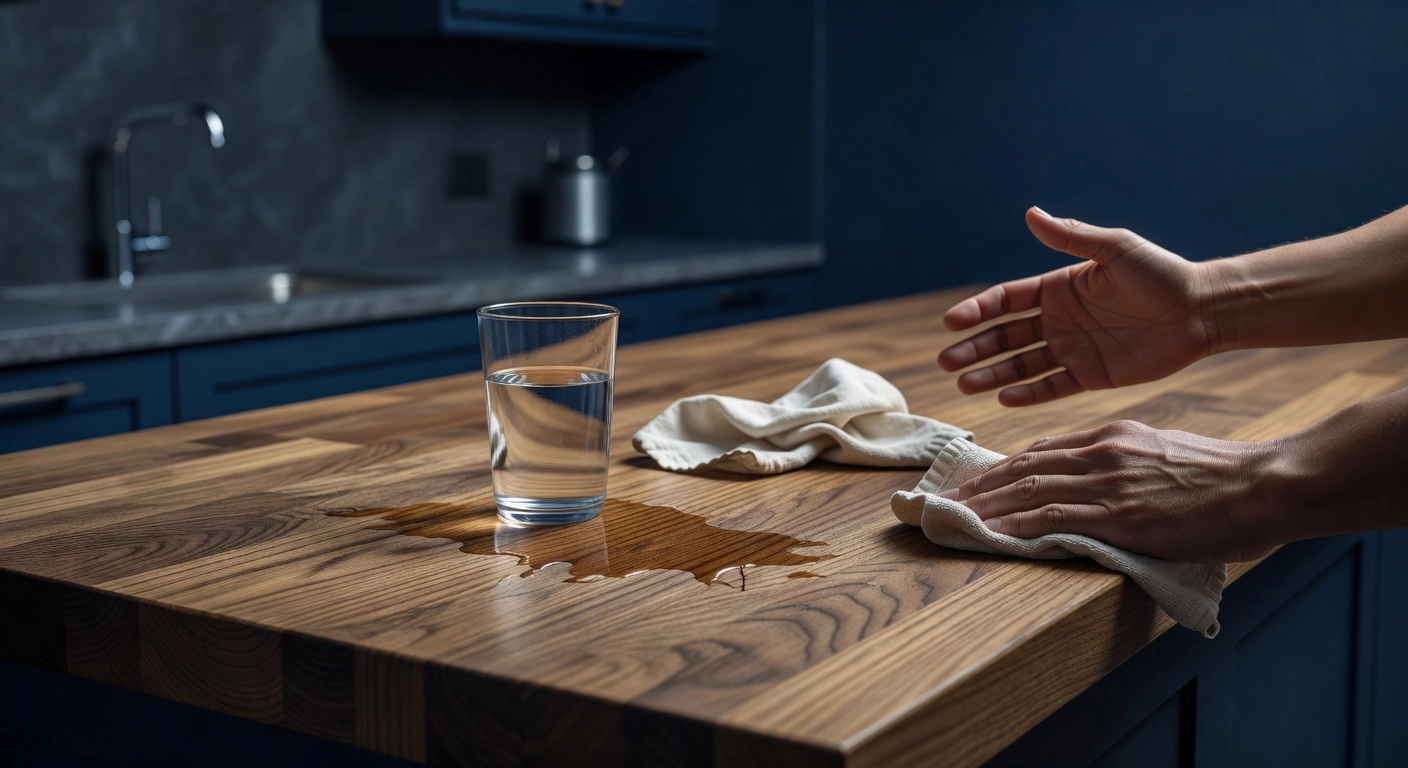
Letting water sit on the surface is probably the single fastest way to ruin a beautiful countertop. Wood is porous, and even a few minutes of standing water gives it time to absorb moisture deep into the fibers. That absorption causes dark water stains, swelling, and raised grain that feels rough under your hands. The fix is simple: wipe up spills the moment they happen, every single time.
Soaking the area near the sink takes that same problem and makes it chronic. Wet sponges left sitting on the wood, dish racks dripping onto the surface, and splash zones from washing dishes all add up over weeks and months. That repeated, prolonged moisture exposure causes the wood fibers to expand unevenly, which leads to warping that is extremely difficult to reverse. Keep a dry towel nearby, move dish racks off the wood, and wring your sponge out completely before it touches the countertop.
Using abrasive scrub pads or steel wool feels like thorough cleaning but actually works against you. Those rough materials scratch the wood grain and create tiny grooves that trap bacteria, food particles, and staining agents. A soft cloth or non-abrasive sponge does the job without the damage.
Placing hot pans directly on the surface causes scorching and cracking almost immediately. Wood simply cannot handle direct heat the way stone can. Keep a trivet or silicone heat pad within arm’s reach so it becomes a reflex, not an afterthought.
Skipping the drying step after cleaning is the most overlooked mistake of all. Air drying sounds harmless, but residual moisture leaves behind mineral deposits and seeps into the wood grain even on a well-oiled surface. Always finish with a dry towel, not the air.
What to Do If You Find Mold or Mildew
Finding mold or mildew on your butcher block can feel alarming, but knowing how to identify it and act quickly makes all the difference.
Mold vs. a dark water stain: how to tell them apart
Before you treat anything, take a close look under good lighting. Mold typically appears as fuzzy, powdery, or patchy spots in dark green, black, blue, or gray tones. You’ll most often spot it near the sink, in the joints between boards, or anywhere moisture tends to linger. It may also carry a faint musty smell. A dark water stain, by contrast, is flat and smooth to the touch. It’s a discoloration caused by absorbed moisture or tannins, not active biological growth. If the spot has texture or an odor, treat it as mold.
Treating the affected area
Pour undiluted white vinegar directly onto the moldy spot and let it sit for 15 to 20 minutes. The acetic acid in vinegar works to kill surface bacteria and inhibit mold growth naturally. After the wait, scrub gently with a soft brush, always moving in the direction of the wood grain to avoid scratching the surface. Wipe away the residue and dry the area completely and immediately with a clean towel. Leaving any moisture behind is what caused the problem in the first place.
When the mold keeps coming back
If vinegar alone doesn’t clear the discoloration, lightly sand the affected spot with 220-grit sandpaper, working with the grain. Follow immediately with another vinegar treatment, allow the wood to dry fully, then re-oil the spot with food-grade mineral oil. Sanding opens the wood fibers, so re-oiling right after is not optional.
Prevention beats treatment every time
Dry your countertop thoroughly after every single cleaning session. Near the sink especially, increase your oiling frequency; every three to four weeks instead of monthly keeps moisture from penetrating in high-use zones.
Knowing when to call it
If mold returns quickly after treatment, or if sanding reveals discoloration running deep into the wood, DIY methods have likely reached their limit. Deeply penetrated mold can compromise the structure of the wood, and at that point, professional assessment or countertop replacement is the safer path forward.
Fixing a Warped or Uneven Butcher Block Surface
Warping happens when one side of your butcher block absorbs significantly more moisture than the other. The top surface takes the hit most often, soaking up spills, steam, and daily cleaning water, while the underside stays dry and stable. That imbalance causes the wet side to swell and expand while the dry side holds its shape, pulling the board into a curve or cup. The good news is that this is almost never a defect in the wood itself; it’s an environmental issue, which means it’s largely preventable.
The single most effective prevention step is oiling both sides equally. Most beginners oil the top surface and forget the underside entirely, which sets up exactly the kind of moisture imbalance that leads to warping. Every time you condition your countertop, flip your thinking and treat the bottom face with the same amount of food-grade mineral oil or butcher block conditioner. Sealed edges around cutouts, sinks, and seams need that same attention.
For minor warping you’ve already noticed, try this simple fix: lay a damp cloth on the concave side, which is the side that curves inward, and leave it overnight. At the same time, let the convex side face open air to dry out. This encourages the drier side to absorb a little moisture and relax back toward flat. It won’t work on severe warping, but for early-stage cupping caught quickly, it often helps.
If your countertop has shifted enough to create gaps at the cabinet edges or is visibly misaligned, that’s beyond a damp cloth fix. At that point, a professional assessment is the smarter call rather than risking further damage.
Finally, proper installation matters more than most people realize. Wood naturally expands and contracts with humidity changes throughout the year. If your countertop was screwed down too rigidly without room to move, that tension builds into stress warping over time. Slotted brackets and small expansion gaps around edges give the wood the breathing room it needs to stay flat long term.
Getting Rid of a Rancid or Sour Smell
A rancid or sour smell coming from your butcher block almost always points to one culprit: someone conditioned the wood with a cooking oil like olive oil, vegetable oil, or canola oil instead of food-grade mineral oil. It’s one of the most common mistakes new butcher block owners make, and it’s an easy one to understand. Cooking oils are organic, which means they oxidize inside the porous wood over time and eventually go rancid, producing that unmistakable sour, slightly musty odor. The smell isn’t a sign your countertop is ruined; it just means you need to remove that oxidized layer and start fresh.
Step 1: Sand the surface with 180-grit sandpaper, following the wood grain. This physically removes the contaminated layer where the rancid oil has settled. Keep your strokes smooth and consistent, always moving with the grain rather than across it. You don’t need to sand aggressively; a light, even pass is enough to expose fresh wood underneath. Wipe away all the dust with a dry cloth before moving on.
Step 2: Apply the lemon and salt treatment to the freshly sanded surface. Sprinkle a generous layer of coarse kosher salt over the area, then rub it in with a cut lemon half using firm, circular motions. The salt acts as a mild abrasive while the lemon juice neutralizes lingering odor at the surface level. Let it sit for five minutes, then wipe it clean with a damp cloth.
Step 3: Dry completely, then apply food-grade mineral oil. Allow the wood to air dry fully before oiling. Apply mineral oil generously with a clean cloth, rubbing it into the grain, and let it soak in for several hours or overnight. Wipe off any excess the next morning.
Going forward, label your mineral oil bottle clearly and store it right next to the countertop. When it’s visible and labeled, everyone in the household knows exactly what to grab.
A Simple Butcher Block Maintenance Schedule
Think of this schedule as your year-round game plan for keeping butcher block countertops looking great without ever feeling overwhelmed. Instead of scrambling to fix problems after they happen, a simple routine keeps damage from building up in the first place.
Daily
After every cooking session, scrape loose food debris off the surface using a plastic scraper or the back of a knife. Then wipe the entire surface down with a soft sponge and warm soapy water, moving with the grain. Rinse the sponge, do a quick follow-up wipe, then immediately dry the surface thoroughly with a clean towel. This last step matters more than most people realize. Never leave wet rags, damp sponges, or standing water sitting on the wood, even for a few minutes. Moisture is the single biggest cause of stains, warping, and cracking in butcher block.
Weekly
Once a week, give the surface a proper sanitizing wipe-down using a 50/50 mix of white vinegar and water. Spray it on, let it sit for about five to ten minutes, then wipe clean and dry completely. While you have good light on the surface, scan for any new stains or dull patches. Catching a fresh stain early means you can treat it with a quick lemon-and-salt scrub before it sets deeper into the grain.
Monthly
Sprinkle a few drops of water onto the countertop. If the droplets bead up, your oil protection is still working. If the water soaks in quickly, it is time to re-oil. Apply food-grade mineral oil or a butcher block conditioner generously along the grain, let it absorb for several hours, then buff off any excess. Also run your hand across the surface to feel for any rough or dry patches that need a little extra attention.
Seasonal (Fall and Spring)
Twice a year, do a full inspection for scratches, dull spots, and areas that feel rough or look faded. If you find minor scratches or surface roughness, lightly sand those areas with 180 to 220 grit sandpaper, always moving with the grain. Follow up with a full conditioning treatment: first a generous coat of mineral oil, then a layer of butcher block conditioner once the oil has soaked in. This two-step treatment gives the wood a refreshed protective barrier heading into the next season.
Year-End
At the end of each year, step back and honestly assess the overall condition of the surface. Look for persistent staining, deep scratches, or areas where the wood feels consistently dry no matter how much you oil. If the surface shows significant wear across a large area, plan a full sand-and-re-oil restoration project for the coming months. Catching this early means you can restore the countertop yourself rather than facing a much bigger repair later.
Keeping Your Butcher Block Countertops Looking Great for Years
Here is the bottom line after everything you have read: butcher block rewards consistency far more than it rewards heroic rescue efforts. The three habits that carry the most weight are drying immediately after every cleaning, oiling once a month, and catching stains early before they have a chance to sink in. Keep those three things going and you will rarely need the heavy-duty fixes covered earlier in this guide.
If you want to extend that care beyond your countertops, WoodStuffHQ’s guides on removing water stains from wood and degreasing kitchen cabinets round out a simple whole-kitchen wood maintenance routine. The same principles apply throughout: act fast, dry thoroughly, and use gentle food-safe products.
One thing worth remembering is that small knife marks and subtle color shifts are not signs you have failed. That patina is part of what makes butcher block beautiful, and it deepens naturally with use and regular oiling.
If you are new to butcher block, give yourself two or three weeks. The routine clicks quickly, takes under five minutes a day, and soon feels as automatic as wiping down any other surface in your kitchen.
Conclusion
Caring for your butcher block countertops does not have to be complicated. Keep these key takeaways in mind: clean spills immediately to prevent staining and warping, use gentle soap and water for everyday cleaning, tackle stubborn stains with natural solutions like salt and lemon, and oil your countertops regularly to keep the wood nourished and protected.
With just a little consistent effort, your butcher block will reward you with decades of beauty and functionality. These countertops are truly an investment worth protecting.
Now it is time to put this knowledge to work. Grab your supplies, give your countertops some well-deserved attention, and start building habits that will keep them looking stunning for years to come. Your kitchen deserves it, and honestly, so do you.


Pingback: L-Shaped Kitchen with Island: 12 Things to Know Before You Renovate - WoodStuffHQ