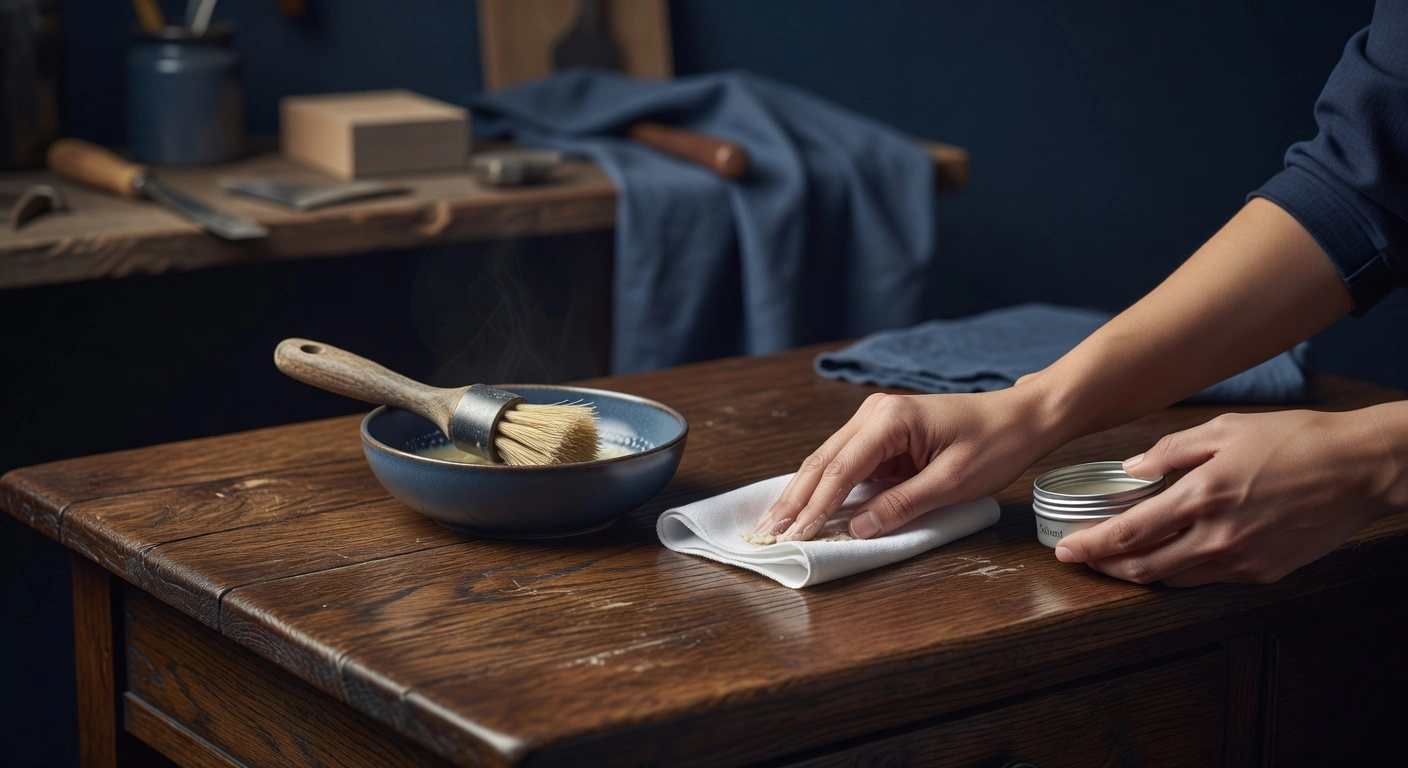
You’ve just refinished a beautiful wooden dresser, but now there’s a thick, cloudy layer of old wax sitting on top and dulling the entire finish. Sound familiar? Whether it’s built-up furniture polish, candle wax drips, or an old wax coating that’s seen better days, dealing with waxy buildup on wood can feel overwhelming, especially if you’re worried about causing damage.
Here’s the good news: knowing how to remove wax from wood furniture is actually a lot easier than most people think, and you definitely don’t need to be a professional to do it right. With the right tools, a little patience, and some simple techniques, you can strip away that stubborn wax and restore your furniture’s natural beauty without scratching or harming the wood underneath.
In this guide, we’ll walk you through everything you need to know as a beginner. From choosing the right removal method to finishing touches that protect your wood, you’ll have all the confidence you need to tackle this project on your own. Let’s get started!
Why Wax Buildup Makes Wood Furniture Look Dull (The Wax Trap Explained)
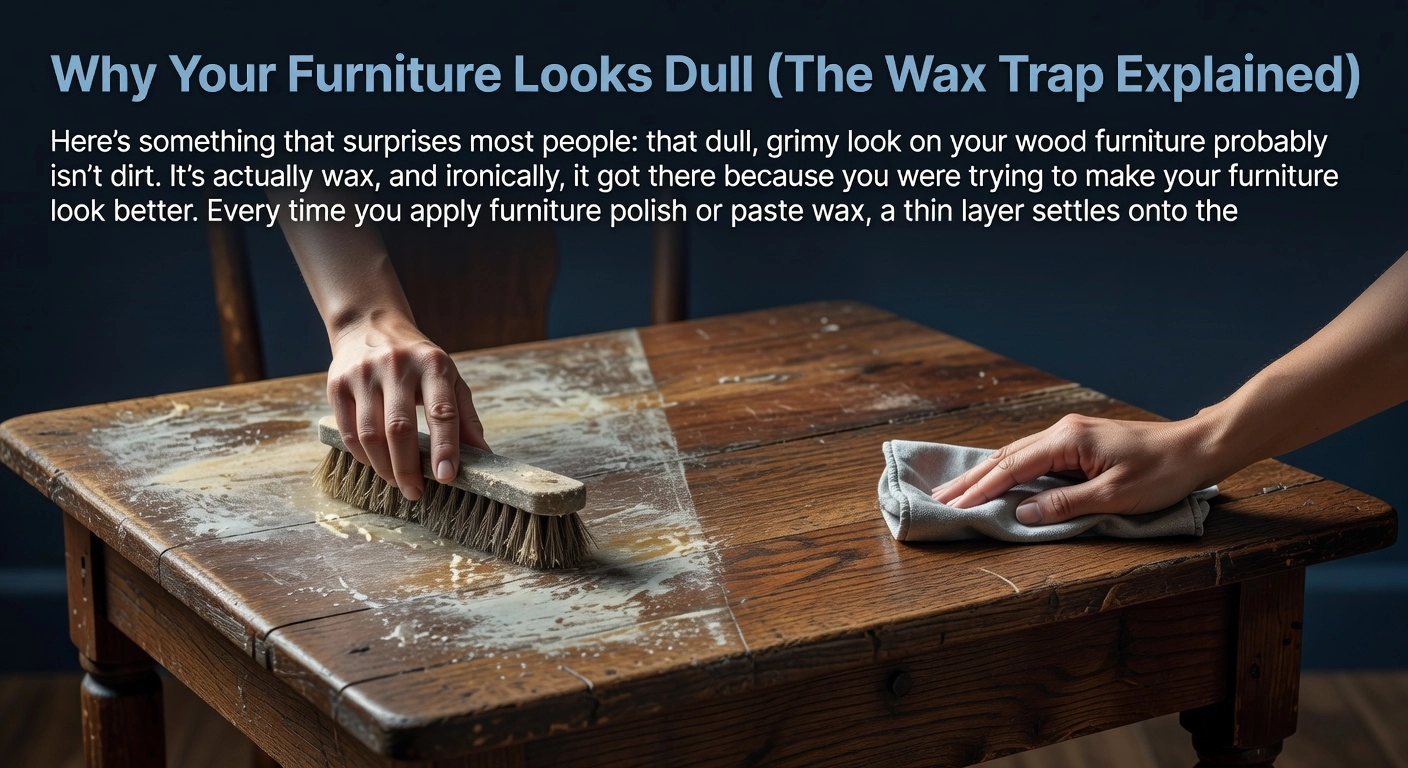
Here’s something that surprises most people: that dull, grimy look on your wood furniture probably isn’t dirt. It’s actually wax, and ironically, it got there because you were trying to make your furniture look better.
Every time you apply furniture polish or paste wax, a thin layer settles onto the surface. Apply it once a year with proper buffing? No problem. But most of us polish more often than that, and those layers start stacking up. Instead of reflecting light the way bare wood naturally does, all that accumulated wax begins to absorb light, leaving your furniture looking cloudy, sticky, and flat. According to wood care experts, these layers also trap dust and grime, making the problem look even worse over time.
This is the classic “wax trap,” and it’s a frustratingly self-defeating cycle. Your furniture looks dull, so you grab the polish. The polish adds another layer, the surface gets duller, and now you’re polishing even more. The furniture loses its glow not because it needs more wax, but because it has way too much.
Two Different Problems, Two Starting Points
Before you grab any supplies, you need to figure out which type of wax you’re actually dealing with, because the approach is slightly different for each.
Chronic polish buildup is the result of years of regular waxing. The surface might feel slick or tacky, look hazy or uneven, and seem to attract dust constantly. This is the “wax trap” scenario described above, and it’s very common on antique or frequently maintained pieces.
A candle wax spill is a completely different situation. It’s usually a fresh or dried blob in one spot, sometimes colored, sitting on top of the finish. The Spruce’s wax removal guide notes that spills like these typically start with physical removal, hardening the wax first so it can be scraped away cleanly.
Both problems share many of the same tools and solutions, including mineral spirits, soft cloths, and a little patience. The key difference is just where you begin. Identifying your wax type first means you’ll gather the right tools from the start and skip any steps that don’t apply to your situation, saving you time and protecting your furniture’s finish in the process.
Polish Buildup vs. Candle Wax: Which One Are You Dealing With?
Before you grab any supplies, it’s worth taking two minutes to figure out exactly what you’re dealing with. The fix for polish buildup and the fix for a candle wax spill are different, and starting with the wrong method just wastes your time.
Polish buildup looks like a hazy, dull film spread across a large portion of the surface. It’s not concentrated in one spot; it tends to be everywhere, and noticeably worse around high-touch zones like armrests, tabletop edges, and drawer knobs. If your whole dining table looks foggy or slightly sticky even after you’ve dusted it, that’s a classic sign of layers of accumulated polish building up over time. The previous section covered exactly how this happens, so you already know what caused it.
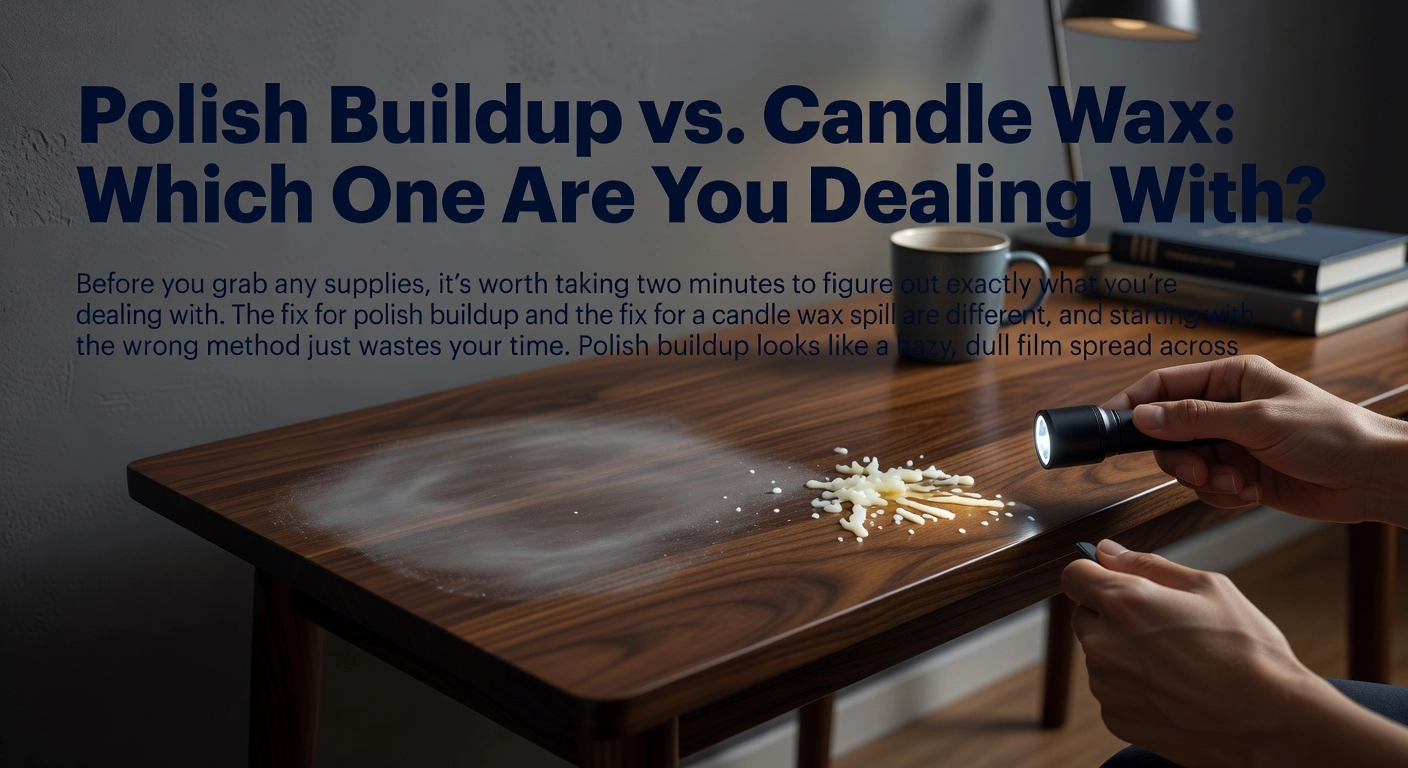
Candle wax spills look completely different. You’ll see a raised, opaque deposit sitting right on top of the wood in one defined area. It usually has a slightly waxy sheen and is white, cream, or the color of the candle itself. It doesn’t spread; it just sits there where the wax dripped.
Not sure which one you have? Try the fingernail scratch test. Find a hidden spot, like the underside of a shelf or the back of a leg, and lightly drag your fingernail across the surface. If you pick up a soft, waxy residue under your nail, you’ve got polish buildup that needs a full clean. A clean scratch with nothing left behind points to a localized candle spill instead.
One more thing to consider before moving forward: finished versus unfinished wood. Most household furniture has a sealed finish, like polyurethane, lacquer, or varnish, and that protective layer means it can handle mild solvents without damage. Unfinished or raw wood, like butcher blocks and cutting boards, is porous and much more sensitive. Solvents can soak in, raise the grain, or cause discoloration on raw surfaces, so those pieces need a gentler approach.
Once you know what you’re dealing with, you’re ready to move forward. Head to Method 1 if you’ve identified widespread polish buildup, or jump to Method 2 if you’re tackling a localized candle wax spill on wood furniture.
What You Need Before You Start
Good news: you don’t need a cabinet full of specialty products to do this job well. A few affordable, easy-to-find supplies are all it takes, and most of them are probably available at your nearest hardware store for under fifteen dollars total.
Mineral spirits are your most important tool here, and specifically you want the odorless or low-odor version for indoor use. This petroleum-based solvent dissolves wax buildup cleanly without leaving behind residue of its own, which is why it consistently outperforms vinegar-water mixes and most commercial “furniture cleaner” sprays. Vinegar sounds appealing because it’s natural, but it can cause problems with certain finishes like shellac, and it simply isn’t strong enough to cut through heavy wax buildup. A quart of odorless mineral spirits is all you need, and it goes a long way. You can find it at any hardware store for roughly eight to thirteen dollars.
000-grade ultra-fine steel wool is the second non-negotiable item. The grade number matters more than most beginners realize. Grab a coarser grade like 0 or 1 by mistake, and you will scratch your furniture’s finish before you know what happened. Stick with 000 (sometimes labeled “extra fine”) or 0000 for the most delicate surfaces. A pack typically costs just a few dollars and rounds out your total supply cost well under fifteen dollars.
For candle wax spills specifically, add a plastic scraper, old credit card, or wooden spoon to your list. Never use a metal scraper on finished wood; it will gouge the surface. These plastic or wood alternatives let you lift hardened wax off cleanly without any damage.
Stock up on lint-free cloths or old cotton t-shirts before you start. This is one supply people consistently underestimate. You will saturate several cloths as you work through the wax, so having a stack of eight to ten on hand prevents frustrating mid-project interruptions.
Finally, don’t skip the safety basics: rubber or nitrile gloves protect your skin from prolonged solvent contact, and safety glasses are worth putting on before you start. Work near open windows or a doorway to keep fresh air moving through the space. If you’re using standard mineral spirits rather than the odorless variety, an inexpensive dust mask adds a helpful extra layer of protection.
Once your supplies are assembled, you’re ready to get to work.
Method 1: How to Remove Polish and Wax Buildup from Wood
Now that you’ve got your supplies gathered, it’s time to put them to work. This method targets polish and wax buildup, the kind that accumulates from months or years of regular furniture polishing. Follow these steps carefully and you’ll be amazed at what comes off.
Step 1: Dust the surface thoroughly first
Before anything else, take a dry, soft cloth and wipe down the entire piece to remove loose dust and debris. This step is easy to skip, but don’t. Any grit or particles sitting on the surface can act like sandpaper once you start working with steel wool, leaving tiny scratches in your finish.
Step 2: Dampen your steel wool and work in sections
Pour a small amount of mineral spirits onto a pad of 000-grade steel wool until it’s damp but not dripping. Then pick a starting section roughly the size of a sheet of paper, about one square foot, and begin working. Always move in the direction of the wood grain, never across it or in circles.
Step 3: Use light pressure, nothing more
Here’s a mistake beginners often make: pressing too hard. The mineral spirits are doing the heavy lifting here by chemically dissolving the wax. Your job is simply to guide the steel wool across the surface with gentle, even strokes.
Step 4: Wipe away dissolved wax immediately
As you work each section, have a clean lint-free cloth ready in your other hand. The moment you’ve made a few passes with the steel wool, wipe the area to pick up the dissolved wax before it has a chance to settle back onto the surface.
Step 5: Move across the piece in manageable sections
Work your way across the furniture one square-foot section at a time rather than trying to tackle the whole surface in one go. As your steel wool pad fills with dissolved wax, swap it out for a fresh one.
Step 6: Do a final wipe-down and let it dry
Once you’ve covered the entire piece, do one final pass with a fresh cloth dampened lightly with mineral spirits. Then set a timer and walk away for at least one hour. The surface needs time to fully dry before you assess the results.
Method 2: How to Remove Candle Wax Spills from Wood
Candle wax spills happen to everyone, and the good news is they look much scarier than they actually are. With the right approach, you can remove even a stubborn drip without leaving a single scratch on your finish.
Step 1: Harden the Wax First
Grab a handful of ice cubes, seal them in a zip-lock bag, and place the bag directly on the wax spill. Leave it there for at least ten minutes. Wax that has hardened properly will flake off in satisfying little chips rather than smearing across your finish in a greasy streak.
Step 2: Scrape Away the Bulk
Once the wax feels firm and solid, it is time to lift it off. Use a plastic card, an old gift card, or the back of a wooden spoon. Start at the outer edge of the spill and work your way inward toward the center in short, gentle strokes.
One firm rule: never use a metal knife or metal scraper on finished wood. Metal edges catch on the surface and gouge the finish instantly.
Step 3: Treat the Leftover Residue
After scraping, there will almost always be a faint sheen or filmy residue where the wax sat. Dampen a lint-free cloth with mineral spirits and wipe the area gently, always moving with the grain rather than against it. This quick test, recommended consistently by Good Housekeeping, takes thirty seconds and could save your finish.
The Warm Iron Alternative
For thinner wax deposits or lighter spills, the iron method is a handy option. Lay a single sheet of paper towel flat over the wax, then briefly pass a warm iron set to its lowest heat setting over the towel. The heat melts the wax just enough for the paper towel to absorb it.
Once the surface is clean and dry, buff it lightly with a clean cloth to restore its natural sheen.
Wax on Kitchen Wood: Butcher Blocks, Cutting Boards, and Cabinets
Most wax removal guides focus entirely on living room furniture and completely skip the kitchen. That’s a problem, because the wood surfaces in your kitchen need a different approach, and using the wrong method on a cutting board or butcher block is a genuine food safety issue.
Cutting Boards and Butcher Blocks: Go Food-Safe
Here’s the key rule: do not use mineral spirits on any wood surface that touches your food. Mineral spirits can leave behind residue that is not safe for food-prep surfaces, even after wiping.
The good news is that the food-safe approach is simple and uses supplies you already have at home.
Step 1: Scrape off the bulk. Use a plastic card or a plastic bench scraper to gently remove any thick wax sitting on the surface.
Step 2: Clean with white vinegar. Mix a 50/50 solution of white vinegar and water in a spray bottle. Apply it to the surface, then rub with a cloth or soft brush, again moving with the grain.
Step 3: Follow up with warm soapy water. A few drops of mild dish soap in warm water, applied with a cloth, will lift whatever the vinegar loosened. Rinse thoroughly with hot water afterward.
Step 4: Dry completely. Wipe the surface down with a clean towel immediately, then stand the board upright to air-dry. Never let kitchen wood sit in a puddle of water, as it will warp and crack.
Once the surface is clean and fully dry, it is ready for proper conditioning. Apply a generous coat of food-grade pure mineral oil or a beeswax-blend conditioner, let it soak in for several hours, then wipe away any excess.
Kitchen Cabinets: Sealed and Solvent-Tolerant
Cabinet wood is a completely different situation. Most kitchen cabinets are coated with a cured finish like polyurethane or lacquer, which seals the wood and makes it much more resistant to solvents. Wax tends to build up on cabinets from furniture polish overspray drifting over from nearby furniture, or from candles sitting on countertops.
You can treat cabinet wax buildup using the same mineral spirits and 000-grade steel wool method described in Method 1 earlier in this guide. The only extra step is to always test first on an inconspicuous spot, like the inside edge of a cabinet door.
Removing Wax Before Painting or Staining Wood
If you’re planning to paint or stain a piece of wood furniture that’s had wax applied to it, this step is honestly the most important one in the entire project. Wax is one of the leading causes of paint and stain adhesion failure.
The biggest mistake people make at this stage is reaching for sandpaper first. Sanding over a waxed surface doesn’t remove the wax; it drives wax particles deeper into the wood grain and pores through friction and heat.
Here’s the process that gives you the best chance of a clean, paint-ready surface:
- Complete the full mineral spirits and 000 steel wool process described in Method 1 of this guide. Work in sections, scrub with the grain, and keep swapping out your cloths until they come away completely clean.
- Follow up with a TSP substitute solution. A trisodium phosphate substitute, wiped over the surface after your mineral spirits treatment, degreases the wood and neutralizes any remaining oily residue.
- Wait a full 24 hours before applying any primer or paint. Once the surface is dry, test adhesion on a small hidden patch before committing to the whole piece.
Safety and Ventilation: What You Actually Need to Know
Before you open a single can of mineral spirits, spend two minutes on safety setup. It genuinely matters more than most guides let on, and the precautions are simple enough that skipping them really isn’t worth it.
Start with ventilation, and take it seriously. Mineral spirits vapors are heavier than air. Open at least two windows to create cross-ventilation, then position a box fan to exhaust air directly out of the room.
Wear nitrile gloves every single time. Mineral spirits absorbs through skin with repeated contact, and the result is dryness, cracking, and irritation at minimum.
Handle used rags and steel wool carefully after you finish. Solvent-soaked materials are still flammable, and bunching them up while wet traps vapors and heat. Lay everything flat outdoors to dry completely, then seal in a metal container.
Mineral Spirits vs. Citrus Removers vs. Commercial Products
If you’ve been reading through this guide, you’ve already seen mineral spirits mentioned more than once. There’s a good reason for that. Across professional finishers, woodworking forums, and restoration experts, odorless mineral spirits consistently comes out on top as the most reliable solvent for dissolving wax buildup.
Citrus-Based Products: The Low-Odor Option
Citrus-based cleaners have been gaining real popularity. Products like Howard Orange Oil and similar citrus-formulated cleaners dissolve wax and grease using natural solvents derived from citrus peels. They smell pleasant and they’re a smart choice for kitchen-adjacent wood where you’d rather not fill the room with solvent fumes.
Why Vinegar Falls Short
Vinegar and water mixtures come up constantly in online cleaning tips, and while they’re fine for surface grime, they genuinely underperform on wax. The mild acidity can cut through light dirt and residue, but it does not fully dissolve wax polymers.
When to Consider Commercial Products
Dedicated commercial wax removers do work, but they typically cost three to five times more than mineral spirits for comparable results on standard finished wood. They’re worth considering for antiques, heavily built-up pieces, or furniture with an unknown finish history.
Quick decision guide: Start with odorless mineral spirits and 000 steel wool for most furniture. Switch to a citrus-based cleaner if low odor matters, particularly in kitchen areas.
Aftercare and How to Prevent Wax Buildup Going Forward
Now that your furniture is clean and fully dry, you’ve got a genuinely fresh start. The surface is ready for protection, but how you protect it going forward is exactly what determines whether you end up back in this same situation a year from now.
Apply silicone-free paste wax no more than once a year. That once-a-year limit isn’t arbitrary. More frequent applications are the direct cause of the dullness and buildup you just spent time removing.
Buffing thoroughly is just as important as the application itself. After applying a thin coat, buff it out completely with a clean microfiber cloth using circular motions until the surface feels smooth and shows no streaks or haze.
For butcher blocks and cutting boards, skip paste wax entirely. Stick with a food-safe oil on a schedule based on how often the surface gets used.
Quick Recap and Your Next Steps
You’ve covered a lot of ground in this guide, so here’s the short version to keep in your back pocket.
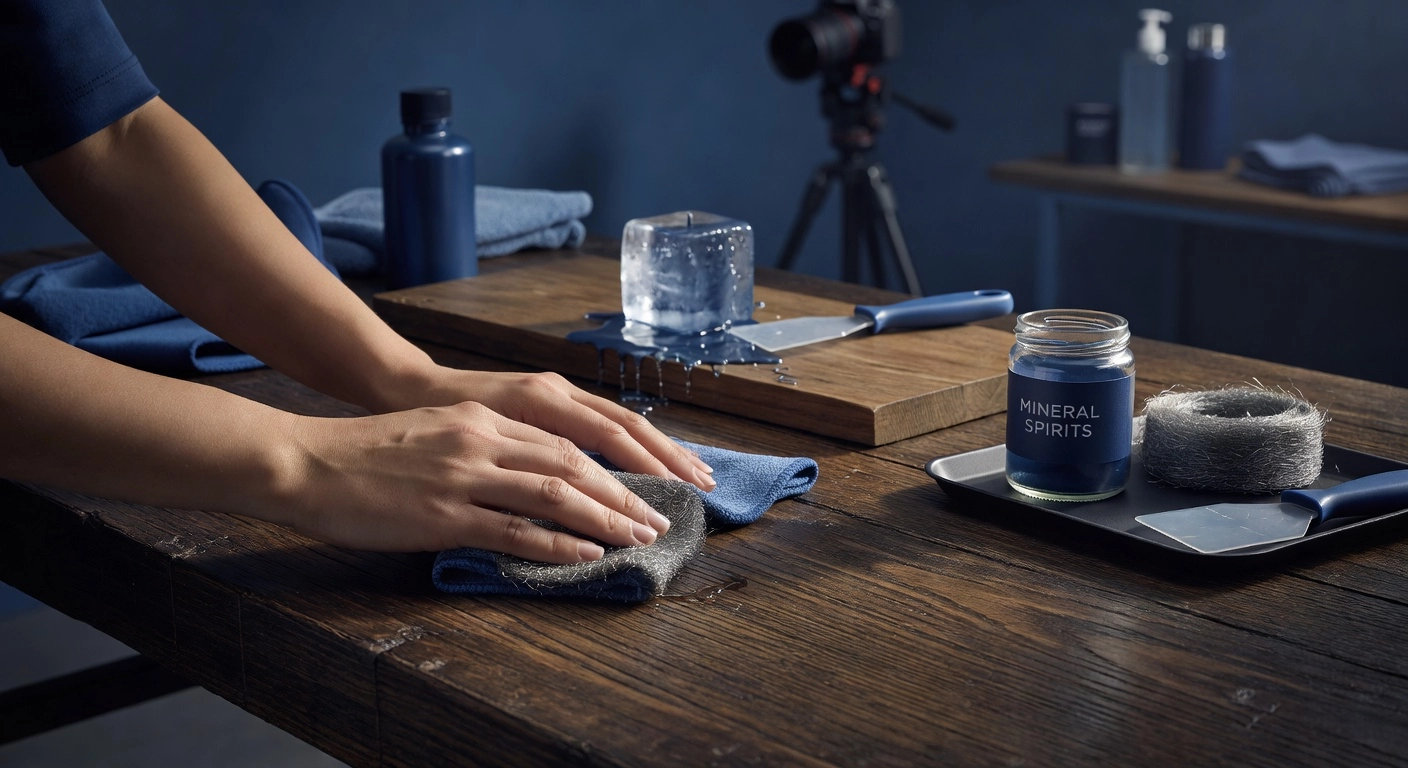
For polish and wax buildup, reach for mineral spirits and 000-grade steel wool, working gently with the grain. For candle wax spills, harden the wax with ice first, scrape it away with a plastic card, then follow up with that same mineral spirits step to clear any residue.
If your project involves a butcher block, cutting board, or kitchen cabinet, skip the standard mineral spirits and use food-safe methods instead. And once everything is clean, maintain with a thin silicone-free paste wax coat no more than once a year, or food-safe oil for kitchen pieces.
Conclusion
Removing wax from wood furniture does not have to be a stressful or complicated process. To recap the key takeaways: always start with the gentlest method possible, work in the direction of the wood grain, use the right solvent for your specific wax type, and finish by conditioning the wood to restore its natural luster.
Now you know exactly how to remove wax from wood furniture safely at home.
With a little patience and the right approach, you can breathe new life into any piece of furniture without causing damage or spending a fortune on professional help.
Now it is your turn. Gather your supplies, pick a piece that needs some attention, and give these techniques a try. Once you see how straightforward the process really is, you will wonder why you waited so long. Your furniture deserves to look its best, and now you have everything you need to make that happen.
Frequently Asked Questions
What is the best solvent to use for removing wax buildup from wood furniture?
Odorless or low-odor mineral spirits is consistently the top recommendation from professional finishers and woodworking experts. It dissolves wax completely without leaving its own residue behind, especially when wiped away promptly with a clean lint-free cloth. Pair it with 000-grade ultra-fine steel wool for best results. Avoid vinegar, as it lacks the strength to fully dissolve wax polymers and can gradually degrade certain wood finishes with repeated use.
Can I use the same wax removal method on a butcher block or cutting board as I would on regular furniture?
No. You should never use mineral spirits on wood surfaces that come into contact with food, as it can leave behind residue that is unsafe for food preparation. Instead, scrape off bulk wax with a plastic card, clean with a 50/50 white vinegar and water solution, then follow up with warm soapy water and rinse thoroughly. Once dry, condition the surface with food-grade mineral oil or a beeswax-blend conditioner rather than furniture polish or paste wax.
How do I know if I have polish buildup or a candle wax spill, and does it change how I approach removal?
Yes, identifying the type of wax matters because the starting method is different for each. Polish buildup appears as a hazy, dull film spread across large portions of the surface, often feeling sticky or attracting dust. A candle wax spill looks like a raised, opaque deposit concentrated in one spot. To confirm which you have, try the fingernail scratch test on a hidden area: if you pick up a soft waxy residue under your nail, it is polish buildup. A clean scratch with no transfer points to a localized candle spill. For candle spills, always harden the wax with ice first before scraping, whereas polish buildup goes straight to the mineral spirits and steel wool method.
Why is it important to remove wax before painting or staining wood furniture?
Wax is one of the leading causes of paint and stain adhesion failure. Nothing bonds well to a waxy surface, and skipping proper removal will result in peeling, bubbling, or blotchy finishes. Critically, you should never sand a waxed surface first, because sanding drives wax particles deeper into the wood grain rather than removing them. Always remove wax chemically with mineral spirits and 000-grade steel wool, follow up with a TSP substitute solution to degrease the surface, then wait a full 24 hours before applying any primer or paint.
How often should I apply wax after cleaning my furniture, and what type should I use?
Apply a silicone-free paste wax no more than once a year. Applying wax more frequently is the primary cause of the dull, hazy buildup this guide covers, since repeated thin layers stack up and absorb light instead of reflecting it. Silicone-free formulas are important because silicone residue can prevent future finishes or stains from bonding properly. When applying, use a thin coat and buff it out thoroughly with a clean microfiber cloth until no streaks or haze remain. For kitchen wood like butcher blocks and cutting boards, skip paste wax entirely and use food-safe oil instead.
I didn’t realize you could use a heat gun for wax removal. Have you tried that method before?
Great question! 😊 Yes, using a heat gun is a popular method for removing old wax buildup from wood furniture, especially when dealing with thick layers or multiple coats of wax.Here’s how it works: the heat gun gently melts the wax, making it easier to wipe away with a soft cloth. The key is to keep the heat gun moving and not let it linger in one spot for too long, as excessive heat can damage the wood finish or cause discoloration.For best results:Use a low to medium heat setting.Keep the heat gun at least 6 inches away from the surface.Wipe away the melted wax immediately with a clean, lint-free cloth.Follow up with a wood cleaner to remove any residue.Have you considered trying this method on a piece of furniture, or do you have any specific concerns about using a heat gun?