

So you’ve decided to renovate your kitchen, and the L-shaped layout with an island is calling your name. Great choice! This setup is one of the most popular kitchen designs for a reason; it combines smart use of corner space with the added functionality of an island, giving you more room to cook, entertain, and stay organized.
But before you start knocking down walls or browsing countertop samples, there are some important things you need to know. An l shaped kitchen with island sounds dreamy in theory, but the reality involves a lot of planning, decisions, and potential pitfalls that catch many first-time renovators off guard.
The good news? You don’t have to figure it all out on your own. In this post, we’re breaking down 12 key things every beginner should know before diving into this type of renovation. From sizing and traffic flow to storage tips and budget considerations, we’ve got you covered. By the end, you’ll feel confident, informed, and ready to bring your dream kitchen to life. Let’s get into it!
Why L-Shaped Kitchens with Islands Are the Most Popular Layout
If you’ve ever wondered why the l-shaped kitchen with island shows up in virtually every home magazine and renovation show, the numbers tell a clear story. According to the Houzz 2026 U.S. Kitchen Design Trends Report, L-shaped layouts lead all kitchen renovations at 35%, beating out U-shaped kitchens at 31% and galley layouts at 14%. That’s not a small gap; that’s a decisive win rooted in real-world performance.
Here’s why homeowners keep choosing this layout:
- It creates a natural work triangle. With cabinets and appliances running along two adjacent walls, your sink, fridge, and stove stay close enough to minimize back-and-forth steps without cramping your style. Cooking, prep, and cleanup each get their own zone.
- It plays perfectly with open-concept living. One or two sides of the kitchen stay completely open to your dining or living area, and the island steps in as a natural bridge between the two spaces.
- Islands double as social hubs. The NKBA/KBIS 2026 Kitchen Trends Report found that 96% of kitchen designers identify islands as key gathering spots for families and entertaining.
- It works almost everywhere. Small apartment or sprawling open-plan home, new build or full renovation, this layout adapts without a fight.
That combination of efficiency, openness, and social energy is exactly why this layout has become the go-to starting point for kitchen planning.
Is Your Kitchen Big Enough for an Island? Sizing Reality Check
Before you fall in love with an island design on Pinterest, grab a tape measure. This is honestly the step most homeowners skip, and it leads to some very expensive regrets.
The clearance numbers you need to know first: According to NKBA guidelines, you need a minimum of 42 inches of clearance between your island and the surrounding cabinetry for a single-cook household. If your kitchen regularly has two or more people cooking at once, bump that up to 48 inches. These aren’t arbitrary numbers; they account for bending, reaching, and moving around each other without anyone getting bumped by a hot pan. Check out this kitchen island sizing guide for a deeper breakdown of how clearances affect your workflow.
How much total floor space do you actually need? A workable L-shaped kitchen with a standard island generally requires at least 12 by 12 feet of total floor space. That gives you enough room for the two cabinet runs plus a reasonably sized island with proper clearance on all sides. Tighter on space? Compact islands can function in rooms slightly smaller than that, but you’ll need to be strategic about island dimensions.
Small-space solutions that actually work:
- Rolling islands on lockable casters that you can tuck aside when not in use
- Narrow prep islands under 24 inches deep, which add counter space without eating up floor space
- Peninsula-style islands anchored to one cabinet run, which reduce clearance requirements since only three sides are open
The seating overhang trap: Here’s a mistake that catches a lot of people off guard. Seating overhangs typically extend 12 to 15 inches beyond the island’s base edge. That sounds small until you realize it quietly shrinks your 48-inch aisle down to 33 inches. Plan your overhang dimensions before you finalize the island footprint, not after.
Finally, before you order anything, measure your appliance clearances, door swings, and dishwasher pull-out space. A refrigerator door swinging into an island corner or a dishwasher that can’t fully open are completely avoidable headaches. Review the NKBA kitchen dimensions and code guidelines to make sure every element plays nicely together.
How to Position Your Island for Workflow and Traffic Flow
Once you’ve confirmed your kitchen has the clearance for an island, the next decision is where exactly to put it. This is where a lot of beginners get tripped up, because placement isn’t just about centering the island in the open space and calling it done.
1. Center it around the work triangle if prep is the priority.
If your island is mainly a workspace for chopping, mixing, and prepping meals, position it so you’re roughly equidistant from your sink, cooktop, and refrigerator. These three points form the classic kitchen work triangle, and keeping the legs between 4 and 9 feet makes your cooking routine feel effortless rather than exhausting. In an L-shaped kitchen, aligning the island parallel to the longer wall of the “L” gives you maximum prep surface while keeping you inside that efficient triangle zone.
2. Shift it toward the dining side if seating is the main goal.
When the island is mostly a breakfast bar or casual hangout spot, pull it slightly toward the living or dining area. This keeps guests and family members out of your cooking zone while still letting everyone feel connected. Make sure you leave a 12- to 15-inch overhang so there’s actual knee room for whoever’s sitting there.
3. Never block the main entry point.
Placing the island directly in line with your kitchen doorway creates an instant bottleneck. According to L-shaped kitchen design guides, traffic should be able to flow around the island naturally, not funnel through a narrow gap between the island and the doorway.
4. Think about sightlines in open-concept spaces.
In open-plan homes, your island often acts as a soft visual divider between the kitchen and living area. Orient it so that someone sitting on the couch can make eye contact with whoever’s cooking. This is one of the reasons L-shaped layouts pair so well with islands in open-concept designs.
5. Plan utility rough-ins before anything gets framed.
If you want a sink or cooktop on your island, this decision has to happen before framing, not after. Plumbing supply lines, drains, venting, and electrical or gas lines all need to be roughed in early. A downdraft vent is a common choice when overhead range hoods would interrupt sightlines, but factor in the added cost and complexity before committing.
Island Size Trends in 2026 and What They Mean for Your Home
Here’s what the data says about where kitchen islands are heading, and what it means if you’re planning a renovation right now.
According to the Houzz 2026 U.S. Kitchen Design Trends Report, 52% of upgraded kitchen islands now exceed 7 feet in length. That’s a significant jump, and it reflects a bigger shift in how homeowners think about their kitchens. People don’t want separate zones for prep, seating, and storage anymore. They want one hardworking surface that does it all, from chopping vegetables to hosting friends for coffee.
That sounds amazing, but here’s the honest truth: bigger isn’t always better for your specific home. If your home is under 1,500 square feet, an oversized island can make your kitchen feel cramped and actually restrict how you move through the space. Following a trend that doesn’t suit your floor plan is one of the most common renovation mistakes beginners make.
A simple rule worth memorizing: your island length shouldn’t exceed two-thirds of your longest L-shaped cabinet run. This keeps things visually balanced and maintains good traffic flow.
Seating is also directly tied to length. A 4-foot island seats two people comfortably, while a 7-foot island can handle four stools with a proper 12-inch overhang for knee room. Plan your island size around how you actually live, not just what looks good in photos.
Island Shapes: What the Data Says and What Actually Works
Now that you know how to size and position your island, let’s talk about shape, because this is where a lot of homeowners get distracted by beautiful photos and end up with something that looks great on Instagram but frustrates them every single day.
The data here is pretty clear. According to the Houzz 2026 U.S. Kitchen Design Trends Report, 80% of all kitchen islands are rectangular. That’s not a coincidence. Rectangular islands are simple, versatile, and they line up naturally with your existing cabinetry. They’re easy to seat, easy to work at, and easy for future buyers to appreciate if you ever sell.
L-shaped islands sit at just 5% of installations, and for good reason. They work well in very large kitchens where a standard rectangle would leave awkward dead zones in the corners, but in most homes they eat up floor space and complicate traffic flow rather than improving it. Check out this guide to kitchen island shapes for a solid breakdown of when each shape actually makes sense.
Waterfall-edge and curved islands are stunning, but they come with real trade-offs. Curved edges make stool placement tricky, and waterfall edges often block knee clearance at the ends entirely. You can learn more about the practical problems with waterfall countertops before committing to that look.
A simple design rule that works without any expertise: align your island shape with the longest cabinet run in your kitchen. That single decision creates visual harmony and makes the whole space feel intentional.
For most homeowners with a standard L-shaped kitchen, a rectangular island between 4 and 7 feet long will outperform every specialty shape in daily function, storage flexibility, and resale value.
What to Put In Your Island: Functions, Features, and Smart Planning
Once you’ve sorted out size, shape, and placement, the real fun begins: deciding what actually goes inside your island. This is where your layout either becomes a hardworking kitchen asset or just a very expensive countertop. Here’s a practical breakdown of what to prioritize.
Storage comes first, and for good reason. According to NKBA’s 2026 Kitchen Trends Report, storage is consistently the most universally valued island feature. Base cabinets, deep drawers sized for pots and pans, pull-out trash and recycling systems, and vertical dividers for baking sheets all help you squeeze maximum function out of every inch. In an L-shaped kitchen, your perimeter cabinets are already doing heavy lifting, so the island is your chance to add specialized storage that keeps your counters clear and your workflow smooth.
Seating is the second most popular addition. A raised bar section (typically about 42 inches tall) or a flush overhang of at least 12 inches gives you knee clearance for stools and instantly creates a casual dining zone. This takes real pressure off your formal dining room for everyday meals, homework sessions, and morning coffee. In an L-shaped layout, positioning seating on the outer edge of the island keeps the working side clean and maintains your traffic flow.
Built-in appliances are growing fast. Prep sinks, induction cooktops, dishwasher drawers, and wine fridges are all increasingly common. The NKBA/KBIS 2026 report specifically calls out dedicated beverage stations (think coffee bars and smoothie setups) as a breakout feature, with 85% of designers predicting their rise. If you want any of these, plan early. Sink plumbing, cooktop ventilation, and electrical circuits all need to be roughed in before countertops go down, and changing course after that point gets expensive fast.
Follow this planning order to avoid costly mid-project pivots. Start with traffic flow and clearance, then define your functional zones (prep, cooking, cleanup, dining), then lock in appliances, and save aesthetics and materials for last. Skipping ahead to picking pretty countertops before confirming your plumbing rough-in location is one of the most common beginner mistakes, and one of the priciest to fix.
Cabinet Style and Finish Trends Shaping L-Shaped Kitchens in 2026
If you’re planning an l-shaped kitchen with island right now, the cabinet trends happening in 2026 are genuinely worth paying attention to. They’re practical, accessible for most budgets, and they make the island the natural star of the space.
Wood is officially back on top. According to the Houzz 2026 U.S. Kitchen Design Trends Report, wood cabinets climbed to 29% market share, nudging past white cabinets at 28% for the first time. That’s a meaningful shift. Medium wood tones like white oak and maple are leading the charge, and they pair beautifully with the natural butcher block island surfaces that are also surging in popularity this year.
Transitional style is driving most of these decisions. It blends warmer wood accents with clean modern proportions, so you get visual depth without committing to a full farmhouse or ultra-modern look. Think neutral warm-beige walls, crisp upper cabinets, and a wood-toned island that anchors the whole space.
The smartest entry point into this trend is a two-tone cabinet strategy. Light or white uppers paired with wood-toned lower cabinets gives you warmth without overwhelming the room. It’s especially effective in L-shaped layouts where the island can echo those lower tones as a cohesive accent.
When it comes to door style, Shaker profiles still dominate at roughly 58% of renovations. They work with every finish, painted or stained, which makes them a safe and stylish default.
The bigger picture here is that natural materials are showing up everywhere, from matte bronze hardware to open wood shelving and warm pendant lighting. When your island countertop is butcher block or a wood slab, that choice reads as intentional and curated rather than trendy. You can explore modern kitchen cabinet ideas for visual inspiration on combining these finishes effectively.
Choosing Your Island Countertop Material: Quartz vs. Wood vs. Everything Else
Once you’ve settled on size, shape, and features for your island, you’ll face one of the most satisfying decisions in the whole renovation: what material goes on top.
Quartz still dominates the perimeter, and for good reason. It’s non-porous, resists stains, handles scratches well, and needs nothing more than mild soap and water to clean. For the main counter runs where you’re constantly setting things down, prepping food, and working near the sink, that low-maintenance durability is hard to beat.
But here’s where it gets interesting. According to the Houzz 2026 U.S. Kitchen Design Trends Report, when homeowners choose a different material for their island versus their perimeter counters, wood and butcher block comes in as the top choice at 44%, up a remarkable 13 percentage points in just one year. That’s not a small shift. That’s a clear signal of where kitchen design is heading.
The reason this combination works so well comes down to contrast. A quartz or stone perimeter reads as clean and modern, but it can also feel a little cold on its own. A warm wood or butcher block island breaks that up beautifully, adding natural grain, texture, and a lived-in quality that all-quartz kitchens often lack. Popular pairings right now include veined quartz on the perimeter with walnut or white oak butcher block on the island.
Now for the honest part. Wood surfaces do require more attention than quartz. You’ll need to oil them regularly, wipe up water spills promptly, and keep an eye out for drying or cracking. The upside is that butcher block is actually repairable. Knife marks and minor surface damage can be sanded out and re-oiled for a nearly new finish. Quartz resists everyday damage very well, but if it gets deeply scratched, you cannot sand it back. It typically needs professional repair or replacement.
The good news is that wood island maintenance is genuinely beginner-friendly and budget-conscious when you build a simple routine around it. Understanding that commitment before installation is what separates a surface you’ll love for decades from one that disappoints you within the first year.
Butcher Block and Wood Island Surfaces: A Maintenance Primer for New Owners
If you chose butcher block or a wood slab for your island countertop, congratulations on making one of the most rewarding material choices in a modern kitchen. But here’s the honest truth most renovation guides skip: your wood island needs real care from day one, and the maintenance routine for an island is more demanding than for any other surface in your kitchen.
Your island takes more abuse than you might expect. Unlike your perimeter counters, which mostly get used from one side and wiped down once or twice a day, an island gets attacked from every direction. People cut directly on it, set down hot pans without thinking, splash water and cooking liquids from multiple sides, and wipe it down repeatedly throughout the day. That constant exposure to moisture, heat, and friction depletes the wood’s protective oil barrier faster than almost any other household surface. Staying ahead of that depletion is the whole game with butcher block.
The initial oiling schedule is the most important thing you will do for your new surface. New butcher block has not yet built up the internal moisture protection it needs to handle daily kitchen life. The standard break-in schedule that wood care experts consistently recommend is straightforward: apply food-safe mineral oil every single day for the first week, then drop to once a week for the following month, and then settle into a monthly maintenance rhythm after that. Apply generously, let the oil sit and absorb for at least 15 to 30 minutes, and then wipe away the excess. Don’t skip the undersides or the end grain on your island, because exposed end grain absorbs moisture especially quickly and is the most common place cracks start.
Choosing the right oil matters more than most beginners realize. Your three main food-safe options are pure food-grade mineral oil (the most affordable and easiest to find), walnut oil (which gives a beautiful rich finish but should never be used in homes with nut allergies), and hardwax oil blends that combine nourishment with surface protection in a single application. Each of these works. What does not work is reaching for whatever cooking oil is sitting on your counter. Vegetable oil, olive oil, and canola oil all go rancid inside the wood within a few weeks, creating unpleasant odors and eventually damaging the surface from the inside out.
The mistakes that catch new owners off guard tend to follow a predictable pattern. Using the wrong oil is the most common one. Skipping end-grain oiling on an island is a close second, because those exposed edges wick moisture directly into the wood’s core. The third mistake is waiting too long when water stains appear. A water stain that gets addressed within a day or two is usually simple to lift; one that sits for a week can raise the grain and require light sanding before re-oiling to restore a smooth surface.
The grey or ashy look is your early warning system. When your wood island starts looking pale, dull, or slightly washed out, it is telling you the oil barrier has been depleted and moisture is now moving freely through the wood. That’s not a crisis, it’s just a prompt. Clean the surface with mild soap and water, dry it immediately and thoroughly, then apply mineral oil generously and let it absorb. A single round of oiling is often enough to bring the color and warmth right back. No special tools, no professional products, and no expertise required beyond a clean rag and a bottle of food-grade mineral oil.
Wood Species for Kitchen Islands: Maple, Walnut, Oak, and How to Choose
Not all wood species are created equal when it comes to kitchen islands, and the one you pick will shape both your daily experience and your maintenance routine for years to come. Here’s a practical breakdown of the three most popular options.
1. Hard Maple: The Reliable Workhorse
Hard maple is the most widely used butcher block species, and there’s a straightforward reason for that. With a Janka hardness rating of around 1,450 lbf, it resists knife marks, dents, and the general abuse that comes with a busy kitchen island. Its tight, closed grain also means it’s genuinely forgiving if you forget an oiling cycle or two. The surface won’t immediately dry out and crack the way more porous woods can. It also tends to run 30 to 50 percent less per square foot than walnut, which makes it the smart starting point for anyone who’s new to owning a wood island surface.
2. Walnut: The Statement Choice
Walnut brings a darker, richer tone that looks right at home in the transitional kitchen styles dominating 2026 design trends. The tradeoff is durability. At a Janka rating of around 1,010 lbf, walnut is noticeably softer than maple and will show scratches and dents more readily over time. It also requires slightly more consistent oiling to preserve its color depth, because the grain absorbs moisture and dries out faster than maple does. If the aesthetics are worth it to you, walnut is a beautiful choice; just go in knowing the maintenance bar is a little higher.
3. White Oak: The Middle Ground
White oak has emerged as a genuinely balanced option. Its hardness sits between maple and walnut, its open grain creates a distinctive visual texture that adds character to an island surface, and its natural tannins offer some built-in moisture resistance. The open grain does mean it absorbs oil more quickly and can dry out faster in high-use environments, so you’ll want to stay consistent with your oiling schedule.
How to Choose
If you’re a first-time wood island owner, start with maple. The lower price point and forgiving grain mean you can learn the maintenance routine without the pressure of protecting an expensive surface. Once you’re comfortable, walnut or white oak become much more approachable upgrades.
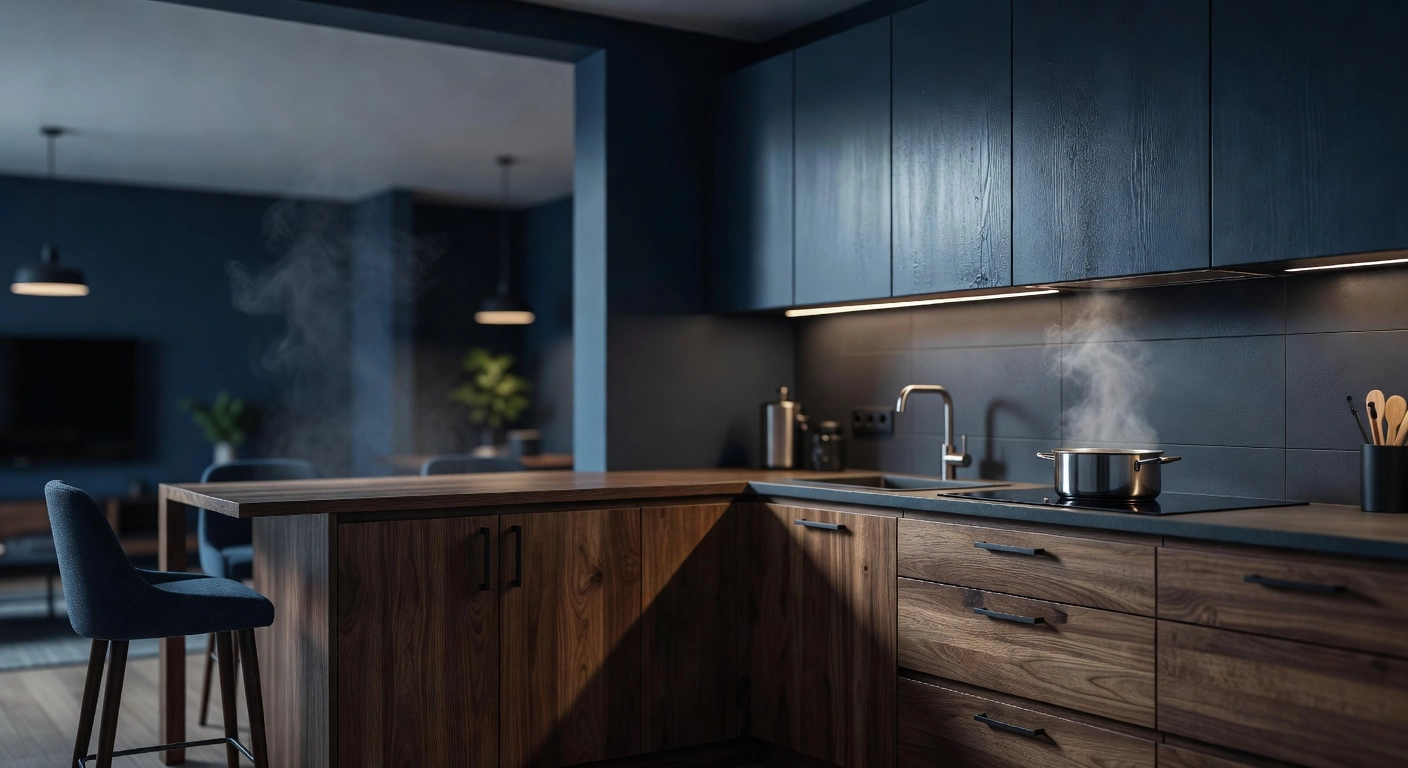
Caring for Wood Cabinets in an Open L-Shaped Kitchen
Open-concept L-shaped kitchens come with a hidden maintenance challenge that most homeowners don’t discover until the grease is already caked on. Because there are no walls or doors to contain cooking vapors, aerosolized oils and fats from your cooktop travel freely through the air and settle as a thin, sticky film on every exposed surface nearby. Cabinet fronts facing the island, doors within several feet of the range, and even upper cabinets you rarely touch all collect this invisible layer with every cooking session.
Wood cabinet fronts are especially vulnerable to this kind of buildup. Even well-sealed wood finishes have enough porosity for grease to bond to the surface and slowly harden over time. What starts as a barely noticeable film gradually dulls your finish and, if left long enough, becomes a legitimately stubborn problem that requires real effort to address without damaging the wood underneath.
The good news is that a simple routine handles this completely. Aim for a light degreasing every four to six weeks using a pH-neutral cleaner or a diluted dish soap solution, just a few drops of dish soap in warm water with a microfiber cloth. This frequency keeps buildup from ever reaching the hardened stage, so you’re always just wiping rather than scrubbing.
For heavy cooking sessions involving frying or sautéing, don’t wait for your scheduled cleaning. Wipe down the island-facing cabinet fronts and anything near the cooktop right after you finish cooking. Fresh grease lifts in seconds; grease that has cured overnight takes considerably more work.
One product category to avoid entirely near cooking zones: silicone-based spray cleaners and standard furniture polishes. These feel like they’re protecting your cabinets, but they leave a residue layer that actually attracts and traps grease particles, making the buildup problem worse over time. Stick to mild soap and water, dry thoroughly after wiping, and your wood cabinets will stay looking sharp for years.
Before You Renovate: A Wood Care Planning Checklist for Your New Kitchen
Planning your wood care routine before the renovation crew packs up is genuinely one of the smartest moves you can make as a new butcher block island owner. Here are five things to check off your list before the kitchen is finished.
1. Oil or seal the butcher block before it gets installed. Once your countertop is screwed down, the underside and edges become nearly impossible to reach. Applying a generous coat of food-grade mineral oil to every surface, including the bottom, sides, and especially the end grain, before installation prevents uneven drying and reduces the risk of warping or cracking later on. Think of it as giving the wood a head start.
2. Stock your wood care kit in advance. Before the kitchen is complete, gather food-grade mineral oil, a gentle wood surface cleaner, fine-grit sandpaper (around 180 to 220 grit), and a food-safe finish for annual resealing. Having these ready means you can start maintenance immediately rather than scrambling after the first water ring appears.
3. Write down your oiling schedule during the first month. New wood needs oiling frequently at first, roughly weekly, then settling into a monthly rhythm. Owners who establish the habit from day one almost always stick with it longer than those who wait until the surface looks dry.
4. Schedule your 12-month restoration touchup now. Mark it on your calendar. After one year of daily use, most butcher block islands benefit from a light sanding and a thorough re-oil to erase shallow knife marks and any water ring remnants from the break-in period.
5. Bookmark your go-to maintenance guides before you need them. Finding a trusted, step-by-step resource for water stain removal and deep conditioning before an issue occurs means you can act quickly and confidently instead of searching under pressure.
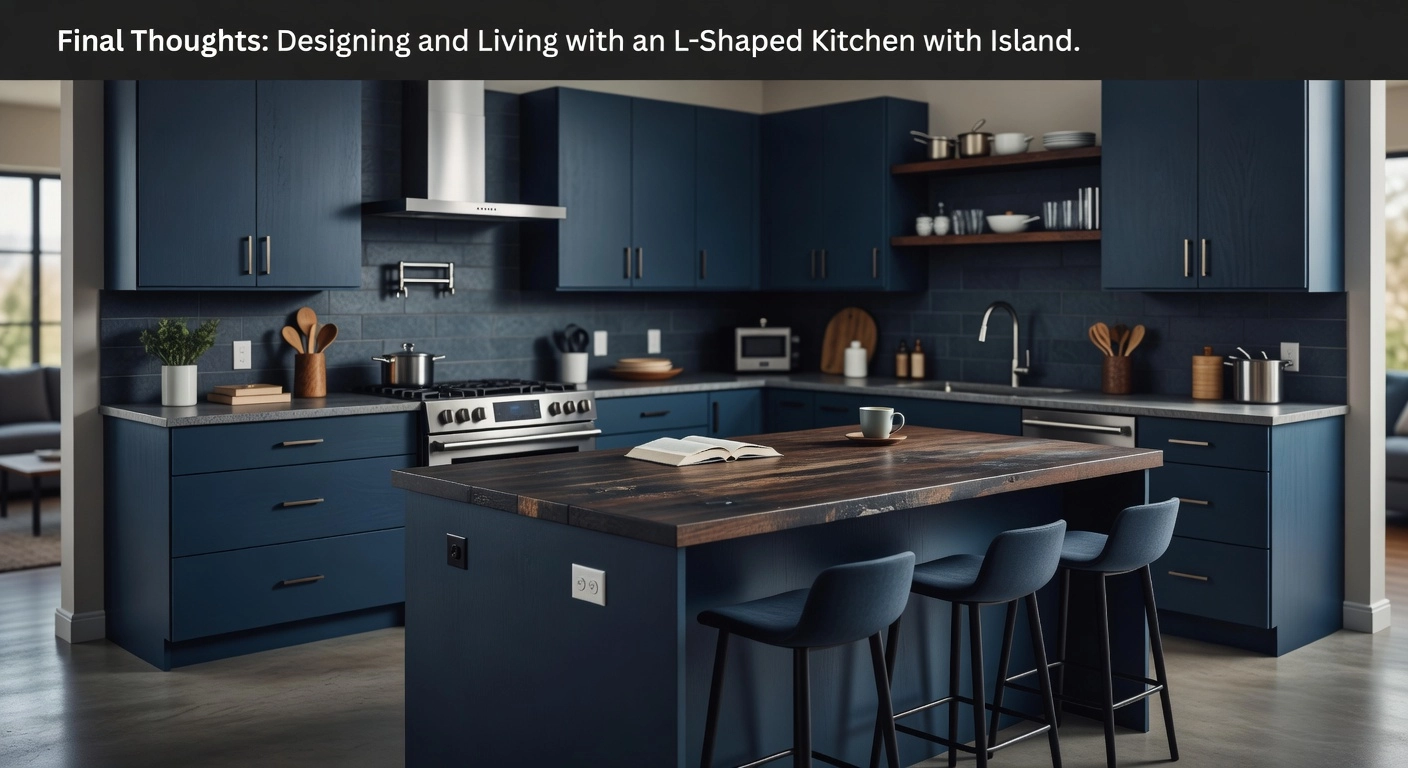
Final Thoughts: Designing and Living with an L-Shaped Kitchen with Island
The l-shaped kitchen with island earns its popularity honestly. Workflow efficiency, open-concept compatibility, and genuine multifunctionality are not marketing talking points; they are reasons backed by data and confirmed by homeowners living with these layouts every day.
Wood and butcher block islands are surging in 2026 for a simple reason: more homeowners are choosing natural materials that genuinely improve with age and use. That 44% jump in butcher block adoption is not a coincidence. It reflects a shift in mindset toward investing in surfaces worth maintaining rather than simply replacing.
The good news is that maintaining those surfaces is well within reach for any beginner. Regular oiling, proactive degreasing, and a first-year touchup require nothing more than products you can order online and about an hour of your time.
Starting those habits early is the single most effective thing you can do. Most wood surface problems that homeowners search frantically to fix later are entirely preventable with simple, consistent care from day one. Use the guides linked throughout this post to build your routine before your renovation is even finished.