
Granite countertops are beautiful, but keeping them looking their best can feel a little intimidating at first. Maybe you just moved into a new home, or perhaps you recently had granite installed and you’re suddenly wondering if you’ve been cleaning it all wrong. Don’t worry, you’re definitely not alone in that feeling.
Here’s the good news: learning how to clean granite countertops is actually much simpler than most people expect. You don’t need a cabinet full of specialty products or hours of scrubbing. With the right approach and a few basic supplies, you can keep your countertops sparkling and protected for years to come.
In this guide, we’ll walk you through everything you need to know as a beginner. You’ll learn which cleaning products are safe to use, which ones to avoid completely, and the simple daily habits that will keep your granite looking brand new. Whether you’re dealing with a fresh spill or just doing your routine kitchen cleanup, we’ve got you covered every step of the way.
What You Need Before You Start

Before you grab a sponge and start scrubbing, taking two minutes to gather the right supplies will save you from accidentally damaging your countertops. Granite is a natural stone that’s typically sealed, so it needs gentle, pH-neutral products to stay looking its best. Here’s everything you’ll want to have on hand.
Soft microfiber cloths (at least two). Grab one for applying your cleaner and a second dry one for buffing the surface afterward. Microfiber is non-abrasive and lint-free, which makes it perfect for polished stone. According to Merry Maids’ granite cleaning guide, drying the surface immediately after cleaning is key to preventing water spots and mineral deposits.
Mild dish soap or castile soap (non-citrus). A few drops of plain, fragrance-free dish soap mixed into warm water is all you need for everyday cleaning. Just make sure it’s not a citrus-based formula, since acidic ingredients can etch the stone over time.
Isopropyl alcohol (70%). This is your best friend for disinfecting. Mix it with a splash of dish soap and water in a spray bottle for a simple DIY cleaner that kills bacteria without bleach or ammonia. Bob Vila’s granite countertop guide recommends letting it sit for three to five minutes before wiping for proper disinfection.
Baking soda. Keep this in your cabinet for tackling stubborn stains. You’ll mix it into a thick paste when needed.
Warm water and a spray bottle. These help you apply cleaners evenly without oversaturating the surface.
Optional: a pH-balanced granite sealer. Not needed for daily cleaning, but worth having around for periodic maintenance, typically once or twice a year.
Step 1: How to Clean Granite Countertops Every Day
Good news: keeping your granite countertops clean every day is much simpler than most people think. You don’t need any special products or fancy equipment. Just a few basic supplies and about five minutes is all it takes to keep that surface looking its best.
What you’ll need: a bowl or spray bottle, warm water, a couple drops of mild dish soap, and two clean microfiber cloths (one damp, one dry).
Start by adding just two or three drops of mild dish soap into a bowl of warm water, or pour the mixture into a spray bottle for easier application. You want a lightly sudsy solution, not a bubble bath. A pH-neutral dish soap works best here since acidic formulas can gradually break down your granite’s protective sealant over time.
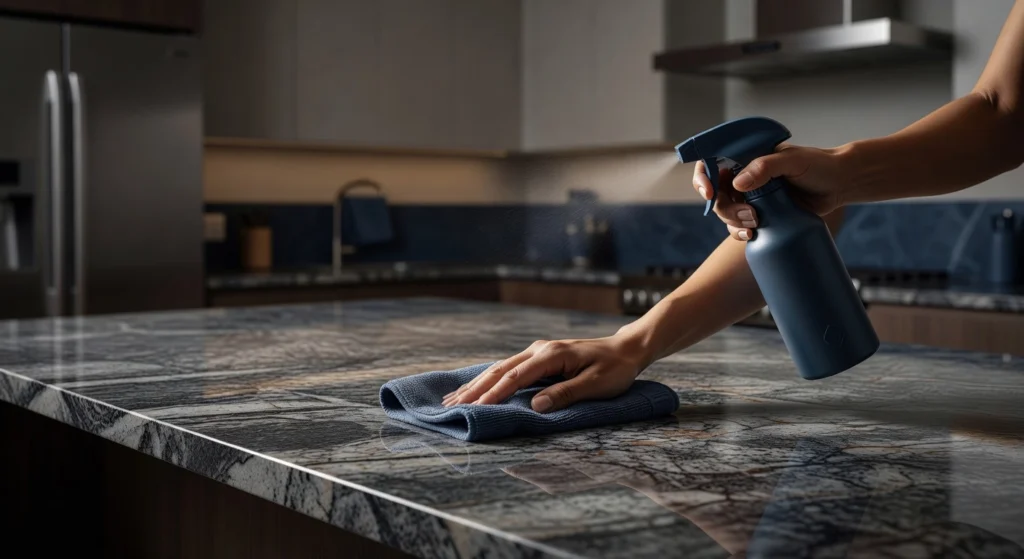
Next, lightly dampen your microfiber cloth with the soapy water and wipe down the entire countertop using gentle circular motions. This technique helps lift crumbs, grease, and everyday grime without scratching the surface. One important thing to watch: don’t oversaturate the cloth or pour water directly onto the stone. Excess moisture can sneak into the natural pores of granite and slowly weaken the sealant from underneath, which is exactly what you want to avoid.
Once you’ve wiped the surface down, rinse your cloth thoroughly with clean water and do a second pass across the countertop. This step removes any leftover soap film, which can cause a cloudy haze, especially noticeable on darker granite. According to Granite Guy Inc.’s step-by-step cleaning guide, skipping this rinse pass is one of the most common mistakes homeowners make.
Finally, immediately dry the entire surface with your second clean, dry microfiber cloth. Don’t let it air-dry. Water left sitting on granite leaves behind mineral deposits that show up as white spots or streaks. A quick buff with a dry cloth keeps things looking polished and spotless. Martha Stewart’s granite care guide also emphasizes that this drying step is non-negotiable for a streak-free finish.
Repeat this routine daily, especially after cooking, and your granite will stay beautiful without any extra effort.
Step 2: Removing Stubborn Stains from Granite
Even with daily cleaning, some stains decide to dig in and stay a while. Don’t worry though — granite is tough, and with the right technique, you can lift most stubborn spots without damaging the surface.
For Oil and Grease Stains: The Poultice Method
If you’ve got a greasy mark from cooking oil, butter, or similar substances, the baking soda poultice is your best friend. Mix baking soda with just enough water to form a thick paste, similar to toothpaste consistency. You want it spreadable but not runny. Apply a generous layer directly over the stain, going slightly beyond the edges so it covers the entire affected area.
Next, cover the paste with plastic wrap and tape down all four edges to seal it in place. This is the key step most beginners skip: the plastic wrap slows the drying process, which actually helps the poultice pull the stain up out of the granite’s pores as it dries. Leave it sitting undisturbed for a full 24 hours. When you come back, the paste will be dry and flaky. Gently wipe it away with a damp microfiber cloth, then dry the surface completely.
According to stone care experts at Rockwood Stone, repeating this process is far safer than reaching for stronger chemicals when a stain is stubborn. Run through the poultice method a second or third time before considering anything more aggressive.
For Food-Based Stains: Wine, Coffee, and Juice
For organic stains like wine, coffee, or fruit juice, a 70% isopropyl alcohol solution works really well. Dampen a clean microfiber cloth with the alcohol and gently wipe the stained area using light, even pressure. Let it sit for a couple of minutes if the stain is set in, then wipe clean and dry thoroughly.
The golden rule here: never scrub. It feels instinctive to apply more pressure when something won’t budge, but abrasive scrubbing can scratch your granite’s polished finish and wear down its protective sealant. Gentle, repeated passes always beat aggressive scrubbing. If the stain persists, MSI Surfaces recommends returning to the poultice method rather than escalating to harsher cleaners.
Up next, we’ll cover how to properly disinfect your granite without stripping its finish.
Step 3: Drying Granite Properly to Prevent Streaks
Once you’ve finished cleaning, don’t walk away and let your countertops air-dry. That’s actually one of the most common mistakes people make, and it’s what causes those frustrating streaks and hazy spots. Tap water contains minerals that get left behind as the water evaporates, creating a dull, cloudy film on your granite surface. Dry your countertops immediately after cleaning, every single time.
Grab a second, clean, dry microfiber cloth for this step. Don’t use paper towels here; they can shed tiny lint fibers and cause micro-scratches over time, especially on polished granite. Your damp cleaning cloth and your drying cloth should always be two separate tools. According to granite care specialists at Granite Depot Columbus, keeping a dedicated dry microfiber cloth near the sink makes this habit much easier to stick with.
As you dry, buff the surface using light, circular motions rather than wiping straight across. This simple technique lifts any remaining film and actually restores your granite’s natural shine without needing any commercial polish. It takes about 30 extra seconds and makes a noticeable difference.
If you live in a hard water area and still notice mineral buildup after drying, mix one part isopropyl alcohol with three parts water in a small spray bottle. Spritz it lightly, wipe it across the surface, and dry immediately with your microfiber cloth. This solution evaporates cleanly and cuts through mineral deposits without harming your granite’s sealant, as noted by Home Cleaning Family.
Finally, do a quick inspection by stepping near a window or natural light source. Artificial lighting hides streaks that natural light reveals easily. If you spot any remaining haze, a quick buff with your dry cloth will take care of it before it sets.
Step 4: Testing and Resealing Your Granite Countertop
Now that your countertops are clean and streak-free, it’s a good idea to check whether your sealant is still doing its job. This test takes about 15 minutes and could save you from a permanent stain down the road.
Run the water droplet test first. Dry your countertop completely, then place a small puddle of water, about a tablespoon, on the surface. Set a timer for 10 to 15 minutes and leave it alone. When the time is up, wipe the water away and look closely at the stone.
Here’s what the results mean:
- Water beads up on the surface: Your sealant is intact and working well. No action needed right now.
- Water soaks in or leaves a dark spot: The sealant has worn down and it’s time to reseal. According to this guide on sealing granite countertops, testing in multiple spots is smart since wear is often uneven, especially near the sink or stove.
Most granite countertops need resealing every 1 to 3 years, but this varies depending on how heavily your kitchen gets used, the finish on your stone, and how porous your particular granite is. Lighter-colored granite tends to need more frequent attention than darker, denser varieties.
When it’s time to reseal, pick up a pH-balanced penetrating stone sealer from your local home improvement store. Apply it in thin, even coats following the product directions exactly, working in small sections. The most important step that beginners often skip: wipe away all excess sealer before it dries. Dried sealer residue leaves a hazy film that is surprisingly difficult to remove without risking damage to the stone.
What You Should Never Use on Granite Countertops
Knowing what to keep away from your granite is just as important as knowing how to clean it. Some of the most common household cleaners can do serious damage, and the tricky part is that the harm often builds up gradually before you notice it.
Vinegar and citrus-based cleaners are probably the biggest offenders. Even diluted vinegar or a lemon-scented spray is acidic enough to etch the stone surface and strip away the protective sealant. Once that sealant is compromised, your granite becomes more porous and far more likely to absorb stains from everyday spills like coffee or red wine.
Bleach, ammonia, and all-purpose sprays (including glass cleaners) fall into the same trap. These products break down your sealant over repeated use and leave the finish looking dull and cloudy. They might seem like they’re doing a great job in the moment, but the long-term damage is real.
Abrasive scrubbers are another one to skip entirely. Steel wool, rough scouring pads, and even Magic Erasers leave tiny scratches across the polished surface. Those micro-scratches trap dirt and stains, making future cleaning harder than it needs to be.
Watch out for dish soaps with citrus additives or heavy-duty degreasers too. A basic mild dish soap is fine for daily use, but anything marketed as a tough degreaser or citrus-powered cleaner is often too harsh for granite.
Finally, hydrogen peroxide is not a routine cleaner for granite. It can lighten darker stone over time and degrade the sealant. If you ever need it for a specific stain on light-colored granite, use it sparingly and only as a one-time fix, not a regular habit. For a full breakdown of safe cleaning practices, this complete expert guide on cleaning granite countertops is worth bookmarking.
DIY Granite Cleaner Recipe and Cost Breakdown
If you’d rather skip the store-bought stuff, making your own granite cleaner takes about two minutes and costs almost nothing. Here’s the simple recipe: combine 1 part 70% isopropyl alcohol with 3 parts water, then add 2 to 3 drops of mild dish soap in a clean spray bottle. Give it a gentle swirl to mix everything together, and you’re done. That’s genuinely all there is to it.
Want it to smell a little nicer? Add 5 drops of lavender or tea tree essential oil to the batch. Both are safe for sealed granite and won’t affect the surface. Just avoid citrus-based oils like lemon or orange, since those are acidic enough to dull the sealant over time.
Why This Formula Actually Works
The isopropyl alcohol handles disinfecting and evaporates quickly, which is exactly why this spray leaves far fewer streaks than plain water. The dish soap lifts grease and everyday grime, and because you’re only using a tiny amount, it rinses clean without leaving residue behind. No harsh chemicals, no acids, no risk to your granite’s finish.
The Cost Savings Are Real
This is where the DIY approach really shines. Using this homemade spray costs roughly $0.02 per use, while commercial granite sprays typically run $0.30 to $0.50 per use. Over a few months, that adds up fast.
For best results, shake the bottle gently before each use and store it away from heat sources. Make a fresh batch every 2 to 3 weeks to keep the formula working at full strength.
Cleaning Granite Safely in Mixed Wood-and-Stone Kitchens

If your kitchen combines granite countertops with butcher block surfaces or oiled wood cabinets, you’ll want to add a few extra steps to your cleaning routine. Mixed-material kitchens are a growing trend in 2026, and they look beautiful, but they do require a little more care to keep both surfaces happy.
Never spray granite cleaner directly onto the countertop when you’re working near wood surfaces. Overspray drifts easily, and even a light mist of your DIY alcohol-based cleaner can land on adjacent butcher block or cabinet edges. Over time, that repeated contact strips the protective oils and finishes that keep wood healthy. Instead, spray or pour your cleaner onto the microfiber cloth first, then wipe the granite. It takes two extra seconds and protects everything nearby.
This matters especially with alcohol-based cleaners. As covered in the DIY recipe section, isopropyl alcohol works great on sealed granite, but it’s genuinely harsh on wood grain. Repeated contact can dry out butcher block and break down food-safe conditioning oils like mineral oil or beeswax, leading to cracking and a dull, thirsty surface over time.
A simple maintenance schedule helps a lot here. Clean your granite surfaces first using your cloth-applied solution, then take a quick look at any adjacent wood surfaces. If they seem a little dry or dull after cleaning day, that’s a good signal to apply a thin coat of mineral oil or butcher block conditioner to restore moisture.
Finally, keep two separate labeled microfiber cloths in your cleaning caddy, one for granite and one for wood. This prevents cleaning product residue from transferring between surfaces and causing unintended damage. Label them clearly with a piece of tape so there’s no guessing mid-clean.
Common Granite Cleaning Mistakes and How to Fix Them
Even with the best intentions, it’s easy to fall into a few habits that slowly damage your granite without you realizing it. Here are the five most common mistakes and exactly how to fix them.
Using vinegar because it seems natural and safe. This is probably the most widespread mistake. Vinegar is acidic, and granite does not respond well to acid. Even occasional use eats into the protective sealant and etches the stone’s surface over time, leaving it dull and more vulnerable to staining. The same goes for lemon juice and citrus-based sprays. If you’ve been using vinegar, swap it out immediately for warm water with a drop of mild dish soap or a pH-neutral granite cleaner.
Letting the countertop air dry after cleaning. Skipping the drying step allows water to evaporate and leave behind mineral deposits, especially in hard water areas. These show up as white, cloudy spots that look like permanent stains. Always finish with a dry microfiber cloth to buff the surface completely.
Waiting too long to wipe up spills. Coffee, wine, and citrus juice can begin staining granite within minutes, particularly if the sealant is worn. Blot spills immediately rather than wiping, then clean and dry the area right away.
Assuming the sealant is fine because the surface looks okay. A dull finish or a surface that darkens when wet is a sign the sealant is failing. Run the water droplet test periodically and reseal when needed.
Layering too many cleaning products. Using multiple sprays or applying too much product leaves a filmy residue that makes granite look hazy and cloudy. Stick to one simple cleaner, use a small amount, and always finish with a dry wipe.
Keeping Your Granite Countertops Clean for the Long Haul
The good news is that you now have everything you need to keep granite looking great for years to come. Stick to the basics: warm water, a few drops of mild dish soap, and a dry microfiber cloth to finish. That simple routine handles the vast majority of everyday messes without putting your sealant or stone at risk.
When stains show up, reach for your baking soda poultice or your DIY alcohol-and-water spray before spending money on commercial products. Both work well and cost almost nothing to make.
Every six months, run the water droplet test. If the water soaks in rather than beading up, it is time to reseal. This one small habit protects your investment and keeps stains from becoming permanent.
Keep acidic cleaners, abrasive scrubbers, and ammonia-based sprays out of your kitchen entirely. No exceptions. And if you have wood surfaces alongside your granite, always clean the stone first, then move on to conditioning your wood to keep both materials in their best shape.
Conclusion
Caring for your granite countertops does not have to be complicated or stressful. Remember the key takeaways: stick to gentle, pH-neutral cleaners, avoid harsh chemicals like bleach and vinegar, wipe up spills quickly before they have a chance to stain, and reseal your countertops regularly to maintain their protection.
With just a few minutes of daily attention, you can keep your granite looking as stunning as the day it was installed. The effort is minimal, but the results speak for themselves.
Now it is time to put what you have learned into action. Do a quick scan of your cleaning supplies today and swap out anything that could be damaging your countertops. Your granite is a long-term investment, and treating it right will keep your kitchen beautiful for decades to come.
Frequently Asked Questions
What is the safest everyday cleaner to use on granite countertops?
The safest everyday cleaner for granite is a simple mixture of a few drops of mild, non-citrus dish soap combined with warm water. Apply it using a damp microfiber cloth, rinse with a clean damp cloth to remove soap residue, and immediately dry the surface with a separate dry microfiber cloth. Avoid any acidic, ammonia-based, or citrus-scented cleaners, as these break down granite's protective sealant over time.
How do I remove stubborn oil or grease stains from granite?
For oil and grease stains, use the baking soda poultice method. Mix baking soda with just enough water to form a thick, toothpaste-like paste and apply it generously over the stain. Cover it with plastic wrap, tape down the edges to seal it, and leave it for a full 24 hours. The sealed paste pulls the stain up from the granite's pores as it dries. Wipe it away with a damp microfiber cloth and dry thoroughly. Repeat the process two or three times if needed before considering anything more aggressive.
How often should I reseal my granite countertops, and how do I know when it's time?
Most granite countertops need resealing every one to three years, depending on usage and the type of granite. To test whether your sealant is still working, dry the surface completely and place a tablespoon of water on it. Wait 10 to 15 minutes. If the water beads up, your sealant is intact. If it soaks in or leaves a dark spot, it's time to reseal. Apply a pH-balanced penetrating stone sealer in thin, even coats and wipe away all excess before it dries to avoid a hazy residue.
What common household cleaners should I never use on granite countertops?
Avoid vinegar, lemon juice, and any citrus-based cleaners since their acidity etches the stone and strips the sealant. Bleach, ammonia, glass cleaners, and all-purpose sprays also degrade the sealant over time and dull the finish. Abrasive scrubbers like steel wool, scouring pads, and Magic Erasers leave micro-scratches that trap dirt. Hydrogen peroxide should not be used as a regular cleaner either, as it can lighten darker granite and break down the sealant.
Can I make my own granite cleaner at home, and is it as effective as store-bought products?
Yes, a highly effective DIY granite cleaner is easy to make at home. Combine one part 70% isopropyl alcohol with three parts water and add two to three drops of mild dish soap in a spray bottle. The alcohol disinfects and evaporates quickly to reduce streaking, while the small amount of dish soap lifts grease and grime without leaving residue. This homemade formula costs roughly $0.02 per use compared to $0.30 to $0.50 per use for commercial sprays, making it a very cost-effective alternative. Make a fresh batch every two to three weeks for best results.