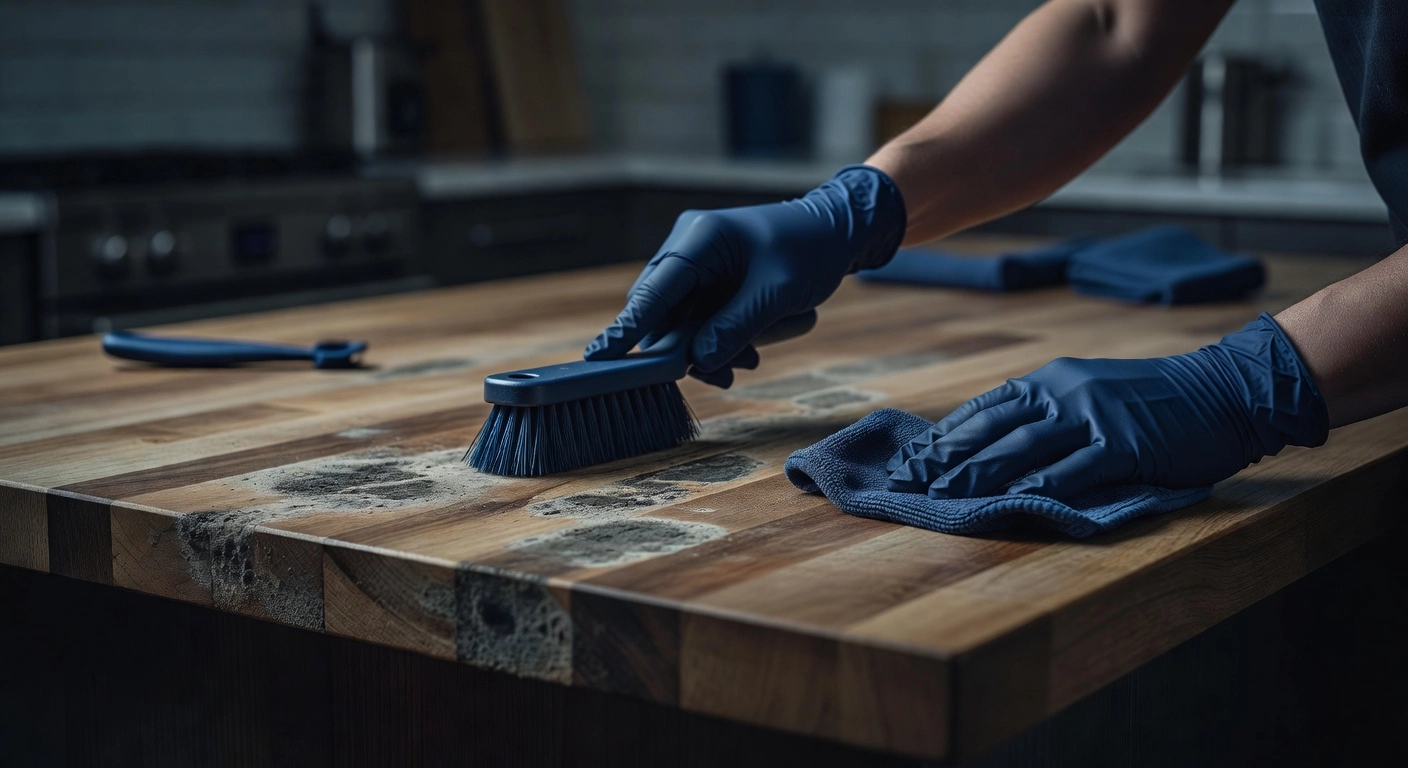
Mold on butcher block countertop is a common kitchen problem that scares homeowners. In this guide you’ll learn exactly how to remove mold from a butcher block countertop safely and prevent it from coming back.
If you notice mold on butcher block countertop surfaces, don’t panic. Wood is porous but totally fixable with the right steps. So grab your cleaning gloves and let’s get that countertop looking fresh and clean again!
Why Mold Grows on Butcher Block Countertops
Butcher block countertops are beautiful, but they have one big vulnerability: they’re made of wood, and wood absolutely loves to hold onto moisture. Understanding why mold on butcher block countertop surfaces shows up in the first place makes it a lot easier to stop it before it becomes a serious problem.
Moisture is the number one culprit. The areas of your countertop closest to the sink are the highest-risk zones for mold on butcher block countertop edges, and for good reason. Splashing water, steam from hot pots, wet sponges sitting on the surface, and dish racks dripping slowly onto the wood all create the kind of prolonged dampness that mold spores need to take hold. Even a spill you think you wiped up can leave enough residual moisture in the grain to start the process. According to maintenance data from WoodStuffHQ’s butcher block care guide, approximately 70% of butcher block surface damage traces back to standing water, with mold frequently developing as a direct secondary consequence.
A depleted oil or sealer layer makes things significantly worse. When your butcher block is properly oiled, food-grade mineral oil or a beeswax blend fills the wood’s pores and creates a barrier that repels water. But when that protective layer wears down from daily use and washing, the bare wood grain becomes exposed and absorbent. Water seeps in, the interior stays dark and damp, and that’s exactly the environment mold needs to colonize. Think of it like a raincoat with holes; it stops working the moment it can’t keep moisture out.
Kitchen humidity plays a surprisingly big role too. Kitchens without exhaust fans, or those in naturally humid climates, often sit above 45% relative humidity. Keeping indoor humidity between 35 and 45% significantly reduces mold risk, since wood continuously absorbs moisture from the surrounding air, not just from direct spills.
Knowing what mold actually looks like helps you catch it early. Watch for dark patches in shades of black, green, or blue, especially along sink edges or under items that sit on the counter regularly. You might also notice powdery white or gray mildew, which tends to be more surface-level. Sometimes the first sign is simply a musty smell that lingers even after you’ve wiped the counter clean. If you’re noticing any of these signs of mold on butcher block countertop surfaces, it’s time to act quickly before the mold pushes deeper into the wood grain.
Identify Your Mold Severity Before You Start
Before you grab a cleaning product and start scrubbing, take five minutes to figure out exactly what you’re dealing with. Mold on butcher block countertops isn’t one-size-fits-all, and jumping straight into treatment without assessing the situation first can lead to wasted effort or even unnecessary damage to your countertop.
The Three Levels of Mold Severity
Level 1: Surface Mildew is the most beginner-friendly situation you can find yourself in. This shows up as powdery white or gray patches sitting on top of the wood surface. The key thing to notice here is that the wood grain underneath looks completely normal with no dark discoloration soaked in. When you lightly wipe the area with a damp cloth, it comes off with a little resistance but doesn’t leave a stain behind. Think of it like dust that has grown a personality. Mildew stays on the surface and is generally the easiest fungal issue to resolve with basic cleaning methods.
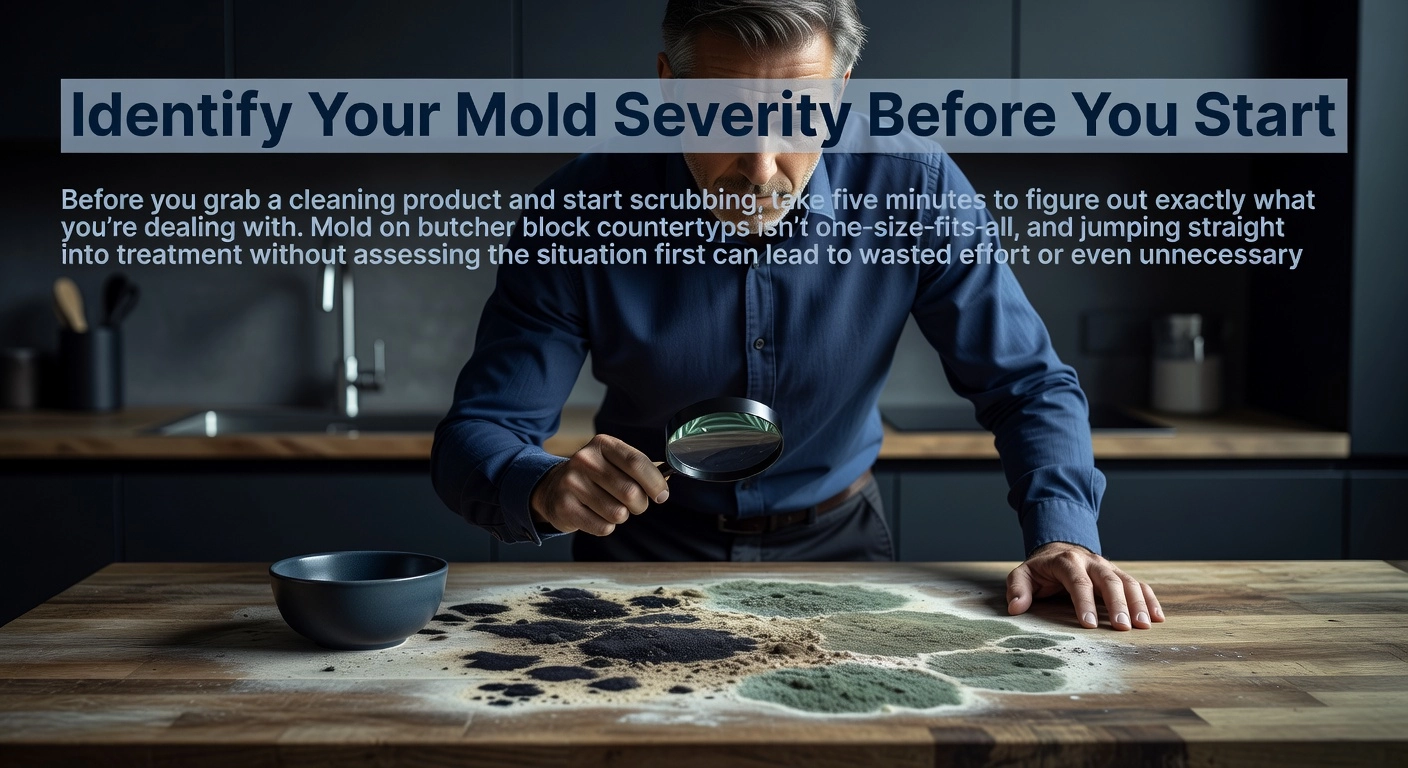
Level 2: Stained Grain means the problem has gone a step deeper. You’ll notice dark patches, often black, green, or grayish-blue, that have actually soaked into the wood fibers. Wiping does nothing because the discoloration lives inside the grain, not on top of it. This stage requires a chemical treatment like diluted vinegar or a mild bleach solution to break down what’s embedded in the wood.
Level 3: Deep Penetration is the most serious scenario. Warning signs include mold spreading across a large area, wood that feels soft or slightly spongy when you press it, or mold that keeps coming back within just a few days of cleaning. This signals that fungal growth has colonized deeper wood fibers and simple surface treatments won’t cut it.
How to Check With a Flashlight
Here’s a simple trick that makes a big difference: grab a flashlight and hold it nearly parallel to your countertop surface, almost like you’re shining it sideways across the wood. This low-angle light reveals texture changes, fuzzy growth, and whether discoloration sits on top of the wood or has sunk into the grain. Overhead lighting flattens everything out and can hide early-stage mold entirely.
Getting your severity level right matters more than you might think. Under-treating a Level 2 or Level 3 problem means the mold roots stay in the wood and the growth returns within days. Over-treating a Level 1 problem with aggressive sanding removes perfectly good wood unnecessarily, thinning your countertop over time. A quick, honest assessment upfront saves you time, money, and frustration down the road.
What You Will Need: Budget-Friendly Supplies
Now that you know what you’re dealing with, let’s make sure you have everything on hand before diving in. The good news? You probably already own most of this stuff, and anything you don’t can be picked up for under $10 at your local hardware or grocery store.
Cleaning Agents
For most mold cases on butcher block, four household staples will get the job done. White distilled vinegar is your best starting point; it’s a natural disinfectant that kills surface mold and neutralizes musty odors without harsh chemicals. Unscented household bleach (diluted to about 1 teaspoon per quart of water) steps in for more stubborn patches that vinegar can’t fully handle. 3% hydrogen peroxide works great on embedded stains and doubles as a gentle disinfectant. Finally, baking soda mixed into a paste with a little water acts as a mild abrasive and deodorizer. Never mix bleach with vinegar, as combining them creates toxic fumes.
Sanding and Finishing Supplies
If cleaning alone doesn’t lift the stain, a little sanding will. Grab 220-grit sandpaper for light surface stains and 150-grit for deeper, more embedded mold. Both are available at any hardware store for under $10. After sanding, you’ll need to reseal the wood to restore its moisture barrier. Food-grade mineral oil is the most affordable and widely available option. A beeswax blend adds extra water resistance, while pure tung oil provides a durable, deeply penetrating finish. Resealing after any mold treatment is a non-negotiable step.
Application Tools and a Note on Equipment
You won’t need anything fancy here. Stock up on clean microfiber cloths or lint-free rags, a spray bottle for your cleaning solutions, a soft-bristle brush for scrubbing, and rubber gloves to protect your hands, especially when working with bleach or peroxide. These basic tools handle the job effectively. A random-orbit sander is a nice bonus if you have one and are tackling a larger surface area, but hand-sanding with the correct grit works perfectly well for most DIY countertop repairs.
Method 1: Vinegar Solution for Surface Mildew
Good news: if you’ve identified light surface mildew on your butcher block, you likely already have everything you need sitting in your pantry. A simple vinegar solution is your best first move, and here’s exactly how to use it.
What Makes Vinegar Work
White distilled vinegar is a genuinely effective mold-fighter, not just a home remedy myth. Its acetic acid content disrupts the cellular structure of many common mold and mildew species on contact. Research suggests it can eliminate over 80% of common mold species, making it a surprisingly powerful tool. Better yet, it’s completely food-safe once it dries, so you don’t have to worry about it lingering on a surface where you prep food. For light surface mildew, this is your ideal starting point before reaching for anything stronger.
Step-by-Step Instructions
Step 1: Mix your solution. Combine equal parts white distilled vinegar and water in a clean spray bottle. Give it a gentle shake to mix. This dilution is effective against surface mildew while being gentler on your wood than straight vinegar.
Step 2: Apply generously. Spray the affected area thoroughly so the surface is well-coated but not pooling with liquid. Let the solution sit for 5 to 10 minutes. This dwell time gives the acetic acid enough contact time to actually kill mold rather than just wipe it around.
Step 3: Scrub with the grain. Using a soft-bristle brush, scrub the mildewed area by moving in the direction of the wood grain, never across it. Scrubbing against the grain can scratch the surface and raise wood fibers, creating more tiny spots where moisture hides later. After scrubbing, wipe everything clean with a damp cloth.
Step 4: Repeat if needed, but watch your clock. If mildew patches remain after the first pass, apply the solution again and repeat the scrub. Just keep a close eye on your timing. Do not let the vinegar solution sit on the wood for longer than 15 minutes total, as prolonged moisture exposure can cause the wood grain to raise and feel rough.
Step 5: Dry thoroughly. Pat the surface dry with a clean cloth right away, then let the countertop air dry for at least 2 hours before you assess the results. Thorough drying is critical because leaving any moisture behind just invites the mold to come right back.
Once the surface is fully dry, check the area in good lighting. If the mildew is gone, you’re ready to re-oil the surface to restore its protective moisture barrier. If faint staining or mildew remains after two full applications, don’t panic. That’s simply a signal to move on to a slightly stronger method.
Method 2: Diluted Bleach Solution for Stubborn Mold
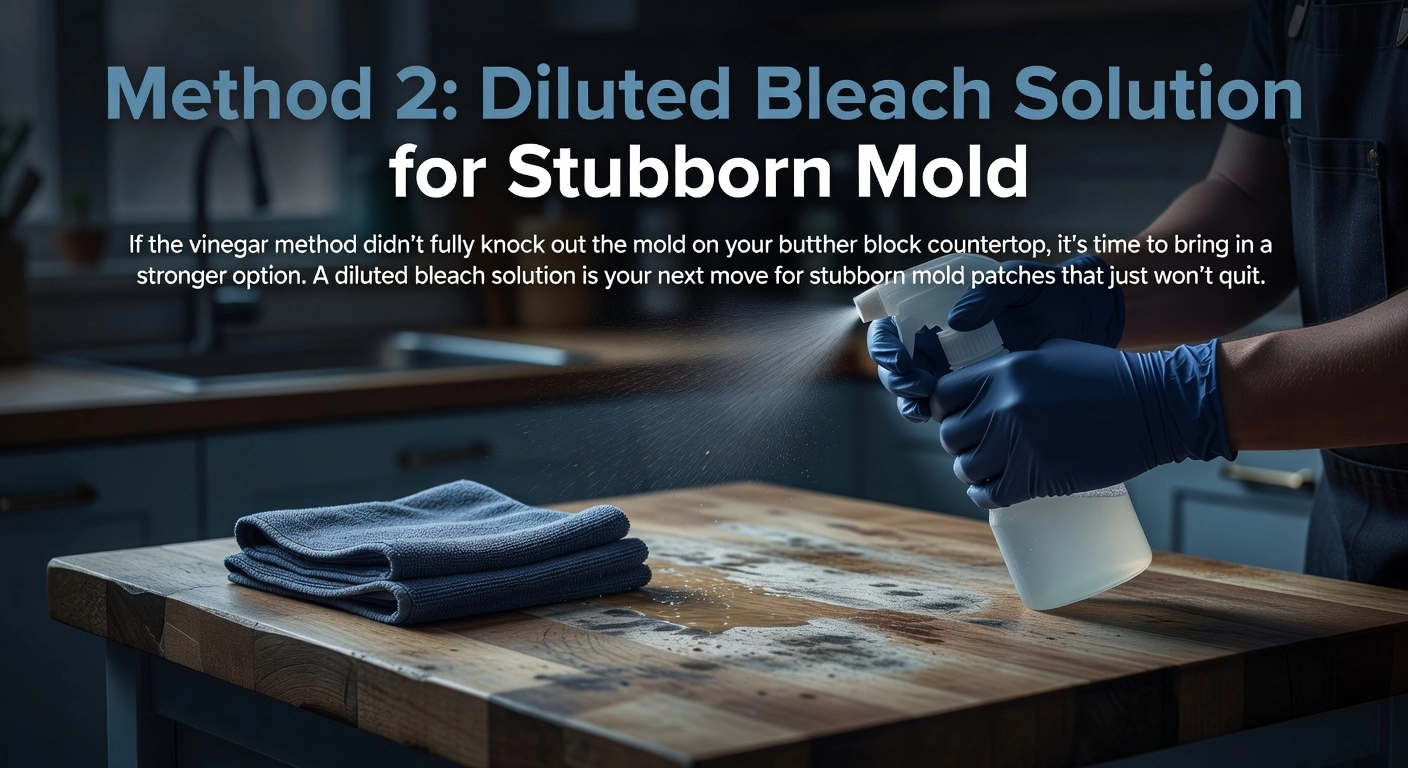
If the vinegar method didn’t fully knock out the mold on your butcher block countertop, it’s time to bring in a stronger option. A diluted bleach solution is your next move for stubborn mold patches that just won’t quit. The key word here is diluted, because how you mix this solution makes all the difference between effective treatment and a damaged countertop.
What You Will Need for This Method
- Unscented household bleach (plain, no added cleaners or fragrance)
- 1 quart of clean water
- Measuring spoon
- Clean cloth or sponge
- Two dry towels
- Rubber gloves
- Good ventilation (open a window or turn on your kitchen fan)
How to Mix and Apply the Solution
Mix exactly 1 teaspoon of unscented household bleach into 1 quart of water. This dilution creates a solution gentle enough for food-prep wood surfaces while still being effective against stubborn mold. Do not eyeball it; using too much bleach can damage wood fibers and leave residue that is unsafe for food contact. This concentration targets surface mold without soaking deep into the wood grain.
Put on your rubber gloves, then dip your cloth or sponge into the solution. Apply it to the affected area and scrub lightly along the wood grain, never against it. Let the solution sit on the surface for no more than 5 minutes. Setting a timer is genuinely helpful here, because leaving bleach on wood longer than necessary increases the risk of lightening or weakening the surface.
A Critical Safety Warning
Never mix bleach with vinegar, hydrogen peroxide, or any other cleaner. Combining bleach with acids like vinegar produces toxic chlorine gas, which causes serious respiratory irritation. Since Method 1 used a vinegar solution, make sure you have rinsed and dried the surface completely before applying any bleach. The EPA’s mold guidance also notes that bleach works primarily on surface mold rather than penetrating deep into porous wood, which is why this method is best reserved for stubborn surface stains rather than deeply embedded mold.
Rinsing, Drying, and Resealing
Once the dwell time is up, rinse the surface twice with plain clean water, using a fresh cloth each time. Two rinses matter because any bleach residue left behind is not safe for a surface where you prep food. After rinsing, dry the area immediately and thoroughly with a clean towel, then allow it to air dry completely before moving on to resealing.
One thing to expect: bleach may lighten the treated spot slightly, giving it a slightly paler tone than the surrounding wood. This is completely normal and nothing to stress over. Once you reseal the countertop with food-grade mineral oil or a beeswax finish, that lighter area will absorb the oil and blend back in beautifully with the rest of the surface.
If the mold stain is still visible after this treatment, the next step is light sanding, which we cover in the following method.
Method 3: Hydrogen Peroxide for Lighter Stains
If bleach feels like overkill for what you’re seeing on your countertop, hydrogen peroxide might be exactly what you need. The standard 3% variety you can grab at any drugstore for about a dollar works beautifully as a gentler alternative for Level 1 and low Level 2 mold staining. Think of it as the middle ground: stronger than vinegar, but kinder to your wood than bleach.
How to Apply It
Pour some hydrogen peroxide directly onto a clean cloth and press it onto the stained area, making sure the wood is well saturated. You can also use a spray bottle if that feels easier. You should see it start to bubble and foam within a minute or two, and that fizzing action is a good sign. It means the peroxide is actively breaking down the organic material causing that dark staining. Let it sit and work for the full 10 minutes, then wipe the area clean and rinse with a damp cloth. Always work in the direction of the wood grain to avoid roughing up the surface.
Why It Works Better Than Bleach on Lighter Wood
Hydrogen peroxide is particularly worth reaching for if your countertop is maple or another light-colored wood species. It causes significantly less surface bleaching than household bleach and is far less likely to raise the grain or leave the wood looking dried out and patchy. Bleach can be pretty aggressive on pale wood tones, often leaving uneven whitish spots that are hard to reverse.
That said, hydrogen peroxide does have one real limitation worth knowing about. It works primarily at the surface level, so if the mold staining has soaked more than 1 to 2 millimeters into the grain, it likely will not reach deep enough to fully clear the discoloration. For those situations, light sanding is a better next step.
Boost Results with a Baking Soda Paste
After your hydrogen peroxide treatment, mix a thick paste of baking soda and water (just enough water to make it spreadable, not runny) and apply it over the treated area. Let it sit for about 15 minutes, then gently scrub along the grain with a soft cloth. The baking soda lifts any residual staining through mild abrasion while also neutralizing leftover acidity on the surface. Rinse thoroughly, dry completely, and follow up with a coat of food-grade mineral oil to restore the wood’s protective barrier.
Method 4: Sanding for Embedded Mold Stains
Sometimes vinegar, bleach, and hydrogen peroxide do everything right but still leave behind a shadow of dark discoloration in the wood grain. That’s your signal that the mold didn’t just sit on the surface. It worked its way into the wood fibers themselves, and no liquid treatment is going to pull it back out. At that point, sanding is the right move. You’re essentially shaving off the stained layer of wood to reveal the clean wood underneath.
What You’ll Need
- 220-grit sandpaper (starting point)
- 150-grit sandpaper (for resistant staining)
- 180-grit sandpaper (for stepping back up)
- A sanding block or random-orbit sander
- Vacuum or tack cloth
- Dust mask
Step-by-Step Sanding Process
Step 1: Start with 220-grit sandpaper. Wrap it around a sanding block or load it into your sander, and begin working in the direction of the wood grain. This part really matters. Sanding across the grain leaves visible scratches that are hard to fix later, so keep your strokes parallel to the grain lines running along the countertop. Use consistent, overlapping strokes and apply even pressure across the stained area so you don’t accidentally sand one spot deeper than another.
Step 2: Check your progress and step down if needed. After a few passes with 220-grit, wipe the dust away and look at the stain under good lighting. If the dark discoloration is fading, keep going with 220-grit until it’s gone. If the stain is holding on stubbornly, switch to 150-grit for more cutting power. The coarser grit removes material faster and can reach staining that’s worked deeper into the grain. Again, always sand with the grain, not against it.
Step 3: Work back up through the grits. Once the stain is gone, don’t stop at 150-grit. That surface will feel rougher than the rest of your countertop. Sand back up through 180-grit and then finish with 220-grit to smooth everything out and blend the repaired area with the surrounding wood. This progressive approach restores the texture so the countertop feels consistent across the whole surface.
Step 4: Clean up all the dust. Use a vacuum to remove the bulk of the sanding dust, then follow up with a tack cloth or a barely damp cloth to pick up the fine particles. Every bit of dust needs to come off before you apply any oil or finish. Trapped dust under an oil coat creates a gritty, rough surface that’s frustrating to fix.
Step 5: Let the wood dry completely. Give the countertop a minimum of 4 hours before applying any oil or sealant. The sanding opens up the wood grain, and any remaining moisture needs to fully evaporate first. Applying oil to damp wood traps that moisture underneath the finish, which can actually encourage the exact problem you just fixed.
A Note on Tools
You don’t need a power sander to pull this off. A simple sanding block, which is just a small block of wood or rubber with sandpaper wrapped around it, gives you plenty of control and costs almost nothing. That said, if you’re dealing with a large countertop area that has widespread staining, a random-orbit sander will save you a lot of time and effort. Either tool gets the job done; the sanding block is just a slower process on bigger surfaces.
Once the surface is dry, you’re ready to re-oil the countertop and restore its protective barrier, which is the step that prevents this whole situation from repeating itself.
Resealing the Countertop After Mold Treatment
Here’s something a lot of people miss: getting rid of the mold is only half the job. Once you’ve cleaned, scrubbed, or sanded your butcher block, that wood is essentially naked. The cleaning process strips away whatever protective oil or finish was there before, leaving porous, thirsty wood that will soak up moisture like a sponge. Skip the resealing step, and you could be looking at mold again within just a few weeks. This step is not optional.
Food-Grade Mineral Oil: Start Here
For most beginners, food-grade mineral oil is the perfect starting point. It’s inexpensive, easy to find at any grocery or hardware store, completely food-safe, and simple to apply. After your countertop is fully dry from the cleaning and treatment process, pour a generous amount of mineral oil directly onto the surface and rub it in with a clean cloth, working with the grain. For an initial re-conditioning treatment after mold removal, you want to do 3 to 4 applications over 24 hours, letting each coat soak in fully before wiping the excess and reapplying. Your wood has been through a lot, and it needs that extra saturation to rebuild its moisture barrier properly.
Beeswax Blends for High-Moisture Areas
Once your oil applications are done, consider topping it off with a beeswax blend, especially if your countertop sits near the sink. Products that combine mineral oil and beeswax (sometimes called “board butter”) create a harder, more water-resistant surface layer on top of the oil base. This extra layer does a much better job of repelling standing water and is ideal for those high-risk zones where moisture lingers. It’s still completely natural and food-safe, and it gives the wood a subtle, attractive sheen as a bonus.
Pure Tung Oil for Deeper Protection
If you want a more durable, long-lasting result, pure tung oil is worth the extra effort. It penetrates deeply into the wood fibers and provides strong moisture resistance once fully cured. The trade-off is time; each coat needs 24 to 48 hours to dry, and you’ll want to apply multiple coats for full restoration after mold treatment. Always check that the product is specifically labeled food-safe before using it on any prep surface.
Why You Should Skip Polyurethane
It might be tempting to reach for polyurethane since it promises a tough, waterproof finish with less maintenance. Resist that urge on a countertop that has had mold problems. Polyurethane forms a film on top of the wood rather than penetrating it. If any moisture sneaks underneath through a scratch, a seam, or a worn edge, it becomes completely trapped with nowhere to go. That creates the exact warm, damp, hidden environment where mold thrives, and you won’t even see it developing until it’s become a bigger problem. Stick with penetrating, natural finishes that let the wood breathe and are easy to spot-treat if you ever need to address an issue again.
How to Prevent Mold From Coming Back
Now that your butcher block is clean and freshly sealed, the real work is keeping it that way. Prevention is genuinely simpler than treatment, and a few consistent habits will make mold a non-issue going forward.
Make Spill Cleanup a Reflex
The single most important thing you can do is wipe up spills the moment they happen, especially around the sink and under your dish rack. This isn’t an exaggeration: on a surface with a worn or thin oil barrier, standing water can start absorbing into the wood in as little as 30 minutes. That absorbed moisture is exactly what mold feeds on. Keep a dedicated cloth or a few paper towels right on the counter near the sink so there’s zero friction between a spill happening and you wiping it up. After any cleaning or heavy water exposure, give the surface a quick dry-down with a towel before walking away.
Stick to a Regular Oiling Schedule
Oiling is your primary defense, and consistency matters more than anything else here. For the first three months after installation or after a major restoration like sanding, oil your countertop monthly to build up a strong protective barrier. The wood is essentially thirsty during this period and will absorb oil quickly, which is a good sign. After that initial phase, every two to three months is the right rhythm for ongoing maintenance. A simple way to know when it’s time: pour a few drops of water onto the surface. If the water beads up, you’re protected. If it soaks in and darkens the wood, it’s time to oil. Always use food-grade mineral oil; cooking oils like olive oil and coconut oil will go rancid inside the wood and create their own problems.
Control the Humidity in Your Kitchen
Wood responds to the air around it, and too much ambient moisture can work against you even when your surface looks dry. Aim to keep your kitchen humidity between 35 and 45 percent year-round. In humid climates or during summer months, a dehumidifier or a consistently running exhaust fan makes a real difference. Pick up an inexpensive hygrometer (a small humidity monitor) and keep it in the kitchen so you can actually see what you’re dealing with rather than guessing.
Give Your Sink Area Extra Attention
The zone directly around your sink deserves its own maintenance routine because it takes far more abuse than the rest of the countertop. Splashing, condensation from a cold glass, and water pooling near the faucet all accelerate oil breakdown in that specific area. Apply an extra coat of mineral oil around the sink perimeter every single month, regardless of where you are in your general oiling schedule. This one small habit directly targets the spot where mold is most likely to start.
Remove Wet Items and Use Simple Barriers
Wet sponges left sitting on the wood, damp dish towels draped over the edge, and soaking pots or pans placed directly on the surface all create localized moisture problems that oil alone can’t fully counteract. Make it a rule: wet items go in the sink or on a rack, not on the butcher block. For your dish rack specifically, place a waterproof mat or drip tray underneath it as a simple, inexpensive barrier. This one low-cost swap eliminates one of the most common sources of chronic moisture damage and keeps the area underneath the rack from becoming a hidden mold zone.
When to Stop Restoring and Replace the Countertop
All the methods we’ve covered work really well for typical mold situations, but sometimes the damage has simply gone too far for DIY restoration to make sense. Knowing when to stop is just as important as knowing how to clean.
Mold keeps coming back within a week. If you’ve done everything right, including a thorough cleaning, sanding, and fresh resealing, and the mold reappears within seven days, that’s a clear sign the fungal growth has colonized deep into the wood fibers. Surface treatments and even 220-grit sanding can only reach so far. At that point, the spores are living deeper in the grain than any DIY method can reliably reach.
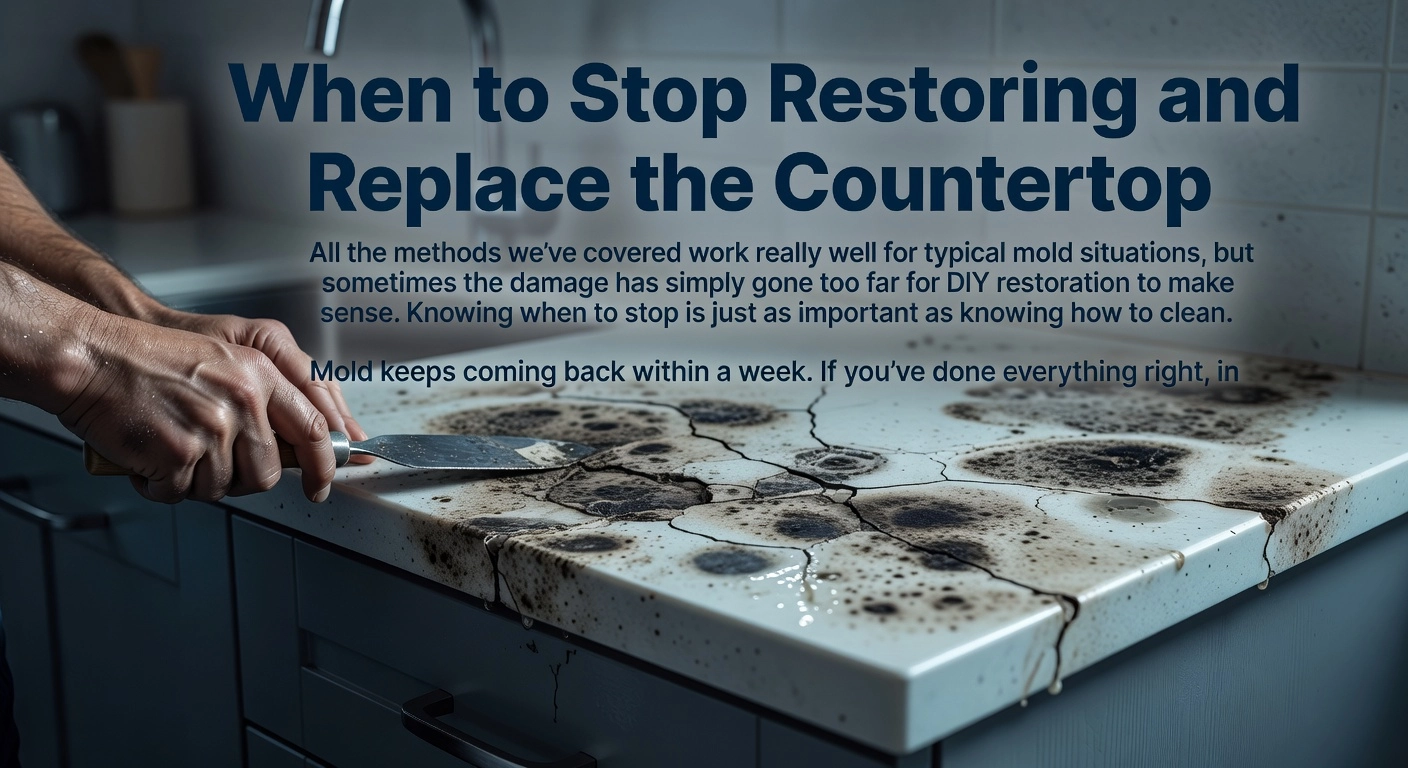
The wood feels soft or spongy. Press firmly on the affected area with your finger or a screwdriver handle. Sound wood should feel solid and firm. If it gives, crumbles, or has a spongy texture, rot has set in alongside the mold. Rot eats the wood’s internal structure, and no amount of cleaning or sealing can reverse that. The wood has essentially lost its integrity and is no longer safe for food prep.
The damage covers a large portion of the surface. If mold has penetrated deeply across more than roughly one-third of your countertop, the math often tips toward replacement. Refinishing costs typically run $200 to $600, while a full replacement averages considerably more, but repeated professional treatments on extensive damage can close that gap quickly.
You suspect black mold. Stachybotrys, or toxic black mold, looks dark greenish-black and slimy rather than fuzzy. In a food preparation area specifically, confirmed or suspected black mold warrants a professional assessment rather than a DIY fix, since disturbing it can spread spores.
Before making any final call, photograph the damage thoroughly. If the staining looks bad but the wood is structurally firm with no recurring growth, restoration is almost always the smarter, more budget-friendly path forward.
The Quickest Path to a Mold-Free Countertop
You now have everything you need to tackle mold on butcher block countertop surfaces with confidence. The key is acting fast, using the right method for your severity level, and resealing properly after treatment.
Good one
thanks