

Looking for bathroom cabinet ideas that actually work in 2026? Your bathroom deserves better than cluttered countertops and wasted space.
Whether you are starting from scratch or looking to refresh a tired bathroom, the right storage solution can completely transform how the room looks and functions.
Without the right wood species, proper finish protection, and smart construction techniques, humidity silently attacks wood fibers, causing swelling, warping, delaminated veneers, and mold growth within months.
This is not a slow, gradual problem. It is an accelerating one, and most homeowners only notice it when the damage is already expensive to fix.
Floating Wall-Mounted Vanity
Floating wall-mounted vanities are one of the fastest-growing bathroom cabinet styles heading into 2026, driven by the surge in small-space living and the widespread embrace of modern minimalist design. By suspending the cabinet off the floor, you instantly expose bare floor beneath the unit, which tricks the eye into perceiving the room as significantly larger. That exposed floor also makes cleaning dramatically easier; a mop or vacuum slides underneath without any obstacles, which matters more than most homeowners expect until they actually live with it.
Structural preparation is the single most important step before you build or mount anything. You must locate wall studs and either align your mounting hardware directly into them or install a horizontal cleat board, sometimes called a ledger board, that spans between studs. The mounting system needs to be rated for at least 150 lbs, and that number climbs sharply the moment you add a stone or quartz countertop. Pre-installing 2×6 blocking between studs before drywalling is the cleanest solution during a renovation.
For the build itself, Baltic birch plywood is the right choice for the cabinet carcass because its consistent inner plies resist the swelling and delamination that bathroom humidity causes in standard particleboard. Use solid teak or white oak for face frames and any exposed elements; both species handle moisture exceptionally well due to their natural cellular structure.
DIY buildability sits at an intermediate level. Accurate dado cuts for shelf dados and a secure ledger board installation are the two skills that separate a solid result from a sagging one, but both are achievable with a circular saw and a drill. For finishing, apply a two-coat penetrating oil on all natural wood elements and follow with semi-gloss waterborne polyurethane on plywood panels for a hard, moisture-resistant surface layer.
Classic Shaker-Style Freestanding Vanity
The Shaker style earns its reputation as the ideal starting point for beginner cabinet builders, and a freestanding vanity is one of the best projects to prove it. Unlike raised-panel doors that demand a router table and specialized bits, Shaker doors rely on straightforward rail-and-stile construction.
Each door requires just two vertical stiles, two horizontal rails, and one flat center panel, typically cut from 1/4-inch plywood or MDF. You can assemble the entire frame using pocket-hole screws and wood glue, tools most beginners already own. Dimensions scale cleanly to any vanity width: calculate your rail length as the door width minus twice the stile width, add your joinery overlap, and you have a cut list that works for a 24-inch vanity just as easily as a 48-inch one.
Choosing a freestanding vanity design built on legs adds a practical moisture management advantage that enclosed toe-kick styles simply cannot match. Air circulates freely beneath the cabinet, preventing the humidity buildup that causes swelling, warping, and mold growth at the base. This is especially valuable in smaller bathrooms where ventilation is limited.
For material selection, the choice comes down to your finish plan. Poplar is the smart pick for painted vanities; its fine, consistent grain accepts paint smoothly without telegraphing texture through the topcoat, and it is widely available at most big-box stores at an affordable price. Red oak is the better choice for stained finishes, as its open grain absorbs stain evenly and showcases natural character.
On the finish debate, stained natural wood grain is the dominant shift heading into 2026, with DIY Shaker vanity builders increasingly choosing oak over painted poplar for its warmth and timeless appeal. All-white painted vanities are declining in popularity as homeowners move toward organic, nature-inspired interiors. If you do stain poplar, apply a pre-stain wood conditioner first to prevent blotching from uneven absorption. Follow with a moisture-cured urethane topcoat, which provides the flexibility and humidity resistance your bathroom demands.
Fluted Door Vanity for a Textured, High-End Look
Fluted cabinet doors are one of the most talked-about bathroom design moves heading into 2026, borrowing the sculptural, textured language that dominated high-end kitchens and translating it directly into bathroom vanities. The vertical channels create linear shadow lines that add depth and a furniture-like quality without requiring complex joinery or advanced woodworking skills.
Two Ways to Build Fluted Doors
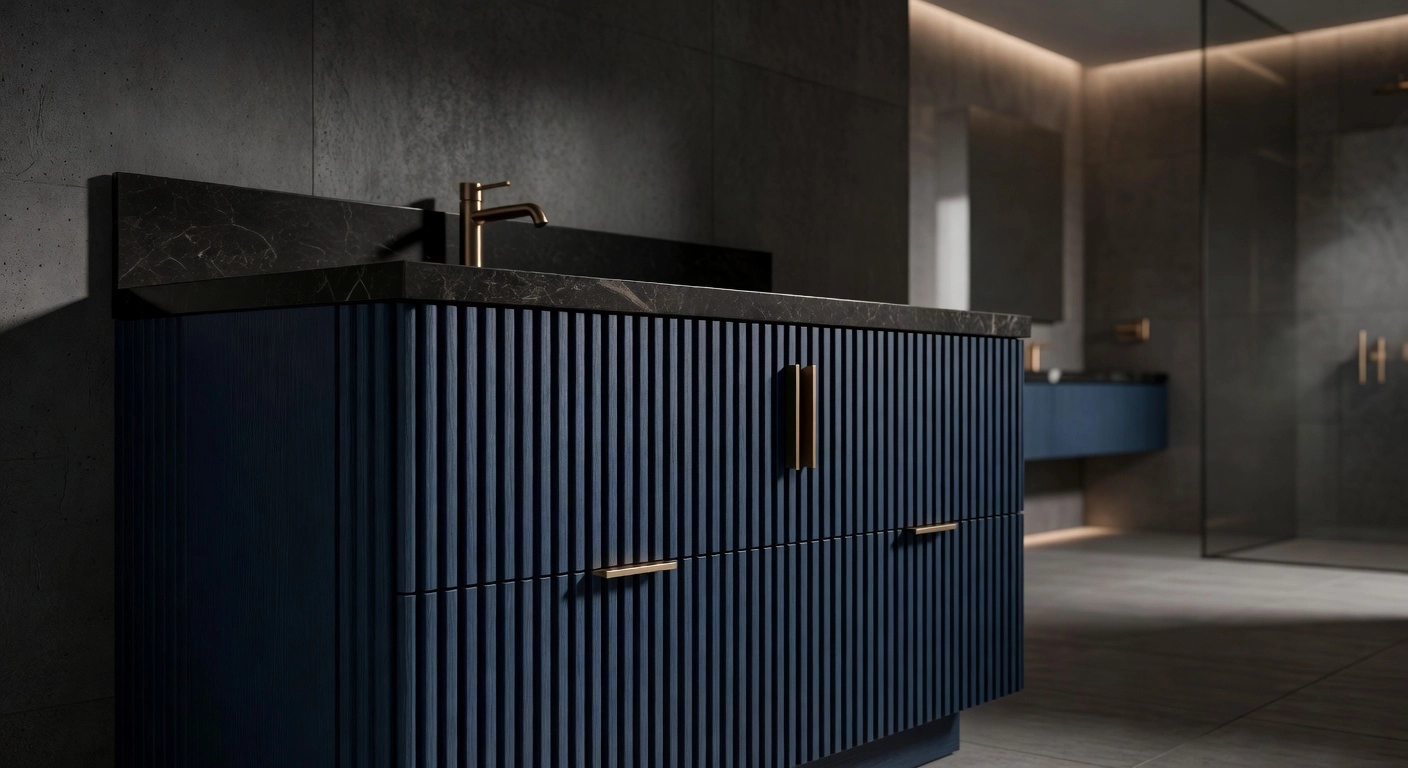
You have two practical construction paths. The router approach involves cutting vertical channels directly into a solid wood panel using a round-nose or V-groove bit on a router table, producing authentic depth and crisp shadow lines that look genuinely integrated into the door. The overlay approach involves gluing pre-made fluted MDF trim strips onto flat door panels using construction adhesive, which requires no routing equipment at all. For beginners without a router, the overlay method is the clear starting point; it works especially well when refacing an existing vanity cabinet.
Choosing Your Wood Species
If you do use a router, species selection matters. Hard maple, white oak, and cherry all machine cleanly, holding crisp flute edges with minimal tear-out. White oak is particularly popular right now given the broader shift toward natural wood grain finishes in 2026 bathroom design trends. MDF remains a solid option for painted finishes where a seamless, grain-free surface is the goal.
Finishing and Pairing Fluted Doors
Fluted surfaces trap moisture inside their grooves, which creates a real maintenance problem in a humid bathroom. Penetrating finishes like oil or wax absorb into the wood but leave the channels partially exposed; polyurethane is the better choice here because it forms a film that seals the grooves completely, protecting against humidity cycles.
Finally, pair fluted doors with simple flat-front drawer boxes to avoid visual overload from competing textures. Measure each drawer box opening before cutting and commit to either a 1/2-inch inset or full-overlay configuration to keep reveals consistent across the entire vanity face.
Reclaimed Wood Medicine Cabinet With Mirror Integration
Mirror-integrated cabinets account for roughly 53% of the bathroom cabinet market by type, making this the single highest-demand category you can build. A reclaimed wood medicine cabinet taps directly into that demand while adding the warmth, texture, and sustainability credentials that define the strongest design trend heading into 2026. The combination of weathered grain and reflective glass creates a contrast that looks intentional and high-end, even on a beginner’s budget.
Despite these challenges, wood still commands roughly 49% of the global bathroom cabinet market, according to industry data from Future Market Insights. That dominance exists because wood, when correctly selected and finished, delivers warmth, durability, and a timeless aesthetic that no synthetic material fully replicates. The keyword is “correctly.” Species selection matters enormously; teak, white oak, and maple outperform pine by a significant margin in humid conditions.
Reclaimed barn wood or pallet wood frames are genuinely beautiful, but they require a non-negotiable prep protocol before they enter a bathroom environment. Start by sanding all surfaces to 120 grit to open the grain and remove surface contamination. Next, check moisture content with an inexpensive pin-type moisture meter; your target is below 8% before any finish goes on.
Wood above that threshold will continue to move after assembly, stressing joints and potentially warping the door. Seal every face, edge, and end grain before you cut your joinery, creating a complete moisture barrier from the start.
For sizing, standard medicine cabinet rough openings run from 14×18 inches up to 24×30 inches. Custom mirror glass cut to your exact door dimensions is available at most hardware stores for under $30, making a tailored fit genuinely accessible. Measure your rough opening first, then order the mirror with a 1/8-inch clearance on all sides.
Hardware selection directly determines how long the cabinet lasts. Hinges and magnetic door catches must be stainless steel or zinc-plated; standard steel hardware begins corroding within months in a high-humidity bathroom. For the finish, apply tung oil or Danish oil first, working it into the weathered grain with a lint-free cloth. These penetrating oils enhance the character marks and knots without burying them under a film. Follow with two coats of water-based polyurethane for a durable, moisture-resistant surface that holds up to daily condensation.
Open Shelf Bathroom Cabinet for Minimalist Storage
Of all the bathroom cabinet builds on this list, open shelving is the one that removes the most obstacles for a first-time builder. There are no doors to fit, no hinges to align, no pulls or knobs to source, and no magnetic catches to adjust. You are working with flat shelves, a simple carcass or wall-mounted brackets, and a clean finish. That reduction in complexity translates directly into fewer opportunities for costly mistakes, which is exactly why this project suits beginners.
That simplicity comes with one non-negotiable design rule. Bathrooms generate moisture-laden air with every shower, and if that air pools in a gap between a shelf unit and the wall, you create ideal conditions for mold growth behind your storage. Solve this by either mounting the unit flush against the wall with no air gap, or adding a back panel of sealed 1/4-inch plywood to close off that cavity entirely. Both approaches are straightforward and worth planning before you cut a single board.
For depth, keep shelves between 8 and 10 inches. That range fits standard toiletry bottles, small baskets, and folded hand towels comfortably without pushing the unit into your traffic path. Space shelves 10 to 12 inches apart vertically to accommodate most bottle heights without wasting dead air between levels.
For materials, solid pine with a solid-color paint finish is the budget-smart choice; paint hides grain inconsistencies and knots that would look rough under a clear coat. If you prefer a natural finish, use 3/4-inch maple plywood with iron-on edge banding applied to the exposed front edges for a clean, furniture-grade appearance. Avoid MDF entirely in bathrooms, as it swells when exposed to humidity even with a sealed finish.
Mount the unit using a French cleat system. Cut two boards with a 45-degree bevel, screw one into wall studs, and interlock the mating piece on the back of the cabinet. French cleats rated for shear loads keep the unit level, allow you to reposition it without repatching drywall, and are far more forgiving for a beginner than drilling directly into the cabinet through finished walls. The bathroom design trends pointing toward minimalist open storage in 2026 make this build both practical and current.
Tall Linen Tower Cabinet for Vertical Storage
When floor space runs out, the only direction left is up. A tall linen tower cabinet converts the dead vertical space above a toilet or beside a vanity into organized, accessible storage for towels, toiletries, and bathroom linens, all without expanding your room’s footprint by a single square foot. This makes linen towers one of the most practical builds on this entire list for anyone working with a compact bathroom.
Dimensions That Actually Fit
Keep your tower 12 to 15 inches deep, 18 to 24 inches wide, and 72 to 84 inches tall. The shallow depth is not just a space-saving trick; it keeps the unit clear of head-clearance zones near toilets and shower entries, which matters more in a tall cabinet than a short one. Width in the 18 to 24 inch range lets the unit tuck beside a vanity without blocking drawers or door swings.
Construction Method for Beginners
Build the carcass from three-quarter inch plywood and add a solid wood face frame to the front. Face-frame construction is more forgiving than frameless European-style box building because the frame hides minor alignment gaps, adds racking resistance, and gives you a solid surface to hang hinges and doors. Frameless cabinets look sleeker but demand precision that punishes beginners fast.
Drill shelf pin holes on 32mm centers on both interior side panels before assembly. The layout takes about 30 extra minutes with a simple drilling jig, but it lets you reposition shelves at any point as your storage needs shift over the years.
Door and Ventilation Details
Use a single full-length door hung on a piano hinge rather than two shorter doors. One door reads cleaner visually and eliminates the frustrating center stile gap alignment problem that trips up beginners on split-door designs.
Address humidity before you close up the build. Tall enclosed cabinets trap moist air, which leads to warping and mildew over time. Drill two one-inch holes at the back panel, one near the bottom and one near the top, then cover each with a small decorative grille insert. This passive stack effect pulls fresh air through the cabinet continuously, protecting both the wood and whatever you store inside.
Custom Under-Sink Cabinet to Maximize Plumbing Space
The under-sink zone is the single most punishing location for any bathroom cabinet. Constant drips from supply lines, condensation on cold pipes, and trapped humidity with little airflow create conditions that destroy raw wood, swell particleboard, and invite mold within a few years. Building a custom under-sink cabinet means designing around these realities from day one rather than hoping a standard vanity will survive them.
Build a Removable Floor Panel
The most practical structural decision you can make is to build the cabinet floor as a removable panel rather than a fixed base. Cut the panel in two pieces around the pipe locations, and attach it with wooden turn buttons or simple friction clips. This gives you fast, tool-free access to shutoff valves whenever a slow drip appears or a supply line needs replacement, without pulling the entire cabinet apart.
Add a False Drawer Front
Because the drain and supply lines block the top drawer cavity, a functional drawer is simply not possible in most under-sink configurations. Attach a false front using rare earth magnets or a few dabs of construction adhesive so the visual drawer line remains intact. This preserves the finished, intentional look of a full vanity without any conflict with the plumbing behind it.
Install Pull-Out Organizers
Pull-out shelves and U-shaped sliding organizers that route around the drain pipe are a top-ranked functional storage trend heading into 2026, and for good reason. A single well-fitted pull-out can effectively double the usable storage compared to a fixed shelf where items at the back become permanently inaccessible.
Choose Moisture-Resistant Materials and Finishes
For the carcass itself, marine-grade plywood or melamine-coated MDF outperforms raw plywood and solid wood in this specific location because both resist swelling from incidental drips. Before assembly, apply two coats of waterborne polyurethane or epoxy paint to every interior surface, including the underside of the top panel. This sealed lining wipes clean, resists cleaning product spills, and dramatically extends the life of the entire cabinet.
Choosing the Right Wood Species for Bathroom Cabinets
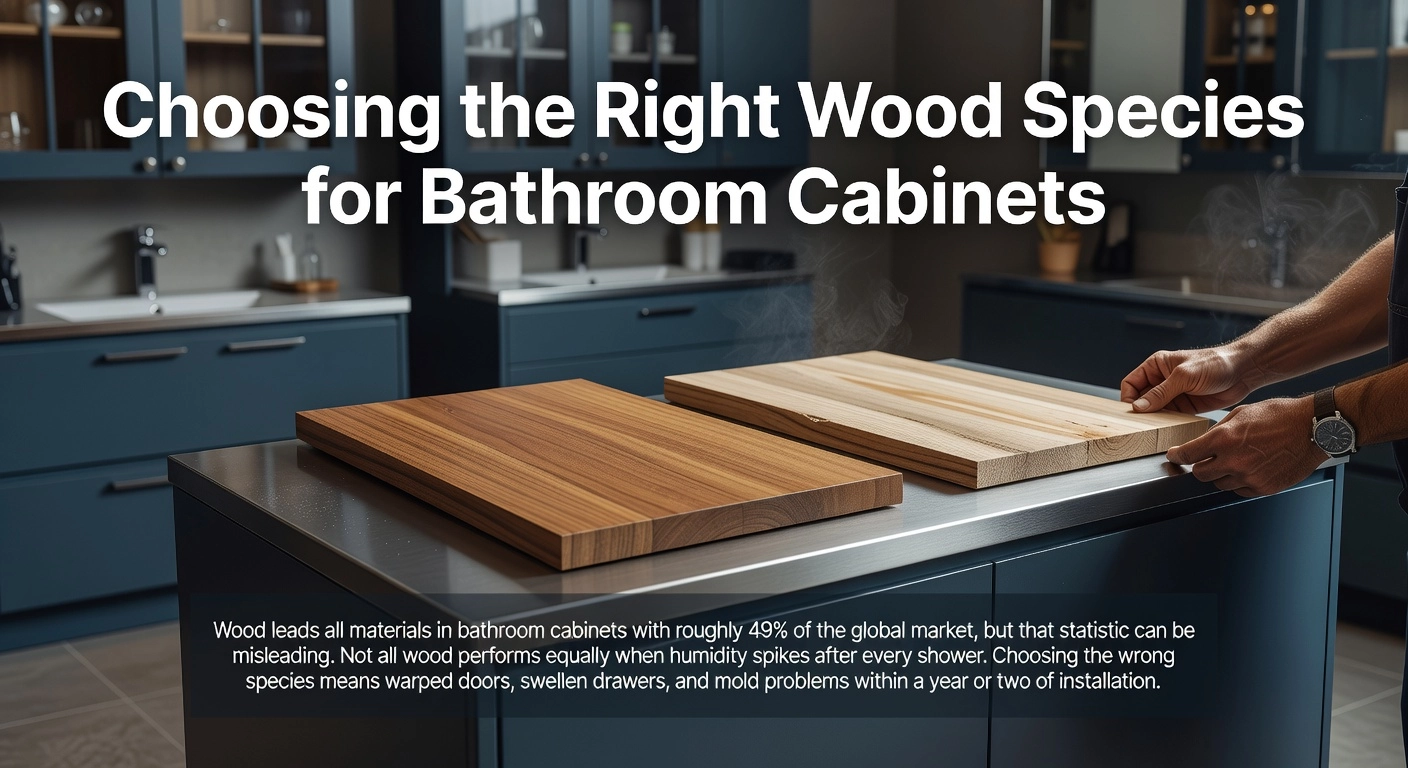
Wood leads all materials in bathroom cabinets with roughly 49% of the global market, but that statistic can be misleading. Not all wood performs equally when humidity spikes after every shower. Choosing the wrong species means warped doors, swollen drawers, and mold problems within a year or two of installation. The species you select at the planning stage determines how much finishing work you need, how long the cabinet lasts, and how much ongoing maintenance it demands.
Top-tier species for high-humidity environments:
- Teak is the gold standard for bathroom cabinetry. Its natural silica content and dense oil structure actively repel moisture rather than simply resisting it. Teak has a proven track record in marine applications, which makes bathroom humidity relatively mild by comparison. It comes at a premium price, but longevity over 30 years or more justifies the cost on statement pieces.
- White oak outperforms red oak significantly because its cellular structure contains tyloses, which physically block water from penetrating the grain. It is a strong domestic alternative to teak at a lower price point and fits the natural wood grain trends dominating 2026 bathroom design.
- Cedar produces natural resins that inhibit mold and resist insects, making it an excellent choice for interior cabinet components and enclosed storage where airflow is limited.
Mid-tier options that deliver with proper preparation:
Hard maple and cherry both perform reliably in bathrooms when every face, including backs and edges, is sealed before assembly. Skipping even one surface creates a moisture entry point that undermines the entire cabinet. Both species cost considerably less than teak while offering the density and stability bathroom environments require.
Species to use carefully or avoid entirely:
Pine and poplar absorb moisture readily and suit only painted finishes with thorough sealing on all six faces. In high-splash zones near sinks or showers, both species risk warping and mold growth. MDF is worse; it expands when wet and should stay out of any area with direct moisture exposure regardless of finish.
The engineered alternative worth knowing:
Baltic birch plywood built to exterior or marine-grade standards outperforms solid wood for large cabinet carcass panels. Cross-laminated plies resist the seasonal expansion and contraction that causes solid wood boxes to rack and joints to open over time.
One non-negotiable baseline: before milling any lumber for a bathroom project, check moisture content with a reliable meter and confirm it reads at or below 8%. Lumber above that threshold will continue releasing moisture after assembly, leading to warping and joint failure as it equilibrates.
The Best Finishes for Bathroom Cabinets That Actually Last
Choosing the right wood species matters, but it is the finish you apply that ultimately determines whether your bathroom cabinets survive a decade of daily steam cycles or fail within two years. Even the most moisture-resistant species will swell, warp, and discolor without a properly applied protective barrier. Think of the finish as the primary line of defense, not a cosmetic afterthought.
1. Film-Building Finishes: The Strongest Protection Available
Polyurethane, conversion varnish, and catalyzed lacquer all form a hard surface film that physically blocks moisture before it can reach the wood. Waterborne versions of these products are the preferred choice for bathroom cabinets because they emit significantly fewer VOCs, clean up with water, and cure to a durable, hard surface that performs as well as traditional solvent-based options. Apply a minimum of two to three coats, sanding lightly between each coat for proper adhesion. These finishes are the best choice for any cabinet near a shower or sink.
2. Penetrating Finishes: Natural Look, Higher Maintenance
Tung oil, Danish oil, and hardwax oil absorb into the wood grain rather than sitting on top, creating a low-sheen, tactile surface. The trade-off is that penetrating finishes offer minimal vapor barrier protection in humid bathrooms and require reapplication every 12 to 18 months to maintain any meaningful moisture resistance. Reserve these for lower-humidity zones or accent pieces rather than vanities directly exposed to steam.
3. Painted Finishes: Use the Right Products
A painted cabinet is only as durable as its primer and topcoat. Always start with a bonding primer designed for wood surfaces, then apply a waterborne alkyd paint formulated for cabinets. Standard latex wall paint lacks the hardness and scrub resistance required for bathroom cabinet doors and will chip and peel quickly. Satin sheens hide minor imperfections while remaining easy to wipe clean.
4. Stained and Topcoated Finishes for the Natural Wood Trend
Natural wood grain finishes are dominating 2026 bathroom design, with stained wood-faced cabinets outpacing painted options in many style categories. To execute this correctly, apply your stain and allow it to fully cure per manufacturer guidelines, often several days. Then seal with two to three coats of semi-gloss waterborne polyurethane, sanding to 320 grit between each coat for a smooth, glass-like surface that preserves the wood’s warmth.
5. Test Your Finish Before Full Application
Before committing to any finish on your entire project, tape a plastic bag tightly over a small finished sample and leave it for 24 hours. If condensation forms and the wood beneath appears darker or wet, the finish has not created an adequate moisture seal. Add additional coats or switch products entirely before applying to your cabinet doors and frames.
How to Restore Water-Damaged or Dull Bathroom Cabinets
Professional cabinet replacement runs $3,000 to $8,000 when professionally installed, yet most water-damaged or dull bathroom cabinets can be fully restored for under $200 in materials and one weekend of focused work. Before you schedule a contractor or order new cabinet boxes, a careful look at the existing damage will tell you exactly which repair path to follow.
1. Identify the damage type first. Surface cloudiness, milky white rings, or a general haze across the finish signals moisture trapped beneath the topcoat, not damage to the wood itself. Black staining is a different problem entirely; it indicates mold or tannin reactions that have penetrated into the wood fibers. Misreading the damage leads to wasted effort, so spend five minutes inspecting before touching anything.
2. Fix white haze with wet-sanding. For moisture-related cloudiness, wet-sand the affected area using 400-grit wet-dry sandpaper with mineral spirits as a lubricant. The mineral spirits prevent dust buildup and reduce friction, allowing the paper to level the finish without cutting through it aggressively. Wipe the surface clean, allow it to dry fully, then apply a matching topcoat such as water-based polyurethane or a spray lacquer to restore the protective layer.
3. Treat black mold staining with oxalic acid. Mix oxalic acid wood bleach according to package directions and apply it directly to the stained area. It targets iron and tannin discoloration without stripping the surrounding wood color aggressively. Neutralize the treated area with a baking soda and water solution, rinse thoroughly, then allow the wood to dry completely before re-sanding with medium-grit paper and sealing with a waterproof topcoat.
4. Degrease before any refinishing. Bathroom cabinet surfaces accumulate soap residue and skin oils that cause new finishes to peel within months. Wipe down all surfaces with a TSP substitute or a diluted white vinegar solution using a soft cloth, scrubbing gently into recesses around hardware holes. Rinse clean and allow the wood to dry completely; skipping this step is the single most common reason DIY refinishing jobs fail prematurely.
5. Refresh hardware alongside the finish. Swapping pulls and hinges to brushed nickel or matte black costs $30 to $80 for a full set and delivers a visual upgrade that rivals a full cabinet replacement at a fraction of the cost.
Painting Bathroom Cabinets Without a Full Replacement
Painting existing bathroom cabinets ranks as the most searched cabinet refresh method for good reason: it costs a fraction of full replacement and can completely transform an outdated vanity in a single weekend. It is also the most common DIY failure on record when homeowners skip the preparation steps. The project looks deceptively simple from the outside, but the bathroom environment is unforgiving, and paint that is not properly anchored will begin peeling within weeks.
The prep sequence is non-negotiable. Start by removing all doors, drawers, and hardware, labeling each piece so reassembly is straightforward.
Clean every surface thoroughly with a degreaser to eliminate soap scum, body oils, and residue that would prevent adhesion. Sand the existing finish with 150-grit paper to mechanically scuff the surface, then wipe everything down with a tack cloth to remove dust. Apply a bonding primer, allow it to dry fully, then sand lightly with 220-grit for smoothness before laying down two finish coats. Each step builds on the last, and skipping any one of them undermines the entire project.
Application method shapes your final result. A foam roller delivers a smooth, factory-like surface on flat door faces and is the best tool for most beginners. A brush handles profiles, edges, and recessed details where a roller cannot reach. An HVLP sprayer produces the finest finish overall but demands extensive masking, ventilation, and cleanup time that makes it less practical for a single small vanity.
For color, all-white painted cabinets are fading as a default choice. Warm off-whites, sage greens, and soft clay tones are gaining ground in 2026, particularly because they complement the natural wood grain trend rather than competing with it.
Topcoat selection ultimately determines durability more than any color choice. A water-based cabinet enamel or waterborne alkyd creates a hard, moisture-resistant film that withstands bathroom humidity far longer than standard wall paint. Choose a satin or semi-gloss sheen for easy cleaning and allow the finish to cure fully before exposing it to steam or heavy use.
The single most common failure point is painting directly over a glossy existing finish without adequate sanding. Bonding primer improves adhesion, but it cannot replace the mechanical grip created by properly scuffing the surface first.
Building vs. Buying Bathroom Cabinets: An Honest Cost Breakdown
The decision to build or buy bathroom cabinets comes down to three honest factors: your budget, your available time, and the tools sitting in your garage right now.
Commercial vanity pricing breaks into three clear tiers. Basic ready-to-assemble units run $150 to $400, shipped flat and assembled on-site with standard finishes and particleboard construction. Mid-range assembled vanities land between $600 and $2,000, offering better hardware, soft-close hinges, and factory finishes that are ready to install quickly. Custom or semi-custom shop-built cabinets start at $2,000 and climb to $6,000 or more, with full personalization on dimensions, wood species, and door profiles. Professional installation adds another $576 to $871 on average, regardless of which tier you choose.
DIY material costs tell a very different story. A 48-inch solid wood floating vanity built from Baltic birch plywood for the box, white oak lumber for the face frame, and quality drawer slides and hinges typically runs $180 to $350 in materials. That is less than many basic RTA units, and the result uses better core materials than most production cabinets in that price range.
DIY wins in three specific situations. First, non-standard spaces where off-the-shelf widths simply do not fit without awkward filler strips. Second, when you need a specific wood species optimized for humidity performance rather than accepting the MDF cores common in production vanities. Third, when design details matter; fluted doors or integrated pull-outs add $500 to $1,500 to manufacturer pricing, but cost only a few extra hours of shop time.
Buying wins when your time is genuinely limited (under 20 hours total), when you lack access to a table saw or router, or when plumbing integration requires a pre-drilled sink cutout that pushes beyond comfortable beginner territory.
Your tool inventory is the honest gatekeeper here. A circular saw, drill, pocket-hole jig, and random orbital sander handle roughly 80% of bathroom cabinet builds. A table saw and router expand your precision and design options, but neither is required for entry-level floating or freestanding vanity projects. WoodStuffHQ build guides include full cut lists and measured drawings that eliminate the design-work barrier entirely, which is the single biggest obstacle separating most homeowners from a successful build.
Budget Pine Vanity Build Under $200
Pine stands out as the most beginner-friendly and wallet-friendly lumber option at any major hardware store, and a complete 36-inch single-sink vanity cabinet is fully achievable for under $200 in raw materials. A single sheet of 3/4-inch plywood plus a handful of 1×3 pine boards covers the entire cabinet box and door frames, with lumber costs typically landing between $65 and $150 depending on local pricing. That leaves room in your $200 budget for pocket screws, wood glue, primer, and paint.
Working with pine’s limitations is the key to a lasting result. Pine blotches badly under stain because its grain absorbs finish unevenly, so paint is always the right call here. Before assembly, seal all six faces of every panel, including edges and backs, with a wood conditioner or primer coat. This step prevents moisture from entering the end grain and causing warping over time in a bathroom environment. Position the cabinet base away from direct shower overspray and use a raised toe-kick to keep the base panel off wet flooring.
For a 36-inch vanity, use this starter cut list: two side panels at 21 x 34.5 inches, one bottom shelf at 33 x 21 inches, one top rail at 33 x 3 inches, and door stiles and rails cut from 1×3 pine. Pocket hole joinery connects every piece cleanly. A Kreg Jig or comparable jig takes roughly 20 to 30 minutes to learn, and the resulting joints are strong enough for decades of daily use without any mortise-and-tenon complexity.
For primer, reach for a shellac-based option such as Zinsser B-I-N. It locks down pine knots and blocks resin bleed-through far better than standard latex primer, giving your topcoat a smooth, uniform base. The full build fits into two weekends, with a miter saw, drill, circular saw, and orbital sander covering every cut and surface you need.
Keeping Bathroom Cabinets Looking Good for the Long Term
Long-term cabinet health comes down to six consistent habits that take less than an hour per year combined.
Monthly cleaning is the simplest line of defense. Wipe cabinet exteriors with a soft cloth dampened in warm water and a few drops of mild dish soap, then immediately follow with a dry cloth. The drying step matters as much as the cleaning itself. Spray cleaners containing ammonia or bleach slowly erode protective finishes with each use, leaving the wood underneath vulnerable to humidity. Stick with gentle soap and dry immediately every time.
Annual caulk inspection prevents the hidden damage that causes full cabinet failure. Check every line where the cabinet meets the wall, countertop, and floor. Cracked or missing caulk allows water to infiltrate behind the cabinet box, where it sits undetected for months. Remove deteriorated caulk completely, clean the seam, and apply fresh 100% silicone caulk for a flexible, waterproof seal.
Re-sealing stained surfaces every two to three years keeps wood-grain finishes looking fresh without a full refinish. Lightly scuff the existing surface with 320-grit sandpaper to create adhesion, wipe away all dust, and roll or brush one thin coat of moisture-resistant polyurethane. This refreshes the protective barrier with minimal effort.
Hardware maintenance is one step most homeowners skip entirely. A single drop of 3-in-1 oil or paste wax worked into hinge pins once a year prevents the rust-induced squeaking that humid bathrooms cause in metal hardware.
Check for soft spots by pressing gently along the cabinet base and around sink plumbing cutouts. Spongy or discolored wood signals active water infiltration. Catching these areas early allows targeted repair rather than full replacement.
Before any refinishing, degrease sink-area surfaces thoroughly with a TSP substitute or mineral spirits. Soap scum and skin oil residue are invisible to the eye but cause new coatings to bubble and peel prematurely if left in place.
Choosing and Building Bathroom Cabinets That Last
Every decision covered in this guide connects back to one foundation: humidity resistance. The wood species you choose, the finish you apply, and the way you assemble joints all determine whether your bathroom cabinets last five years or fifty. Teak and white oak lead because their cellular structure resists moisture penetration naturally. Marine varnish and penetrating oils seal that wood against daily steam cycles. Plywood cores with sealed edges hold their shape when particleboard would swell and fail.
The two strongest 2026 design trends also happen to be the most practical choices a builder can make. Natural wood grain stained finishes showcase the species doing the protective work, and floating vanities reduce the floor-level moisture exposure that destroys cabinet bases over time. Choosing either trend means choosing durability alongside aesthetics.
Custom DIY builds deliver the best outcome when fit, species quality, and budget all matter. A floating vanity or linen tower is a realistic one-weekend project with a saw, drill, sander, and clamps, at material costs well below comparable retail options.
Before budgeting for replacement, assess whether restoration is possible. Most water-damaged or dull cabinets respond to under $200 in sandpaper, wood glue, moisture-blocking primer, and a fresh topcoat.
For measured drawings, cut lists, and bathroom-specific finish selection guides covering floating vanities and linen towers, explore the full build resources at WoodStuffHQ.
Conclusion
Finding the right bathroom cabinet does not have to be complicated or expensive. As you have seen throughout this guide, there is a solution for every style, every space, and every budget. Whether you prefer a modern floating vanity, a rustic freestanding unit, or a simple over-the-toilet organizer, the perfect option is within reach.
The key takeaways are simple: prioritize function alongside style, measure your space carefully before buying, and never underestimate the impact that smart storage can have on your daily routine.
Now it is time to take action. Browse the ideas that caught your eye, set a realistic budget, and start planning your bathroom transformation today. A more organized, beautiful bathroom is closer than you think, and with the right cabinet, you can make it happen sooner than you expect.