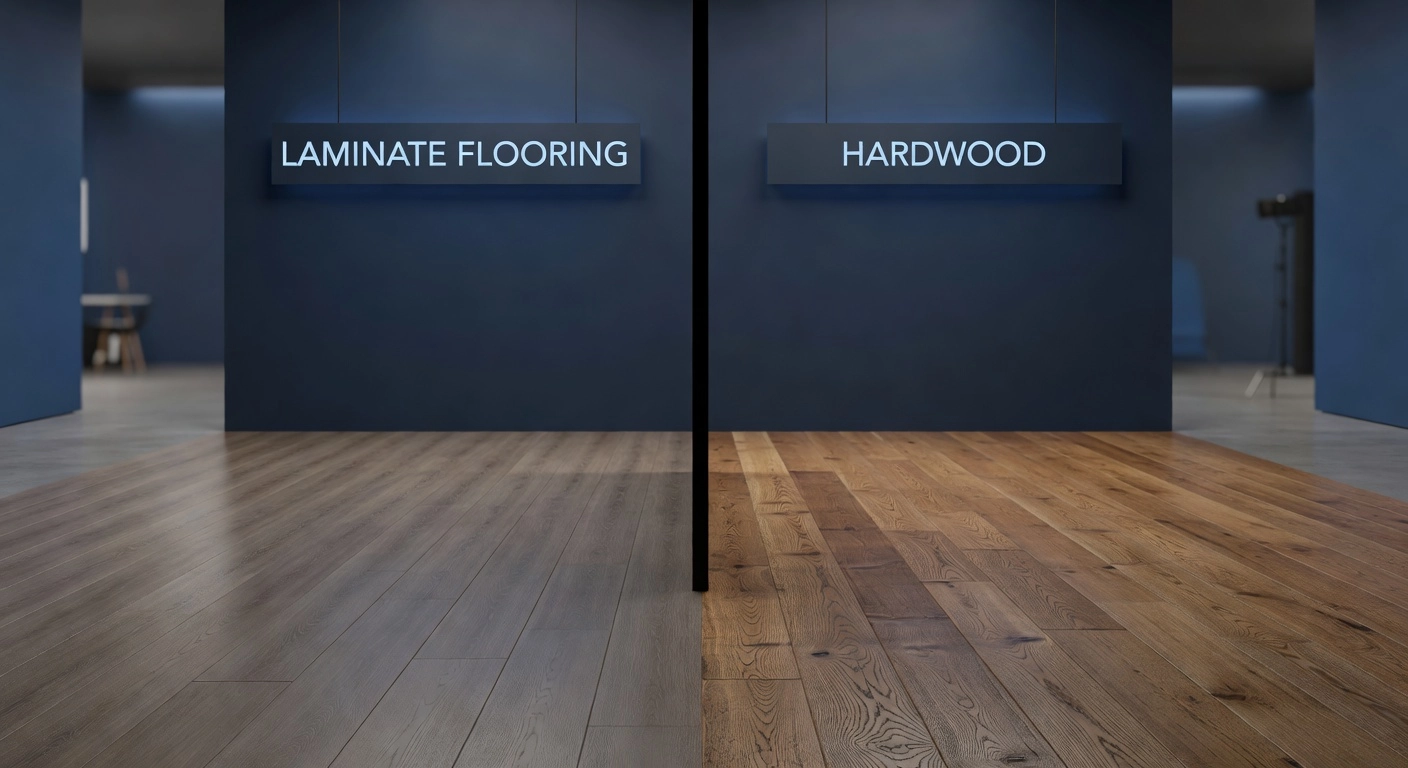
Choosing the right flooring for your home is one of the most important decisions you will make during a renovation or new build. With so many options available, it can feel overwhelming, especially when two of the most popular choices look remarkably similar at first glance. That is where understanding the key differences between laminate flooring and hardwood becomes essential.
Laminate flooring has surged in popularity over the past decade, and for good reason. It offers homeowners an affordable, durable, and visually appealing alternative to traditional hardwood. But is it always the better choice? Not necessarily. Both options come with distinct advantages and drawbacks that can significantly impact your budget, lifestyle, and long-term satisfaction.
In this guide, we will walk you through everything you need to know to make a confident, informed decision. We will cover cost, durability, installation, maintenance, and overall aesthetics, breaking down each factor in simple, straightforward terms. By the end, you will have a clear picture of which flooring option truly fits your home and your needs.
What Is Laminate Flooring and How Is It Made
Laminate flooring is a fully synthetic, multi-layered product engineered to replicate the look of hardwood, stone, or tile at a fraction of the cost. Understanding its construction helps you make smarter flooring decisions, especially when comparing it to real wood options.
The four-layer construction forms the foundation of every laminate plank. At the bottom sits the backing layer, a melamine-impregnated paper or resin-treated material that stabilizes the plank and resists warping. Above that is the core layer, typically made from high-density fiberboard (HDF) or medium-density fiberboard (MDF), compressed wood fibers bonded with resin that give the plank its structural backbone and thickness (commonly 6 to 12mm). Next comes the photographic decorative layer, a high-resolution printed image using advanced digital printing and embossed-in-register (EIR) technology to mimic realistic wood grain. Finally, the aluminum oxide wear layer seals the top, providing scratch, stain, and fade resistance. You can learn more about how laminate flooring layers work together before making a purchase decision.
The AC rating system (AC1 through AC5) measures abrasion and wear resistance. AC1 and AC2 suit low-traffic bedrooms and guest rooms; AC3 handles busy kitchens and hallways; AC4 and AC5 are built for commercial environments with heavy foot traffic. For most homes, AC3 is the reliable sweet spot.
Modern laminate now features waterproofing innovations including wax-sealed edges, tight click-lock systems, and hydrophobic HDF cores. Leading products claim up to 72-hour water protection for kitchens, bathrooms, and basements. According to an in-depth breakdown of laminate layers, these advancements significantly expand where laminate can be safely installed.
One critical limitation: laminate cannot be sanded, stained, or refinished. Its visible surface is a printed photograph protected by a synthetic resin coating, not real wood. Wood care products simply will not bond to or penetrate this sealed surface. Damage means replacement, not restoration.
HDF cores currently dominate approximately 63.61% of the global laminate market in 2026 because higher density delivers superior stability, stronger locking joints, and better moisture resistance. Budget-tier products using lower-density MDF cores tend to swell more easily and wear faster, making core quality a reliable indicator of overall product performance.
What Is Real Hardwood Flooring
Where laminate mimics wood through photography and synthetic layers, real hardwood flooring is wood, delivering authenticity, longevity, and performance that no printed layer can duplicate.
Solid vs. Engineered: Two Forms of the Real Thing
Real hardwood comes in two primary forms. Solid hardwood is milled from a single piece of lumber, typically ¾-inch thick, and runs 100% real wood through its entire depth. Engineered hardwood features a genuine hardwood wear layer, usually 1 to 6 millimeters thick, bonded over a cross-layered plywood or HDF core for dimensional stability. Both use authentic wood species including oak, maple, walnut, hickory, and cherry. Solid hardwood performs best in stable, climate-controlled environments like upper-level rooms, while engineered hardwood handles moisture-prone areas such as basements and kitchens more reliably, thanks to its multi-layer core that expands and contracts roughly one-third as much as solid wood. Engineered planks can also be manufactured in wider formats, up to 12 inches, making them popular for modern, open-concept spaces.
Grain Authenticity No Laminate Can Match
Each plank of real hardwood carries the unique fingerprint of the tree it came from. Species differ in Janka hardness, grain pattern, natural color variation, and character marks like knots and mineral streaks. Even the most advanced laminate vs. hardwood comparison confirms that embossed-in-register texturing, while impressive, still relies on a repeating photographic print. Real wood grain flows organically across every plank without repetition, a quality impossible to manufacture artificially.
The Refinishing Advantage and the Role of Wood Finishes
Solid hardwood can be sanded and refinished four to eight times over a lifespan exceeding 75 to 100 years. Each refinishing removes approximately 1/32 of an inch of material, erasing scratches, stains, and wear while allowing complete color transformations. This is precisely where products like Minwax wood stains and floor finishes deliver exceptional value. Minwax oil-based penetrating stains absorb directly into the real wood fiber, bonding at a cellular level to enhance natural grain and deliver rich, lasting color. A protective topcoat, such as Minwax polyurethane floor finish, then seals the surface against moisture, abrasion, and daily wear. These products work because they interact with actual wood cellulose; they are incompatible with laminate’s synthetic wear layer.
A Structural and Aesthetic Investment
Real hardwood floors, particularly solid installations, are nailed or glued directly to the subfloor, making them a structural element of the home rather than a removable surface covering. They contribute measurable resale value and develop a natural patina over decades that deepens their character. According to current hardwood flooring trend data, 75% of homeowners prefer restoring existing wood floors over replacing them, recognizing wood as a long-term asset worth protecting and maintaining.
Laminate vs. Hardwood: Side-by-Side Comparison
With both flooring types now clearly defined, a direct comparison reveals exactly where each option wins and where it falls short. The table below covers eight critical dimensions every homeowner should evaluate before committing to a purchase.
| Dimension | Laminate | Solid Hardwood |
|---|---|---|
| Installed Cost | $1–$7 per sq ft | $5–$15+ per sq ft |
| Lifespan | 15–25 years | 75–100+ years |
| Refinishability | Not possible | Yes, multiple times |
| DIY Ease | High (click-lock) | Moderate to difficult |
| Moisture Resistance | Moderate to good | Poor |
| Resale Value | Neutral to minimal | Consistently positive |
| Maintenance | Low | Low to moderate |
| Sustainability | Mixed (low-VOC progress) | Strong (renewable, biodegradable) |
Cost and What Drives the Price Gap
Laminate’s installed cost of $1–$7 per sq ft reflects its synthetic construction and beginner-friendly floating installation. Within that range, price rises with wear layer rating (AC3 to AC5), plank width, texture realism, and underlayment quality. Solid hardwood runs $5–$15 or more per sq ft installed, with species selection, plank width, finish type, and labor method pushing costs higher. On a 1,000 sq ft project, that gap can translate to thousands of dollars saved upfront with laminate.
Lifespan, Refinishing, and Long-Term Value
The lifespan difference is significant. Laminate typically requires full replacement after 15–25 years because its wear layer cannot be sanded or refinished once it degrades. Hardwood floors, by contrast, can last 75 to 100 years or more with periodic refinishing every 10–15 years, effectively resetting the surface without tearing out the floor. Over a 50-year ownership window, hardwood’s higher upfront cost often balances out when replacement cycles are factored in.
Resale Value and Sustainability
Hardwood consistently delivers a documented return on investment in home appraisals, with some reports citing 70–119% ROI on installation or refinishing projects. Laminate provides an attractive, affordable update but contributes neutral to minimal value in competitive real estate markets where buyers expect real wood. On the sustainability front, responsibly sourced hardwood is renewable, refinishable, and fully biodegradable at end of life. Laminate has made real progress with low-VOC and reduced-formaldehyde formulations, but its composite core still presents a less favorable environmental profile compared to natural wood. For homeowners thinking long-term, hardwood’s combination of longevity, resale performance, and sustainable character remains the stronger investment.
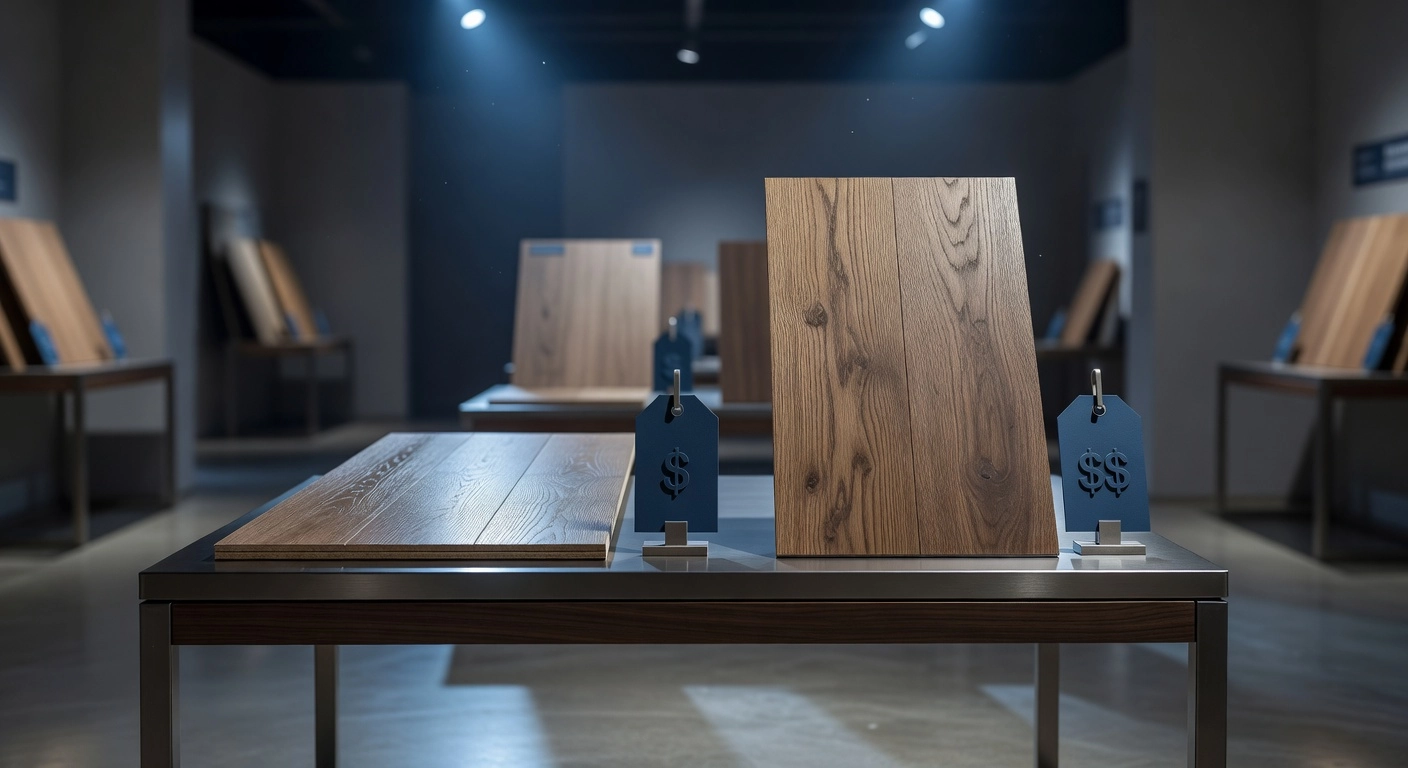
The Real Cost of Laminate vs. Hardwood Over Time
Price tags at the showroom tell only part of the story. To make a truly informed decision between laminate flooring and hardwood, you need to look at what each option actually costs over a decade or more of real-world use.
Upfront Costs and Where the Gap Narrows
Laminate flooring runs approximately $1 to $7 per square foot installed, making it one of the most accessible hard-surface options on the market. Solid hardwood, by contrast, typically costs $5 to $15 or more per square foot installed, depending on species, grade, and subfloor conditions. That difference can feel significant on a large project. However, the gap shrinks considerably in the mid-range. Premium laminates with thicker wear layers, embossed-in-register textures, and water-resistant cores command higher prices that overlap with entry-level hardwood options. Once you factor in underlayment, subfloor prep, and room complexity, a quality laminate install and a basic hardwood install can land surprisingly close together.
Total Cost of Ownership Over 30 Years
Here is where the real math matters. Laminate cannot be sanded or refinished because its decorative layer is a printed photograph bonded over an HDF core. When it wears out, typically between years 15 and 25, the entire floor must be torn out and replaced. Hardwood, on the other hand, can be stripped, sanded, and recoated multiple times across its lifespan. Applying a fresh Minwax® polyurethane finish after sanding costs a fraction of full replacement, typically $3 to $8 per square foot compared to $5 to $15 or more for a brand-new installation.
For a 500 square foot room over 30 years, the numbers break down like this. With laminate at roughly $5 per square foot installed and a 20-year replacement cycle, you pay approximately $2,500 at year zero and another $2,500 at year 20, totaling around $5,000. If your laminate needs replacing at the 15-year mark, a third installation pushes that figure closer to $7,500. With hardwood at $12 per square foot installed, your year-zero cost is $6,000. Add two refinishing cycles at years 10 and 20, at roughly $5 per square foot each, and your 30-year total reaches approximately $11,000. However, that floor remains intact and functional well beyond year 30 without replacement.
Why Replacement Demand Tells Its Own Story
Industry data reinforces this cycle. Renovation and replacement activity currently drives approximately 57.68% of global laminate market demand, according to Mordor Intelligence. That statistic signals that a large portion of laminate buyers are already on their second or third installation, cycling through floors every 15 to 20 years rather than investing once and maintaining. Refinishing hardwood costs significantly less than replacing a worn floor entirely, and the labor disruption is considerably lower as well. Stripping old finish, sanding, and applying fresh Minwax® coats is far less invasive than demolishing a laminate installation, hauling debris, and starting over from scratch. For long-term homeowners, that distinction adds up in both dollars and convenience over time.
Durability, Lifespan, and the Refinishing Limitation
Laminate flooring uses an internationally standardized durability system called the Abrasion Class (AC) rating to communicate how well a product resists surface wear. AC3 handles moderate to heavy residential use, making it appropriate for bedrooms, dining rooms, and living areas with normal family foot traffic. AC4 steps up the performance for higher-demand zones like entryways, kitchens, and family rooms with kids or pets. AC5 is engineered for heavy commercial environments but is sometimes chosen by homeowners who want maximum protection in demanding spaces. The important caveat for beginners is that AC ratings only measure surface abrasion resistance. The actual thickness of the wear layer determines what happens the moment damage penetrates that protective barrier, and once it does, your repair options shrink dramatically.
When Damage Happens, Replacement Is the Only Real Option
This is the critical distinction that separates laminate from real hardwood at a fundamental level. The decorative “wood” image in laminate is a printed photographic layer sitting just beneath a thin protective coating. Sanding is not possible because sanding would destroy the image entirely. Deep scratches that breach the wear layer, chips, or plank swelling caused by moisture at seams all lead to the same outcome: the affected plank must be replaced. Minor surface blemishes can sometimes be hidden with filler kits or repair markers, but these are cosmetic cover-ups, not true repairs. Water damage is particularly unforgiving; once the HDF core absorbs moisture and swells, replacement rather than restoration becomes the standard solution. Matching discontinued plank patterns or dye lots after several years is often impossible, meaning visible inconsistencies are a likely outcome.
How Hardwood Achieves a 75 to 100-Year Lifespan
Real hardwood earns its longevity through one capability laminate simply does not have: refinishing. Solid hardwood floors can be sanded back to bare wood and refinished multiple times over their life, typically every 7 to 15 years depending on foot traffic, wood species, and finish type. Harder species like oak and hickory hold up longer between refinishing cycles. Over the full lifespan of a home, a solid hardwood floor can be fully restored four to ten times before the wood thickness becomes a concern. Surface wear, deep scratches, or a dull, tired finish on real hardwood can also be addressed without a full sand-and-refinish. Products like Minwax® Hardwood Floor Reviver renew lightly worn polyurethane-finished floors without sanding, while Minwax® Blend-Fil Pencils conceal nicks and minor scratches by restoring color to the damaged area. The wood itself remains intact and ready for future restoration cycles.
The Single Most Important Limitation for Long-Term Homeowners
For anyone planning to stay in a home beyond 15 years, the inability to refinish laminate is not a minor inconvenience; it is the deciding factor in the comparison. After 15 to 25 years of use, a laminate floor reaches the end of its functional life and requires full replacement, generating new material costs, labor expenses, and installation disruption all over again. A hardwood floor in the same home can be refinished back to like-new condition at a fraction of replacement cost, preserving both the floor’s appearance and the home’s resale value. The math favors hardwood significantly for permanent residents; laminate’s lower upfront cost erodes quickly when full replacement cycles are factored into the equation over a 30 or 40-year ownership horizon.
Moisture Resistance: How Laminate and Hardwood Really Compare
Modern laminate products have made genuine advances in moisture resistance, but the full picture is more nuanced than packaging claims suggest. Premium waterproof laminate can withstand surface water exposure for 72 hours or longer, and that protection is real for everyday spill scenarios. The critical vulnerability, however, lies at the seams. Water that migrates through the joints between planks reaches the HDF core, triggering swelling, edge lifting, and delamination that no surface treatment can reverse. Subfloor vapor is an equally documented failure point: moisture rising from a concrete slab passes upward through the floating installation, causing damage that often voids manufacturer warranties. Quick cleanup eliminates most surface risks, but prolonged exposure or compromised subfloor conditions remain a consistent weakness even in top-tier products.
Waterproof vs. Water-Resistant: Reading the Label Carefully
This distinction matters more than most beginners realize. Water-resistant laminate handles splashes and brief spills when wiped promptly, but standard cores will swell under extended contact. Waterproof laminate uses compressed cores with hydrophobic treatments, sealed edges, and enhanced locking systems rated for sustained standing water. The problem is that manufacturers and retailers frequently use these terms interchangeably in advertising copy, while fine-print warranty language quietly limits coverage to specific time windows or excludes subfloor-related damage entirely. Always review the actual warranty document and look for independent certifications rather than relying on front-of-package language.
Where Each Flooring Type Performs Best
For below-grade basements, rental bathrooms, and spaces with frequent managed moisture exposure, quality waterproof laminate holds a genuine edge over solid hardwood. It tolerates humidity fluctuations better, and replacing individual planks costs far less than refinishing water-damaged hardwood. Above-grade kitchens, dining areas, and living spaces tell a different story. Real hardwood finished with a properly applied Minwax floor finish creates a durable protective barrier that performs reliably in these environments. Products like Minwax Ultimate Floor Finish form a tough polyurethane topcoat that resists everyday spills and moisture absorption, and the underlying wood can be refinished if damage does occur, extending the floor’s usable life significantly.
Why Subfloor Moisture Testing Is Non-Negotiable
Regardless of which flooring you choose, testing subfloor moisture levels before installation prevents failures that no product can fix after the fact. On concrete slabs, a calcium chloride test should confirm moisture vapor emission at or below acceptable thresholds. Wood subfloors require a moisture meter reading, ideally within a few percentage points of the flooring material itself. Test multiple locations across the room, document your results, and address any issues with vapor barriers or dehumidification before a single plank goes down. Skipping this step is the single most common installation mistake, and it affects both laminate and hardwood equally.
Aesthetics and Authenticity: EIR Texture vs. Real Wood Grain
EIR (embossed-in-register) technology represents the most significant leap forward in laminate realism to date. By aligning the physical surface texture precisely with the printed wood-grain image, EIR creates corresponding ridges and indentations exactly where knots, grain lines, and pores appear in the photograph. The result fools casual observers in many lighting conditions, and high-quality EIR laminate has genuinely narrowed the visual gap with real hardwood. However, detectable differences persist underfoot and underhand. Real hardwood produces a warmer, denser sensation when walked on and delivers a solid, quieter thud, especially when nailed or glued down. Laminate, installed as a floating floor over underlayment, can feel slightly harder or more cushioned and often generates a hollower, clickier sound with each step. These acoustic and tactile nuances remain distinguishable to anyone making a direct side-by-side comparison.
The 2026 color shift makes this conversation more relevant than ever. Consumers are moving decisively away from the cool grays and bleached tones that dominated the past decade toward warmer, earthier neutrals, including greige, honey, natural oak, toffee, caramel, and walnut. These tones are not trends invented by designers; they are the native colors of real wood species like oak, maple, and walnut. Laminate manufacturers are working hard to replicate them through printed photographic layers, but real hardwood arrives with these tones already embedded in its cellular structure.
This is precisely where Minwax stain options deliver an advantage that no laminate product can match. With a palette exceeding 240 colors, including Minwax’s own 2026 Color of the Year, Special Walnut, homeowners can dial in exact trending tones on real oak, maple, or walnut floors. Shades like Honey, Provincial, and Light Toffee replicate the warmest 2026 palettes, and because stain interacts differently with each species and individual board, every installation produces a genuinely unique result. No laminate’s fixed photographic print can achieve that depth of customization.
Wide-plank laminate formats, typically seven to nine inches or wider, are also trending in 2026 for the spacious, premium aesthetic they create. They deliver real visual impact, but every plank ultimately draws from a limited set of digital images. Even with multiple plank designs and randomized layouts, a pattern repeat is inevitable. Real hardwood wide planks contain no repeats; every board tells a different story through its own unique grain, mineral streaks, and knots. That distinction compounds over time. Real hardwood develops a living patina through oxidation, grain movement, and finish evolution that adds warmth and character with each passing year. Laminate ages through surface wear, UV fading, and seam stress, remaining visually static until it simply needs replacement.
Installation and DIY Feasibility
Of the three flooring types covered in this guide, laminate offers the most accessible installation experience for first-time DIYers. Modern click-lock floating systems require no adhesive, no nails, and no specialized power tools. The planks simply snap together and rest on the subfloor without being fastened to it. Subfloor preparation is minimal: the surface must be clean, dry, and level within approximately 3/16 inch over 10 feet. Minor low spots can be addressed with self-leveling compound or the right underlayment. An average bedroom can realistically be completed in a single afternoon with basic tools including a saw, spacers, a tapping block, and a mallet.
Before installation begins, laminate planks need to acclimate in the room for 48 to 72 hours, stored flat at normal living conditions between 60 and 80 degrees Fahrenheit and 35 to 65 percent relative humidity. Skipping this step risks buckling or gapping after installation. Always leave a perimeter expansion gap of 1/4 to 3/8 inch around walls, doorframes, and fixed objects, using spacers during the process and covering the gap with baseboard or quarter-round molding afterward. For underlayment, a high-density foam pad with an integrated vapor barrier works well over concrete subfloors; cork or felt options provide better sound absorption in multi-story homes. Some premium laminate products include attached underlayment, eliminating that step entirely.
Engineered hardwood with click-lock systems has meaningfully closed the DIY difficulty gap for real wood. Experienced DIYers can float these products over concrete or existing floors without professional equipment, making genuine wood accessible for weekend projects. Solid hardwood, by contrast, remains firmly in professional territory. It requires blind nailing or stapling with specialized flooring nailers, a careful acclimation period that can stretch to several weeks, and precision that leaves little margin for error.
The DIY convenience of laminate is a legitimate advantage for rental properties, short-term renovations, or budget projects where the floor serves a defined purpose for a limited time. For a primary residence where longevity, resale value, and long-term performance matter most, installation ease should be one factor among many rather than the deciding one.
Long-Term Value and Resale Impact
Real estate appraisal data makes a compelling case for hardwood flooring when resale value is part of the equation. Homes with genuine hardwood floors consistently command a price premium of roughly 2 to 5 percent over comparable properties with laminate or carpet. National Association of Realtors data reinforces this, showing that new hardwood installation achieves an estimated 70 to 118 percent ROI at resale, while professionally refinishing existing hardwood reaches approximately 147 percent, placing it among the highest-returning interior renovation projects available to homeowners. Appraisers treat real wood as a quality signal, whereas laminate and worn carpet can trigger downward adjustments due to buyer resistance and anticipated replacement costs. The emotional appeal matters too: buyers and their agents frequently identify genuine hardwood as a premium, timeless feature that accelerates offers and strengthens negotiating positions.
Laminate’s contribution to resale value, by contrast, is largely neutral to minimal. The upfront savings are real and significant, often two to four times cheaper per square foot installed compared to solid hardwood, but those savings do not accumulate as home equity. When the wear layer degrades, laminate requires full replacement rather than refinishing, which means you absorb the cost without gaining ground in appraised value. Notably, renovation and replacement activity drives approximately 57.68 percent of laminate demand globally in 2025, according to Mordor Intelligence. Many homeowners in that segment are on their second flooring cycle, and that experience often prompts a serious reconsideration of whether hardwood delivers better long-term value despite the higher starting cost.
Protecting a hardwood investment is where a quality finish becomes essential. Applying a durable protective finish from Minwax, such as a polyurethane floor finish, creates a resilient barrier against moisture, scratches, and everyday grit. Consistent care with Minwax-recommended floor cleaners and a refinishing cycle when the surface shows wear keeps the wood looking premium, which directly supports the aesthetic buyers associate with higher-value homes.
The scenario comparison illustrates the long-term math clearly. Homeowner A installs hardwood at year one, refinishes once at year 12 for roughly three to eight dollars per square foot, and maintains floors that can last generations through multiple refinishing cycles. Homeowner B installs laminate at year one, then faces a full replacement at year 18 at the complete reinstalled cost. Across a 20 to 30 year horizon, hardwood’s renewability and superior resale performance frequently make it the more cost-effective path, despite the higher upfront investment.
Sustainability: Real Wood vs. Synthetic Laminate
Laminate’s environmental story has genuinely improved in recent years. Major manufacturers now routinely comply with the U.S. EPA’s TSCA Title VI formaldehyde emission standards, which cap HDF core emissions at or below 0.11 ppm and require third-party certification. Canada’s CANFER regulations were updated in 2025 to align more closely with TSCA, creating a consistent North American standard. Environmental Product Declarations (EPDs) are increasingly common across leading brands, offering transparent lifecycle data covering manufacturing energy, carbon footprint, and end-of-life impacts. Many producers also use recycled wood fiber from sawmill byproducts in their HDF cores, reducing reliance on virgin timber. These are meaningful gains, particularly for indoor air quality.
However, laminate carries a structural sustainability limitation that certifications cannot resolve. As a multi-layer composite bonded with resins and adhesives, it is not biodegradable and is difficult to recycle through standard municipal systems. Most laminate ends up landfilled or incinerated at the end of its 15 to 25-year lifespan. Industrial recycling programs exist but remain limited in geographic reach and scale. When a floor must be fully replaced every two to three decades, that cycle generates considerable material waste, regardless of how low its formaldehyde emissions were during use.
Real hardwood from responsibly managed, FSC-certified forests tells a different story. It is renewable, biodegradable, and sequesters carbon throughout its life. Crucially, it can be refinished rather than replaced. A 2025 life cycle analysis found that refinishing a wood floor reduces carbon emissions by an average of 89% and energy use by 97% compared to full replacement. A solid hardwood floor maintained with low-emission finishes can realistically serve a home for 75 to 100 years or longer.
This is where Minwax low-VOC formulations contribute directly to the sustainability equation. Water-based polyurethanes and other low-emission Minwax products minimize off-gassing during application and support LEED-aligned renovation priorities, extending the useful life of real wood without compromising air quality. Protecting a floor properly is what makes the multi-decade lifespan achievable.
From a whole-lifecycle perspective, one hardwood floor that is refinished every 7 to 15 years requires a fraction of the raw materials, production energy, transportation, and disposal resources that two or three full laminate replacements demand over the same span. For homeowners weighing environmental impact alongside performance, real wood paired with responsible finishing products represents the more sustainable long-term investment.
When Laminate Is the Right Choice
Laminate flooring is not the right choice for every project, but it is absolutely the right choice for specific situations where budget, risk tolerance, and timeline matter more than long-term asset value.
Rental properties represent one of the clearest use cases. Tenant turnover brings unpredictable wear, and the economics of replacing a $2 per square foot laminate floor between tenants are far more manageable than refinishing or repairing hardwood. An AC4-rated laminate delivers scratch and stain resistance suited to everyday rental abuse, installs quickly to minimize vacancy time, and produces a clean, appealing finish that attracts tenants without requiring a premium investment.
Below-grade basement spaces present real challenges for hardwood installation, including vapor transmission from concrete slabs and humidity fluctuations that cause solid wood to swell and buckle. Water-resistant laminate installed over a proper vapor barrier handles these conditions with far less subfloor remediation than hardwood would require.
Tight renovation budgets benefit directly from laminate’s installed cost range of roughly $3 to $7 per square foot, which delivers a visually updated space without the financial commitment of solid hardwood.
Short-term ownership scenarios, where a homeowner plans to sell within five to seven years, call for aesthetic improvement rather than long-term investment. Laminate refreshes dated floors at a cost that makes practical sense for the ownership window.
Secondary spaces such as mudrooms, laundry rooms, and utility areas prioritize function and durability over authenticity. Laminate handles high foot traffic and everyday spills in these zones cleanly and affordably, making it a sensible, no-compromise solution where resale considerations are minimal.
When Real Hardwood Is the Better Investment
For homeowners planning to stay in a primary residence for 15 or more years, real hardwood is frequently the smarter financial decision when you account for total cost of ownership rather than upfront price alone. Solid hardwood can last 50 to 100 years with proper care and can be refinished four to six times over its lifespan. Laminate, by contrast, typically requires full replacement every 15 to 25 years since its wear layer cannot be sanded or renewed. Over a multi-decade ownership horizon, hardwood’s higher initial investment is offset by avoiding repeated replacement costs and the labor disruption that comes with them.
Aesthetic authenticity and tactile quality are equally important factors for many homeowners. Real wood grain, natural warmth underfoot, and the way hardwood ages gracefully over decades are qualities no synthetic printed layer can fully replicate. More importantly, real hardwood gives you the freedom to change your floor’s entire character without replacing it. Minwax® stains offer a wide palette spanning light naturals, warm honey tones, and deep walnut finishes, allowing you to sand and restain as your style evolves or your home’s decor changes. That flexibility is simply unavailable with laminate, where a worn or outdated floor means a full replacement project.
Resale value is another decisive factor. According to the National Association of Realtors, refinishing existing hardwood floors delivers approximately 147% ROI, the highest of any tracked interior project. Real estate professionals consistently cite hardwood as a top buyer preference, with hardwood homes selling faster and often commanding a premium over comparable properties with synthetic flooring.
Finally, in high-traffic living rooms, dining rooms, and open-plan spaces where the floor defines a home’s character for generations, hardwood’s refinishability makes it the more durable long-term choice. Species like oak, maple, and hickory handle heavy use well, and periodic refinishing restores their appearance without the cost and disruption of full replacement.
Caring for Your Real Hardwood Floor Investment
Real hardwood floors reward consistent, straightforward care. Daily or several-times-weekly sweeping and dry mopping with a microfiber tool removes abrasive grit before it can scratch and dull your finish. When deeper cleaning is needed, a well-wrung microfiber mop paired with a pH-neutral hardwood floor cleaner is the professional standard. pH-neutral formulas clean effectively without leaving residue, stripping the protective finish, or raising the wood grain the way vinegar, ammonia, or harsh household cleaners can. Wipe spills immediately, place felt pads under furniture legs, and lay area rugs at entryways to dramatically reduce wear in high-traffic zones.
Knowing when to recoat versus when to fully refinish is one of the most valuable skills a hardwood floor owner can develop. Surface scuffs, minor dullness, and light finish wear are ideal candidates for a recoat: the existing finish is lightly abraded, and a fresh compatible topcoat is applied, typically restoring both protection and appearance within a single day. Deep scratches that penetrate into the wood itself, stains that have soaked below the finish layer, or a desired color change all call for a full sand-and-refinish cycle. A simple test helps clarify the decision: if a drop of water beads on the surface, the finish is still intact and a recoat will likely suffice.
Minwax floor finishes are formulated specifically for the demands of hardwood floors, delivering a durable protective layer that resists everyday foot traffic, moisture, and spills while preserving the wood’s natural grain and color. Products like the Minwax Ultimate Floor Finish are available in gloss, semi-gloss, and satin sheens, with fast recoat times that minimize household disruption during application.
For homeowners who want to refresh their floor’s aesthetic without replacing a single plank, Minwax wood stains offer a practical solution. Minwax’s 2026 Color of the Year, Special Walnut, aligns directly with the shift toward warm neutrals, honey oaks, and earthy browns that define this year’s interior design direction. Applying a new stain tone during a refinish cycle transforms the entire look of a room at a fraction of the cost of new flooring.
This is ultimately where hardwood’s advantage over laminate is most concrete. A properly maintained hardwood floor, supported by periodic recoats and a full refinish when genuinely needed, can serve a home for 50 to 100 years or more. Laminate’s printed wear layer cannot be renewed; once it degrades, full replacement is the only option. A disciplined finish schedule, using quality products applied correctly, pushes hardwood’s service life well beyond the 15 to 25 year ceiling that defines any laminate product on the market today.
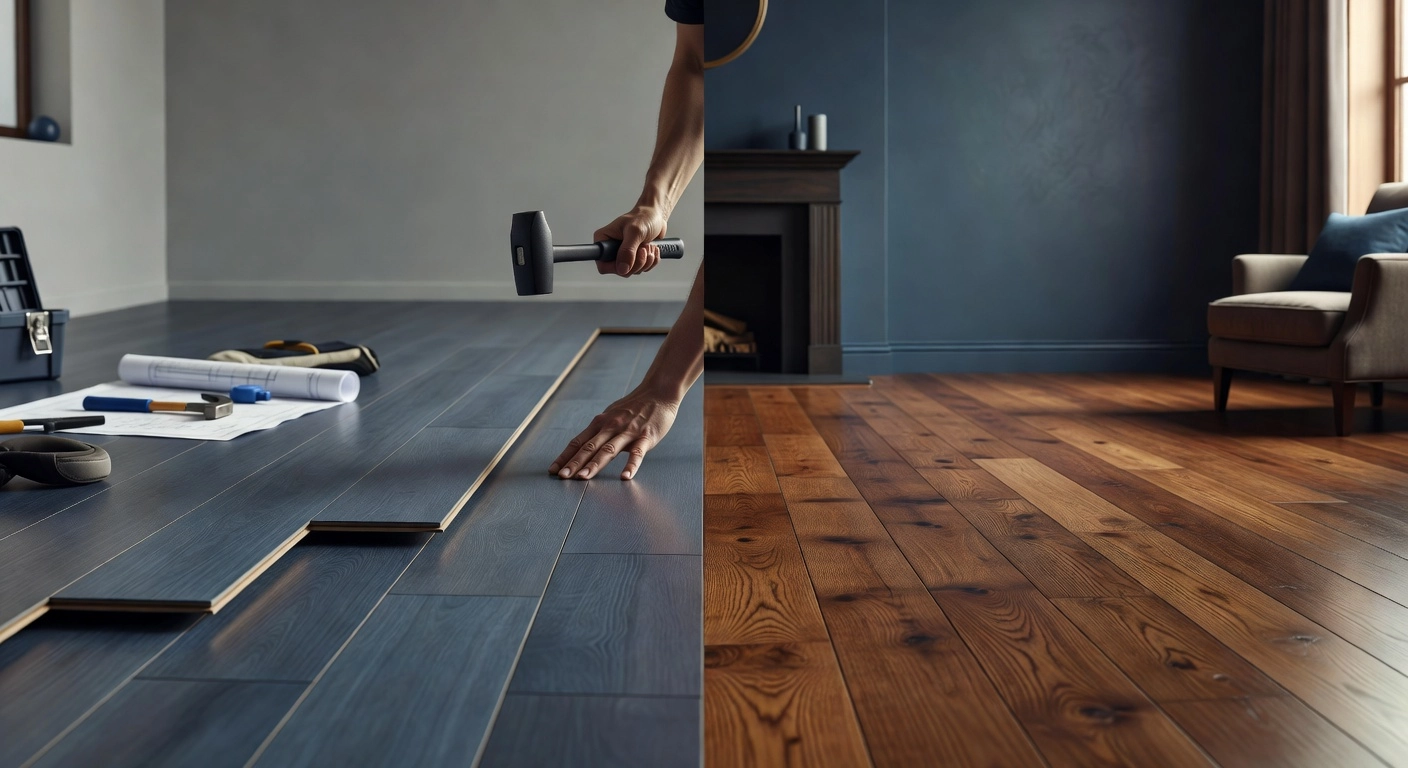
Making the Right Flooring Decision for Your Home
The core decision comes down to timeline and priorities. Laminate offers a lower upfront cost and faster, more DIY-friendly installation, making it a practical choice for short-term needs. Real hardwood delivers superior long-term value, the ability to be refinished multiple times, and a meaningful impact on home resale prices. For most homeowners planning to stay put for a decade or more, those advantages compound significantly over time.
The 30-year cost of ownership remains the most overlooked factor in flooring decisions. Laminate’s shorter lifespan means one or two full replacements within that window, each carrying material, labor, and disruption costs that quietly erode the original savings. Hardwood, refinished periodically rather than replaced entirely, typically delivers a lower annualized cost over the same period.
If you are replacing laminate for the second or third time, that replacement cycle cost is now a serious argument for upgrading to real hardwood. The cumulative expense of repeated installs often rivals or exceeds what a single hardwood investment would have cost from the start.
The good news for hardwood owners is that professional help is not always necessary. Minwax stains and finishes allow you to refresh, recolor, or protect an existing hardwood floor as a manageable DIY project. From stain selection to applying a durable topcoat, the process is well within reach for a prepared homeowner.
For stain color guides, finish recommendations, and complete hardwood floor care resources, visit woodcare.com to support every stage of your next renovation project.
Conclusion
Choosing between laminate and hardwood ultimately comes down to your priorities. Laminate wins on affordability, durability, and easy maintenance, making it ideal for busy households and budget-conscious renovators. Hardwood brings timeless beauty, long-term value, and the ability to be refinished repeatedly, making it a worthwhile investment for those planning to stay in their home for years to come. Your lifestyle, budget, and the specific room you are renovating should all factor into your final decision.
Now that you have a clear picture of both options, you are equipped to make a choice you will feel confident about for years ahead. Take measurements, set your budget, and consult with a flooring specialist to explore samples in person. The right floor is out there waiting for you. Trust the process, and enjoy the transformation.
Frequently Asked Questions
How do laminate and hardwood flooring compare in terms of long-term cost over 30 years?
While laminate costs $1–$7 per square foot installed versus $5–$15 or more for hardwood, the long-term math often favors hardwood. For a 500 sq ft room over 30 years, laminate can total $5,000–$7,500 due to one or two full replacements. Hardwood, at roughly $6,000 upfront plus two refinishing cycles at about $5 per sq ft each, totals around $11,000 but remains functional well beyond 30 years without replacement. When you factor in that refinishing costs a fraction of full replacement, hardwood frequently delivers a lower annualized cost over a multi-decade ownership horizon.
Can laminate flooring be repaired if it gets scratched or water damaged?
Unlike hardwood, laminate cannot be sanded, stained, or refinished because its visible surface is a printed photographic layer protected by a synthetic resin coating. Minor surface blemishes can sometimes be concealed with filler kits or repair markers, but these are cosmetic cover-ups rather than true repairs. Deep scratches, chips, or water damage that causes the HDF core to swell typically require full plank replacement. Additionally, matching discontinued plank patterns or dye lots after several years is often impossible, which can result in visible inconsistencies in your floor.
Which flooring is better for moisture-prone areas like basements and kitchens?
For below-grade basements and spaces with frequent moisture exposure, quality waterproof laminate holds a genuine advantage over solid hardwood. Premium laminate products with sealed edges and enhanced locking systems can withstand surface water for up to 72 hours, and they tolerate humidity fluctuations better than solid wood. However, water that migrates through plank seams can still reach the HDF core, causing irreversible swelling. In above-grade kitchens and living areas, real hardwood finished with a quality polyurethane floor finish performs reliably and can be refinished if moisture damage does occur. Regardless of flooring type, testing subfloor moisture levels before installation is essential.
Does real hardwood flooring actually increase home resale value compared to laminate?
Yes, real hardwood consistently delivers a documented return on investment that laminate cannot match. According to National Association of Realtors data, new hardwood installation achieves an estimated 70–118% ROI at resale, while refinishing existing hardwood reaches approximately 147%, making it one of the highest-returning interior renovation projects available. Homes with genuine hardwood floors typically command a 2–5% price premium over comparable properties with laminate or carpet. Laminate provides an attractive update but contributes neutral to minimal resale value, as buyers and appraisers treat real wood as a premium, timeless feature while laminate's anticipated replacement cost can trigger downward appraisal adjustments.
Is laminate flooring a more environmentally friendly choice than hardwood?
This depends on how you define sustainability. Laminate has improved significantly, with major manufacturers now complying with EPA TSCA Title VI formaldehyde standards and many using recycled wood fiber in their HDF cores. However, laminate is a multi-layer composite that is not biodegradable and is difficult to recycle, meaning most ends up landfilled after its 15–25 year lifespan. Real hardwood from FSC-certified forests is renewable, biodegradable, and sequesters carbon. A 2025 life cycle analysis found that refinishing a hardwood floor reduces carbon emissions by 89% and energy use by 97% compared to full replacement. Over a 75–100 year hardwood lifespan with periodic refinishing, the raw materials, production energy, and disposal waste are a fraction of what two or three laminate replacement cycles generate.
2 thoughts on “Laminate Flooring vs. Hardwood: A Complete Comparison”