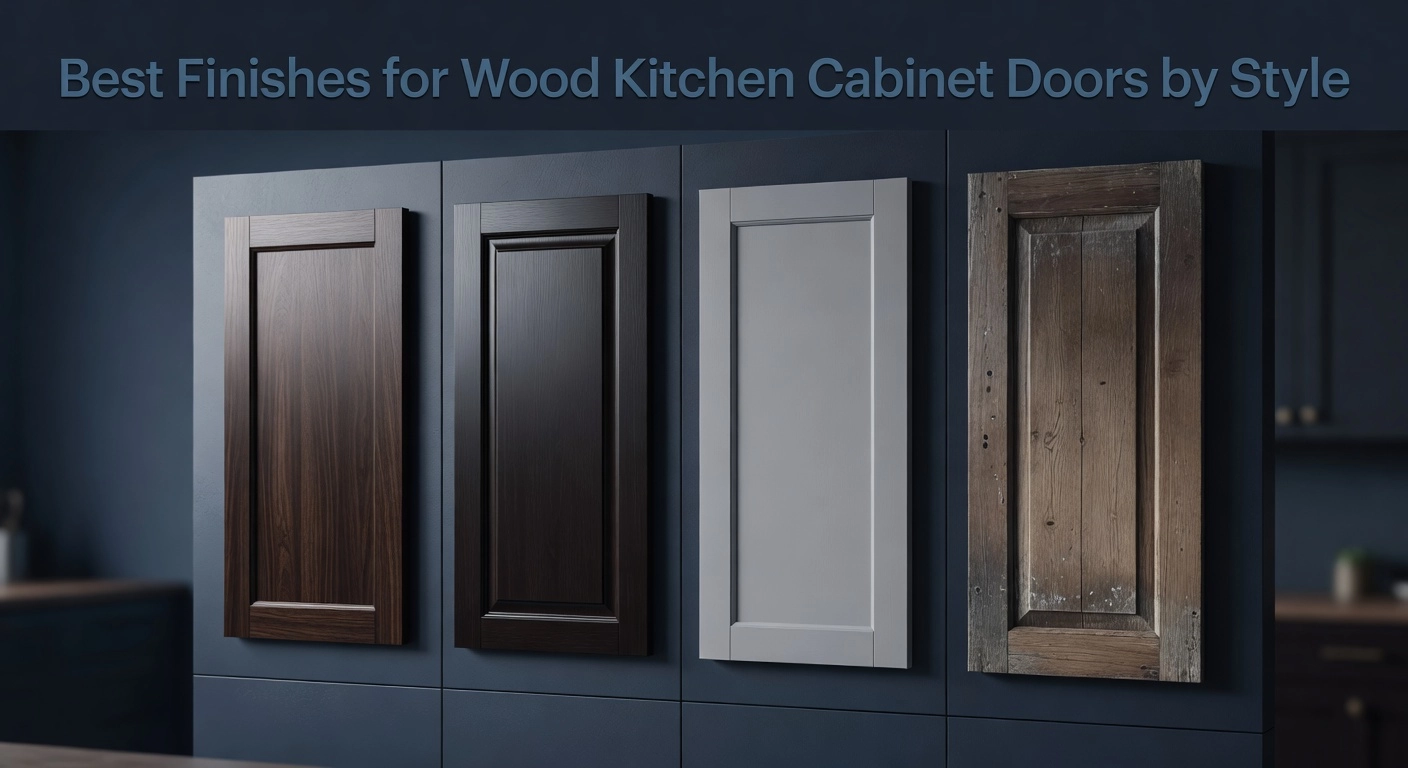
Ever walked into a kitchen and instantly felt drawn to the cabinets without knowing exactly why? Chances are, the finish had everything to do with it. The right finish can take your kitchen doors from “just okay” to absolutely stunning, and the good news is that you don’t need to be a professional carpenter to understand your options.
Whether you’re renovating your kitchen from scratch or simply refreshing your existing cabinets, choosing the right finish for your cabinet doors can feel overwhelming at first. There are so many choices out there, and each one works better with certain styles than others. That’s exactly why we put this guide together.
In this post, we’re breaking down the best finishes for wood kitchen cabinet doors based on popular design styles. From modern and minimalist to rustic and traditional, you’ll walk away knowing exactly which finish suits your vision, your budget, and your skill level. So grab a cup of coffee and let’s make this whole process a lot less confusing and a lot more fun.
Natural White Oak and Visible Grain Doors
If you want your kitchen doors to feel warm, grounded, and genuinely on-trend in 2026, natural white oak is the wood to know. According to the NKBA 2026 Kitchen Trends Report, 51% of design professionals named white oak their preferred cabinet wood species. It’s easy to see why. The wood has this beautiful, organic quality with subtle grain patterns and soft gray undertones that feel fresh without trying too hard.
The two most popular cuts right now are rift-cut and wire-brushed. Rift-cut white oak produces a tight, straight grain with minimal figuring, giving your kitchen doors a clean, modern look that also resists warping in humid environments. Wire-brushed textures add a gentle tactile depth that feels handcrafted without looking rustic. Both styles work beautifully on flat-panel and Shaker-style door profiles, where the wood surface gets to be the star of the show rather than competing with ornate details.
To enhance the grain without covering it up, reach for Minwax Wood Finish in Natural or Early American. These penetrating oil-based stains bring out the wood’s natural variation and add a touch of warmth while keeping that light, neutral character intact. Once your stain is dry, seal everything with Minwax Polyurethane in a Matte sheen to guard against kitchen moisture and grease. The matte finish keeps the look understated and organic rather than plastic or shiny.
On the budget side, refinishing existing doors with Minwax products typically runs $1,500 to $4,000 for an average kitchen. Replacing them with pre-finished white oak doors? That can easily climb to $10,000 to $30,000 or more. Refinishing is a smart, cost-effective way to get this gorgeous look without a full renovation.
Shaker Cabinet Doors: Achieving Classic Warmth
Shaker-style cabinet doors have held their ground as the most popular kitchen cabinet door style in U.S. homes, and for good reason. Their clean lines, recessed panel detail, and timeless simplicity work across virtually every kitchen aesthetic, from farmhouse to transitional to modern. According to KBIS 2026 data, Shaker accounts for roughly 50% of observed cabinet installations, making it far and away the dominant choice for homeowners. Best of all, this style takes stain beautifully, which means you can customize the color while keeping that signature structured look intact.
That said, the routed edges and recessed panels on Shaker doors can cause a real headache when staining. Those profile changes create spots where wood grain direction shifts, and end grain gets exposed, both of which absorb stain at different rates. The result can be blotchy, uneven color if you use a standard liquid stain. Minwax Gel Stain is the smarter choice here. Its thicker, gel-like consistency sits more on the wood surface rather than soaking in unpredictably, giving you consistent, streak-free color even across complex profiles.
For color selection, warm neutral stain tones work especially well on Shaker profiles. Shades like Golden Oak, Jacobean, and Dark Walnut bring out that classic warmth that suits transitional and traditional kitchens perfectly, highlighting the recessed panel without overwhelming the clean lines.
Newer Shaker designs are also trending toward slimmer rails and stiles, creating a lighter, more contemporary silhouette. These updated profiles pair nicely with lighter, cooler stain colors or natural wood tones that let the refined proportions breathe.
Pro tip: always stain the recessed panel section first, then work outward toward the frame. This keeps your lap lines clean and prevents uneven buildup where the panel meets the rails and stiles.
Wire-Brushed and Textured Wood Cabinet Doors
If you love the idea of cabinets that feel as good as they look, wire-brushed, fluted, and reeded wood surfaces are worth a serious look. These textures are trending hard in 2026 as premium design choices for kitchen doors because they add real depth, shadow lines, and a handcrafted quality that smooth, flat panels simply cannot match. Wire-brushing removes softer wood fibers to create a subtle raised grain, while fluted and reeded styles carve vertical grooves that catch light beautifully. The result feels intentional, warm, and anything but mass-produced.
Here is something that makes these surfaces especially exciting from a finishing standpoint: the texture actually opens up the wood grain, allowing stain to penetrate more deeply than it would on sanded-smooth wood. That means richer color, greater contrast between grain lines, and a more dimensional, layered appearance overall. Think of it as the wood doing extra work for you.
For stain color, Minwax Wood Finish in weathered tones like Weathered Oak or Classic Gray works beautifully on these surfaces. These shades settle into the grooves and accentuate the texture naturally, giving your kitchen cabinet doors an authentically aged, organic look without overdoing it.
One important tip to keep in mind: avoid heavy-bodied gel stains on deeply textured or wire-brushed surfaces. Gel stain tends to pool inside recesses and can dry unevenly, leaving blotchy or inconsistent results. Stick with a penetrating oil-based stain for smooth, even coverage.
Finally, sand lightly between coats using a fine grit like 220, and finish with a matte polyurethane topcoat. This seals out kitchen grease and grime while preserving every bit of that tactile, handcrafted character you worked to achieve.
Matte Finishes for a Soft, Modern Kitchen Look
If you’ve noticed that kitchen cabinet design trends for 2026 are moving away from that ultra-shiny, reflective look, you’re not imagining things. Matte finishes have officially taken over as the go-to choice for kitchen doors, and both homeowners and designers are fully on board. The soft, light-absorbing quality of a matte surface creates a calm, sophisticated vibe that just feels more livable than high-gloss ever did.
One of the biggest practical wins with matte is how well it handles daily life. Fingerprints, minor scratches, and smudges that would stand out like a spotlight on a glossy surface simply disappear into a matte finish. If you have kids, pets, or just a busy household, this is a genuinely big deal. According to 2026 kitchen cabinet color and finish trends, matte’s ability to conceal everyday wear is a key reason designers are recommending it so consistently right now.
For protection, Minwax Fast-Drying Polyurethane in Matte is a solid choice for wood kitchen doors. It lays down a durable, low-sheen coat that stands up to moisture, grease, and repeated contact without looking flat or dull.
Matte works beautifully with natural wood tones and pale to mid-range stains. However, on very dark stains, satin may be the smarter call since it adds subtle depth without tipping into glossy territory.
One quick application tip worth knowing: always stir matte polyurethane thoroughly before using it. Never shake the can. Matte formulas contain flattening agents that settle at the bottom, and shaking introduces air bubbles that can leave your finish looking uneven. Slow, thorough stirring from bottom to top keeps everything properly mixed for a smooth, consistent result.
Two-Tone Kitchen Doors: Coordinating Upper and Lower Cabinets
Two-tone kitchen designs are one of the hottest renovation trends heading into 2026, and it’s easy to see why. According to a 2026 Houzz Kitchen Trends Study, nearly 1 in 4 homeowners choose contrasting colors for their upper and lower cabinets. The look adds personality, visual depth, and a custom feel without requiring a full kitchen overhaul.
The most popular approach pairs lighter upper cabinets with darker lower cabinets. Light uppers draw the eye upward, making smaller kitchens feel more open and airy. Darker lowers ground the space and are also more practical since they hide everyday scuffs and wear far better than lighter finishes. It’s a smart combination that works across kitchen styles, from modern to farmhouse.
This is where Minwax stains really shine for DIYers. Because you can control how much stain you apply and how long it sits, you get precise results on wood cabinet doors. Your lower doors can go rich and deep while your upper doors stay in a softer, complementary tone.
A great starting point for warm kitchens is Minwax Classic Gray on the uppers paired with Jacobean or Dark Walnut on the lowers. This combination delivers subtle contrast that feels timeless and works beautifully with a range of countertop and flooring choices.
Before you commit to any pairing, though, look at your whole kitchen. Your two-tone cabinet colors should coordinate with your floors, countertops, and backsplash so the finished space feels intentional and cohesive rather than mismatched. Always test stain samples on your actual cabinet wood first, since undertones shift depending on the species.
Bold Color Accent Doors: Sage, Navy, and Charcoal
If you loved the idea of two-tone kitchens from the previous section, bold accent doors take that concept one step further. Sage green, navy blue, and charcoal are among the most talked-about kitchen colors heading into 2026, and designers consistently recommend applying them selectively rather than throughout an entire kitchen. Think island cabinetry, lower cabinet runs, or a single accent wall of doors. This targeted approach adds real personality and depth without making the space feel dark or closed in.
The key with bold colors is knowing where to use them. These shades work beautifully as accents against lighter painted uppers, natural white oak panels, or off-white perimeters. Pairing a charcoal lower cabinet with warm wood grain uppers, for example, creates that sophisticated contrast that feels intentional and current rather than overwhelming.
When it comes to actually applying color to your kitchen doors, preparation is everything. Sand bare wood smooth, ideally finishing around 220-grit, and always use a pre-stain wood conditioner on porous species like pine or alder. Skipping this step leads to uneven, blotchy color absorption that no amount of extra coats will fix.
For the finishing product itself, Minwax PolyShades is worth knowing about. It combines a rich stain color with a polyurethane protective finish in a single step, which saves serious time compared to staining and topcoating separately. It comes in multiple color-and-sheen combinations, including options that work beautifully for navy, charcoal, and other deep accent tones, letting you dial in exactly the right look for your two-tone palette.
Refreshing Faded or Worn Kitchen Cabinet Doors on a Budget
If your kitchen cabinet doors are looking dull, scratched, or just plain tired, here’s some good news: you don’t need to replace them to make them look brand new. Refinishing existing wood kitchen cabinet doors typically costs a fraction of full cabinet replacement, yet delivers a surprisingly comparable visual upgrade. DIY refinishing materials for a standard kitchen often run just $200 to $600, compared to thousands for new cabinetry.
You’re also tapping into a massive renovation wave. The global kitchen cabinets market is projected to reach USD 115.64 billion in 2026, fueled largely by homeowners looking for smart, cost-effective ways to refresh their spaces. Budget-conscious DIY refinishing sits right at the heart of that demand.
The single most common mistake beginners make is skipping proper cleaning before they do anything else. Start with Minwax Wood Cabinet Cleaner to cut through grease, grime, and built-up residue. Simply spray it on and wipe clean with a damp cloth; no rinsing required. Jumping straight to sanding over a greasy surface is a recipe for uneven, patchy results.
Once your doors are clean and dry, the process is straightforward. Lightly sand with 150-grit sandpaper to scuff the old finish and help the new stain bond properly. Apply Minwax Wood Finish in your chosen color using thin, even coats, then seal everything with a fresh polyurethane topcoat. Done right, decade-old doors genuinely look newly installed.
There’s also a feel-good bonus here. Refinishing preserves your existing wood rather than sending discarded cabinetry to a landfill, which aligns beautifully with the sustainability-focused renovation mindset that’s gaining serious momentum heading into 2026.
Sustainable and Reclaimed Wood Cabinet Door Aesthetics
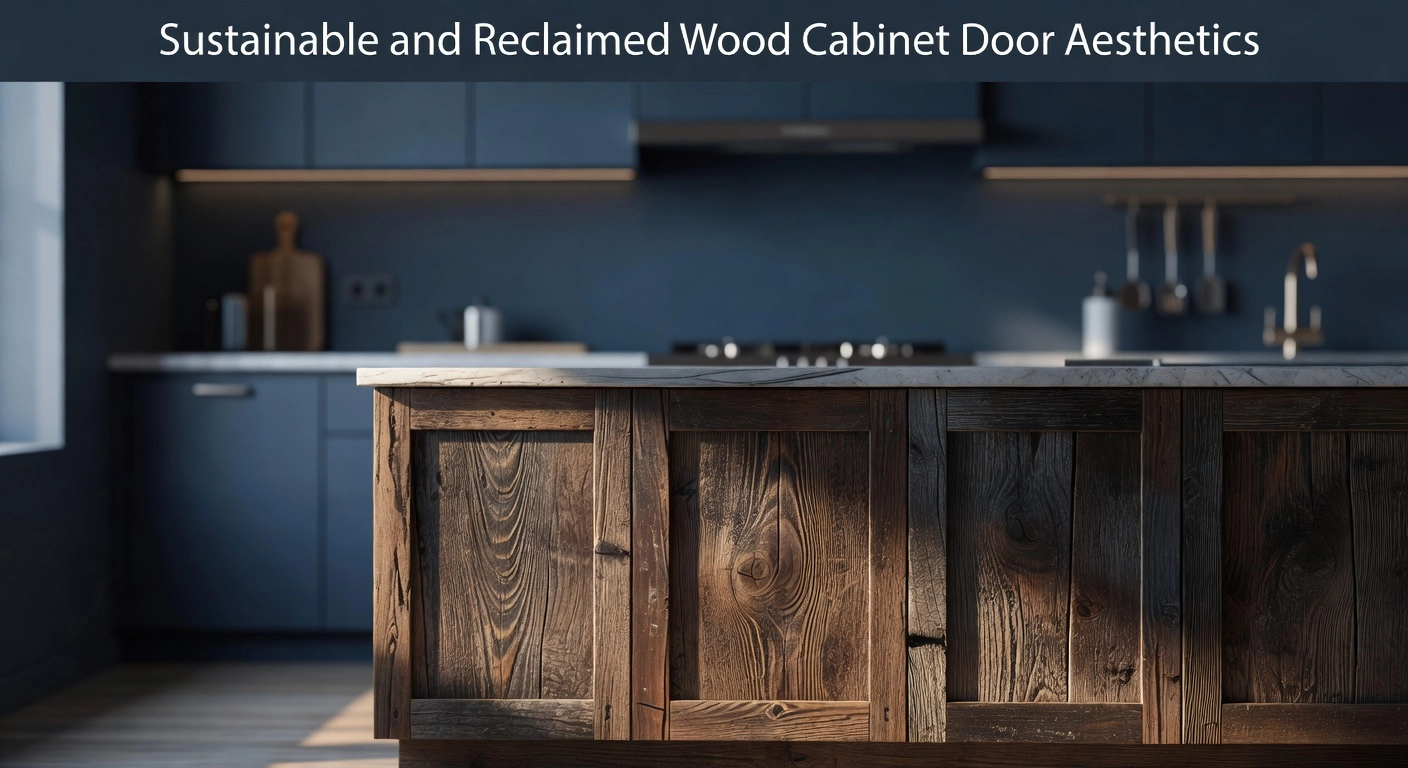
Sustainability has moved from a niche preference to a genuine baseline expectation in kitchen design, and the numbers back it up. Wood holds roughly 45% of the global kitchen cabinets market share in 2026, partly because more homeowners are actively seeking natural, eco-conscious materials that feel authentic rather than manufactured. Reclaimed and responsibly sourced wood cabinet doors are a big part of that shift, and for good reason.
Here is what makes reclaimed wood so visually compelling: the knots, mineral streaks, color variations, and natural grain irregularities are not flaws. They are the whole point. These characteristics give each door a one-of-a-kind character that no factory finish can replicate. The goal when finishing these surfaces is to highlight those details, not bury them.
This is where product choices really matter. Minwax Wood Finish in translucent tones like Driftwood or Weathered Oak works beautifully on imperfect, character-rich wood because it penetrates the surface and enriches the grain without covering up what makes the wood interesting. You get warmth and depth while the knots and streaks still show through clearly.
On the flip side, avoid heavy opaque stains on reclaimed wood. Covering those natural variations with a solid, opaque color defeats the entire purpose of choosing a material with built-in textural interest in the first place.
To protect your reclaimed kitchen doors without killing their raw, organic feel, finish them with a water-resistant matte polyurethane. It shields against kitchen moisture and daily wear while keeping that natural, low-sheen look completely intact.
Keeping Wood Kitchen Cabinet Doors Looking Their Best
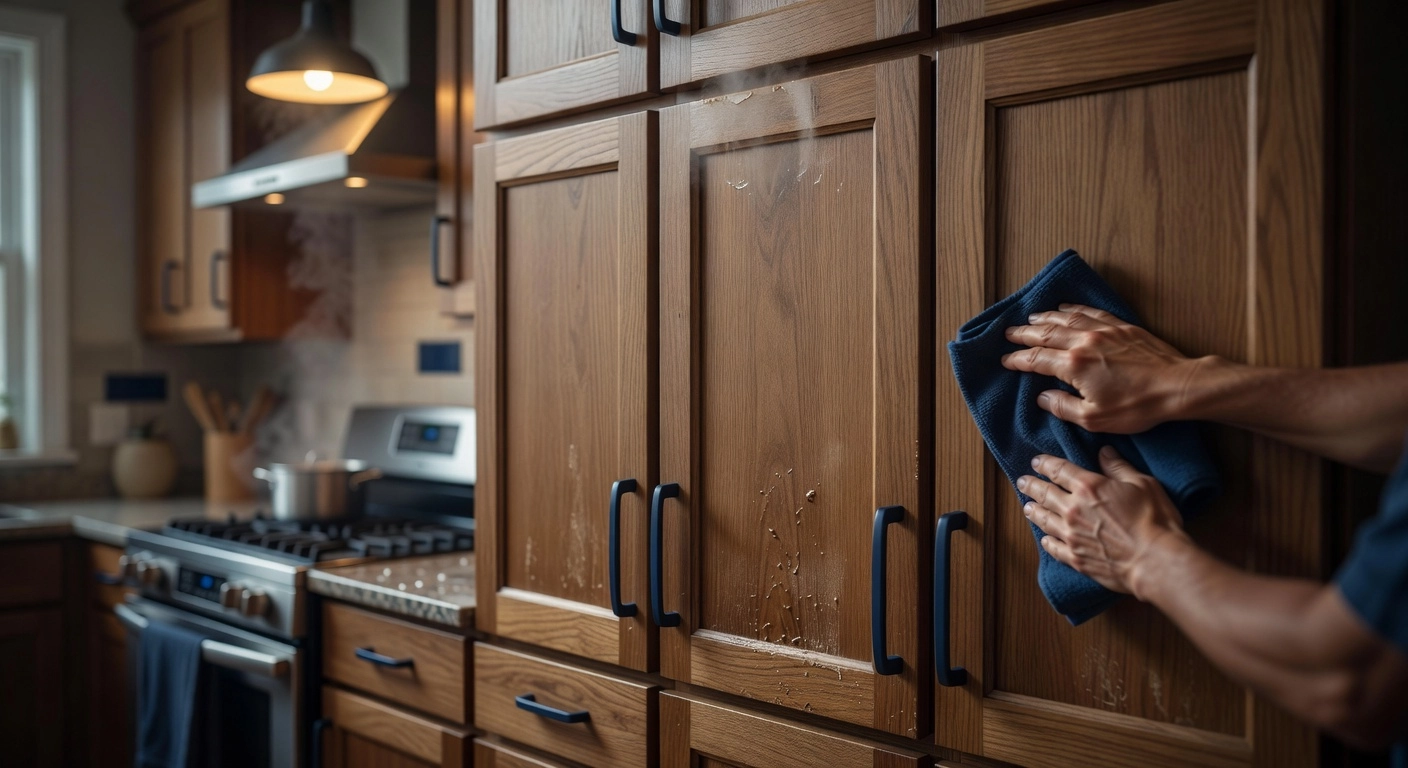
Your kitchen is the hardest-working room in your home, and your cabinet doors take the brunt of it. Between steam from boiling pots, grease splatter near the stove, and constant moisture around the sink, wood kitchen cabinet doors face conditions that can break down even a solid finish over time. That’s why maintenance isn’t a once-a-year task here; it’s a consistent habit.
Minwax Wood Cabinet Cleaner is a great tool to keep in your cleaning rotation. It’s formulated specifically for finished wood surfaces, so it lifts cooking grease and residue without stripping the protective finish underneath. No harsh rinsing needed, just spray, wipe, and you’re done.
For doors near the stove and sink, a quick weekly wipe-down goes a long way. Grease that sits on a finish long enough starts to embed into it, weakening adhesion and leading to peeling or dullness over time.
When you clean, steer clear of abrasive sponges, ammonia-based cleaners, and excess water. These are surprisingly damaging to polyurethane finishes and can dull the surface faster than everyday wear will.
Finally, do a simple water bead test once a year. Splash a few drops on the door surface. If the water spreads flat instead of beading up, the protective finish has worn thin. A light scuff-sand and a fresh topcoat will restore that barrier and keep your cabinet doors looking great for years ahead.
Choosing the Right Finish Starts With the Right Information
Refinishing your wood kitchen cabinet doors is one of the smartest, most budget-friendly upgrades you can make in 2026. Professional refinishing typically costs a fraction of full replacement, and the visual payoff is dramatic. But getting great results isn’t just about picking up a brush. It starts with matching the right product to your specific wood species and door style.
Different woods absorb stain differently. Maple behaves nothing like white oak, and white oak behaves nothing like walnut. That’s why Minwax offers a targeted lineup designed for real-world variation, including Wood Finish penetrating stains, Gel Stain for vertical door surfaces, PolyShades for one-step color and protection, and clear Polyurethane for a durable topcoat.
Whether you’re chasing that warm, natural white oak grain look, building out a two-tone color scheme, or simply bringing tired doors back to life, product and prep choices determine the final result. Once your finish is applied, use Minwax Wood Cabinet Cleaner regularly to remove grease and grime without damaging the surface between refinishing cycles. Browse the full Minwax product line to build the right combination for your kitchen.
Conclusion
Choosing the right finish for your wood kitchen cabinet doors does not have to be a guessing game. Remember these key takeaways: your design style should always guide your finish selection, durability matters just as much as appearance, and budget-friendly options can still deliver stunning results. Whether you lean toward the sleek look of a modern matte finish or the warm character of a rustic stain, there is a perfect option waiting for you.
Now it is time to take action. Pull up your inspiration photos, consider your kitchen’s lighting and traffic levels, and use this guide as your starting point. If you found this post helpful, share it with someone who is planning a kitchen refresh. Your dream kitchen is closer than you think, and it all starts with one great finish choice.
Frequently Asked Questions
What is the best finish for Shaker-style kitchen cabinet doors?
Minwax Gel Stain is the best choice for Shaker-style cabinet doors because its thick consistency sits on the wood surface rather than soaking in unevenly. This prevents the blotchy, streaky results that can happen around the routed edges and recessed panels. Warm neutral tones like Golden Oak, Jacobean, and Dark Walnut work especially well on Shaker profiles, highlighting the recessed panel while preserving those clean, classic lines.
How much does it cost to refinish kitchen cabinet doors versus replacing them?
Refinishing existing wood kitchen cabinet doors is significantly more affordable than replacement. DIY refinishing materials for a standard kitchen typically run just $200 to $600, while professional refinishing averages $1,500 to $4,000. By contrast, replacing doors with pre-finished white oak cabinets can easily cost $10,000 to $30,000 or more. Refinishing delivers a dramatic visual upgrade at a fraction of the cost and is one of the smartest budget-friendly kitchen improvements you can make.
Why are matte finishes so popular for kitchen cabinet doors in 2026?
Matte finishes have become the dominant choice for kitchen cabinet doors because they offer both a sophisticated aesthetic and practical everyday benefits. Unlike high-gloss surfaces, matte finishes absorb light rather than reflect it, creating a calm, modern look. More importantly, fingerprints, minor scratches, and smudges that would be highly visible on glossy cabinets simply disappear into a matte finish. This makes them ideal for busy households with kids or pets. Minwax Fast-Drying Polyurethane in Matte is a reliable product for achieving this durable, low-sheen result.
Can I use gel stain on wire-brushed or deeply textured cabinet doors?
No, gel stain is not recommended for wire-brushed or deeply textured cabinet door surfaces. Because gel stain is thick and heavy-bodied, it tends to pool inside grooves and recesses, drying unevenly and leaving blotchy, inconsistent results. For textured surfaces like wire-brushed, fluted, or reeded wood, a penetrating oil-based stain is the better choice. These stains soak into the opened grain evenly, enhancing texture and color depth naturally. Weathered tones like Minwax Weathered Oak or Classic Gray work especially well on these surfaces.
How do I know when my kitchen cabinet doors need to be refinished?
A simple water bead test is the easiest way to check whether your cabinet doors need refinishing. Splash a few drops of water onto the door surface. If the water beads up, the protective finish is still intact. If the water spreads flat instead of beading, the finish has worn thin and it is time for a light scuff-sand and a fresh polyurethane topcoat. You should also watch for visible signs like dullness, peeling, or grease that no longer wipes off cleanly, all indicators that the finish barrier has broken down and needs to be restored.
2 thoughts on “Best Finishes for Wood Kitchen Cabinet Doors by Style”