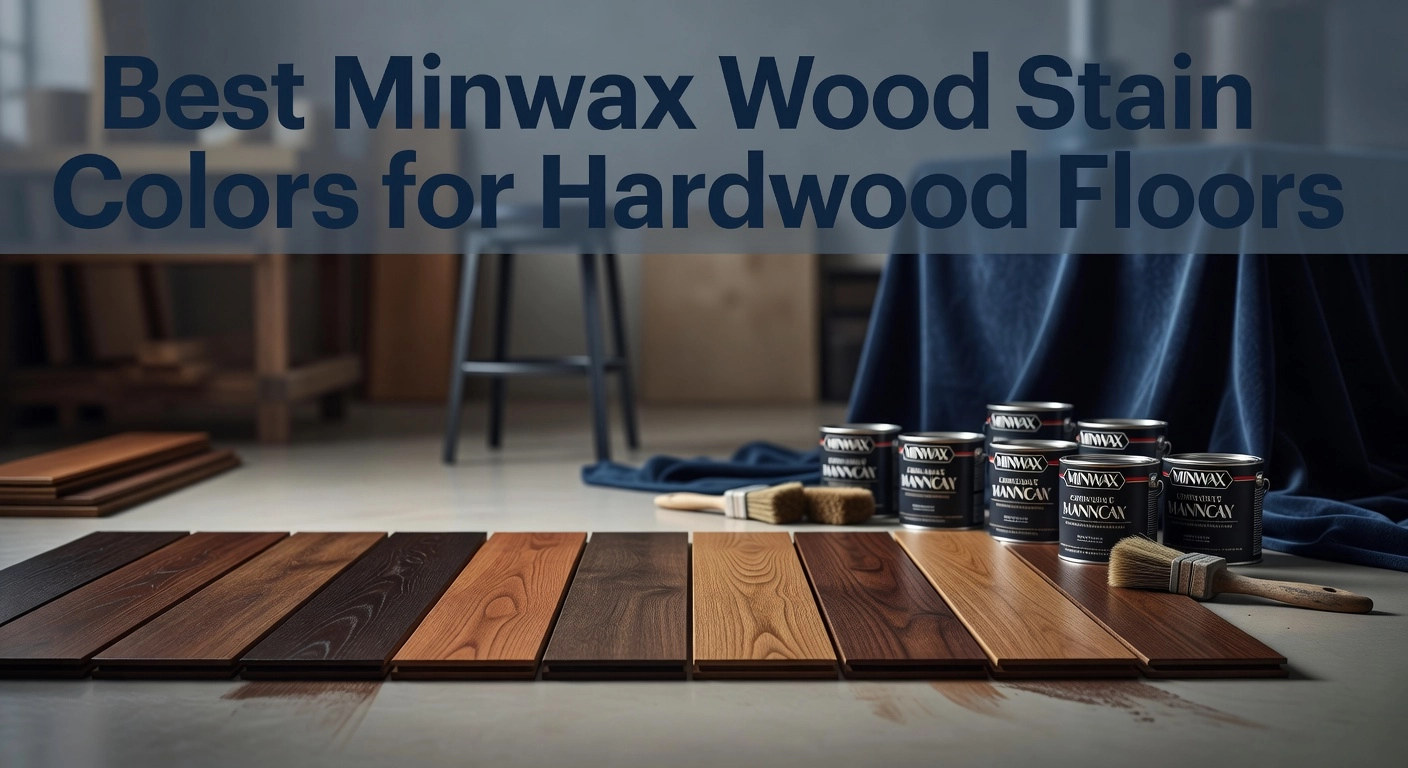
Best Minwax wood stain colors for hardwood floors can completely transform the look of your entire home.Whether you are refreshing worn planks or staining new floors
Minwax is one of the most trusted names in wood finishing, and for good reason.
Their stain colors are consistent, widely available, and beginner-friendly, making them a top choice for DIY homeowners tackling hardwood floors for the first time. With dozens of shades to choose from, however, the selection process can feel overwhelming.
That is exactly why we put this guide together. In this post, you will discover the best Minwax wood stain colors specifically suited for hardwood floors, along with helpful tips on what makes each shade work well in real homes.
Picking the right Minwax wood stain colors is only half the battle. The real difference between a pro-looking floor and a blotchy mess comes down to application. Once you choose your shade from the chart above, learn how to apply wood stain without streaks using simple tools and techniques we tested for 30 days. The color means nothing if the finish looks uneven.
From warm golden tones to rich, deep browns, we have narrowed down the top options so you can move forward with confidence. By the end, you will know exactly which stain color fits your style and space.
Why Your Stain Choice Defines Your Floor
The stain you choose for your hardwood floors does far more than add color. It shapes the entire personality of a room, influencing warmth, perceived size, and visual depth for years to come. Lighter stains like Natural or Simply White reflect light and make compact spaces feel open and airy, while deeper tones like Dark Walnut or Jacobean create intimacy and grounded elegance. The formula matters just as much as the color: oil-based penetrating stains sink into wood fibers for rich, grain-enhancing results, while water-based options deliver faster dry times, lower odor, and exceptional clarity over lighter species.

Hardwood floors demand a higher level of deliberation than furniture or trim projects precisely because they anchor everything else in a room. A poorly chosen stain on a side table is a minor inconvenience; the wrong shade across 800 square feet of oak flooring is a costly, time-consuming mistake. Floors interact with your lighting, your furniture, and your wall colors simultaneously, which means the stakes are simply higher.
Wood species adds another layer of complexity. Red oak’s natural pink undertones intensify certain stains, while dense maple resists absorption and requires careful prep to avoid blotchiness. Pine, being soft and porous, benefits strongly from a pre-stain conditioner before any color is applied. Always test on your actual wood before committing.
This is where Minwax wood stains earn their reputation as the trusted standard for both beginners and professionals. With 240-plus colors across all stain lines and purpose-built hardwood floor products designed for durability under foot traffic, Minwax offers a reliable, well-supported path from raw wood to finished floor. Throughout this guide, you will find color recommendations, formula breakdowns, species-specific tips, and the trending choices defining floors in 2025 and 2026.
Oil-Based vs. Water-Based Minwax Stains: Which Formula Is Right for You
Choosing between oil-based and water-based Minwax wood stain comes down to your wood type, project timeline, and the final look you want to achieve. Understanding the strengths of each formula helps you make a confident decision from the start.
The Case for Oil-Based: Classic Grain and Depth
Minwax Wood Finish is the brand’s flagship oil-based penetrating stain, offering approximately 36 colors ranging from light naturals to rich, deep tones like Dark Walnut and Ebony. This formula soaks directly into wood fibers rather than sitting on the surface, which is why it excels at bringing out the natural grain character of dense hardwoods like oak. Dry time runs roughly 2 hours, meaning you can stain and apply a protective topcoat within the same day under good conditions. Cleanup requires mineral spirits, so plan for proper ventilation and safe disposal of rags. For beginners working on traditional flooring or furniture restoration, this formula delivers a vibrant, time-tested finish in a single coat.
The Case for Water-Based: Color Range and Convenience
Water-based tintable stains open up a dramatically wider palette, with more than 200 color options mixed to your specification at retail locations. These formulas dry faster than oil-based versions, often within an hour, and produce lower odor and lower VOC output, making them a practical choice for indoor projects with limited ventilation. On porous or softer woods like pine and maple, water-based stains deliver more consistent, uniform color without over-emphasizing grain irregularities. Cleanup is simple with soap and water.
How to Decide: A Practical Guide
The global water-based wood stains market reflects a clear consumer trend, growing from roughly $375 million in 2025 to a projected $536 million by 2032, driven by demand for eco-friendlier, easier-to-use products. Still, oil-based remains the preferred choice when rich, traditional tones and maximum grain depth are the priority. Choose oil-based for hardwood floors and heritage-style projects where that warm, lived-in character matters most. Choose water-based when modern color accuracy, a broader palette, and faster project completion are your primary goals. Either way, always test your chosen stain on a scrap piece or inconspicuous area before committing to the full surface.
Top Minwax Wood Stain Colors for Hardwood Floors
Choosing the right Minwax wood stain color is less about following trends and more about matching your specific wood species, room style, and traffic demands. A color that looks stunning on red oak in a low-traffic bedroom may disappoint on pine in a busy hallway. This use-case approach consistently delivers better results than relying on popularity rankings alone, because factors like grain porosity, natural lighting, and foot traffic all influence how a stain performs and ages over time.
Minwax offers more than 240 color options across its full stain lineup, spanning oil-based penetrating formulas, water-based tintable stains, gel stains, and PolyShades. The official color browse tool lets you filter by color family, opacity level, and product type, making it easier for beginners to narrow down choices before committing to a sample test.
Opacity plays a significant role in your final result. Semi-transparent stains penetrate the wood and allow natural grain, knots, and figure to remain visible, creating an organic, lively appearance ideal for showcasing oak’s ray flecks or pine’s character. Deeper, more solid opacities provide a uniform, consistent finish that minimizes blotchiness, which suits modern or minimalist interiors where evenness matters more than grain expression.
The most requested color families in 2025 and 2026 break down into four categories. Warm browns, including Provincial and Early American, offer timeless versatility. Cool grays have softened into warmer greige tones for transitional spaces. Light naturals like Golden Oak brighten smaller rooms. Deep espressos such as Jacobean and Dark Walnut deliver bold sophistication, though they require more maintenance in high-traffic areas.
Social media testing on oak, maple, and pine has consistently elevated three colors as top performers. Special Walnut, named Minwax’s 2026 Color of the Year, delivers balanced warmth without overpowering natural grain. Provincial earns praise for reliable consistency across multiple species. Dark Walnut adds rich depth, making it a go-to choice for high-contrast design schemes.
Special Walnut: The 2026 Color of the Year for Good Reason
Officially announced in August 2025, Special Walnut earned its place as the Minwax 2026 Color of the Year by delivering exactly what today’s interiors demand: warmth, authenticity, and timeless depth. This warm, earthy, semi-transparent medium brown is available in both oil-based and water-based formulas, giving beginners flexible options based on their project timeline and wood type. It reflects a broader design shift away from cool, stark tones toward grounded, natural aesthetics rooted in reclaimed materials and handcrafted character.
One of Special Walnut’s greatest strengths is how it interacts with wood grain, particularly on red oak. Rather than masking the wood’s natural patterns, its semi-transparent formula penetrates the surface to accentuate depth and dimension. The result is a floor that feels rich and intentional without looking artificially dark or heavy. This quality makes it one of the most versatile stain choices across species and room styles alike.
Special Walnut also aligns directly with the growing “wood drenching” trend, where stain is applied consistently across floors, walls, built-ins, and ceilings to create a cohesive, immersive interior. Design experts describe this approach as treating wood as the primary design anchor of a space, creating layered environments that feel both warm and deliberately composed.
In practical terms, Special Walnut performs exceptionally well in high-traffic areas and open-concept layouts, where visual continuity and durability matter equally. Its even coverage and forgiving tone complement kitchens, living rooms, and connected spaces without competing with varied furnishings or finishes.
Pro tip for beginners: If you are applying Special Walnut to pine or maple, always use a Minwax Pre-Stain Wood Conditioner first. These porous woods absorb stain unevenly, which causes blotching and streaking. The conditioner seals the surface uniformly so your finished result looks smooth and professional.
Provincial: The Warm Neutral That Works on Almost Every Species
If Special Walnut earns praise for its understated elegance, Provincial (color code 211) earns its reputation as the ultimate crowd-pleaser. This semi-transparent, medium-brown stain adapts to nearly every species you put it on, reading as a balanced warm brown on red oak, a classic rich tone on pine, and a polished, consistent finish on maple. A 2025 comparison test across pine, poplar, red oak, and whitewood concluded that Provincial was the most versatile of the group, delivering reliable, attractive results where other stains stumbled. That kind of consistent performance across species is exactly what beginners need when they cannot predict how a stain will behave on their specific floor.
Compared to Special Walnut, Provincial sits slightly richer and more amber-forward in tone. It carries warm golden undertones that add depth and character without tipping into orange territory. This quality makes it a natural fit for traditional and transitional interiors where homeowners want warmth and visual weight without committing to a dark finish. It strikes a genuinely useful middle ground: not too light to feel bland, not too dark to feel heavy.
On red oak specifically, Provincial performs exceptionally well. Rather than fighting the species’ natural pinkish-red undertones, it works with them, enhancing the prominent open grain and adding a layer of warmth that feels intentional and refined. Bloggers and flooring professionals consistently recommend it as one of the top stain choices for red oak floors.
For wall color pairings, Provincial creates a grounded, livable floor tone that complements cream, white, and greige walls without competing. It hides everyday dust and scuffs better than very light stains while remaining bright enough to keep rooms feeling open.
To protect Provincial-stained floors in medium-to-high-traffic areas, apply two to three coats of oil-based or water-based polyurethane over a fully dried stain. Satin sheen is the most popular choice for floors; it offers durability, hides surface wear, and preserves a natural, low-luster appearance that suits Provincial’s warm, grounded character perfectly.
Dark Walnut: Bold Depth for Dramatic Floor Statements
Dark Walnut (color code 2716) stands among the deepest semi-transparent options in the Minwax Wood Finish line, producing a rich chocolate-brown tone that retains enough transparency to let wood grain breathe through. On oak and hickory, the results are particularly striking. Both species carry open pores that accept penetrating stains evenly, allowing Dark Walnut to deliver consistent, dramatic depth without obscuring the natural texture that makes hardwood floors worth staining in the first place. The finished look reads as intentional and elevated, the kind of floor that anchors a room with quiet confidence.
On softer, more porous woods like pine, however, Dark Walnut demands respect during preparation. Without thorough sanding through 120 to 180 grit and an application of Minwax Pre-Stain Wood Conditioner, pine absorbs stain unevenly, producing blotchy patches and overly dark spots. Sanding with the grain removes mill marks and opens pores consistently, while the pre-conditioner limits how aggressively the wood pulls in pigment. Skipping either step on pine is the most common beginner mistake with dark stains, and one that is difficult to correct after the fact.
In terms of design impact, Dark Walnut floors function as a powerful grounding element in light, modern interiors. Paired with white walls, clean-lined furnishings, and generous natural light, the deep brown creates high contrast that adds warmth and sophistication simultaneously. The darkness underfoot makes lighter elements in the room feel more intentional and deliberate.
For application, commit to a single controlled coat on the first pass, then step back and evaluate the depth under your room’s actual lighting before deciding whether a second coat is necessary. This discipline prevents over-darkening, which is much harder to fix than under-darkening.
For those debating between very dark and ultra-dark finishes, Dark Walnut and Ebony represent two distinct thresholds. Dark Walnut delivers a deep, warm brown that still shows visible grain and undertones. Ebony pushes further into near-black territory, flattening grain and creating a more dramatic, contemporary statement. Choose Dark Walnut for refined depth; choose Ebony when maximum boldness is the priority.
Early American: The Classic Choice for Oak Hardwood Floors
Early American (color #230) has remained one of the most trusted Minwax wood stain colors for hardwood floors precisely because it delivers consistent, flattering results on the two most common oak species found in American homes. On red oak, which naturally carries pink and reddish undertones, Early American produces a balanced medium-brown that neutralizes excess warmth without stripping the wood of its character. On white oak, which features tighter grain and more subtle figure, the stain settles into a rich, even brown that looks deliberate and refined. This reliability across both species is why flooring professionals and DIY homeowners reach for it repeatedly on refinishing projects.
The stain’s warm, slightly golden undertone is the key to its compatibility with oak. Oak contains natural tannins that react with certain stain chemistry, and Early American’s amber warmth works with those tannins rather than against them. Cooler or grayer stains often fight oak’s natural chemistry, producing muddy or uneven results. Early American sidesteps that problem entirely, producing a tone that reads as genuinely wood-forward and timeless under most lighting conditions.
Homes built in traditional, Craftsman, or Colonial architectural styles particularly benefit from this color. The medium-brown tone harmonizes with painted woodwork, period millwork, and natural furnishings that define those interiors without demanding the floor compete for attention.
For larger floor projects, maintaining a wet edge during application is critical. Early American dries in approximately 2 hours, so working in manageable sections and wiping excess stain within the recommended dwell time prevents visible lap marks. Sealing the finished floor with a polyurethane topcoat available through WoodCare.com completes the system, locking in color and building durable protection against daily wear.
Weathered Oak: Light, Airy, and Built for Modern Spaces
Weathered Oak (color code 270) earns its place among the most distinctive options in the Minwax Wood Finish line by delivering something no gray-heavy formula can replicate: a genuine silvery-brown warmth that reads as naturally aged rather than artificially tinted. The result is a driftwood-like tone with subtle warm undertones that creates a Scandinavian or coastal aesthetic without the coldness that pure gray stains often introduce. On floors, this translates to spaces that feel open, light-filled, and effortlessly modern.
One practical advantage that beginners often overlook is how lighter stains handle daily wear in busy homes. Because Weathered Oak offers low contrast against dust, pet hair, and minor surface debris, those elements simply disappear visually. Active households with dogs, cats, or young children will notice they can go longer between cleanings before the floor looks untidy, a genuine quality-of-life benefit that darker, high-contrast stains cannot offer.
On white oak specifically, Weathered Oak performs exceptionally well. White oak carries naturally cooler undertones, and this stain amplifies that quality, producing a honey-gray cast that feels current and sophisticated. Where warmer stains like Early American or Provincial lean into the wood’s reddish tones, Weathered Oak steers the result toward a cleaner, more contemporary character.
The one area where this stain demands extra attention is surface preparation. Because the formula is semi-transparent and low in pigment, it will not hide sanding swirl marks, uneven grit transitions, or missed spots. Sand consistently through your grit progression (120 to 180 grit as recommended), clean thoroughly, and always test on a hidden area before committing to the full floor.
For the strongest design result, pair Weathered Oak floors with a matte or satin topcoat rather than a high-gloss finish. Add light wood furniture, neutral walls, and clean architectural lines to complete a cohesive, minimalist interior that lets the stain’s subtle, grain-enhancing quality do the work.
Ebony: For High-Contrast, High-Impact Floor Designs
Minwax Ebony (color code 2718) is the deepest option in the Wood Finish line, producing a near-black tone with cool, grayish undertones that still allows wood grain to show through on open-grained species like oak, ash, and mahogany. Unlike a painted surface, Ebony penetrates the wood fibers, so the natural texture and pore structure remain visible beneath the color. This creates a striking, dimensional effect that feels rich rather than flat, making it especially powerful on floors where grain patterns run across wide visual fields.
Design-wise, Ebony floors function as a bold grounding element in contemporary, industrial, and high-contrast interiors. The near-black base amplifies lighter elements in the room, including white walls, cream upholstery, or brushed metal fixtures, creating the kind of sharp visual contrast that defines modern and transitional design aesthetics. Dark stained floors have gained traction in 2025 and 2026 design circles precisely because of their versatility within the dark spectrum; they anchor open-concept spaces without competing with surrounding decor.
Application demands careful preparation. Uniform sanding from 120 to 180 grit, always following the grain direction, ensures even pore opening across the entire floor. On softer or blotch-prone woods like pine, applying Minwax Pre-Stain Wood Conditioner before the stain is essential to prevent patchiness. Wipe the stain off at a consistent dwell time, working in the grain direction, and never allow it to dry on the surface.
For a more personalized result, blending Ebony with a lighter stain in small ratios (such as one part Ebony to three parts a neutral gray tone) creates custom charcoal hues that soften the intensity while retaining depth. Always test your blend on a scrap board first.
Finally, very dark floors benefit from a matte or satin topcoat rather than high gloss, which minimizes scratch visibility and reduces reflectivity. With proper maintenance coats applied every three to five years, Ebony floors retain their impact for a decade or more.
How to Prep Your Floor Before Applying Any Minwax Stain
Surface preparation is the single most important factor separating a professional-looking floor from one that looks blotchy, uneven, or amateurish. No stain color, regardless of how carefully you choose it, will perform well on an improperly prepared surface. Minwax recommends sanding your floor to a baseline of 120 to 180 grit before applying any wood stain. Starting with a medium grit around 100 to 120 removes imperfections, old finish residue, and surface damage, while finishing with 150 to 180 opens wood pores evenly without sealing them shut.
Sanding direction and your grit progression matter as much as the grits you choose. Always sand in the direction of the wood grain. Cross-grain scratches become highly visible once stain is applied because the stain settles into those grooves and creates visible lines across your floor. Progress through your grits in sequence, such as 100 then 120 then 180, so each finer pass removes the scratch pattern left by the previous one. After sanding, remove all dust thoroughly using a vacuum with a bristle attachment followed by a tack cloth wipe. Leftover dust clogs wood pores unevenly and creates texture problems in your final finish.
Minwax Pre-Stain Wood Conditioner is a non-negotiable step on soft or porous species. Pine, maple, birch, and fir absorb stain unpredictably because their pore structures are irregular. Denser sections absorb less while softer grain and knot areas soak up significantly more, causing streaks and dark blotches. The conditioner penetrates pores ahead of the stain, limiting excessive absorption in vulnerable areas and promoting uniform color across the surface. Apply it after sanding, allow it to penetrate for 5 to 15 minutes, wipe away the excess, and apply your stain within two hours.
Before committing to a full floor application, always test your chosen stain color first. Apply the complete prep sequence, including conditioner if applicable, to a scrap board of the same species or an inconspicuous corner of the floor. Evaluate the dried result under your room’s actual lighting conditions before proceeding.
The most common prep mistakes that cause uneven results include:
- Skipping Pre-Stain Wood Conditioner on blotch-prone species like pine or maple
- Stopping your sanding progression too fine, at 220 grit or beyond, which seals pores and weakens stain absorption
- Failing to remove mill glaze from new or factory-milled hardwood, a compressed surface layer that physically blocks stain penetration and requires proper sanding to eliminate
- Sanding across the grain or skipping grit steps in your sequence
- Applying stain over inadequately cleaned surfaces with dust or debris still present
Addressing each of these points before you open a can of Minwax wood stain guarantees the color you tested is the color you get across the entire floor.
Application Tips for a Professional-Looking Finish
Once your floor is properly prepped, the right application technique is what separates a clean, professional result from a blotchy, uneven one. Follow these five practical strategies to get the most out of every can of Minwax wood stain.
1. Choose the Right Tool for the Job
Lambswool applicators are the top choice for staining large floor areas. Their natural absorbency allows for smooth, even distribution across wide planks without runs or drips, and their 10-inch width covers ground quickly. For edges, corners, and tight spaces near baseboards, a foam brush or staining pad gives you the precision control a lambswool pad cannot. Before using a lambswool applicator, remove loose fibers by pressing tape against the pad and pulling it away. This prevents lint from embedding in your stain layer and ruining an otherwise clean finish.
2. Maintain a Wet Edge to Avoid Lap Marks
On large floors, lap marks form when fresh stain meets a section that has already begun to dry. To prevent this, work in narrow strips of two to three floorboards at a time, always moving parallel to the wood grain. Apply stain to one strip and immediately move to the adjacent strip while the first is still wet. On very large rooms, having one person apply while another follows with a wipe cloth helps maintain consistent timing and prevents any section from sitting too long before being wiped.
3. Control Your Timing for Consistent Color
Apply Minwax Wood Finish oil-based stain liberally, then allow it to penetrate for 5 to 15 minutes before wiping off the excess with a clean, lint-free cloth. Longer dwell times produce deeper, richer color; shorter times yield a lighter tone. The critical rule is consistency: whatever timing you choose on the first section, replicate it exactly on every subsequent section. Never let oil-based stain dry on the surface without wiping; dried excess blocks topcoat adhesion and can cause peeling later.
4. Layer Colors for a Custom Floor Tone
Minwax stains are formulated to be mixed and layered. For a custom look, apply a base coat, allow it to dry for the recommended time (typically at least two hours), then apply a partial second coat in the same or a contrasting color. Wiping the second coat off more quickly than the first keeps the tone subtle rather than heavy. You can also blend two stain colors together before application to create a completely unique shade that matches your specific design vision.
5. Finish with the Right Protective Topcoat
Stain adds color but offers zero surface protection on its own. Once your stain is fully dry and no longer tacky, apply a clear topcoat rated for floors. Minwax Super Fast-Drying Polyurethane for Floors pairs well with oil-based stain formulas, offering durability with fast recoat windows. For water-based stains or lighter tones where you want to avoid ambering, Minwax Ultimate Floor Finish delivers a non-yellowing protective layer that recoats in approximately two hours. Both products are available through WoodCare.com and are specifically designed to work over Minwax wood stain on hardwood floors.
Which Minwax Stain Works Best on Your Wood Species
Not all wood species respond to Minwax stain the same way. Porosity, density, grain structure, and natural undertones all determine how deeply color penetrates and how evenly it distributes. Matching the right formula to your specific species is one of the most impactful decisions you can make before opening a single can.
1. Red Oak
Red oak is the most forgiving species for beginners. Its naturally large, open pores absorb stain evenly and readily, making blotching rare. This receptivity means nearly any Minwax Wood Finish color produces consistent, predictable results. Special Walnut enhances its warm grain beautifully, Provincial adds a sophisticated medium-brown tone without overpowering natural character, and Dark Walnut delivers rich contrast while keeping grain visible. Because red oak naturally carries reddish undertones, stains with pink or amber bases can intensify warmth beyond what you expect, so always test on a scrap board first.
2. White Oak
White oak offers cooler, more neutral undertones and distinctive ray fleck patterns that photograph beautifully. Lighter and neutral stains like Weathered Oak or Special Walnut complement rather than mask these natural features, producing a refined, contemporary result. Heavy or warm-toned stains can compete with white oak’s grain rather than enhance it, so restraint works in your favor here.
3. Maple
Hard maple is dense with tight pores that resist stain absorption and blotch unpredictably without preparation. Apply Minwax Pre-Stain Wood Conditioner before any stain application, and favor water-based formulas, which penetrate more evenly on dense surfaces. Lighter to medium tones produce the most consistent color distribution.
4. Pine
Pine absorbs stain aggressively around knots and inconsistently across flat grain, making pre-stain conditioner non-negotiable. Lighter semi-transparent stains minimize blotching risk and preserve pine’s natural warmth. Skipping the conditioner step almost guarantees an uneven, splotchy finish.
5. Hickory
Hickory features dramatic natural contrast between light sapwood and darker heartwood. Deeper stains like Dark Walnut or Early American work best by creating a unified, cohesive tone that settles the visual tension in the grain rather than amplifying it.
Choosing the Right Minwax Stain Starts with Knowing Your Floor
Every great stain result comes down to five core decisions made before you open the can. Your wood species determines how color absorbs; oak accepts stain evenly while pine requires conditioning to prevent blotchiness. Desired opacity shapes whether grain shows through or gets covered. Room style and traffic level influence whether you choose a warm medium tone or a durable darker shade that hides daily wear. Formula preference between oil-based and water-based affects dry time, odor, and finish compatibility.
Before committing to a full floor, always test your chosen stain on a sample board or a hidden section beneath furniture. Color chips and screen previews are approximations only; the same stain reads differently on red oak versus white oak under your specific lighting conditions.
Preparation consistently outperforms any stain selection alone. Sanding to 120-180 grit opens wood pores evenly, and applying a pre-stain conditioner on porous woods eliminates the blotchy, streaky results that frustrate beginners.
Use the Minwax color guide and WoodCare.com product pages to filter across 240-plus options by color family, opacity, and formula before purchasing. If you are still uncertain where to begin, Special Walnut, the Minwax 2026 Color of the Year, offers a warm, versatile medium brown that flatters nearly every wood species with minimal risk.
Conclusion
Choosing the right Minwax wood stain color for your hardwood floors does not have to feel overwhelming. To recap the key takeaways: warm golden tones brighten smaller spaces, rich deep browns add drama and sophistication, and neutral mid-tones offer the most versatile everyday appeal. Testing your chosen stain on a sample board before committing is always a smart move.
The right stain color can completely elevate your home, adding character, warmth, and lasting beauty underfoot. Minwax makes that transformation accessible, whether you are a seasoned DIYer or picking up a brush for the very first time.
Now it is your turn to take action. Grab a few sample cans, prep your surface properly, and start testing. Your dream floors are closer than you think. The perfect color is out there waiting for you.
Frequently Asked Questions
What is the best Minwax wood stain color for hardwood floors in 2025 and 2026?
Special Walnut has been named the Minwax 2026 Color of the Year and is widely considered the best all-around choice. It delivers a warm, earthy, semi-transparent medium brown that enhances natural wood grain without overpowering it. It performs well on nearly every wood species, works in high-traffic areas, and suits a wide range of interior styles from traditional to contemporary.
Should I use oil-based or water-based Minwax stain for hardwood floors?
It depends on your priorities. Oil-based Minwax Wood Finish penetrates deeply into wood fibers, enhancing grain depth and producing rich, warm tones ideal for traditional hardwood floors. Water-based formulas dry faster, produce lower odor and VOCs, and offer more than 200 color options. Choose oil-based for classic warmth and grain character, and water-based when you need faster project completion, a broader color palette, or better results on dense species like maple.
Do I need to use Minwax Pre-Stain Wood Conditioner before staining hardwood floors?
It depends on your wood species. For porous or soft woods like pine, maple, and birch, Pre-Stain Wood Conditioner is non-negotiable. These species absorb stain unevenly, causing blotchy patches and streaks. The conditioner seals the surface uniformly, limiting excessive pigment absorption in vulnerable areas. For open-grained hardwoods like red oak, the conditioner is less critical but still beneficial for ensuring the most even possible result.
Which Minwax stain colors work best on red oak floors?
Red oak is one of the most forgiving species for staining because its large, open pores absorb stain evenly. The top-performing colors on red oak include Special Walnut, which enhances warm grain beautifully; Provincial, which adds a sophisticated medium-brown tone; and Dark Walnut, which delivers rich contrast while keeping grain visible. Keep in mind that red oak’s natural reddish undertones can intensify warm-toned stains, so always test on a scrap board first before committing to the full floor.
How do I avoid lap marks and blotchy results when staining hardwood floors?
The key is proper preparation and consistent application technique. Sand your floor to 120 to 180 grit, always following the grain direction, and remove all dust thoroughly before applying stain. During application, work in narrow strips of two to three floorboards at a time, maintaining a wet edge by moving to the adjacent strip before the previous one dries. Apply stain liberally, let it penetrate for 5 to 15 minutes, and wipe off the excess consistently across every section. On blotch-prone species, always apply Pre-Stain Wood Conditioner first.
11 thoughts on “Best 15 Minwax Wood Stain Colors for Hardwood Floors [2026 Guide]”