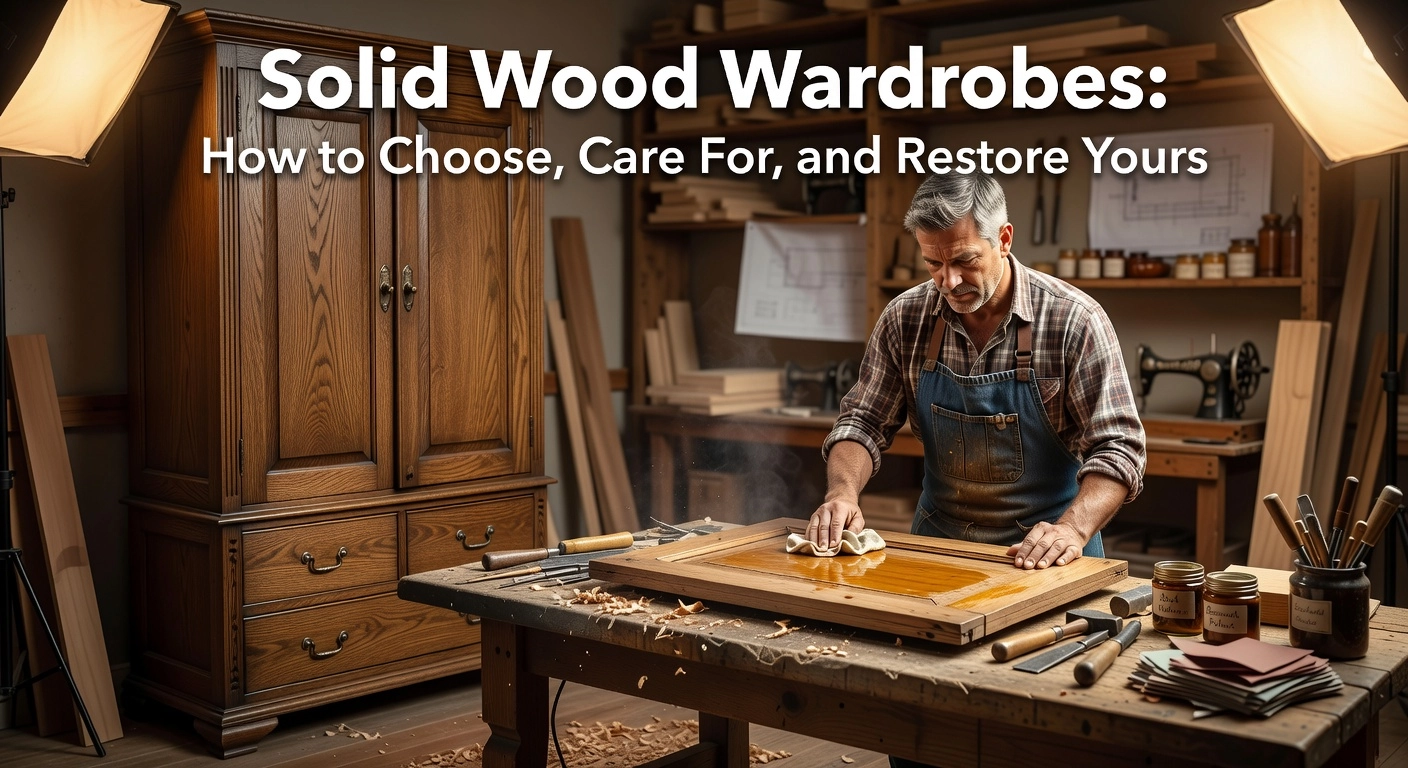
There’s something truly special about opening a wardrobe that’s built to last a lifetime. If you’ve ever run your hand along the smooth grain of solid wood furniture, you already know that feeling of quality that’s hard to put into words.
A solid wood wardrobe isn’t just a place to hang your clothes. It’s an investment, a statement piece, and with the right care, something you could pass down through generations. But if you’re new to owning one (or thinking about buying your first), the whole world of wood types, finishes, and maintenance routines can feel a little overwhelming.
Don’t worry, we’ve got you covered. In this guide, we’re breaking everything down into simple, easy-to-follow steps that anyone can understand. Whether you’re trying to figure out which solid wood wardrobe is right for your space, wondering how to keep it looking its best, or hoping to bring an older piece back to life, you’ll find practical tips for all of it right here. Let’s dive in and make the whole process a lot less complicated.
What Is a Solid Wood Wardrobe (and How to Tell If You Have One)
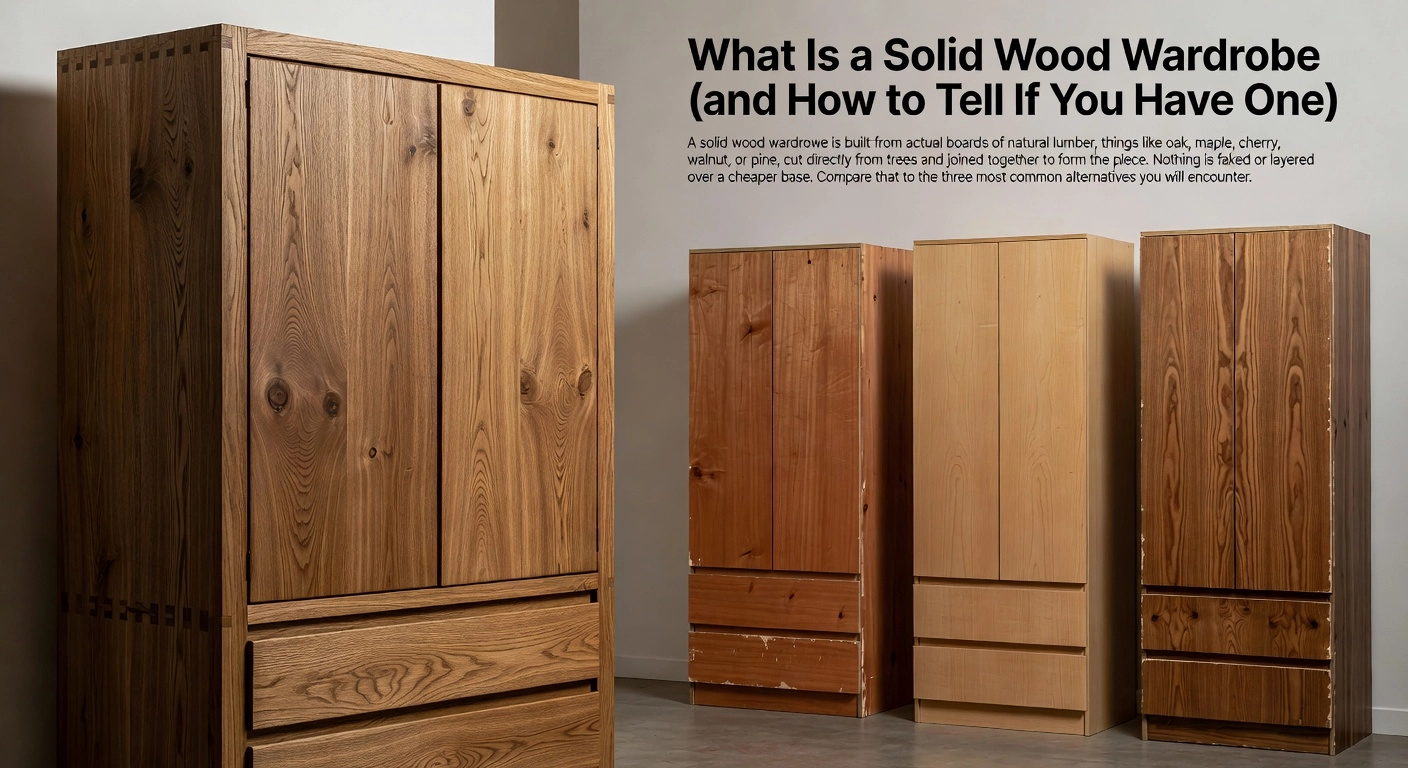
A solid wood wardrobe is built from actual boards of natural lumber, things like oak, maple, cherry, walnut, or pine, cut directly from trees and joined together to form the piece. Nothing is faked or layered over a cheaper base. Compare that to the three most common alternatives you will encounter when shopping or thrifting.
Veneer is a paper-thin slice of real wood (sometimes as thin as 0.5 mm) glued over a core of engineered material. It looks like wood on the surface but cannot be sanded down more than once or twice before you hit the substrate underneath. MDF, or medium-density fiberboard, is made from fine wood fibers mixed with resin and pressed into smooth sheets. It has zero natural grain and swells badly when it gets wet. Particleboard is the budget option, made from sawdust and wood chips glued together. It feels light, dents easily, and often crumbles around screws over time. You can learn more about how to tell if furniture is really solid wood with a closer look at these differences.
The Visual Test
Run your eyes along the face panel of the wardrobe, then follow the grain around to the side and the edge. On a true solid wood wardrobe, the grain pattern flows continuously and naturally around corners. On a veneered piece, the grain often stops abruptly at the edge, or you will notice edge banding, a thin strip applied to hide the engineered core underneath. Laminate surfaces sometimes look suspiciously perfect, with a grain pattern that repeats in a way real wood never does.
The Tactile Test
Pick up a drawer or open a door and pay attention to the weight. Solid wood feels noticeably heavier and more substantial than engineered alternatives. Run a finger along an edge; natural wood edges have a slight irregularity to them because wood is not a manufactured material. Knots, subtle color shifts, and small grain variations are not flaws, they are proof you are dealing with the real thing. A surface that feels unnaturally smooth and uniform, or shows a faint seam along an edge, is a strong sign of veneer or laminate. For a deeper dive, this solid wood versus particleboard and veneer comparison breaks it down clearly.
The End-Grain Check
This is the most reliable test. Look at any exposed corner or cut edge on the wardrobe, particularly on the top, sides, or an unfinished interior edge. Solid wood shows end grain, the circular or semi-circular growth rings visible from the cut end of a board. If you see that pattern, you almost certainly have solid wood throughout. Veneer will show a thin decorative layer sitting on top of a completely different material, and MDF or particleboard will display a uniform, fibery texture with no grain rings at all.
Knowing what you actually have before you buy or restore a piece is not just trivia. Solid wood can be sanded, refinished, and repaired for decades. Veneer and particleboard often cannot survive heavy restoration work, so quick identification tests for used furniture can save you real time and money before you commit to a project.
The Real Pros and Cons of Solid Wood Wardrobes
Now that you know what a solid wood wardrobe actually is, let’s talk about whether one is right for you. Like any big purchase, there are genuine upsides and real drawbacks worth understanding before you commit.
The Pros Worth Knowing
1. You can fix it when life happens. This is honestly one of the biggest selling points. Scratches from moving furniture, dents from a dropped hanger, water rings from a damp cloth left sitting too long, all of these can be sanded out and refinished on solid wood. With MDF or veneer alternatives, damage like that is often permanent. On solid wood, it is just a surface problem waiting to be solved. Sites like WoodStuffHQ exist precisely because this kind of DIY repair is totally doable for beginners with basic tools.
2. It gets better with age. Solid wood develops a natural patina over the decades, a gradual deepening of color, a mellowing of the grain, a warmth that no factory finish can replicate. A walnut wardrobe you buy today will look even richer in 20 years. That character is part of the appeal, and it is a big reason solid wood furniture holds strong resale and heirloom value compared to engineered alternatives that simply wear out.
3. It is a genuinely eco-friendly choice. When sourced from responsibly managed forests, solid wood is a renewable material free from the synthetic resins and adhesives found in many composite boards. Buying one quality piece that lasts 30 or 40 years also means fewer replacements and less furniture waste overall, something increasingly important to today’s buyers.
4. It handles heavy loads without complaint. A solid wood wardrobe can hold dense winter coats, heavy blankets, and stuffed shelves without sagging or flexing. That structural strength is hard to match with lighter engineered materials.
The Cons You Should Expect
5. The upfront cost is higher. There is no getting around it. Solid wood costs more than MDF or veneer options at the point of purchase. That said, when you spread the cost over decades of use, the value often works out favorably compared to replacing cheaper furniture every few years.
6. It is heavy and humidity-sensitive. Moving a solid wood wardrobe is a real project; these pieces are dense and substantial. Solid wood is also hygroscopic, meaning it naturally expands and contracts as indoor humidity changes. Without proper humidity control (ideally between 40 and 60 percent relative humidity), you can see warping or joint movement over time. This is manageable, but it requires some awareness.
The pros and cons of solid wood reflect what the market is telling us too. The global solid wood furniture market is valued at US$6.04 billion in 2026 and is projected to reach US$8.39 billion by 2035, growing at a 4.8% CAGR. Consumers are clearly choosing durability and quality over disposable alternatives, and a solid wood wardrobe sits right at the center of that shift.
Solid Wood vs. Veneer Wardrobes: Which Is Better for You
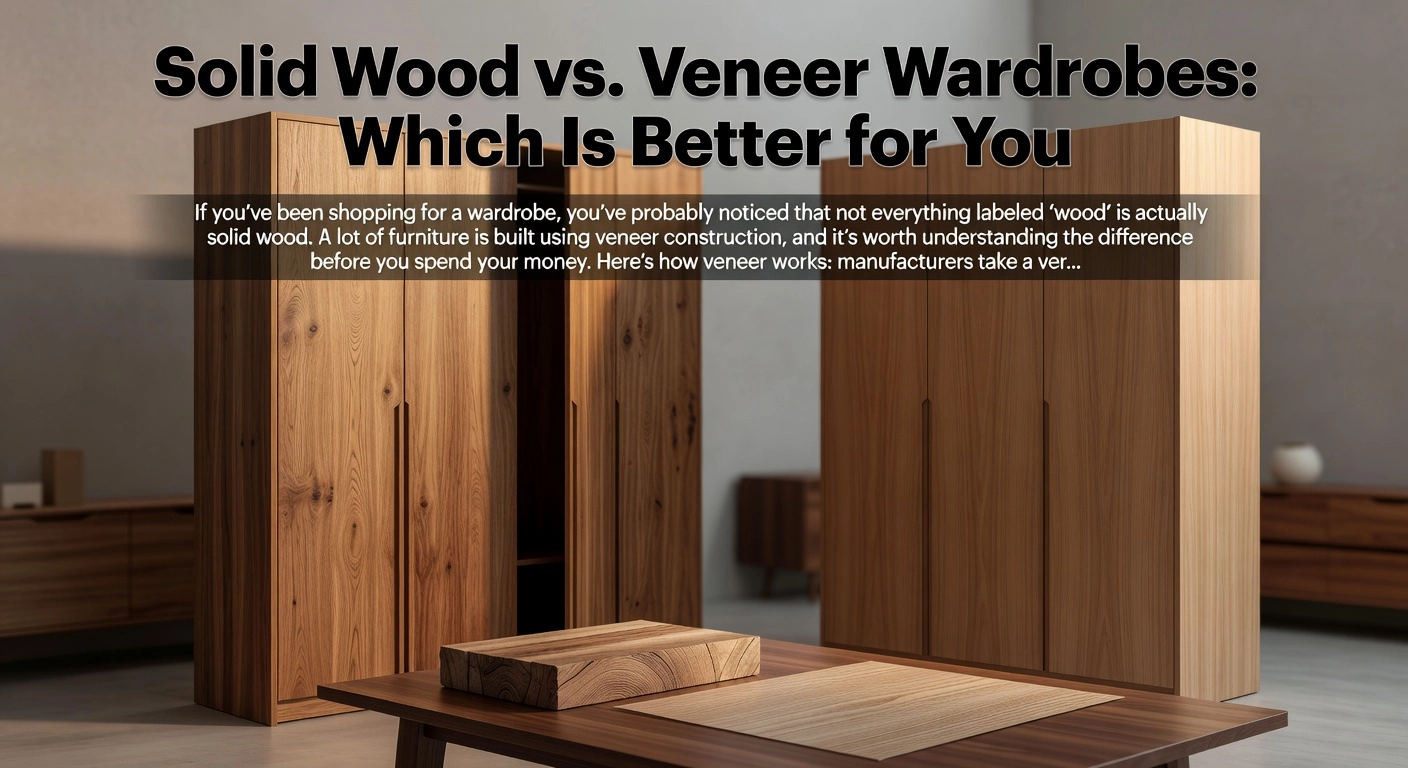
If you’ve been shopping for a wardrobe, you’ve probably noticed that not everything labeled “wood” is actually solid wood. A lot of furniture is built using veneer construction, and it’s worth understanding the difference before you spend your money.
Here’s how veneer works: manufacturers take a very thin slice of real wood, typically about 1/16 of an inch or less, and bond it over a substrate like particleboard or MDF (medium-density fiberboard). The surface looks and feels like genuine wood because, technically, it is real wood on the outside. The core underneath, though, is engineered material. You can learn more about how solid wood and veneer construction differ to get a clearer picture before buying.
Where Veneer Actually Has the Edge
Veneer is not automatically the inferior choice. On large, flat panels like wardrobe doors and side panels, veneered engineered cores are actually more dimensionally stable than solid wood. Solid wood expands and contracts with humidity changes, which can cause wide panels to warp or doors to stick over time. Veneer over MDF resists that movement much better. It also costs noticeably less for large pieces, and the surface grain tends to look more uniform and consistent across the whole wardrobe.
Why Solid Wood Wins for Long-Term Owners
The biggest advantage solid wood has over veneer comes down to repairability. When a solid wood wardrobe gets a deep scratch, a dent, or even minor water damage, you can sand it down and refinish it without hitting any substrate underneath. You can do this multiple times over the life of the piece. Solid wood also supports stronger joinery techniques like dovetails and mortise-and-tenon joints, which hold up far better over decades of daily use. You can explore the practical differences between solid wood and veneer furniture to see how those joints compare in real-world use.
The DIY Repair Problem with Veneer
For anyone who wants to maintain and restore their own furniture, veneer creates a real challenge. Deep scratches or water damage often cut right through that thin wood layer and reach the particleboard underneath. Once particleboard gets wet, it swells and crumbles. At that point, a clean DIY fix is basically off the table. You are looking at professional veneer replacement or, more often, replacing the piece entirely.
The Bottom Line: Which Should You Buy?
If you are buying a wardrobe you plan to keep for 20 or more years and you are willing to do basic maintenance like controlling humidity and occasional refinishing, solid wood outperforms veneer on total cost of ownership. You avoid early replacement, you can fix damage yourself, and the piece can genuinely last a lifetime. Veneer makes more sense for a secondary space, a shorter-term situation, or a tighter budget. The key is being honest about your timeline and how much upkeep you are actually willing to do.
Best Wood Species for a Solid Wood Wardrobe
Not all wood is created equal, and the species your wardrobe is built from will determine how it looks, how long it lasts, and how much upkeep it needs. Here’s a practical breakdown of the five most common options you’ll encounter while shopping.
1. Oak: The Reliable All-Rounder
Oak is probably the most popular choice for solid wood wardrobes, and for good reason. Red oak comes in at around 1,290 lbf on the Janka hardness scale, which means it handles daily wear extremely well without denting easily. Its open grain pattern is actually a bonus if you want to add color, since it absorbs stain beautifully and evenly. Oak is also widely available across most price ranges, making it one of the easiest species to find whether you’re shopping locally or online. If you want a durable, no-fuss wardrobe that works with almost any bedroom style, oak is a safe and smart starting point.
2. Walnut: The Premium Pick That’s Trending Right Now
Walnut is having a serious moment in 2026 interior design. Its rich, dark brown tone and striking grain pattern are showing up everywhere as homeowners move away from pale, washed-out looks toward warmer, more dramatic wood finishes. Beyond its good looks, walnut has a closed grain structure that resists moisture better than open-grain species like oak, which is a practical bonus in a bedroom wardrobe. The catch is cost; walnut runs significantly more expensive than oak or maple. But if your budget allows it, a walnut wardrobe is genuinely stunning and holds its value well over time. According to recent wood design reporting, walnut is consistently highlighted as a standout finish for 2026 furniture.
3. Cherry: The Heirloom Choice
Cherry wood is for buyers who think in decades, not years. It starts out a warm pinkish-tan color and slowly deepens into a rich reddish-brown patina as it ages and absorbs light. That transformation is part of the appeal. Cherry is moderately hard at around 950 lbf, so it’s not the toughest option, but it pairs beautifully with oil or wax finishes that protect the surface while letting the natural grain breathe. It’s widely considered an heirloom-quality species, meaning a well-built cherry wardrobe can genuinely be passed down through generations.
4. Pine: The Budget-Friendly Option
Pine is a softwood, which means it dents and scratches more easily than the hardwoods listed above. However, it’s noticeably lighter in weight, easier to move around, and much kinder on your wallet. For a guest bedroom or a first apartment, a pine wardrobe can be a perfectly practical choice. Just know going in that it needs more frequent conditioning and maintenance to stay protected. Regular oiling or waxing helps keep pine from drying out and showing wear too quickly.
5. Maple: The Painter’s Favorite
Hard maple sits at around 1,450 lbf on the Janka scale, making it one of the densest and most scratch-resistant options available, as noted in hardwood furniture guides. Its grain is fine and relatively uniform, which is less visually dramatic than walnut or oak but works perfectly for painted finishes or very light stains where you want a clean, smooth surface without much texture showing through. If you’re planning to paint your wardrobe or want a contemporary, understated look, maple delivers serious durability without the fuss.
A Quick Note on 2026 Trends
If you care about your wardrobe feeling current, lean toward darker and richer tones. Walnut and smoked oak are the species interior designers are championing this year, valued for their warmth, visible grain character, and sense of “quiet luxury.” Lighter, bleached, or gray-washed woods are increasingly viewed as dated. This doesn’t mean you need to follow trends strictly, but it’s worth knowing if resale value or long-term style is part of your decision.
How to Care for a Solid Wood Wardrobe
Owning a solid wood wardrobe is a long-term investment, and a little consistent care goes a long way toward keeping it looking beautiful for decades. The good news is that maintaining solid wood is genuinely straightforward once you know the basics. Here are the five key care habits every solid wood wardrobe owner should follow.
1. Dust it every week with a soft microfiber cloth.
Dust might seem harmless, but over time it acts like fine sandpaper on a wood finish, especially when it settles into the grain or gets pushed into the narrow gaps around hinges and handles. Use a soft microfiber cloth and work in downward strokes along vertical panels rather than wiping in circles. This moves dust away from hardware gaps instead of packing it in. A lambswool duster works well too. The key thing to avoid is rough or dry cloths, which can leave tiny scratches you won’t notice right away but will see over time.
2. Give it a deeper clean once a month.
A weekly dusting handles surface buildup, but monthly you’ll want to do a proper wipe-down. Mix a small amount of mild soap (something gentle like Murphy Oil Soap) with warm water, dampen your cloth, and then wring it out thoroughly. The cloth should feel barely damp, not wet. Wipe down the panels and immediately follow with a dry cloth to remove any moisture. Leaving water sitting on vertical wood surfaces, even briefly, can soften the finish or cause the wood to swell slightly. Skip multi-purpose sprays, furniture wipes, or anything with alcohol or ammonia; these can strip the finish faster than you’d expect.
3. Condition the wood every three to six months.
Solid wood naturally loses moisture over time, especially in bedrooms with central heating running through winter. When wood dries out, it can develop hairline cracks or start to look dull and lifeless. Applying a quality wood conditioner or paste wax a couple of times a year replenishes those natural oils and keeps the finish protected. Apply a small amount with a soft cloth, work it in following the grain, and buff away any excess. Less is more here; a thin even coat does the job, and over-applying just creates a sticky buildup.
4. Keep humidity levels stable between 35 and 55 percent.
This one matters more than most people realize. Solid wood is a hygroscopic material, meaning it absorbs and releases moisture from the surrounding air. When humidity swings dramatically, the wood expands and contracts, which eventually leads to warping, cracking, or doors and drawers that no longer close properly. Aim to keep your bedroom humidity between 35 and 55 percent relative humidity. A basic hygrometer from any hardware store lets you monitor this easily. In winter when indoor heating dries the air out, a bedroom humidifier helps maintain safe levels. In humid climates or during summer, a dehumidifier or air conditioning keeps excess moisture in check. Also keep the wardrobe away from heat vents, radiators, and fireplaces, as direct heat sources accelerate drying and cause uneven stress on the wood.
5. Know what to avoid.
A few common habits can quietly damage a solid wood wardrobe over time. Direct sunlight is a big one; UV exposure causes the finish to dry out and fade unevenly, leaving one side of your wardrobe looking noticeably older than the other. Position it away from windows where possible, or use curtains and blinds during peak sun hours. Aerosol polish sprays that contain silicone are another thing to skip entirely. They leave an invisible residue that builds up with repeated use and actually interferes if you ever want to refinish or touch up the wood later. Finally, watch for standing water near the base, especially in rooms where windows are left open during rain. Wipe up any spills or pooled moisture immediately, as prolonged contact at the base can lift the finish and cause the wood to swell or discolor.
Following these five steps consistently means your solid wood wardrobe stays in excellent shape with minimal effort, and you’ll rarely need to deal with bigger restoration work down the road.
Common Solid Wood Wardrobe Problems You Can Fix Yourself
One of the biggest selling points of a solid wood wardrobe is that when something goes wrong, you can actually fix it yourself. Unlike particleboard or veneered pieces that tend to chip, swell permanently, or fall apart when damaged, solid wood responds beautifully to basic DIY repairs. Here are the five most common problems you’ll run into and exactly how to handle each one.
1. Scratches on Vertical Panels
Light surface scratches are probably the most frequent complaint, and the good news is they are usually the easiest to fix. Try rubbing a raw walnut directly into the scratch, the natural oils and tannins in the nut darken and blend minor marks surprisingly well. A wood touch-up marker in a matching shade works just as effectively for quick, low-mess results. Pick up your marker, test it on a hidden spot first, then color in the scratch following the direction of the grain.
For deeper scratches that catch your fingernail, you will need to go a step further. Lightly sand the damaged area with 220-grit sandpaper, always moving along the grain rather than across it, then apply a matching stain and seal with a compatible topcoat like paste wax or polyurethane. Work in a small area and blend carefully into the surrounding finish so the repair disappears.
2. Water Rings on Door Panels
That white cloudy ring left by a damp glass or vase is not actually damage to the wood itself. It is moisture trapped inside the finish layer, which means it is often reversible without any sanding at all. Apply a small amount of petroleum jelly or plain mayonnaise directly onto the ring, leave it overnight, then wipe it away and buff the surface with a soft cloth. The fats help push the trapped moisture out of the finish, and most white rings disappear completely.
Dark rings are a different story. Those indicate moisture that has penetrated through the finish and into the wood fiber itself. For those, you will need to lightly sand the affected area, apply a fresh coat of matching stain, and refinish the panel. It takes more effort, but it is absolutely doable as a weekend DIY project.
3. Sticking or Swollen Doors
If your wardrobe doors are suddenly stiff or dragging, seasonal humidity is almost always the cause. Solid wood naturally expands in humid months and contracts when the air is drier. Before you reach for sandpaper or a hand plane, check your hinges first. Loose hinge screws are a surprisingly common culprit, and simply tightening them can solve the problem immediately.
If the door is still sticking after tightening the hardware, rub a candle or a block of beeswax along the edges where the door makes contact. This reduces friction without removing any wood at all, which is important because the door will likely shrink back in drier weather. Only resort to sanding or planing if the sticking is severe, and even then, remove material gradually.
4. Hardware Maintenance
Good hardware makes a wardrobe a pleasure to use every day, and keeping it in shape only takes a few minutes a couple of times a year. Make it a habit to tighten all hinge screws every six to twelve months since they work loose with regular use. For hanging rod brackets, a dry silicone lubricant keeps things sliding smoothly without attracting dust the way oil-based products do. Clean your drawer slides with a damp cloth to remove built-up grime, then apply a thin layer of paste wax to keep them gliding effortlessly.
5. Mold or Mildew on the Interior
Finding mold inside your wardrobe is alarming, but it is a fixable problem as long as you also deal with the source. Mix one part white vinegar with two parts water, apply it to the affected surfaces, and scrub gently with a soft brush or cloth. After cleaning, dry the interior thoroughly using a fan or by leaving the doors open for several hours.
Here is the critical part: if you do not address the humidity causing the mold, it will come back. Mold thrives when indoor humidity climbs above roughly 60 percent. A small dehumidifier in the room or improved ventilation will go a long way toward keeping your wardrobe interior dry and clean for the long term.
When and How to Refinish a Solid Wood Wardrobe
Even a well-loved solid wood wardrobe will eventually reach a point where basic cleaning and polishing just won’t cut it anymore. Knowing when to refinish, and which approach to take, can save you time, money, and a lot of frustration.
1. Spot the Signs It’s Time to Refinish
Not every scuff or scratch means you need to refinish your wardrobe. The real red flags are more serious. If the finish is flaking, peeling, or chipping in visible patches, bare wood is already exposed and vulnerable to moisture damage. If the surface has turned gray and dull in ways that wiping can’t fix, that’s oxidation eating through the protective layer. Another reliable test: splash a few drops of water on the surface. If the water soaks in instead of beading up, the finish has broken down and the wood is unprotected. Large areas of bare wood are also a clear signal that a simple polish won’t be enough anymore.
2. Try the No-Strip Method First for Light Wear
Before you commit to a full refinish, check whether your wardrobe just needs a revival rather than a full overhaul. Products like Restor-A-Finish are designed for exactly this situation: a finish that looks tired, faded, or lightly scratched but still has its basic structure intact. You simply wipe the product on with a cloth, work it into the wood in small sections, and wipe it dry. It penetrates the existing finish, blends out minor blemishes, and restores color and sheen without any sanding or stripping. This method works on most finish types including lacquer, varnish, and polyurethane. It’s a great first option for wardrobes that look worn but still function perfectly well.
3. Follow These Steps for a Full Refinish
When the damage is too significant for a no-strip approach, a full refinish is the way to go. Start by cleaning the entire piece thoroughly to remove grease, dust, and residue. Strip the old finish using a chemical stripper or 80 to 120 grit sandpaper, then sand progressively up to 220 grit for a smooth surface. If your wardrobe is pine or cherry, apply a wood conditioner before staining to prevent blotchy, uneven color absorption. These two species are especially prone to that problem. From there, apply your chosen stain and finish with at least two coats of topcoat, sanding lightly between coats.
4. Use a Top-to-Bottom Technique on Vertical Panels
Wardrobes have a lot of vertical surfaces, and that changes how you apply finish. Always work top to bottom in sections so any drips land on unfinished areas below rather than ruining freshly coated wood. Apply thinner coats on vertical panels than you would on a horizontal tabletop; thin coats are far less likely to sag or run. Use a gel-style stripper if you’re removing old finish, since it clings to vertical surfaces much better than liquid versions.
For deeper guidance on each step of this process, WoodStuffHQ’s tutorials on removing water rings, fixing scratches, and restoring wood furniture walk you through the details with tested methods designed for beginners.
Is Your Old Solid Wood Wardrobe Worth Restoring?
Before you haul an old wardrobe to the curb or donate it, it’s worth spending 10 minutes figuring out whether you’re sitting on a genuinely restorable piece. Older solid wood wardrobes were built to last generations, and many just need a little attention to come back to life.
Run Through This Quick Structural Checklist First
Start by checking the joints. Grab the wardrobe frame and give it a gentle wobble. Loose joints are common in older pieces, but that’s usually not a dealbreaker. If the wood is still intact and the joint just needs fresh glue and clamping, you’re in good shape. What you want to avoid is finding joints where chunks of wood are missing or the mortise and tenon connection has completely crumbled.
Next, look at the panels. Press your thumb against the flat surfaces and tap lightly. Solid wood panels feel dense and don’t flex. If you notice bubbling, peeling, or separation at the edges, that’s delamination, which signals veneer over plywood rather than true solid wood. Finally, open and close the doors. They should swing without dragging or binding. Sagging doors often just need a hinge tightened or replaced, which is a 20-minute fix.
The Numbers Make a Strong Case for Restoring
A quality solid wood wardrobe runs between $800 and $3,000 new, and that’s before you get into custom or built-in options. Compare that to a typical DIY restoration budget: sandpaper, wood glue, basic finishing supplies, and hardware rarely exceed $150 total. If the structure is sound, restoration wins financially almost every time, and you end up with a piece that already has character built in.
Creative Repurposing Ideas That Fit 2026 Style Trends
Traditional armoire shapes are having a real moment right now. The maximalist revival trending through 2026 celebrates bold, layered interiors with heritage pieces as focal points. A deep wardrobe can be converted into a media unit by pulling out the hanging rod and adding adjustable shelves. Alternatively, strip the interior and build out a bar setup with glass racks and LED lighting for an instant entertaining statement.
Know When to Walk Away
Some problems genuinely don’t justify the effort. Severe warping across large flat panels is difficult to reverse without professional equipment. Broken mortise and tenon joints with missing wood can’t simply be re-glued. Extensive mold growth that has penetrated deep into the wood fibers is a health concern and structurally compromises the piece. Surface mold is usually treatable; deep infestation is a different story.
Signs You Have a Piece Worth Saving
Pull open the drawers and look at the corners. Dovetail joinery is one of the clearest signs of quality construction, and hand-cut dovetails with slight irregularities point to even older craftsmanship. Tap the panels; solid wood sounds dense rather than hollow. Pick up a drawer and feel the weight. Genuinely solid hardwood pieces feel noticeably heavier than their engineered counterparts. Consistent secondary woods inside, like pine drawer bottoms in an oak exterior, are another green flag that the original maker cared about how the piece was built.
Making the Most of Your Solid Wood Wardrobe
By this point, you have everything you need to make a smart, confident decision about your solid wood wardrobe. The key is simple: solid wood is worth every extra dollar when you plan to keep it long-term, stay consistent with basic maintenance, and choose to restore rather than replace when wear eventually shows up.
The good news is that most problems you will encounter are completely manageable at home. Scratches, water rings, sticking doors, and dull finishes are all fixable with basic tools and the right products, no professional required. That repairability is exactly what separates solid wood from MDF or veneer alternatives.
When you are ready to tackle a specific repair, WoodStuffHQ’s step-by-step restoration guides walk you through each fix in plain language, with tested methods and no specialty tools needed.
Bookmark the wood species and care sections too. They make excellent seasonal references as humidity levels shift and your wardrobe’s needs change throughout the year.
The bottom line is this: a well-maintained solid wood wardrobe only gets better with age, building character and patina that no flat-pack alternative can ever replicate.
Conclusion
A solid wood wardrobe is one of those rare purchases that genuinely rewards you over time. To recap the key takeaways: choosing the right wood type and finish sets the foundation for long-term satisfaction, regular maintenance keeps your wardrobe looking beautiful year after year, and even older or worn pieces can be restored to their former glory with the right approach.
The effort you put into caring for solid wood furniture pays off in ways that flat-pack alternatives simply cannot match. Quality, durability, and timeless style all come as part of the package.
Now it’s your turn to take action. Whether you’re shopping for your first solid wood wardrobe or refreshing one you already own, use this guide as your go-to reference. Your wardrobe has the potential to become a lasting piece of your home’s story. Make it one worth telling.
Frequently Asked Questions
How can I tell if my wardrobe is made of solid wood or just veneer?
There are three reliable tests. First, the visual test: check if the grain pattern flows continuously around corners — veneer often stops abruptly at edges or has repeated, suspiciously uniform patterns. Second, the tactile test: solid wood feels noticeably heavier and has slight natural irregularities like knots and color shifts, while veneer surfaces feel unnaturally smooth or show faint seams at edges. Third, the end-grain check: look at any exposed corner or cut edge for circular growth rings, which confirm solid wood. Veneer will show a thin decorative layer over a different material, while MDF or particleboard displays a uniform, fibery texture with no grain rings.
Which wood species is best for a solid wood wardrobe?
The best wood depends on your priorities. Oak is the most popular all-rounder — durable, widely available, and works with most bedroom styles. Walnut is the premium choice for 2026, offering rich dark tones and good moisture resistance. Cherry is the heirloom pick that deepens beautifully in color over time. Maple is ideal if you want to paint your wardrobe, as it's one of the hardest and most scratch-resistant options. Pine is the budget-friendly choice but requires more frequent maintenance since it's a softwood that dents more easily. For current style trends, walnut and smoked oak are leading choices among interior designers.
How often should I maintain my solid wood wardrobe and what does that involve?
Solid wood wardrobe care follows a simple schedule. Weekly, dust it with a soft microfiber cloth using downward strokes to avoid packing dust into hardware gaps. Monthly, do a deeper wipe-down with a barely damp cloth using mild soap like Murphy Oil Soap, followed immediately by a dry cloth to remove any moisture. Every three to six months, apply a wood conditioner or paste wax to replenish natural oils and protect the finish. Year-round, keep bedroom humidity between 35 and 55 percent relative humidity to prevent warping, cracking, or sticking doors. Also avoid direct sunlight, aerosol silicone-based polishes, and standing water near the base.
Can I fix common damage like scratches and water rings on a solid wood wardrobe myself?
Yes, most common damage is fixable at home without professional help. Light scratches can often be blended using a raw walnut rubbed along the mark, or a wood touch-up marker in a matching shade. Deeper scratches require light sanding with 220-grit sandpaper along the grain, followed by matching stain and a topcoat. White water rings, which are moisture trapped in the finish, can usually be removed by applying petroleum jelly or mayonnaise overnight and buffing away. Dark water rings that have penetrated the wood need light sanding, restaining, and refinishing. Sticking doors are often fixed simply by tightening loose hinge screws, or rubbing candle wax along the contact edges to reduce friction.
Is it worth restoring an old solid wood wardrobe instead of buying a new one?
In most cases, yes — financially and practically. A quality new solid wood wardrobe costs between $800 and $3,000, while a typical DIY restoration using sandpaper, wood glue, finishing supplies, and hardware rarely exceeds $150. As long as the structure is sound — meaning joints can be re-glued, panels are solid and not delaminating, and doors can be adjusted — restoration is almost always the better investment. Signs of a quality piece worth saving include dovetail joinery at drawer corners, dense solid panels that sound heavy when tapped, and consistent secondary woods used in the interior. Walk away only if there is severe panel warping, broken joints with missing wood, or deep mold infestation throughout the piece.
4 thoughts on “Solid Wood Wardrobes: How to Choose, Care For, and Restore Yours”