
There is something undeniably stunning about walking into a room with rich, deep floors that make everything feel more sophisticated and put-together. If you have been dreaming about giving your home that kind of elegant, dramatic look, dark wood flooring might be exactly what you have been searching for.
But before you fall completely in love and start pulling up your current floors, there are a few important things you should know. Dark wood flooring is beautiful, no question about it, but it also comes with its own set of quirks, maintenance needs, and design considerations that can catch first-time buyers off guard.
The good news? None of it is too complicated once you know what to look for. In this post, we are going to walk you through everything a beginner needs to consider before making this big decision. From how dark floors hold up in busy households to which rooms they work best in, we have got you covered. By the end, you will feel confident and informed enough to decide whether dark wood flooring is the right choice for your home.
Why Dark Wood Floors Are Having a Major Moment Right Now
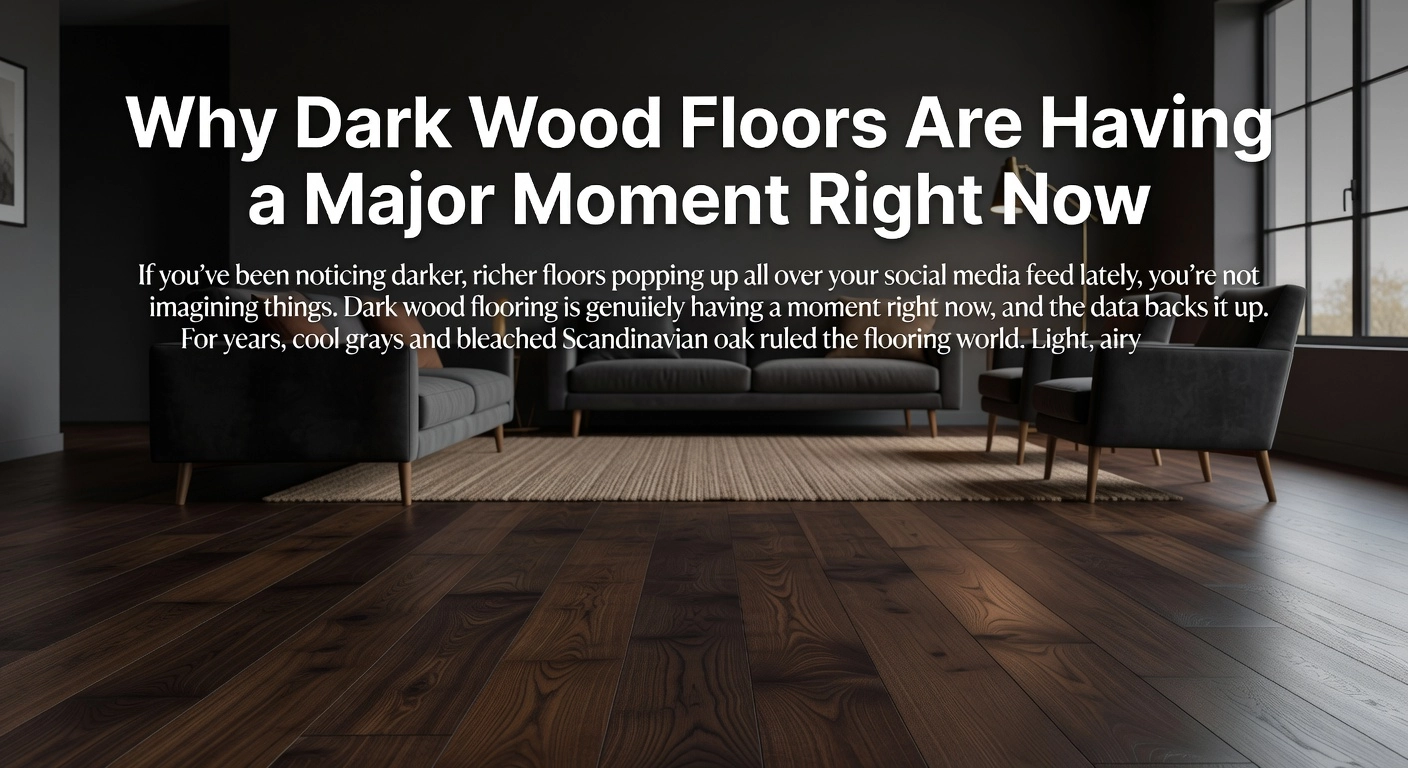
If you’ve been noticing darker, richer floors popping up all over your social media feed lately, you’re not imagining things. Dark wood flooring is genuinely having a moment right now, and the data backs it up.
For years, cool grays and bleached Scandinavian oak ruled the flooring world. Light, airy, and minimalist was the look everyone wanted. But according to 2026 flooring trend reports from Forbes, Vantia Hardwoods, and Garrison Collection, the pendulum has swung back in a big way. Homeowners are moving toward warmer, deeper tones like walnut, espresso-stained oak, and rich chestnut browns. The shift feels less like a passing fad and more like a genuine reset in how people want their homes to feel.
Social media is a huge part of why this is happening so fast. A Forbes report citing Bona survey data found that 67% of Gen Z homeowners and 57% of millennial homeowners say social media directly influences their flooring decisions. Darker, moodier aesthetics simply photograph beautifully and create that dramatic, cozy vibe that performs well online. When you see a gorgeous moody living room on your feed for the hundredth time, it starts to feel like the obvious choice.
And flooring is not a decision people take lightly. A separate Bona survey found that 61% of American homeowners prioritize wood flooring when designing or purchasing a home, putting it among the most important interior choices you can make.
Beyond trends and social media, there is a bigger design philosophy driving this shift. Nature-inspired, earthy, and organic palettes are dominating interior design in 2026. Dark wood floors fit perfectly into that direction, grounding a room and bringing a sense of warmth that lighter floors simply cannot replicate.
The format matters too. Wide plank installations and patterned layouts like herringbone and chevron are giving dark wood even more visual personality, making it feel fresh, intentional, and thoroughly modern rather than heavy or dated.
What Actually Counts as Dark Wood Flooring
Not all dark floors are created equal, and knowing the difference before you shop will save you a lot of confusion (and potentially a lot of money).
1. Natural Walnut: The Gold Standard
When people picture the perfect dark wood floor, they’re usually imagining walnut. American walnut hardwood flooring gets its rich chocolate-brown color naturally, without any stain involved. That matters because the color runs all the way through the wood, not just on the surface. Its grain pattern also has a natural depth and movement that’s genuinely hard to fake with stain on a lighter species. The trade-off is cost; walnut sits at a higher price point and has a Janka hardness rating of around 1010, which means it’s a bit softer than oak and better suited to lower-traffic areas or bedrooms rather than a busy mudroom.
2. Dark-Stained Oak: The Affordable Entry Point
If walnut is out of your budget, don’t worry. Dark-stained red oak and espresso or Jacobean-stained white oak are the most practical starting points for most homeowners. Red oak is widely available, budget-friendly, and absorbs stain evenly thanks to its open grain. White oak is slightly harder and more stable, giving you a cleaner, more uniform finish. Both species deliver that deep, dramatic look without the premium price tag of exotic hardwoods.
3. Smoked and Fumed Oak: The Modern Option
Smoked or fumed oak takes a completely different approach. Rather than applying a surface stain, the wood is exposed to ammonia vapor inside a sealed chamber for anywhere from 48 hours up to a full week. The ammonia reacts with the wood’s natural tannins, producing a warm gray-brown tone that penetrates deep into the grain. The result looks organic and intentional, which is exactly why it’s popular in modern and transitional interiors right now.
4. Hickory with Dark Finishes: High Drama, High Character
Hickory is one of the hardest domestic wood species available, with a Janka rating of around 1820, making it extremely durable in high-traffic spaces. Add a dark stain and you get serious visual drama, because hickory’s naturally bold grain variation creates striking contrast. That said, hickory’s pronounced figuring and knots are not for everyone. If you prefer a clean, uniform look, hickory will likely feel too busy.
5. A Beginner’s Key Distinction: Species vs. Stain
Here’s something worth understanding early on. Black walnut hardwood flooring and other naturally dark species hold their color consistently through the thickness of the board. If a section gets worn down or scratched, the underlying wood is still a similar dark tone. With a stained floor like Jacobean oak, the dark color lives on the surface. Heavy wear can expose the lighter wood underneath, and fixing that properly means re-sanding and re-staining the area. Neither option is wrong, but knowing this upfront helps you plan for maintenance and realistic touch-up expectations down the road.
The Real Pros of Dark Wood Floors (Not Just the Pretty Ones)
Now that you know what dark wood flooring actually is, let’s talk about why it works so well beyond just looking gorgeous in a Pinterest photo.
1. It Grounds Open-Concept Spaces Like Nothing Else
If you have an open floor plan, you’ve probably noticed that large, flowing spaces can sometimes feel a little… unfinished. Like furniture is just floating around with no real purpose. Dark floors solve this problem beautifully. A deep espresso or walnut floor acts as a visual anchor, giving furniture groupings something to “sit into” rather than drift above. The darker tone adds weight to the floor plane, which makes the whole room feel more intentional and pulled together. Interior designers often describe it as the difference between a room that looks decorated and one that looks designed.
2. High-Contrast Pairings Are Genuinely Stunning
Dark floors are one of those rare design elements that make everything around them look better. Crisp white walls? They practically glow against a walnut base. Warm cream furniture? It feels rich and inviting rather than bland. Jewel-toned accents like deep navy throw pillows or an emerald green armchair? They absolutely pop. This high-contrast effect is a big reason hardwood flooring trends in 2025 and 2026 keep pointing back to darker tones as a smart foundation for dynamic, layered rooms.
3. Matte and Satin Finishes Change Everything
Here’s something a lot of beginners don’t realize: the finish matters just as much as the color. High-gloss dark floors can look a little formal and dated, and they show every single footprint. Matte and satin finishes, on the other hand, give dark wood an organic, just-sanded quality that feels sophisticated without trying too hard. They diffuse light softly, enhance the natural grain, and age gracefully. Current trends through 2026 show glossy finishes clearly declining in favor of these lower-sheen options, and honestly, once you see a matte dark floor in person, the difference is obvious.
4. Wide Planks Reduce Visual Clutter
More seams mean a busier floor. Fewer seams mean a cleaner, more luxurious look. Wide plank dark wood floors take full advantage of this by letting the richness of the wood speak without interruption. In a room with natural walnut or dark-stained oak in wide format, your eye travels smoothly across the floor rather than getting caught on a grid of narrow boards. It feels more expensive, and it makes the whole space feel calmer and more refined.
5. Herringbone and Chevron Patterns Become a Room’s Focal Point
This is probably the most underrated advantage on this list. When you install dark wood in a herringbone or chevron pattern, the floor stops being background and becomes a genuine design feature. The interlocking geometry adds craftsmanship and movement, which often means you can keep the rest of the room simpler and spend less on additional decorative elements. One statement floor can do the heavy lifting that a gallery wall, an expensive area rug, or custom built-ins might otherwise handle.
The Honest Downsides Nobody Warns You About
Let’s be real for a second. Dark wood flooring looks incredible in photos, but there are some genuinely frustrating day-to-day realities that most design blogs gloss right over. Here’s what you actually need to know before you commit.
1. Dust and Pet Hair Are Basically Your New Roommates
This is the one that catches most people off guard. Light gray dust, pet hair, and fine debris show up almost immediately on dark surfaces, even right after you’ve swept. The contrast between light particles and a dark espresso or walnut floor is stark, and there’s no hiding it. If you currently sweep or vacuum twice a week and feel good about it, expect to bump that up considerably. Households with dogs or cats, especially light-furred breeds, report this as one of the biggest daily frustrations with dark hardwood flooring. Your cleaning schedule will need a real upgrade.
2. Footprints and Streaks Show Up Fast
Kitchens and hallways are where this becomes especially obvious. Moisture from shoes, bare feet, and everyday tracked-in water leaves visible streaks and smudge marks on dark finishes, particularly on glossy or semi-gloss surfaces. Many homeowners describe their floors looking dirty just a few hours after mopping. Choosing a matte or satin finish can help reduce this effect significantly, since those finishes scatter light rather than amplify every mark.
3. Scratches Are Much More Visible
When a dark stained floor gets scratched, the damage often reveals the lighter natural wood underneath. That high-contrast “scar” is far more noticeable than it would be on a natural or light-toned floor. This is one of the well-documented downsides of dark hardwood that flooring pros consistently flag for buyers.
4. Water Spots Can Look Like Permanent Damage
Hard water leaves white mineral deposits that sit on dark finishes like a neon sign. Near pet water bowls, kitchen sinks, or entryways where wet shoes drip, these spots can accumulate quickly. The good news is they’re treatable, but only if you address them promptly with the right cleaner. Left too long, they become much harder to remove without damaging the finish.
5. Active Households Need Realistic Expectations
If your home has kids, dogs, or both, entry zones and main corridors will show wear faster than you might expect. Busy households considering dark floors are often better served by pairing them with entry rugs, a firm no-shoes policy, and felt pads under every piece of furniture. Dark wood can absolutely work in a lively home, but going in with clear eyes about the upkeep commitment makes all the difference.
Matte vs. Satin vs. High-Gloss: Which Finish Is Right for Dark Floors
Once you’ve committed to dark wood flooring, one of the most important decisions you’ll make is choosing the right finish. And honestly, this choice will affect how your floors look and feel every single day, so it’s worth thinking through carefully.
1. High-Gloss Is Losing the Popularity Contest
High-gloss finishes deliver that mirror-like shine you’ve probably seen in older homes or formal spaces, but they’re quickly falling out of favor in 2026. The reason is pretty simple: on dark floors, a high-gloss finish turns every tiny scratch, footprint, and dust particle into a spotlight moment. That rich espresso or walnut surface you loved in the showroom? It starts looking like a crime scene every time someone walks through in socks. Multiple trade sources confirm that gloss is now mostly reserved for formal, low-traffic rooms rather than everyday living spaces.
2. Matte and Satin Are Now the Go-To Choice
Matte and satin finishes have taken over as the dominant preference for dark wood floors, and it makes a lot of sense once you understand why. Instead of reflecting light back at you, these finishes absorb and diffuse it, which naturally hides minor scuffs, fine scratches, and everyday footprints. The result is a more organic, natural-looking floor that feels current rather than dated. Industry trend reports for 2026 consistently list matte and satin as the top finish choices, describing them as the “subtle finish” movement replacing the glossy standards of previous decades. Satin tends to be a great starting point for beginners since it sits between the two extremes and is very forgiving day-to-day.
3. Consider Waterborne Over Oil-Based Finishes
If you’re refinishing dark floors, pay attention to the finish type, not just the sheen level. Waterborne (water-based) finishes are gaining ground over traditional oil-based options for one really important reason: they dry completely clear. Oil-based finishes add a warm amber or yellowish tint over time, which can shift your carefully chosen dark stain in ways you didn’t expect. Waterborne options also cure faster and produce significantly lower VOC emissions, making them friendlier for indoor air quality during and after application.
4. The One Real Downside of Matte Finishes
Matte finishes do come with a practical tradeoff worth knowing upfront. They are less forgiving of the wrong cleaning products. Using harsh cleaners, vinegar solutions, or anything that leaves a residue can create a cloudy, hazy film on the surface that’s genuinely difficult to remove. To keep matte floors looking their best, you need pH-neutral, residue-free cleaners and a microfiber mop. It’s a simple routine, but skipping it causes visible problems faster than it would on a satin or semi-gloss surface.
5. Test Before You Commit
For any DIYer planning a refinish project, here’s one practical tip that saves a lot of regret: test your chosen sheen on a small, inconspicuous sample area first. Apply your finish, let it cure fully, then live with it for a few days in your actual lighting conditions. What looks perfect in a store sample can read very differently under your kitchen lights or afternoon sun. This small step takes maybe an afternoon and can completely change your final decision before you’ve committed to the whole floor.
Where Dark Wood Floors Work Best (And Where to Think Twice)
Not every room is created equal when it comes to dark wood floors, and knowing where they thrive versus where they struggle will save you a lot of headaches down the road.
1. Living Rooms and Dining Rooms: The Sweet Spot
These two spaces are honestly where dark wood flooring gets to show off everything it’s capable of. Foot traffic is moderate compared to hallways or kitchens, so wear and tear accumulates more slowly. In larger, open-concept living and dining areas, the visual weight of dark floors grounds the entire space and gives it a sense of purpose and sophistication. You also have the most pairing flexibility here. A chunky jute rug, a light linen sofa, or a set of natural wood dining chairs all play beautifully against a dark espresso or walnut floor. The contrast practically does the decorating work for you.
2. Bedrooms: Low Traffic, High Reward
Bedrooms are genuinely one of the best places to use dark wood flooring, especially if you’re not someone who cleans obsessively. The lower foot traffic means dust, scratches, and footprints accumulate far more slowly than they would in a kitchen or hallway. The warmth and coziness that dark floors add to a bedroom is hard to replicate with any other material. Pair them with lighter bedding, soft textiles, and warm lighting, and the overall effect feels grounded and inviting rather than heavy or dark.
3. Kitchens: Riskier, But Getting More Viable
Kitchens have long been considered a no-go zone for dark hardwood, and historically that reputation was earned. Moisture, spills, and staining show up dramatically on dark surfaces, and repeated exposure can warp or cup solid hardwood over time. However, the growing popularity of layered kitchen design is changing this calculation. Butler’s pantries and sculleries are increasingly handling the messiest prep work, dishwashing, and wet tasks on tile or other durable surfaces. That leaves the main kitchen area functioning more as a social and entertaining space, where dark hardwood can shine with far less moisture risk.
4. Engineered Hardwood Is Your Best Friend in Wet Zones
If you’re committed to dark floors in a kitchen or basement-level room, engineered dark hardwood is the practical choice, full stop. Its cross-layered construction gives it far better resistance to moisture, humidity swings, and the expansion and contraction that destroys solid hardwood in wet environments. This is not a niche product choice either; engineered hardwood held roughly 72% of the total hardwood flooring market share in 2025, according to Mordor Intelligence. That dominance exists precisely because it performs where solid hardwood simply cannot. Even with engineered planks, quick cleanup of spills is still essential since no wood floor is fully waterproof.
5. Entry Halls and Mudrooms: Proceed With Caution
This is where the honest conversation gets real. Entry halls and mudrooms are the toughest environments for dark wood floors, and not just because of traffic volume. Grit, wet shoes, tracked-in salt during winter, and debris from outside will scratch and dull a dark floor faster than almost anything else. Every scuff and smear is visible. If you absolutely love the look and want to use dark wood here, you need to commit to a non-negotiable daily sweep routine and invest in a serious doormat setup, ideally one mat outside and one inside to trap debris in layers. Going in without that routine means your floors will show the wear within months.
Dark Floor Maintenance: What Actually Keeps Them Looking Good
Here’s the honest truth about dark wood floors: they look incredible, but they require more consistent care than lighter floors to stay that way. The good news is that the routine itself is pretty simple once you know what you’re actually doing.
1. Daily dry sweeping is non-negotiable
Fine grit, dust, and tracked-in sand act like tiny pieces of sandpaper every time someone walks across your floor. On a lighter floor, minor scratching blends in. On dark wood, it shows up fast as a dull, hazy surface that no amount of mopping will fix. A quick pass with a microfiber dust mop or a vacuum on the bare-floor setting (no beater bar) pulls that grit off before it does damage. According to a Bona consumer survey cited by Forbes, over half of homeowners only clean their floors a few times a month or less. For dark floors specifically, that frequency genuinely causes harm over time. Aim for a few times per week at minimum, and keep an entry mat at every door to reduce what gets tracked in.
2. Weekly damp mopping is your baseline cleaning routine
Once a week, grab a microfiber mop that is well-wrung, meaning barely damp rather than wet. Apply your cleaner to the mop head, not directly to the floor, and work in the direction of the wood grain. The goal here is to lift residue without introducing moisture that can cause warping or finish damage. This is the routine that keeps dark floors streak-free and looking rich rather than tired.
3. Your cleaner choice matters more than you think
Multi-surface sprays and anything ammonia-based will strip the sheen from matte or satin finishes and leave a cloudy film behind. That haziness is far more obvious on dark wood than on lighter floors. Stick to a dedicated pH-neutral, residue-free wood floor cleaner formulated for sealed hardwood.
4. Quick touch-ups prevent buildup between weekly cleanings
In high-traffic zones like hallways and kitchen entries, a slightly damp microfiber cloth wiped over visible footprints between weekly sessions keeps things looking fresh without the moisture risk of a full mop.
5. Use tested guidance for product selection
WoodStuffHQ has detailed guides on choosing the right wood floor cleaner and building a streak-free cleaning routine specifically for stained and finished dark wood. The guides walk through product types, safe application methods, and what to avoid so you are not guessing when it comes to protecting a floor you have invested in.
DIY Restoration for Dark Floors: Scratches, Water Rings, and When to Refinish
Dark floors are genuinely worth protecting, and the good news is that most common issues are completely fixable at home without calling in a professional. Here is what you need to know about handling the most frequent problems.
1. Fixing Scratches on Dark Stained Floors
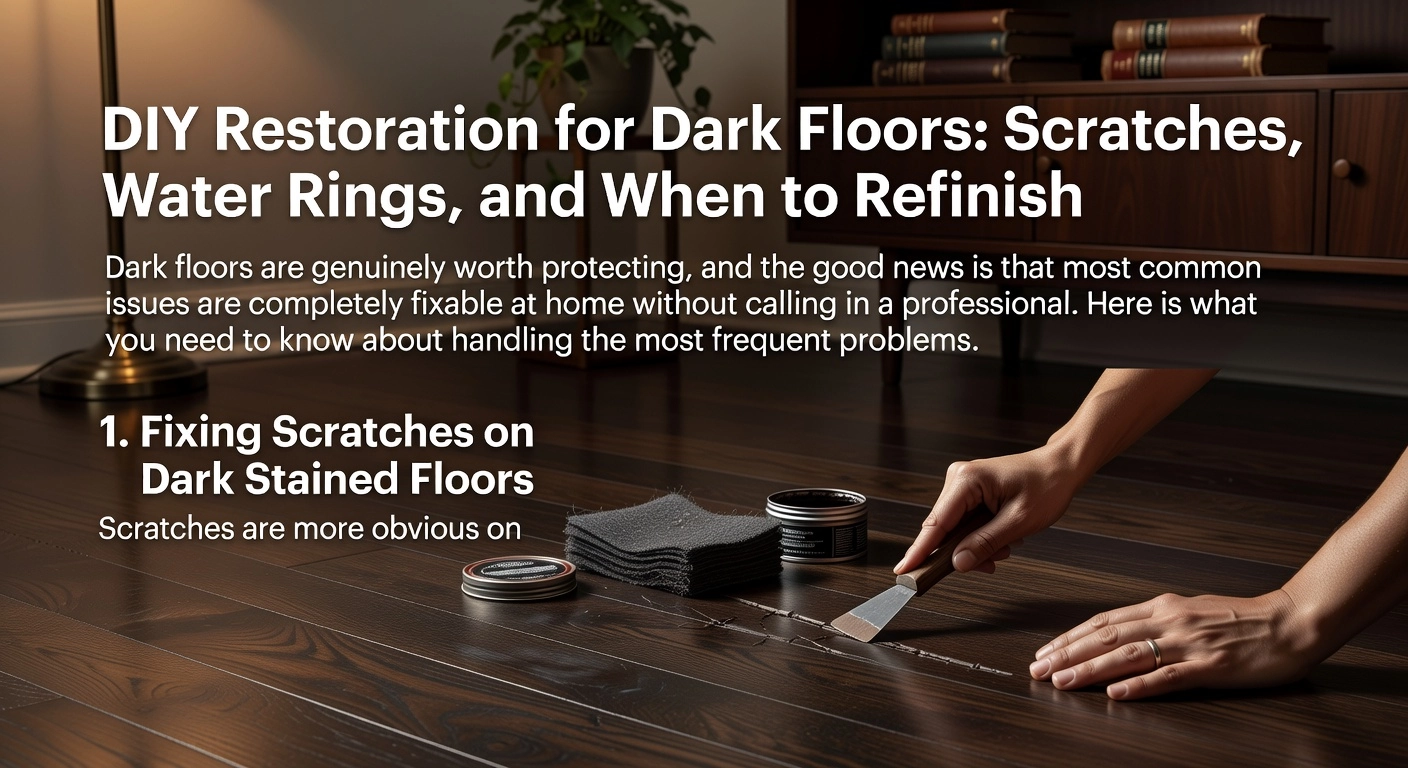
Scratches are more obvious on dark floors than on lighter ones, and here is the tricky part: a good repair has to match both the stain color and the sheen level at the same time. A touch-up that is slightly glossier or duller than the surrounding finish will catch the light and look just as noticeable as the original scratch. For minor surface scratches, wood touch-up markers in espresso, walnut, or jacobean tones are your best starting point. Apply thin layers along the grain, let each layer dry, and buff gently. For slightly deeper scratches that have not broken through the finish entirely, color-matched wood filler followed by a compatible topcoat gets the job done without a full refinish.
2. Tackling Water Rings and Mineral Deposits
Water rings and mineral deposits stand out dramatically on dark wood, and the temptation to scrub hard is one you want to resist. Aggressive cleaning can dull or strip the finish and make the problem worse. Gentle methods work better here. Mineral spirits on a soft cloth, rubbed lightly with the grain, handles many light rings effectively. Fine steel wool (the 0000 grade) used with a finish-safe polish is another tested option for stubborn spots. WoodStuffHQ’s water ring removal guide walks through these approaches step by step, including when gentle abrasives are appropriate versus when a polish alone will do the trick, all without risking further damage to the finish.
3. Refinishing: The High-Impact Option That Is Also the Responsible One
When scratches and dullness have spread across a wider area, refinishing is the move. It is also one of the most environmentally sound choices you can make. Refinishing dark floors reduces carbon emissions by more than 89% compared to a full floor replacement, per lifecycle research cited in Bona survey data. That is a significant number. The 75% of American homeowners who prefer restoring floors over replacing them are making a smart call financially and environmentally. Just note that dark floors need extra attention during refinishing around stain application; uneven absorption causes blotchiness, so using a wood conditioner before staining and working in consistent sections makes a real difference in the final result.
4. Degreasing Kitchen Floors and Reviving Dry or Cracked Wood
Kitchen dark floors collect grease that shows up clearly against a deep finish. A pH-neutral hardwood cleaner applied with a well-wrung microfiber mop handles routine buildup without damaging the finish or leaving excess moisture. For dry or cracked dark wood, a wood conditioner or food-grade mineral oil applied generously and buffed in after soaking can restore flexibility and sheen over a few treatments. Both of these are genuinely beginner-friendly projects. WoodStuffHQ has dedicated guides for each that walk through the process using everyday tools, so you do not need any specialized equipment to get good results.
Dark vs. Light Wood Floors: A Straight Comparison
So you’ve spent the last few sections learning everything about dark wood floors specifically. But how do they actually stack up against lighter options when you put them side by side? Here’s a honest, no-fluff breakdown.
1. Which One Hides the Everyday Mess Better
Light floors, think bleached oak, white oak, and those cool Nordic-inspired tones, actually do a solid job of hiding everyday dust and fine debris because lighter particles blend right into the surface. Here’s the catch though: in raking afternoon light, when the sun hits your floor at a low angle, scratches and dents become surprisingly visible on lighter surfaces. That shallow gouge from moving furniture that you barely noticed before suddenly looks like a canyon. Dark floors flip this dynamic. They show dust, pet hair, and footprints much more readily on a daily basis, but a matte or wire-brushed finish helps soften that significantly.
2. Aesthetic Impact and How Each Feels in a Room
Dark floors create visual drama and a grounded, sophisticated atmosphere. They work especially well paired with light walls and furniture, producing that high-contrast look that makes a room feel intentional and designed. Light floors do something different and equally valuable: they make spaces feel larger, airier, and brighter. If you have a smaller room or a north-facing space that doesn’t get much natural light, lighter tones genuinely help the room breathe. Dark floors shine in larger, well-lit spaces where they can anchor the design without making the room feel closed in.
3. Maintenance Realities
The maintenance burden is genuinely higher for dark floors day-to-day. There’s no sugarcoating that. However, that gap narrows considerably with the right microfiber mop, a pH-neutral cleaner, and a consistent routine a few times per week. It becomes habit pretty quickly.
4. Resale Value in 2026
Both tones are competitive for resale right now. The important shift is that dark wood is no longer considered a risky or niche choice by buyers. The trend toward warmer, richer tones means dark floors can actually add perceived luxury and character to a listing.
5. The Bottom Line
For maximum design impact with a commitment to regular upkeep, dark floors win. For lower-maintenance households or light-starved rooms, a warm mid-tone is a smart compromise worth considering.
Is Dark Wood Flooring Right for Your Home? A Simple Decision Checklist
After everything we’ve covered, here’s the honest summary: dark wood flooring brings real drama, warmth, and sophistication to a home, but it does require more consistent upkeep than lighter options. The good news is that every common pain point has a practical fix, whether that’s choosing a matte finish to hide minor wear or keeping a microfiber mop handy for quick daily sweeps.
Run through this quick checklist before you decide:
- Room type: Living rooms, dining areas, and bedrooms are ideal. Kitchens and entryways need moisture-resistant engineered options.
- Household traffic: High traffic with kids or pets? Go textured or engineered for better durability.
- Cleaning commitment: Dark floors reward a simple daily sweep and weekly damp mop routine.
- Finish preference: Matte or satin finishes forgive far more than high-gloss.
- Budget: Engineered runs roughly $4 to $10 per square foot installed; solid wood runs $6 to $15 and beyond.
If you already have dark wood floors, restore before you replace. Refinishing costs significantly less and cuts environmental impact by over 89% compared to full replacement.
For your next steps, WoodStuffHQ has beginner-friendly guides covering cleaning dark floors, removing water rings, refinishing worn surfaces, and choosing safe wood floor cleaners. Start with a realistic weekly routine, and you will find dark wood flooring is completely manageable, even as a first-time homeowner.
Conclusion
Dark wood flooring can be a stunning addition to any home, but going in informed makes all the difference. Here is a quick recap of what matters most: dark floors require consistent maintenance to stay looking their best, lighting and room size play a huge role in how they look day to day, and not every space in your home is an ideal candidate for this bold choice.
The right preparation turns a potentially overwhelming decision into an exciting one. You now have the foundation to shop smarter, ask better questions, and avoid the common mistakes that catch so many buyers off guard.
Ready to take the next step? Visit a local flooring showroom, request a few samples, and see how dark wood looks in your actual space before committing. Your dream floors are closer than you think.