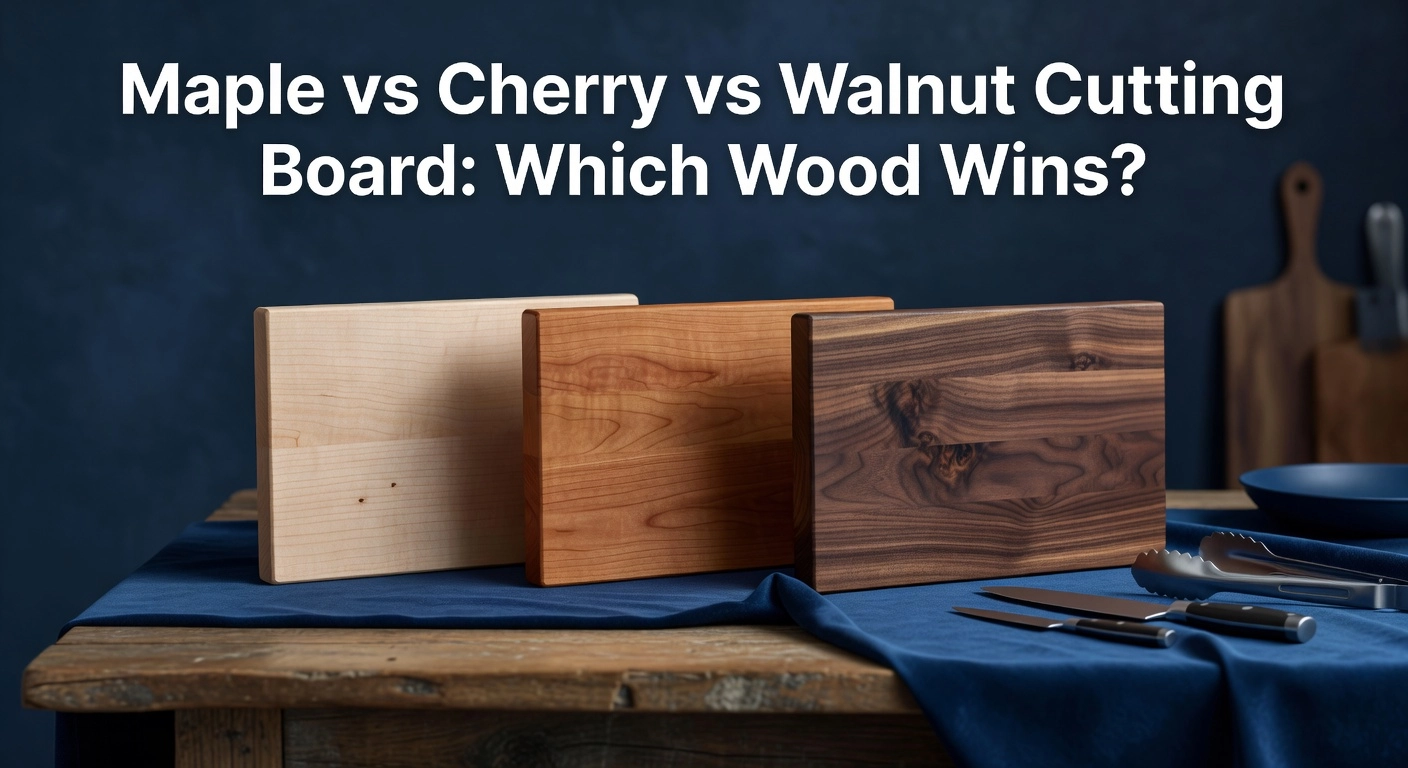
You finally decided to ditch that flimsy plastic cutting board and invest in something that actually looks and feels like it belongs in a real kitchen. But now you’re standing there, staring at a wall of beautiful wooden boards, wondering which one is actually worth your money. Sound familiar?
Choosing between a maple vs cherry vs walnut cutting board is one of the most common dilemmas for anyone stepping up their kitchen game. And honestly, it makes sense why people get confused. All three woods look gorgeous, but they each have their own personality, strengths, and a few quirks you should know about before pulling out your wallet.
In this post, we’re going to break it all down in plain, simple terms. No woodworking jargon, no confusing technical specs. Just honest, practical information about how each wood performs in a real kitchen, how it holds up over time, and which one might be the best fit for your cooking style and budget. By the end, you’ll know exactly which board deserves a spot on your counter.
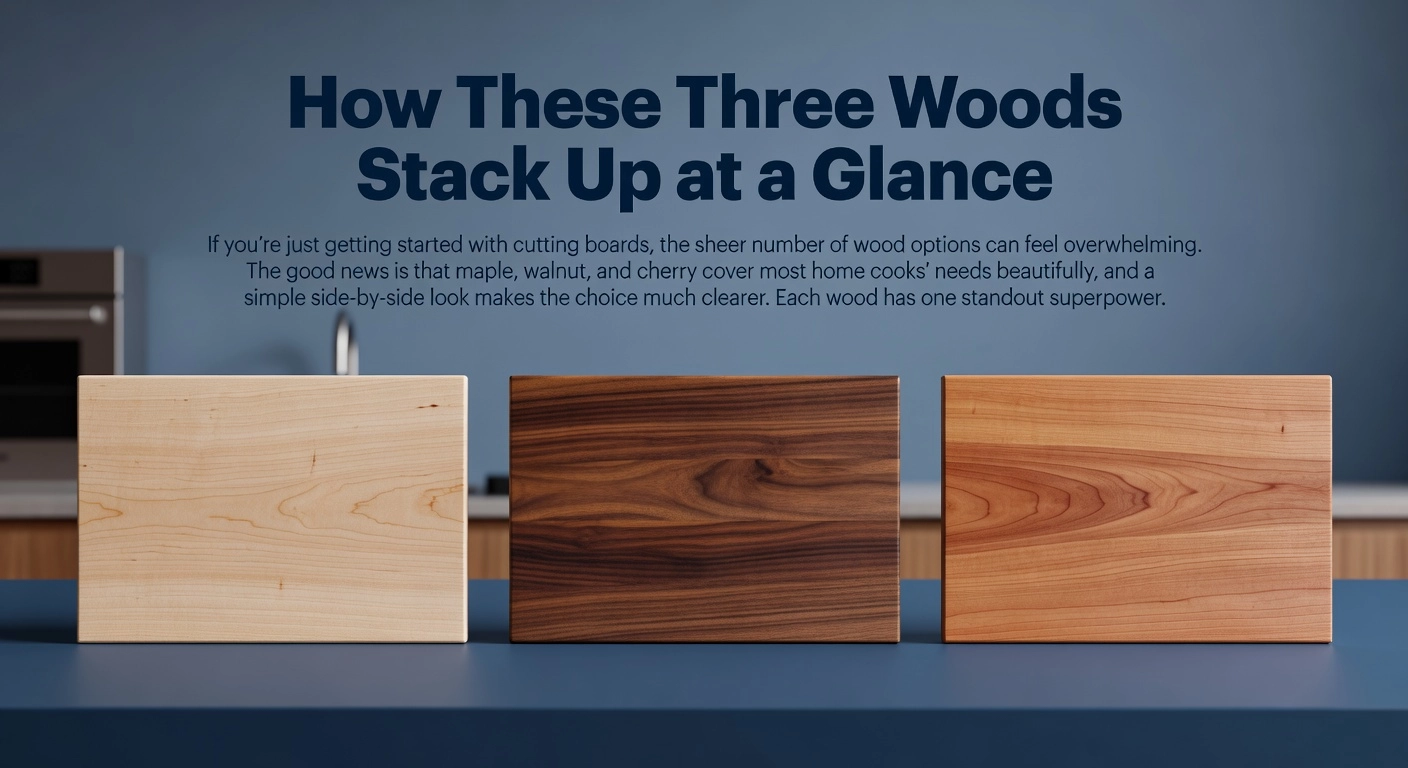
How These Three Woods Stack Up at a Glance
If you’re just getting started with cutting boards, the sheer number of wood options can feel overwhelming. The good news is that maple, walnut, and cherry cover most home cooks’ needs beautifully, and a simple side-by-side look makes the choice much clearer.
| Wood | Janka Hardness | Price Tier | Best Use Case |
|---|---|---|---|
| Hard Maple | 1,450 lbf | Most affordable | Heavy daily prep, raw meat handling |
| Black Walnut | 1,010 lbf | Premium | Serving boards, aesthetic-focused kitchens |
| American Cherry | 850–995 lbf | Mid-range | Knife-friendly prep, gift and display boards |
Each wood has one standout superpower. Maple is the durability champion; its tight, dense grain resists deep knife marks and moisture better than the other two, making it the go-to for everyday heavy use. Walnut wins on looks, bringing that rich, dark chocolate-brown tone that makes a cutting board double as a gorgeous serving piece. Cherry is the gentlest on your knife edges, and it develops a warm, reddish patina over time that actually gets more beautiful with age, as noted in this cherry cutting board guide.
One important modifier applies across all three species: grain construction. End-grain boards (where the wood fibers face upward like a bundle of straws) are gentler on knives and slightly self-healing, while edge-grain boards are more affordable and still perform excellently. This distinction can matter just as much as which wood you pick.
The reassuring bottom line is that all three are domestic hardwoods considered safe for food contact. Keep them oiled with food-grade mineral oil every two to four weeks, hand-wash and dry them promptly, and any of these three will serve your kitchen reliably for years.
Maple Cutting Boards: The Workhorse of the Kitchen
If you’re the type of cook who just wants a board that can take a beating, stay clean, and not break the bank, maple is almost certainly your best friend. It’s the no-nonsense option in this comparison, and there’s a reason professional kitchens have relied on it for decades.
Built Like a Tank: Maple’s Hardness Advantage
Rock maple (also called hard maple or sugar maple) comes in at approximately 1,450 lbf on the Janka hardness scale, which makes it the toughest of the three woods we’re comparing here. To put that in perspective, walnut lands around 1,010 lbf and cherry sits somewhere between 850 and 995 lbf. That extra hardness means maple resists knife grooves, scratches, and dents far better than its counterparts. When you’re breaking down a chicken or dicing vegetables every single day, that durability adds up quickly. A maple board will hold a smoother surface longer, which matters more than most beginners realize.
The Hygiene Case for Maple
Here’s something that might surprise you: the type of wood grain actually affects how bacteria behaves on your board. Maple has an especially tight, low-porosity grain structure, meaning there are fewer microscopic gaps for moisture, food particles, and bacteria to sneak into. All three of these domestic hardwoods have some natural antimicrobial properties, but maple’s density gives it a real edge when it comes to keeping things sanitary under heavy, repeated use. According to research and expert comparisons on wood cutting board safety, properly maintained dense hardwoods like maple can perform just as well as plastic boards in real-world kitchen conditions, sometimes better. For home cooks who prep raw proteins regularly, that’s a meaningful advantage.
What Maple Actually Looks Like (And How It Ages)
Maple has a pale, creamy color with subtle, fine grain that fits right into most kitchen styles. It’s clean and neutral, which sounds like a compliment, and it mostly is. The trade-off, though, is that this light background makes knife marks, scratches, and staining more visible over time. A walnut board can hide a lot of sins with its deep, dark coloring. Maple cannot. This doesn’t affect performance at all, but it’s worth knowing upfront if aesthetics are important to you.
Price and Value: Maple Wins Here Too
Maple is consistently the most affordable of the three options, making it the smartest choice if you need a larger board or plan to use it hard every day. Walnut typically commands the highest price thanks to its premium look and density, while cherry usually falls somewhere in the middle. For budget-conscious home cooks, maple delivers the most function per dollar spent.
Who Should Actually Buy a Maple Board
Maple is the right pick if you prioritize function, hygiene, and value over visual drama. If your board is going to live on the counter, get used five nights a week, and occasionally see raw meat, maple handles all of that without complaint.
Keeping Your Maple Board in Great Shape
Maple responds really well to regular conditioning with food-grade mineral oil. Apply a generous coat, let it soak in for a few hours or overnight, then wipe off the excess. Because of its light color, maple makes it very obvious when it needs attention. A dry maple board looks pale and almost chalky, so the wood itself will tell you when it’s thirsty. Aim to oil it every two to four weeks depending on how often you use and wash it.
The biggest mistake beginners make with maple is skipping oilings and letting the board dry out completely between uses. When maple loses too much moisture, it shrinks unevenly and can develop surface cracks along the grain. Those cracks are not just cosmetic; they create exactly the kind of grooves you were trying to avoid. A quick, consistent oiling routine is all it takes to prevent this entirely.
Cherry Cutting Boards: Beautiful, Gentle, and Better With Age
If maple is the dependable workhorse of the kitchen, cherry is the board you fall a little bit in love with. It brings something genuinely different to the table: a warmth and visual personality that only gets better the longer you own it, paired with a softness that your knives will quietly appreciate every single day.
The Softest of the Three (And Why That’s Actually a Good Thing)
Cherry sits at 850 to 995 lbf on the Janka hardness scale, making it the softest wood in this comparison. That might sound like a disadvantage at first, but for your knives, it’s genuinely great news. A softer surface creates less resistance against your blade as it comes down, which means your knife edges stay sharp longer between sharpenings. If you’ve ever noticed your knives dulling faster than expected, a harder board surface could be part of the reason. Cherry removes that problem almost entirely. It’s still a hardwood, plenty tough enough for everyday prep, but it has just enough give to treat your blades kindly.
The Color Change That Makes Cherry Truly Special
Here’s the thing that no other wood does quite as dramatically as cherry: it transforms right before your eyes over time. When a cherry board is brand new, it has a light pinkish-tan color, almost like pale salmon. Within weeks of regular use and exposure to natural light, it begins darkening noticeably. Over several months, it deepens into a rich, warm reddish-brown that genuinely looks like a completely different piece of wood. This process, driven by oxidation and the wood’s natural resins reacting to UV light, is called patina development, and it’s one of cherry’s most celebrated characteristics.
You can find plenty of before-and-after examples in woodworking communities showing boards that started nearly beige and ended up looking like polished mahogany. The transformation is real, and it’s stunning. For cooks who double their board as a serving piece for charcuterie or entertaining, this aging quality gives cherry a serious edge over maple’s more static, lighter appearance. You can explore how cherry compares to other woods in density and performance to understand exactly how these material differences show up in real use.
Tannins, Hygiene, and What Cherry Offers Naturally
Cherry wood contains natural tannins that provide moderate antimicrobial properties, which is a helpful bonus in any kitchen environment. That said, it’s worth being straightforward here: cherry doesn’t quite match maple’s hygiene advantages, which come from maple’s denser, tighter grain that resists moisture absorption more aggressively. Cherry’s grain is still relatively tight compared to more open-grained woods, so it holds up well with proper care. Just keep in mind that regular drying and oiling matter even more with cherry than with maple, since its softer, slightly more porous surface can harbor bacteria in deeper grooves if neglected.
Price, Practicality, and Who Cherry Is Really For
Cherry lands in the mid-range price bracket, typically more affordable than walnut but a bit pricier than basic maple. For what you get aesthetically, that pricing makes a lot of sense. This is a board that can genuinely pull double duty as a prep surface and a serving board without looking out of place at a dinner party. According to detailed wood comparisons for cutting board buyers, cherry consistently earns praise as a compelling mid-tier option that punches above its price in visual appeal.
The ideal cherry board owner is a home cook who cares about their knives, enjoys a board that feels personal and evolving rather than purely utilitarian, and likes the idea of owning something that looks better with every passing season.
A DIY Care Tip That Changes Everything
Here’s a practical insight that makes a real difference with cherry specifically: oiling your board regularly doesn’t fight the color change, it actually accelerates and enriches it. When you apply food-grade mineral oil generously and let it soak overnight, the wood absorbs it evenly, which helps the patina develop more uniformly and with deeper, richer tones. Without consistent oiling, cherry can darken unevenly and dry out faster than the other two woods. Aim to oil your cherry board every two to four weeks, or whenever the surface starts looking a little thirsty and lighter in color.
The One Real Limitation to Know
Because cherry is the softest of the three options, it does accumulate knife grooves and surface marks faster than maple or walnut. Those grooves aren’t just cosmetic; they can trap food particles and bacteria if ignored. The fix is simple: a light sanding with fine-grit sandpaper every few months smooths the surface back out and is a satisfying little restoration project that takes maybe fifteen minutes. Pair that with a fresh coat of oil afterward, and your cherry board looks practically new again. It’s more maintenance than maple requires, but for the right cook, the payoff in beauty and knife performance is absolutely worth it.
Walnut Cutting Boards: Premium Looks With Practical Balance
If maple is the workhorse and cherry is the showpiece, walnut lands in the sweet spot between the two. It brings real durability to the table without sacrificing the kind of good looks that make you actually want to leave your board out on the counter.
The Hardness Sweet Spot
Black walnut clocks in at around 1,010 lbf on the Janka hardness scale, which puts it right in the middle of this comparison. Maple sits above it at roughly 1,450 lbf, and cherry comes in softer at 850 to 995 lbf. In practical terms, walnut is tough enough to handle daily meal prep without quickly becoming a scratched-up mess, but it is also a bit gentler on your knife edges than maple. You get solid durability without constantly worrying about dulling your favorite chef’s knife. It is the kind of balance that works really well for everyday home cooks who want their board and their knives to both last a long time. If you want to dig deeper into how these wood hardness ratings compare across species, kitchen knife communities have done some thorough breakdowns worth reading.
Dark Grain That Hides the Evidence
One of walnut’s sneaky advantages is how forgiving it looks after regular use. That rich, dark chocolate-brown grain does a surprisingly good job of hiding knife marks, light scratches, and the general wear that comes from being a working kitchen tool. Maple is a beautiful wood, but its pale surface highlights every little scuff and cut line. Early-stage cherry has a similar issue since it starts lighter before it deepens with age. Walnut skips that awkward phase entirely. Your board can see serious daily use and still look presentable when guests come over. For anyone who keeps their board on the counter as part of their kitchen setup, this is a genuinely practical perk, not just a cosmetic one.
Natural Protection Built In
Walnut contains a naturally occurring compound called juglone, which gives it some built-in antimicrobial properties. This, combined with walnut’s moderate porosity, means it holds up reasonably well from a food safety standpoint. It is not quite as dense or low-porosity as hard maple, which sits at the top of the hygiene ranking among these three woods, but walnut performs solidly when properly maintained. The key phrase there is “properly maintained.” No wood cutting board is self-cleaning, and walnut is no exception. Regular oiling, prompt washing, and thorough drying are still non-negotiable. You can read more about how wood density affects cutting board hygiene and durability to understand why those maintenance habits matter so much.
From Prep Board to Dinner Table
One trend that has picked up serious momentum is using walnut boards for double duty: morning meal prep and evening charcuterie spreads. Walnut’s deep, dramatic grain makes it genuinely gorgeous as a serving surface for cheese, cured meats, fruit, and bread. You are not pulling out a ratty prep board for guests; you are presenting something that looks intentional and elevated. This dual-use appeal is a big reason walnut boards have become popular gifts and kitchen splurges. If you want a board that earns its counter space in more ways than one, walnut makes a compelling case.
The Price and the Commitment
Here is the honest part: walnut is the most expensive option of the three. It typically costs noticeably more than a comparable maple board, sometimes significantly so, because walnut grows more slowly and commands higher demand. That premium is real, and it is worth factoring into your decision. What does not change is the maintenance commitment. Walnut needs the same conditioning routine as maple and cherry: food-safe mineral oil or a board conditioner applied every two to four weeks, more often if the surface starts looking dry or dull. Walnut’s natural oils can sometimes make it feel slightly less thirsty than maple, but do not let that lull you into skipping treatments. Dry walnut cracks just like any other wood.
Is Walnut Right for You?
The ideal walnut board owner is someone who wants a board they feel good about displaying, whether that means leaving it on the counter between uses or carrying it to the table for a dinner party spread. It suits design-conscious home cooks who appreciate quality materials and want their kitchen tools to look as good as they perform. If your top priority is maximum durability at the lowest price, maple probably wins for you. But if you want something that feels a little more special without giving up real-world performance, walnut is a genuinely excellent choice.
Hygiene and Food Safety: Which Wood Handles Bacteria Best
When it comes to food safety, maple takes the top spot among the three woods. Its incredibly tight, closed grain and low porosity mean it absorbs less moisture, resists deep knife grooves better than the others, and gives bacteria fewer places to hide. Hard maple’s Janka hardness of around 1,450 lbf directly ties into this advantage: a harder surface simply takes longer to develop the kind of cuts and crevices where bacteria love to set up camp. Wholesale Cutting Boards breaks down how maple’s dense grain structure limits bacterial harboring compared to softer alternatives, making it the professional kitchen standard for good reason.
That said, walnut and cherry are not far behind, and they bring their own natural defenses to the table. Walnut contains juglone, a natural compound that can help break down bacterial cell walls, while cherry’s tannins and phenolic compounds have shown inhibitory effects against pathogens like E. coli and Salmonella. These are genuinely useful properties. However, as Bear Claw Knife’s comparison of these three wood types points out, natural antimicrobials are a bonus, not a substitute for washing your board properly after every use.
The Real Hygiene Risk Across All Three Woods
Here is something that surprises a lot of beginners: the wood species you choose matters far less than what happens to your board over time. Deep grooves from knife marks are the number one hygiene concern across maple, walnut, and cherry alike. Those grooves trap food particles and moisture in places your sponge simply cannot reach, creating the ideal environment for bacterial growth. Maple resists groove formation longest thanks to its hardness, but no wood is immune with regular use.
CDC and USDA guidelines recommend using separate boards for raw meat, poultry, and seafood versus produce and ready-to-eat foods. This rule applies regardless of whether your board is maple, walnut, cherry, or anything else. Keeping a dedicated raw meat board is one of the simplest, most effective food safety habits you can build.
How to Deep Clean Any Wood Cutting Board
The cleaning protocol is the same for all three woods. Wash with hot, soapy water immediately after use, rinse thoroughly, and dry right away. Never soak your board in water and never run it through the dishwasher; both cause warping, cracking, and actually increase bacterial risk by opening up the wood’s surface. Stand the board upright after washing to allow airflow on both sides. For a deeper sanitizing step, wipe the surface with diluted white vinegar or a mild bleach solution (about one tablespoon of unscented bleach per gallon of water), let it sit briefly, then rinse and dry completely.
When Grooves Become a Problem (And What To Do)
Once grooves become deep enough that regular scrubbing cannot dislodge trapped debris, your board is sending you a signal. Before you toss it, try light sanding. Starting with 80 to 120 grit for deeper gouges, then finishing with 150 to 220 grit, can restore a smooth, safe surface on maple, walnut, and cherry alike. Always sand with the grain, clean away all the dust, dry the board fully, and re-oil with food-safe mineral oil before putting it back into rotation. Cherry’s softer surface may need this treatment more frequently, but the process works beautifully on all three. Greatsunhome’s breakdown of hygiene and durability confirms that consistent care routines close the gap between species significantly. If a board has grooves too deep or numerous to sand back effectively, that is when replacement makes sense.
How Each Wood Affects Your Knife and Why Grain Construction Matters
Here’s something that surprises a lot of beginner cooks: your choice of cutting board wood can actually affect how quickly your kitchen knives go dull. It’s not just about aesthetics or durability. The wood itself plays a real role in edge retention, and grain construction matters just as much as the species you choose.
Softer Woods Give Your Knife a Gentler Landing
The key is what happens when your blade meets the board. Softer woods like cherry (around 950 lbf on the Janka hardness scale) and walnut (around 1,010 lbf) give slightly under the blade rather than pushing back hard against it. That slight give reduces the micro-abrasion that dulls a knife edge over time. Cherry is the gentlest of the three, and premium board makers consistently hear from customers that it’s the easiest on high-quality knife edges. Walnut offers a very similar benefit, just a touch firmer. Maple, at roughly 1,450 lbf, is considerably denser and puts up more resistance with every cut, which can accelerate dulling on flat-grain surfaces with repeated use.
Why Grain Orientation Changes Everything
This is where things get really interesting. The way a board is built matters more than the wood species in many cases. Face-grain boards (where you’re cutting on the wide, flat face of the plank) offer the least protection for your knife and show marks quickly. Edge-grain boards are better on both counts, offering more durability and slightly more forgiveness for your blade. But end-grain construction is in a different league entirely. With end-grain, the wood fibers stand upright and actually part around your knife as it cuts, then close back together. This self-healing action dramatically reduces edge dulling and board scarring across all three wood types. It’s especially significant for maple, because it neutralizes much of the hardness disadvantage on flat-grain surfaces.
What the Knife Community Actually Says
On kitchen knife forums and enthusiast communities, the consensus is fairly consistent. Cherry gets the nod for edge retention, maple earns praise for structural longevity, and walnut is widely seen as the practical middle ground, balancing good looks, decent softness, and solid durability without the trade-offs on either extreme.
If protecting your knife edges is a top priority, the practical recommendation is straightforward: choose a cherry or walnut end-grain board over a maple face-grain or edge-grain option. An end-grain maple board is still excellent and very durable, but the softer woods in end-grain form offer the best combination of gentleness and performance you can get.
Which Cutting Board Wood Should You Actually Choose
By now you have a solid picture of what each wood brings to the table. So let’s cut straight to the practical stuff and match you with the right board for your actual life.
Choose maple if you want the hardest-working board in your kitchen. With a Janka hardness of around 1,450 lbf, maple handles heavy daily prep, resists deep knife grooves better than the other two, and stays cleaner longer thanks to its tight, closed grain. It’s also the most budget-friendly of the three, with quality edge-grain options sitting comfortably in the $60 to $80 range. If your household has kids, you’re prepping raw meat regularly, or you simply don’t want to think much about babying your board, maple is the clear, confident answer.
Choose walnut if your board needs to do double duty. That rich chocolate-brown color and striking grain don’t just look good on a prep counter; they make walnut a natural centerpiece for charcuterie spreads and entertaining setups. Yes, you’ll pay a premium, often 1.5 to 2 times the price of maple. But if presentation matters to you and you want a board that transitions seamlessly from kitchen prep to dinner party table, walnut is genuinely worth the splurge.
Choose cherry if you care deeply about your knives and love a board with personality. At around 950 lbf, cherry is the gentlest on knife edges of the three, and it develops a beautiful warm patina over time that maple and walnut simply don’t replicate. It’s the underrated pick for avid home cooks who invest in quality knives and want a board that actually improves with age.
One thing worth repeating: grain construction matters more than wood species alone. An end-grain or quality edge-grain board in any of these three woods will outperform a face-grain board of any species every time.
And here’s the most budget-conscious truth we can offer: a $60 to $80 maple or cherry board that gets oiled every few weeks will outlast and outperform a $200 walnut board that never sees a drop of mineral oil. Maintenance is the real multiplier here, not price.
How to Care for Maple, Cherry, and Walnut Cutting Boards
No matter which wood you picked, the good news is that caring for all three follows the same simple foundation. Apply a food-grade mineral oil or a beeswax board conditioner every 2 to 4 weeks for all three wood types. That’s really the baseline rule you need to memorize. This regular conditioning replenishes the moisture lost from washing and everyday use, which keeps your board from warping, cracking, and becoming a breeding ground for bacteria. Never use cooking oils like olive or coconut oil; they go rancid inside the wood and create more problems than they solve.
Maple-Specific Care Tips
Maple is tough, but it shows its age through surface graying and visible dryness when it’s not conditioned consistently. If you notice the surface looking dull, chalky, or developing shallow knife grooves, grab a sheet of 220-grit sandpaper and lightly sand the surface before your next oiling session. This restores the wood’s smooth texture, opens up the grain for better oil absorption, and removes those early groove lines before they get deep enough to trap bacteria. After sanding, wipe away the dust and apply a generous coat of mineral oil, letting it soak in overnight before wiping off the excess.
Cherry-Specific Care Tips
Cherry develops its beautiful warm patina through a combination of UV exposure and regular use, but inconsistent moisture is its biggest enemy. If you oil it one week and then skip the next three, you risk blotchy, uneven darkening across the surface that looks a little rough. Consistent conditioning sessions help the color develop evenly over time, giving you that rich tobacco-brown tone that makes cherry boards so visually appealing. Think of regular oiling as investing in the long-term good looks of your board.
Walnut-Specific Care Tips
Walnut contains natural oils in its wood fibers, so it may absorb less conditioner per session compared to maple or cherry. Do not let that fool you into skipping cycles. The edges and end grain are still vulnerable to cracking when moisture levels drop, especially during dry winter months.
How to Tell When Any Board Needs Conditioning
The water bead test is the simplest way to check. Sprinkle a few drops of water on the surface and watch what happens. If the water beads up and rolls around, your board is well-conditioned. If the water spreads out, soaks in quickly, or you can see dry, patchy areas on the surface, it is time to oil. Apply a thin, even layer, let it absorb for several hours or overnight, then wipe off any excess. For a deeper walkthrough on application technique, the complete guide to wooden cutting board care at WoodStuffHQ covers the full process step by step, including board conditioner comparisons that help you choose the right product for your specific wood.
When to Restore Your Cutting Board Versus Replace It
The single clearest sign that any cutting board needs replacing is not a dark stain or a color shift. It is groove depth. When knife marks become deep enough to trap food particles and moisture that survive a thorough wash, the board becomes a genuine food safety concern. The USDA and food safety experts agree that boards with hard-to-clean grooves should be retired, regardless of how nice the wood still looks on the surface.
Each wood hits that threshold at a different pace, which matters for your decision-making. Maple, with its Janka hardness of roughly 1,450 lbf, resists groove formation better than the other two woods and can hold up to daily heavy use for many years before serious wear sets in. Walnut develops visible marks sooner, often within six to twelve months of regular use, but its medium hardness still gives you plenty of restoration windows. Cherry is the softest of the three at around 850 to 995 lbf, so it may show knife marks quickly enough that a light sanding session within the first year of heavy use is a smart proactive move rather than a last resort.
The good news is that a full DIY restoration works beautifully on all three woods as long as the damage has not gone too deep. Start by sanding along the grain with 80-grit paper to level the worst grooves, then progress through 120-grit and finish with 220-grit for a smooth surface. Clean away all dust, sanitize thoroughly, and follow with multiple coats of food-safe mineral oil left to soak in overnight. This process genuinely revives tired boards and costs under $20 to $30 in supplies.
Signs a board is beyond saving:
- Grooves deeper than about 1/4 inch that your fingernail catches easily
- Persistent odors that survive a salt and lemon scrub plus thorough drying
- Visible mold growing inside the grain that does not respond to treatment
- Deep cracking or warping that prevents the board from sitting flat
If you are weighing restoration against replacement, the math strongly favors restoring when possible. Quality end-grain maple boards run $80 to $150 or more, cherry and walnut can push $100 to $180 at the premium end, and a professional refinishing service runs around $60. A DIY sand-and-oil session costs a fraction of that and, done twice a year alongside regular oiling, can push a maple board’s lifespan to 15 years or longer.
If you have a weathered maple or cherry board on hand, consider documenting it before you start: photograph the surface in natural light to capture the grooves, dullness, and any discoloration. After your sanding and re-oiling session, take matching photos and do a simple water-bead test. That before-and-after contrast is genuinely motivating and shows better than any description how much life a good restoration brings back.
The Bottom Line on Maple, Cherry, and Walnut Cutting Boards
Here is the quick summary you have been building toward. Maple wins on durability and hygiene, making it the smartest pick for heavy daily use and raw meat prep. Walnut wins on aesthetics and dual-use, giving you a board that looks just as good on a charcuterie spread as it does on the counter. Cherry wins on knife-friendliness and long-term beauty, rewarding patient cooks with a board that genuinely improves with age.
But here is the honest truth: the wood you choose matters far less than how consistently you care for it. Oiling with food-grade mineral oil or a board conditioner every 2 to 4 weeks is what actually determines how long any board lasts, regardless of species.
Before spending extra on walnut, think honestly about your cooking habits and budget. A well-maintained edge-grain maple board outperforms a neglected walnut board every single time.
For mineral oil routines, restoration tutorials, and board conditioner comparisons, the WoodStuffHQ complete guide to wooden cutting boards, seasoning walkthrough, and restoration tutorials are your best next stops.
Conclusion
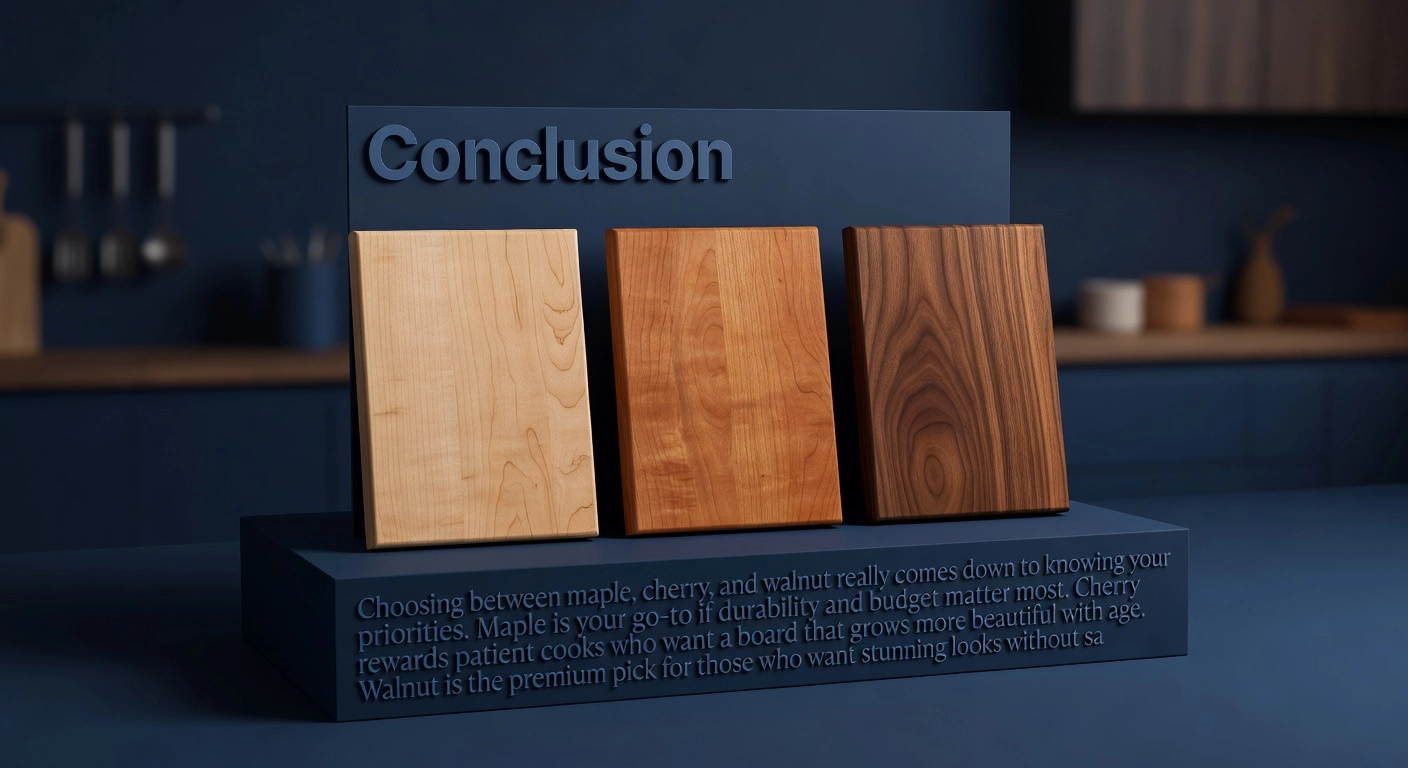
Choosing between maple, cherry, and walnut really comes down to knowing your priorities. Maple is your go-to if durability and budget matter most. Cherry rewards patient cooks who want a board that grows more beautiful with age. Walnut is the premium pick for those who want stunning looks without sacrificing knife performance.
All three are genuinely excellent choices that will outlast any plastic board you have ever owned. The real loser is always doing nothing and sticking with a surface that dulls your knives and harbors bacteria.
So here is your next step: pick the wood that matches how you actually cook and what you truly value in a kitchen tool. Invest in quality once, care for it properly, and you will have a cutting board that serves you for decades. Your knives, your food, and your kitchen will thank you.
Frequently Asked Questions
Which wood is best for a cutting board if I prep raw meat daily?
Maple is the best choice for daily raw meat preparation. Its Janka hardness of approximately 1,450 lbf gives it the tightest, most closed grain of the three woods, meaning it absorbs less moisture, resists deep knife grooves longer, and gives bacteria fewer places to hide. It is also the most affordable option, making it ideal for cooks who need a heavy-duty, hygienic board without overspending.
Does a cherry cutting board really change color over time, and is that normal?
Yes, and it is one of cherry’s most celebrated features. A brand-new cherry board starts with a light pinkish-tan color, but within weeks of regular use and exposure to natural light, it begins darkening noticeably. Over several months, it deepens into a rich, warm reddish-brown through a process called patina development, driven by oxidation and the wood’s natural resins reacting to UV light. This transformation is completely normal, and consistent oiling actually helps the color develop more evenly and with deeper, richer tones.
Is walnut worth the higher price compared to maple or cherry?
Walnut is worth the premium if you want a board that does double duty as both a prep surface and a serving piece. Its rich chocolate-brown grain hides knife marks and daily wear better than maple or cherry, and it balances solid durability with enough softness to be reasonably gentle on knife edges. However, if your top priority is maximum durability at the lowest price, a well-maintained maple board delivers more function per dollar. The honest answer is that walnut is a worthwhile splurge for design-conscious cooks, but not a necessity for purely functional kitchens.
How often should I oil my wooden cutting board, and what should I use?
You should oil your cutting board every 2 to 4 weeks, or more frequently if the surface looks dry, dull, or patchy. Use food-grade mineral oil or a beeswax board conditioner, never cooking oils like olive or coconut oil, which go rancid inside the wood over time. To apply, spread a generous coat across the surface, let it soak in for several hours or overnight, then wipe off the excess. A simple water-bead test tells you when it is time to re-oil: if water spreads and soaks in rather than beading up, your board needs conditioning.
When should I restore my cutting board versus replace it entirely?
The clearest sign a board needs replacing is groove depth, not stains or color changes. When knife marks become deep enough to trap food particles and moisture that survive a thorough wash, the board becomes a food safety concern. Before replacing, try a DIY restoration: sand along the grain starting with 80-grit paper for deeper grooves, progress to 120-grit, and finish with 220-grit, then clean away dust and apply multiple coats of food-safe mineral oil overnight. Replace the board only if grooves are deeper than about one-quarter inch, persistent odors survive cleaning, visible mold grows inside the grain, or deep cracking prevents the board from sitting flat.
2 thoughts on “Maple vs Cherry vs Walnut Cutting Board: Which Wood Wins?”