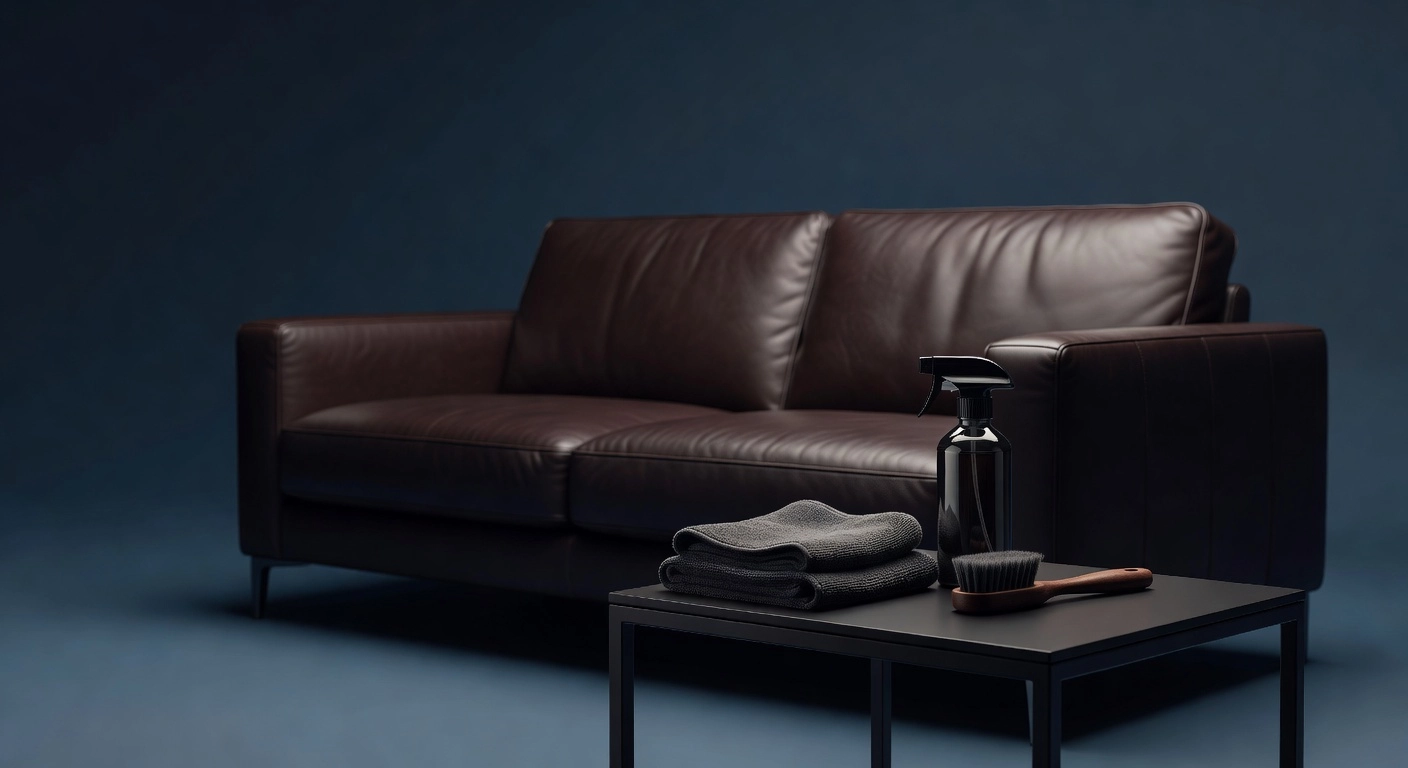
Best leather cleaner for sofa is the single most important purchase you can make to protect your investment. Your leather sofa is one of the most valuable pieces of furniture in your home, but without proper care, it can crack, fade, and age poorly within just a few years.
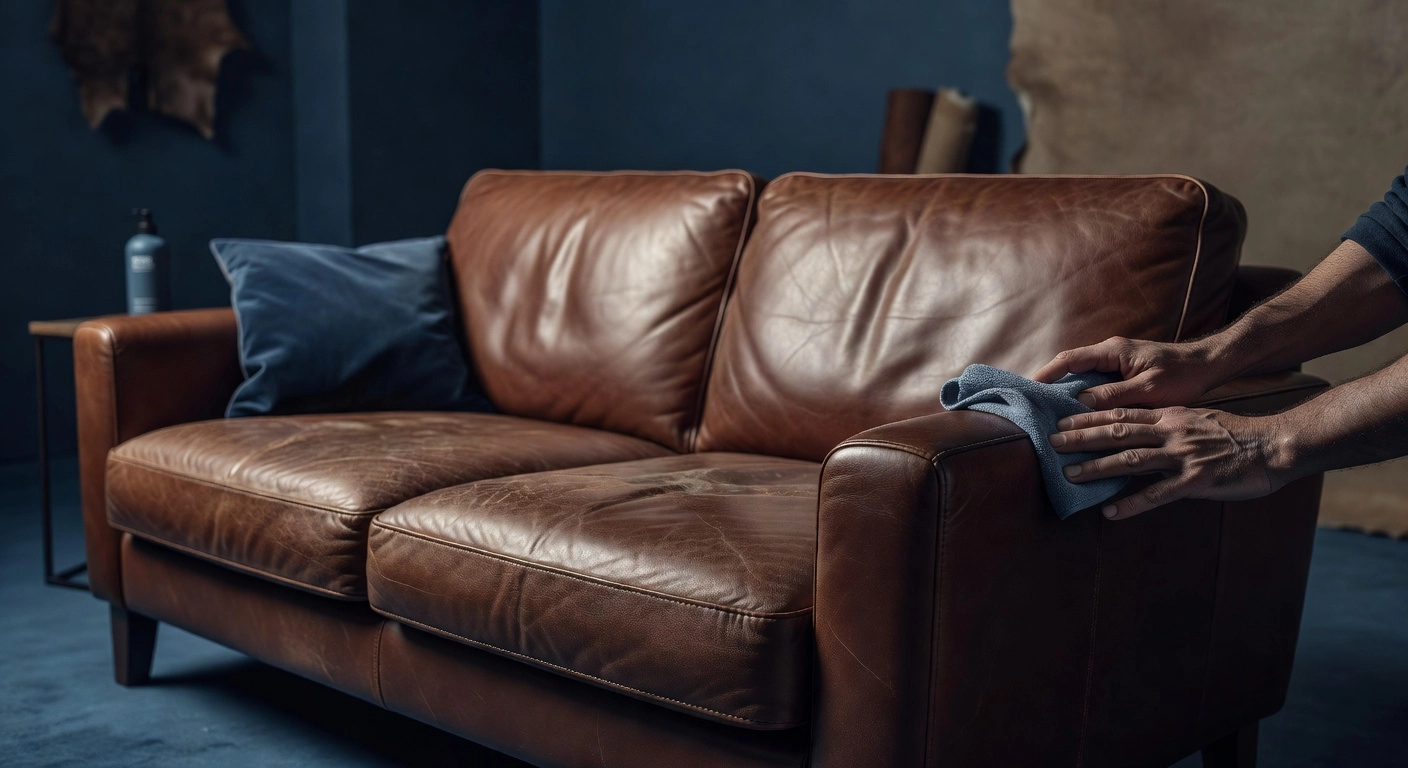
Why Your Leather Sofa Needs Regular Cleaning and Conditioning
Choosing the right leather cleaner for sofa maintenance is what separates
Leather is a natural, porous material derived from animal hides, and it behaves more like skin than synthetic upholstery. Over time, exposure to dry air, sunlight, and daily use gradually strips the material of its natural moisture and oils.
Without replenishment, the fibers lose flexibility and begin to stiffen, eventually developing micro-cracks, surface fading, and a dull, lifeless appearance. Well-maintained leather furniture can last 5 to 15 years or longer, but neglect dramatically accelerates that aging process.
Everyday use introduces another threat: body oils, sweat, dust, and spills accumulate on the surface and form a film that penetrates deep into the leather fibers. These contaminants weaken the material from the outside in, causing discoloration on high-contact areas like armrests and headrests. Body oils in particular contain salts and acids that slowly degrade the leather if not regularly removed.
This is why a two-step approach is non-negotiable. Cleaning alone, especially with water-based products, can strip remaining natural oils and leave leather drier than before. Conditioning must always follow cleaning to restore moisture, rebuild suppleness, and create a protective barrier.
Skipping the conditioner is one of the most damaging mistakes homeowners make, and it significantly shortens sofa lifespan through accelerated cracking and fiber breakdown.
For most households, a full clean-and-condition routine every 6 to 12 months is sufficient. Homes with pets, children, or heavy daily use should increase that frequency to every 3 to 6 months to stay ahead of buildup and wear.
When choosing the best leather cleaner for sofa care, always match the product to your leather type. Using the wrong formula can cause more damage than the stain itself.

Types of Leather Cleaners and What Each One Does
Not all leather cleaners work the same way, and choosing the wrong one can do more harm than good. Here is a breakdown of the five main types you will encounter.
1. Spray Cleaners Sprays are the most beginner-friendly option, delivering even coverage across large sofa surfaces with minimal effort. However, pH balance varies widely between brands. Leather sits at a naturally acidic pH of around 4.5 to 5.5, so cleaners formulated outside that range can dry out or strip protective coatings over time. Always look for a pH-balanced formula specifically designed for finished leather before buying a spray.
2. Foam and Cream Formulas These penetrate deeper into the leather surface, making them the better choice for sofas that are heavily soiled, stiff, or visibly dried out. Creams work similarly to moisturizers, restoring suppleness from within, while foams lift embedded grime without saturating the material. According to Real Simple’s tested leather cleaner guide, cream formulas noticeably improved texture and softness on neglected surfaces.
3. Saddle Soap Saddle soap is an affordable, time-tested solution for light stains and surface dirt. The key caution is overuse. Applied too frequently or without conditioning afterward, it can strip protective finishes and leave leather brittle.
4. 2-in-1 Cleaner and Conditioner Kits These combination products clean and condition in a single step, and they dominate 2025 to 2026 expert roundups for good reason. According to market research tracking the leather care industry, combination products are gaining significant market share due to their time-saving convenience, making them ideal for beginners.
5. Check Compatibility Before You Apply Genuine leather and faux leather require different formulations. Using a product designed for one on the other risks cracking, discoloration, or finish damage. Always read the label and patch-test in a hidden area first.
7 Leather Cleaners That Actually Work on Sofas
Not every leather cleaner delivers what it promises, and for beginners, sorting through dozens of options can feel overwhelming. The seven products below have been vetted by expert publications, real-world sofa testing, and thousands of consumer reviews, giving you a reliable shortlist to work from.
1. Chemical Guys Complete Leather Care Kit
This two-step kit earns the top spot in expert roundups from The Spruce, Real Simple, and Good Housekeeping for good reason. The process works by first removing embedded dirt and oils with the cleaner, then replenishing moisture with a conditioner enriched with vitamin E. The kit also provides UV protection, which matters enormously for sofas positioned near windows or in sun-exposed rooms. Testers specifically noted strong results on worn leather sofas with visible scratches and surface fatigue, making it an excellent choice when your sofa needs genuine restoration rather than light maintenance.
2. Leather Honey Conditioner
With over 66,000 positive ratings and a 4.5-star average, Leather Honey stands as one of the most consumer-validated leather care products available. Its thick, honey-like formula absorbs deeply into upholstery, making it particularly effective on dry or cracked sofa leather. The formula contains no silicone or solvents, which protects the leather’s natural fibers over repeated use. One trade-off worth noting is that it does not include built-in UV protection, so pairing it with a UV-protective spray in sunny environments is a smart move.
3. Lexol Cleaner and Conditioner
Lexol has been a trusted name in leather care for decades, backed by a dermatologist-tested formula that works across both automotive and furniture applications. A hands-on sofa test published by Style by Emily Henderson found that Lexol outperformed competing products by restoring suppleness without excessive darkening, a common complaint with heavier conditioners. For beginners working with finished or sensitive leather upholstery, Lexol offers a forgiving, gentle option that delivers reliable results without risk of over-saturation.
4. Weiman Leather Cleaner and Conditioner
Weiman earns its place on this list through wide retail availability and a formula that includes UVX-15 sunscreen protection. This built-in UV shield actively guards against fading, drying, and cracking caused by sun exposure, giving it an advantage over conditioners that focus solely on moisture. You can find Weiman at most major retailers at accessible price points, and its spray and cream formats make application straightforward for first-time users. Expert roundups from both Real Simple and The Spruce have included Weiman options for convenient one-step sofa care.
5. TriNova and Furniture Clinic Spray Cleaners
Both TriNova and Furniture Clinic offer spray-format cleaners that are especially beginner-friendly. Better Homes and Gardens named TriNova a best pick for couches specifically because its spray application covers large sofa surfaces quickly and works effectively on leather, vinyl, and faux leather alike. Furniture Clinic’s Leather Ultra Clean follows a similar approach, preparing the surface thoroughly for conditioning while producing clear before-and-after results that give beginners visible confirmation the product is working. If you prefer a simple, point-and-spray method without mixing or measuring, either of these products fits that need well.
6. Bickmore Bick 4 Conditioner
Bickmore Bick 4 fills a specific role that the other products on this list do not: lightweight maintenance between deeper cleaning sessions. It moisturizes and restores suppleness without darkening the leather, which is critical for preserving the original color of lighter-toned sofas. Its affordable price and large bottle size make it practical for the every-six-to-twelve-month conditioning schedule that leather care experts recommend. Think of Bick 4 as your go-to refresh product once the heavy cleaning work is already done.
7. Match the Formula to Your Leather Type
Choosing any product from this list without considering your sofa’s leather type is the single most common beginner mistake. Two-step kits like Chemical Guys suit heavily worn pieces needing full restoration. Thick conditioners like Leather Honey work best on severely dry upholstery. Sprays from TriNova or Weiman suit regular upkeep on mixed-material or faux leather sofas. Always test any product on a hidden area first, since pigmented, aniline, and faux leather each respond differently to the same formula. Taking this one extra step prevents irreversible surface damage and ensures the product you choose actually improves your sofa rather than harming it.
DIY Leather Cleaner Options You Can Make at Home
Budget-friendly homemade solutions can handle routine leather sofa maintenance, but each option comes with specific rules you need to follow to avoid accidental damage.
The worst mistake is buying a generic cleaner instead of the best leather cleaner for sofa specifically designed for your leather finish.
1. Mild Dish Soap Diluted in Distilled Water This is the most widely recommended starting point for beginners. Add two to three drops of mild dish soap to one cup of distilled water and mix gently. Dampen a microfiber cloth with the solution (never soak it), then wipe the leather surface in small circular sections. Follow immediately with a clean, damp cloth to remove any soap residue, then dry thoroughly. According to The Cleaning Authority, this simple mixture effectively lifts surface grime without stripping the leather’s finish.
2. White Vinegar Mixed With Water A solution of one part white vinegar to two parts distilled water can tackle light stains and mild mildew. However, this option should never be applied to unfinished or aniline leather because undiluted or repeated vinegar use (pH roughly 2 to 3) can dry out and damage sensitive surfaces over time. Martha Stewart recommends dabbing the solution rather than rubbing, then blotting dry promptly.
3. Always Use Distilled Water Tap water contains minerals that leave behind streaks, residue, and water marks on leather. Distilled water eliminates this risk entirely, making every DIY solution safer and more effective.
4. Follow Every DIY Clean With a Commercial Conditioner Homemade solutions clean the surface but cannot restore the natural oils leather loses over time. Always apply a dedicated commercial conditioner after cleaning and drying to keep the leather supple and prevent cracking.
5. Test on a Hidden Area First Before applying any DIY solution to visible surfaces, test it on the underside of a cushion or the sofa’s back panel. Wait several minutes and check for discoloration or texture changes before proceeding with full application.
How to Clean a Leather Sofa Without Damaging It
Knowing which products to use is only half the battle. Applying them correctly is what separates a sofa that looks refreshed from one that ends up streaky, stiff, or damaged. Follow these five steps every time you clean, and your leather will stay in excellent condition for years.
1. Vacuum First, Always
Before any liquid touches your sofa, remove cushions and use a vacuum with a soft brush attachment to clear dust, crumbs, and debris from every seam and crevice. This step is non-negotiable. Fine particles act like sandpaper when wet, and dragging them across leather during cleaning causes micro-scratches that accumulate into dull, worn patches over time. A dry microfiber cloth works for flat surfaces, but only a vacuum reaches the gaps where most abrasive buildup hides.
2. Apply Cleaner to the Cloth, Not the Sofa
Squirting or spraying cleaner directly onto leather almost always delivers too much product in one spot. Instead, apply your chosen leather cleaner to a microfiber cloth first, then work with that cloth. The cloth should feel damp, not wet. Over-saturating leather causes swelling, watermarks, and discoloration because the material is porous and absorbs moisture quickly.
3. Work in Small, Systematic Sections
Use gentle circular motions and move from one section to the next in a deliberate pattern, such as top to bottom or left to right. Scrubbing one area repeatedly concentrates friction and risks removing the protective finish. Rinse your cloth regularly to avoid spreading loosened dirt back onto clean areas.
4. Let the Surface Dry Completely Before Conditioning
After cleaning, wipe away any remaining moisture with a dry cloth and allow the sofa to air-dry naturally. At room temperature, this takes roughly 10 to 15 minutes for light cleaning sessions. Avoid hair dryers or placing the sofa near heat vents, as forced heat accelerates cracking by pulling oils out of the leather rapidly.
5. Condition in Thin Layers and Buff the Excess
Apply conditioner sparingly with a clean cloth using the same circular motion you used to clean. Thin layers absorb more effectively than heavy coats, which sit on the surface and turn tacky. Let the conditioner absorb for several minutes, then use a dry cloth to buff away any residue. This final buffing step restores a natural sheen without leaving a greasy film. According to professional cleaning guides, repeating this full process every six to twelve months keeps leather supple and resistant to cracking throughout its lifespan.
Cleaning Mistakes That Can Ruin a Leather Sofa
Even when you have the right leather cleaner for sofa use, applying it incorrectly or reaching for the wrong product can cause damage that no amount of conditioning will reverse. These five mistakes are the most common ones beginners make.
1. Using Household Cleaners Like Bleach, Acetone, or All-Purpose Sprays These products were not formulated with leather in mind. Bleach and ammonia-based sprays strip the protective finish from the hide, while acetone dissolves surface coatings entirely. The result is irreversible discoloration, dry patches, and peeling that worsens over time. Stick exclusively to pH-balanced, leather-specific cleaners.
2. Cleaning with Hot Water or Steam Heat is one of leather’s worst enemies. Steam cleaners and hot water cause the fibers to warp, shrink, and crack by rapidly drawing out the natural moisture that keeps the material supple. Always use a damp cloth with cool or room-temperature solutions only.
3. Using Rubbing Alcohol Without Following Up Rubbing alcohol can lift ink stains when dabbed sparingly with a cotton swab, but it strips moisture from the leather immediately. If you use it, apply a leather conditioner right after to replace the lost oils and prevent cracking or surface dulling.
4. Reaching for Paper Towels Paper towels feel soft, but their texture is abrasive enough to create micro-scratches on smooth leather finishes with repeated use. Over time, this dulls the surface noticeably. Use a soft, lint-free microfiber cloth instead for every cleaning task.
5. Skipping the Patch Test A label that reads “safe for all leather types” does not guarantee safe results on your specific sofa. Dye lots, tanning processes, and protective finishes vary between manufacturers, meaning one formula can behave differently across two sofas from different brands. Always test on a hidden area, such as the underside of a cushion, and wait at least 24 hours before proceeding.
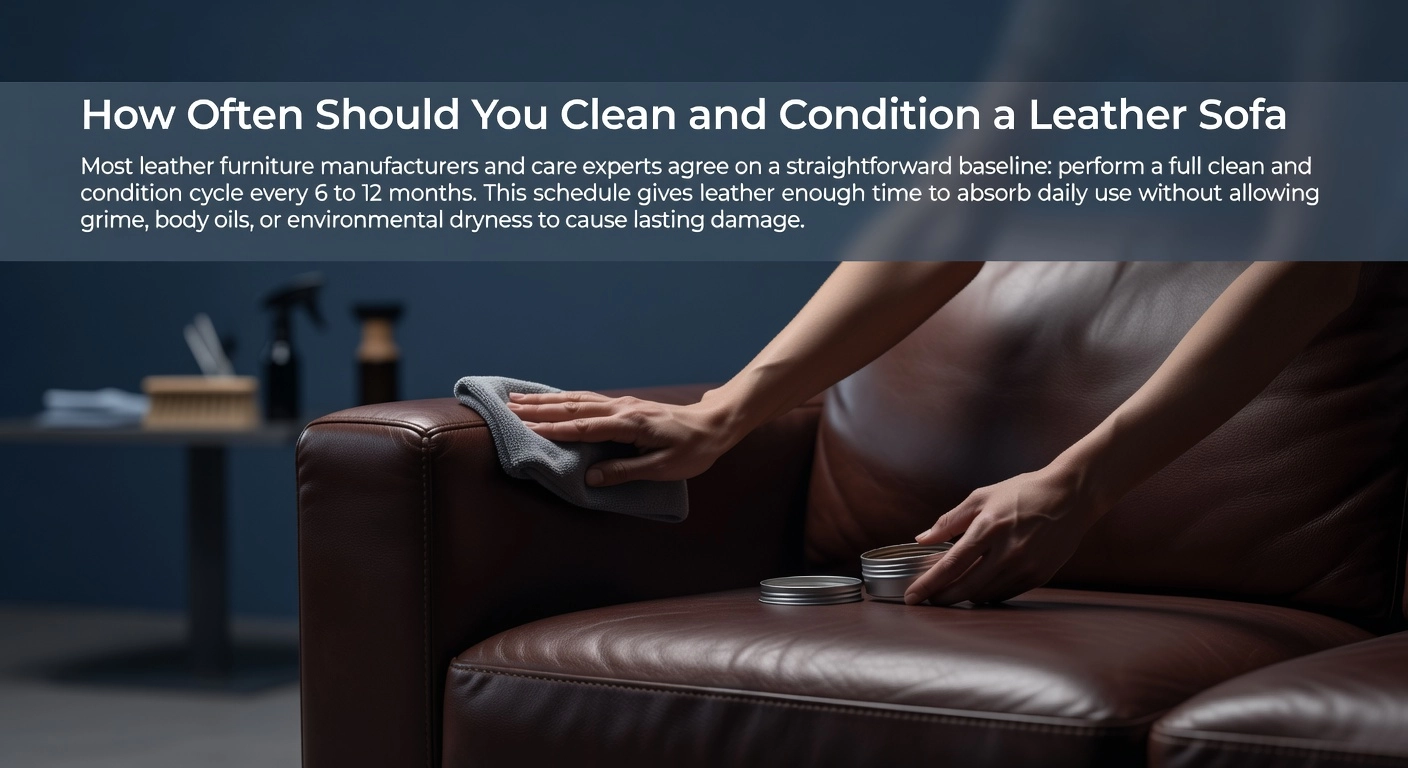
How Often Should You Clean and Condition a Leather Sofa
Most leather furniture manufacturers and care experts agree on a straightforward baseline: perform a full clean and condition cycle every 6 to 12 months. This schedule gives leather enough time to absorb daily use without allowing grime, body oils, or environmental dryness to cause lasting damage. Think of it as the same logic behind seasonal home maintenance. Skipping it for two or three years is when you start seeing permanent cracking that no leather cleaner for sofa use can fully reverse.
For households with pets, children, or heavy daily traffic, a lighter touch more frequently makes a real difference. A barely damp microfiber cloth wiped across seat cushions and armrests once a month removes surface oils and debris before they work into the grain. This small habit extends the time between full conditioning sessions and keeps the sofa looking presentable between deep cleans.
Seasonal timing is worth building into your routine rather than relying on a vague “twice a year” reminder. Central heating during winter dramatically lowers indoor humidity, which pulls moisture directly out of leather fibers. Conditioning your sofa each fall, before heating season begins, acts as a protective barrier against that dry-air damage. A spring session afterward restores anything the winter pulled away.
Your sofa will also tell you when it needs attention ahead of schedule. Visible dullness, a slight stiffness when you press the cushion surface, or hairline cracks forming near seams are all signals to act immediately rather than wait for your next calendar reminder. Catching these signs early means a simple clean and condition session is usually enough to restore suppleness before the damage becomes permanent.
Keeping Your Leather Sofa in Top Shape for Years
Long-term leather sofa care comes down to five habits that protect your investment without demanding much of your time.
Always complete the clean-then-condition sequence. Cleaning alone strips natural oils from the leather surface, leaving it vulnerable to cracking and stiffness. Conditioning immediately after replenishes those oils and seals in moisture. Skipping the second step means your sofa is actually worse off than before you started.
Match your product to your leather type and always patch test. Apply any new cleaner or conditioner to a hidden area and wait at least 24 hours before proceeding with a full application. Pigmented leather, semi-aniline, and full aniline each respond differently to formulas, and a small test prevents irreversible damage.
Set a maintenance reminder every six months. Tying your cleaning schedule to seasonal changes, such as spring and fall, keeps the routine predictable without feeling like a burden.
Apply the same material-specific mindset to wood furniture in your home. Just as leather requires products matched to its finish, wood surfaces need appropriate cleaners and oils. Consistent, targeted care across all furniture materials prevents costly repairs down the line.
One quality cleaner and conditioner kit covers multiple sessions, making it a practical, cost-effective purchase that outperforms cheap alternatives over time.
Conclusion
Your leather sofa deserves the best care possible, and choosing the right cleaner makes all the difference. Here are the key takeaways to keep in mind:
- Not all leather cleaners are created equal; always match the product to your specific leather type
- Gentle, pH-balanced formulas protect the material without stripping its natural oils
- Regular cleaning prevents long-term damage, saving you money on repairs or replacement
- Reading ingredient labels helps you avoid harsh chemicals that cause cracking and fading
Now it is time to take action. Browse our top-recommended products, pick the one that fits your sofa and budget, and start your leather care routine today. A few minutes of maintenance each month can add years of beauty and durability to your furniture. Your sofa was an investment worth making; treat it like one.
Frequently Asked Questions
How often should I clean and condition my leather sofa?
For most households, a full clean-and-condition cycle every 6 to 12 months is sufficient. However, homes with pets, children, or heavy daily use should increase that frequency to every 3 to 6 months. A helpful tip is to tie your schedule to seasonal changes, conditioning in the fall before heating season begins and again in the spring. If your sofa shows visible dullness, stiffness, or hairline cracks near seams, clean and condition it right away rather than waiting for your next scheduled session.
What is the best type of leather cleaner for a beginner to use?
Beginners are best served by a 2-in-1 cleaner and conditioner kit, such as the Chemical Guys Complete Leather Care Kit or Weiman Leather Cleaner and Conditioner. These combination products handle both cleaning and conditioning in a single step, reducing the chance of skipping the critical conditioning phase. Spray-format cleaners from brands like TriNova or Furniture Clinic are also beginner-friendly because they provide even coverage across large sofa surfaces with minimal effort. Always patch test any product on a hidden area before full application.
Can I use household products like vinegar, dish soap, or rubbing alcohol to clean my leather sofa?
Some DIY options can be used carefully. A solution of two to three drops of mild dish soap in one cup of distilled water is safe for routine surface cleaning. A mixture of one part white vinegar to two parts distilled water can tackle light stains, but should never be used on unfinished or aniline leather due to its low pH. Rubbing alcohol can lift ink stains when dabbed sparingly, but must be followed immediately with a conditioner. Never use bleach, acetone, ammonia-based sprays, or all-purpose household cleaners, as these cause irreversible damage to leather finishes.
Why is conditioning necessary after cleaning a leather sofa?
Leather is a natural, porous material that loses moisture and natural oils through daily use, dry air, and the cleaning process itself. Cleaning alone, especially with water-based products, can strip away the remaining oils and leave leather drier and more vulnerable than before. Conditioning immediately after cleaning replenishes lost moisture, restores suppleness, rebuilds the protective barrier, and helps prevent cracking and fading. Skipping the conditioner is one of the most damaging mistakes homeowners make, significantly shortening the sofa’s lifespan.
How do I avoid damaging my leather sofa while cleaning it?
To avoid damage, always vacuum first using a soft brush attachment to remove debris before any liquid touches the surface. Apply cleaner to a microfiber cloth rather than directly onto the sofa, and use a damp cloth rather than a wet one to prevent swelling and watermarks. Work in small, systematic sections using gentle circular motions. Let the sofa air-dry completely at room temperature before applying conditioner, avoiding heat sources like hair dryers. Always use a soft microfiber cloth instead of paper towels, which can cause micro-scratches, and patch test any new product on a hidden area and wait 24 hours before proceedin
So pick the best leather cleaner for sofa based on your leather type