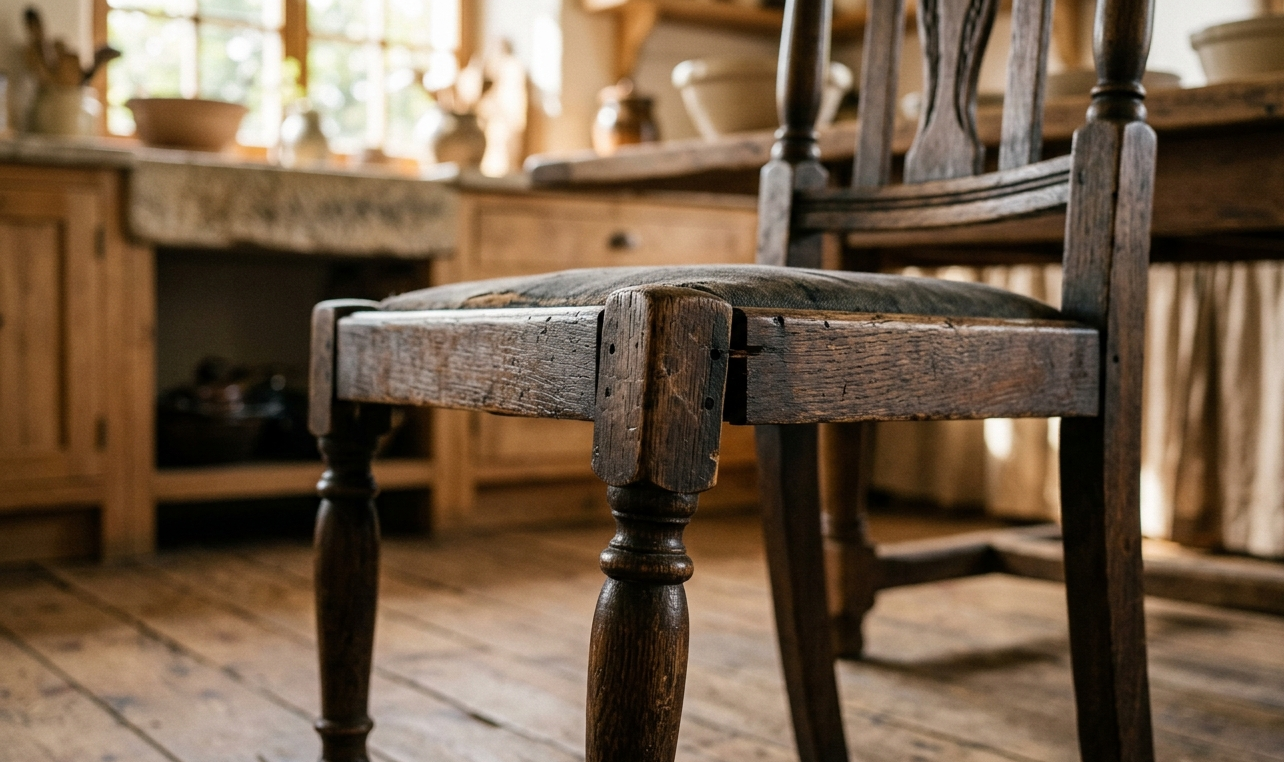
Fix wobbly wooden chair joints before they collapse — that annoying wobble every time you sit down is not just irritating, it is a warning sign. A loose chair joint can fail without warning, causing injury or destroying furniture worth hundreds of dollars. The good news? Most wobbly chair fixes take under 30 minutes and cost less than $10.
Why Your Wooden Chair Wobbles (And How to Fix It)
A wobbly chair is rarely just “one loose screw.” In most cases, the problem is deeper:
- Dry glue failure: Old hide glue or PVA glue becomes brittle after 5–15 years, especially in dry climates.
- Wood shrinkage: Seasonal humidity swings cause joints to open up — a 1/32-inch gap is enough to create a wobble.
- Stripped dowels or tenons: Repeated stress crushes the wood fibers inside the joint until the connection is loose.
- Missing fasteners: Screws back out over time, especially in softwoods like pine.
- Floor unevenness: Sometimes the chair is fine and the floor is the problem (more on this later).
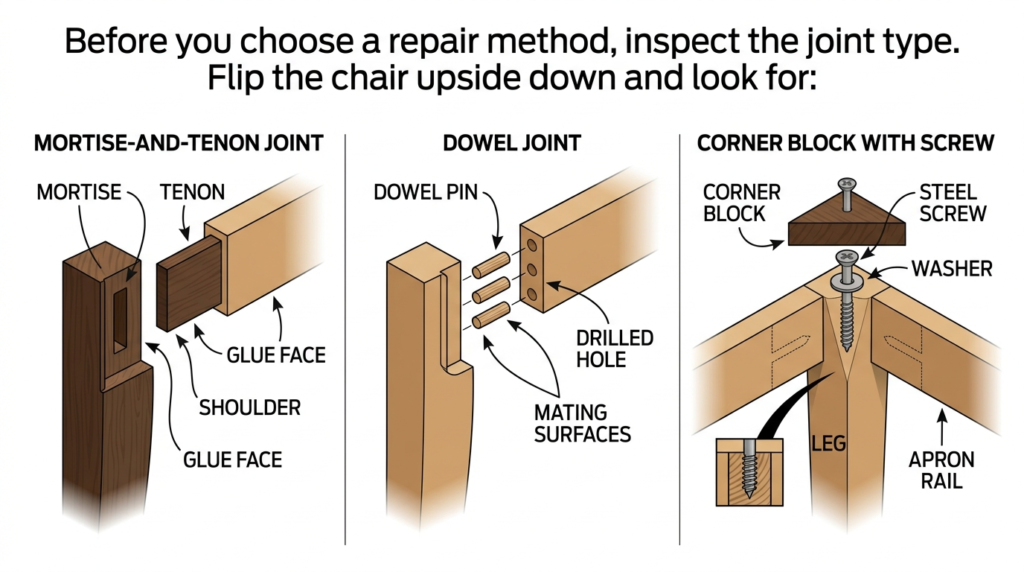
Before you choose a repair method, inspect the joint type. Flip the chair upside down and look for:
| Joint Type | What It Looks Like | Best Repair Method |
|---|---|---|
| Mortise & Tenon | A square peg (tenon) fits into a square hole (mortise) | Hide glue injection or epoxy |
| Dowel Joint | Round wooden pins visible at the joint | Dowel replacement or glue + clamp |
| Corner Block | Triangular wood blocks with screws inside the seat frame | Screw replacement or corner braces |
| Butt Joint + Screws | Leg butts directly into seat frame, held by screws | Epoxy + longer screws |
Fix Wobbly Wooden Chair Method 1: Hide Glue Injection
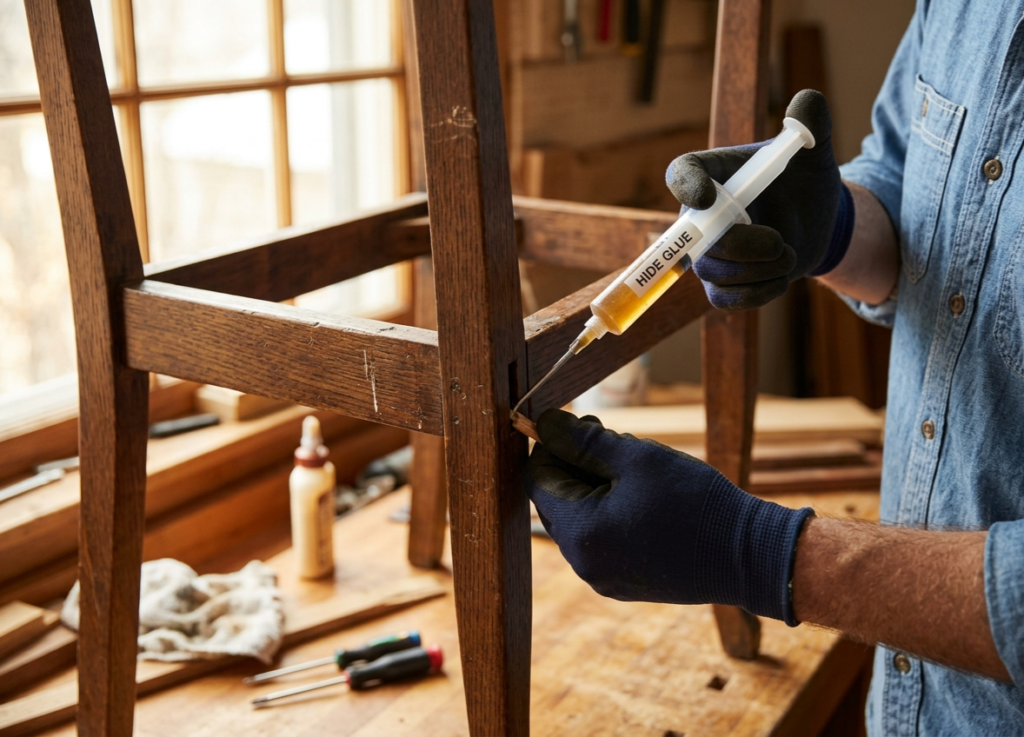
If your chair is more than 50 years old, it was probably assembled with hide glue (animal-based adhesive). Hide glue is reversible — it softens with heat and moisture — which is why antique restorers love it. You can re-activate old hide glue or inject new hide glue without disassembling the chair.
What You Need
- Hide glue granules or liquid hide glue (see options on Amazon)
- Small syringe or glue injector (veterinary syringes work perfectly)
- Warm water (if using granules)
- Heat gun or hair dryer
- Masking tape
- Rubber mallet
Step-by-Step
- Heat the joint: Aim a heat gun at the loose joint for 2–3 minutes. This softens old hide glue inside.
- Inject glue: Mix hide glue with warm water (follow package ratio). Draw into a syringe and inject deep into the joint gap. Wiggle the leg to work glue into all surfaces.
- Clamp: Wrap the joint with masking tape or use a strap clamp. Tighten until glue squeezes out.
- Let it cure: Hide glue reaches full strength in 24 hours, but you can remove clamps after 4–6 hours.
- Clean excess: Wipe away squeezed-out glue with a damp cloth while still wet.
Cost: $8–$12 | Time: 30 minutes active + 24 hours cure | Skill Level: Beginner
Fix Wobbly Wooden Chair Method 2: Wood Glue + Clamp
For chairs built after 1960, the factory probably used PVA wood glue (yellow glue like Titebond). When this glue dries out or the joint opens, standard yellow glue is the easiest fix — but only if you can clamp the joint tightly.
What You Need
- Titebond Original or Titebond III (waterproof option)
- Bar clamps, pipe clamps, or strap clamps
- Damp rag for cleanup
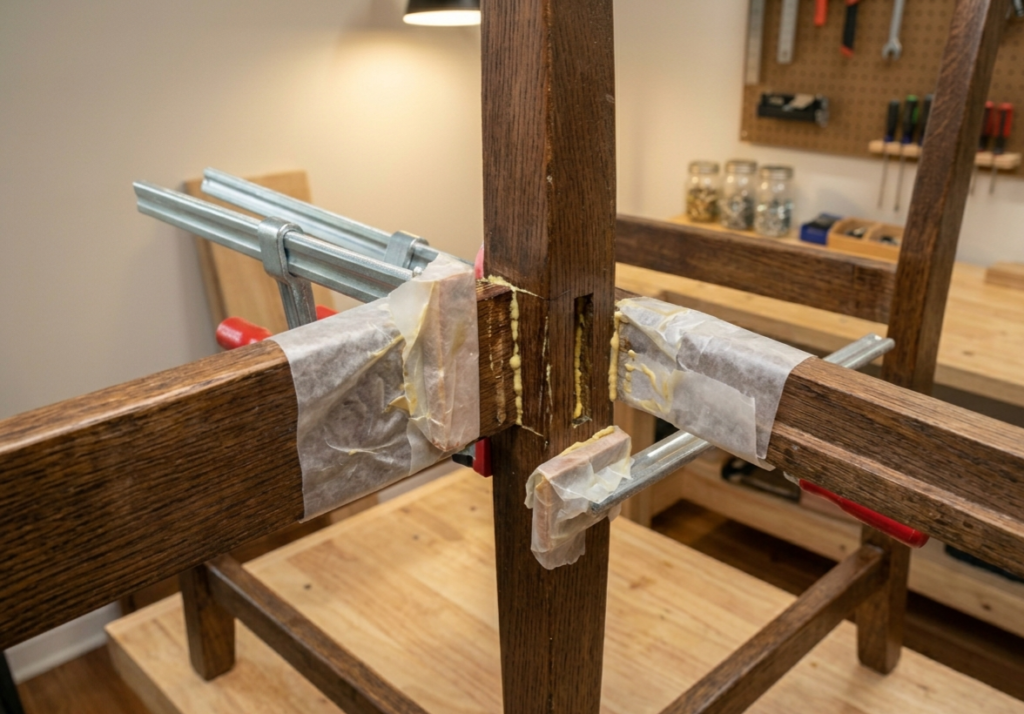
- Wax paper (to prevent glue sticking to clamp pads)
Step-by-Step
- Disassemble if possible: If the joint is loose enough to pull apart, do so. Scrape out old, flaky glue with a putty knife or small chisel.
- Apply glue: Brush glue on both mating surfaces. Do not skimp — a thin layer is weaker than a generous one.
- Reassemble: Push the joint together firmly. Use a rubber mallet if needed.
- Clamp: Apply even pressure with clamps. Place wax paper between clamp pads and the wood to prevent staining. Tighten until glue beads squeeze out.
- Cure: Leave clamps on for at least 2 hours. Full strength takes 24 hours.
Cost: $5–$8 | Time: 20 minutes + 24 hours cure | Skill Level: Beginner
Method 3: Epoxy Repair (Best for Stripped Holes & Severely Worn Joints)
When a dowel hole or screw hole is stripped — meaning the wood inside is crushed and no longer grips — liquid wood glue will not work. The joint needs filler that rebuilds the wood itself. Enter epoxy.
There are two epoxy approaches:
Option A: 5-Minute Epoxy (Fast, Temporary Fix)
Mix equal parts resin and hardener. Inject into the stripped hole, insert the leg or screw, and hold for 5 minutes. Good for emergencies, but not as strong long-term.
Option B: Two-Part Wood Epoxy + Hardener (Permanent Fix)
Products like System Three T-88 or Abatron WoodEpox are specifically formulated for wood repair. They bond to wood fibers, fill gaps, and can be sanded and stained.
Step-by-Step for Stripped Dowel Holes
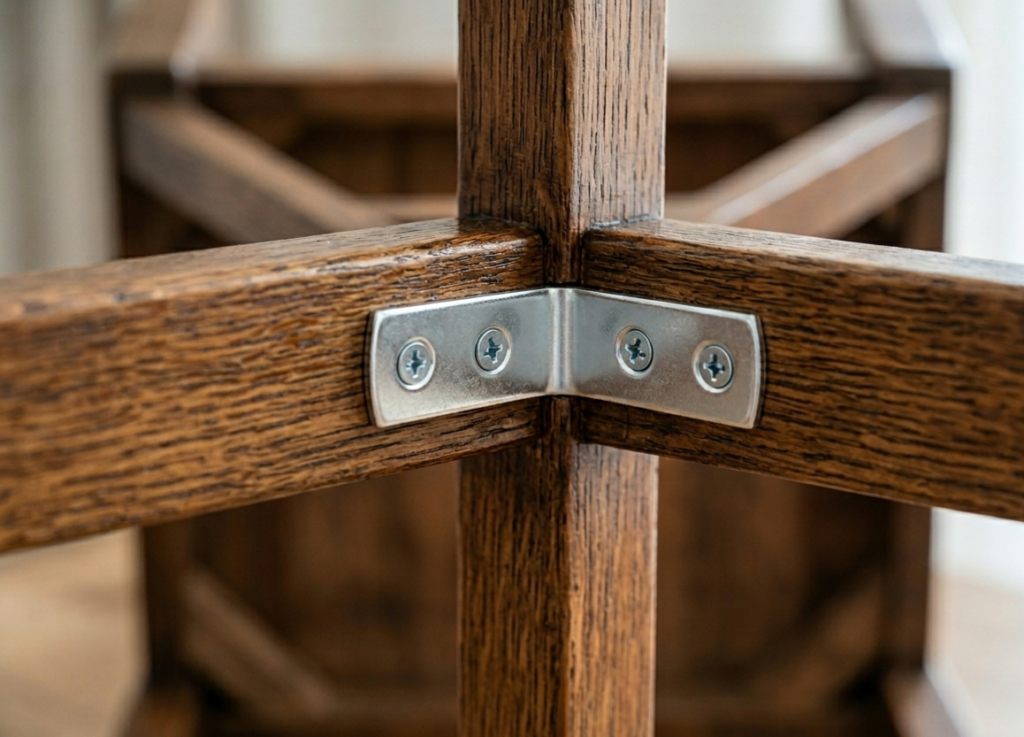
- Drill out the old dowel: Use a drill bit slightly larger than the original dowel to remove crushed wood and old glue.
- Mix epoxy: Follow the manufacturer ratio exactly. Stir for 60 seconds.
- Fill the hole: Use a putty knife or syringe to pack epoxy into the hole.
- Insert new dowel: While epoxy is wet, insert a new hardwood dowel (oak or maple). Wipe excess epoxy flush with the surface.
- Let it cure: Most epoxies need 24 hours. Do not rush this.
- Sand and finish: After curing, sand flush and touch up with stain or paint.
Cost: $15–$25 | Time: 45 minutes + 24 hours cure | Skill Level: Intermediate
Method 4: Corner Braces & Metal Brackets (Best for Hidden Fixes & Heavy Chairs)
Sometimes the joint is so damaged that glue alone cannot hold it — or the chair is a cheap modern piece where the factory joint was never strong to begin with. In these cases, metal hardware provides mechanical reinforcement that glue cannot match.
What You Need
- Flat corner braces (L-brackets) or chair corner braces
- 1-inch wood screws
- Drill with countersink bit
- Screwdriver
Step-by-Step
- Position the brace: Place an L-bracket across the inside corner where the leg meets the seat frame. The brace should span both pieces.
- Mark holes: Use a pencil to mark screw locations. Pre-drill with a bit slightly smaller than the screw diameter to prevent splitting.
- Countersink (optional): If you want a flush look, use a countersink bit so screw heads sit below the surface.
- Install screws: Drive screws into both the leg and the frame. Do not overtighten — snug is enough.
- Hide the hardware (optional): Paint the bracket to match the wood, or cover with wood putty and stain.
Cost: $3–$6 | Time: 15 minutes | Skill Level: Beginner
Method 5: Dowel Pin Reinforcement (Best for Broken Tenons & Major Rebuilds)
If the tenon (the peg part of a mortise-and-tenon joint) is cracked, split, or completely broken off, you need to rebuild the connection. The best way is to drill through the joint and insert a new hardwood dowel pin that acts like a structural nail.
What You Need
- 3/8-inch hardwood dowel (oak or maple)
- Drill with 3/8-inch bit
- Wood glue
- Flush cut saw or hacksaw
- Wood putty + stain (for finishing)
Step-by-Step
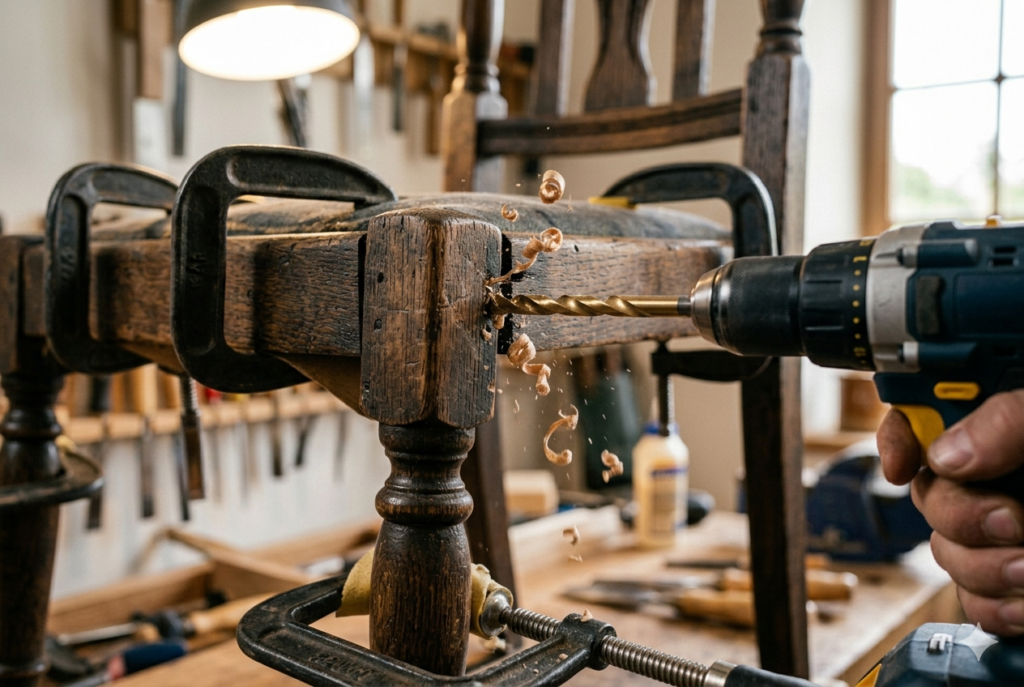
- Align the joint: Clamp the leg and frame together exactly where they should sit.
- Drill through: Drill a 3/8-inch hole straight through the frame and into the leg, perpendicular to the joint. Go about 2 inches deep into the leg.
- Apply glue: Brush glue inside the hole and on the dowel.
- Insert dowel: Hammer the dowel through the frame and into the leg until it is flush or slightly recessed.
- Cut flush: If the dowel sticks out, cut it flush with the surface using a flush cut saw.
- Hide the repair: Fill the exposed dowel end with wood putty, sand smooth, and stain to match.
This method is essentially what factories do — it is called a “drawbore pin” in traditional joinery and creates a mechanical lock that glue alone cannot achieve.
Cost: $4–$8 | Time: 30 minutes + 24 hours cure | Skill Level: Intermediate
How to Prevent Future Wobbles
Repairing the chair is only half the battle. Here is how to keep it solid for decades:
1. Check & Tighten Screws Every 6 Months
Wood expands and contracts with humidity. Screws loosen over time. A 2-minute quarterly check prevents major repairs.
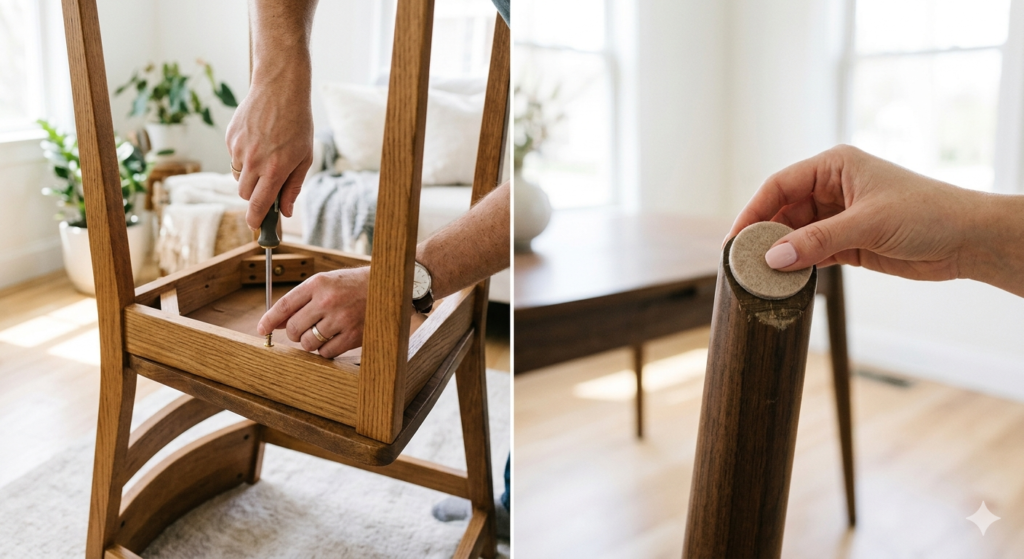
2. Use Felt Pads (And Replace Them)
Felt pads reduce vibration and floor contact stress. Replace them every 6–12 months before they compress into hard disks.
3. Maintain Humidity Between 35–55%
Extreme dryness shrinks wood and opens joints. A small humidifier in winter protects every piece in your home. Learn more in our seasonal maintenance guide.
4. Lift — Never Drag
Dragging a chair stresses leg joints and loosens fasteners. Always lift furniture when moving it. For heavy pieces, use furniture sliders.
5. Check the Floor First
Before you repair the chair, test it on a known-flat surface like a tile floor. If the wobble disappears, the problem is your floor — not the chair. Use adjustable leveler feet to compensate for uneven floors.
Tools & Materials Checklist
| Item | Used In | Approx. Cost | Where to Buy |
|---|---|---|---|
| Titebond Wood Glue | Methods 2, 3, 5 | $5–$8 | Amazon |
| Hide Glue (Granules) | Method 1 | $8–$12 | Amazon |
| 5-Minute Epoxy | Method 3 | $6–$10 | Amazon |
| Bar / Strap Clamps | Methods 1, 2 | $10–$20 | Amazon |
| Corner Braces (4-pack) | Method 4 | $3–$6 | Amazon |
| Hardwood Dowel Rod (3/8″) | Method 5 | $4–$8 | Amazon |
| Felt Pads (Bulk Pack) | Prevention | $5–$8 | Amazon |
| Adjustable Leveler Feet | Prevention | $6–$10 | Amazon |
Total toolkit cost (buying everything): ~$45–$80
Cost per repair (using what you have): ~$3–$15
Frequently Asked Questions
Can I use super glue to fix a wobbly chair?
No. Super glue (cyanoacrylate) creates a brittle bond that shatters under impact and vibration. It is fine for decorative repairs, but never for structural joints that bear weight. Always use PVA wood glue or epoxy for chairs.
How long should I wait before sitting on a glued chair?
Most wood glues reach 80% strength in 2 hours, but full cure takes 24 hours. For safety, wait the full 24 hours before applying full weight. In humid or cold conditions, add 6–12 hours.
My chair wobbles but the joints look tight. What is wrong?
Check three things: (1) Are the floor levelers or felt pads worn unevenly? (2) Is the floor itself uneven? Test the chair on tile. (3) Is one leg shorter than the others due to wear or previous repair? If so, add a felt pad to the short leg.
Should I repair or replace a wobbly chair?
If the chair is solid wood (oak, maple, walnut) and the damage is limited to one joint, repair it. A $5 repair saves a $200+ chair. If the wood is splitting, multiple joints are failing, or it is cheap particleboard, replacement is smarter.
Can I fix a chair without taking it apart?
Yes — Methods 1 (hide glue injection) and 4 (corner braces) require little or no disassembly. However, if the joint is packed with old, flaky glue, disassembly and cleaning always produce a stronger, longer-lasting repair.
Final Thoughts: A Solid Chair Is a Safe Chair
A wobbly chair is not just annoying — it is a liability. The good news is that every repair method in this guide costs under $25 and takes less than an hour. Whether you choose the reversible elegance of hide glue, the brute strength of epoxy, or the mechanical reliability of corner braces, the key is to act now before the joint fails completely.
Start with the simplest method that fits your chair type. For most modern chairs, wood glue + clamps (Method 2) is all you need. For antiques, reach for hide glue (Method 1). And for chairs that have seen better days, corner braces (Method 4) provide instant stability with zero skill required.
📥 Keep This Guide Handy
Print our Seasonal Furniture Maintenance Checklist and tape it inside your cleaning cabinet. A 5-minute monthly inspection prevents 90% of furniture emergencies.
If your wood furniture sits near a window or on a balcony, cleaning alone won’t save it. UV rays break down the finish and cause cracking over time. Learn how to protect wood furniture from sun damage with 5 proven methods before the color fades.
Got a different furniture problem? Check out our guides on removing water stains, fixing scratches, and restoring dry wood for more DIY solutions.