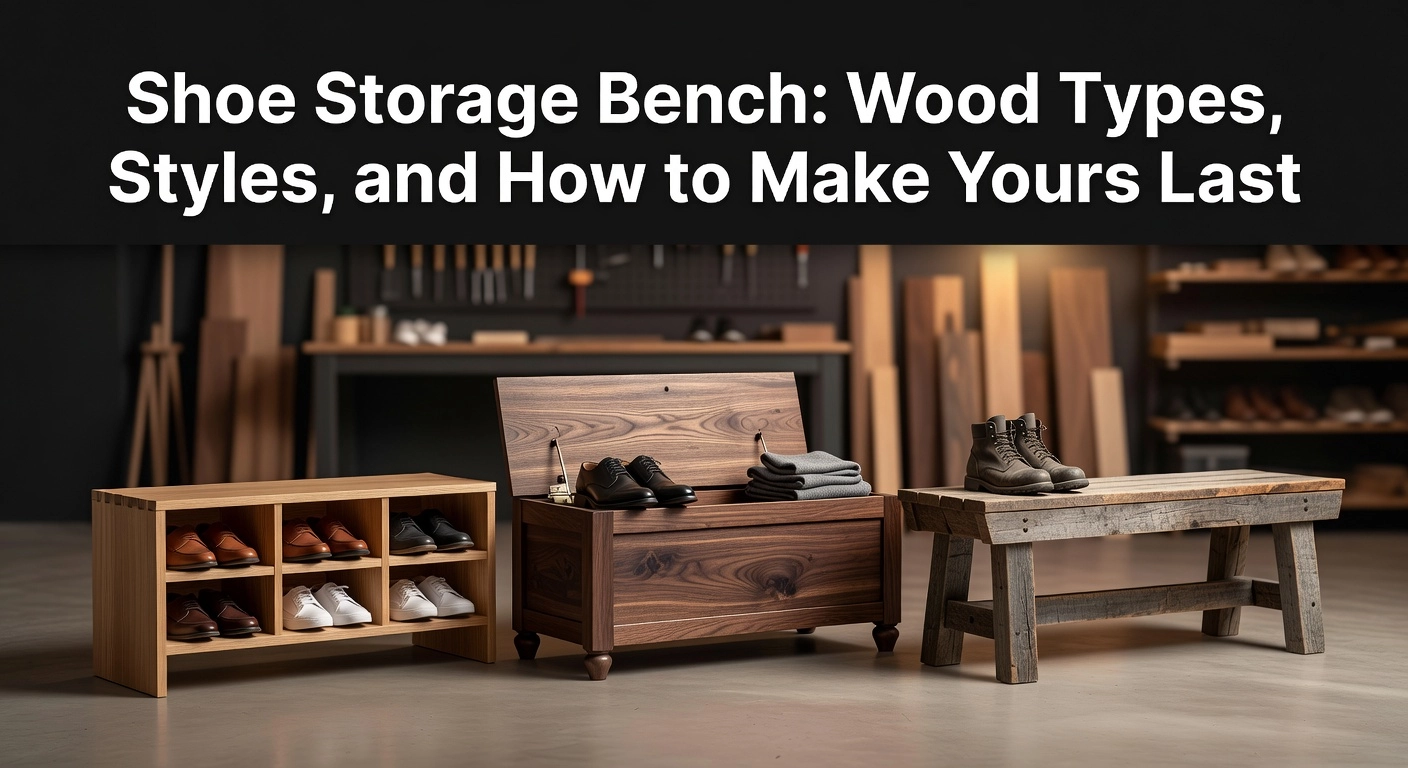
Picture this: you walk through your front door after a long day, and instead of tripping over a pile of sneakers, boots, and sandals, you’re greeted by a clean and organized entryway. Sounds dreamy, right? That’s exactly what a good shoe storage bench can do for your home.
If you’ve been thinking about adding one to your space but aren’t sure where to start, you’re in the right place. Whether you’re a first-time buyer or someone who just wants to make a smarter choice, this guide breaks everything down in a way that’s easy to follow and actually useful.
We’re going to walk you through the most popular wood types used in shoe storage benches, the different styles available for every kind of home, and some simple tips to help yours stay looking great for years to come. No confusing jargon, no overwhelming options. Just straightforward advice to help you find or build something that works for your space and your lifestyle. Let’s get into it!
5 Shoe Storage Bench Styles Worth Knowing About
Not all shoe storage benches are created equal, and picking the right style makes a real difference in how well it holds up over time, especially if you’re dealing with a mudroom or entryway that sees wet boots and daily foot traffic. Here’s a breakdown of the five most common styles and what you actually need to know before choosing one.
1. Cubby-Style Benches
Cubby-style benches are probably the most popular option you’ll come across, and for good reason. They feature open compartments that can hold anywhere from 4 to 12 pairs of shoes depending on the size of the unit. Because the cubbies are open, air circulates freely around your footwear, which is a big deal if you want to avoid the musty smell that comes from trapping wet shoes in an enclosed space. These work best in wider entryways where you have room to spread out, and they’re easy to grab and go. Just keep in mind that they can look a little cluttered if everyone in the house tosses shoes in randomly rather than placing them neatly.
2. Lift-Top Benches
Lift-top benches have a hinged seat that flips open to reveal storage underneath. They look incredibly clean from the outside, almost like a regular piece of furniture, which is why they’re popular in living rooms and more formal entryways. The catch is that the enclosed interior traps humidity, especially from wet winter boots. If the wood inside isn’t properly sealed, you’re setting yourself up for warping, mildew, and odors. Check out this shoe storage organization guide for tips on how material choices affect moisture management.
3. Open Shelf Benches
Open shelf benches are the simplest style to build and maintain. There are no enclosed compartments where moisture can collect against unfinished wood, so airflow is never a problem. These are a great starting point if you’re thinking about a DIY build, since the construction is straightforward and forgiving for beginners.
4. Drawer-Based Benches
Drawer-based benches suit smaller households that prefer a tidy, furniture-like look. The drawers keep shoes hidden, but they demand quality joinery and a durable finish. In humid mudroom conditions, poorly finished wood drawers will swell and stick. Smooth-gliding hardware and a sealed interior surface are non-negotiable here. According to current shoe storage market research, demand for well-finished, moisture-resistant storage is growing steadily as more people bring these pieces into high-traffic areas.
5. Modular and Stackable Designs
Modular and stackable benches are having a real moment right now, particularly for apartments and compact living spaces. You can reconfigure them as your needs change, which makes them a smart long-term buy. The best versions are built from solid wood or bamboo, both of which handle humidity and daily wear far better than particleboard. Particleboard tends to swell, chip, and fall apart at the joints over time. Expert roundups from The Spruce consistently highlight solid wood and bamboo as the materials worth paying a little more for upfront.
Best Wood for a Shoe Storage Bench
Once you’ve decided on the style of your shoe storage bench, the next big question is what it should actually be made of. Wood type matters more than most beginners realize, especially when your bench is sitting in an entryway or mudroom where wet boots, humidity, and daily foot traffic are a constant reality. Here’s a breakdown of the most common wood choices so you can pick the right one for your situation.
1. Pine: The Beginner-Friendly Budget Pick
Pine is the go-to wood for first-time DIY builders and anyone shopping on a tighter budget. It’s widely available at any hardware store, easy to cut and sand, and significantly cheaper than hardwoods. A basic pine board build can come together quickly without needing professional tools, which is exactly why it shows up in so many beginner tutorials. The catch is that pine is a softwood, meaning it dents and scratches more easily than harder options. Drop a heavy boot on it or drag a wet sneaker across the surface repeatedly, and you’ll start to see the wear. If you go with pine, applying a quality polyurethane coat or wood sealer is non-negotiable for mudroom use. Without that protective layer, moisture from wet shoes can seep in, cause swelling, and eventually warp the wood. Sealed properly, though, pine can hold up surprisingly well and gives a clean, natural look that fits most entryway styles. You can check out DIY entryway shoe storage bench plans for solid pine build ideas suited to beginners.
2. Oak: The Hardworking Family Option
If your household involves kids, winter boots, or just a lot of daily foot traffic, oak is worth the upgrade. White oak and red oak are both dense hardwoods that resist dents and scratches far better than pine. Oak also has better natural moisture resistance, which makes a real difference in entryways where wet footwear is the norm from November through March. It takes stain beautifully and, when finished properly, can last for decades without showing significant wear. The downside is cost; oak costs more per board foot than pine and can be slightly harder to work with for complete beginners. That said, the durability payoff makes it one of the most practical investments if you’re building a bench meant to last.
3. Bamboo: The Eco-Friendly Standout in 2026
Bamboo is technically a grass, not a wood, but engineered bamboo boards perform on par with many hardwoods when it comes to strength and moisture resistance. It handles humidity exceptionally well, making it one of the smartest choices for a shoe bench in a damp mudroom or covered porch entryway. Beyond performance, bamboo is one of the most sustainable materials available right now. It grows to harvest-ready maturity in just three to five years without needing replanting, compared to decades for hardwood trees. In 2026, sustainable materials like bamboo are trending heavily in home furnishing choices, with eco-conscious shoppers prioritizing low-impact options. Bamboo benches tend to be lighter than oak alternatives and often more affordable than premium hardwoods while still delivering that clean, minimalist look that works with modern and Scandinavian-inspired entryway designs. A light oiling once a year keeps it in great shape long-term.
4. Reclaimed Wood: Character With Extra Prep Work
Reclaimed wood, salvaged from old barns, flooring, or structural beams, brings a warmth and personality that new lumber simply cannot replicate. Every plank has its own grain pattern, weathering, and history. It also aligns perfectly with the sustainability push happening across the home furnishing industry right now, since using reclaimed material keeps wood out of landfills and reduces demand for freshly harvested timber. The important thing to know before using reclaimed wood in an entryway is that it requires real preparation. You’ll need to clean it thoroughly, inspect it for pests or rot, let it fully dry, and apply a fresh sealer or finish before it’s ready for daily use near wet shoes and muddy boots. Skipping those steps can lead to problems down the road. Done right, though, a reclaimed wood shoe bench becomes a genuinely unique piece that adds serious character to any entryway.
5. Plywood and MDF: Affordable but Know the Limits
Most mass-market shoe storage benches in the $60 to $200 price range are built with plywood, MDF (medium-density fiberboard), or particleboard. These engineered materials keep manufacturing costs low and allow for smooth, consistent finishes. For a dry bedroom closet or low-traffic area, they can work fine. In a mudroom or entryway, though, they have a real weakness: moisture. MDF swells when edges absorb water, and laminate or veneer surfaces can peel or delaminate after repeated exposure to wet boots or high humidity. Budget benches built from these materials often show visible damage within one to two years of real-world entryway use. If you’re considering what to look for before buying a wooden shoe rack, checking the core material is one of the most important steps. Higher-grade plywood like Baltic birch performs noticeably better than standard MDF and is worth seeking out if you’re building your own bench on a budget. For long-term durability in wet conditions, solid wood or well-sealed bamboo will always outperform pressed-wood alternatives.
Buy or Build: What the Wood Inside Actually Tells You
Here’s something most beginner buyers don’t think to check until it’s too late: what the bench is actually made of on the inside matters far more than how it looks in a product photo.
The engineered wood problem in budget benches
Most retail shoe storage benches sitting in the $60 to $200 price range at major retailers are built with MDF or particleboard cores topped with a thin veneer or melamine foil surface. These materials look completely fine when they arrive at your door. The trouble shows up a few years later when wet boots, damp umbrella drips, and everyday humidity start doing their damage. Particleboard absorbs moisture readily, which causes the core to swell and the surface layer to bubble, crack, or peel away from the edges. Once that veneer starts delaminating, there is no fixing it. You are looking at a full replacement, not a repair. For a piece sitting in your entryway where moisture exposure is basically guaranteed, solid wood versus particleboard is a real performance difference, not just a marketing talking point.
Why solid wood is worth the extra upfront cost
Solid wood benches typically cost more at the point of purchase, but they give you options that engineered wood simply cannot. When the surface gets scratched, scuffed, or stained after a few years of heavy use, you can sand it back and refinish it rather than hauling the whole thing to the curb. This is exactly the kind of restoration work covered throughout WoodStuffHQ, and it applies perfectly to a bench that sees daily traffic. A well-maintained solid wood bench can last 15 to 25 years or longer, which often makes it cheaper per year than replacing a budget particleboard model every two or three years.
The IKEA TJUSIG is a solid exception at an accessible price
The TJUSIG bench at around $70 uses a solid pine frame, which makes it a genuinely solid wood option at a price point that competes directly with engineered alternatives. Pine is a real wood, though it sits on the softer end of the hardness scale and dents more easily than oak or maple. Adding a coat of sealer or polyurethane before you start using it gives the surface meaningful protection against the moisture and scuffs that come with daily entryway life. It is a small extra step that extends the bench’s lifespan considerably.
Building your own from a single 2×10 board
A DIY bench made from one 2×10 board is one of the most beginner-friendly wood projects you can take on. Basic cuts, a drill, a sander, and around $20 to $50 in lumber gets you a functional bench with a shoe shelf underneath. More importantly, you get to choose the species and apply your own protective finish from the start, building durability in rather than adding it as an afterthought.
The one question to ask before buying anything
Before purchasing any retail bench, find the materials or specifications section of the product listing and look for two specific things. Does it say solid wood, pine, oak, or another named species? Or does it say engineered wood, MDF, particleboard, manufactured wood, or veneer? That single detail, often buried in the fine print of a product spec sheet, tells you everything about how long that bench will hold up in a busy entryway. Budget marketing often emphasizes the wood look without confirming actual wood construction, so reading the specs carefully before you buy saves a lot of frustration down the road.
How to Finish a Shoe Bench for High-Traffic Entryways
Your entryway is probably the hardest-working spot in your entire home, and it shows on your wood. Every time someone walks in wearing wet boots or snowy shoes, humidity spikes. Every time the front door swings open in winter, cold air rushes in and temperature drops suddenly. Then add the constant scraping and scuffing of footwear against the bench seat and lower shelf. According to research on how humidity and temperature affect wood, wood expands and contracts with moisture changes, which stresses finishes from the inside out. That’s why the finish you choose for a shoe storage bench matters more here than it would for, say, a bookcase tucked in a dry living room.
Oil-Based vs. Water-Based Polyurethane: Which One Wins for a Shoe Bench?
Oil-based polyurethane is the go-to choice when you need maximum surface hardness on a bench seat or lower shelf. It forms a tough, protective shell that resists scratches, moisture, and abrasion with just two coats, and it adds a warm amber tone that actually looks better as the wood ages. The tradeoff is that it has higher VOC emissions, a strong smell during application, and longer dry times between coats, often 8 to 12 hours. You’ll want good ventilation in your entryway while it cures.
Water-based polyurethane with low VOC content is the smarter pick if indoor air quality matters to you, especially in a home with kids or pets. It dries faster, usually touchable within an hour, and it cures clear without yellowing. Modern water-based formulas have closed the gap on durability significantly, though you’ll typically need four to eight coats to build the same protective thickness as oil-based. For a beginner working indoors, water-based is often the easier and safer starting point.
Penetrating Oils and When They Make Sense
Tung oil and Danish oil are popular with beginners because they’re forgiving to apply and they bring out gorgeous grain character in woods like oak, walnut, or reclaimed pine. They soak into the wood fibers rather than sitting on top as a film, which gives the bench a natural, matte look that’s hard to replicate with polyurethane. The honest downside is that penetrating oils offer moderate protection at best. In a high-traffic entryway, plan on reapplying every one to two years. Proper climate control during application also makes a real difference in how well these finishes cure and bond.
Staining, Sustainable Finishes, and Prep Tips
Staining before you seal is completely optional, but it’s worth considering for one practical reason: darker stain tones help disguise the scuffs and minor scratches that shoes inevitably leave behind. A medium walnut or espresso stain on pine, for example, hides surface wear far better than raw or lightly finished wood. Just sand thoroughly first, wipe away all dust, and let the stain dry fully before applying your topcoat.
If you’re building your bench from bamboo or reclaimed wood, low-VOC and natural oil finishes are a genuinely good match. These materials are trending for all the right reasons, sustainability, unique character, and durability, and they respond well to tung oil or low-VOC water-based products when you take your time with prep and thin coats. The key is patience: multiple thin applications with full dry time between each coat will outperform one heavy coat every single time.
How to Restore a Worn or Water-Damaged Shoe Bench
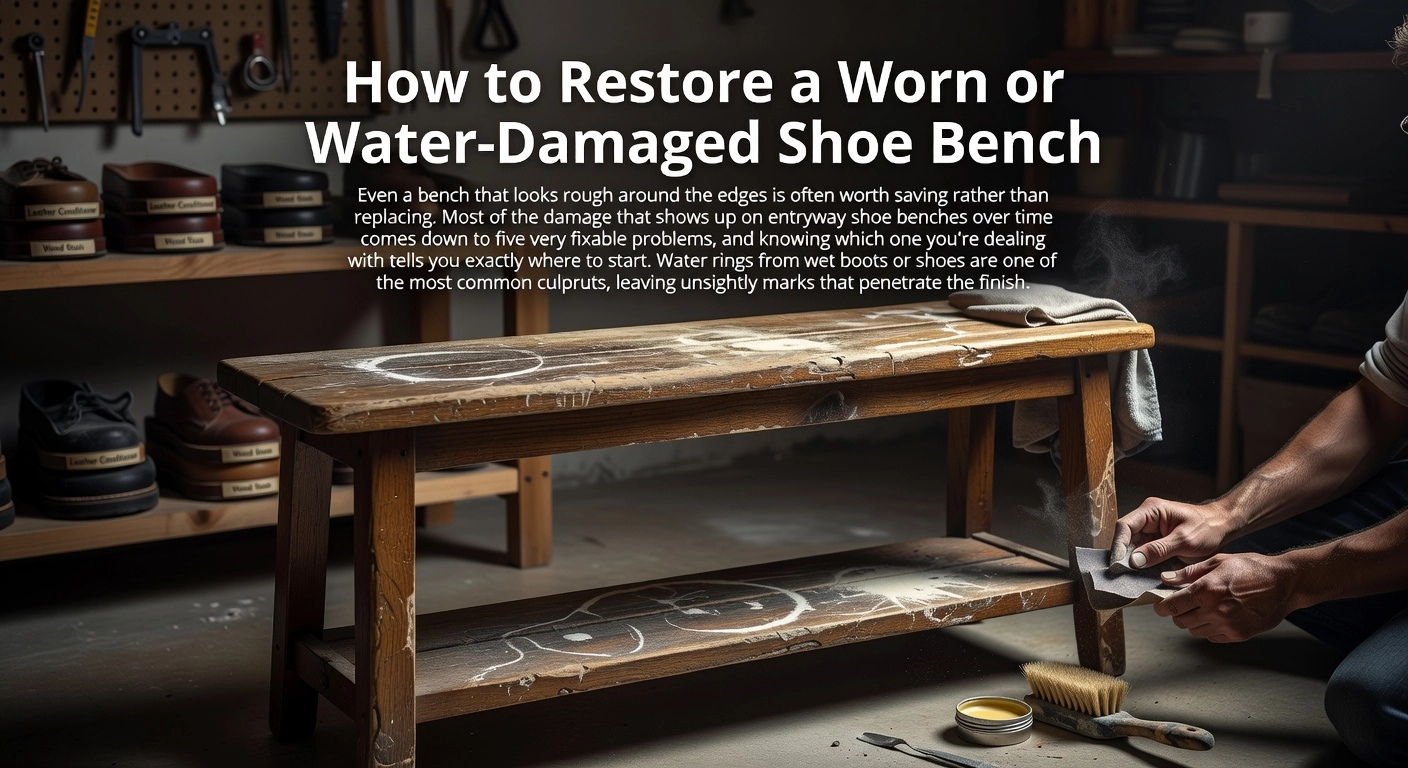
Even a bench that looks rough around the edges is often worth saving rather than replacing. Most of the damage that shows up on entryway shoe benches over time comes down to five very fixable problems, and knowing which one you’re dealing with tells you exactly where to start.
1. Lift White Water Rings Before Reaching for Sandpaper
Water rings from wet boots are probably the single most common complaint about entryway benches, and the good news is that most of them respond to simple treatments before you even think about sanding. Those cloudy white halos form when moisture gets trapped in the finish layer, not in the wood itself, which means you can often coax them out without disturbing the surface underneath.
Start with something you already have in the kitchen. Spread a thin layer of mayonnaise or petroleum jelly directly over the ring, leave it for a few hours or overnight, then wipe it clean and buff with a soft cloth. The oils work their way into the finish and displace the trapped moisture. For stubborn rings, lay a clean dry cloth over the stain and pass a warm iron over it on a low setting, keeping it moving so you don’t scorch anything. The gentle heat evaporates the moisture right out of the finish. Try these approaches first, because they work more often than you’d expect, and they save you from a full refinishing job when a simple fix would have done the trick.
2. Condition Dry or Cracked Wood Before Adding Any New Finish
Older benches, especially unsealed pine ones, tend to look dull, chalky, or cracked after years of sitting near a front door. Before you apply any new stain or sealer, the wood needs to drink in some moisture first. Applying a topcoat over dry, thirsty wood leads to uneven absorption, blotchy color, and a finish that peels sooner than it should.
Wipe down the surface with a wood conditioner or a penetrating oil like lemon oil or hemp oil. Let it absorb for 15 to 30 minutes, wipe away any excess, and give it time to fully dry before moving on. Pine in particular benefits from this step because it’s a naturally soft, porous wood that dries out faster than denser hardwoods. Conditioning fills those pores, evens out the surface, and gives your new finish something consistent to bond to.
3. Degrease the Surface or Your New Finish Won’t Stick
Entryway furniture quietly collects layers of shoe polish, body oils, dirt, and general grime that are nearly invisible but absolutely prevent new finishes from adhering. Skipping this step is one of the most common reasons a freshly refinished bench starts peeling or looking patchy within a few months.
Dampen a soft cloth with mineral spirits and rub it along the grain of the wood. You’ll likely be surprised at what comes off on the cloth. Follow up with a mild soap-and-water wipe, then let the surface dry completely before doing anything else. This isn’t optional prep work; it’s the step that determines whether your restoration actually lasts.
4. Light Sanding Plus a Fresh Sealer Coat Does More Than You Think
For a solid wood bench that’s just looking tired and worn but isn’t structurally damaged, light sanding followed by a new sealer coat is often all it takes to get back to near-original condition. You don’t need to strip the whole thing down to bare wood unless the existing finish is bubbling or peeling in large sections.
Work through 150-grit sandpaper first to smooth out rough patches and worn areas, then follow with 220-grit to refine the surface. Wipe away all the dust with a tack cloth, then apply your sealer or topcoat in thin, even layers. Focus extra attention on the seat and front edges, since those spots take the most wear. A water-resistant finish like polyurethane works especially well for entryway pieces that face humidity and foot traffic daily. This process, combined with degreasing and conditioning, brings most neglected benches back to life without a major investment of time or materials.
5. Check Inside Enclosed Benches for Mold Before Doing Anything Else
Lift-top benches and enclosed cubby designs are fantastic for hiding clutter, but they have a hidden vulnerability. When wet boots go inside and the lid closes, moisture has nowhere to go. Over time, that trapped humidity creates the perfect environment for mold and mildew to develop on the interior wood surfaces.
Before any sanding or finishing, open up the bench and inspect every interior surface carefully. If you spot dark spots, fuzzy patches, or notice a musty smell, address the mold first. Work outdoors or in a well-ventilated space, wear gloves, and clean the affected areas with a solution of equal parts white vinegar and water or a mold-safe wood cleaner. Scrub gently with a soft brush, let the surface dry completely in a well-ventilated spot, and consider leaving the lid propped open for a day or two. Once the interior is fully dry and clean, you can move forward with conditioning and sealing the rest of the bench. Adding a small boot tray or a cedar insert going forward will help keep moisture from building up again.
Refinishing and restoring rather than replacing aligns with a broader shift toward sustainable, circular furniture practices that’s been growing steadily heading into 2026. A bench that’s seen better days is almost always salvageable with the right sequence of steps, and working through these five fixes in order gives you the best shot at a result that looks and lasts like new.
Building a Shoe Storage Bench: Where Beginners Should Start
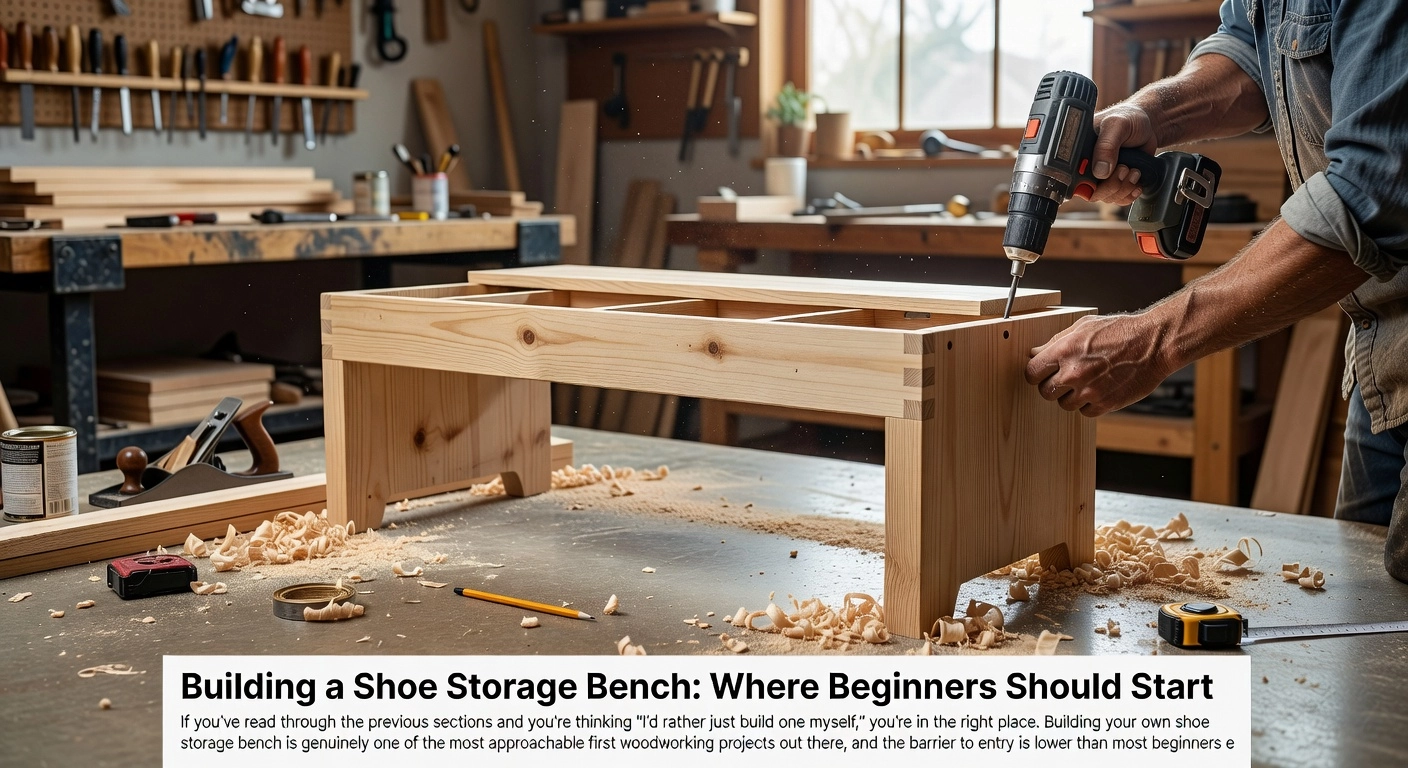
If you’ve read through the previous sections and you’re thinking “I’d rather just build one myself,” you’re in the right place. Building your own shoe storage bench is genuinely one of the most approachable first woodworking projects out there, and the barrier to entry is lower than most beginners expect.
1. One Board Is All You Really Need
The most beginner-friendly shoe bench build starts with a single 2×10 board, usually an 8-foot length from your local home center. You cut it down into the seat, two side panels, and a middle shelf. That’s the whole project. You don’t need a workshop full of tools either; a circular saw or miter saw, a drill, and a sheet of sandpaper will get you through the entire build. The simplicity is the point. When you’re learning how pieces fit together and how wood behaves under a screw or a bead of glue, having fewer parts and cuts means fewer places to make a mistake.
2. Free Plans Make This a One-Day Project
You don’t need to figure out the design yourself. Sites like Woodshop Diaries and FixThisBuildThat offer free, detailed plans complete with cut lists, diagrams, and step-by-step instructions. Many builders complete the full assembly in a single afternoon once the cuts are made. Lumber for a basic pine version typically runs under $30, which is a fraction of what you’d pay for a comparable piece at retail.
3. Pine 2×10 Is the Right Starting Material
Pine is forgiving in a way that harder woods simply aren’t. It’s soft enough to cut cleanly with basic tools, it accepts screws without splitting if you pre-drill, and it takes stain or paint readily. Select pine 2×10 is stocked at virtually every home center, so you’re not hunting for specialty lumber. For a beginner learning how joinery actually works in practice, pine lets you course-correct without wasting expensive material.
4. Sealing Is the Step That Determines Lifespan
This is the step most beginners skip, and it’s the most important one. An entryway bench takes wet boots, tracked-in grit, and humidity swings every single day. Unsealed pine will show wear, staining, and moisture damage within a season or two. Sand up to 220 grit before finishing, then apply two coats of satin polyurethane or a paint-plus-primer combination to all exposed surfaces. That sealing step is genuinely what separates a bench that lasts two years from one that holds up for fifteen.
5. Build in Adjustable Shelf Heights From the Start
If you’re building for a family, this design detail pays off immediately. Drilling shelf pin holes into your side panels during the build costs almost nothing extra in time or materials, but it means you can reposition the shelf to fit tall boots one season and stack sandals the next. It’s the single most practical upgrade you can make to a basic bench design, and it’s far easier to add during the build than to retrofit later.
Keeping Your Shoe Bench Looking Good Year Round
You’ve already put in the work to build or buy a solid shoe storage bench. The part most people skip is keeping it in good shape once it’s in place. A little consistent attention goes a long way, and none of these steps require special tools or professional skills.
Do a seasonal wipe-down, not just a quick dust. Shoe residue, dirt tracked in from outside, and general grime settle into shelf surfaces and the underside of the seat over time. Every three to six months, empty the bench completely and wipe everything down with a mild solution of dish soap and warm water on a well-wrung cloth. Pay special attention to the shelf undersides and the seat edges, which tend to collect the most buildup. Dry the surfaces thoroughly afterward; leaving moisture sitting on wood is exactly the kind of thing that causes problems down the road.
Refresh the seat surface once a year with a thin coat of finish or wood conditioner. The seat is the highest-wear spot on any bench because people sit in roughly the same location every time they put on or take off shoes. Over a year or two, that repeated friction starts to thin out whatever protective coat the wood has. A light application of a wood conditioner or paste wax restores that protection before wear-through sets in. Pick a product suited to your existing finish, apply a thin coat, and buff it gently. Ten minutes once a year is a much easier job than sanding and refinishing later.
Use a removable tray or liner inside cubbies and lift-top compartments. Wet boots and sneakers drip. That moisture lands directly on interior wood surfaces, and over many seasons it leads to swelling, staining, and even mold. A waterproof tray or a simple rubber mat inside the storage area catches those drips and is easy to pull out, rinse off, and dry. This single habit protects the interior wood better than almost anything else you can do.
Check for loose joints and hardware swelling once a year. Wood moves with seasonal humidity changes, especially on benches sitting near exterior doors. Joints can loosen, and screws can work themselves out gradually. A quick annual inspection where you press on corners, wiggle the seat, and tighten any loose fasteners takes about five minutes and keeps the structure sound for years.
Handle small water rings and scuffs right away. A fresh water ring is a surface-level problem you can fix in minutes with a little white vinegar and olive oil rubbed along the grain. Left for weeks, that same ring soaks deeper into the wood and turns into a sanding job. Scuffs work the same way; a touch-up marker or wood polish handles them easily when caught early. The bench sections earlier in this guide walk through full restoration if things have already gotten that far, but early action almost always means you won’t need to go that route.
The Right Shoe Bench Starts with the Right Wood Decisions
Everything covered in this guide comes back to a handful of decisions that compound over time. Choose solid wood over engineered materials, and you start with a foundation that can genuinely last decades rather than a few frustrating seasons. Seal it properly before it sees its first muddy boot, and you prevent the water rings, swelling, and staining that cause most early damage. If wear does show up down the road, targeted treatments for surface grime, dryness, or water marks can restore a solid wood bench almost completely, skipping the expense and waste of full replacement entirely.
If you’d rather build than buy, a simple one-board project gives you complete control over wood species, finish type, and exact dimensions at a fraction of retail pricing, often under $50 in materials. That kind of intentional start matters because the bench you build or restore only holds up long-term when it’s paired with consistent wood care habits. Regular cleaning, prompt spill response, and periodic resealing are what separate a bench that develops character over time from one that looks rough within a single winter. The wood decisions come first, but the care practices are what make them stick.
Conclusion
A shoe storage bench is one of those simple upgrades that makes a surprisingly big difference in your daily life. To recap the key takeaways: the wood type you choose affects both durability and appearance, so pick one that suits your climate and lifestyle. The style you select should complement your home’s existing look while meeting your actual storage needs. And with a little regular care, your bench can stay beautiful and functional for years to come.
Now it’s your turn to take action. Measure your entryway, think about how many shoes your household cycles through, and use what you’ve learned here to make a confident choice. Whether you buy one or build one yourself, the right shoe storage bench transforms a chaotic entryway into a welcoming first impression. Start small, choose wisely, and enjoy the difference it makes every single day.