
So you finally invested in a small double bed with storage, and honestly, it was probably one of the smartest bedroom decisions you’ve made. Those handy drawers and compartments underneath are a game changer for keeping your space tidy. But here’s something many new owners don’t think about until it’s too late: the wood needs a little love and attention to stay looking its best.
Whether your bed frame is solid oak, pine, or a wood veneer finish, knowing how to care for it properly can mean the difference between furniture that lasts a decade and furniture that looks worn out within a couple of years. The good news is that wood care really isn’t complicated once you know what you’re doing.
In this guide, we’re breaking everything down into simple, beginner-friendly steps. You’ll learn how to clean the wood correctly, protect it from everyday damage, handle minor scratches, and keep those storage drawers gliding smoothly. Think of this as your go-to checklist for keeping your bed frame looking fresh and beautiful for years to come.
What Is a Small Double Bed with Storage and Who Needs One
A small double bed measures 120 cm wide by 190 cm long (that’s 4 ft x 6’3″ in old money), sitting neatly between a single and a full-size double. According to the UK bed size guide from Bed Advice, a standard double runs 135 cm wide, so you’re giving up about 15 cm with a small double. That might not sound like much, but in a tight bedroom, those centimetres make a real difference to how much floor space you get back.
So who actually needs one? Quite a lot of people, as it turns out. Solo sleepers who find a single too cramped, teenagers who need room to stretch out, guest bedrooms that get used a few times a year, and anyone living in a compact UK property. Victorian terraced houses are a classic example, with their narrow “box rooms” that simply cannot fit a full double without the furniture dominating every inch of the space. As MyBedFrames explains, this size is one of the most practical choices for smaller UK rooms.
UK bedrooms have been getting smaller since the 2010s, with the trend accelerating after 2020 due to new-build housing patterns and rising urban property costs. That squeeze has pushed more buyers toward multifunctional furniture, and storage beds have become a popular answer.
When it comes to storage, there are two main styles to know about. Side-opening drawer beds use built-in drawers (usually two to four) that slide out from the sides or foot of the frame. They are easy to access daily without shifting the mattress, though they need clearance space on whichever side the drawers open. Hydraulic ottoman beds use gas struts to lift the entire mattress base upward, revealing a large undivided storage space underneath. They hold more, but getting to the wood frame beneath for cleaning or maintenance requires lifting the whole base first.
This article focuses specifically on wooden frames because they are the most popular choice for small double storage beds in the UK, offering warmth, durability, and classic style. However, wood does come with its own upkeep needs. Storage compartments can trap moisture and dust, drawer mechanisms put stress on joints and fixings over time, and the enclosed base makes regular cleaning of the frame much trickier than it would be with an open divan. Understanding those challenges is exactly what this guide is here to help with.
Wood Types Used in Small Double Storage Beds and How Each Behaves
Not all wooden storage beds are built the same, and the material your frame is made from has a big impact on how it holds up over time, especially when drawers and enclosed spaces are involved.
Solid Pine vs. Solid Oak
Pine is often the go-to choice for budget-friendly storage beds. It is lighter, easier to work with, and noticeably more affordable than hardwoods. The downside is that pine is a softwood, scoring around 870 lbf on the Janka hardness scale. That means it dents more easily from everyday bumps and absorbs moisture readily. Inside an enclosed drawer base where airflow is limited, that moisture absorption can cause swelling, sticking drawers, and loosened joints over time. Pine frames typically last around 8 to 15 years with normal use.
Solid oak is a different story. With a Janka hardness rating of around 1,290 lbf, oak is significantly denser and more resistant to denting, scratching, and warping. A well-made oak storage bed can last 25 to 30 years or more. If you are buying for a main bedroom rather than a spare room, oak is worth the extra spend.
Engineered Wood: MDF and Plywood
Many flat-pack storage beds use MDF or plywood rather than solid timber. These materials keep costs down and produce consistent sizing, which makes factory production easier. The problem is that MDF is highly vulnerable to moisture, particularly at edges, joints, and cut surfaces. In the enclosed micro-environment of a storage drawer base, humidity can cause MDF to swell, crumble, or permanently deform. Plywood handles humidity slightly better due to its cross-grain layered construction, but neither material can be sanded back and refinished the way solid wood can.
How Enclosed Storage Traps Moisture
Storage drawers limit airflow underneath the bed, creating a more humid environment than open-slatted frames. All wood types absorb and release moisture as seasonal humidity shifts, but softer woods and engineered boards respond more dramatically. Swollen drawers that stick in winter and rattle in summer are classic signs of this. Some factory finishes in cheaper frames can also off-gas in enclosed spaces if the coating was not properly cured before assembly. Keeping your bedroom humidity between 40 and 60 percent using a simple hygrometer helps reduce these issues across all wood types.
2026 Trends: Light Wood Platform Styles
Oak, ash, and beech are dominating the 2026 platform bed aesthetic, driven by Scandi and Japandi-inspired interiors. These light woods brighten smaller rooms visually. They also have open or semi-open grain structures, meaning the wood’s pores are prominent and receptive to stains, oils, and sealers. That is great news for DIY finishing, but it does mean preparation matters. Without pore filling or a gel stain approach, open-grain woods like oak and ash can look blotchy after staining. A clear hardwax oil or light wood sealer tends to work beautifully on these species and is easy for beginners to apply.
The Practical Recommendation for UK Homes
For UK bedrooms, where humidity shifts noticeably between damp winters and drier heated interiors, solid oak or ash gives you the most durable foundation for a storage bed. Both species resist moisture ingress and warping better than pine or any engineered wood option. Ash offers a slightly lighter tone than oak if you prefer a paler look in a compact room. Whichever you choose, look for kiln-dried hardwood with solid joinery, seal the frame with a quality finish, and give those drawers a little ventilation by not overpacking them.
6 Common Problems with Wooden Storage Bed Frames and Drawers
Wooden storage beds are genuinely brilliant for small bedrooms, but they do come with a few quirks worth knowing about before you commit. Here are the six most common issues you’ll run into with wooden storage bed frames and drawers, plus simple ways to stay ahead of each one.
1. Water Rings and Moisture Stains on the Frame or Headboard
That ring left behind by a glass of water on your bedside table? It happens to headboards and frame rails too. Wood finishes trap moisture from spills, condensation, or a naturally damp bedroom environment, leaving white rings or darker discoloration that can be tricky to shift once they set. Solid pine and oak frames are particularly vulnerable if the protective finish is thin or has started to wear. The fix is straightforward: wipe spills immediately with a dry cloth, keep a coaster handy, and apply a furniture wax or beeswax blend seasonally to create a proper moisture barrier. Keeping your room’s humidity between 40 and 60% makes a real difference too.
2. Warped or Swollen Drawers That Stick and Jam
This one is especially common in pine and MDF frames during the warmer, more humid months of the year. Wood is hygroscopic, meaning it naturally absorbs and releases moisture from the air. When humidity creeps above 60%, drawer sides swell and bind against the frame opening, making them nearly impossible to pull out smoothly. MDF is particularly prone to this because it soaks up moisture faster than solid hardwood. Keeping indoor humidity in check with a dehumidifier during summer helps enormously, as does lubricating the drawer runners a couple of times a year.
3. Squeaky Joints and Creaking Slats
Squeaking is one of the most reported frustrations with storage bed frames, and the added weight of filled drawers makes it worse by putting extra stress on the joints and connections. Loose screws, wood rubbing on wood, and stressed fixings are the usual culprits. The good news is this is one of the easiest problems to fix. Tighten all bolts and screws every few months, apply a rub of beeswax or paraffin candle wax to contact points between slats and the frame, and add felt pads where wooden surfaces meet. Frames with mortise-and-tenon joinery tend to hold up much better under load than simple dowel or bolt constructions.
4. Worn or Flaking Finish on High-Contact Surfaces
Drawer faces, headboard edges, and footboard corners take a lot of daily contact, and the finish wears away faster here than anywhere else on the frame. UV light from windows, cleaning products with harsh chemicals, and general handling all speed up the dulling and flaking process. Once the finish goes, the bare wood underneath is exposed to moisture and staining. A simple annual application of wood polish or wax on these high-traffic areas keeps the finish looking good and the wood protected. Swap out silicone-based cleaners for a barely damp microfiber cloth for regular dusting.
5. Scratched Drawer Runners Affecting Smooth Operation
Over time, the runners or glides that your drawers slide along pick up scratches, debris, and general wear, especially if you regularly load the drawers with heavier items like books or bedding. Scratched runners not only make drawers feel gritty and stiff but also expose raw wood on the interior surfaces to further damage. According to this storage bed guide on Chairish, selecting frames fitted with ball-bearing metal slides rather than basic wooden glides gives you noticeably better long-term performance. Clean out any grit from the drawer channels and apply a silicone or wax lubricant every few months to keep things running smoothly.
6. Musty Smells Inside Ottoman or Drawer Storage
Enclosed storage compartments, particularly in ottoman-style beds where the mattress essentially seals the space, are prone to trapping moisture and developing a musty smell. Body heat, humid air, and damp stored items all contribute to this, and unfinished interior wood surfaces absorb that moisture readily, creating ideal conditions for mold and mildew over time. The simple habit of lifting the base or opening the drawers for a few minutes each week to air things out makes a big difference. Store only completely dry items, pop a few silica gel sachets inside, and give the interior surfaces a wipe down every month or so. A well-ventilated room helps significantly too.
The encouraging news is that every single one of these problems is preventable with a bit of regular care. Most of the fixes cost nothing more than a candle stub for waxing joints or a bag of silica gel, and a proper storage bed maintenance routine takes less than 30 minutes a season to keep your frame performing well for years.
How to Restore a Worn Wooden Storage Bed Frame Step by Step

If your wooden small double storage bed is looking tired, scratched, or dull, the good news is that a full restoration is well within reach for a beginner. You do not need a workshop full of tools or years of experience. With patience, the right prep, and a free weekend, you can bring a worn frame back to life for well under £50 in most cases. Here is how to do it properly, step by step.
Step 1: Disassemble the Frame and Remove All Hardware
Before you touch a piece of sandpaper, take the bed apart as much as possible. Remove the headboard, footboard, side rails, slats, and all drawers. If your frame has an ottoman-style lift, detach the gas struts and hinges too. Working on individual components separately gives you full access to every surface and stops you from accidentally scratching mechanisms or missing corners.
Take photos before you start and keep screws and fittings in small labelled bags. This sounds overly cautious, but when you are reassembling at the end of a long weekend, those photos will save you a lot of head-scratching.
Step 2: Clean Every Surface with a Wood-Safe Degreaser
Once the frame is in pieces, clean everything before you sand. Old polish, body oils, dust, and product buildup will clog your sandpaper and cause uneven results if you skip this stage. Use a wood-safe degreaser or a mild solution of warm water with a small amount of washing-up liquid applied with a soft cloth.
Avoid soaking the wood, especially on engineered pine or MDF components. Wipe each surface down, then leave everything to dry fully, around 30 to 60 minutes minimum. A follow-up wipe with a tack cloth removes any remaining residue and leaves you with a clean, dry surface ready for sanding.
Step 3: Sand Worn Areas Starting with 120-Grit, Finishing with 220-Grit
Sanding is where the transformation begins. Start with 120-grit sandpaper on any worn, flaking, or scratched sections, always moving in the direction of the wood grain. Sanding across the grain leaves visible scratches that show through your final finish. Once the old surface is smooth and even, move up to 220-grit across the whole piece for a silky, even texture.
Wipe away dust between grits using a tack cloth or a lightly damp rag followed by a dry one. Sand drawer components separately and take care on any areas with thin veneer, as these can wear through quickly.
Step 4: Apply Wood Conditioner Before Any Stain or Finish
This step is especially important if your frame is pine, which is one of the most common materials in budget and mid-range storage beds. Pine absorbs stain unevenly without pre-treatment, leaving blotchy patches that are difficult to fix. Apply a wood conditioner liberally with a cloth, let it penetrate for around 5 to 15 minutes following the product instructions, then wipe away the excess.
If the wood is very dry and dehydrated rather than being stained, a penetrating oil works well at this stage to restore moisture before your finishing coat goes on.
Step 5: Apply Your Chosen Finish in Thin, Even Coats
Choose a finish based on the look and durability you need. Wax and penetrating oil give a natural, warm result but need reapplying every year or two. Water-based varnish offers stronger protection with low odour, which makes it a practical choice for a bedroom environment.
Apply thin, even coats with a brush or foam applicator, always working with the grain. Allow each coat to dry fully, often 4 to 8 hours between coats depending on the product. Lightly sand with 220-grit between coats and wipe clean before applying the next layer. Two to three thin coats will always outperform one thick application.
Step 6: Reassemble and Test All Moving Parts
With the finish fully cured, it is time to put everything back together using your photos and labelled hardware as a guide. Refit drawers and check that they slide smoothly without sticking or catching at the sides. If your frame has an ottoman lift, reattach the gas struts and hinges and test the full range of motion before loading it with stored items.
Once everything moves correctly and the frame feels solid, make up the bed and enjoy the results. For ongoing care, a light wax or oil reapplication twice a year keeps the wood in good condition and extends the life of your restoration significantly.
How to Remove Water Rings and Stains from a Wooden Bed Frame
Water rings are one of the most frustrating things to find on a wooden bed frame, mostly because they seem to appear out of nowhere. A glass of water left on the headboard overnight, a damp cloth rested on the frame top, or even condensation from a cold drink can do it. What actually happens is that moisture works its way into the protective finish layer (the varnish, wax, or lacquer on top of the wood) and gets trapped underneath. As it sits there, it creates that familiar white or grey cloudy patch. The good news is that because the moisture is usually stuck in the finish rather than the wood itself, these marks are often much easier to fix than they look.
Method 1: The Heat Method for Fresh White Rings
This is usually the first thing to try, and it works surprisingly well on surface-level white rings. Lay a clean, dry cotton cloth flat over the stain (an old white t-shirt or thin tea towel works perfectly). Set your iron to a low or medium heat setting and, importantly, make sure there is no steam. Empty the water reservoir completely before you start. Press the iron onto the cloth in short bursts of around five to ten seconds at a time, lifting frequently to check whether the ring is fading. The gentle heat draws the trapped moisture back up through the finish and evaporates it. Once the mark disappears, let the area cool fully before buffing with a little furniture wax to restore the shine.
Method 2: Oil and Salt Paste for Fresh Marks
If the heat method does not quite do the job, an oil and salt paste is a brilliant second option for fresh stains on headboards and frame tops. Mix a small amount of olive oil with a teaspoon of table salt to form a rough paste. Apply it directly to the stain with a soft cloth and rub gently in circular motions, keeping your pressure light so you do not disturb the finish around the mark. The salt provides just enough mild abrasion to lift the stain while the oil conditions the wood at the same time. Wipe it clean, buff the area, and repeat if needed.
Method 3: Light Sanding and Spot Refinishing for Older Stains
For darker or older stains that have actually penetrated the finish and reached the wood fibres, the surface methods above will not be enough on their own. In this case, lightly sand the affected area with fine-grit sandpaper (150 to 220 grit is ideal), working with the grain and feathering the edges so the repair blends naturally with the surrounding surface. Wipe away all dust with a tack cloth, then apply a matching wood stain or oil to the spot. Finish with a compatible topcoat in thin layers, and buff the whole surface once dry for a seamless result.
Prevention Tips Worth Keeping in Mind
Applying a protective wax or oil finish to all exposed wooden surfaces every six months makes a real difference. It creates a water-resistant barrier so that future spills bead up on the surface rather than soaking in. Always wipe spills immediately, use coasters or a small tray on the frame top, and try to keep indoor humidity between 40 and 60 percent to reduce stress on the wood and finish over time.
For a much deeper walkthrough covering multiple tested methods including mayonnaise, baking soda, and vinegar-oil treatments on different wood types, head over to the WoodStuffHQ water stain removal guide. It covers both white surface rings and the trickier dark stains with step-by-step photos to guide you through every stage.
How to Fix Squeaky Joints and Stiff Storage Drawers in Wooden Beds
A squeaky bed or a drawer that sticks every single time you open it might seem like small annoyances, but they tend to get worse if you leave them. The good news is that most of these issues are genuinely fixable at home with basic supplies. Here is how to work through them one by one.
Step 1: Diagnose Where the Noise or Problem Is Coming From
Before you grab any tools, spend a few minutes figuring out what is actually causing the squeak. Remove the mattress and press down on different sections of the frame while someone listens for where the noise comes from. The three most common culprits are loose frame joints (where the wood has started to move slightly at the connection point), dry wood rubbing against wood at the slat supports or side rails, and metal drawer runners vibrating against the wooden frame sides. Each one has a different fix, so getting this right first saves you a lot of guesswork.
Step 2: Fix Loose Joints with Wood Glue and a Corner Bracket
If a joint is the problem, the fix is straightforward. Use a syringe or thin applicator to work wood glue deep into the gap in the joint, then press the pieces together firmly and clamp them overnight. Once the glue has fully cured, add a small metal corner bracket or L-bracket on the underside of the joint where it will not be visible from any normal angle. This adds long-term stability and stops the joint from working loose again under regular use. Do not skip the bracket step, because glue alone can fail over time if the frame flexes during use.
Step 3: Sort Out Stiff or Swollen Drawers
Wooden drawers swell when they absorb moisture from the air, which is very common in UK bedrooms during autumn and winter. Take the drawer out completely and run fine-grit sandpaper (150 to 220 grit) lightly along the sides and the runner surface, always moving with the grain rather than across it. Wipe away the dust, then rub a thin coat of beeswax or plain candle wax onto every surface that makes contact with the frame. The difference is noticeable almost immediately; drawers that were dragging heavily will slide much more smoothly. Reapply the wax every six months or so to keep things running well.
Step 4: Tackle Warped MDF Drawer Faces
If a drawer face on an MDF-framed bed has bowed slightly, do not panic. In mild cases, place the drawer flat on a hard surface in a warm, dry room and stack heavy books or weights evenly across the face overnight. The gentle, consistent pressure encourages the panel to relax back into a flatter shape. This works best when the warping has been caused by a brief moisture exposure rather than long-term damage. Avoid doing this in a damp room, as that will make the problem worse rather than better.
Step 5: Deal with Musty Smells Inside Drawers and Ottoman Bases
Musty odors build up inside enclosed wooden storage spaces, especially in beds that sit in rooms with limited ventilation. Lightly sand the unfinished interior surfaces to remove any surface mildew or old residue, then wipe everything down with a diluted white vinegar solution mixed at roughly equal parts vinegar and water. Leave the drawers or ottoman base fully open and allow everything to air out for at least 24 to 48 hours before putting anything back inside. Vinegar neutralizes the odor rather than just masking it, which makes it far more effective than sprays or air fresheners.
Step 6: Know When It Is Time to Replace Rather Than Repair
Some problems are genuinely beyond what a DIY fix can handle safely. Delaminating MDF, where the layers start peeling apart, and severely cracked solid wood drawer sides both fall into this category. At that point, the structural integrity of the drawer is compromised and no amount of glue or filler will give you a reliable long-term result. Replacement drawer boxes are available from most furniture retailers and often come in standard sizes, making it reasonably straightforward to find a match. If you are finding that multiple components are failing at once, it may also be worth considering a newer frame with metal ball-bearing drawer slides, which are quieter, smoother, and far more durable than basic wood-on-wood runners.
Refinishing or Repainting a Wooden Storage Bed Frame on a Budget
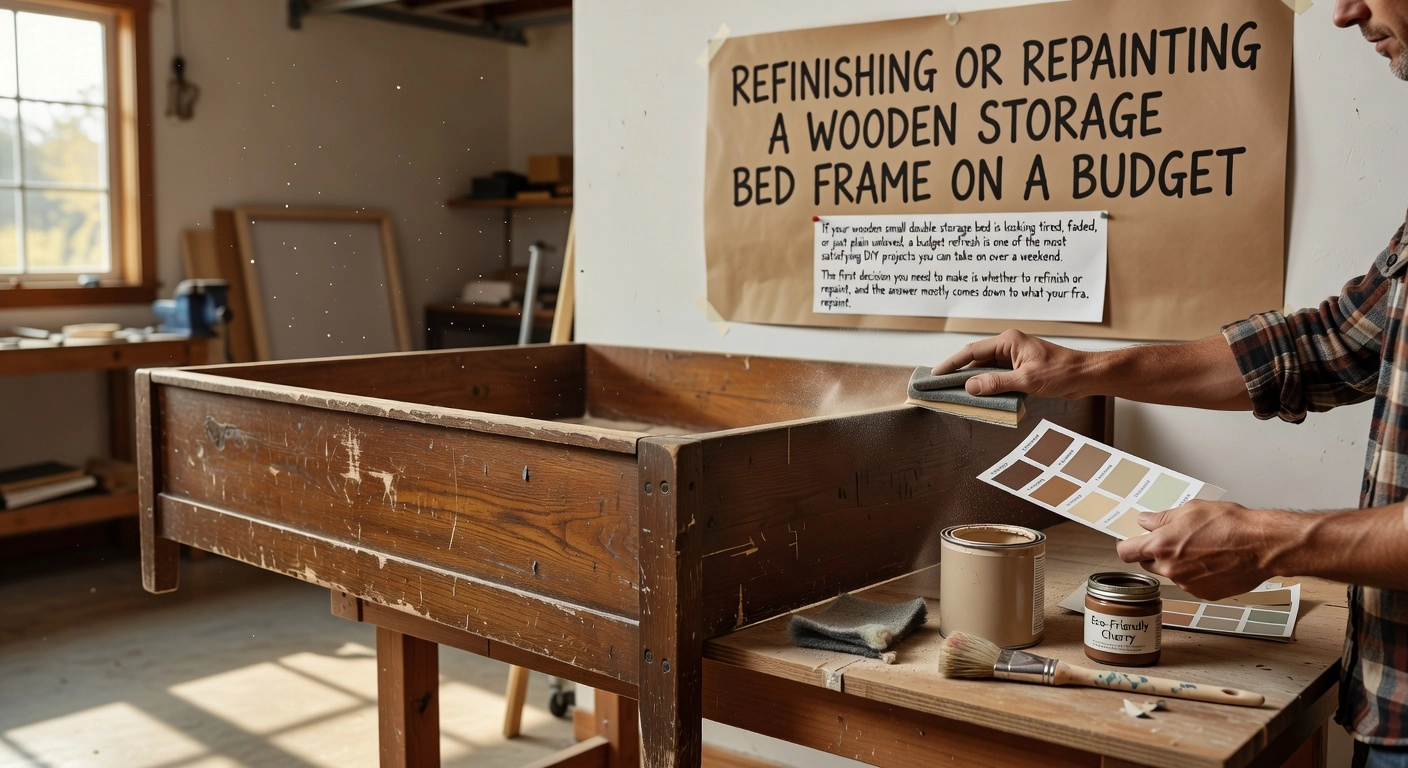
If your wooden small double storage bed is looking tired, faded, or just plain unloved, a budget refresh is one of the most satisfying DIY projects you can take on over a weekend. The first decision you need to make is whether to refinish or repaint, and the answer mostly comes down to what your frame is actually made from.
Solid wood frames (pine, oak, or similar) are ideal candidates for refinishing because they have a genuine natural grain worth showing off. Stripping the old finish and applying a fresh oil or wax lets that character come through beautifully. MDF and engineered wood frames, on the other hand, have no visible grain to preserve, so repainting is the more practical and better-looking route. Trying to “refinish” MDF like solid wood will not give you the result you are hoping for, so choosing the right approach upfront saves you a lot of wasted effort.
Prep Steps Before You Paint
Good preparation makes the difference between a finish that lasts years and one that chips within months. Start by filling any holes, dents, or dings with a sandable wood filler, and give it time to dry fully before moving on. Once dry, sand the entire surface smooth using 180 to 220 grit paper, then wipe away all the dust with a slightly damp cloth. The most important step with MDF specifically is applying a shellac-based primer before any paint goes on. MDF is extremely porous, and without a proper sealing primer it will soak up paint unevenly, swell at the edges, and leave you with a rough, patchy finish no matter how many coats you apply.
Picking the Right Paint and Finish
For a bed frame in a bedroom, water-based eggshell or satin finishes are the smart choice. They are durable enough to handle everyday knocks, easy to wipe clean, and they dry to a slightly sheen finish that hides minor imperfections better than flat or matte paints. Crucially, water-based formulas are low-VOC, which matters a lot in an enclosed bedroom environment where you are sleeping every night. This aligns directly with 2026 bedroom furniture trends that prioritise sustainable and eco-friendly wood care, making low-VOC products a genuinely forward-thinking choice rather than just a marketing label.
Refinishing Solid Wood with Oil or Wax
If you have a solid wood frame, Danish oil and hard wax oil are two of the most beginner-friendly finishing options available. Danish oil is applied by wiping it on with a cloth, it dries relatively quickly, and it leaves a soft satin sheen that enhances the grain without looking plasticky. Hard wax oil goes a step further by combining the penetrating benefits of oil with the protective properties of wax, giving you better moisture resistance and a harder surface. For a storage bed that sees regular drawer use and movement, hard wax oil is worth the slight extra investment. Both options are low-VOC and widely recognised as safer choices for indoor wood restoration in living spaces.
Document Everything with Before-and-After Photos
Before you touch a single piece of sandpaper, take photographs of the frame under consistent lighting. Natural daylight from the same window, at the same time of day, works perfectly. These photos are genuinely useful during the project, not just for sharing the transformation afterwards. Comparing your in-progress shots to the originals helps you spot areas you have missed, identify patches of uneven sanding, and catch thin spots in your finish before everything is fully cured and reassembled. It takes two minutes and saves a lot of head-scratching halfway through.
A budget refinish or repaint for a small double storage bed is realistically a weekend project, with materials costing well under £50 to £100 depending on what you already have at home. The full process for refinishing a wooden bed frame is very manageable for a beginner, especially when you break it down into preparation, priming, and finishing stages spread across two days.
DIY: How to Add Storage to a Basic Wooden Bed Frame Without Special Tools
If you already own a basic wooden small double bed frame and want to squeeze more storage out of it, you do not need to buy a brand new bed or hire anyone to help. These three DIY approaches use only beginner-friendly tools and simple materials to transform what you already have.
Start by measuring your clearance height. Before you do anything else, grab a tape measure and check the gap between the floor and the lowest point of your bed frame. Most small double wooden frames sit somewhere between 25 and 35 cm off the floor. That number matters because it tells you exactly what will fit underneath without scraping. Aim to leave at least 2 to 3 cm of breathing room above whatever storage solution you choose, so boxes or shelves slide in and out without a fight. Also check for any central support legs or cross beams that might interrupt the space, since these affect where you can position things.
Option 1: Rolling Under-Bed Storage Boxes
This is the most flexible option and a brilliant starting point for beginners. Cut untreated pine boards to size based on your clearance height and the width of your frame, then assemble them into simple open-top boxes using wood glue and finishing nails. Attach four swivel castors to the base of each box so it rolls out easily for access. You can fit two or three boxes across the length of a 120 cm wide small double frame, giving you a serious amount of hidden storage for linens, seasonal clothing, or spare bedding.
Option 2: Plywood Platform Shelf for Slatted Frames
If your frame uses slats with visible support legs or lower rails running beneath, you can rest a cut-to-size sheet of plywood directly onto those supports to create a solid shelf platform between the slats and the floor. Cut the sheet to fit snugly inside the frame perimeter, test the fit, and use it to hold flat storage bins or folded items in a neat, organised layer. No fixing or screwing is required for the basic version, which makes this genuinely tool-light.
Option 3: Headboard Shelves for Everyday Essentials
Mount shallow shelves directly onto a solid headboard panel using basic L-brackets and a length of planed timber cut to width. Position one shelf for books, another for a phone charger or small lamp, and you have a compact bedside solution that uses zero floor space.
Finishing everything to match is the step most beginners skip, and it shows. Once your additions are assembled and sanded smooth with 120-grit paper (then finished with 220-grit for a silky surface), apply the same stain or oil product used on your existing frame. Test on a scrap offcut first to confirm the colour match before committing. Multiple thin coats with a light sand between each one will give you a result that looks intentional rather than patched together.
Your beginner tool list: tape measure, hand saw (or ask a local timber merchant to cut boards for you at the time of purchase), sandpaper in 120 and 220 grit, wood glue, finishing nails, and your matching finish product. According to market research on the under-bed storage box market, the residential storage sector is growing steadily, but custom wooden DIY solutions remain popular precisely because they blend with existing furniture in a way that plastic bins simply cannot match.
Eco-Friendly Wood Care Products for Sustainable Storage Bed Maintenance
If you have spent time restoring or refinishing your wooden small double storage bed using the methods covered earlier in this guide, it is worth thinking carefully about which products you bring into your bedroom for long-term maintenance. The bedroom is not a workshop. You spend somewhere between seven and nine hours every night breathing the air in close proximity to your bed frame, and any chemicals off-gassing from finishes during that time go straight into your lungs. Conventional solvent-based varnishes and oil-based paints can release volatile organic compounds (VOCs) for weeks or even months after application, and concentrations indoors are often significantly higher than outdoors. For a smaller UK bedroom with a window that only opens a crack, that is a genuine concern worth taking seriously.
The good news is that beginner-friendly, low-VOC alternatives work brilliantly on wooden storage bed frames. Linseed oil, tung oil, and Danish oil are three of the best options to start with. Unlike surface-coating varnishes, these oils penetrate the wood fibres directly, nourishing from within and offering flexible moisture protection without trapping chemicals underneath a film. Tung oil is particularly tough and water-resistant once cured. Linseed oil (choose the boiled version for faster drying) gives a warm, matte glow. Danish oil, which is typically a tung or linseed blend, is arguably the easiest for beginners because it goes on smoothly and dries relatively quickly.
For drawer interiors and any surface that regularly contacts bedding or clothing, beeswax and hard wax oil products are the smarter choice. These are made from renewable ingredients like beeswax, carnauba wax, and plant oils, and many formulations are completely food-safe. They create a breathable, protective layer without any harsh chemistry, which matters a lot when your duvet and pillowcases are rubbing against the wood daily.
If you are buying a new frame or sourcing replacement timber parts, look for the FSC (Forest Stewardship Council) certification mark, a small logo featuring a stylised tree and checkmark. It confirms the wood was harvested responsibly. Responsible sourcing is a strong 2026 trend, and many solid wood bed manufacturers now highlight FSC credentials prominently on packaging and product listings.
One thing to avoid entirely in an enclosed bedroom is solvent-heavy varnish or oil-based paint. These products can contain 300 g/L of VOCs or more, and in a compact UK bedroom, ventilation simply cannot keep up.
For ongoing care, a light application of wax or oil every six to twelve months on exposed frame surfaces is all you need. Clean the wood gently first, apply a thin coat along the grain, leave it to absorb for around twenty minutes, then wipe away any excess and buff lightly. This routine keeps the wood hydrated and resilient through seasonal humidity changes without any product buildup.
Caring for Your Wooden Storage Bed Keeps It Working for Years
You have covered a lot of ground in this guide, so here is a quick recap of the habits that will keep your wooden small double storage bed in good shape for years to come. Start by identifying your wood type, whether that is solid pine, oak, or an engineered wood frame, so you can match your care products correctly. Deal with moisture and staining as soon as they appear rather than leaving them to soak in. Keep your drawer runners lubricated with beeswax a couple of times a year, and set a reminder to refinish exposed surfaces every 12 months. These small, consistent actions add up to a significant difference over time.
The best part is that none of this requires specialist tools or a full weekend. Most of the repairs and maintenance tasks described throughout this guide can be completed in a single afternoon using products you can pick up at any hardware store.
Investing that time genuinely pays off. Well-maintained solid wood furniture can last decades longer than neglected pieces, which means fewer replacements and less waste. That aligns nicely with the growing shift toward sustainable purchasing, especially as more buyers look for furniture that lasts rather than furniture that just looks good on arrival.
If you run into a specific problem, WoodStuffHQ has detailed tutorials covering how to remove water rings, fix dry or cracked wood, and degrease wood furniture properly. Each guide walks you through the process step by step with no assumed knowledge.
Finally, get into the habit of photographing your frame before and after any restoration work. It is a simple way to track your progress, remind yourself what is possible, and share your results with others who might be tackling the same project.
Conclusion
Taking care of your small double bed with storage does not have to be overwhelming. By sticking to a few simple habits, you can protect your investment for years to come. Remember the essentials: clean the wood gently and regularly, shield it from moisture and direct sunlight, address scratches early before they worsen, and keep those storage drawers running smoothly with occasional maintenance.
The effort you put in now will pay off every single time you walk into a tidy, well-kept bedroom. Good furniture deserves good care, and your bed frame will reward you for it.
Ready to get started? Pick one tip from this guide and put it into practice today. Small, consistent actions add up to big results over time. Your future self will thank you for keeping that beautiful bed looking as good as the day it arrived.
Frequently Asked Questions
How often should I clean and maintain my wooden small double storage bed?
Most maintenance tasks only need to be done seasonally. Lubricate drawer runners with beeswax every six months, apply a protective wax or oil finish to exposed surfaces every 12 months, and wipe down interior storage compartments monthly. For daily care, simply wipe spills immediately with a dry cloth and dust the frame regularly with a microfiber cloth. Setting aside around 30 minutes per season is typically enough to keep your frame in excellent condition.
Why do my storage drawers stick or swell, and how can I fix them?
Drawer swelling is caused by wood absorbing moisture from the air, which is especially common in UK bedrooms during autumn and winter when humidity rises above 60%. To fix stiff drawers, remove them completely and lightly sand the sides and runner surfaces with 150 to 220 grit sandpaper, always moving with the grain. Then rub a thin coat of beeswax or plain candle wax on all contact surfaces. For ongoing prevention, use a dehumidifier during humid months and keep indoor humidity between 40 and 60 percent using a hygrometer.
What is the best wood type for a small double storage bed in a UK bedroom?
Solid oak or ash are the best choices for UK bedrooms, where humidity shifts noticeably between damp winters and drier heated interiors. Oak has a Janka hardness rating of around 1,290 lbf, making it highly resistant to denting, scratching, and warping, and a well-made oak storage bed can last 25 to 30 years or more. Ash offers a slightly lighter tone if you prefer a paler look in a compact room. Both species handle moisture ingress far better than pine or engineered wood options like MDF, which is particularly vulnerable to swelling and delaminating in enclosed storage environments.
How do I remove white water rings from my wooden bed frame or headboard?
White water rings usually mean moisture is trapped in the finish layer rather than the wood itself, making them easier to fix than they appear. The heat method works well for fresh rings: lay a clean dry cotton cloth over the stain, set an iron to low or medium heat with no steam, and press in short five to ten second bursts until the mark fades. Alternatively, mix olive oil and table salt into a paste, apply it to the stain with a soft cloth, and rub gently in circular motions. For older or darker stains that have penetrated the finish, lightly sand the area with 150 to 220 grit sandpaper, then apply a matching wood stain or oil followed by a compatible topcoat.
What eco-friendly products are safe to use for maintaining a wooden storage bed in a bedroom?
For a bedroom environment where you spend seven to nine hours a night, low-VOC products are strongly recommended. Linseed oil, tung oil, and Danish oil are excellent beginner-friendly options that penetrate the wood fibres directly and offer flexible moisture protection without releasing harsh chemicals. For drawer interiors and surfaces that contact bedding, beeswax and hard wax oil products made from renewable ingredients like beeswax, carnauba wax, and plant oils are the safest choice. Avoid solvent-heavy varnishes and oil-based paints, which can contain 300 g/L of VOCs or more and off-gas for weeks in an enclosed space. Look for FSC-certified wood when buying replacement parts or a new frame.