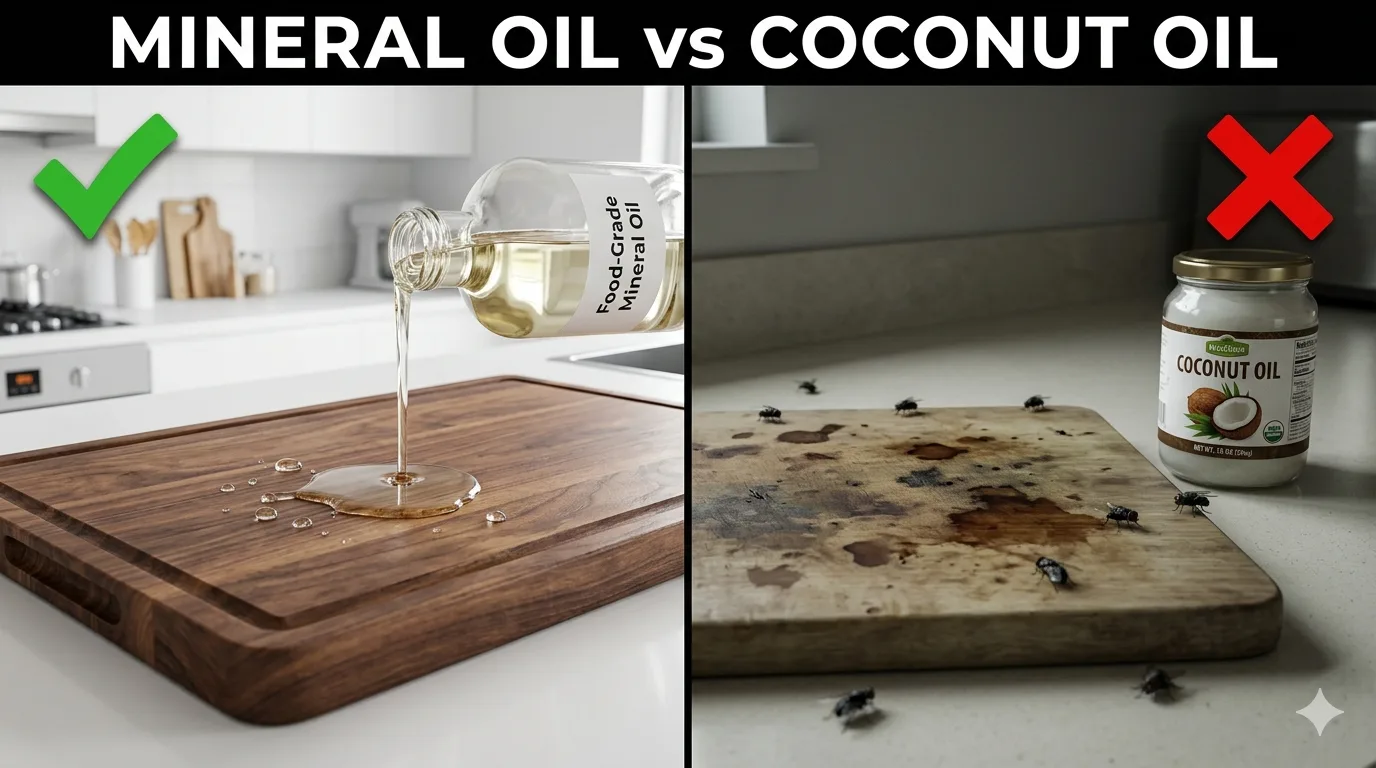
Mineral oil vs coconut oil cutting board – which should you choose? Both are popular, but only one is truly food-safe long term.
You can see a great example of this in the [Bevel & Bond End-Grain Maple Cutting Board]
After oiling hundreds of boards, the answer is clear: food-grade mineral oil wins. Here’s why, plus when coconut oil might work.
Quick Answer: Mineral Oil is Better for Cutting Boards
Food-grade mineral oil is the industry standard because it never goes rancid, has no smell, and protects wood for months.
Coconut oil can go rancid in 1-3 months, causing bad smells and sticky residue on your board.
What is Food-Grade Mineral Oil?
Food-grade mineral oil is a clear, odorless, tasteless oil derived from petroleum. It’s USP certified and 100% safe for wood surfaces that touch food.
Key benefits for cutting boards:
- Never goes rancid: Stays stable for years
- No odor or taste: Won’t affect your food
- Deep penetration: Soaks into wood fibers to prevent cracking
- Cheap: $10 bottle lasts 2+ years
- NSF approved: Used in commercial kitchens worldwide
This is the same oil we recommend in our step-by-step oiling guide.
What About Coconut Oil for Cutting Boards?
Coconut oil is a plant-based fat that’s solid at room temp. Many people use it because it’s “natural” and already in their kitchen.
The problem: Coconut oil is a food. And like any food, it can spoil.
Types of coconut oil:
- Refined coconut oil: No coconut smell. Lasts 18-24 months in jar
- Unrefined/Virgin coconut oil: Strong coconut smell. Goes rancid faster
Even refined coconut oil will go rancid once absorbed into wood because it’s exposed to air, light, and bacteria.
Mineral Oil vs Coconut Oil: Head-to-Head Comparison
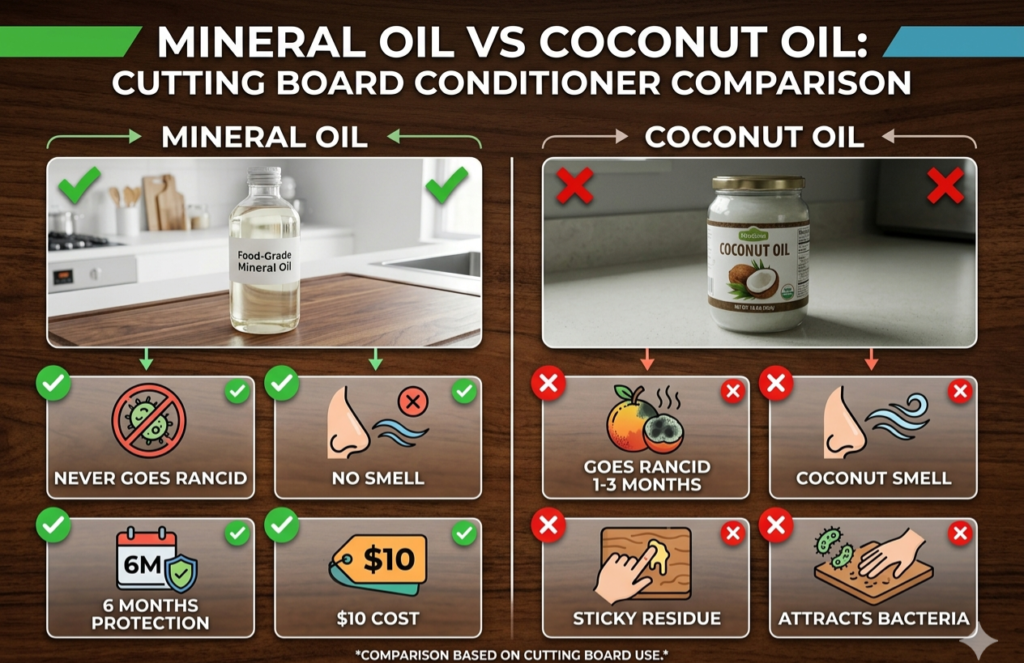
| Feature | Mineral Oil | Coconut Oil |
|---|---|---|
| Goes Rancid | No, never | Yes, 1-3 months |
| Odor | None | Coconut smell or rancid smell |
| Food Safety | USP Food-Grade Certified | Food, but spoils |
| Wood Protection | Excellent, 3-6 months | Poor, 2-4 weeks |
| Cost | \$10 for 16oz | \$8 for 14oz |
| Allergies | Hypoallergenic | Tree nut allergy risk |
| Cleaning | Wipes clean | Gets sticky when rancid |
| Expert Choice | Yes, 99% of pros | No |
4 Reasons Mineral Oil Beats Coconut Oil
1. Mineral Oil Never Goes Rancid
Rancidity is when oils oxidize and smell like old crayons. Coconut oil contains unsaturated fats that oxidize in wood.
You’ll know it’s rancid when your board smells sour and feels sticky. The only fix is sanding the board down.
Mineral oil is a saturated hydrocarbon. No double bonds = no oxidation = no rancid smell ever.
2. Better Long-Term Protection
Mineral oil test: Apply once. Water beads off for 3-6 months.
Coconut oil test: Apply once. Water soaks in after 2-3 weeks.
Wood needs deep saturation to prevent cracking. Mineral oil stays liquid and keeps wood conditioned. Coconut oil solidifies in winter and washes out fast.
3. No Smell or Taste Transfer
Unrefined coconut oil makes your board smell like a tropical drink. Cut an onion, and you’ll taste coconut-onion.
Rancid coconut oil smells like vomit. Not kidding.
Mineral oil is 100% inert. No smell, no taste, no transfer to food.
This rule also applies to countertops. See Rule 2 in our butcher block countertop care guide for why food oils cause black mold.
4. Used by All Professionals
Walk into any butcher shop or restaurant. They use mineral oil. Boos Block, the #1 cutting board brand, ships boards with mineral oil.
USDA and FDA both approve mineral oil for food contact surfaces. Coconut oil has zero commercial approvals.
When Can You Use Coconut Oil?
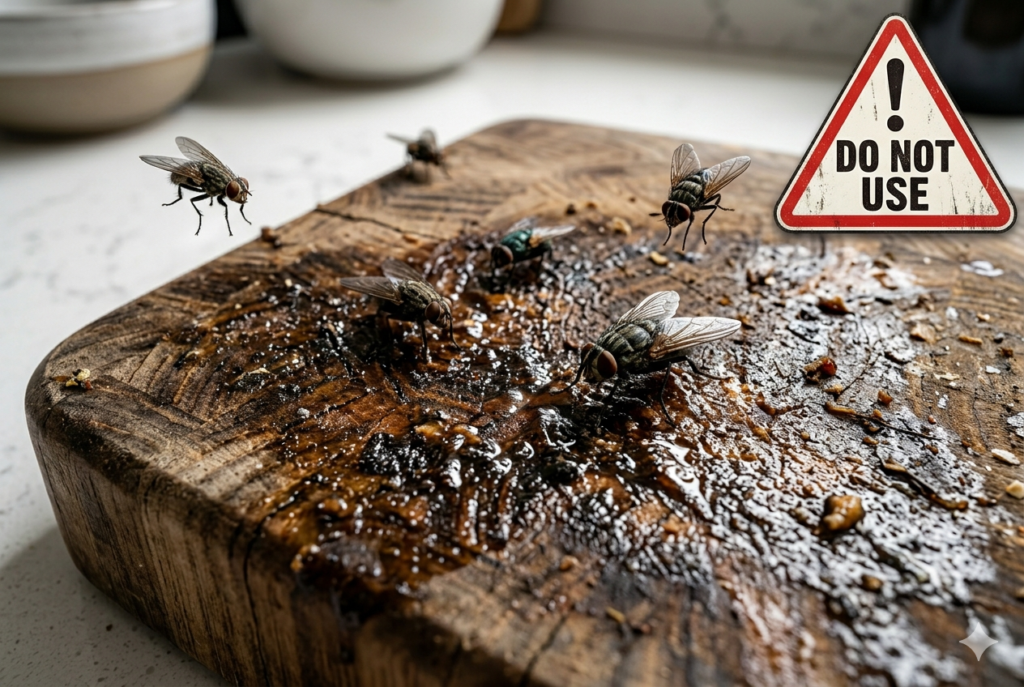
Only use coconut oil if:
- You’re in an emergency and have no mineral oil
- You oil weekly and use the board daily so oil doesn’t sit
- You use refined coconut oil and live in a cold climate
Even then, switch to mineral oil ASAP. Coconut oil is a band-aid, not a solution.
What About Other Oils? Olive Oil, Vegetable Oil, Walnut Oil
Never use these food oils on cutting boards:
- Olive oil: Goes rancid in 2 weeks. Sticky nightmare
- Vegetable/Canola oil: Rancid in 1 month. Attracts bacteria
- Walnut oil: Goes rancid + major allergy risk
Only 3 oils are safe long-term:
- Food-grade mineral oil – Best choice
- Pure tung oil – Expensive, 5-day cure time
- Board cream – Mineral oil + beeswax mix
How to Switch from Coconut Oil to Mineral Oil
If your board smells rancid from coconut oil:
Step 1: Clean – Scrub with hot water, soap, and coarse salt. Let dry 24 hours.
Step 2: Smell Test – If still sour, sand with 220-grit sandpaper to remove top layer.
Step 3: Apply Mineral Oil – Follow our complete oiling guide to saturate with mineral oil.
The mineral oil will displace rancid coconut oil over time.
FAQ: Mineral Oil vs Coconut Oil
Is mineral oil safe if petroleum-based?
Yes. Food-grade mineral oil is USP purified. It passes through your body without absorbing. Safer than vegetable oil.
Will coconut oil ruin my expensive cutting board?
Yes, over time. Rancidity causes deep odors you can’t wash out. You’ll need to sand 1/8″ off the board.
Can I mix mineral oil and coconut oil?
Don’t. The coconut oil will still go rancid and ruin the mineral oil.
What do Boos Block and John Boos use?
John Boos Mystery Oil = mineral oil + wax blend. They never recommend coconut oil.
The Verdict: Use Mineral Oil Only
For wooden cutting boards, mineral oil vs coconut oil isn’t close.
Mineral oil is cheaper, safer, lasts 10x longer, and is used by every professional. Coconut oil belongs in your pan, not your board.
Buy a $10 bottle of food-grade mineral oil once. Your board will last decades.
Next step: Read our step-by-step guide to oiling your board with mineral oil for best results.
You can see a great example of this in the [Bevel & Bond End-Grain Maple Cutting Board]
Want to Go Deeper on Wooden Cutting Boards?
Picking between end grain and edge grain is just the start. Wood type, thickness, and finish all change how your board performs and how long it lasts. For the full breakdown of everything from maple vs walnut to oil types and daily care, check our complete guide to wooden cutting boards.
If you want a second opinion from a woodworking pro, Fine Woodworking has a detailed technical guide on why end grain construction is favored for butcher blocks. Their tests show the same 3x knife-friendliness we mentioned above.
6 thoughts on “Mineral Oil vs Coconut Oil Cutting Board: Which is Better?”