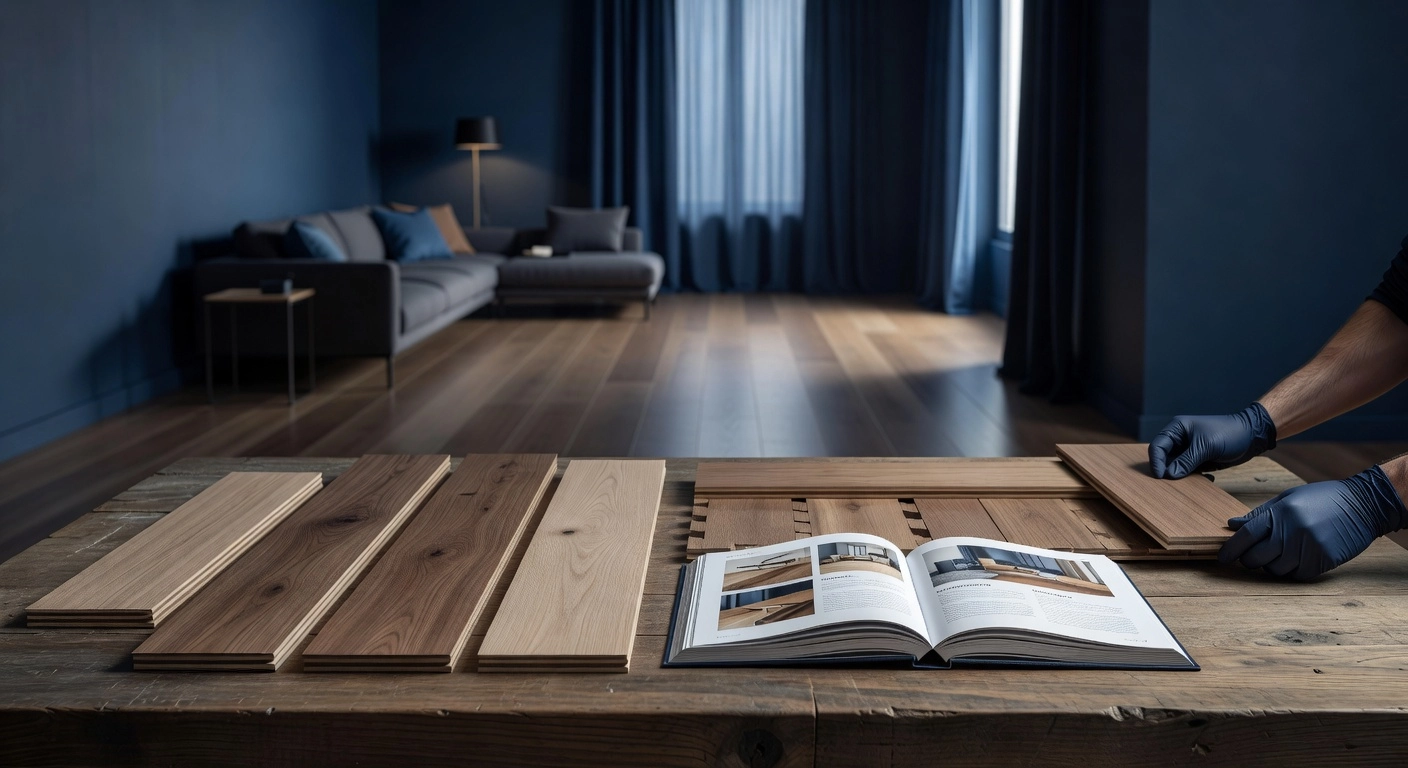
Engineered Wood Flooring: The Complete Homeowner’s Guide

Choosing the right flooring for your home can feel overwhelming, especially with so many options available on the market today. If you have been searching for a beautiful, durable, and cost-effective solution, engineered wood flooring might be exactly what you have been looking for.

Jump to Section

This complete guide is designed specifically for homeowners who are new to the world of flooring. Whether you are renovating your first home or simply upgrading an existing space, understanding the basics will save you time, money, and frustration. Engineered wood flooring has become one of the most popular choices among homeowners in recent years, and for good reason. It combines the timeless appeal of real wood with enhanced stability and versatility that traditional hardwood simply cannot match.

Throughout this guide, you will learn what engineered wood flooring actually is, how it differs from solid hardwood and laminate, which types suit different rooms and budgets, and how to install and maintain it properly. By the end, you will have all the knowledge you need to make a confident, informed decision for your home.
What Is Engineered Wood Flooring?

Engineered wood flooring (EWF) is a multi-layer flooring product built around a genuine hardwood veneer surface bonded to a stable engineered core. That core consists of multiple plywood or cross-laminated plies with grains oriented in alternating, crisscross directions. This orthogonal grain construction is the key to EWF’s dimensional stability: when humidity or temperature shifts cause wood fibers to expand or contract, the opposing grain layers counteract each other, dramatically reducing the warping, cupping, and gapping that can plague traditional solid hardwood. The result is a plank that looks and feels like real wood because, at its surface, it genuinely is.

How EWF Differs from Solid Hardwood and Laminate

Understanding what sets EWF apart from its two closest alternatives helps clear up persistent confusion in the flooring market. Solid hardwood is milled from a single piece of timber throughout its full thickness, which gives it excellent refinishing depth but makes it highly sensitive to moisture and generally unsuitable for below-grade installations. EWF uses only a thin hardwood veneer on top, preserving that authentic wood aesthetic while gaining stability from the engineered core beneath. For a detailed breakdown of how engineered floors are constructed layer by layer, the differences become immediately clear.

Laminate, by contrast, contains no real wood veneer whatsoever. Its surface is a photographic or printed layer, a high-resolution image of wood grain sealed under a synthetic wear coating. As The Spruce’s comparison of laminate vs. engineered wood flooring explains, EWF delivers genuine wood texture and character that no printed layer can replicate.

Market Standing, Factory Finishes, and Refinishing Facts

EWF’s advantages have made it the dominant choice in the U.S. flooring market, capturing roughly 75% of wood flooring sales in 2024, up from approximately 70% in 2023. Most EWF products ship with durable, factory-applied finishes, typically UV-cured aluminum oxide formulations, that deliver immediate scratch and wear resistance straight out of the box. There is no waiting for on-site coatings to cure before moving furniture in.

One of the most common misconceptions beginners encounter is the idea that EWF is a synthetic substitute or “fake” wood. It is not. The top wear layer is authentic hardwood, complete with natural grain, knots, and character. A second misconception is that EWF can never be refinished. In reality, refinishing potential depends entirely on wear layer thickness. Veneers measuring 3 to 6 mm can typically support multiple sandings over the floor’s lifetime, while thinner layers under 2 mm may only accommodate a light screen-and-recoat. For a beginner’s complete guide to engineered wood flooring, wear layer thickness is always one of the first specifications worth checking before purchasing.

Key Benefits of Engineered Wood Flooring

Engineered wood flooring delivers a compelling set of advantages that explain why it now accounts for 75% of the U.S. wood flooring market. Understanding these benefits helps you make a confident, informed decision before starting your project.

Moisture and Humidity Resistance

The cross-ply core construction is the defining structural advantage of engineered wood. Because each layer is oriented with its grain running perpendicular to the layer above and below it, the forces of expansion and contraction largely cancel each other out. The result is a floor that resists the gapping, cupping, and warping that commonly affect solid hardwood during seasonal humidity changes. According to flooring experts who study humidity performance, engineered products expand and contract roughly 50% less than solid wood under equivalent moisture conditions. This makes engineered wood a far safer choice for homes in humid climates or regions with dramatic seasonal swings.

Wider Installation Flexibility

Because of its dimensional stability, engineered wood can be installed in locations where solid hardwood is not recommended. Basements, kitchens, laundry rooms, and slab-on-grade concrete foundations are all viable options. Installation methods including floating, glue-down, and nail-down give homeowners and contractors flexibility to match the approach to the specific subfloor and environment. Floating installations are particularly practical for below-grade spaces and concrete slabs, since they require no adhesive or fasteners and accommodate minor subfloor movement.

Cost Advantage Over Solid Hardwood

Engineered hardwood typically costs less per square foot in both materials and installed price compared to solid hardwood. Material-only pricing generally ranges from $4.50 to $16 per square foot, while solid hardwood runs higher. Faster installation methods, especially floating systems, reduce labor time and therefore total project cost. For budget-conscious homeowners, those savings can be redirected toward premium finish treatments or complementary wood care products that extend the floor’s lifespan.

Authentic Look and Feel of Real Wood

The surface of engineered wood is genuine hardwood veneer, typically 2 to 6 mm thick on standard products and thicker on premium options. That means the grain patterns, natural warmth, and tactile character you see and feel are identical to solid wood. Wide plank formats up to 10 or 12 inches wide, which carry significant movement risk in solid wood, are entirely practical in engineered products. Routine maintenance is straightforward; regular sweeping and periodic cleaning with a compatible hardwood floor cleaner keeps the surface looking its best without the intensive interventions that solid wood sometimes demands.

Alignment with Sustainability Trends

Consumer preference is shifting toward natural, real-wood materials and away from synthetic options like laminates and SPC vinyl. Engineered wood fits that trend well because it uses significantly less solid hardwood per square foot, relying on a thin veneer rather than a full-thickness plank. Many products incorporate recycled wood fiber in the core layers and use low-VOC finishes, supporting eco-conscious purchasing decisions. The global engineered hardwood flooring segment is projected to grow at approximately 6.4% annually through 2033, driven in part by this growing preference for sustainable, real-wood solutions.

Wear Layer Thickness and What It Means for Your Floor

The wear layer is the topmost surface of an engineered wood plank, a thin slice of genuine hardwood that delivers the authentic grain, texture, and beauty you see underfoot. This veneer is bonded to the engineered core below and does all the heavy lifting against daily foot traffic, furniture, and abrasion. Wear layer thickness typically runs from around 2 mm on entry-level products to 6 mm or more on premium lines, with mid-range residential options commonly landing in the 3 to 4 mm range. Understanding this single specification will help you make a far more informed purchasing decision than relying on total plank thickness alone.

The thickness of the wear layer has a direct, proportional relationship to your floor’s long-term refinishing potential. Each professional sanding pass removes roughly 0.75 to 1 mm of material to eliminate scratches, dents, and worn finish. A 4 to 6 mm wear layer can support two to four sandings across the floor’s lifespan, giving you decades of renewed appearance. A thinner 2 mm veneer, by contrast, leaves very little material to work with before hitting the core.
If you have a floor with a thin 2 mm veneer, aggressive drum sanding is genuinely risky and should be avoided entirely. The safe approach for these floors is a screen-and-recoat: lightly scuffing the existing finish and applying a fresh topcoat without cutting into the wood itself. Products like Minwax® Fast-Drying Polyurethane are well-suited to this kind of maintenance refresh, restoring protection and sheen without compromising the veneer.

Before purchasing, always request the manufacturer’s exact wear layer specification in millimeters rather than accepting vague marketing language like “thick veneer.” If refinishing flexibility matters to your household, prioritize 3 mm at minimum and ideally 4 mm or more for high-traffic areas. Finally, the wide-plank formats trending strongly into 2026, often measuring 7 to 10 inches or wider, frequently pair their larger format with thicker wear layers, making them a smart long-term investment for homeowners who want both contemporary style and lasting durability.

Engineered Wood Flooring Installation Methods Explained

Engineered wood flooring supports three distinct installation methods, and choosing the right one can make the difference between a floor that performs beautifully for decades and one that develops problems within a few years. Each approach suits specific subfloor types, skill levels, and project goals.

Floating Installation

With floating installation, planks connect to each other using click-lock or tongue-and-groove joints rather than fastening directly to the subfloor. The entire floor moves as one unified layer over a foam, cork, or combination underlayment that also provides a vapor barrier. This method is the most beginner-friendly option available, requiring fewer specialized tools and allowing for faster completion. It works especially well in basements and below-grade spaces where moisture concerns make direct adhesion risky, and it is ideal for renovations where you want to install over existing tile or vinyl without demolition. One important note: floating floors work best with planks under roughly 7 inches wide, since wider boards can amplify movement and produce an undesirable hollow sound underfoot.

Glue-Down Installation

Glue-down installation uses a full-spread flexible adhesive, typically a urethane or MS polymer formula, to bond planks directly to the subfloor with no underlayment in between. The result is an exceptionally stable, solid-feeling floor that resists movement even under heavy foot traffic. This method is the standard choice for concrete slab subfloors, and it performs particularly well over radiant heating systems because direct contact maximizes heat transfer. It also handles wide-plank formats far better than floating installation does. The trade-off is added complexity: adhesive requires 24 to 48 hours of curing time before foot traffic, and removal later is significantly more difficult. For most homeowners working on a concrete subfloor, glue-down is the preferred engineered hardwood method for its unmatched durability and stability.

Nail-Down or Staple-Down Installation

Nail-down and staple-down methods use a pneumatic nailer or stapler to fasten planks through the tongue into a wood subfloor, typically 3/4-inch plywood or OSB. This traditional technique is preferred by flooring professionals for above-grade and on-grade residential projects on wood subfloors. It delivers a permanent, solid result with natural room for expansion, and damaged planks can be replaced individually when needed. However, it requires specialized tools and is not compatible with concrete subfloors without additional layers. Thinner engineered products may also not be suitable for fastening, so always verify manufacturer specifications before choosing this approach. For a detailed comparison of all three approaches, this method-by-method breakdown is a helpful reference.

Subfloor Preparation and Choosing Your Method

Regardless of which method you select, subfloor preparation is non-negotiable. The surface must be flat within 3/16 inch over a 10-foot span, structurally sound, clean, and dry. Moisture testing is critical: wood subfloors should measure below 12% moisture content and within 2 to 4 percentage points of the flooring itself, while concrete slabs should test below 75% relative humidity using in-situ probes. Acclimation, storing the flooring in the installation space at 60 to 80 degrees Fahrenheit and 35 to 55 percent relative humidity for at least 48 hours, allows the planks to stabilize before installation begins.

When selecting your method, use these guidelines: choose floating for DIY projects, basement applications, or installations over existing floors; choose glue-down for concrete slabs, wide planks, radiant heating, or high-traffic permanent installations; choose nail-down for wood subfloors in above-grade rooms where professional permanence is the priority. Always confirm that your chosen method aligns with the manufacturer’s recommendations for your specific product.

Engineered Wood Flooring Trends Shaping Homes Right Now

Understanding what today’s homeowners and designers are choosing helps you make smarter decisions about your own floors. The engineered wood flooring market is shifting rapidly, and the trends heading into 2026 point clearly toward one overarching theme: authenticity over artificiality.

Color is moving in a warmer direction. The cool gray and bleached-white finishes that dominated the previous decade are giving way to warm, earthy palettes rooted in natural wood character. Honey oak, caramel, soft chestnut, and sun-washed neutrals are emerging as the leading aesthetic choices, and for good reason. These tones create inviting, grounded spaces that pair effortlessly with earthy accents like terracotta, muted sage, and warm whites. According to Forbes’ 2026 home flooring trend coverage, designers are embracing what they describe as “toasty palettes,” signaling a lasting shift toward timeless, nature-inspired interiors rather than trend-chasing neutrals.

Plank size is getting bigger. Wide and long plank formats measuring 7 to 10 or more inches across are now the dominant choice for modern and transitional home styles. Wider planks reduce the number of visible seams on a floor, which makes rooms feel larger and creates a cleaner, more seamless visual flow. This format is especially effective in open-concept living spaces, where continuity across large areas matters most. Longer plank lengths compound this effect, allowing the natural grain and character of real wood to display without interruption.

Finish preferences are shifting toward subtlety. Low-luster matte and soft satin finishes are steadily replacing high-gloss coatings as the preferred surface treatment. Matte finishes enhance the natural grain of the wood, hide minor scratches and everyday wear more effectively, and deliver a relaxed, organic aesthetic that aligns with the broader move toward understated, nature-forward interiors. Wire-brushed textures, which give floors a lightly aged or hand-finished appearance, are gaining popularity alongside these low-sheen options.

Patterned installations are having a major moment. Herringbone and chevron layouts have re-emerged as top-tier design statements for 2026, transforming what is typically a background element into a true focal point. These patterns work especially well in entryways, dining rooms, and primary living areas, and they pair naturally with warm tones and matte finishes. Cohesive millwork and stair integration extend the design throughout the home for a polished, intentional result.

Performance and values are reshaping purchasing decisions. Water-resistant and fully waterproof-rated engineered constructions are in high demand for kitchens, bathrooms, and below-grade spaces where moisture exposure is a regular concern. At the same time, sustainability is becoming a genuine purchase driver. Homeowners are increasingly choosing real-wood engineered flooring over laminates and SPC vinyl because it offers authentic wood character, longer service life, and the ability to be refinished rather than replaced, which reduces long-term material waste considerably.

How to Care for Engineered Wood Floors

Protecting your investment starts with a consistent care routine. Engineered wood flooring may be more resilient than solid hardwood, but its factory-applied urethane finish still requires thoughtful, regular maintenance to stay looking its best for decades.

Daily and Weekly Cleaning

Start with dry cleaning every day or as often as traffic demands. A dry microfiber mop or dust mop is your best tool here, pulling up grit, pet hair, and fine debris that act like sandpaper against your finish with every footstep. Follow this with a weekly damp-mop session using a well-wrung microfiber mop and a pH-neutral hardwood floor cleaner. Minwax Hardwood Floor Cleaner is specifically formulated for urethane-finished floors, cutting through dirt and grease without leaving behind soap residue or film that dulls the surface over time. Always apply the cleaner to the mop rather than pouring it directly onto the floor, and work in the direction of the wood grain for the best results.

Moisture Management Rules

Water is the most consistent threat to engineered wood flooring, even with its more stable core construction. Never use a soaking-wet mop; your mop head should feel barely damp to the touch before it contacts the floor. Clean up spills and pet accidents immediately using a soft, dry cloth, then follow with a lightly dampened cloth if needed. Beyond individual spills, maintaining indoor relative humidity between 35% and 55% is essential year-round. When humidity drops below that range, planks can shrink and develop gaps. When it climbs too high, boards absorb moisture and cup at the edges. A simple hygrometer placed in your living area makes it easy to monitor conditions consistently.

Seasonal Humidity Considerations

Seasons create natural pressure on your floors. Winter heating systems pull moisture from indoor air, causing wood fibers to contract and small gaps to appear between planks. Summer humidity does the opposite, pushing fibers to expand. Running a humidifier during winter months and using air conditioning or a dehumidifier in summer keeps conditions stable and prevents the cycle of expansion and contraction that gradually stresses your floor’s structure. Engineered wood handles these fluctuations better than solid hardwood by design, but staying within the recommended humidity window gives you the longest possible lifespan.

Pet and Kid Household Tips

Active households need a few extra layers of protection. Attach felt pads to the legs of all furniture, including chairs that move frequently, and replace them when they wear thin or collect embedded grit. Trim pet nails regularly, since sharp claws are one of the leading causes of surface scratches. Placing area rugs in high-traffic corridors, near entryways, and under dining tables absorbs impact and dramatically reduces wear on your finish.

Common Mistakes to Avoid

Several popular cleaning methods are genuinely harmful to engineered wood. Steam mops force moisture and heat directly into seams and edges, causing warping and finish failure. Oil soaps leave a residue that builds up over time and interferes with future recoating. Wax-based cleaners cloud urethane finishes and create a slippery, difficult-to-remove layer that can void your floor’s warranty. Ammonia, vinegar, bleach, and abrasive scrubbers belong nowhere near your engineered floor. Stick exclusively to pH-neutral, manufacturer-recommended products like Minwax Hardwood Floor Cleaner, and your factory finish will maintain its protective integrity for years to come.

Finishing and Refinishing Engineered Wood Floors

Every engineered wood floor leaves the factory wearing a finish that was built to last, but that finish will not last forever without occasional renewal. Understanding the difference between what the mill applies and what you can apply at home is the first step toward keeping your floor in excellent condition for decades.

Factory finishes are cured at the mill using ultraviolet light, which bonds multiple coats of aluminum oxide-infused urethane into an exceptionally hard, uniform surface in seconds. This process produces a result that no site application can fully replicate, and it is why most engineered floors arrive floor-ready straight out of the box. Site-applied finishes, by contrast, are used for maintenance and recoating after the original factory finish begins to show its age. They are not inferior products; they simply serve a different purpose, refreshing protection rather than replacing it from scratch.

Recognizing When Your Floor Needs Attention

The right treatment depends entirely on what you observe. If your floor looks dull, has lost its sheen, or shows light surface scratches that have not cut through to bare wood, the finish is worn but the veneer underneath is still intact. This is the ideal condition for a maintenance coat or screen-and-recoat, a process that involves deep cleaning the surface, lightly scuff-sanding with a floor buffer and fine abrasive mesh to create adhesion, and applying one or two fresh coats of finish. Minwax® Ultra Fast-Drying Polyurethane for Floors is well suited to this job, delivering a durable, protective coat with a fast recoat window that keeps the project to a single day. If scratches penetrate the veneer, or if you see staining, discoloration, or peeling, the situation calls for professional evaluation rather than a DIY recoat.

The Hard Limits of Sanding Engineered Floors

This is where engineered wood diverges sharply from solid hardwood, and where beginners must pay close attention. The wear layer on an engineered plank is typically 2 to 6 mm thick. Floors on the thinner end of that range, specifically those with a 2 to 3 mm wear layer, cannot withstand aggressive drum sanding. Each full sanding pass removes roughly 0.5 to 1.5 mm of wood, which means a thin veneer could be destroyed in a single session. Drum sanders, which are standard equipment for solid hardwood refinishing, are simply too aggressive for most engineered floors and should be avoided entirely unless a qualified professional determines the veneer can handle it.

DIY or Call a Professional?

A homeowner who is comfortable with prep work, renting a floor buffer, and applying finish can confidently handle a maintenance coat on most engineered floors. The process avoids the veneer entirely and carries minimal risk when done carefully. Full sanding and refinishing on any thin-veneer floor is a different matter; the margin for error is too small, and a mistake means replacing boards rather than simply refinishing them. For anything beyond a recoat, hiring a flooring professional is the safer and more cost-effective long-term choice.

Building a Recoating Schedule

Most engineered wood floors in active households benefit from a maintenance coat every 3 to 5 years. High-traffic zones such as hallways, kitchens, and entryways may need attention closer to the 2 to 3 year mark, while bedrooms and low-traffic rooms can often go 5 to 7 years between coats. Factors like pet traffic, finish type, and your daily care routine all influence this timeline. Aluminum oxide factory finishes tend to hold up longer than standard urethane, so floors with that protection may sit comfortably at the longer end of the schedule. Keeping up with regular recoats extends the life of the veneer dramatically, often pushing full refinishing or replacement out 20 years or more.

Engineered vs. Solid Hardwood: Key Care Differences

Knowing whether you have engineered wood flooring or solid hardwood directly shapes every care and refinishing decision you make, so understanding the differences between the two is essential before purchasing any product.

Refinishing cycles represent one of the most significant distinctions. Solid hardwood, typically three-quarters of an inch thick throughout, can withstand up to 7 to 10 full sand-and-refinish cycles over its lifetime because the entire plank serves as the wear surface. Engineered wood flooring, by contrast, is strictly limited by the thickness of its real-wood veneer layer. A 2 mm wear layer may support only one or two refinishes, while a premium 4 mm or thicker layer can handle three or more. Once sanding reaches the core, the floor is permanently damaged. If maximum refinishing longevity is your priority, solid hardwood holds the advantage, though premium thick-veneer engineered options close that gap considerably.

Moisture tolerance tells a different story. Engineered wood flooring handles humidity fluctuations significantly better than solid hardwood, thanks to its cross-laminated core construction, which resists expansion and contraction. In regions with seasonal humidity swings, solid hardwood is far more prone to cupping, gapping, and warping. Engineered floors are genuinely lower-maintenance in variable climates, though neither type is fully waterproof, and prompt spill cleanup remains important for both.

Cleaning product compatibility is broadly similar across both types, with one critical exception. Finish-stripping solutions and wax-based or oil-soap products should never be used on factory-finished engineered wood flooring. These products degrade the protective urethane finish, cause residue buildup, and can void manufacturer warranties. Stick to pH-neutral hardwood floor cleaners formulated for finished surfaces.

Installation grade also differs meaningfully. Solid hardwood is recommended only for above-grade installations, while engineered wood flooring performs reliably on, above, or slightly below grade, including over concrete slabs and in basement spaces with proper moisture barriers.

Before purchasing any cleaner, restorer, or refinishing product, confirm which flooring type you have. Review your original installation documentation, purchase records, or the flooring manufacturer’s specifications to match products correctly and protect your floor’s warranty.

Frequently Asked Questions About Engineered Wood Flooring

Can Engineered Wood Flooring Be Refinished?

Yes, but the answer depends entirely on wear layer thickness. Floors with a veneer under 2 mm are generally limited to a light screen-and-recoat at best, since sanding through to the core is a real risk. Mid-range products with a 2 to 4 mm wear layer typically support one or two careful sandings. Premium floors with 4 mm or more approach solid hardwood in refinishing potential, allowing multiple full restoration cycles. Always check your manufacturer’s specifications before proceeding, and when in doubt, consult a flooring professional who can measure remaining thickness and assess the floor’s condition firsthand.

How Long Does Engineered Wood Flooring Last?

With proper care and periodic maintenance coats, engineered wood flooring typically lasts 25 to 30 years. Premium products built with thicker wear layers and quality cores can exceed that range significantly when refinishing is performed on schedule. Key longevity factors include installation quality, maintaining indoor humidity between 40 and 60 percent, using protective felt pads under furniture, and addressing spills promptly. Applying a fresh maintenance coat every five to seven years in moderate-traffic areas preserves the protective film and delays the need for more invasive sanding.

Is Engineered Wood Flooring Waterproof?

Standard engineered wood flooring is water-resistant, not fully waterproof. Its layered core handles everyday spills and normal humidity fluctuations far better than solid hardwood, but prolonged standing water can still cause swelling or delamination. Some specialty constructions carry a fully waterproof rating, using enhanced cores, edge sealing, or advanced locking systems that protect against top-down moisture in kitchens and basements. Always verify the specific product’s warranty and rating before installing in high-moisture environments, and wipe up spills immediately regardless of the product’s rated protection level.

What Is the Best Way to Clean Engineered Wood Floors?

Daily maintenance should rely on a soft-bristle vacuum or dry microfiber dust mop to remove grit before it scratches the finish. For periodic deeper cleaning, use a well-wrung microfiber mop with a pH-neutral hardwood floor cleaner, working in the direction of the grain. Avoid steam mops, vinegar, ammonia, and oil soaps entirely; these can dull or penetrate the finish over time. Minwax® Hardwood Floor Cleaner is formulated to clean safely without leaving dulling residue, making it a reliable choice for routine care.

New Finish Coat Versus Professional Refinishing

A maintenance recoat is the right call when the floor looks dull or shows light surface scratches but no raw wood is visible. This restores protection with minimal wear layer removal and is the preferred approach for engineered floors where preserving thickness matters most. Professional sanding and refinishing becomes necessary when the finish is worn through in traffic zones, deep scratches or stains have reached the wood itself, or uneven sheen cannot be corrected by recoating alone. Evaluate your floor in raking light across high-traffic areas; if bare wood is visible, call a professional rather than attempting a recoat that will not bond properly to a compromised surface.

The Bottom Line on Engineered Wood Flooring

Engineered wood flooring delivers something no other product category can fully replicate: the authentic warmth and grain of real hardwood, the installation flexibility to go anywhere in your home, and the moisture resilience to stay beautiful through humidity swings and everyday life. That combination is why it now holds 75% of the U.S. wood flooring market and continues to grow.

The difference between a floor that looks tired in 10 years and one that stays beautiful for 30 comes down almost entirely to care. Start with Minwax Hardwood Floor Cleaner for your weekly routine; its residue-free formula protects the finish without dulling it. When the surface begins to show wear, apply a maintenance coat using Minwax Ultra Fast-Drying Polyurethane for Floors before damage reaches the wood itself.

Ready to go deeper? Explore related guides on applying a maintenance coat step by step, managing seasonal humidity between 35 and 55 percent, and choosing pet-friendly flooring strategies.

Take one action today. Inspect your floor for dullness or visible scratches, then either upgrade your cleaning routine or schedule that overdue maintenance coat. Consistent care is the simplest investment you can make in a floor that will serve your home for decades.

Conclusion

Engineered wood flooring offers a winning combination of beauty, durability, and practicality that makes it one of the smartest investments a homeowner can make. To recap the key takeaways: engineered wood delivers the authentic look of real hardwood at a more accessible price point; it performs better than solid wood in moisture-prone areas; it suits virtually every room and lifestyle; and proper maintenance will keep it looking stunning for decades.

Now that you have the knowledge, the next step is yours to take. Start by measuring your space, setting a realistic budget, and visiting a local flooring showroom to see your favorite options in person.

Your dream floors are closer than you think. With the right information and a clear plan, transforming your home has never been more achievable.

Frequently Asked Questions

What is the difference between engineered wood flooring and solid hardwood?

Engineered wood flooring is made from a genuine hardwood veneer bonded to a multi-layer cross-laminated core, while solid hardwood is milled from a single piece of timber throughout its full thickness. This construction gives engineered wood greater dimensional stability, making it roughly 50% more resistant to expansion and contraction from humidity changes. Solid hardwood can typically be sanded and refinished 7 to 10 times over its lifetime, while engineered wood is limited by its veneer thickness. However, engineered wood can be installed in basements, over concrete slabs, and in moisture-prone areas where solid hardwood is not recommended.

Can engineered wood flooring be refinished, and how many times?

Yes, engineered wood flooring can be refinished, but the number of times depends entirely on the wear layer thickness. Floors with a veneer under 2 mm are generally limited to a light screen-and-recoat only, as aggressive sanding risks hitting the core. Mid-range products with a 2 to 4 mm wear layer can typically support one or two careful sandings, while premium floors with 4 mm or more can handle multiple full refinishing cycles. Always check manufacturer specifications before sanding, and for thin-veneer floors, opt for a maintenance recoat using a product like Minwax Ultra Fast-Drying Polyurethane rather than risking full sanding.

Which installation method is best for engineered wood flooring in a basement or over concrete?

The floating installation method is generally the best choice for basements and concrete slab subfloors. In this method, planks connect to each other using click-lock or tongue-and-groove joints and rest over a foam or cork underlayment with a vapor barrier, without being fastened directly to the subfloor. This approach handles moisture concerns better than nail-down methods and is also the most beginner-friendly option. Glue-down installation using a flexible urethane or MS polymer adhesive is another strong option for concrete slabs, offering exceptional stability and better performance for wide-plank formats and radiant heating systems.

How long does engineered wood flooring last, and what factors affect its lifespan?

With proper care, engineered wood flooring typically lasts 25 to 30 years, and premium products with thicker wear layers can exceed that range significantly. Key factors that affect lifespan include the quality of the installation, maintaining indoor relative humidity between 35% and 55% year-round, using felt pads under furniture, cleaning up spills immediately, and applying a fresh maintenance coat every 3 to 7 years depending on traffic levels. Using the right cleaning products, specifically pH-neutral hardwood floor cleaners and avoiding steam mops, vinegar, or oil soaps, also plays a major role in preserving the factory finish and extending the floor's overall durability.

What are the most important things to avoid when cleaning engineered wood floors?

Several common cleaning methods can cause serious damage to engineered wood floors. Steam mops should never be used, as they force moisture and heat into seams and edges, causing warping and finish failure. Oil soaps and wax-based cleaners leave residue that dulls the finish and can void manufacturer warranties. Ammonia, vinegar, bleach, and abrasive scrubbers also damage the protective urethane coating over time. Always use a pH-neutral hardwood floor cleaner applied to a well-wrung microfiber mop rather than pouring liquid directly onto the floor, and work in the direction of the wood grain. Minwax Hardwood Floor Cleaner is a reliable choice formulated specifically for urethane-finished wood floors.

Similar Posts

3 Comments

Leave a Reply

Your email address will not be published. Required fields are marked *