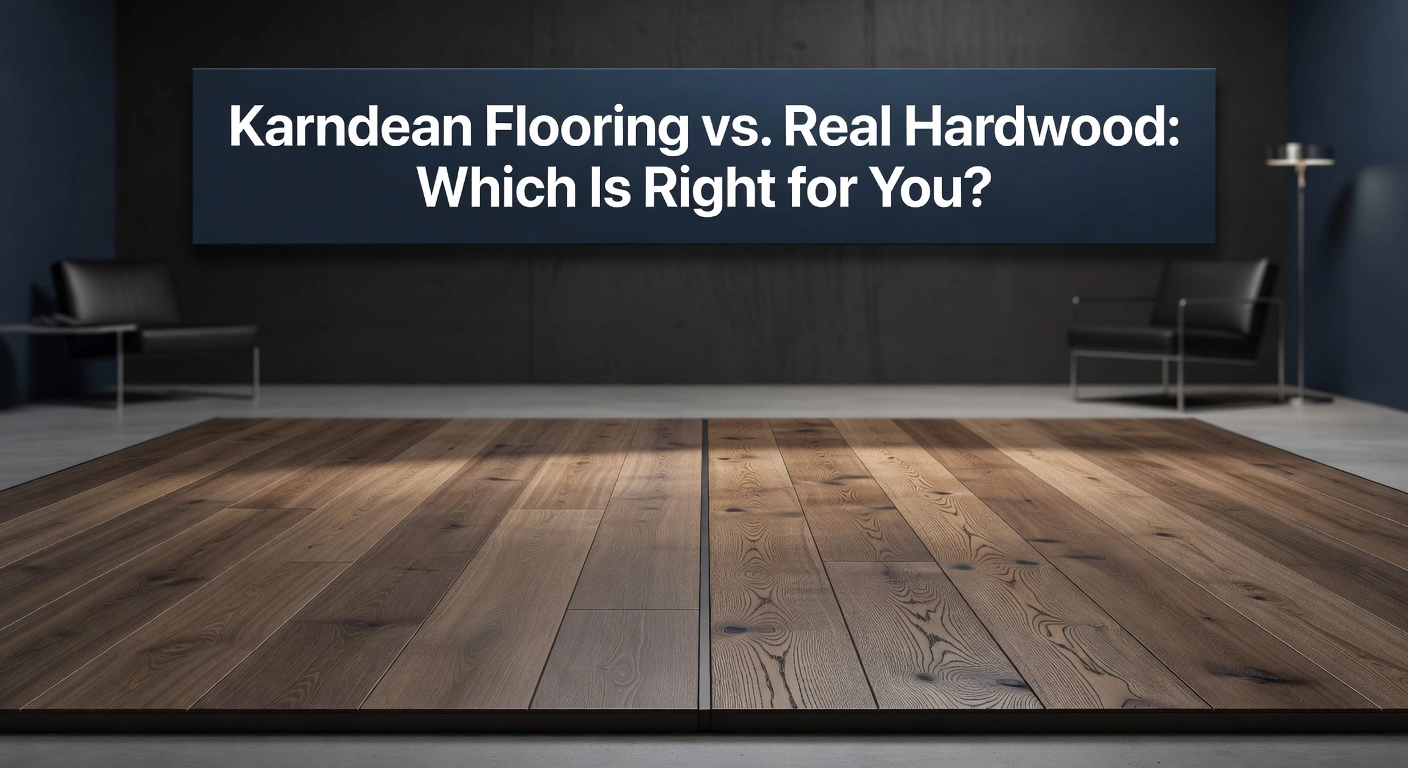
Choosing the right flooring for your home is one of those decisions that looks straightforward on the surface but quickly becomes overwhelming once you start weighing up the options. Two contenders that consistently dominate the conversation are karndean flooring and real hardwood, and for good reason. Both offer stunning aesthetics, long-term durability, and the kind of visual warmth that transforms a space entirely.
But they are not the same product, and the differences between them matter far more than most homeowners initially realise. From installation requirements and maintenance demands to cost, performance under foot traffic, and suitability for different rooms in the home, each option brings a distinct set of strengths and limitations to the table.
In this comparison, we break down exactly what separates karndean flooring from traditional hardwood, cutting through the marketing noise to give you clear, practical guidance. By the end, you will have a solid understanding of which option aligns with your lifestyle, your budget, and the specific demands of your space, so you can make a confident, informed decision.
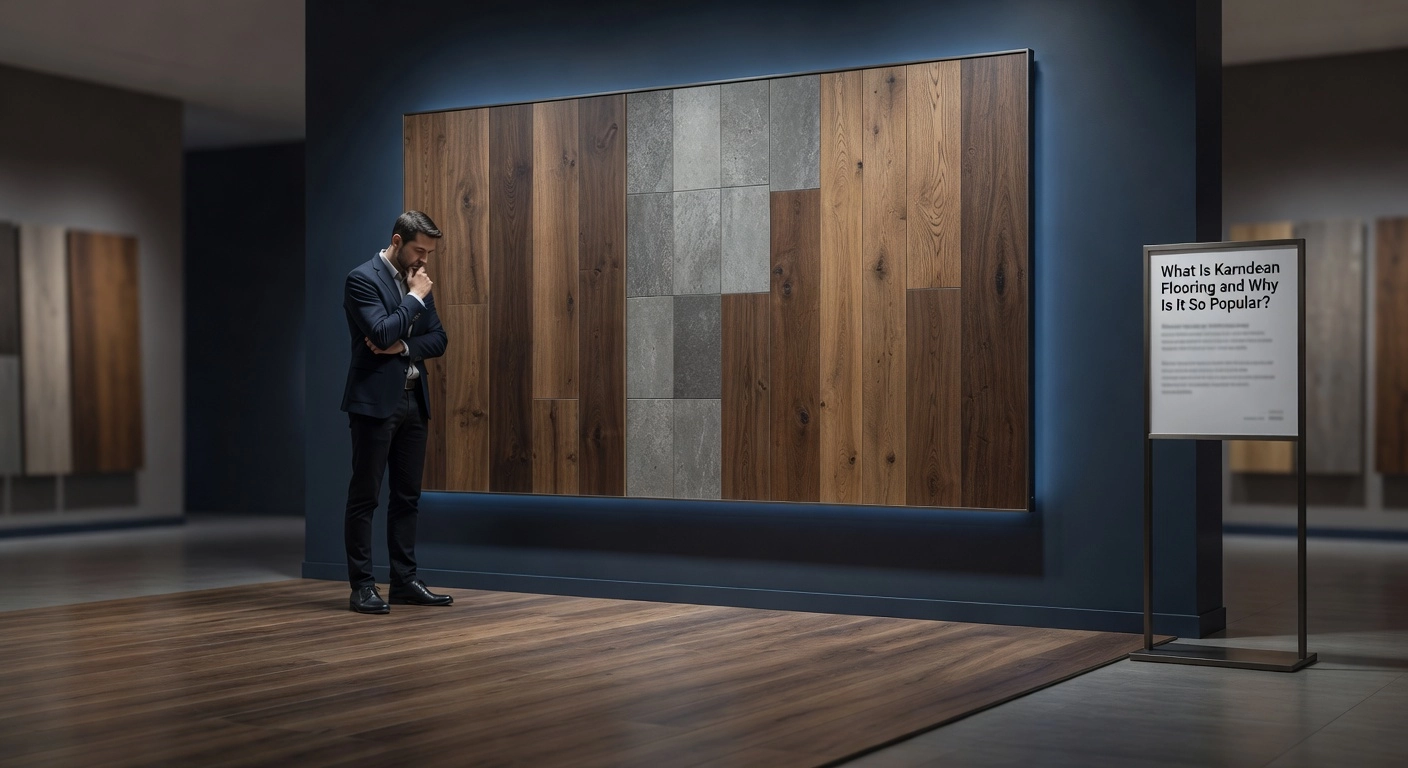
What Is Karndean Flooring and Why Is It So Popular?
Karndean is a premium luxury vinyl tile (LVT) and luxury vinyl plank (LVP) brand purpose-built to replicate the authentic look and feel of natural wood and stone. Its multi-layer PVC construction sets it apart from standard vinyl products, incorporating a high-resolution decorative layer, a stable limestone-composite core, and the brand’s proprietary K-Guard+ polyurethane wear system on top. This protective coating delivers enhanced scratch resistance, hygienic surface properties, and long-term durability without requiring waxing or refinishing. The result is a floor that closely mimics the grain, texture, and visual depth of real hardwood or natural stone while offering far greater resilience in high-moisture environments.
The brand’s commercial strength reflects genuine consumer demand. Worldwide Karndean sales exceeded $400 million in 2023, positioning the company as a significant force within the broader LVT market, which is projected to reach $37.92 billion in 2026. This growth is driven by homeowners and commercial buyers alike seeking waterproof, low-maintenance alternatives to traditional flooring materials. Karndean serves both audiences effectively, with residential and healthcare, hospitality, and education sectors all represented in its customer base.
Product variety is a core competitive advantage. Collections such as Art Select, Van Gogh, Knight Tile, and Opus span a wide range of price points and design aesthetics, from rich oak and walnut planks to travertine and limestone tile visuals. Hundreds of individual designs feature authentic embossing, varied plank widths, and mix-and-match compatibility for custom layouts including herringbone and geometric patterns.
The practical benefits are equally compelling. Karndean flooring is 100% waterproof, allergen-resistant, and rated safe for pets and children, backed by a lifetime residential warranty. Installation flexibility extends across three formats: glue-down for bespoke pattern work, rigid core click-lock floating for straightforward project installs, and loose lay for versatile, lower-disruption applications.
How Karndean Flooring Is Built: Layers, Wear Protection, and Performance
Karndean flooring is engineered through a precise multi-layer construction that delivers consistent performance across residential and commercial environments. At its core, the product stacks a PVC carrier base, a high-definition printed design layer, a transparent embossed wear layer, and a polyurethane K-Guard+ topcoat into a unified structure. This configuration creates a surface that is inherently non-porous, meaning moisture, bacteria, and allergens cannot penetrate the floor the way they can with grout lines, wood grain, or carpet fibers. The result is a hygienic, low-maintenance product suited for kitchens, bathrooms, and high-traffic living areas alike.
Wear Layer Thickness and Durability
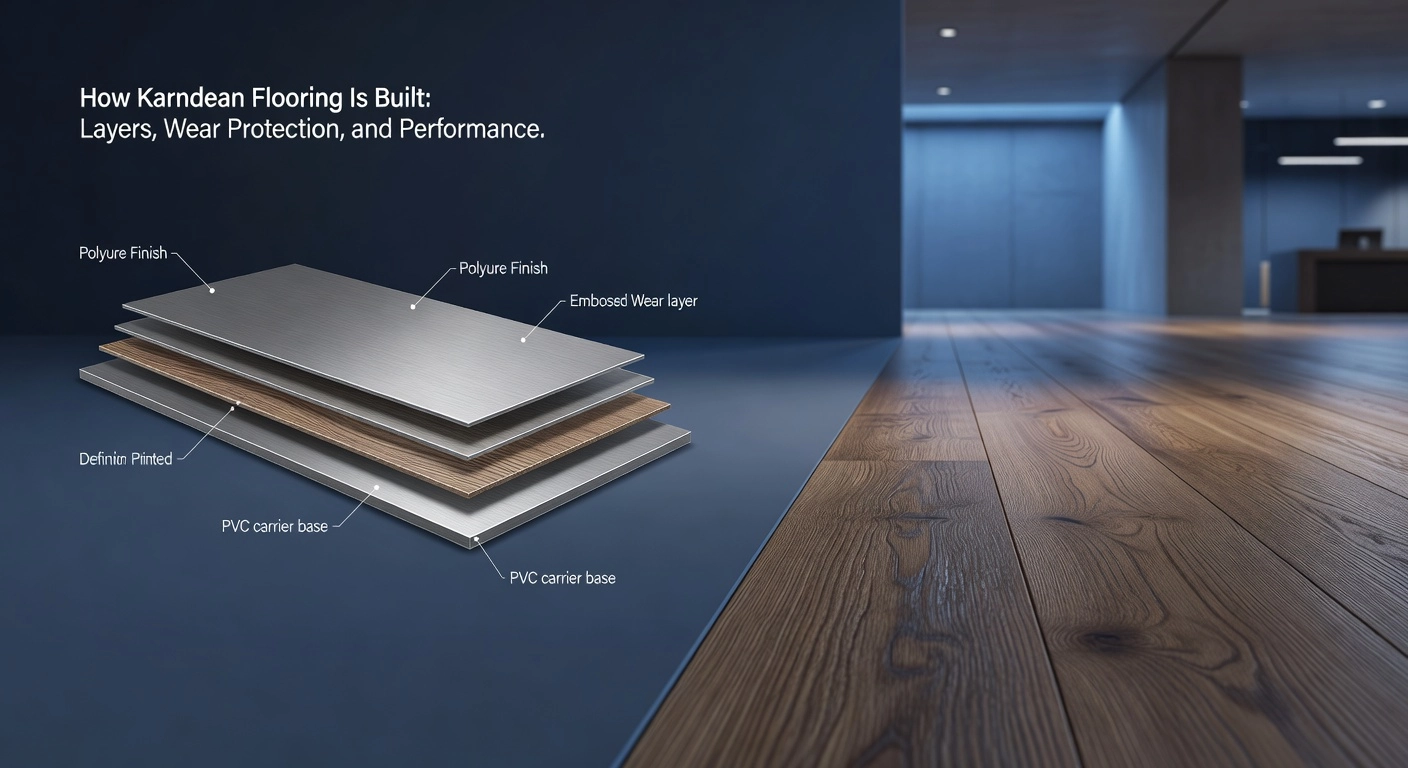
The transparent wear layer is the single most critical performance variable in any Karndean product. According to detailed thickness specifications, Karndean wear layers range from 0.3mm in entry-level residential collections to 0.55mm and beyond in premium lines such as Van Gogh and Art Select. Thicker wear layers directly translate to greater resistance against scratches, scuffs, and indentation under heavy foot traffic or furniture loads. The polyurethane topcoat above the wear layer provides an additional defense, simplifying routine cleaning while extending the functional lifespan of the floor.
Rigid Core Construction and Market Growth
Karndean’s rigid core format, found in collections like Korlok, incorporates a denser stabilizing layer that resists telegraphing from subfloor imperfections and maintains dimensional stability under temperature fluctuations. This engineering advancement supports floating click-lock installation without adhesive, reducing installation time and complexity. The broader LVT category is projected to grow at a 9.9% CAGR through 2036, driven substantially by rigid core format adoption across both residential renovations and commercial builds.
Underfloor Heating Compatibility and a Key Limitation
Karndean flooring is fully compatible with underfloor heating systems, provided that interface temperatures remain at or below 27 degrees Celsius. This compatibility aligns with rising consumer demand for radiant heating as both a comfort upgrade and an energy-efficient solution. However, buyers should weigh one structural limitation carefully. Unlike real hardwood, which can be sanded and refinished multiple times over decades, Karndean’s printed design layer sits permanently beneath the wear layer and cannot be restored through sanding. Once the wear layer is depleted, replacement is the only viable path forward. For homeowners prioritizing long-term restoration potential, this trade-off is a defining factor when comparing karndean flooring against genuine hardwood options.
What Real Hardwood Flooring Offers That LVT Cannot Replicate
Solid and engineered hardwood possess inherent material qualities that no printed vinyl layer can genuinely replicate. Each plank emerges from an actual tree, carrying unique grain patterns, mineral streaks, knots, and tonal shifts that develop organically during growth. This produces structural depth and tactile warmth that shifts subtly from plank to plank, creating a living floor with authentic irregularities. Karndean and other premium LVT products use advanced digital printing and surface embossing to approximate these qualities impressively, yet the surface remains a uniform vinyl layer without genuine wood resonance or organic variation. When you walk barefoot across real white oak or walnut, the sensory experience reflects centuries of natural formation, something no manufacturing process has fully matched. Comparing luxury vinyl flooring vs hardwood consistently reveals this tactile and structural gap between the two categories.
Refinishing Cycles and Long-Term Lifespan
One of hardwood’s most decisive advantages is its ability to be restored rather than replaced. Solid hardwood planks, typically three-quarters of an inch thick, support between five and ten sanding and refinishing cycles across their lifespan, depending on species hardness and how aggressively each cycle removes material. Engineered hardwood supports fewer cycles due to its thinner wear layer, but still allows meaningful restoration. LVT offers no equivalent; surface damage requires plank replacement rather than restoration. Refinishing with products such as Minwax hardwood floor finishes, polyurethane topcoats, or Hardwood Floor Reviver renews luster and rebuilds scratch resistance without touching the subfloor, extending a well-maintained solid floor to 50 to 100 years of useful life. That longevity fundamentally changes the long-term cost equation in favor of real wood.
Resale Value and Species-Specific Character
Authentic hardwood floors deliver measurable financial returns at resale. Data from the National Association of Realtors indicates that refinishing existing hardwood floors recovers approximately 147% of project cost, placing it among the highest-ROI interior improvements available to homeowners. Premium buyers actively distinguish real wood from synthetic alternatives, treating hardwood as a quality signal that LVT does not equally convey. Understanding why real wood wins in value-driven markets comes down to this perception of permanence and authenticity.
Species diversity adds another dimension that printed vinyl cannot reproduce. White oak delivers tight linear grain and understated tones. Red oak presents warm, pronounced cathedral patterns. Walnut brings rich, dark elegance. Maple offers smooth, pale uniformity ideal for contemporary spaces. Hickory produces bold color contrast and exceptional hardness suited for heavy use. Each species responds differently to stains, ages distinctively over time, and carries a different Janka hardness rating that affects long-term scratch visibility. These are genuine material differences rooted in biology, and they give homeowners the ability to select a floor whose character evolves authentically alongside the home itself.
Durability Face-Off: Karndean LVT vs. Hardwood in Real-World Conditions
When it comes to real-world performance, the contest between Karndean LVT and solid hardwood reveals two genuinely different philosophies of durability, and the right answer depends entirely on where and how the floor will be used.
Moisture Resistance: A Clear Structural Divide
Karndean’s 100% waterproof PVC construction gives it an unambiguous advantage in moisture-prone spaces. Bathrooms, laundry rooms, kitchens, and below-grade basements are all viable installation zones for Karndean LVT, because its non-porous core will not swell, warp, cup, or develop mold from prolonged humidity or incidental water exposure. Solid hardwood, by contrast, is hygroscopic by nature, absorbing and releasing moisture from the surrounding environment. Most hardwood flooring manufacturers explicitly advise against installing solid wood below grade or in high-humidity rooms. For homeowners finishing a basement or renovating a full bathroom, Karndean’s waterproof floor benefits make it a structurally safer choice in those specific zones.
Dents, Scratches, and Repairability
In daily wear scenarios involving pets, children, and furniture, Karndean’s K-Guard+ wear layer resists surface scratches and scuffs more consistently than unprotected or lightly finished hardwood. However, this advantage carries an important trade-off. When LVT sustains deep gouges or permanent indentations from heavy furniture, those damaged planks require full replacement; the wear layer cannot be sanded down or refinished. Solid hardwood dents more readily under impact, but a qualified installer can sand, restain, and refinish the surface multiple times across the floor’s lifespan, effectively restoring it to near-original condition. That repairability fundamentally changes the long-term calculus.
Commercial Validation and Residential Implications
Karndean’s commercial lines are installed across healthcare facilities, hotels, and educational institutions, environments that demand consistent performance under heavy daily foot traffic and strict hygiene standards. That real-world commercial track record directly validates its credentials for demanding residential applications such as high-traffic entryways, family rooms, and multi-pet households. As detailed at Karndean’s comparison of LVT vs. solid hardwood, the wear layer technology that performs in a hospital corridor translates meaningfully to a busy household.
Dimensional Stability and Climate Considerations
Solid hardwood expands and contracts seasonally as indoor humidity and temperature shift, requiring careful acclimatization before installation and ongoing climate management to prevent gapping or buckling. Karndean LVT experiences minimal dimensional movement under normal conditions and demands far less environmental preparation. For hardwood installations, applying a quality Minwax floor finish creates a moisture-resistant protective barrier that reduces daily wear, slows the absorption of ambient humidity, and extends the intervals between refinishing cycles. That protective layer is a meaningful investment for homeowners committed to preserving solid wood long-term.
Long-Term Durability: The Refinishing Advantage
Karndean LVT typically delivers 15 to 25 years of service life before wear-layer degradation requires full replacement. Quality solid hardwood, maintained with periodic Minwax treatments and refinished every 10 to 15 years as needed, can realistically last 50 to 100 years or longer in the same space. Over a multi-decade ownership window, a well-maintained hardwood floor may outlast two or three complete LVT replacement cycles, making the higher maintenance investment of wood genuinely cost-competitive over time.
Maintenance Requirements: The Biggest Difference Between LVT and Wood
Karndean’s low-maintenance promise sits at the center of its marketing strategy, and for good reason. The routine is genuinely simple: sweep or vacuum daily to remove grit that could scratch the K-Guard+ wear layer, damp mop with a pH-neutral cleaner such as Karndean Clean diluted in water, and apply Karndean Remove followed by Karndean Refresh every six to twelve months to restore surface protection. No sanding, no screening, no professional recoating, and no downtime. For households managing heavy foot traffic, pets, or young children, that predictable simplicity holds real appeal.
Real hardwood operates on a more demanding schedule. Daily dusting and sweeping remain non-negotiable, since fine grit acts like sandpaper against a polyurethane finish under repeated foot traffic. Occasional deep cleaning with a wood-safe, pH-balanced product removes residue that accumulates and dulls the surface over time. Beyond routine care, hardwood requires periodic recoating or full refinishing, typically every seven to ten years depending on traffic volume, finish type, and the consistency of daily upkeep. Water-based finishes tend to show wear sooner than oil-modified alternatives, while high-traffic entryways and kitchens accelerate that timeline regardless of finish chemistry.
The maintenance gap between the two materials narrows considerably when hardwood owners commit to a disciplined care routine. Applying Minwax Hardwood Floor Cleaner regularly lifts surface buildup before it can degrade the finish layer, extending the interval between professional interventions. Pairing that with Minwax refresher products restores sheen and adds a thin protective layer that compensates for everyday micro-abrasion. Entrance mats, felt furniture pads, and prompt spill response compound the benefit. Hardwood that receives this level of attention consistently outperforms neglected floors of any material type, reducing the frequency and cost of recoating cycles significantly.
On spill resistance, Karndean’s non-porous construction gives LVT a genuine edge over unprotected or lightly finished hardwood. Liquids bead on the surface rather than penetrating, making it particularly reliable in kitchens, bathrooms, and laundry areas. However, hardwood sealed with a quality polyurethane or oil-modified finish achieves comparable everyday spill resistance in most living spaces. The critical difference is response time; polyurethane-sealed hardwood handles a spilled glass of water wiped within minutes without lasting damage, but prolonged exposure from pet accidents or standing water creates risks that LVT simply does not share.
The most important reframe in this comparison involves how refinishing is understood. Periodic sanding and recoating with Minwax products is not a burden unique to hardwood owners; it is a renewal capability that LVT cannot offer at any price point. When a Karndean floor’s wear layer reaches the end of its useful life after fifteen to twenty-five years, the floor is replaced entirely. A hardwood floor reaching the same point gets sanded back to raw wood, restores its original depth and grain, accepts a new stain color if the owner wants an updated look, and re-emerges with a surface indistinguishable from new installation. That cycle can repeat multiple times across a single floor’s lifespan, making refinishing less of a cost and more of a long-term investment in both performance and aesthetics.
Total Cost Comparison: Purchase, Installation, and Lifetime Value
Karndean material costs typically fall between $2 and $4 per square foot before installation, positioning it firmly within the premium LVT tier. That price point is notably higher than mass-market vinyl but still undercuts most solid hardwood options on upfront material expense. Professional installation adds another $2 to $5 per square foot, depending on whether you select glue-down, rigid core, or loose-lay format, and whether subfloor leveling is required. A 500-square-foot living room installation using a glue-down Karndean product could realistically carry a total installed cost between $2,000 and $4,500 before factoring in any subfloor preparation work.
Real hardwood flooring spans a much wider material range, from $3 to $12 per square foot depending on species, grade, width, and whether you select solid or engineered construction. Oak at standard grades sits toward the lower end; wide-plank walnut or exotic species push toward the ceiling. Installation for engineered hardwood in glue-down format competes closely with premium LVT installation pricing, though solid hardwood typically demands additional subfloor attention and specialized labor, pushing total installed costs into the $6 to $25 per square foot range in many markets.
The long-term picture changes the comparison substantially. Over a 30-year period, hardwood floors can be sanded and refinished multiple times, with each refinishing cycle costing approximately $1 to $3 per square foot (or higher depending on regional labor rates and condition of the floor). Even accounting for three to four refinishing cycles over three decades, the cumulative cost remains manageable compared to the alternative. Routine maintenance using quality Minwax floor finish products between professional refinishing cycles extends the life of the wear surface and delays the need for full sanding, compressing long-term costs further.
Karndean, by contrast, cannot be sanded, refinished, or restored once the wear layer reaches end-of-life. The entire floor must be removed and replaced, resetting the full material and installation cost regardless of how well the floor was maintained. For investment property owners or homeowners planning to sell within 10 to 20 years, this distinction carries real financial weight. Real hardwood floors consistently command a resale premium that frequently exceeds the cumulative cost of Minwax-based maintenance programs, making authentic wood the stronger long-term value proposition in primary living areas where buyer perception directly influences sale price.
Aesthetics and 2026 Design Trends: How Both Floors Stack Up
Both karndean flooring and real hardwood align strongly with 2026’s dominant design direction, which centers on nature-inspired warmth, organic textures, and restorative interiors. Karndean’s 2026 collections reflect this shift directly, featuring warm neutrals, earthy mid-tones, and enhanced wood grain effects inspired by white oak, walnut, and elm, alongside stone visuals including travertine and limestone. Collections like Van Gogh and LooseLay introduce Hawaiian koa-inspired woods and Andean Travertine effects, reinforcing consumer appetite for grounding, biophilic spaces that counterbalance the pace of modern life. The palette has shifted decisively away from the cooler grays that dominated previous years, landing firmly in warmer brown undertones and organic tonal ranges.
Authenticity vs. Replication
Real hardwood species like white oak and walnut deliver the exact aesthetic Karndean works to simulate, without any visual approximation. The warm grain tones, natural depth, and subtle mineral streaking found in white oak planks represent precisely the look 2026 interiors are built around. Hardwood gains a lived-in patina over time, developing character that printed vinyl layers are designed to mimic but cannot genuinely evolve. For homeowners prioritizing authentic material presence rather than a high-quality reproduction, species selection alone positions real hardwood squarely at the center of current design trends.
Pattern Flexibility and Custom Layouts
Karndean holds a genuine advantage in bespoke laying patterns. Its glue-down installation method supports herringbone, chevron, geometric, and mixed-width configurations with a level of modular flexibility that makes intricate custom layouts highly achievable. This supports the 2026 emphasis on personality-driven, eclectic interiors where patterned floors serve as architectural focal points rather than background elements.
Staining Adaptability After Installation
Where real hardwood separates itself decisively is post-installation adaptability. Karndean’s design is fixed at the point of purchase; the color and grain effect chosen on day one remain permanent. Real hardwood can be refinished and restained at any future point using Minwax wood stain products, allowing homeowners to shift from warm golden oak tones to deep espresso walnut finishes or cooled gray-washed effects as trends evolve. Minwax’s 2026 Color of the Year, Special Walnut, aligns directly with the warm, grounding tones trending across interiors this year.
Limed and whitened wood effects, popular for coastal, Scandinavian, and light-filled 2026 spaces, are fully achievable on real hardwood using Minwax Whitewash Pickling Stain and white-tinted finishes. These applications preserve authentic grain texture and allow the wood to continue aging naturally beneath the finish, a quality LVT can approximate visually but cannot replicate in tactile depth or material evolution.
Sustainability and Environmental Considerations for Both Floor Types
Karndean flooring, like all LVT products, is built on a PVC foundation derived from petroleum-based synthetic materials. While Karndean has made meaningful strides in sustainability, incorporating up to 50% post-industrial recycled PVC content in backing layers and diverting all manufacturing waste from landfill, the end-of-life picture remains a genuine limitation. Post-consumer vinyl flooring recycling infrastructure is still underdeveloped, meaning that when Karndean reaches the end of its service life, most installations will ultimately end up in landfill. No amount of recycled content during production fully resolves the challenge of what happens to a PVC product decades later.
FSC-certified hardwood presents a fundamentally different environmental story. Harvested from responsibly managed forests that maintain biodiversity and ecosystem health, real wood is a renewable, carbon-sequestering resource. A properly maintained hardwood floor routinely lasts 50 to 100 years through periodic refinishing, treatments like those offered by Minwax, and attentive care. Independent lifecycle assessments estimate solid hardwood carries a global warming potential of approximately 9 to 12 kg CO2 equivalent per square meter, compared to more than 60 kg CO2 equivalent for rigid-core LVT formats. Fewer replacement cycles mean fewer manufacturing runs, less transportation impact, and less material entering the waste stream over a building’s lifetime.
On one practical point, both flooring types perform equally well. Karndean LVT and hardwood are both compatible with underfloor heating systems, an increasingly important consideration as homeowners pursue energy-efficient radiant comfort. Karndean installations require adherence to maximum interface temperature guidelines, while engineered and solid hardwood floors work effectively with careful moisture and temperature management.
Karndean does hold a genuine indoor air quality advantage worth acknowledging. Its sealed, non-porous surface actively resists mold, mildew, allergens, and bacterial growth, and its FloorScore certification confirms low post-installation VOC emissions. For households managing allergies or high-traffic hygiene demands, this is a meaningful benefit that hardwood, with its more porous surface structure, cannot match as effortlessly.
Weighing all factors together, the sustainability advantage belongs to well-maintained real hardwood. A single hardwood floor, properly refinished over generations, eliminates the environmental cost of multiple LVT replacement cycles while avoiding PVC content entirely and retaining biodegradable end-of-life options.
When Karndean Flooring Is the Right Choice for Your Home
Below-grade spaces represent the clearest and most defensible case for choosing Karndean over real hardwood. Basements and concrete slab installations are structurally incompatible with solid wood flooring because ground-level moisture intrusion creates persistent humidity fluctuations that cause warping, cupping, and mold growth. Karndean’s fully waterproof, non-porous construction handles this environment without compromise, and its glue-down format bonds directly to properly prepared concrete without requiring a moisture barrier in most applications. For homeowners finishing a basement or building on a slab foundation, this is not simply a preference decision but a practical necessity.
High-moisture rooms follow the same logic. Bathrooms, laundry rooms, and mudrooms expose flooring to standing water, steam, and tracked-in moisture on a daily basis. Solid hardwood is genuinely unsuitable in these spaces without extensive and ongoing sealing efforts that still carry long-term risk. Karndean’s 100% waterproof surface handles spills and humidity without deterioration while maintaining the wood or stone aesthetic these rooms benefit from visually.
Rental properties and commercial environments gain something different from Karndean: operational efficiency. Zero refinishing requirements mean no scheduling downtime, no tenant displacement, and no recurring service costs. Commercial-grade wear layers and individual plank replaceability in glue-down formats keep maintenance budgets predictable over years of heavy use.
Households with pets, young children, or consistently heavy foot traffic represent another strong fit. The K-Guard+ surface coating resists scratches and scuffs, the nonporous surface resists allergen buildup, and routine care requires nothing beyond sweeping and occasional damp mopping. Families unwilling or unable to commit to periodic hardwood refinishing cycles gain meaningful lifestyle simplicity.
Finally, budget-conscious homeowners planning full-home installations can use Karndean strategically rather than universally. Placing it in high-risk or high-wear zones, including basements, bathrooms, entryways, and playrooms, preserves project budget for authentic hardwood in principal living and dining spaces where resale perception and material investment carry the most weight.
When Real Hardwood Is the Smarter Long-Term Investment
Main living areas present the strongest case for choosing real hardwood over any LVT product, including premium options like Karndean. Living rooms, dining rooms, and primary bedrooms are the spaces where buyers form immediate impressions, where natural grain and authentic patina register viscerally, and where long-term resale value is built or lost. Real estate appraisers consistently treat genuine hardwood as a premium material designation, with ROI figures commonly cited between 70 and 80 percent in mid-to-upper markets. Karndean delivers convincing realism, but under close inspection and in appraisal reports, the distinction between printed vinyl and actual wood remains financially meaningful.
Investment Properties and Resale Strategy
Homes being prepared for sale benefit disproportionately from genuine hardwood, particularly in markets above the $400,000 price point. Buyers in those segments and the agents guiding them recognize authentic wood on sight, and appraisers document it differently than LVT regardless of visual similarity. Karndean’s realism is impressive within its category, but it does not command the same language in listing descriptions or appraisal line items that real hardwood reliably generates.
Refinishing Flexibility as a Long-Term Asset
Homeowners who anticipate evolving their interior aesthetic over a decade or more gain something tangible with real hardwood that Karndean permanently forfeits at installation: the ability to change. Solid hardwood can be sanded and refinished three to ten or more times depending on thickness, allowing complete color changes, updated stain tones, or full restoration using a Minwax® treatment routine. Karndean’s design is locked in at purchase; style changes require full replacement.
Heritage Homes and Architectural Authenticity
Period and heritage properties demand material consistency that no printed layer can substitute. Matching original species, milling profiles, and finish character preserves architectural integrity in ways that extend beyond aesthetics to historical accuracy and long-term property distinction.
The Minwax Maintenance Advantage
Homeowners committed to a consistent Minwax® care routine transform hardwood into a genuinely multi-generational investment. Periodic cleaning, protective finishing, and scheduled refinishing cycles extend floor life reliably past 50 years, and often well beyond that. When refinishing costs of approximately $3 to $8 per square foot are weighed against the full replacement expense Karndean requires at end of life, real hardwood’s total cost of ownership becomes equivalent or lower for owners with a long-term horizon.
Making the Right Flooring Decision for Your Home and Budget
Both floors have earned their place in the market, and the smartest decision comes from matching material strengths to specific room conditions rather than declaring a universal winner.
Karndean is a genuinely high-performing LVT product with real, measurable advantages in waterproofing, design versatility, and daily maintenance simplicity. For moisture-prone spaces, high-traffic commercial environments, or households where a no-fuss cleaning routine is a priority, it delivers consistent results backed by a lifetime residential warranty.
Real hardwood, however, remains the superior long-term investment in primary living spaces. Its refinishing potential, proven resale value of 70 to 80 percent ROI compared to roughly 50 to 60 percent for luxury vinyl, authentic grain character, and century-long lifespan when properly maintained give it an edge that no vinyl product can replicate over time.
The concern most often cited in favor of LVT, which is maintenance complexity, is directly addressed by Minwax hardwood care products. A consistent routine using Minwax Hardwood Floor Cleaner for regular upkeep, Hardwood Floor Reviver for restoring worn finish without sanding, and polyurethane finishes for full renewal transforms hardwood into a permanently renewable asset. That routine closes the maintenance gap and gives hardwood owners a clear, manageable care path at every stage.
Let room function, moisture exposure, budget timeline, and length of ownership guide the decision. Where hardwood is the right fit, a disciplined Minwax maintenance program ensures it outperforms any vinyl alternative across the full life of the home.
Conclusion
Both karndean flooring and real hardwood have genuine strengths, and neither is the universally superior choice. The right decision comes down to your lifestyle, budget, and the specific demands of each room. Karndean delivers outstanding practicality, moisture resistance, and long-term value with minimal upkeep. Real hardwood offers timeless authenticity and the ability to be sanded and refinished over decades.
If you prioritise durability and versatility across the whole home, karndean is hard to beat. If heritage craftsmanship and natural character matter most to you, hardwood remains a compelling investment.
Now that you understand the key differences, take the next step. Visit a local showroom, request samples, and walk on both surfaces before committing. The floor you choose will shape how your home looks and feels for years to come, so choose with confidence.
Frequently Asked Questions
Can Karndean flooring be installed in bathrooms and basements where real hardwood cannot?
Yes, Karndean flooring is 100% waterproof and non-porous, making it fully suitable for bathrooms, laundry rooms, mudrooms, and below-grade basement installations. Its PVC construction resists swelling, warping, cupping, and mold growth even under prolonged moisture exposure. Real hardwood, by contrast, is hygroscopic and absorbs ambient moisture, making it genuinely unsuitable for high-humidity rooms or concrete slab installations without significant risk of long-term damage.
How does the long-term cost of Karndean flooring compare to real hardwood over 30 years?
While Karndean typically costs $2 to $4 per square foot for materials versus $3 to $12 for hardwood, the long-term cost picture shifts considerably. Karndean cannot be refinished and must be fully replaced once its wear layer degrades after 15 to 25 years, resetting the full material and installation cost. Real hardwood can be sanded and refinished three to ten or more times, with each refinishing cycle costing approximately $1 to $3 per square foot. Over a 30-year ownership window, a well-maintained hardwood floor may outlast two or three complete Karndean replacement cycles, making it cost-competitive or cheaper for long-term homeowners.
Does real hardwood add more resale value to a home than Karndean LVT?
Yes, real hardwood consistently outperforms luxury vinyl at resale. According to the National Association of Realtors, refinishing existing hardwood floors recovers approximately 147% of project cost, and hardwood installations typically deliver 70 to 80% ROI compared to roughly 50 to 60% for luxury vinyl products like Karndean. Real estate appraisers document genuine hardwood differently than LVT in appraisal reports, and premium buyers in markets above $400,000 actively distinguish authentic wood from printed vinyl alternatives, treating hardwood as a quality signal that LVT does not equally convey.
What is the main maintenance difference between Karndean flooring and real hardwood?
Karndean requires only daily sweeping or vacuuming, occasional damp mopping with a pH-neutral cleaner, and a surface refresh treatment every six to twelve months. No sanding, professional recoating, or downtime is ever needed. Real hardwood demands the same daily care but additionally requires periodic deep cleaning, protective finish reapplication every few years, and full sanding and refinishing every seven to ten years depending on traffic and finish type. However, this refinishing capability is also hardwood's greatest advantage, as it allows the floor to be fully restored rather than replaced, something Karndean cannot offer at any price point.
Which flooring is the more sustainable and environmentally friendly option?
FSC-certified real hardwood holds the stronger overall sustainability profile. It is a renewable, carbon-sequestering resource with an estimated global warming potential of approximately 9 to 12 kg CO2 equivalent per square meter, compared to over 60 kg CO2 equivalent for rigid-core LVT formats. A properly maintained hardwood floor lasting 50 to 100 years eliminates multiple replacement cycles and the associated manufacturing and transportation impact. Karndean incorporates up to 50% post-industrial recycled PVC content and diverts manufacturing waste from landfill, but its petroleum-based PVC construction and underdeveloped post-consumer recycling infrastructure mean most installations will ultimately end up in landfill at end of life.