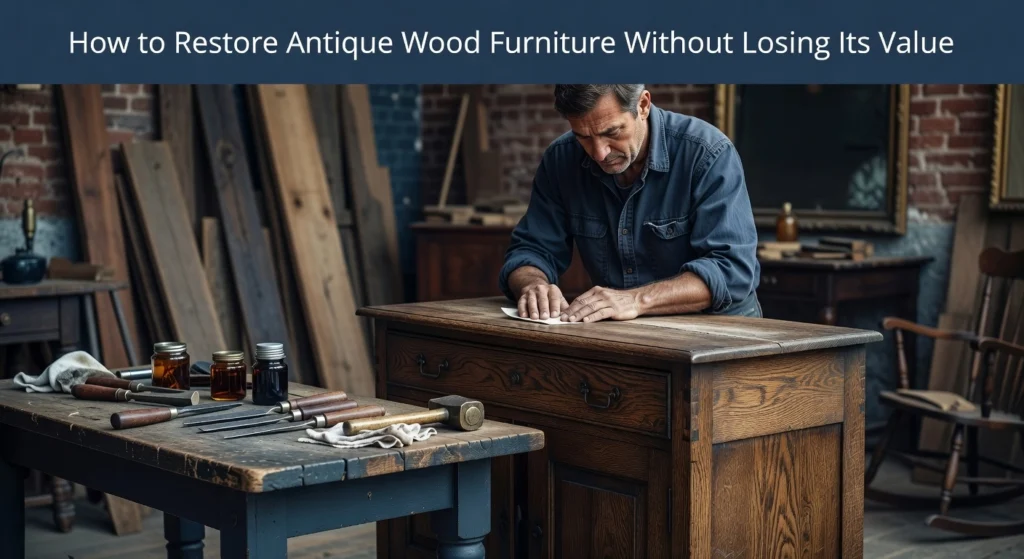

That weathered Victorian dresser sitting in your garage or the scratched-up oak dining table passed down through generations deserves better than a rushed paint job or an aggressive sanding session.
Done wrong, restoration can strip away the very qualities that make antique furniture valuable. Done right, it breathes new life into a piece while preserving its authenticity and worth.
Restoring antique wood furniture is equal parts science and craftsmanship, requiring a careful understanding of wood types, finishes, and historical context before you ever pick up a tool.
This tutorial is designed for those who already have a foundational knowledge of woodworking and want to move beyond basic repairs into truly skilled restoration work.
Why Restoring Antique Furniture Is Worth the Effort
Before you reach for the phone to call a professional restorer, consider this: the average cost of professional antique furniture restoration runs between $1,200 and $3,500 per piece, with complex items like dining sets or ornate dressers pushing even higher.
A skilled DIY approach, by contrast, typically requires only a few hundred dollars in materials, including sandpaper, finish products, wood glue, and basic hand tools.
The aesthetic and functional results are often indistinguishable, making hands-on restoration one of the most cost-effective projects a homeowner can undertake.
The market data reinforces why so many people are making this choice right now. The antique restoration segment is expanding at roughly 5.8% annually, a pace that outstrips the broader furniture repair industry.
Much of that momentum comes from millennials who have inherited heirlooms and want to honor the history embedded in those pieces rather than discard them. This generation is drawn to furniture with genuine provenance and character, viewing restoration as both a meaningful act and a practical alternative to purchasing expensive new pieces.
There is also a compelling environmental argument for picking up the sandpaper instead of shopping for replacements. Restoring a solid-wood antique keeps usable material out of the landfill and eliminates the carbon cost associated with manufacturing, transporting, and packaging new furniture.
Old-growth wood found in antique pieces is denser, more stable, and tighter-grained than the plantation-grown lumber used in most modern production furniture. That superior material quality is simply not available at any price point in today’s market, which makes preservation the logical choice from both an ecological and a practical standpoint.
The financial upside extends well beyond personal savings. The second-hand furniture market is projected to grow from approximately $41 billion in 2025 to $84 billion by 2035, driven by sustainability values, affordability, and growing appetite for vintage aesthetics. A well-restored antique piece holds its value as a family heirloom and appreciates within that expanding resale market. In short, the time you invest in restoring antique wood furniture pays dividends in cost savings, environmental impact, material quality, and long-term financial value.
Assess the Piece Before You Touch Anything
Before you pick up a brush, open a can of stripper, or apply a single drop of cleaner, take a deliberate step back and conduct a thorough assessment of the piece. Rushing into surface work is one of the most common mistakes intermediate restorers make, and it can cause irreversible damage, from deepening existing cracks to stripping away original patina that took decades to develop.
Start with Structural Integrity
Work through the piece systematically before addressing anything cosmetic. Gently test every joint, including mortise-and-tenon connections, dovetail corners, and leg-to-rail junctions, by applying light pressure in multiple directions. Check drawer slides for smooth operation and binding, inspect hinges and hardware for looseness or missing fasteners, and look for cracks, warping, or fractures in the wood itself. Antique furniture was typically built with hide glue, which is designed to release over time and be reglued periodically, so some looseness in older joints is expected rather than alarming. Structural issues must be stabilized before any surface work begins; sanding or finishing a piece with a compromised joint will only compound the problem.
Identify the Wood Species
Knowing whether you are working with open-grained oak, dense mahogany, figured walnut, or soft pine directly determines which products are safe and effective. Porous woods absorb stains and fillers differently than tight-grained hardwoods, and using an incompatible filler or finish can result in adhesion failure or discoloration. Examine the end grain, weight, color, and raw wood in hidden areas like drawer interiors or the underside of the top. For more details on choosing the right treatment for each wood type, see our guide on how different woods absorb oils and finishes.
Look for Evidence of Previous Work
Inspect the entire piece for mismatched stain tones, patches of different grain texture, non-original hardware, or areas where paint was applied over an existing finish. These signs of prior restoration attempts tell you what challenges lie ahead. A previous poor repair may need to be corrected before you can proceed, and overpainting on a potentially valuable antique could be concealing original finish or hand-applied details worth preserving. Identifying prior interventions is essential to determining the right level of intervention for your project.
Document Everything Before You Begin
Photograph the piece from every angle using consistent, well-lit conditions. Capture close-ups of joints, hardware, damage areas, maker’s marks, and interior surfaces. Date-stamp your images and store them with written notes. This documentation serves multiple purposes: it tracks your progress objectively, informs decisions about minimal versus invasive treatment, and creates a record for anyone who works on the piece in the future.
Catalog Surface Conditions Separately
Finally, assess the surface independently from structural concerns and list each issue you observe. Note water rings, surface scratches, deep gouges, burn marks, cloudy or crazed finish, sticky patches, and any areas of flaking or peeling. Separating structural damage from surface damage helps you sequence the work correctly: always address structural repairs first, then move to surface cleaning, filling, and finishing in deliberate order.
Test for Lead Paint and Set Up Your Safety Protocol
Before any sanding, scraping, or chemical stripping begins on a piece manufactured before 1978, you must test for lead paint. Lead-based paint was banned for consumer use in the United States in 1978, but it remains present in countless antique and vintage furniture pieces. Testing is the only reliable method. DIY lead test swab kits are widely available at hardware stores and online. If lead is confirmed and the project is extensive, consult EPA guidelines on lead-safe practices or a certified professional before proceeding.
Once testing is complete, establish your full safety protocol. Use an N95 or P100 respirator at minimum, and consider upgrading to a respirator fitted with organic vapor cartridges when working with solvent-based strippers. Work outdoors whenever possible, and if you must work inside, open windows and doors on opposite sides of the room to create cross-ventilation. For skin protection, choose chemical-resistant gloves made from nitrile, neoprene, or butyl rubber.
Finally, treat your used rags with serious caution. Rags soaked in oil-based stains, finishes, or strippers can spontaneously combust if bunched together. After use, submerge them in water immediately and dispose of them according to your local hazardous waste regulations.
Identify the Existing Finish Before Applying Anything
Once your safety checks are complete, resist the urge to apply any product until you know exactly what finish you are working with. Shellac, lacquer, polyurethane, oil, and wax each behave in fundamentally different ways, and they are chemically incompatible with certain treatments. Identifying the finish first takes only a few minutes and protects weeks of work from going sideways.
Run Solvent Tests in a Hidden Area
The most reliable identification method involves simple solvent tests performed on inconspicuous spots. Start with denatured alcohol. If the finish becomes tacky or dissolves, you are dealing with shellac. According to WOOD Magazine’s finish identification guide, this test is the standard diagnostic tool used by professional restorers.
If denatured alcohol produces no reaction, apply lacquer thinner. Lacquer will soften and flow under lacquer thinner. If neither solvent affects the surface, you are most likely looking at polyurethane, varnish, or an oil finish.
Why Pre-1950 Finishes Demand Extra Care
Many antiques produced before 1950 carry shellac or lacquer finishes, and both are significantly more sensitive to heat, moisture, and chemical exposure than modern polyurethane coatings. This sensitivity has practical consequences. A water ring or a single careless application of an alcohol-based cleaner can permanently damage a shellac finish. The good news is that shellac and lacquer can often be repaired using a technique called amalgamation, where the correct solvent is applied to reflow and smooth the existing finish without full stripping.
The Real Cost of Getting It Wrong
Applying the wrong product over an incompatible existing finish creates problems that are genuinely difficult to reverse. Layering polyurethane over shellac or applying an oil-based product over a sealed film finish often results in peeling, bubbling, or a persistent cloudiness that strips out the clarity of the surface. These failures typically require full chemical stripping to correct. Always match your treatment to the finish you have confirmed, not the one you assume is there.
Choose Your Intervention Level: Preservation vs. Full Refinishing
Now that you know what finish you are working with, the next critical decision is how aggressively to intervene. This choice carries real consequences, and getting it wrong in either direction wastes time, money, and potentially destroys irreplaceable value.
When Preservation Is the Right Call
True antiques, generally defined as pieces over 100 years old, often carry a significant portion of their monetary and historical worth in the surface itself. The original patina cannot be authentically reproduced once it is gone. The preservation approach follows a disciplined sequence: clean thoroughly using diluted Murphy’s Oil Soap, make targeted structural repairs, apply a restorer product to revive color and depth, and finish with a protective paste wax. None of these steps involve stripping or broad sanding.
The Role of Restor-A-Finish as a First-Line Tool
Before concluding that a piece needs full refinishing, reach for a product like Howard’s Restor-A-Finish. This penetrating formula works by wipe-on application, blending out minor scratches, water rings, sun fade, oxidation, and cloudiness without removing anything from the existing finish. Its effectiveness on dull or hazy shellac and lacquer surfaces makes it ideal for antique work.
Matching Intervention to the Piece’s Identity
Ask yourself: what is this piece, exactly? A genuine antique with collectible value demands preservation. A family heirloom with sentimental value benefits from the same light-touch approach. A thrifted mid-century piece with no significant antique premium gives you far more freedom for full refinishing. Full refinishing is appropriate when a piece is heavily damaged beyond surface revival or when a previous owner already stripped the original finish.
How to Properly Clean Antique Wood Furniture
With your intervention level decided and your finish identified, cleaning comes before any other hands-on work. A thorough, careful clean reveals the true condition of the wood beneath accumulated grime.
Start with the Gentlest Approach
Always begin with the mildest possible method. Dampen a soft cotton or microfiber cloth with warm water and add a small amount of mild dish soap, then wring the cloth thoroughly. Wipe along the grain in smooth, controlled strokes. Follow immediately with a second cloth dampened with plain water to lift soap residue, then dry each section completely.
Handling Grease and Wax Buildup
When soap and water fail to shift stubborn buildup, a solution of equal parts white vinegar and water adds mild acidity that cuts through grease and old wax residues. Apply it sparingly with a wrung-out cloth, working with the grain. Always test this solution on a hidden area first.
When to Reach for a Dedicated Cleaner
If you are uncertain about the finish type, a furniture cleaner specifically formulated for antiques is the safer route. Avoid Murphy Oil Soap entirely on shellac or wax finishes, as its formulation can cause softening or cloudiness. Mineral spirits applied with a soft cloth is a gentler alternative when the finish is unknown or delicate. For cleaning kitchen wood surfaces before staining, check our 2-ingredient degreaser solution for greasy cabinets.
Repairing Scratches, Water Rings, Dents, and Loose Joints
With the piece cleaned and your intervention level established, you can now address the specific damage that remains.
Loose Joints
Wobbly chairs and table legs are among the most common structural problems. Remove every trace of the old glue using warm water for hide glue, then apply fresh wood glue and clamp firmly for 24-48 hours. For more on clamping and joining techniques, see our wood finishing prep guide.
Surface Scratches
Light scratches rarely need sanding. Stain markers and wax fill sticks matched to the surrounding finish are the fastest options. For a natural alternative, rub a fresh walnut along the scratch to darken the raw wood.
Water Rings and White Haze
The cloudy white rings left by wet glasses form within the finish layer. On shellac or wax finishes, use 0000-grade steel wool lightly dampened with paste wax. Work in straight strokes following the grain direction. For deeper water damage on tabletops, our 7 proven methods to remove water stains from wood will save you from full stripping.
Dents in Solid Wood
Shallow dents can be raised using steam. Fold a damp cloth over the dent and press a warm iron briefly onto the cloth. The steam drives moisture into compressed fibers and causes them to expand.
Burns and Deep Gouges
Burns and deep gouges require wood filler matched to the finish color. Press filler firmly into the void, sand flush when dry, and apply a topcoat matched to the surrounding finish.
Restoring the Finish Without Stripping: The Preservation Method
If the original finish remains largely intact but has grown dull, reviving it without stripping is the preservation-friendly choice.
Applying a Finish Restorer
Start with a penetrating finish restorer such as Howard’s Restor-A-Finish in the shade that matches your wood tone. Apply using 0000 steel wool or a soft cloth, working strictly in the direction of the grain. This allows the restorer to penetrate the existing finish and blend minor damage.
Sealing with Wax
Once the restorer has dried, follow with Howard Feed-N-Wax or a quality paste wax. Apply a thin coat and allow it to haze over for 20-30 minutes. This wax layer seals the restored finish and conditions the wood fibers underneath.
Buffing to a Finished Sheen
After the wax has hazed over completely, buff the entire surface using a clean, dry cloth, moving in straight strokes that follow the grain. Circular motions introduce micro-swirls that are visible on older finishes.
When Full Stripping and Refinishing Is the Right Call
If the existing finish is peeling, alligatoring, or severely compromised by water damage, stripping becomes necessary. On antique furniture with carved details, use a chemical stripper rather than sandpaper to preserve the profiles. Reserve sanding only for flat surfaces and final prep work.
Progressive Sanding for a Smooth Base
Begin with 80 grit to clear remaining finish, then work through 120, 150, and finish with 180-220 grit. Always sand with the grain. Stopping around 180-220 grit prevents closing the wood pores, which interferes with stain penetration.
Conditioning and Topcoat Selection
Before staining porous species like pine or oak, apply a pre-stain wood conditioner to prevent blotching. For high-use surfaces like tabletops, polyacrylic resists scratches and water. For traditional pieces, paste wax delivers a soft hand-rubbed sheen. For a natural look, Danish oil or tung oil enhances grain without building a film.
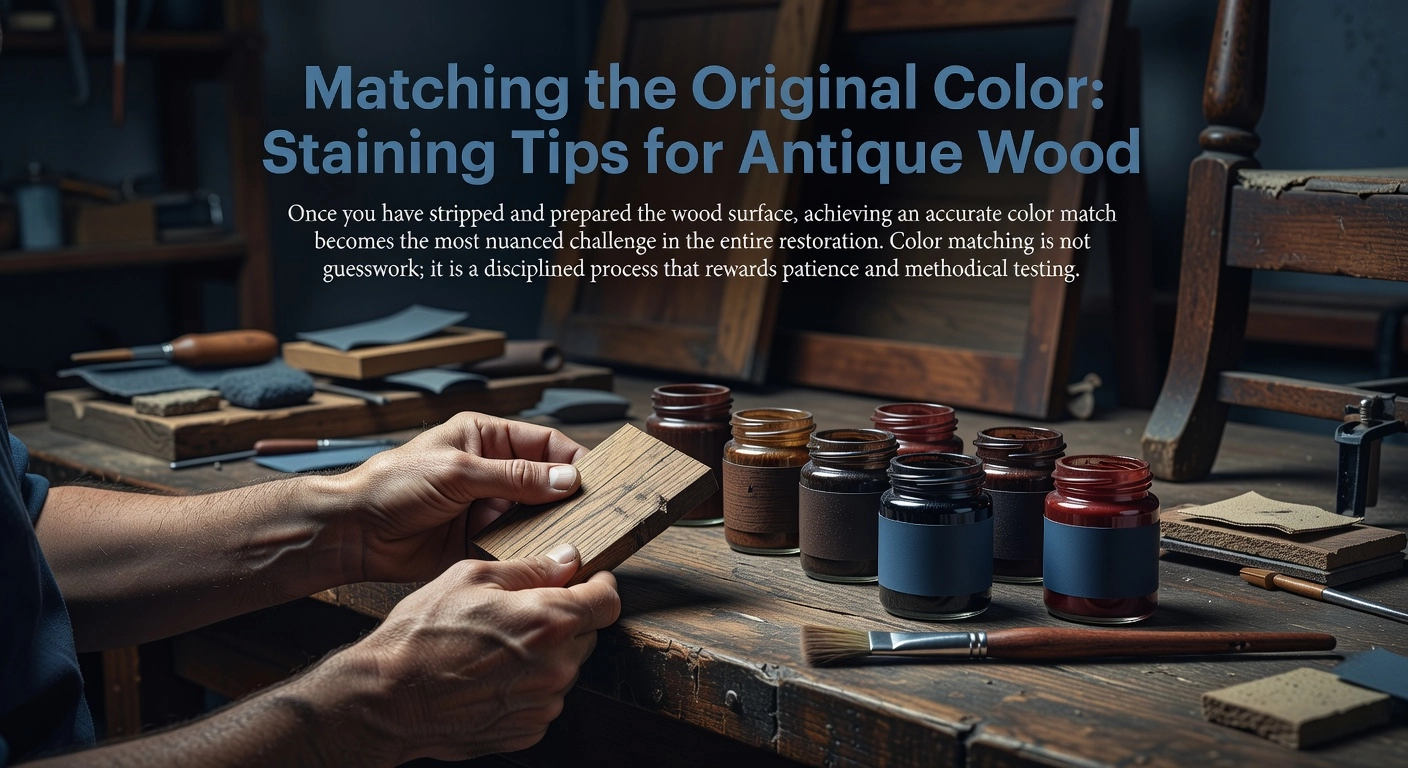
Matching the Original Color: Staining Tips for Antique Wood
Once you have stripped and prepared the wood surface, achieving an accurate color match becomes the most nuanced challenge. Test every candidate color on the underside of the piece or a scrap of identical wood. Wet stain always appears lighter than it dries.
Why Gel Stain Outperforms Liquid Stain on Antique Wood
For antique restoration work, gel stain is almost always the smarter choice over liquid stain. Antique wood has uneven porosity after decades of humidity changes. Gel stain sits on the surface longer and penetrates more slowly and evenly, giving you greater control and preventing splotchy results.
Mix Custom Colors Rather Than Relying on Stock Shades
Stock stain colors are formulated for general use, not for matching a specific century-old tone. Mix two oil-based stains together to build a custom match. Start with small test batches at a 1:1 ratio and record every formula precisely.
Account for Wood Species Absorption
Mahogany, walnut, and cherry absorb stain slowly and evenly. Oak has an open grain that pulls unevenly, while pine is highly prone to splotching without pre-stain conditioner. Knowing your species before opening the first can saves significant rework. For choosing the right Minwax shade for floors and furniture, see our complete guide to Minwax wood stain colors.
Maintaining Antique Wood Furniture After Restoration
All the work invested in restoring antique wood furniture pays dividends only with consistent maintenance.
Paste wax is your most reliable long-term protection tool. Apply a quality paste wax without silicone every three months, working in the direction of the grain and buffing to a light sheen. This thin layer resists moisture and guards against minor abrasion.
Sunlight is the single fastest degrader of antique finishes. UV exposure causes shellac and varnish to craze and bleaches wood tones unevenly. Position restored antiques away from south-facing windows and use UV-filtering window film.
Indoor humidity directly determines whether your structural repairs hold. Keep relative humidity between 40 and 55 percent. Keep restored pieces away from heating vents and exterior doors where conditions fluctuate most.
Spills require immediate attention with a soft, dry cloth. Blot rather than wipe. Never use all-purpose sprays or commercial polishes containing silicone or ammonia, as they cloud original finishes and interfere with future restoration work.
Schedule a brief annual inspection of joints, hardware, and finish condition. Catching a single loose joint before it fails saves hours of invasive work.
Start Your Restoration With the Right First Step
Every skill covered in this guide builds on a single foundation: you must assess before you act. Preservation almost always beats full stripping for genuine antiques. Original surfaces carry patina and provenance that cannot be recreated once removed.
Before starting any hands-on work, gather every material you need, confirm your workspace is properly ventilated, and complete all structural repairs before addressing the surface. The skills you have developed here connect directly to the broader tutorials available throughout WoodStuffHQ.
If this is your first restoration project, begin with your least valuable or most damaged piece. One successful restoration builds the confidence and technique every subsequent project depends on.
Conclusion
Restoring antique furniture rewards patience, research, and respect for the original craftsmanship. To recap: always assess before you act, identify and match original finishes faithfully, address structural issues with minimal intervention, and apply only period-appropriate techniques. Each principle protects both the beauty and the monetary value of the piece.
Now it is time to put this knowledge to work. Start with a single piece and move through each stage deliberately. The furniture waiting in your workshop has already survived decades. With the right approach, your hands will ensure it survives decades more.
Frequently Asked Questions
Should I refinish my antique furniture or just restore the existing finish?
For genuine antiques over 100 years old, preservation is almost always better than full refinishing. The original patina adds significant monetary and historical value that cannot be recreated. Use finish restorers and wax for light damage. Only strip and refinish if the existing finish is peeling, alligatoring, or severely damaged beyond repair.
How do I test for lead paint on antique furniture?
Use a DIY lead test swab kit from any hardware store. Clean a small area, moisten the swab, and rub it on the surface for 30 seconds. If it turns pink or purple, lead is present. For pieces made before 1978, always test before sanding. If lead is confirmed, follow EPA lead-safe practices or hire a certified professional.
What’s the difference between shellac, lacquer, and polyurethane finishes?
Shellac dissolves with denatured alcohol and was common before 1950. Lacquer softens with lacquer thinner and was popular mid-century. Polyurethane resists most solvents and is the modern durable finish. Test with solvents in a hidden spot to identify which you have before applying any new product, as they are chemically incompatible.
How can I remove white water rings from antique wood without stripping?
For shellac or wax finishes, use 0000 steel wool lightly dampened with paste wax. Rub gently in straight strokes following the grain, then buff and re-wax the entire surface. This removes the damaged top layer of finish while blending the repair. For deeper stains, see our detailed water stain removal methods.