You’ve probably walked into a home improvement store, spotted a stack of laminate flooring on clearance, and thought, “Could this actually work for my home?” The answer isn’t as simple as yes or no, and that’s exactly what we’re going to dig into today.
Cheap laminate flooring is everywhere, and the price tags can be seriously tempting. We’re talking anywhere from 50 cents to a couple of dollars per square foot. But before you load up your cart, it’s worth knowing what you’re actually getting at that price point versus spending a little more.
In this post, we’re breaking down what budget laminate flooring looks like in the real world. We’ll compare the quality differences across price ranges, talk about where cheap laminate holds up well and where it falls short, and help you figure out if going budget-friendly is the right call for your specific situation. Whether you’re updating a rental property or just trying to stretch your renovation dollars, this guide will give you a clear picture so you can shop with confidence instead of guesswork.
What Counts as Cheap Laminate Flooring
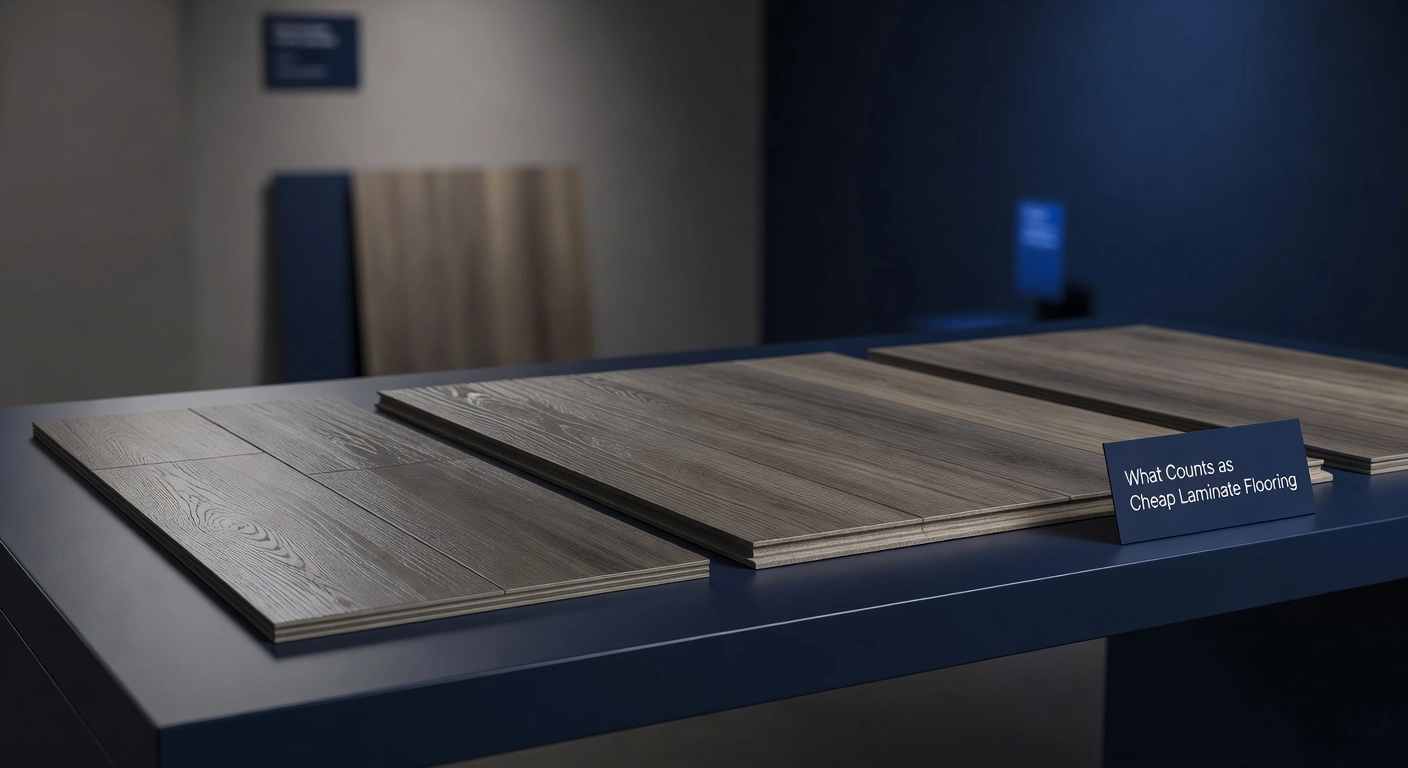
If you’ve ever searched for laminate flooring and felt overwhelmed by the range of prices, you’re not alone. “Cheap” laminate flooring generally refers to anything priced under about $3 per square foot, but even within that range, there’s a noticeable difference between the bare-bones entry-level stuff and the slightly upgraded budget options.
The Two Main Price Tiers
At the lowest end, you’re looking at $0.67 to $0.99 per square foot. These are the products you’ll find sitting on the shelves at big-box retailers, and they’re designed for homeowners who need a decent-looking floor without spending a fortune. Step up slightly and you hit the mid-budget “cheap” tier, which runs roughly $2 to $3 per square foot. These options often come with basic water resistance or slightly thicker planks, and you’ll find them at discount outlets alongside the big-box stores. Anything above $3 per square foot starts crossing into mid-grade territory and generally offers meaningfully better durability and longer warranties.
Where You’ll Actually Find Budget Laminate
The distribution of budget laminate is pretty concentrated. Home Depot and Lowe’s are the go-to stops for the lowest entry-level pricing, often running promotions that push prices even lower. Floor and Decor has built a reputation for everyday competitive pricing, especially if you want waterproof laminate styles without jumping to a premium price point. Discount specialty outlets round out the budget market with bulk deals, clearance sections, and a wide range of styles in the $1 to $3 range. These channels focus squarely on accessibility and volume, making them the natural hunting ground for cost-conscious shoppers.
The Brand You’ll See Everywhere at Entry-Level
When it comes to recognizable budget laminate brands at big-box stores, TrafficMaster stands out immediately. Products like the TrafficMaster Grey Oak 7mm laminate consistently show up near that 99 cents per square foot mark, making them a default starting point for budget shoppers. You can also browse all laminate options under $0.99 at Home Depot to get a clear picture of what the entry-level market actually looks like today. These products typically come in 7mm overall thickness with a click-lock installation system that makes them genuinely DIY-friendly for first-time installers.
What “Cheap” Really Means for Your Floor
Here’s the honest truth: lower prices don’t mean a completely different type of flooring. Most laminate floors at every price point share the same basic construction, meaning an HDF core topped with a photographic layer and a protective wear layer. What changes at the budget end is the thickness of the wear layer, the overall plank thickness, and the warranty terms. Entry-level laminate often runs 6 to 8mm thick overall, with thinner wear layers that scratch and dent more easily over time. Warranties on these products typically run 10 to 15 years, compared to 25 years or even lifetime warranties on premium lines. You’re not getting inferior core technology; you’re getting less protection on top and a thinner plank underfoot.
Who’s Actually Buying Budget Laminate
The typical buyer is a residential homeowner tackling a renovation or replacement project, and the numbers back that up. According to 2025 market data from Mordor Intelligence, renovation and replacement projects captured 57.68% of the global laminate flooring market, with residential applications accounting for roughly 68.55% of overall laminate sales. Budget laminate is a popular choice for homeowners who want a quick cosmetic upgrade, a temporary solution before a bigger remodel, or simply a cost-effective floor for lower-traffic rooms like bedrooms or home offices. The combination of low upfront cost and simple DIY installation makes it an easy first step for anyone new to home improvement projects.
How Budget Laminate Is Actually Constructed
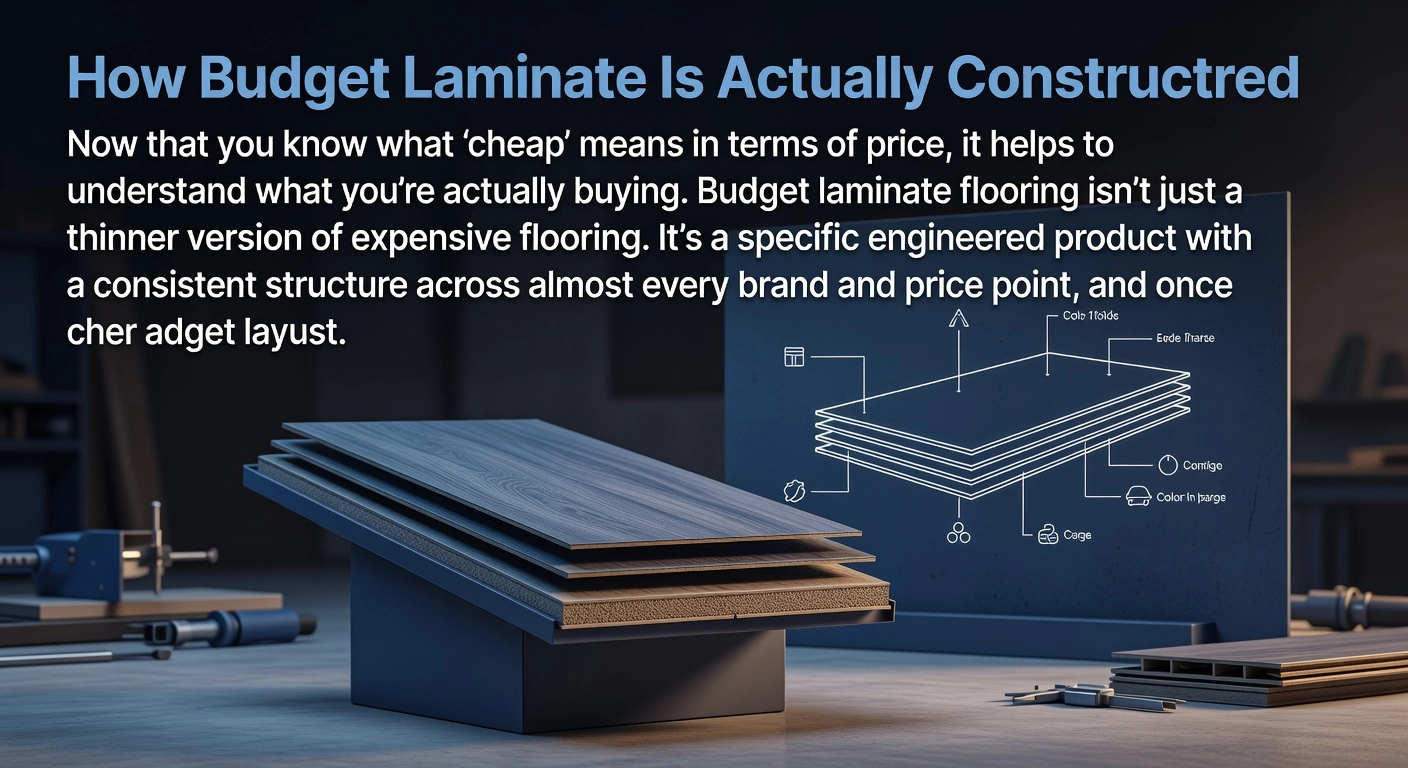
Now that you know what “cheap” means in terms of price, it helps to understand what you’re actually buying. Budget laminate flooring isn’t just a thinner version of expensive flooring. It’s a specific engineered product with a consistent structure across almost every brand and price point, and once you understand how it’s built, you’ll know exactly where the quality differences actually hide.
The Four-Layer Sandwich
Every laminate plank, whether it costs 99 cents or $3 per square foot, is built from four layers pressed together under intense heat and pressure. At the very bottom sits the backing layer, a thin sheet of melamine-treated paper or plastic that keeps the plank stable and helps prevent moisture from creeping up from below. Above that is the HDF core, which is the thick, structural backbone of the whole plank. On top of the core sits the photographic image layer, a high-resolution printed film that mimics wood grain, stone, or tile with surprising realism. Finally, the protective wear layer caps everything off at the top, acting as a transparent shield against scratches, scuffs, and stains.
That’s it. Four layers, every time, regardless of price. Understanding how these layers interact helps explain why some budget options hold up well and others fall apart within a few years.
Why the Core Isn’t the Problem
Here’s something that surprises most first-time buyers: the HDF core is actually quite consistent across price tiers. According to market data, HDF holds roughly 63-64% of the laminate flooring market, and for good reason. High-density fiberboard is compressed to a density of around 800 to 1,000 kg/m³, which gives it solid rigidity and supports the click-lock system reliably. Whether you’re buying a budget plank or a premium one, the core is doing roughly the same job. So if the core isn’t the main quality variable, what is? The wear layer, almost every time.
AC Ratings: The Number You Need to Know
The AC rating (Abrasion Class) is the standardized system used to measure how much punishment a laminate floor can take. Think of it as a durability score. AC1 is designed for very light use only, like a rarely visited guest room or a closet. AC3 covers general residential traffic and works well in living rooms, bedrooms, and dining areas. AC4 and AC5 step up to handle busier households with kids and pets, and even light commercial settings. Most experts recommend AC3 as the bare minimum for primary living areas, with AC4 being a smart target if your budget allows it.
The Wear Layer Problem with Cheapest Options
Consumer reviews and flooring videos consistently point to one culprit when budget laminate fails early: a thin wear layer. The very cheapest options, often priced under $1 per square foot, frequently feature wear layers on the lower end of the thickness range. Over time, that thin shield wears down, and eventually the printed image layer underneath starts to show scratches and dull spots that can’t be buffed out or refinished. This is the single biggest quality concern at this price point, and it’s worth checking wear layer details carefully before you buy, even if the AC rating looks acceptable on the label.
Click-Lock Installation Makes DIY Easy
One genuine advantage that budget laminate delivers regardless of price is the installation method. Nearly all modern laminate uses a click-lock floating system, where planks snap together along their edges without any glue, nails, or staples. The floor simply “floats” over your existing subfloor with an underlayment beneath it. You need basic tools like a saw, a tapping block, and some spacers, and most beginners can tackle a room over a weekend. This DIY-friendly setup saves significantly on labor costs, which makes cheap laminate flooring an even more attractive option for budget-conscious renovators.
The Genuine Advantages of Choosing Budget Laminate
Let’s be honest: budget laminate flooring gets a bad reputation it doesn’t always deserve. When you look past the skepticism, there are some genuinely compelling reasons why millions of homeowners choose it every year.
The Cost Savings Are Hard to Ignore
The most obvious advantage is the price, and it’s a big one. Entry-level laminate starts as low as $0.67 to $0.99 per square foot at major retailers, which means you can floor a 200 square foot room for somewhere between $134 and $200 in materials alone. Compare that to solid hardwood, which can run $6 to $22 or more per square foot installed, and the difference becomes pretty dramatic. Even if you add underlayment and a few basic tools, you’re still looking at a fraction of what other flooring options cost. For a rental property refresh, a starter home update, or a basement makeover on a tight budget, those savings are very real. You can check out current laminate flooring cost breakdowns to get a clearer picture of what to expect at different price points.
It Actually Looks Pretty Good Now
This is where budget laminate has made the most impressive strides. The photographic layer technology used in today’s products has improved enough that most casual observers genuinely can’t tell the difference from a standing distance. Oak, hickory, and stone patterns are rendered with enough detail and texture variation to look convincing in a living room or bedroom setting. Matte finishes and embossed surfaces help reduce that plasticky sheen that older cheap laminate was known for. You’re not going to fool a flooring professional up close, but for everyday living, modern budget laminate delivers solid visual results.
Beginners Can Actually Do This Themselves
The click-lock floating installation system is one of the best things about laminate at any price point. Planks snap together without glue, nails, or specialty adhesives. You need a few basic tools like a mallet, pull bar, spacers, and a saw for cuts, and you’re essentially set. Most beginners can complete an average rectangular room in a single day, which is a huge deal when you factor in that professional labor typically adds $1.50 to $6 per square foot to your total. Skipping that cost while still getting a clean, finished floor is a legitimate win. The laminate flooring market continues growing partly because of how accessible DIY installation has become for everyday homeowners.
Moisture Resistance Is Getting Better
One of the traditional knocks against cheap laminate was its vulnerability to water. That gap is narrowing. Budget and mid-tier laminate products increasingly feature water-resistant cores, sealed edges, and enhanced wear layers that can handle everyday spills without immediate damage. This doesn’t make them ideal for wet bathrooms with standing water, but it does open them up to kitchens, basements, and other spaces where some moisture exposure is expected. It’s a meaningful upgrade that partially closes the historic performance gap with luxury vinyl plank, especially for shoppers who prefer the feel and look of laminate but need a bit more peace of mind in their flooring choice.
The Limitations Most Retailers Won’t Highlight
Here’s something most retailers gloss over while they’re busy showing you how great those wood-look visuals are: cheap laminate flooring comes with some real trade-offs that can cost you significantly more over time than the price tag suggests upfront.
The Lifespan Gap Is Bigger Than You Think
Low-end laminate flooring typically lasts somewhere between 3 and 10 years in real-world conditions, and that range shrinks fast in busy households. A bedroom that sees light foot traffic might hold up on the higher end of that estimate, but a living room with kids, pets, and regular furniture shuffling can chew through entry-level laminate in just a few years. Compare that to properly maintained hardwood flooring, which routinely lasts 50 to 100 years across generations. The difference isn’t minor. It’s a fundamentally different relationship with your floor, and that matters for planning purposes.
Once It’s Scratched Through, It’s Done
This is the limitation that catches most first-time buyers completely off guard. Real hardwood can be sanded down and refinished multiple times over its life, essentially resetting the surface and making it look brand new again. Laminate simply cannot do that. The structure of a laminate plank is a printed photographic image layer sitting under a thin clear wear layer. Once something scratches through that wear layer and reaches the image underneath, the floor’s appearance is permanently compromised. You can’t sand it, you can’t recoat it, and polish products only mask the problem temporarily. The only real fix is replacing the affected planks or the entire floor, which brings us to the next issue.
Thin Wear Layers Show Their Age Quickly
Budget laminates commonly carry AC2 or AC3 wear layer ratings, which are designed for light to moderate residential use. In practice, that means they’re not well-suited for high-traffic hallways, homes with large dogs, or any room where you’re regularly rolling office chairs or moving heavy furniture. Pet nails in particular are rough on thin wear layers, creating fine scratches that accumulate into a dull, scuffed appearance over months rather than years. Higher-end laminates rated AC4 or AC5 handle these scenarios considerably better, but those products typically cost more and sit outside the true budget tier.
The Real Cost Adds Up Over Time
Here’s where the math gets uncomfortable. Installing cheap laminate in a 200 square foot room might run you $800 to $1,400 once you factor in materials and labor. That sounds manageable, until you realize you might be doing it again in five to eight years. Two or three replacement cycles over a 20-year period can easily push your total spending past what a single hardwood installation would have cost, without any of the long-term durability benefits. Disposal fees, subfloor prep, and the general disruption of reinstalling flooring add hidden costs that never appear on that original price tag.
It Can Affect What Buyers Think of Your Home
Real estate professionals are pretty consistent on this point: hardwood flooring outperforms laminate when it comes to appraisals and buyer perception. Hardwood can support a 2 to 5 percent price premium in many markets, while laminate tends to read as neutral at best. In mid-range or higher-end homes, buyers may actually factor laminate into their negotiating position, viewing it as something they’ll want to replace eventually. If you’re treating your home as a long-term investment, that perception gap is worth considering before you commit to the budget option throughout your main living areas.
Cheap Laminate vs. LVP vs. Real Hardwood: Side-by-Side
So you’ve heard the pros and cons of cheap laminate on its own. But how does it actually stack up when you put it side by side with the two alternatives most homeowners are comparing it to right now? Let’s break this down in plain terms.
Price: Where Laminate Has a Clear Edge
Upfront material cost is where cheap laminate wins without any argument. Budget laminate runs between $0.67 and $3 per square foot, with entry-level options starting as low as $0.89 at discount retailers. Luxury Vinyl Plank (LVP) typically starts around $2 and climbs to $5 or more per square foot for quality options. Solid hardwood is the biggest investment, ranging from $5 to $12 per square foot just for materials, before a single board is nailed down. When you factor in installation, laminate often totals $3 to $8 per square foot installed, while hardwood can land anywhere from $8 to $18 or higher. For a 400-square-foot living room, that cost gap becomes very real, very fast.
Water Resistance: LVP Leads, Hardwood Can Be Protected
This is a category where the three options are genuinely different. LVP, especially rigid core or SPC varieties, is fully waterproof for its entire lifespan. Spills, pet accidents, and even minor flooding are not a problem. Laminate has improved significantly with water-resistant core technology, but it still has limits. Most “waterproof” laminate products give you a window of roughly 24 to 72 hours before the HDF core starts to swell if water gets into the seams. Unprotected hardwood is the most vulnerable of the three to moisture, and it should not be installed in bathrooms or below-grade spaces. That said, hardwood that is properly sealed with a high-quality floor finish holds up surprisingly well in kitchens and moderate-traffic areas. Applying a protective finish is one of the smartest things you can do to extend hardwood’s performance in everyday environments where the occasional spill is unavoidable.
Durability and Repairability: Hardwood Plays the Long Game
Here is a factor that budget-focused buyers often underestimate. Laminate and LVP both have a hard ceiling on their lifespan. When the wear layer scratches through or a plank gets damaged, you replace it. There is no refinishing, no sanding, no second life. Cheap laminate typically lasts 3 to 10 years depending on traffic and care, while better LVP can reach 15 to 25 years. Hardwood, on the other hand, can be sanded and refinished seven to ten times or more over its lifetime. Properly maintained hardwood floors regularly last 50 to 100 years, making them a genuinely generational investment. According to a detailed LVP vs. laminate breakdown, total cost of ownership over decades often favors hardwood despite the higher upfront price.
Appearance, Environmental Profile, and the 2026 Price Shift
On looks, hardwood still wins for pure authenticity. Natural grain variation, warmth, and the way the floor ages gracefully are things a photographic layer cannot fully replicate, even with today’s impressive embossing technology. Premium laminate and LVP have genuinely narrowed the visual gap, and many guests will never notice the difference. But underfoot, in texture, sound, and feel, hardwood remains in a class of its own.
From an environmental standpoint, sustainably sourced or FSC-certified hardwood is a renewable material that sequesters carbon and lasts for generations. Cheap laminate cycles through landfills more quickly given its shorter lifespan, and its composite HDF core involves resins and pressing processes that raise legitimate disposal concerns. According to a flooring cost and materials comparison, lifecycle impact is an increasingly important factor for homeowners thinking beyond the purchase price.
Finally, tariff pressures in 2026 are quietly shifting the competitive landscape. Import duties on SPC and LVP products, particularly those sourced from China, have pushed retail prices for vinyl alternatives noticeably higher. Laminate, with a comparatively lower exposure to those same tariffs in many cases, has held its price advantage more steadily. For a buyer purely focused on budget, that gap is wider today than it was two years ago.
The 10-Year Cost Math: Cheap Laminate vs. Refinished Hardwood
Let’s put some real numbers on the table, because this is where the “cheap” in cheap laminate flooring gets complicated.
Picture a 500 square foot living room. In one corner, you’re pricing out entry-level laminate at roughly $1 per square foot in materials. In the other corner, you’ve got existing solid hardwood floors that need some love but are structurally sound. Which path actually costs less over 10 years? The answer might surprise you.
The Laminate Installation Math
Starting with laminate, the upfront numbers look friendly. Materials for 500 square feet at $1 per square foot runs about $500. Add professional installation labor at $1 to $2 per square foot, and you’re looking at another $500 to $1,000. Total first installation: roughly $1,000 to $1,500. That feels manageable.
Here’s where it gets tricky, though. Budget laminate in a moderately trafficked room can wear out in as little as 10 years, especially with the thinner wear layers found on entry-level products. Unlike hardwood, laminate cannot be refinished or restored once that wear layer is gone. Your only option is full removal and complete replacement. If that happens once during your 10-year window, you’re adding another $1,000 to $3,000 on top of your original install. That brings your real 10-year total to somewhere between $2,000 and $4,500, and that’s before factoring in disposal fees or any subfloor repairs discovered mid-project.
The Hardwood Refinishing Math
Now look at the hardwood side. A professional sand-and-refinish job on 500 square feet typically runs $3 to $5 per square foot, putting the total cost at $1,500 to $2,500 for a quality result. Done once at the start of your 10-year window, a properly refinished hardwood floor with good protective coatings can last the entire decade without needing another full professional refinish. That single service covers you completely, with no replacement cycle looming at year eight or nine.
The long-term math on hardwood gets even better when you factor in what a well-maintained floor actually needs between professional refinishing visits. Solid hardwood can handle multiple refinishing cycles over its lifetime, which can stretch 50 to 100 years or more. Each professional refinish is a renewal, not a replacement.
Where DIY Maintenance Changes the Equation
This is where handy homeowners can really shift the per-year cost in their favor. Products like Minwax Hardwood Floor Reviver are designed specifically for this gap between professional refinishing visits. It’s a water-based polyurethane topcoat that restores shine and adds a fresh protective layer without any sanding required. A quart runs around $20 to $30 at most home improvement stores, and applying it once or twice a year takes maybe an afternoon.
Over 10 years, a consistent DIY maintenance routine might cost you $200 to $400 total. That small investment extends the life of your professional refinish significantly, reducing dullness, minor surface wear, and the urgency of scheduling another full refinishing job. Combined with regular sweeping and proper cleaning products, this kind of care keeps refinished hardwood looking sharp year after year.
The 10-Year Totals Side by Side
When you add it all up, the comparison looks something like this. Cheap laminate with one replacement cycle runs roughly $2,000 to $4,500 over 10 years. Professionally refinished hardwood with regular DIY upkeep runs roughly $1,700 to $2,900 over the same period, often less if you stay on top of maintenance.
The bottom line is worth sitting with for a moment. “Cheap” laminate flooring is genuinely affordable on day one, but every time it wears out and needs full replacement, you pay installation labor all over again. Refinished hardwood costs more upfront in some cases, but you’re buying a floor that can be renewed rather than replaced. Before you commit to that $1 per square foot material, it’s worth running these numbers for your specific situation. The floor that looks cheapest in the store aisle isn’t always the one that costs least over time.
When Cheap Laminate Actually Is the Right Call
Here’s the thing about cheap laminate flooring: it gets dismissed a lot, but there are genuine situations where it’s actually the smartest choice in the room. The key is knowing whether your situation matches the product’s strengths, not fighting against its weaknesses.
Rental properties are probably the clearest win. If you’re a landlord turning over a unit between tenants, you need something that looks clean and updated, goes in fast, and doesn’t drain your renovation budget. Cheap laminate checks all three boxes. At under $1 per square foot for entry-level options, you can refresh a 600 square foot apartment floor for a fraction of what hardwood would cost. The click-lock floating installation means you or a handyman can get it done in a weekend without special tools or glue. And honestly, durability expectations in a rental are different. You’re not asking the floor to last 30 years; you need it to survive a few tenancies and look decent in listing photos.
Planning to move within 3 to 5 years? This is another situation where cheap laminate just makes sense. You want the house to show well and feel updated, but you’re not building a forever home. Since laminate floats over your existing subfloor without being nailed or glued down, you’re not making a permanent commitment. The floor does its job, adds visual appeal, and you move on.
Concrete slab subfloors in below-grade spaces are also worth mentioning. Solid hardwood and concrete are a difficult combination because wood expands and contracts with moisture and temperature changes. Laminate’s floating installation with a vapor barrier underlayment handles that situation much more practically.
Tight budgets where the current floor is damaged carpet or cracked vinyl represent another real use case. Going from torn carpet to a wood-look laminate is a legitimate upgrade, even if it’s not a forever floor.
Finally, guest bedrooms and occasionally used basement spaces are ideal candidates. When foot traffic is light, the wear layer concerns that matter in a busy hallway simply stop being relevant. Your laminate will look fine for years with minimal effort.
How to Protect or Restore Existing Hardwood Instead
Before you commit to installing anything new, it’s worth doing a quick investigation under your feet. A surprising number of homeowners searching for cheap laminate flooring are actually standing on top of solid hardwood that’s been buried under old carpet, vinyl, or a worn-out finish for decades. Homes built before the 1970s especially tend to hide genuine hardwood beneath layers of later renovations. Peeling back a corner of carpet in a closet or along a baseboard takes about two minutes and could completely change your renovation plan.
What Full Refinishing Actually Looks Like
If the hardwood underneath is in rough shape but structurally sound, refinishing it is often more cost-effective than installing new flooring. The process starts with light sanding or “screening,” which uses a buffer and screen pad to remove the top layer of old finish without aggressively cutting into the wood itself. From there, you have the option to stain. Minwax Wood Finish penetrating stains soak directly into the wood grain, giving you rich, even color that highlights the natural character of the floor rather than sitting on top of it. Once the stain dries, applying two to three coats of Minwax Super Fast-Drying Polyurethane for Floors seals everything in with a durable, long-lasting protective layer. It recoats in as little as three to four hours, so you can complete the whole job in a weekend and have the floor ready for light foot traffic within 12 to 18 hours.
When You Don’t Need to Sand at All
Not every hardwood floor needs a full refinishing job. If your floors are just looking dull, slightly scuffed, or have lost their protective sheen, Minwax Hardwood Floor Reviver is worth trying first. There’s no sanding, no special prep, and no heavy equipment involved. You clean the floor, squeeze the product in an “S” pattern, and spread it with a damp painter’s pad. It dries to a clear, durable topcoat that restores shine and adds a fresh layer of protection, and the results typically last three to six months with normal traffic.
Handling Minor Scratches Before They Become Big Problems
Small scratches and scuffs are easy to ignore, but they tend to multiply fast in high-traffic areas. Minwax Repair Markers let you touch up nicks and color inconsistencies in minutes, blending seamlessly with the existing finish. For slightly deeper damage, a color-matched wood filler followed by a repair marker handles the job without any sanding or refinishing. These small fixes extend the life of your current finish significantly, buying you extra years before a full refinishing job becomes necessary.
Making Hardwood Last for the Long Haul
Properly maintained hardwood floors can last 50 to 100 years or more, which is a lifespan that no cheap laminate product can come close to matching. The habits that get you there are straightforward. Stick felt pads on every piece of furniture and replace them when they wear down. Keep indoor humidity between 35 and 55 percent year-round, because extreme swings cause the wood to expand, contract, cup, or crack. Sweep and vacuum regularly to remove grit that acts like sandpaper underfoot. Apply a refresher coat of finish every few years to maintain that protective barrier. These small, consistent practices cost very little and protect a floor that adds real value to your home.
Bottom Line: Making the Right Floor Decision for Your Budget
Cheap laminate can be a genuinely smart move, but only when you go in with clear eyes about what you’re actually buying. It delivers real short-term value in rental units, temporary spaces, and rooms where budget is the primary constraint. The catch is that once the wear layer gives out, you’re looking at full replacement costs, and those can quietly erase the savings you banked on day one.
Before you buy anything, flip the box over and find the AC rating. AC3 is the absolute minimum for general residential use in living rooms, bedrooms, and dining areas. If you’re flooring a kitchen, hallway, or any space where kids and pets are a daily reality, AC4 is worth the modest price bump. That small upgrade in wear layer thickness pays for itself in years of extra life.
If you already have hardwood floors under old carpet or existing flooring, do yourself a favor and get a refinishing estimate first. Professional refinishing typically runs $3 to $8 per square foot, and products like Minwax® floor care solutions can handle light refresh jobs at a fraction of that cost. Many homeowners are genuinely surprised to find that restoring what they already have is both cheaper and longer-lasting than installing new laminate.
The real bottom line is simple: stop shopping by price per square foot alone. Factor in installation, lifespan, and eventual replacement. That number tells the true story.
Conclusion
Cheap laminate flooring can absolutely work for your home, but only when you go in with realistic expectations. Here are the key takeaways to keep in mind:
- Budget laminate works best in low-traffic, low-moisture areas like bedrooms or rental units.
- Spending even a little more per square foot often delivers significantly better durability and appearance.
- Installation quality matters just as much as the product itself.
- Your specific situation, lifestyle, and long-term plans should drive your final decision.
The smartest flooring choice is not always the cheapest or the most expensive. It is the one that fits your needs and budget without cutting corners where it counts.
Ready to make your move? Compare at least three price points at your local store, grab some samples, and test them in your actual space. Your floors are worth a few extra minutes of research.
Frequently Asked Questions
What AC rating should I look for when buying budget laminate flooring?
At minimum, look for AC3 for general residential use in living rooms, bedrooms, and dining areas. If you have kids, pets, or high-traffic areas like hallways and kitchens, upgrade to AC4 if possible. The AC rating measures how much wear and abrasion the floor can withstand, and it is the single most important spec to check on any budget laminate product. Avoid AC1 or AC2 options for primary living spaces, as these are designed only for very light use.
How long does cheap laminate flooring actually last?
In real-world conditions, budget laminate typically lasts between 3 and 10 years depending on foot traffic, moisture exposure, and how well it is maintained. A rarely used guest bedroom might reach the high end of that range, while a busy living room with pets and children can wear through entry-level laminate in just a few years. This is significantly shorter than solid hardwood, which can last 50 to 100 years with proper care, and is one of the key trade-offs to factor into your total cost calculation before purchasing.
Can cheap laminate flooring be repaired if it gets scratched or damaged?
Unfortunately, laminate flooring cannot be sanded or refinished like hardwood. Once a scratch or scuff penetrates through the wear layer to the printed image layer underneath, the damage is permanent. The only real fix is replacing the affected planks or, in some cases, the entire floor. This is one of the most significant limitations of cheap laminate, especially products with thinner wear layers, and it is why lifespan and total replacement costs should always be factored into your budget before you buy.
Is cheap laminate flooring a good choice for rental properties?
Yes, rental properties are actually one of the best use cases for budget laminate. At under $1 per square foot for entry-level options, you can refresh a large space quickly and affordably. The click-lock floating installation means it can be completed over a weekend without professional tools or adhesives. Since rental floors do not need to last 30 years and tenants expect a clean, updated look rather than premium materials, cheap laminate checks all the right boxes. Just make sure to choose at least an AC3 rating to handle normal tenant foot traffic.
How does cheap laminate compare to luxury vinyl plank (LVP) in terms of value?
The main advantage laminate holds over LVP is upfront cost, with budget laminate starting as low as $0.67 per square foot compared to LVP which typically starts around $2 per square foot. However, LVP is fully waterproof, making it a better choice for kitchens, bathrooms, and basements. Quality LVP can also last 15 to 25 years, compared to 3 to 10 years for budget laminate. It is also worth noting that tariff pressures in 2026 have pushed LVP prices higher, widening the price gap and making laminate an even more competitive budget option for dry interior spaces.
1 thought on “Cheap Laminate Flooring: What You Actually Get for Your Money”