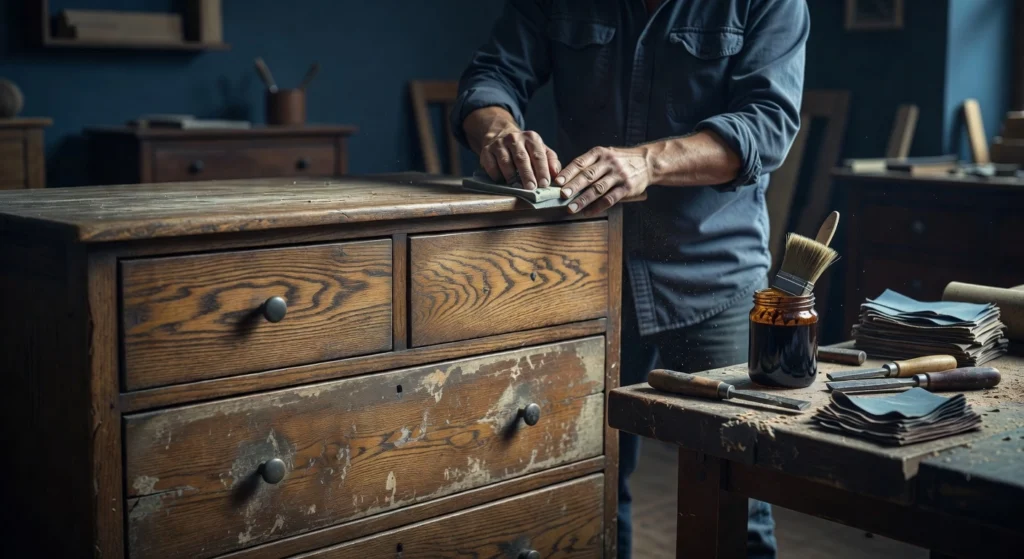

That old dresser sitting in your garage might look like a lost cause, but what if it could become the centerpiece of your bedroom? Furniture refinishing is one of those satisfying DIY skills that can completely transform worn, scratched, or outdated pieces into something you are genuinely proud to show off.
The best part? You do not need years of woodworking experience to get started. With the right guidance, even a total beginner can achieve professional-looking results on their very first project.
In this complete beginner’s guide to furniture refinishing, you will learn everything you need to know to tackle your first wood project with confidence. We will walk you through choosing the right tools and supplies, prepping your surface properly, applying stain or paint like a pro, and finishing with a protective top coat that lasts. Along the way, you will pick up practical tips that save you time, money, and frustration.
Whether you have a thrift store find or a beloved family heirloom that needs some love, this guide will help you bring it back to life. Let’s get started!
When to Refinish vs. Repair Your Furniture
Before grabbing sandpaper and a can of stain, it’s worth pausing to figure out what your furniture actually needs. Refinishing is a full-process commitment: you strip away the existing finish entirely, sand the wood down to a clean surface, and apply fresh stain and protective topcoats like lacquer or varnish. It’s rewarding, but it’s also a multi-step project that takes real time and effort. A repair, on the other hand, targets a specific problem without touching the surrounding finish. Think scratch touch-ups with wax or oil, lifting a white water ring with a little heat, or conditioning dry wood back to life with a nourishing oil treatment. Same furniture, completely different scope.
So how do you know which one your piece actually needs? Your furniture is probably calling for a full refinish if you notice the finish peeling or flaking away from the surface, deep discoloration that goes beyond a surface stain, bare wood showing through in high-traffic spots, or an overall patchy and uneven look that no amount of polishing seems to fix. These are signs the protective layer has broken down too far to patch reliably. Spot fixes on a failing finish usually just highlight the problem rather than solve it.
If the damage is more isolated, you can almost certainly get away with a targeted repair instead. Shallow scratches, light water rings, dull or grimy surfaces, and dry or cracked wood are all fixable without stripping anything. WoodStuffHQ has practical guides covering how to repair wooden furniture surfaces and furniture scratch repair techniques that can walk you through these simpler fixes step by step.
Before committing to refinishing, also consider whether the piece is actually worth it. Solid hardwoods like oak, walnut, and maple are almost always worth the effort, both in durability and long-term value. Particleboard or thin-veneer furniture, not so much, since sanding can easily cause more damage than it fixes. Sentimental pieces and quality antiques are obvious candidates. And on the sustainability side, the case for refinishing is genuinely compelling: Americans discard roughly 12 million tons of furniture annually, with the vast majority going straight to landfill. Choosing to restore rather than replace is one of the most direct ways to reduce that waste.
Tools and Materials You Will Need
Before you dive into your first furniture refinishing project, gather everything upfront. There’s nothing worse than stopping mid-strip because you forgot tack cloth or realized you’re missing a key sandpaper grit. Here’s exactly what you need.
Your Essential Tool Checklist
Start with a chemical stripper to dissolve old finishes so you’re not fighting them with sandpaper alone. Pair it with a paint scraper or putty knife to lift the softened goop off the surface without gouging the wood. A sanding block is your best friend for curved legs, edges, and carved details where a power tool simply won’t fit. For flat surfaces, an orbital sander saves enormous time and effort, making it one of the best early investments you can make. Round out your kit with tack cloth (those sticky yellow cloths that grab every last dust particle before you apply finish), a few chip brushes or foam brushes for applying stripper and finish coats, and a pile of old rags for wiping, buffing, and general cleanup. You’ll also want drop cloths to protect your workspace. This helpful essentials guide breaks down how each tool actually gets used in a real project.
Sandpaper Grits Explained
Multiple grits aren’t optional; they’re the whole system. 80-grit is your heavy hitter, used to remove thick old finishes or level out deep scratches and gouges. 120-grit smooths the roughness left behind by the coarser paper and opens the wood grain for better stain absorption. 180-grit refines the surface further, erasing swirl marks and getting you close to finish-ready. Finally, 220-grit delivers that silky-smooth feel right before your first finish coat, and you’ll use it again between coats to knock down any bumps or drips. Skipping grits creates scratches that show through your final finish, so work through each one patiently. Always sand with the wood grain, and wipe the surface clean between every grit change.
Finish Options at a Glance
Choose your finish before you start so you’re not improvising at the last minute. Penetrating oils like Danish or tung oil soak into the wood and create a natural, low-sheen look that’s easy to touch up later. Varnish builds a flexible, durable film that handles humidity well, making it great for dining tables or pieces near windows. Lacquer dries fast and hard, though it works best with spray application and solid ventilation. Polyurethane is the most beginner-friendly film finish, available in water-based formulas that are low-odor, non-yellowing, and widely available in 2026. When in doubt, this beginner-friendly refinishing overview can help you match the right finish to your specific piece.
Safety Gear You Should Not Skip
Refinishing involves real chemicals, and cutting corners here isn’t worth it. Wear nitrile gloves to protect your skin from strippers and solvents, and put on safety glasses or goggles before you open anything. Most importantly, use a half-face respirator with organic vapor cartridges rated for VOCs, not just a paper dust mask, since fumes from strippers and finishes can be seriously harmful. Work outdoors or in a space with open windows and a fan moving air away from your face.
Budget Breakdown for Beginners
A solid beginner kit typically runs $150 to $300, covering sandpaper, a basic orbital sander, brushes, safety gear, stripper, and finish. As you take on more projects, you can upgrade to better dust collection, a quality HVLP sprayer, or professional-grade finishes for another $200 to $500 over time. In 2026, low-VOC and water-based products are easier to find and more affordable than ever, making them a smart first choice for both your health and the environment.
Step 1: Assess and Prepare Your Piece
Before you touch a single piece of sandpaper, spend some real time getting to know your piece. This assessment stage is honestly where successful furniture refinishing projects are won or lost, and skipping it is one of the most common beginner mistakes out there.
Know What Finish You’re Working With
The existing finish on your furniture determines everything: which stripper you buy, how aggressive your removal process needs to be, and whether you can even apply your new stain directly. The good news is that a simple solvent test can tell you a lot. Dab a small amount of denatured alcohol on a hidden spot. If the finish gets tacky or starts to dissolve, you’re dealing with shellac. No reaction? Try lacquer thinner next. If that softens the surface, it’s lacquer. If neither budges the finish, you’re likely looking at varnish or polyurethane, which needs chemical stripping or sanding rather than solvents. An oil finish will feel soft and matte without any hard film, while wax tends to smear or feel slightly greasy to the touch. Getting this right matters because using the wrong stripper can damage the wood underneath or create bonding problems for your new finish. This beginner’s guide to identifying furniture finishes walks through the testing process in clear, practical detail.
Veneer or Solid Wood? It Changes Everything
Run your hand along the underside or back edge of your piece. Solid wood shows continuous grain wrapping around corners, feels heavier, and produces a solid knock when tapped. Veneer, on the other hand, is a thin layer of real wood over a plywood or MDF core. It may show seams, repeated grain patterns, or feel lighter than you expect. This distinction is critical because veneer can be sanded through in seconds with a power sander, ruining the piece entirely. If you have veneer, stick to gentle hand sanding and check your progress constantly.
Disassemble, Clean, and Prep Your Space
Remove all hardware, knobs, hinges, and pulls, and bag them labeled for reinstallation. Pull out drawers and doors so you can work each surface evenly. Set up in a well-ventilated area, ideally outdoors or near open windows with a fan running, since strippers and solvents release fumes quickly. Lay down drop cloths and have your gloves, goggles, and respirator within reach before you open anything.
Once everything is disassembled, clean the entire surface with a degreaser. Old wax, furniture polish, and everyday grime create an invisible barrier that prevents stain and new finish from bonding properly. A gentle degreaser on a lint-free cloth, wiped thoroughly and allowed to dry completely, makes a real difference in your final results. Restoration experts consistently highlight this step as one that beginners skip too often, and it shows in patchy, peeling finishes down the line. For a deeper look at common prep pitfalls, Mumford Restoration’s guide on furniture restoration mistakes is worth bookmarking.
Deal With Structural Damage First
While you’re cleaning and inspecting, check every joint, corner, and surface for wobbles, cracks, or separating glue. If a chair leg is loose or a drawer frame is splitting, fix it now before you refinish anything. Applying a beautiful new finish over an unstable structure means you may be sanding it all back off in six months when the joint finally gives. Use appropriate wood glue to re-secure loose joints, clamp them fully, and let them cure overnight. Minor surface scratches or small cosmetic dings can wait until after stripping, but anything structural needs to come first.
Step 2: Stripping the Old Finish
Now that your piece is clean, assessed, and prepped, it’s time for the most transformative part of the process: getting that old finish off. Stripping can feel intimidating at first, but once you understand the steps, it becomes very manageable, even for a first-timer.
Chemical Stripping: Apply, Wait, and Remove
Chemical stripping is the go-to method for most furniture refinishing projects, especially on pieces with curves, details, or veneer. Start by applying a thick, generous layer of gel or paste stripper using a disposable chip brush. You want roughly an 1/8-inch coating, not a thin smear. Thin applications dry out too fast and won’t penetrate the finish properly. Work in manageable sections, and if you’re in a warm space or working outdoors, cover the stripper with plastic wrap to lock in moisture and extend the working time.
Dwell time varies by product, but most strippers need between 15 and 30 minutes to do their job. Watch for the finish to bubble up or wrinkle; that’s your cue it’s working. Test a small corner by gently scraping. If the finish lifts cleanly, you’re ready. If it’s still firm, give it more time and reapply if it has dried out. For pieces with thick, layered paint, you may need two or three rounds.
When it’s time to remove the softened finish, reach for a plastic scraper and always work with the wood grain. Metal scrapers on soft or older wood will gouge the surface and create extra sanding work later. Scoop the sludge into a disposable container as you go. Finish up with #0000 steel wool or a stiff nylon brush dipped in mineral spirits to clear any remaining residue. Then let the wood dry fully before moving forward. For a deeper look at safer product options, this overview of safe paint strippers from This Old House is worth bookmarking.
Mechanical Stripping: Heat Guns and Sanders
Mechanical methods have their place, but they come with real risks. A heat gun works well on solid, flat wood covered in multiple thick layers of paint where chemicals would require endless reapplications. Keep the gun moving and hold it several inches from the surface to avoid scorching. On veneer, skip the heat gun entirely; the heat can dissolve the underlying glue and cause bubbling or delamination that is very difficult to fix.
An orbital sander is better suited as a finishing step after chemical stripping rather than a primary removal tool. It can quickly sand through thin veneer or embed old finish into open wood grain. If you do use one, start with 80 to 100-grit and keep the sander moving consistently.
Tackling Carvings, Spindles, and Tight Corners
Flat scrapers are useless in tight spaces, so build a small toolkit for detail work. Apply stripper generously into crevices with a brush, let it dwell fully, then work it out with old toothbrushes, brass bristle brushes, or fine steel wool. For spindles and turned legs, wrap a piece of sandpaper or steel wool around the curve and use a back-and-forth motion. Wooden skewers or dental picks can help dislodge residue from sharp grooves without scratching. This guide on stripping furniture methods covers detail work techniques well if you want more ideas.
Safety Comes First
Chemical strippers demand respect. Work outdoors or in a space with strong cross-ventilation, fans pointed outward, and windows open. Wear chemical-resistant gloves (nitrile or butyl rubber), splash-proof safety goggles, long sleeves, and closed-toe shoes. A respirator with organic vapor cartridges is a smart addition, especially with traditional formula products.
For disposal, collect all sludge and used materials in a sealed container and check your local hazardous waste guidelines. Never pour stripper waste down a drain or onto soil.
Mistakes to Avoid
The most common slip-up beginners make is leaving the stripper on too long, which can raise the wood grain or leave a tacky residue that is harder to remove than the original finish. On the flip side, pulling it too soon means you’ll be scrubbing off half-softened coating with unnecessary effort. The second big mistake is reaching for a metal scraper on pine, poplar, or any soft wood; even light pressure will leave gouges. Finally, always neutralize the surface after stripping using the method your product recommends, whether that’s a mineral spirits wipe-down, a diluted vinegar rinse, or a dedicated afterwash. Skipping this step leaves chemical residue that can prevent your new finish from bonding correctly. This step-by-step refinishing guide covers neutralization clearly if you want a visual reference.
Once your wood is stripped clean, neutralized, and fully dry, you’re in great shape for the next stage: sanding down to a smooth, even surface ready for stain or finish.
Step 3: Sanding With the Right Grit Progression
Sanding is where your furniture refinishing project really starts to take shape, and the order in which you move through sandpaper grits matters far more than most beginners expect. Think of each grit as doing a specific job. If you start too fine, say jumping straight to 180 or 220 grit, you won’t have enough abrasive power to cut through leftover finish residue from the stripping step. That residue sits in the wood grain and causes blotchy, uneven stain absorption later. On the flip side, starting with something too coarse without following a proper progression tears into the wood grain fibers more aggressively than necessary, leaving deeper scratches that take much longer to work out.
The Grit Progression That Works
For most hardwood furniture projects, this four-step sequence covers you from start to finish:
- 80 grit: Your starting point. This removes any remaining finish residue and levels out surface imperfections left from stripping. It leaves visible scratches, but that’s expected at this stage.
- 120 grit: This grit erases the 80-grit scratch pattern and continues leveling the surface. You’ll notice the wood looking more uniform here.
- 180 grit: Now you’re smoothing things out. The surface should feel noticeably different under your fingertips after this pass.
- 220 grit: Your final prep before stain or finish. This creates a clean, receptive surface without closing the wood pores too tightly, which would reduce stain penetration.
According to Popular Woodworking’s expert sanding guidance, the goal at each stage is simply to remove the scratch pattern from the previous grit. Don’t skip more than one grit at a time, and spend enough time at each stage to fully eliminate the marks left behind.
Always Sand With the Grain
This one is non-negotiable. Cross-grain scratches, meaning scratches running perpendicular to the wood’s natural grain lines, become dramatically visible once you apply stain. They show up as dark streaks or squiggly lines that contrast sharply against the wood’s natural pattern. You won’t always notice them on bare wood under bright overhead lighting, but stain reveals everything.
To avoid this, always orient your strokes parallel to the grain. On flat surfaces like tabletops, this sanding guide from Little House of Four recommends finishing with a hand-sanding pass along the grain at your final grit, even if you used a random orbital sander for the bulk of the work. That final hand pass cleans up any swirl marks the orbital left behind.
Orbital Sander vs. Hand-Sanding
Use a random orbital sander on large, flat surfaces like tabletops, drawer fronts, and chair backs. It covers ground quickly and reduces the physical effort significantly. Keep light pressure on the tool and let the sander’s weight do the work for you.
Switch to hand-sanding for edges, curves, carved details, legs, and any area where precision matters more than speed. Sanding blocks help maintain consistent pressure on flat sections, while flexible sanding pads wrap nicely around curved profiles. Using a power sander on tight edges risks rounding them over or cutting through thin veneer, so hand control is worth the extra time.
Tack Cloth: The Final Step Before Stain
Once you’ve finished your 220-grit pass, resist the urge to immediately grab your stain. Dust left on the surface will mix into your finish and cause rough patches or uneven color. A tack cloth, which is a loosely woven gauze infused with a light sticky resin, is the cleanest way to lift fine particles without adding moisture or lint.
Bunch the tack cloth loosely in your hand and wipe lightly along the grain direction using gentle pressure. Pressing too hard can leave a sticky residue on the wood that interferes with stain adhesion. Vacuum away any bulk debris first, then follow with the tack cloth for a final clean sweep. Work methodically across every surface and fold the cloth to a fresh section as it loads up with dust. Once the surface looks clean and feels smooth, you’re ready to move on to staining.
Step 4: How to Stain Different Wood Types
Not all wood is created equal, and nowhere does that become more obvious than at the staining stage. The same color you loved on a sample chip can look completely different depending on whether your piece is oak, pine, walnut, or maple. Understanding how each wood type behaves will save you from a frustrating surprise and help you get results you are actually proud of.
Oak: The Beginner’s Best Friend
If you are just starting out with furniture refinishing, oak is genuinely forgiving. Its open grain structure means the pores are larger and more evenly distributed, so stain absorbs deeply and consistently across the surface. You are far less likely to end up with blotchy patches or uneven color, which makes it a great wood to build confidence on. For 2026 trends, warm brown and jewel-tone stains are having a serious moment on oak. Think rich chestnut, deep provincial browns, and earthy medium tones that let the grain pattern do the talking. Minwax even named Special Walnut its 2026 Color of the Year, a warm medium brown that looks especially stunning on oak furniture. If you want to highlight that beautiful grain texture rather than cover it up, a gel stain works particularly well here too.
Pine and Softwoods: Pre-Conditioner Is Non-Negotiable
Pine, poplar, fir, and similar softwoods are a different story entirely. These species are highly absorbent, but the absorption is uneven, meaning stain rushes into some spots and barely touches others. The result without proper prep is a blotchy, splotchy finish that looks nothing like the color on the label. Pre-stain wood conditioner is not optional here; it partially seals the wood’s pores to even out how the stain soaks in. Apply the conditioner, let it sit for about 10 to 15 minutes, wipe away the excess, and then apply your stain within a couple of hours before the conditioner fully dries. Gel stains are also a smart choice for softwoods because they sit more on the surface rather than penetrating deeply, which gives you much more control over the final color.
Walnut: Less Is Definitely More
Walnut is one of those woods that almost does the work for you. Its naturally rich, dark chocolate tones and open grain are already beautiful, so the most common mistake beginners make is over-staining it. Piling on a heavy dark stain can muddy those gorgeous natural tones and make the piece look flat and artificial. In most cases, walnut looks best with either a clear topcoat or a very light stain that simply adds a touch of depth. Many woodworkers prefer natural oils to let the wood’s character shine through. If you do want some color, test an extremely light application first and build up slowly.
Cherry and Maple: Patience and Thin Coats Win
Cherry and maple have tight, closed grain structures, which means stain absorbs slowly and unevenly. Applying too much at once leads to patchy color and frustrating results. The trick is to work in thin coats, applying a small amount of stain and wiping it back fairly quickly before it has a chance to settle unevenly. A pre-stain conditioner helps here too. Keep in mind that cherry naturally darkens with light exposure over time, so starting lighter than you think you need is always the smarter move. You can reference Sherwin-Williams’ guide to stains for different wood types for more species-specific guidance as you plan your approach.
Always Test Before You Commit
No matter which wood type you are working with, always test your stain on a scrap piece from the same batch or an inconspicuous spot on the actual piece. Let the test area dry completely and apply your planned topcoat over it, since topcoats can shift the color noticeably. If the result comes out too dark, try wiping more aggressively during your next application or switching to a lighter formulation. If it is too light, apply an additional thin coat after the first one dries fully. This small step takes five minutes and can save you hours of regret later.
Step 5: Choosing and Applying the Right Finish
You’ve made it through stripping, sanding, and staining, and now comes the step that really seals the deal, literally. Choosing the right finish protects all that hard work and gives your piece its final personality, whether that’s a warm, natural glow or a tough-as-nails surface that can handle daily abuse.
Oil Finishes: Tung Oil and Danish Oil
If you want a finish that feels closest to the natural wood and is forgiving for beginners, oil finishes are a great starting point. Both tung oil and Danish oil are penetrating finishes, meaning they soak into the wood rather than sitting on top of it. The result is a soft, low-sheen look that lets the grain shine through beautifully. Danish oil is actually a blend of oil and resin, which gives it slightly better durability than pure tung oil. The catch is that oils require patience: plan on applying anywhere from three to eight thin coats, wiping off the excess each time, and allowing proper drying time between each application. They also need periodic re-oiling over the years as they wear down, especially on surfaces that see moisture or regular handling. For a side table, a bookshelf, or any piece where you want that eco-conscious, natural aesthetic, oils are hard to beat.
Varnish and Polyurethane
When durability is the priority, such as on a dining table or a desk that sees daily use, varnish or polyurethane is the smarter choice. These finishes form a hard protective film on top of the wood rather than soaking in, which means they offer significantly better resistance to water, scratches, and general wear. Water-based polyurethane dries faster and has lower fumes, making it a friendlier option for indoor use. Oil-based versions take longer to dry (sometimes up to 24 hours between coats) and have stronger fumes, so ventilation is non-negotiable. One trade-off worth knowing: oil-based poly tends to yellow slightly over time, which can warm up lighter woods but may not suit every project.
Lacquer: Fast Results With Some Caveats
Lacquer dries incredibly fast, sometimes within 30 minutes between coats, which makes it popular with experienced furniture makers. However, it works best when sprayed, and brushing it on can leave streaks and bubbles if you are not careful. It also carries significant VOC concerns, so proper respiratory protection and strong ventilation are essential. For beginners working on a first project, lacquer is worth knowing about but is generally better saved for when you have more experience.
Brush Versus Rag Application
For oil finishes, a lint-free rag is your best friend. Apply generously along the grain, work it in, then wipe away all the excess before it gets tacky. For varnish or polyurethane, a quality brush works better. Use long, smooth strokes following the grain and finish each pass by “tipping off,” dragging the brush at a low angle to flatten out any bubbles. Always stir your finish rather than shaking it, since shaking introduces air bubbles that end up in your final coat.
Between-Coat Sanding With 320 Grit
Lightly sanding between coats might feel like extra work, but it makes a noticeable difference in the final result. Each coat can pick up tiny dust particles or leave minor texture behind; 320-grit sandpaper knocks those imperfections down quickly without cutting through the finish itself. Use very light pressure, almost like buffing rather than actually sanding, and make a few passes until the surface feels uniformly smooth. Wipe away all dust with a tack cloth before applying the next coat. After three coats, run a fingernail lightly across the surface. If it feels solid and resists minor scratching, you have adequate protection. High-use surfaces like tabletops may benefit from a fourth coat for extra peace of mind.
Curing Times and the Most Common Refinishing Mistakes
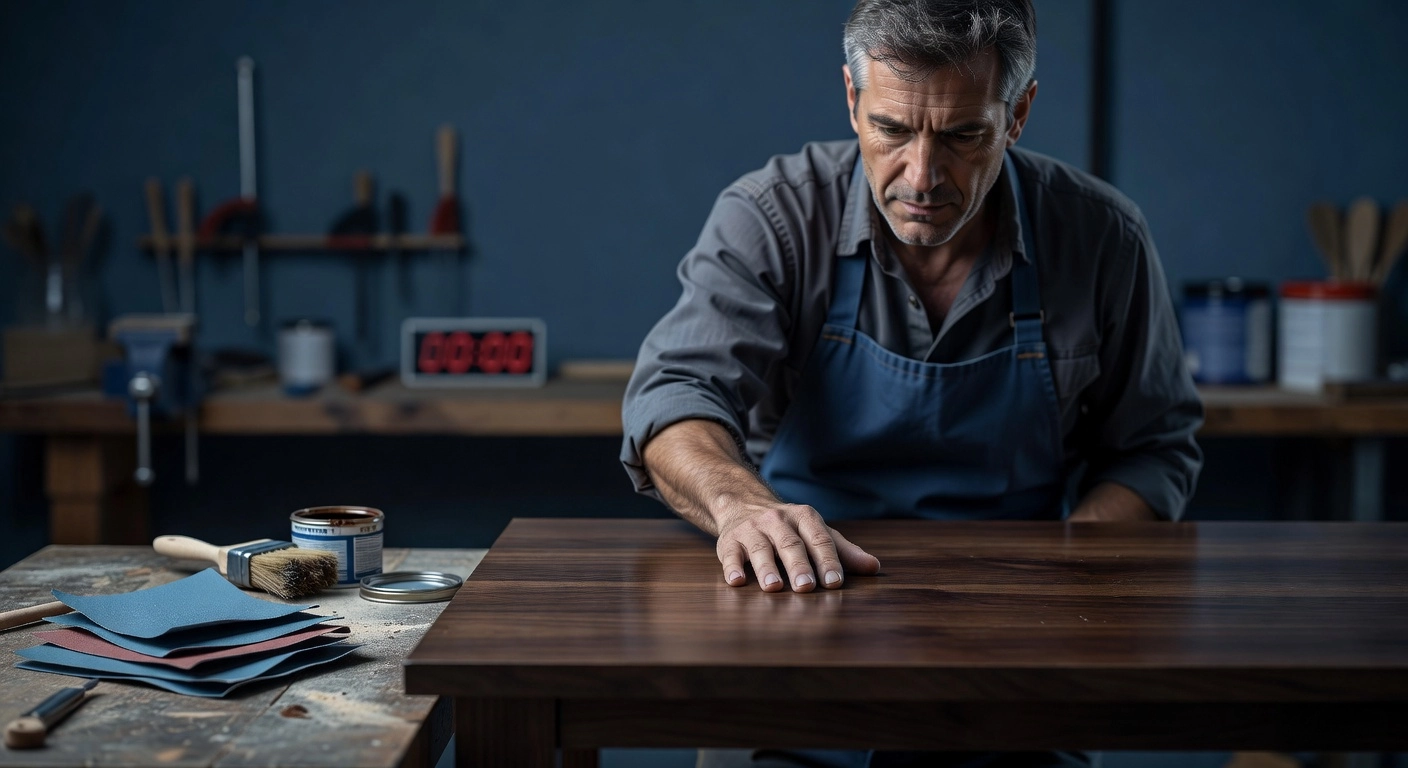
One of the most important things to understand about furniture refinishing is the difference between a finish that feels dry and a finish that actually is dry. When you run your hand over a freshly finished surface and it no longer feels tacky, that just means the solvents have evaporated enough to form a skin. The finish hasn’t fully hardened yet. Full cure, meaning the point where the finish reaches its maximum hardness and durability, takes anywhere from 7 to 30 days depending on the product. Water-based finishes typically cure in 7 to 21 days, while oil-based products can take the full 30 days or longer.
Using your furniture before that cure window closes is where a lot of beginners accidentally undo all their hard work. A soft, uncured finish is incredibly vulnerable. Setting a glass down can leave a permanent water ring. Placing a book or a decorative object on the surface can press a visible impression right into the film. Even a tablecloth dragged across the surface can cause peeling or lifting. These aren’t surface scratches you can buff out; they often require sanding back and starting the finish process over entirely.
Mistakes That Trip Up Beginners
Beyond patience with curing, there are a handful of technique mistakes that consistently cause problems. Skipping grits in your sanding progression is a big one. If you jump from 80-grit straight to 220-grit, you leave deep scratches that finer paper can’t remove, and those scratches show right through your stain. Applying stain too thick is another trap; it gets gummy, dries unevenly, and creates a blotchy, muddy look. Always apply a thin coat and wipe the excess. Also, never shake a can of finish; stir it gently. Shaking introduces air bubbles that transfer directly onto your surface.
Environment Matters More Than You Think
Temperature and humidity have a massive effect on how your finish behaves. The sweet spot is roughly 65 to 75 degrees Fahrenheit with moderate humidity. Finishing outdoors in summer heat sounds convenient, but direct sun and high temperatures cause the surface to skin over too quickly, trapping solvents underneath and causing adhesion failure, bubbles, or peeling down the road. High humidity slows water-based finishes dramatically and can cause clouding.
Fixing Common Finish Problems
If something goes wrong, most problems are fixable with a light sand-back and a fresh coat applied under better conditions. Bubbles usually come from shaking the can or brushing too aggressively; sand smooth and reapply with gentle strokes. Fisheye, those annoying little craters in your finish, means there’s oil or wax contamination on the surface; strip back, clean thoroughly, and start fresh. Blotchy stain is almost always a wood porosity issue; a pre-stain conditioner applied before your next attempt will help significantly. Streaks typically point to thick coats or a worn brush; thin coats and a quality applicator solve this almost every time.
DIY vs. Professional Refinishing: How to Decide
Now that you’ve worked through the full refinishing process, it’s worth stepping back to ask an honest question: should you have done this one yourself, or is the next project better left to a pro? Knowing where the line falls saves you time, money, and a few headaches.
DIY makes the most sense for solid wood pieces with good structural integrity, simple color changes, and manageable surface areas. Think a small oak dresser, a pine coffee table, or a set of dining chairs without intricate carvings. If the joints are tight, the surface is flat, and you’re just refreshing a faded stain or switching up the color, you’re in good DIY territory. Materials for a typical dresser project run roughly $100 to $250, covering stripper, sandpaper, stain, topcoat, and basic safety gear.
Professional refinishing is worth the investment when the job gets complicated. Veneer repairs, complex color matching on antiques, structural fixes, and irreplaceable heirlooms all benefit from expert hands. A pro averages around $350 to $700 for a dresser in 2026, though intricate pieces can run higher. That gap over DIY costs narrows quickly when you factor in your time and the risk of a costly mistake on something valuable.
Most professional services include pickup and delivery, custom stain matching, structural repairs, and a workmanship warranty, often around one year.
If you decide to hire out, get two or three quotes, ask to see before-and-after photos, and request a written breakdown of costs. Red flags to watch for include vague pricing, no portfolio, and pressure to commit without a proper in-person assessment. A trustworthy refinisher welcomes your questions.
Why Refinishing Is the Sustainable Choice in 2026
Every year, Americans alone throw away roughly 12 million tons of furniture, and the overwhelming majority of it ends up in landfills rather than being recycled or repurposed. That’s an enormous amount of wood, metal, and craftsmanship simply buried in the ground. When you choose to refinish a piece instead of replacing it, you’re directly pushing back against that cycle and keeping a functional object in use for potentially decades longer.
The numbers behind the upcycled furniture movement make it clear this isn’t a niche trend. The global upcycled furniture market is projected at approximately $11.4 billion in 2026, growing at a 10% annual rate, which signals a genuine and lasting shift away from disposable “fast furniture” toward pieces people actually want to keep and care for. Consumers are increasingly choosing quality, story, and longevity over cheap and convenient.
The good news for beginners is that going the eco-friendly route no longer means sacrificing results. Low-VOC and water-based finishes are widely available today and perform comparably to older solvent-heavy products, with faster dry times and far less indoor odor. You can complete a full refinishing project safely in a well-ventilated room without harsh chemical exposure.
Refinishing also fits neatly into circular economy thinking by keeping existing wood out of the waste stream and reducing demand for freshly harvested timber. Beyond the environmental angle, it connects beautifully with 2026’s quiet luxury aesthetic, where natural wood tones, subtle custom stain colors, and thoughtfully updated hardware create pieces that feel elevated, personal, and genuinely timeless rather than mass-produced.
Frequently Asked Questions About Furniture Refinishing
How long does a full refinishing project take, including drying and curing?
Plan for anywhere from a few days to a few weeks when you factor in every stage. The hands-on work, cleaning, stripping, sanding, and applying coats, might only take several hours spread across a weekend. The waiting, however, is where time really adds up. Individual coats typically dry in 4 to 24 hours depending on the product and humidity in your space. Full curing, meaning the point where the finish reaches its maximum hardness and durability, takes 7 to 14 days for most finishes, and some oil-based urethanes need closer to 28 days. During that curing window, treat your piece gently and keep heat and moisture away from it.
Can you skip stripping and still get good results?
Sometimes yes, and it can save you a lot of time. If the existing finish is intact but just tired-looking, with maybe some light scratches or fading, you can clean thoroughly, lightly scuff the surface for adhesion, and apply a compatible topcoat or gel stain right over it. Problems start when you have peeling layers, incompatible old finishes stacked on top of each other, or damage that goes down into the wood itself. In those cases, skipping the strip usually means your new finish fails faster than it should.
What is the difference between refinishing and repainting?
Refinishing restores or changes the wood’s natural appearance using stains and clear protective topcoats, keeping the grain visible. Repainting covers everything with an opaque layer of paint, hiding the grain entirely. For solid wood pieces you love for their character, refinishing almost always makes more sense. For particleboard furniture, heavily damaged surfaces, or pieces where you just want a bold new color, paint is the more practical and forgiving choice.
How do you handle furniture buried under multiple paint layers?
Work slowly and use chemical stripper rather than aggressive mechanical sanding, which risks gouging softened wood. Heat guns help loosen thick buildup. Sand progressively from coarser to finer grits once the bulk is removed, and pay extra attention to edges where sanding can cut through quickly.
Can veneer furniture be refinished?
Yes, but only lightly. Veneer is a thin real-wood layer that cannot survive the same sanding a solid wood piece can handle. Stick to fine-grit hand sanding, focus on cleaning and stabilizing any bubbles or loose sections, and avoid moisture. Painting is often a safer long-term option for veneer that is already showing wear.
What finish holds up best on a dining table?
Oil-modified polyurethane applied in three to four thin coats is the most beginner-friendly option that still delivers serious protection against spills, scratches, and daily heat exposure. Always use coasters and trivets regardless of finish type, because no coating is fully heatproof.
When is a piece truly too far gone?
If the frame is structurally failing, the wood is deeply rotted or warped from water damage, or the veneer is delaminating beyond repair, the honest answer is often to let it go. Surface-level issues on solid wood are almost always worth fixing. A good rule of thumb: if the bones are sound, the piece is worth saving.
Start Your Refinishing Project With Confidence
You’ve got everything you need to see this through. The full process comes down to five manageable stages: assess your piece, strip the old finish, sand through the grits, stain for color, and finish with a protective topcoat. Each step builds naturally on the last, and none of them require professional training to pull off successfully. Beginners succeed here every day with patience, basic tools, and a willingness to go slowly.
If this is your first project, start small on purpose. A side table, a stool, or a thrifted end table gives you room to practice without the pressure of a large, sentimental piece like a dining table or dresser. Smaller items build real muscle memory and deliver a satisfying result fast, which makes tackling that bigger project feel far less daunting.
From here, WoodStuffHQ has you covered for what comes next. Check out the guides on fixing scratches on wood furniture, removing water stains, and restoring dry wood for targeted touch-up skills that pair naturally with refinishing.
Snap before-and-after photos at every stage and share your results with the DIY and upcycling community online. People are genuinely inspired by real transformations. And with the global wood furniture repair market projected to reach $3.6 billion by 2035, you are joining a growing movement that values quality and longevity over disposable flat-pack furniture. A well-refinished piece simply lasts longer, and that is always worth the effort.
Conclusion
Furniture refinishing is a skill that anyone can learn, and the results are well worth the effort. To recap the essentials: proper surface preparation is the foundation of every great finish, choosing the right stain or paint makes all the difference in the final look, and a quality top coat protects your hard work for years to come. Most importantly, patience and attention to detail will always outperform rushing through the process.
Now it is your turn to put these techniques into practice. Start small with a thrift store find or that forgotten piece sitting in your garage. Take it one step at a time, trust the process, and do not be afraid to make mistakes because that is how the best skills are built.
Your next favorite furniture piece is not something you need to buy. It is something you can create.


Pingback: Grain Wood Furniture Review: Worth Buying in 2026? - WoodStuffHQ
Pingback: Best Wood Furniture Cleaners: Top Picks and DIY Recipes - WoodStuffHQ
Pingback: Best Sofa Beds with Wood Frames: What to Buy and Make Last - WoodStuffHQ
Pingback: Queen Bed Frames: Best Options to Buy, Build, or Restore - WoodStuffHQ
Pingback: Murphy Beds: 9 Things Every DIY Woodworker Should Know - WoodStuffHQ