

Finding the perfect sofa bed can feel overwhelming, especially when you’re navigating dozens of options, confusing specs, and conflicting reviews. But here’s the good news: when you narrow your search to sofa beds with wood frames, you immediately filter out a lot of the noise and zero in on pieces that are built to last.
Wood frames have long been the gold standard in furniture construction. They offer superior durability, a timeless aesthetic, and the kind of structural integrity that cheap metal or particleboard alternatives simply cannot match. Whether you’re furnishing a guest room, a studio apartment, or a living space that needs to pull double duty, a wood-framed sofa bed is one of the smartest investments you can make.
In this guide, we’ve done the research so you don’t have to. You’ll discover the best sofa beds with wood frames available today, learn what separates a quality build from a forgettable one, and pick up practical tips to keep your piece looking and functioning beautifully for years to come. Let’s get started.
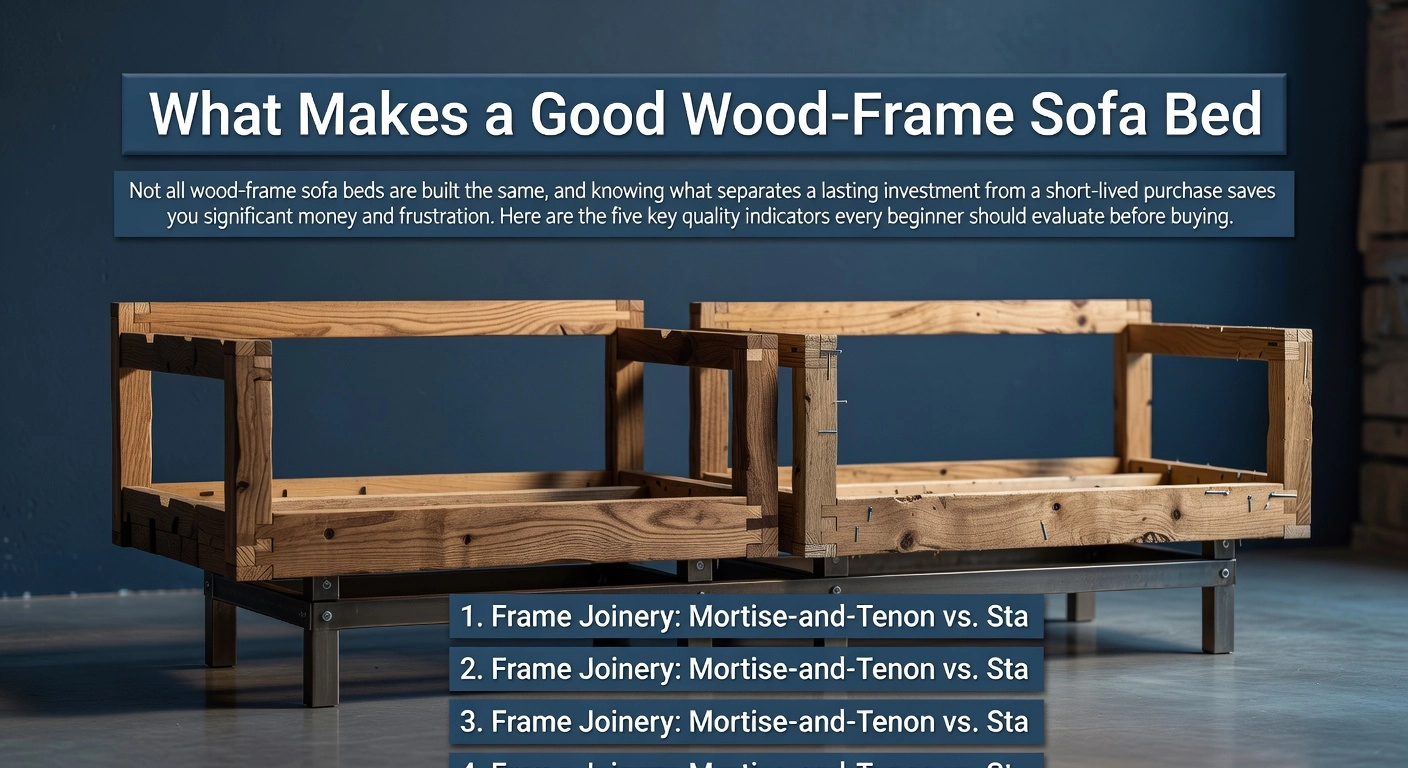
What Makes a Good Wood-Frame Sofa Bed
Not all wood-frame sofa beds are built the same, and knowing what separates a lasting investment from a short-lived purchase saves you significant money and frustration. Here are the five key quality indicators every beginner should evaluate before buying.
1. Frame Joinery: Mortise-and-Tenon vs. Staple-and-Glue
The way a frame is joined together determines how long it survives daily stress. Mortise-and-tenon joinery, one of woodworking’s oldest and most reliable methods, involves cutting a precisely fitted pocket (mortise) into one piece of wood and a matching projection (tenon) on the adjoining piece. The interlocking connection, often reinforced with glue and corner blocks, resists twisting, racking, and repeated weight loads for decades. Staple-and-glue construction, common in mass-produced furniture, uses fasteners and adhesive to hold joints together quickly and cheaply. Under the repeated folding, unfolding, and occupancy stress of a sofa bed, these joints loosen, creak, and eventually fail within a few years. When shopping, ask specifically about joinery type or look for terms like “kiln-dried hardwood frame with reinforced joinery” in product specifications.
2. Wood Species: Oak, Walnut, and Pine Compared
Wood species dramatically affect how a frame performs over time. Oak registers between 1,290 and 1,360 lbf on the Janka hardness scale, offering exceptional dent resistance and grain stability, making it ideal for high-traffic sofa bed use. Walnut, at approximately 1,010 lbf, provides slightly less hardness but delivers rich, distinctive grain patterns and excellent durability for daily wear. Pine, a softwood ranging from 380 to 690 lbf, is significantly more vulnerable to dents and scratches and is better suited to low-traffic applications. For a sofa bed expected to serve both seating and sleeping functions regularly, oak or walnut frames are the clear practical choice.
3. Finish Quality and Future Restoration
Finish type matters more than most buyers realize, especially if you plan to restore or refinish the piece later. Penetrating oil finishes, such as tung oil or Danish oil, soak into the wood fibers rather than sitting on top. This means scratches and wear blend in naturally, and touch-up work requires nothing more than reapplying oil to the affected area. Lacquer coatings form a hard film over the surface that offers strong initial protection but cracks and peels over time; repairing lacquer often requires sanding down a broad area and recoating, which is considerably more labor-intensive. For households focused on long-term wood care, an oil-finished frame is far more maintainable. You can find more guidance on evaluating sleeper sofa quality standards before purchasing.
4. Pull-Out vs. Fold-Down Mechanisms
Pull-out sofa beds store an innerspring or memory foam mattress inside the frame on a folding metal sub-structure. This design places substantial dynamic stress on the wood frame, particularly on the rails, cross-members, and joints, every time the bed is deployed and stowed. The frame must be engineered to handle both the mechanism’s weight and distributed sleeper weight without sagging. Fold-down designs, where the backrest reclines flat or cushions rearrange, are mechanically simpler and impose less complex structural demand, though the hinge points still require solid construction. Either way, a robust hardwood frame with quality joinery is non-negotiable for reliable long-term performance.
5. Solid Wood vs. MDF and Particleboard
For households expecting 10-plus years of regular use, solid wood is the only sensible choice. Kiln-dried hardwood resists warping, supports reupholstery, and can be sanded and refinished repeatedly. MDF and particleboard, made from compressed fibers and resins, absorb moisture, sag under sustained load, and chip irreparably. Once damaged, engineered board furniture is essentially unrepairable. Solid wood frames also retain resale value and support sustainability goals by lasting generations rather than years. According to current furniture trend research, consumers increasingly favor natural wood materials for exactly this reason. If a listing does not specify solid wood construction, treat that as a warning sign and investigate further before committing to a purchase.
The Best Wood-Frame Sofa Beds Ranked by Durability and Design
Now that you understand what separates a quality wood-frame sofa bed from a mediocre one, here is how the top options on the market actually stack up against each other. Each pick below was evaluated using five consistent criteria: frame material grade, finish type, mechanism quality, manufacturer sustainability claims, and estimated lifespan.
1. WoodStuffHQ Top Pick: Solid Oak or Walnut Platform Sofa Bed
For households that demand the most from their furniture, a solid oak or walnut platform sofa bed with an exposed wood frame, mortise-and-tenon joinery, and a natural oil finish represents the gold standard. Mortise-and-tenon joints distribute stress across the wood grain rather than relying on metal fasteners that can loosen over time, making this construction style ideal for high-use households where the sofa bed is pulled out multiple nights per week. Natural oil finishes penetrate the wood fibers rather than sitting on top like polyurethane, meaning they can be reapplied and refreshed without full stripping. For woodworking hobbyists, this type of frame is also the most satisfying to maintain, since standard wood care techniques apply directly.
2. Article Nordby
The Article Nordby is a Scandinavian-inspired sleeper sofa built around a kiln-dried solid wood frame with corner-blocking for added rigidity. Kiln-drying removes moisture from the wood before construction, which prevents warping and joint failure over time, a critical quality indicator for frames that will flex repeatedly with each conversion. The Nordby is available in linen and boucle upholstery, both of which are relatively forgiving to clean, and the solid wood legs are easy to remove, sand lightly, and refinish if they accumulate scratches. For beginners who want a durable but approachable entry into solid wood sofa beds, this model offers reliable everyday performance.
3. West Elm Shelter Sleeper
The West Elm Shelter Sleeper earns its place on this list through a combination of sustainability credentials and long-term refinishability. Its FSC-certified solid wood frame confirms that the timber was harvested from responsibly managed forests, an increasingly important factor given that 76% of U.S. shoppers now prioritize sustainable products when making furniture purchases. The pull-out innerspring mechanism provides a more traditional sleeping surface than foam-only options, which many users find more comfortable for extended guest stays. The refinishable leg finish means this sofa bed can be restored rather than replaced if the wood shows wear after several years of use.
4. Room and Board Berin
The Room and Board Berin is widely recognized as one of the most consistently built sleeper sofas available, particularly for buyers who want quarter-sawn oak frame options. Quarter-sawn oak is cut perpendicular to the growth rings, producing a more dimensionally stable board that resists warping better than flat-sawn alternatives. This matters enormously in a sofa bed frame, where repeated mechanical stress can exploit any structural weakness. Reviewers consistently report that Berin frames hold up across years of heavy guest use without developing the creaks or wobbles common in lesser-built alternatives, making it a smart long-term investment for guest rooms that see frequent use.
5. Innovation Living and Luonto
Both Innovation Living and Luonto are Scandinavian brands that engineer their sofa beds specifically for nightly use rather than occasional pull-outs. Their frames use beech and birch hardwoods, both of which offer an excellent strength-to-weight ratio for fold-down mechanisms that must cycle hundreds of times without binding or sagging. Luonto in particular emphasizes sustainably sourced Nordic woods with smooth, gap-free fold-down surfaces that sleep like a proper bed rather than a compromise. These brands suit anyone who needs a sofa bed that functions as a primary sleeping surface, not just a guest option.
6. IKEA FRIHETEN
The IKEA FRIHETEN is the most accessible option on this list, typically priced under $1,000 and widely available for renters who move frequently. Its engineered wood frame is functional and adequate for occasional use, but it has meaningful limitations that beginners should understand before purchasing. Engineered wood cannot be sanded, refinished, or restored the way solid hardwood can, which means damage is essentially permanent. For renters who prioritize affordability and do not plan long-term wood maintenance, it remains a practical choice; for homeowners seeking a piece they can care for and restore over decades, it falls short.
7. American Leather Sleepers
American Leather represents the premium end of this category, combining high-end solid wood frames with patented pull-out mechanisms backed by a 10-year warranty on the mechanism and a lifetime warranty on the frame itself. Real-world examples of these sleepers lasting 16 or more years without sagging are not uncommon among reviewers, which speaks directly to the value of investing in repairability from the start. For buyers who want a sofa bed they can pass down or maintain indefinitely, expert guides consistently rank American Leather among the top choices available today.
8. Jasiway Floor Platform Sofa Bed
The Jasiway Floor Platform Sofa Bed is a standout pick specifically for woodworking hobbyists and DIY enthusiasts in the WoodStuffHQ audience. Its solid wood platform construction with modular, reversible arms invites customization in a way that most ready-made sofas do not. The low-profile floor-level design works well in smaller spaces, and the solid wood components can be refinished, stained, or treated with wood oils later down the line as skills develop. If you enjoy hands-on wood care projects and want a sofa bed that can grow with your woodworking knowledge, this is the most DIY-compatible option on this list.
Across all eight picks, the clearest pattern is that frame material grade drives nearly every other quality metric, from how long the finish holds to how well the mechanism operates after years of use. Solid hardwood frames consistently outlast engineered alternatives by a significant margin, and they remain the only option for buyers who want to restore and maintain their sofa bed rather than replace it.
Wood Frame vs. Metal vs. Upholstered: Which Lasts Longer
Once you have narrowed down your top sofa bed picks, the frame material becomes the deciding factor for how long your investment actually lasts. The comparison between wood, metal, and upholstered frames reveals meaningful differences in durability, maintenance demands, and real-world repairability.
1. Durability: What Each Frame Material Actually Delivers
Solid wood frames, particularly those built from kiln-dried hardwoods like oak or walnut, consistently outperform other materials over the long haul. Research on sofa frame types shows that high-quality solid wood frames routinely last 10 to 15 years or more with proper care, while MDF and engineered wood alternatives typically give out within 5 to 8 years. Solid wood furniture more broadly can last 20 to 50 years when maintained correctly, a lifespan no metal or upholstered option reliably matches. Metal frames, while structurally strong and moisture-resistant in their early years, present a critical limitation: once a weld cracks or the frame bends under repeated stress, restoration becomes extremely difficult. Unlike wood, you cannot sand down a bent steel joint and refinish it back to working order.
2. Care Requirements Differ More Than You Might Expect
Wooden sofa bed frames require periodic dusting, occasional conditioning with appropriate wood oils or waxes, and stable indoor humidity levels to prevent warping or cracking. These are simple, low-cost tasks that most homeowners can handle without professional help. Powder-coated metal frames, by contrast, need consistent protection from moisture, since any scratch in the coating opens the door to rust, particularly in humid climates or basements. Comparisons between wooden and metal bed frames consistently highlight that metal frames also tend to develop squeaks over time as joints loosen, which wood frames with mortise-and-tenon construction resist far better.
3. The Repairability Advantage of Wood Frames
This is where solid wood frames genuinely separate themselves from the competition. Scratches, surface dents, and worn finishes on an oak or walnut sofa bed frame respond well to DIY sanding, wood filler, staining, and refinishing techniques. A repair that costs a fraction of replacement can add years of usable life. Metal damage, by comparison, often requires welding or specialized tools that most homeowners do not own. Fully upholstered frames compound the problem further by hiding the underlying structure entirely, trapping odors, allergens, and moisture in the fabric and padding with limited options for deep cleaning without professional intervention.
4. Cost-Per-Year Value Favors Solid Wood
When you calculate the true cost of ownership over time, solid wood frame sofa beds deliver better value than their price tags initially suggest. A quality wood-frame sofa bed maintained with basic DIY care can last two to three decades, spreading its upfront cost over far more years than a metal or MDF option replaced every 6 to 10 years. Minor repairs on wood typically run 10 to 30 percent of the cost of a new piece, while full replacement cycles for lower-grade alternatives add up quickly. For buyers willing to invest in basic wood care skills, a solid oak or walnut frame sofa bed is not just a furniture purchase but a long-term asset.
How to Evaluate Wood Quality Before You Buy
Knowing how to read a product listing like a woodworker reads a board separates smart buyers from frustrated ones. These five evaluation points give you a reliable framework for judging wood quality before a sofa bed ever arrives at your door.
1. Decode the Terminology: Solid Wood vs. Wood Frame vs. Engineered Wood
The exact phrase used in a product spec sheet tells you more than any marketing photo. “Solid wood” means full-length pieces of kiln-dried hardwood such as oak, maple, or ash, and these frames typically last 10 to 15 years or longer under daily use. “Wood frame” is a vague term that often signals a mix of materials without committing to quality, so treat it as a yellow flag and dig deeper. “Engineered wood” covers a wide range, from furniture-grade plywood with seven or more laminated layers (a legitimate structural choice) down to particleboard and MDF, which are prone to moisture damage and joint failure under the repeated stress of a sleeper mechanism. Understanding solid wood vs. engineered wood sofa frames helps you prioritize kiln-dried hardwood or high-grade plywood hybrids over vague or low-grade alternatives.
2. Ask for Joinery Details
Frame joints are where sofa beds fail first, especially under the dynamic stress of folding, unfolding, and bearing sleeping weight. Corner blocks glued and screwed into frame corners add meaningful rigidity. Mortise-and-tenon joints, where a precisely cut wood tenon fits into a matching mortise, represent one of the strongest traditional connections available. Dowel reinforcement adds value when paired with glue and screws. Staple-only assembly, by contrast, loosens over time and is a reliable indicator of a shorter lifespan. Premium solid wood sofa frames built to last almost always combine multiple joinery methods rather than relying on a single fastener type.
3. Evaluate the Finish for Future Repairability
If you ever plan to touch up or restore the exposed wood on your sofa bed, finish type matters enormously. Oil-based and wax finishes penetrate the wood surface, making spot repairs as simple as light sanding followed by a fresh application. Thick lacquer coatings form a protective film that resists daily wear well initially but requires stripping back to bare wood for any serious repair work. Neither finish is inherently wrong; the right choice depends on whether you prioritize long-term DIY flexibility or maximum upfront surface protection.
4. Consider Grain Direction on Structural Components
Quarter-sawn lumber, cut so growth rings run perpendicular to the face, resists warping, cupping, and twisting far better than flat-sawn cuts when exposed to repeated weight and humidity changes. For load-bearing components like legs and side rails, straight-grained quarter-sawn hardwood is the more stable choice. Flat-sawn lumber is more common and more affordable but moves more under stress, which compounds over years of daily sofa bed use.
5. Verify Wood Sourcing and Sustainability Credentials
FSC (Forest Stewardship Council) certification confirms that the wood was harvested through responsible forest management practices. Domestic hardwood sourcing adds traceability and reduces the environmental footprint of transport. This matters beyond ethics: sofa frame types and construction standards show that responsibly sourced lumber is more consistently graded and dried, which correlates with better structural performance. With 76% of U.S. shoppers now prioritizing sustainable products when buying furniture, FSC-certified and domestically sourced options are no longer rare; they are increasingly standard among premium brands and worth requesting before you commit.
Long-Term Care for Wooden Sofa Bed Frames
A solid wood sofa bed frame can outlast several cheaper alternatives when you commit to a simple maintenance routine. These five care practices protect your investment and keep the timber looking as good as the day it arrived.
1. Routine Cleaning Without Damaging the Finish
Dust and grime are the most consistent threats to a wood frame’s finish, and removing them safely requires the right technique. Use a soft microfiber cloth that is slightly damp, not wet, and pair it with a pH-neutral wood cleaner to avoid stripping the protective coating or swelling the wood grain beneath. Always wipe in the direction of the grain rather than across it, using gentle, even strokes. Follow immediately with a dry cloth to absorb any residual moisture, since even small amounts of standing water can lift finishes over time. Avoid silicone-based polishes, abrasive pads, and general-purpose household sprays, as these are formulated for surfaces that can handle more aggressive chemistry than wood finishes can.
2. Scratch Prevention and Treatment
Prevention is always cheaper than repair when it comes to timber frames. Stick felt or rubber pads under all four frame legs before the sofa bed ever touches your floor, since this single step prevents the constant micro-abrasion that accumulates during everyday movement and use. When a surface scratch does appear, address it immediately rather than letting it expose raw wood to moisture. A matching wood touch-up marker or repair crayon blended carefully into the scratch is usually enough for shallow damage. Deeper gouges may need a wood filler product, light sanding, and a fresh coat of matching finish. Widespread wear across multiple areas is a signal that a full refinish, involving stripping, sanding, restaining, and resealing, is the more practical path forward.
3. Moisture Protection and Placement
Wood is a living material that expands and contracts in response to humidity and temperature shifts, which is why placement decisions matter as much as cleaning habits. Keep your wooden sofa bed frame away from direct sunlight, HVAC vents, and high-humidity spaces like basements or rooms with poor ventilation. Sustained UV exposure fades and dries wood, while heat sources near vents cause rapid moisture loss that leads to cracking and finish peeling. Maintaining indoor humidity between 40 and 60 percent using a humidifier or dehumidifier stabilizes the wood year-round and dramatically reduces the risk of warping.
4. Hardware Maintenance on a Seasonal Schedule
The pull-out mechanism and hinge hardware on a sofa bed endure significant stress with every conversion, and loose fasteners are the leading cause of the wobbling and instability that shortens a frame’s functional life. Set a reminder every three to six months, timed around seasonal cleaning, to inspect and tighten all bolts, hinge screws, and connector hardware. A basic screwdriver and an Allen wrench handle most of this task in under ten minutes. For moving parts in the mechanism, a light application of appropriate lubricant keeps the action smooth without attracting dust buildup. This simple habit is one of the most effective ways to extend the years of reliable use you get from any sofa bed. You can find a practical overview of this approach in this convertible bed care and longevity guide.
5. Reconditioning the Finish Before It Fails
Wood sends visible warning signs before serious damage sets in, and catching them early saves you from a costly full refinish. Look for a lighter or faded color in the wood, a rougher texture when you run your hand across the frame, or a general loss of the sheen you noticed when the piece was new. These are signs the wood is drying out and losing the flexibility it needs to resist cracking. Penetrating oil products such as Danish oil, tung oil, or linseed oil blends are ideal for this stage of care. They soak directly into the wood fibers, restore moisture and suppleness, and bring back a warm satin luster without building up a thick surface layer. Clean the frame thoroughly first, apply the oil according to the product directions, allow it to penetrate fully, then buff away any excess with a clean cloth. Repeat annually or whenever the warning signs return to keep your timber frame performing at its best for years to come.
Can You Build or Restore a Wooden Sofa Bed Yourself
The good news for hands-on homeowners is that both building and restoring a wooden sofa bed frame fall well within reach of a beginner with basic tools and a free weekend.
1. Building a Custom Wooden Sofa Bed from Scratch
DIY plans available on Etsy and YouTube have made custom sofa bed builds more accessible than ever. Pine is the most practical starting lumber for beginners because it is affordable, widely available at big-box stores, and easy to cut and fasten. Most plans call for dimensional pine like 2x4s for the structural frame and 1×12 planks for side panels, with 3/4-inch plywood often added for the base. Tool requirements are refreshingly modest: a circular saw or track saw, a drill/driver, clamps, wood glue, a sander, and basic measuring tools cover the majority of builds. For the sofa-to-bed conversion mechanism, gas struts or piston lift hardware are the most common choice, and plans typically specify the piston strength needed based on your mattress weight. Simple builds can come in under $200 in materials, making custom construction genuinely competitive with budget retail options.
2. Frame Restoration Basics

Refinishing a worn solid wood sofa bed frame follows the same straightforward process used for any wood furniture. Start by sanding the frame with 60-grit sandpaper to remove the old finish, then progress to 120-grit or finer for a smooth surface. Before applying any stain or finish, wipe on a pre-stain wood conditioner, which is especially important for pine because it prevents uneven, blotchy absorption. A penetrating oil finish such as Danish oil or tung oil is the ideal choice for beginners; it soaks into the wood, is forgiving to apply, and can be touched up later by lightly sanding and reapplying. Two to three thin coats with drying time between each will produce a durable, natural-looking result without any professional equipment.
3. Upgrading Support Slats
Sagging plywood slats are one of the most common complaints with older sofa beds, and the fix is simpler than most people expect. Measure the existing slats, then cut solid hardwood boards, pine 1x3s or 1x4s work well, to the same dimensions. Sand the edges smooth, space the new boards evenly with a 2 to 3 inch gap between each, and secure them in place. This single upgrade noticeably improves sleeping comfort and reduces stress on the frame joints over time.
4. When Restoration Is Worth It vs. Replacement
A structurally sound solid wood frame is almost always worth refinishing rather than replacing. Solid wood tolerates repeated sanding cycles, holds screws and hardware securely, and genuinely improves with age and proper care. MDF and particleboard frames are a different story entirely. These engineered materials swell when exposed to moisture, cannot be sanded and refinished, and typically begin deteriorating within a few years of normal use. If the frame is particleboard, replacement is the more practical and cost-effective path forward.
5. WoodStuffHQ Resources for Frame Maintenance
WoodStuffHQ offers several guides that apply directly to sofa bed frame care. The furniture scratch repair guide covers quick methods for addressing surface damage without full refinishing. The dry wood restoration guide walks through oiling techniques that revive neglected frames. For anyone tackling a full refinish, the furniture refinishing beginner’s guide provides a complete step-by-step process suited to exactly this type of project.
Choosing the Right Wood-Frame Sofa Bed for Your Home
Selecting the right wood-frame sofa bed comes down to five non-negotiable criteria: frame material, joinery quality, finish type, mechanism durability, and sustainability credentials. Solid oak and walnut frames represent the strongest long-term investment for homeowners planning to keep furniture for 10 or more years. These dense hardwoods resist daily wear, develop a rich patina over time, and can be refinished rather than replaced, making them far more cost-effective over a decade than engineered wood alternatives.
The most important mindset shift for any buyer is recognizing that a quality wood-frame sofa bed is not a one-time purchase but a maintainable asset. Basic DIY skills including tightening joints, conditioning the wood with oil, and addressing surface scratches can extend the life of your sofa bed by years. Approximately 76% of U.S. shoppers now prioritize sustainable furniture, and maintaining rather than replacing aligns perfectly with that value.
Before visiting any showroom or filtering products online, work through the wood evaluation checklist covered earlier in this guide. Confirm kiln-dried solid hardwood specs, verify joinery type, check for FSC certification, and test for stability in person whenever possible. This preparation separates genuinely durable options from misleading marketing claims.
For ongoing care after your purchase, the wood care and restoration guides at WoodStuffHQ provide practical, step-by-step support covering everything from conditioning treatments to finish restoration, all designed for beginners without professional tools.
Conclusion
Choosing the right sofa bed does not have to be complicated. When you prioritize a solid wood frame, you are investing in durability, timeless style, and long-term value that cheaper alternatives simply cannot deliver. Pair that with quality cushioning, a smooth pull-out mechanism, and routine care, and your sofa bed will serve you well for years to come.
The smartest buyers focus on construction first and aesthetics second. A beautiful piece means nothing if it wobbles after six months.
Now it is time to put this knowledge to work. Browse the top picks highlighted in this guide, measure your space, and choose a sofa bed that fits both your lifestyle and your budget. Your perfect guest room or studio setup is closer than you think. Invest wisely, and enjoy the comfort and versatility that a great wood-framed sofa bed brings to your home.