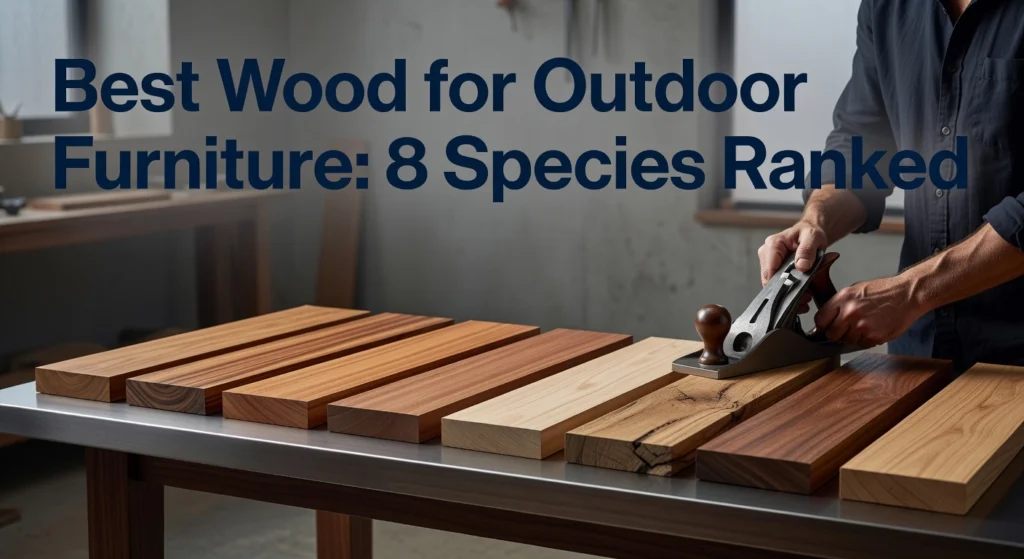

Choosing the wrong wood for your outdoor furniture can be an expensive mistake. Left exposed to rain, sun, and humidity, the wrong species will warp, crack, and rot within just a few seasons, leaving you with a yard full of splinters and regret.
The good news is that selecting the right material does not have to be complicated. Whether you are building a backyard deck, shopping for a patio dining set, or simply replacing a worn-out garden bench, understanding which wood species hold up best outdoors will save you time, money, and frustration in the long run.
In this guide, we have ranked eight of the best wood options for outdoor furniture, from budget-friendly choices to premium hardwoods built to last decades. You will learn how each species performs against moisture and insects, how much maintenance each one requires, and which option best fits your budget and lifestyle. By the end, you will have everything you need to make a confident, informed decision before spending a single dollar on your next outdoor furniture project.
Why Wood Still Beats Synthetic Outdoor Furniture
Wood continues to dominate the global outdoor furniture market for good reason. According to market research from Fortune Business Insights, wood holds between 42 and 53% of the global outdoor furniture market by material share, consistently outpacing aluminum, resin, and HDPE composites. That kind of market leadership does not happen by accident. It reflects decades of real-world performance and a set of advantages that synthetic materials simply have not been able to match.
1. Repairability Changes the Long-Term Value Equation
The single biggest practical advantage wood holds over synthetics is repairability. When a teak bench develops surface scratches, when cedar boards crack after a harsh winter, or when weathering leaves your acacia table looking dull and grey, you can sand the surface back and refinish it at home with basic supplies. No professional tools required, no replacement purchase necessary. Synthetic options like HDPE composites cannot offer this. Once faded, cracked, or deeply scratched, those pieces typically head to the landfill. Properly maintained hardwoods like teak can realistically last 20 to 50 years or more, making wood the stronger long-term investment.
2. Natural Patina Is a Feature, Not a Flaw
Teak and cedar develop a distinctive silver-grey patina through natural UV exposure and weathering. Many homeowners actively seek this aged, organic look because it deepens the character of a piece over time. Synthetic manufacturers recognize this appeal and spend considerable effort molding faux wood grain textures and colors into their composites in an attempt to replicate it. The result is always recognizable as an imitation. Real wood grain carries tactile warmth, natural variation, and an evolving aesthetic that no manufactured composite can authentically reproduce.
3. Wood Aligns With How Modern Consumers Shop
Research from Market Research Future confirms that over 60% of consumers prefer environmentally friendly brands, with a significant portion willing to pay more for responsibly sourced materials. FSC-certified teak, cedar, and acacia sourced from managed forests directly meet this demand. Paired with low-VOC finishing options, wood outdoor furniture supports a genuinely sustainable purchase, not just a marketing claim. Petroleum-based synthetics, regardless of their recycled content messaging, cannot match the renewable, repairable, and biodegradable profile of certified wood.
4. Long-Term Cost Favors Wood When You Maintain It
HDPE composites win on zero-maintenance convenience, and that is a legitimate point worth acknowledging. However, wood wins decisively on longevity, aesthetics, and long-term cost when you commit to basic annual care, such as cleaning, oiling, or sealing. A quality teak dining set maintained with periodic oiling can outlast multiple cycles of synthetic furniture replacement, ultimately costing less over a 20-year period. The key phrase is “properly maintained,” and that is exactly where practical, beginner-friendly wood care knowledge makes all the difference.
What Makes a Wood Suitable for Outdoor Use
Not all wood species are created equal when it comes to surviving the elements. Four specific properties determine whether a wood will thrive outdoors or deteriorate within a few seasons.
1. Natural Oil Content
Oil content is the single most important factor in outdoor performance. High-oil species like teak contain natural compounds that actively repel moisture, resist fungal growth, and prevent warping without any added treatment. Teak’s exceptional natural oils make it the gold standard for outdoor furniture precisely because those oils work continuously, even in wet or coastal climates. Lower-oil woods like pine require sealants or stains to achieve comparable results.
2. Janka Hardness Rating
The Janka scale measures how much force a wood can resist before denting. Teak scores around 1,070 lbf, making it durable under normal patio use. Ipe reaches approximately 3,510 lbf, offering superior resistance in high-traffic areas where furniture gets stacked, dragged, or heavily used. Softer woods below 900 lbf show surface wear much faster.
3. Grain Density
Tighter grain means less surface area for moisture and UV rays to penetrate. Dense-grained tropical hardwoods resist the cracking, checking, and fungal ingress that plague looser-grained species in humid or rainy climates. This property works alongside oil content to reduce long-term maintenance demands.
4. Silica Content
Some tropical hardwoods absorb silica from soil during growth. This creates a hard, microscopic barrier that strengthens resistance to insects, rot, and moisture without chemical treatment. Ipe, for example, can last 50 or more years outdoors with minimal maintenance partly because of its silica content.
Evaluating any wood species against these four factors gives beginners a reliable framework. Match your climate and maintenance tolerance to the right combination of oil, hardness, grain, and silica before making any purchase.
Teak: The Gold Standard for Outdoor Durability
If you want outdoor furniture that handles everything nature throws at it without demanding much in return, teak is the wood most experts point to first. This tropical hardwood (Tectona grandis) has earned its reputation over centuries, originally prized for boat decks and marine applications because of one standout quality: its extraordinarily high natural oil content.
Why Teak’s Natural Oils Change Everything
Teak contains more natural oils and silica than virtually any other commonly available outdoor furniture wood. Those oils work around the clock as a built-in barrier, repelling water before it can soak into the wood fibers, resisting rot and fungal growth, and deterring insects including termites. The result is a wood that stays structurally sound outdoors with little to no chemical treatment. According to Diamond Tropical Hardwoods, teak’s dense grain and natural oil composition make it uniquely resistant to the kind of moisture damage that compromises most other woods within a few seasons.
Durability Across Every Climate
Teak earns an excellent durability rating across all outdoor conditions. It handles coastal salt air, tropical humidity, heavy rain, intense UV exposure, and freeze-thaw cycles with equal reliability. Unlike softer woods that swell, crack, or warp under temperature swings, teak expands and contracts minimally because its oils regulate moisture absorption. If you live near the ocean or in a region with harsh winters, this matters significantly. Very few woods at any price point can match that kind of all-climate performance.
Maintenance Level and DIY Care Routine
Maintaining teak outdoor furniture is straightforward enough for any beginner. Once or twice a year, clean the surface by scrubbing gently along the grain using a soft nylon brush and a mild soap solution or a commercial teak brightener. Rinse thoroughly, then allow the wood to dry completely, typically 24 to 48 hours, before any further treatment.
After drying, you have two options. Apply a teak-specific oil or UV-protective sealer in thin coats to preserve the warm honey-brown color, wiping away any excess. Or simply leave it untreated and allow it to develop a natural silver-gray patina over one to two years. Both choices are valid; the patina does not signal damage or reduced durability. Avoid pressure washing or steel wool, as both strip the wood’s protective oils and damage the grain.
Sustainability and Cost Considerations
FSC-certified teak from responsibly managed plantations is widely available from reputable suppliers and should be your baseline requirement before purchasing. Look for FSC or SVLK certification labels, which verify legal harvesting, reforestation practices, and environmental standards. Avoid uncertified sources, as unverified teak raises serious deforestation concerns.
On cost, teak sits firmly in the premium tier. However, a quality teak set can last 30 to 50 years or longer with basic annual care, making the per-year cost surprisingly reasonable compared to replacing budget furniture every few seasons. For homeowners who want outdoor furniture they buy once and keep for decades, that upfront investment makes practical sense.
Cedar: The Budget-Friendly DIY Favorite
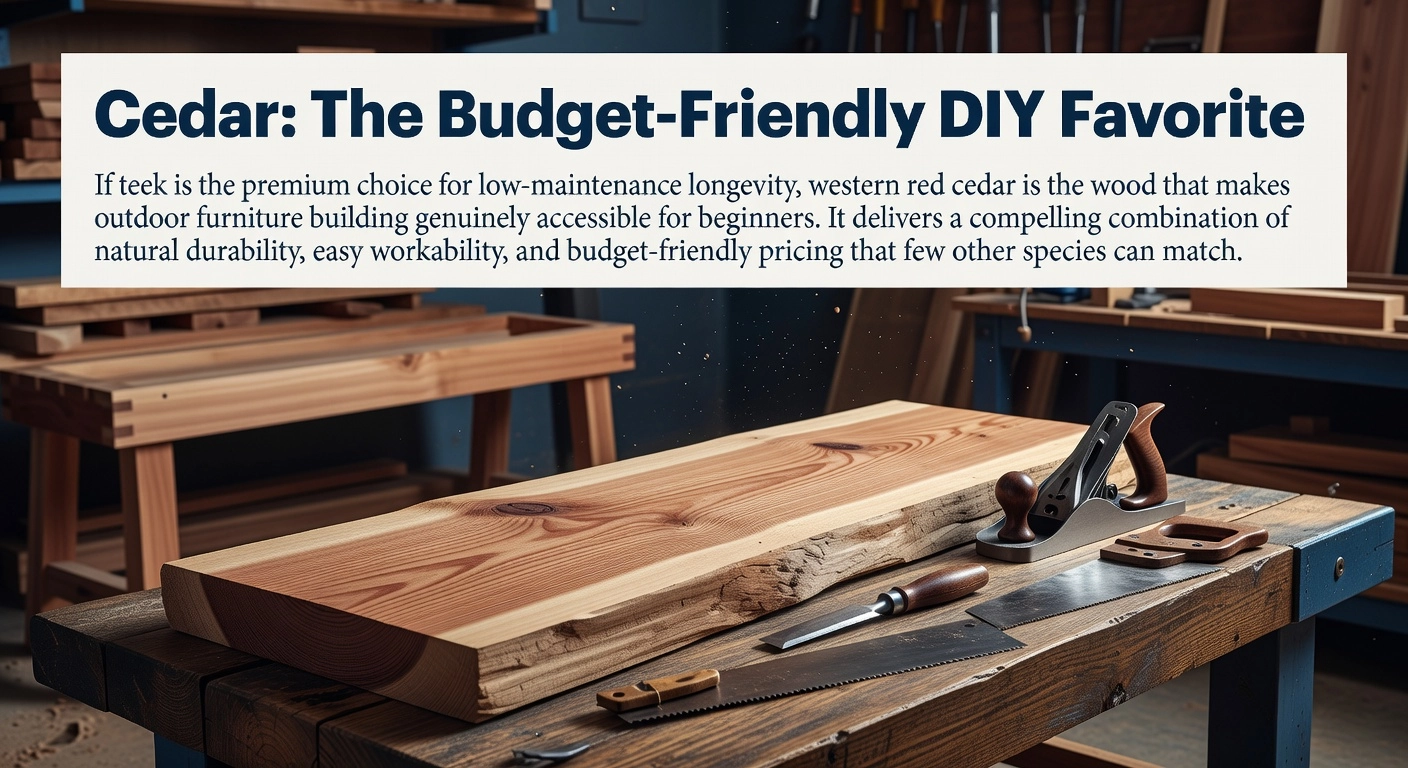
If teak is the premium choice for low-maintenance longevity, western red cedar is the wood that makes outdoor furniture building genuinely accessible for beginners. It delivers a compelling combination of natural durability, easy workability, and budget-friendly pricing that few other species can match at this level.
Why Cedar Resists the Elements Naturally
What separates western red cedar from ordinary softwoods is its internal chemistry. The heartwood contains natural compounds called thujaplicins, a class of aromatic oils that function as built-in fungicides and insect repellents. These oils actively resist moisture penetration, decay-causing fungi, and common wood-boring insects without any synthetic treatment. The wood’s distinctive sweet, slightly spiced scent is a direct byproduct of these oils. According to The Wood Database, cedar heartwood is rated “durable to very durable” against decay, placing it in the same protective tier as many hardwoods despite being a softwood. For DIY builders, this means raw cedar boards can go outdoors without requiring pressure treatment or chemical preservatives right out of the gate.
Durability and Climate Considerations
Cedar performs reliably well in dry to moderate climates, where properly finished pieces can last 15 to 20 years or more. However, in high-humidity, coastal, or consistently wet environments, the natural oils degrade faster under prolonged UV exposure and moisture cycling. In these conditions, unprotected cedar will gray and begin to check or split within a couple of seasons. The key takeaway for beginners: cedar is not a set-it-and-forget-it wood in harsh climates, but with consistent care, it holds up impressively.
Maintenance Routine Any DIYer Can Handle
Cedar requires a moderate maintenance commitment. Every one to two years, or annually in wet climates, the surface needs light sanding with 120-grit sandpaper to lift surface gray and open the grain. Follow that with a penetrating outdoor wood oil or UV-protective sealant, applying it with a brush or cloth in thin, even coats. As outlined in the Duffield Timber cedar guide, breathable penetrating finishes outperform film-forming coatings like polyurethane outdoors, since film coatings tend to peel as the wood expands and contracts seasonally.
Cost, Availability, and Best Projects
Cedar sits firmly in the affordable ($$) tier, widely stocked at lumber yards and home improvement stores in multiple grades. Construction-grade or knotty cedar keeps project costs low, while higher clear grades offer a cleaner appearance for visible furniture surfaces. This accessibility makes it the go-to starting point for first-time outdoor furniture builders tackling Adirondack chairs, garden benches, pergolas, and raised planter boxes. These project types suit cedar perfectly because they involve straightforward joinery, benefit from cedar’s lightweight nature, and naturally accommodate the periodic refinishing that keeps the wood looking sharp for years.
Acacia: High Visual Impact at a Mid-Range Price
Acacia brings something distinct to the outdoor furniture conversation: bold, eye-catching wood grain combined with genuine hardness, all at a price point that sits comfortably below premium teak. If you want a dining table or lounge chair that becomes a visual centerpiece on your patio, acacia delivers that effect reliably. The wood features interlocked, wavy grain patterns, often described as tiger stripes or river-like swirls, with warm tones ranging from golden yellow to deep reddish-brown. That combination of color depth and pattern variation is difficult to match at the same price tier.
Hardness and Durability
Acacia is a genuinely dense tropical hardwood. Janka hardness ratings typically fall in the 2,000 to 2,300 lbf range, which places it well above species like white oak and hard maple. That density translates directly to scratch resistance and structural stability in furniture that sees daily outdoor use.
The important caveat here is variability. Acacia is not a single species; it is a broad genus containing more than 1,300 individual species, sourced from regions spanning Australia, Southeast Asia, Africa, and beyond. Quality, weight, and weather resistance shift significantly depending on which species you are actually buying and where it was harvested. Some varieties perform excellently outdoors for a decade or more with proper care. Others, particularly lower-grade material sold without clear species identification, may struggle in harsh climates. According to The Spruce’s buying guide for acacia furniture, always ask your supplier for specific species and origin details before purchasing.
Maintenance Routine for Beginners
Acacia requires more attention than teak because it contains less natural oil. In dry or sunny climates, plan to oil your acacia furniture every three to six months. Skipping this step leads to surface cracking, graying from UV exposure, and moisture infiltration over time.
A practical DIY care routine looks like this:
- Clean monthly with mild soapy water and a soft cloth; rinse thoroughly and dry completely before oiling
- Inspect the surface for small cracks or rough patches, sanding lightly with fine-grit sandpaper if needed before applying oil
- Apply teak oil or a food-safe outdoor wood oil in thin coats following the grain direction; wipe away any excess and allow full drying between coats
- Prepare for winter by cleaning, applying a fresh protective oil coat, then storing pieces indoors or covering them with waterproof furniture covers to block moisture and UV damage
Buying Smart: The Teak Substitute Warning
One pattern beginners frequently encounter is acacia being marketed as a budget teak substitute at mass-market retailers. While acacia can be an excellent outdoor wood, lower-grade sourcing combined with vague species labeling often means the piece lacks the consistent durability and natural oil content of quality plantation teak. Before buying, verify the specific species, the sourcing region, and whether the supplier provides transparent material information. Reputable suppliers will have clear answers; those who cannot identify the exact species are worth approaching with caution.
Cost and Value Assessment
Acacia sits firmly in the mid-range price tier, generally $$ to $$$, making it a strong value option for homeowners who want high visual impact without the premium price of teak. When sourced carefully from suppliers with clear species identification, it offers a compelling combination of aesthetics, hardness, and longevity that few woods at the same price point can match.
Eucalyptus: The Sustainable Teak Alternative
If teak sits at the top of the outdoor furniture hierarchy, eucalyptus occupies a compelling position just below it: delivering comparable durability and a similarly rich, reddish-brown grain, but at a significantly lower price and with a much lighter environmental footprint. For beginners who want a premium-feeling outdoor setup without the premium cost or guilt, eucalyptus is one of the smartest choices on the market right now.
Sustainability That Sets It Apart
The two species you will most commonly find in outdoor furniture are Eucalyptus grandis (rose gum) and Eucalyptus saligna. Both are plantation-grown and reach harvestable maturity in just 7 to 10 years, compared to 30 to 40 years for teak. That speed makes eucalyptus one of the most renewable hardwood options available for outdoor furniture today. Many reputable suppliers source FSC-certified plantation stock, which means the wood you buy has been independently verified as responsibly harvested. According to The Good Trade’s 2026 sustainable furniture guide, eucalyptus has become a go-to recommendation among eco-conscious brands precisely because it combines strong performance with genuine environmental credentials.
Weather Resistance and Durability
Eucalyptus contains natural oils that provide meaningful resistance to moisture, rot, and insects. That oil content is not quite as high as teak’s, but it substantially outperforms cedar and acacia, especially with basic annual care. In moderate climates, eucalyptus earns a very good durability rating, with a well-maintained piece lasting 20 to 25 years or more. When properly sealed, its resistance to rot and insects is genuinely comparable to teak. Designers featured by House Beautiful consistently highlight it as the practical teak alternative for homeowners who want long-term outdoor performance without paying a premium price.
Maintenance and DIY Care Routine
Maintenance sits at a low to moderate level, primarily requiring one annual application of a penetrating outdoor oil. A linseed-based oil or teak oil both work well; apply generously, wipe away any excess after about an hour, and allow the piece to cure for a full 24 hours before returning it to heavy use.
Before oiling, follow this simple cleaning sequence. Mix a 1:10 bleach-to-water solution and scrub away any mildew or surface discoloration with a soft brush. Rinse the wood thoroughly and allow it to dry completely. If the surface shows light graying or minor checking, sand lightly with 120-grit sandpaper before applying oil. Always work in a shaded area, and dispose of oily rags carefully since they present a fire risk when bunched together.
Cost and Value
Eucalyptus typically falls in the mid-range price tier ($$-$$$), coming in 20 to 40 percent less expensive than comparable teak pieces. That price gap narrows considerably when you factor in lifespan: a properly maintained eucalyptus set can match teak’s longevity over decades, making the value proposition genuinely strong for budget-conscious beginners who are still willing to invest in quality.
Redwood: Naturally Rot-Resistant with Minimal Upkeep
Redwood holds a special place in the outdoor furniture world, particularly for homeowners on the U.S. West Coast. Its durability comes from biology rather than chemistry: the heartwood naturally contains high concentrations of tannins and phenolic compounds that act as built-in preservatives. These extractives resist fungal decay, repel insects including termites, and reduce the swelling and warping that ruins lesser woods. Old-growth redwood, sourced from trees hundreds of years old, carries the highest levels of these compounds, making it exceptionally stable and long-lasting without any chemical treatment whatsoever.
The caveat worth knowing upfront is that virtually all commercial redwood sold today is new-growth or second-growth material, harvested from managed forests of younger trees. These trees contain lower tannin concentrations than their old-growth counterparts, which means the wood requires slightly more maintenance and shows greater variability in performance. That said, new-growth redwood still outperforms the vast majority of softwoods, including pine and fir, thanks to its remaining heartwood extractives. Choosing grades labeled “All Heart” (heartwood only, no sapwood) maximizes your rot resistance and gives you the closest performance to older material.
Durability and Climate Fit
Redwood performs best in dry to moderate climates, which is exactly why it thrives across much of California and the broader U.S. West. In those conditions, well-maintained redwood furniture can last for decades. In high-humidity coastal zones or tropical environments with constant moisture exposure, redwood holds up reasonably well but falls behind denser hardwoods like teak or eucalyptus, which carry natural oils that provide additional moisture resistance in harsh, wet conditions.
Maintenance and DIY Care
Maintenance is refreshingly straightforward. If you prefer a natural look, you can leave redwood completely untreated; it will gradually silver to a soft gray patina while retaining its structural integrity for many years. For those who want to preserve the warm reddish-brown color, apply a UV-stabilized penetrating sealer or a water-repellent wood preservative every one to two years. The critical rule: avoid film-forming finishes like varnish or polyurethane on exterior wood. These products trap moisture beneath the surface and eventually peel, creating more work than they prevent.
Your routine care process is simple. Rinse the furniture with water and scrub lightly with a soft brush to remove dirt and mildew. Allow the wood to dry fully before applying any sealer. Penetrating oils and tung oil blends are excellent choices because they absorb into the wood fibers rather than sitting on top.
Cost and Availability
Redwood sits in the mid-range to premium price tier, less expensive than imported teak but priced above cedar or pine in most markets. Availability varies significantly by region; it is most accessible and competitively priced on the U.S. West Coast, where it is locally sourced. Buyers in other regions may face higher shipping costs or limited stock through specialty suppliers.
White Oak: The Hardest-Working Domestic Option
White oak earns its reputation as the hardest-working domestic hardwood for outdoor furniture through a biological advantage that no other common North American species can match. Deep within its heartwood, white oak develops tyloses, microscopic balloon-like structures that physically plug the wood’s pores as sapwood matures. These tiny cell formations create a natural barrier against water penetration, making white oak functionally waterproof from the inside out. This is precisely why red oak, despite its similar appearance, fails outdoors: red oak lacks tyloses entirely, leaving its pores open like tiny straws that draw moisture straight into the wood.
Proven by Centuries of Barrel Making
The most compelling proof of white oak’s moisture resistance is not a lab test. It is the cooperage industry. White oak is the same species used to craft wine and whiskey barrels, where the wood must contain liquid for years without leaking, rotting, or compromising the contents. That real-world track record translates directly to outdoor furniture. With a Janka hardness rating of approximately 1,360 lbf and high tannin content that naturally deters insects and fungi, white oak earns an excellent durability rating for exterior applications. Properly maintained pieces can realistically last decades in full outdoor exposure.
Maintenance and DIY Care
Maintenance falls into the moderate category, which is manageable for any beginner with a free afternoon. White oak benefits from an annual penetrating oil application and occasional light sanding to keep its tight grain surface in good condition. The practical routine is straightforward: clean the furniture thoroughly to remove dirt and any mildew, then sand with 150-grit sandpaper if the surface feels rough or has started to gray. Apply a tung oil or exterior Danish oil generously, allow it to penetrate fully, and buff lightly with a clean cloth. Recoat the following season to maintain protection. Pay extra attention to end grain, which absorbs moisture fastest and benefits most from a thorough sealing.
Sustainability and Value
White oak is a genuinely eco-friendly choice for the sustainability-conscious buyer. It grows natively across North America, is widely available from domestic suppliers, and is not subject to the import restrictions or CITES regulations that complicate tropical hardwood sourcing. Choosing FSC-certified white oak strengthens that environmental story further. On cost, white oak sits comfortably in the mid-range tier ($$), typically running between $6 and $10 per board foot for standard grades. That puts it well below premium tropical hardwoods while delivering durability that outperforms softer domestics. For DIY builders seeking the best value-for-durability ratio in a domestic hardwood, white oak is difficult to beat.
Ipe: The Hardest Outdoor Wood Available
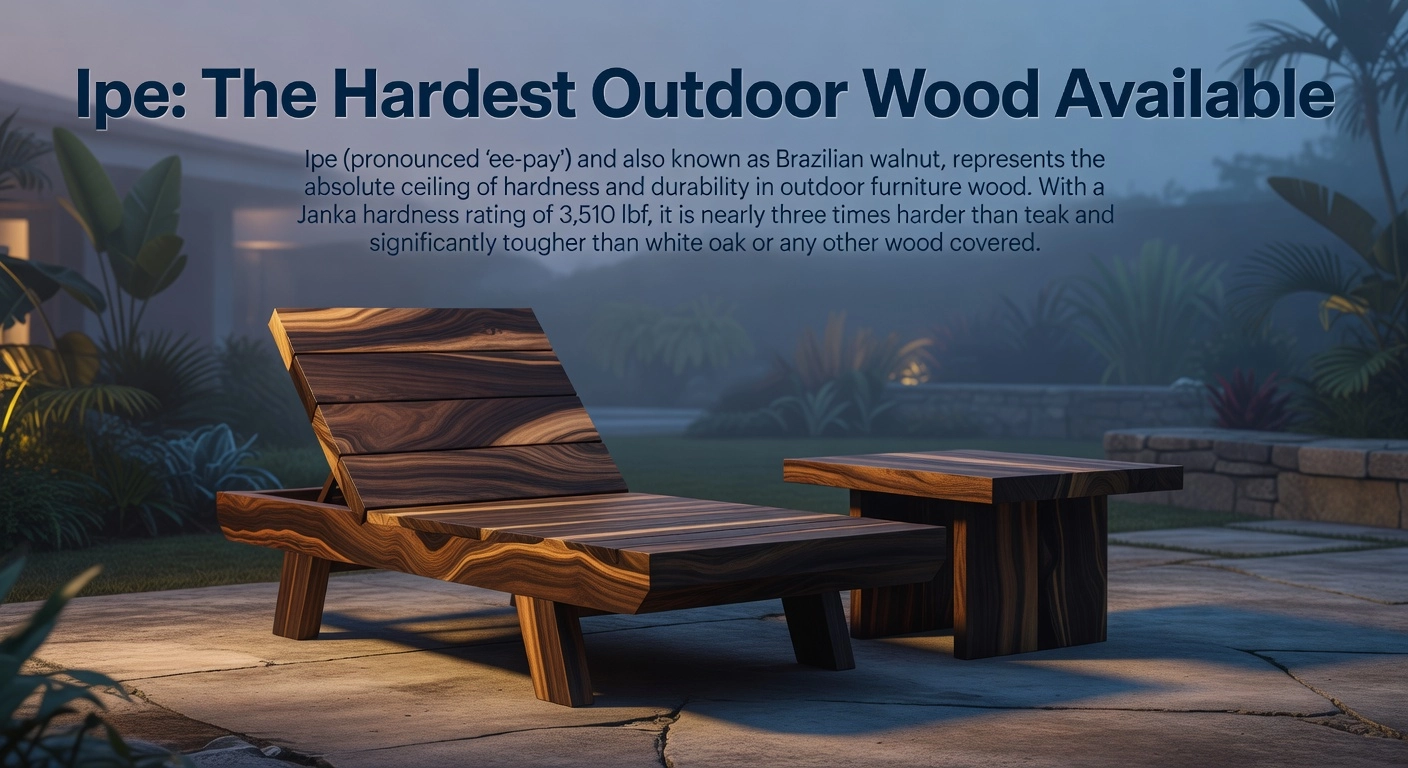
Ipe (pronounced “ee-pay”) and also known as Brazilian walnut, represents the absolute ceiling of hardness and durability in outdoor furniture wood. With a Janka hardness rating of 3,510 lbf, it is nearly three times harder than teak and significantly tougher than white oak or any other wood covered in this guide. That density translates directly to real-world performance: Ipe furniture and decking resist dents, deep scratches, and surface damage that would visibly mar softer species over years of regular use.
What makes Ipe especially remarkable is that its protection comes entirely from within the wood itself. The natural oils and silica content embedded in the grain give Ipe a Class A fire rating, the same classification used for concrete and steel in structural tests. No chemical pressure treatment is required to achieve rot resistance, insect resistance, or mold resistance. Termites, fungi, and moisture are all stopped by the wood’s own biology, making it one of the few materials that arrives fully protected straight from the mill.
The durability figures for Ipe are genuinely difficult to match. Properly installed Ipe decking and furniture regularly last 40 to 75 years under full outdoor exposure. Documented real-world installations show structural integrity maintained after decades of use, far outlasting pressure-treated wood, composite materials, and most competing hardwoods.
Maintenance requirements are low but deliberate. Ipe does not need a sealant or film-forming finish for weather resistance; those products often peel on such dense wood anyway. What it does benefit from is an annual application of an Ipe-specific penetrating hardwood oil. This single step slows UV-induced graying and, more importantly, reduces surface checking, the thin hairline cracks that appear when the surface dries unevenly. Left untreated, Ipe weathers to a silver-gray patina while retaining full structural strength. Oiling is strictly a cosmetic choice.
For DIY beginners, an important distinction applies here. Ipe is not a beginner-friendly wood to build with. Its extreme hardness dulls regular drill bits and saw blades quickly; carbide-tipped drill bits and pre-drilling every fastener hole are non-negotiable requirements for construction. However, ongoing DIY maintenance, oiling, light cleaning with mild soap and water, and occasional surface refreshing, is entirely manageable without professional help or specialized equipment.
The cost tier sits firmly in the premium to very premium range. Upfront investment is significant, but when divided across a lifespan measured in decades, the annual cost-per-year calculation becomes highly competitive. For homeowners who want outdoor furniture they will never need to replace, Ipe is the most logical long-term investment in this guide.
Mahogany: The Classic Choice for Refined Outdoor Pieces
Mahogany has built its reputation over centuries as the wood of choice for refined, elegant furniture, and that heritage extends naturally to outdoor pieces. Two species dominate today’s market: genuine mahogany (Swietenia macrophylla, also known as Honduran or Big-leaf mahogany) and its widely available substitute, African mahogany (Khaya spp.). Both share a characteristic reddish-brown color and, more importantly, a stable interlocking grain structure that resists warping and cupping as outdoor humidity fluctuates through the seasons. This dimensional stability is a genuine advantage for wide tabletops and long seat slats where movement can crack joints or distort flat surfaces over time.
Durability falls in the good to very good range, depending on which species you purchase and how consistently you maintain it. Neither species matches teak’s near-legendary natural oil content, but both resist rot, decay, and insect attack better than most temperate hardwoods. African mahogany is worth calling out specifically here: because responsible sourcing has made it far more available than the increasingly rare genuine Swietenia, you will find better-quality stock, and it performs comparably outdoors when properly finished. Plantation-grown genuine mahogany exists but tends to be less dense than old-growth material, so always check species documentation before buying.
Maintenance sits at a moderate level, which means mahogany rewards a consistent annual care routine without demanding the intensive schedule that softer woods require. Because its natural oil content is lower than teak, mahogany needs external protection to maintain weather resistance and prevent surface checking or premature graying.
Your DIY Mahogany Care Routine
Follow these steps once a year, or whenever the finish looks dull or dry:
- Clean the surface with mild soap and warm water using a soft brush. Avoid pressure washing, which can raise grain and force moisture into joints.
- Inspect thoroughly for surface checking, loose grain, or areas where the previous finish has worn through.
- Apply an exterior penetrating oil formulated for tropical hardwoods, working it into the grain with a lint-free cloth.
- Add a UV-inhibiting spar varnish in thin coats if the furniture receives direct sun for most of the day. Lightly sand between coats for adhesion.
Sustainability and Sourcing
Genuine Swietenia macrophylla is listed under CITES Appendix II, meaning international trade requires verified export permits and legal harvest documentation. Do not assume a label reading “mahogany” guarantees compliant sourcing; always ask for the scientific name and supporting paperwork. The straightforward responsible choice is FSC-certified African mahogany, which offers comparable performance and a traceable, certified supply chain. With over 60% of consumers now preferring environmentally responsible brands, this certification also reflects the direction the broader outdoor furniture market is heading.
Cost sits in the mid-range to premium tier ($$-$$$), with genuine mahogany priced higher due to regulatory constraints on supply. African mahogany delivers strong value at a slightly lower price point. You will find both species most commonly in traditional teak-style outdoor dining sets, classic Adirondack-inspired loungers, and heritage-style garden benches.
Outdoor Wood Maintenance Compared: A Quick-Reference Guide
The table below gives you a fast reference across all eight species covered in this guide. Use it to match your wood choice to your real-world maintenance tolerance and climate before you buy.
| Wood | Weather Resistance | Oiling Frequency | Best Product | Sanding Need | Best Climate |
|---|---|---|---|---|---|
| Teak | Very High | Minimal | Teak-specific oil | Low | Coastal/humid/versatile |
| Ipe | Extremely High | Minimal | Ipe hardwood oil | Low to moderate | Harsh/exposed/variable |
| White Oak | Medium-High | Annual | Penetrating linseed or Danish oil | Moderate | Versatile with finishing |
| Eucalyptus | Medium-High | Annual | UV-resistant exterior oil | Moderate | Coastal/humid |
| Redwood | Medium-High | Annual | Penetrating oil or sealant | Moderate | Drier/inland climates |
| Cedar | Medium-High | Annual | Penetrating linseed or Danish oil | Moderate | Drier/inland climates |
| Acacia | Medium | 1 to 2 times per year | Exterior wood oil or sealer | Moderate | Covered or moderate exposure |
| Mahogany | Medium | Every 6 to 12 months | Exterior spar varnish or oil | Moderate | Partial shade/milder climates |
Two patterns stand out immediately. Teak and Ipe sit at the low-maintenance end of the spectrum. Their natural density and oil content do most of the protective work, so your job is largely limited to occasional cleaning and a light oiling when you want to restore color. Cedar, acacia, and mahogany sit at the other end. They require the most consistent oiling and resealing schedules, typically once or twice per year, to prevent cracking, fading, and moisture penetration.
Climate matching deserves as much attention as species selection. Teak and eucalyptus handle coastal humidity and salt air well because of their natural moisture resistance. Cedar and redwood, while excellent performers, hold up most reliably in drier inland climates where prolonged moisture exposure is less of a factor.
Product alignment matters too. Using the wrong finish on a wood can seal the surface incorrectly or interfere with the wood’s natural oils. Teak gets teak-specific oil; Ipe gets Ipe hardwood oil; white oak and cedar respond well to penetrating linseed or Danish oil; mahogany benefits from an exterior spar varnish as an optional protective topcoat.
For beginners, one rule covers everything on this list: oil once each spring and either store furniture indoors or cover it with weatherproof covers through winter. Follow that routine consistently, and any of these eight species will maintain a strong appearance and structural integrity for 15 years or more.
How to Choose Outdoor Wood Based on Your Climate
All eight species covered in this guide perform differently depending on where you live. Matching your wood choice to your specific climate is one of the most practical decisions you can make before spending money on outdoor furniture.
1. Humid and Coastal Climates (Southeast US, Pacific Northwest, Gulf Coast)
Persistent moisture, salt air, and high humidity are the harshest conditions any outdoor wood will face. In these environments, prioritize teak, eucalyptus, or Ipe. All three contain high concentrations of natural oils that repel moisture from within the wood itself, rather than relying entirely on surface finishes. Teak in particular can last 15 to 25 years in Florida or Gulf Coast conditions with routine cleaning. Eucalyptus delivers similar protection at a lower price point, making it a smart upgrade from cedar in regions where mold and rot are constant threats.
2. Dry and Arid Climates (Southwest US, Mountain West)
Cedar, redwood, and white oak thrive in low-humidity environments and require noticeably less frequent oiling or sealing than they would in wetter regions. Western red cedar and redwood heartwood both resist rot and insects naturally, handle intense sun well, and stay lightweight for DIY projects. In Phoenix or Denver, a quality cedar bench needs little more than an annual coat of UV-protective finish to stay in excellent condition for years.
3. Freeze-Thaw Climates (Midwest, Northeast US, Canada)
Repeated freezing and thawing creates expansion and contraction cycles that split and crack dimensionally unstable woods over time. Teak, white oak, and eucalyptus handle this seasonal moisture cycling reliably. Acacia and mahogany are more prone to checking and warping under these conditions, making them riskier investments for Chicago or Toronto climates without consistent winter storage.
4. High-UV Environments (Southwest, High Altitude)
Every wood species degrades faster under intense ultraviolet exposure, so a UV-inhibiting sealant or stain is non-negotiable here. Teak will naturally transition from warm brown to a silver-gray patina over time; this is cosmetic and does not affect structural integrity. Cedar and redwood, however, benefit most from a UV-protective stain applied before significant graying begins, as early application preserves both color and fiber strength.
5. Budget Considerations by Climate
In wet climates, the upfront premium for teak or eucalyptus pays off by eliminating repeated refinishing costs and early replacement. Cedar installed in a humid Gulf Coast yard may need stripping, sanding, and recoating every one to two years, which adds up quickly. In dry climates, cedar is genuinely the most cost-efficient choice: lower purchase price, minimal maintenance demands, and solid longevity when given basic protection.
Quick-Start DIY Care Routine for Any Outdoor Wood Furniture
Knowing which wood suits your climate is only half the equation. The other half is following a consistent care routine that keeps your investment looking sharp and structurally sound for years. Here are five practical steps any beginner can execute without professional tools or specialized experience.
1. Spring Startup Routine
Start each season with a thorough cleaning before applying any protective treatment. Rinse the entire piece with a garden hose to dislodge loose dirt, pollen, and winter grime. Follow with a soft-bristle brush and a solution of mild dish soap diluted in warm water, scrubbing gently in the direction of the grain to avoid raising wood fibers. Skip the pressure washer; the concentrated force damages wood surfaces and forces moisture deep into the grain. Rinse completely with clean water, then allow the furniture to dry for a full 48 hours before applying any oil or sealant. Rushing this step traps moisture beneath the finish, which leads to mildew growth and poor product adhesion.
2. Reversing Early Surface Graying
Gray outdoor wood is not ruined wood. That silver-gray tone is simply oxidized lignin, the surface layer of cells broken down by UV exposure. Light hand-sanding with 120-grit sandpaper removes this oxidized layer and exposes the fresh, naturally colored wood underneath. Sand only in the direction of the grain, using moderate pressure and long even strokes. No power tools are required for surface-level graying; your arm and a sanding block are sufficient. Wipe away the dust with a dry cloth before moving on to oiling.
3. Applying Outdoor Wood Oil Correctly
Pour a small amount of outdoor wood oil onto a clean, lint-free cloth and wipe it onto the surface in smooth strokes that follow the grain. Work in a shaded area rather than direct sunlight to allow even absorption. Let the oil penetrate for 15 to 20 minutes, then wipe off any remaining excess firmly. Leaving surplus oil on the surface creates a sticky, uneven residue that attracts dirt. Allow a full 24-hour cure before placing anything on the furniture or returning it to heavy use.
4. Winter Storage and Protection
If indoor storage is not possible, use breathable furniture covers made from ventilated fabric rather than plastic tarps. Plastic seals in condensation and creates the warm, damp conditions that mildew thrives in. Breathable covers allow air to circulate while blocking snow, debris, and UV. Elevate chairs and tables on a wooden pallet or blocks so air can move freely beneath the legs, preventing moisture from pooling at the base.
5. When to Refinish Versus Spot-Treat
Surface checking (hairline cracks) and gray discoloration are cosmetic issues that respond well to sanding followed by a fresh coat of oil. No full refinishing is needed. Deep cracks, loose joints, or black mildew staining require more targeted work: sand the affected areas, treat mildew with an appropriate cleaner before oiling, and address loose joints with wood glue or hardware replacement. Oiling over unresolved structural problems or active mildew only seals the damage in rather than correcting it.
Choosing the Right Wood Is Only Half the Job
Selecting the right species sets you up for success, but consistent care is what actually determines how long your outdoor furniture lasts. Across everything covered in this guide, a few clear patterns emerge: teak and Ipe lead on raw durability and low maintenance demands, cedar and white oak deliver the best value for domestic buyers, and eucalyptus stands out as the smartest sustainable mid-range pick for budget-conscious shoppers who still want genuine performance.
Wood holds one critical advantage over synthetics that rarely gets enough attention: repairability. A composite or HDPE piece that weathers badly often requires full replacement. A neglected wood piece, even one that has turned gray, cracked slightly, or developed mildew, can typically be sanded back, re-oiled, and restored to near-original condition. Properly maintained wood furniture routinely outlasts composite alternatives while improving in character over time.
Climate matching matters just as much as species selection. The best wood for outdoor furniture is simply the one best suited to your specific conditions, whether that means high humidity on the Gulf Coast, intense UV exposure in the Southwest, or hard freeze-thaw cycles in the Midwest.
For next steps, explore dedicated care guides covering teak oiling schedules, cedar sealing techniques, weathering reversal methods, mildew treatment, and seasonal storage best practices. If you only adopt one habit, make it a spring cleaning and oiling routine. That single action, done consistently each year, removes winter damage, replenishes protective oils, and extends the life of any wooden outdoor furniture more than any other maintenance step.
Conclusion
Choosing the right wood for outdoor furniture comes down to four key factors: durability against moisture and insects, maintenance requirements, budget, and how long you want it to last. Premium hardwoods like teak and ipe offer decades of performance with minimal upkeep, while budget-friendly options like pressure-treated pine can still deliver solid results when properly maintained. No single species is perfect for every situation, so matching the wood to your specific climate and lifestyle matters most.
Now that you have a clear picture of how each species stacks up, you are ready to shop, build, or replace with confidence. Start by identifying your budget and how much maintenance you are realistically willing to do. The right outdoor furniture should bring you joy for years, not headaches. Choose wisely, invest once, and enjoy every season outdoors.