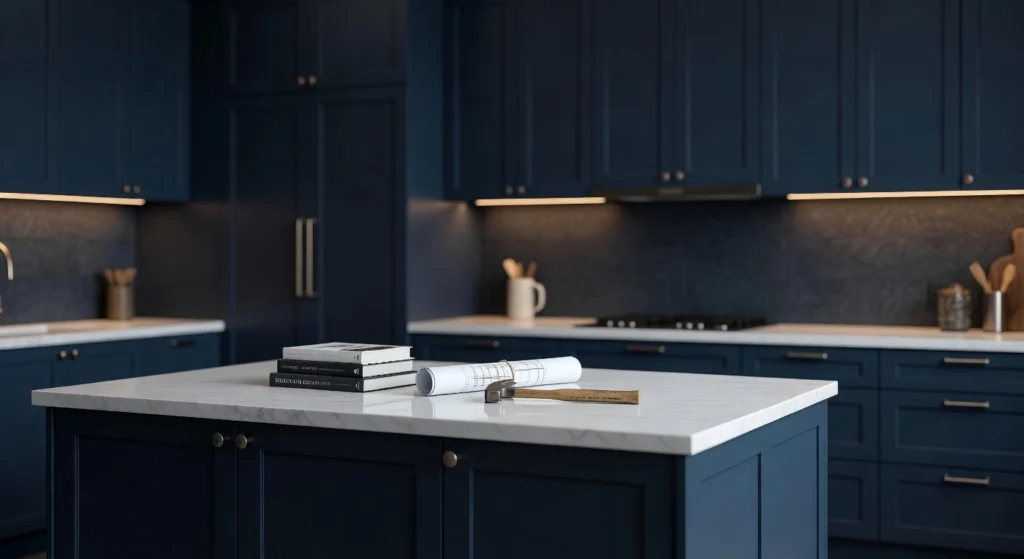

Let’s be honest, most of us don’t think much about kitchen cabinets until something goes wrong. A door falls off its hinge, the finish starts peeling, or you realize your storage space just isn’t working for you anymore. Sound familiar?
Whether you’re buying your first home, planning a renovation, or simply trying to make smarter choices for your space, understanding kitchen cabinets can save you a lot of time, money, and frustration. These hardworking features take up more visual space in your kitchen than almost anything else, so getting them right really matters.
The good news is that you don’t need to be an expert to make smart decisions. You just need the right information presented in a way that actually makes sense. That’s exactly what this guide is here for. We’ve put together a straightforward list of everything a beginner homeowner should know about kitchen cabinets, from materials and styles to installation tips and common mistakes to avoid. By the time you’re done reading, you’ll feel confident and ready to tackle any cabinet project that comes your way.
Why Kitchen Cabinets Define Your Entire Kitchen
Walk into any kitchen and your eyes go straight to the cabinets. That’s not an accident. Kitchen cabinets cover more surface area than any other element in the room, spanning walls, base units, and sometimes full-height towers or a central island. Countertops, appliances, and flooring all play supporting roles, but the cabinets set the tone. Change your cabinets, and you effectively change the entire kitchen. It really is that simple.
The numbers back this up in a big way. According to a 2026 Kitchen ROI and Cabinet Trends Report, 84% of kitchen renovation projects involve cabinets in some form, whether that means a full replacement, a reface, or a fresh finish. That makes cabinetry the near-universal starting point for any kitchen upgrade, and it explains why so many homeowners treat cabinet decisions as the most important choices in the entire remodel.
Style preferences are also shifting in a meaningful way. In 2026, wood finishes overtook white as the top cabinet choice, with 29% of renovating homeowners choosing wood, up 6 percentage points year over year, according to the Houzz 2026 U.S. Kitchen Trends Study. White cabinets dropped to 28%. Homeowners are clearly gravitating toward warmer, more natural aesthetics, and wood delivers exactly that.
Behind this trend sits a massive global industry. The kitchen cabinets market was valued at USD 91 to 108 billion in 2025, with wood substrates accounting for roughly 60% of market share. Wood dominates because it looks great, works well with DIY repairs, and can be refinished rather than replaced.
That last point matters more than most beginners realize. When you think of your cabinets as a long-term wood investment rather than a fixed feature, every decision changes. You start thinking about finish durability, maintenance routines, and repair options, not just color trends. That mindset is exactly what turns a one-time project into a kitchen that stays beautiful for decades.
The Best Wood Species for Kitchen Cabinets
Not all wood is created equal when it comes to kitchen cabinets. The species you choose affects how your cabinets look, how long they last, and how much maintenance they demand over time. Here’s a breakdown of the most common options so you can pick the right fit for your kitchen and your budget.
1. Maple Maple is a top pick for good reason. It has a tight, uniform grain that takes paint and stain evenly without blotchy spots, which makes it especially well-suited for Shaker-style doors in painted or stained finishes. With a Janka hardness rating of around 1,450, it resists dents better than most woods you’ll find at this price point. If you want clean, consistent-looking cabinets with minimal drama in the grain, maple delivers exactly that.
2. White Oak White oak has become one of the most talked-about cabinet species right now, and for good reason. Its warm, open grain brings natural character to a kitchen, and its cellular structure makes it genuinely resistant to moisture, steam, and humidity. That matters a lot near a sink or dishwasher. According to 2026 design research from Houzz, wood cabinets are now the top choice among renovating homeowners, with white oak leading professional specifications.
3. Hickory If durability is your top priority, hickory wins the category. It carries the highest Janka hardness rating of common cabinet woods, coming in around 1,820 to 1,880. The tradeoff is its bold, dramatic grain variation, with streaks ranging from pale to dark. That look fits beautifully in rustic or farmhouse kitchens but can feel visually overwhelming in a modern, minimal space.
4. Red Oak Red oak is a classic for traditional kitchens, and it has one major practical advantage: it’s one of the easiest cabinet woods to refinish. Its porous grain readily accepts new stain, so if your cabinets get scratched or worn over the years, you can sand them down and re-stain without a huge investment. As eagle woodworking’s cabinet color trend guide notes, red oak is increasingly being updated with cooler or neutral stains to tone down its naturally warm, reddish hue.
5. Cherry Cherry is a beautiful long-game wood. It starts out lighter and deepens into a rich reddish-brown over time thanks to light exposure. That natural patina is part of its charm. The catch is that in a grease-heavy kitchen, cherry needs more attentive cleaning to protect that finish. Stick to mild soap or diluted solutions and avoid harsh chemical cleaners.
6. Pine and Softer Woods Pine is the budget-friendly option, and it works well in casual or painted kitchens. The downside is softer wood dents and dings more easily under daily kitchen use. It needs a solid protective topcoat, and that finish will require more frequent touch-ups compared to harder species. Pine is a reasonable choice for lower-traffic areas, but for a busy family kitchen, harder woods will serve you longer.
Cabinet Styles Dominating in 2026
If you’re planning a kitchen cabinet update, knowing what styles are actually selling right now can save you a lot of second-guessing. Here’s a breakdown of the six trends dominating cabinet choices in 2026.
1. Shaker-Style Doors Still Rule the Room
Shaker cabinets continue to hold the top spot, accounting for roughly 58% of consumer cabinet purchases. It’s easy to see why. Their simple recessed panel design works equally well in a farmhouse kitchen, a transitional space, or a more contemporary setup. They pair beautifully with both painted finishes and natural wood stains, giving you a ton of flexibility. If you want a look that won’t feel dated in five years, Shaker is still your safest, most versatile bet. According to modern kitchen cabinet trends for 2026, slim or micro-Shaker variants with thinner frames are also emerging as a refined update on the classic style.
2. Flat-Panel and Slab Doors Are Gaining Ground
Flat-panel and slab-style doors now make up around 22% of designer-driven projects. These sleek, handle-less designs appeal to homeowners going for a minimalist, high-end look, and they’re especially popular in open-plan kitchens where clean lines matter. They tend to show up more in higher-budget renovations than in budget-conscious refreshes.
3. Two-Tone Designs Add Depth Without a Full Overhaul
Pairing natural wood lower cabinets with lighter painted uppers is one of the smartest moves in kitchen design right now. It adds visual depth and dimension without committing to a bold color everywhere. Subtle pairings, like warm white uppers with honey oak lowers, tend to look more cohesive than stark contrasts.
4. Warm Neutrals Are Replacing Stark White
Shades like mushroom, putty, and oatmeal are pushing crisp white off its pedestal. These tones feel warmer and more grounded while still being highly versatile. Greens, particularly sage and muted olive tones, are also becoming popular accent colors on islands or lower cabinets, replacing the gray that dominated kitchens for the past several years. You can explore more about 2026 kitchen cabinet color and style trends to see how designers are putting these palettes together.
5. Fluted and Reeded Textures Are the New Detail Worth Noticing
Fluted and reeded textures, those vertical grooves or ridges on cabinet doors and island panels, are showing up everywhere. They add a handcrafted, tactile quality that flat surfaces simply can’t match. Oak is one of the best species for this detail because its open grain interacts beautifully with the texture, especially under warm lighting. According to current cabinet door style research, this detail pairs especially well with matte finishes for an organic, modern feel.
6. Medium Wood Tones Are Leading the Wood Revival
Wood cabinets have officially overtaken white as the top cabinet choice in 2026, with 29% of renovating homeowners going the wood route. Within that group, medium wood tones lead the way at 15%, with maple and white oak cited as the most requested species. Both offer warmth and a contemporary grain character that feels fresh without being trendy. If you are choosing a wood species for new cabinet doors or a refinishing project, these two are worth serious consideration.
How to Decide: Repair, Refinish, or Replace Your Cabinets
Before you spend a single dollar on your kitchen cabinets, open every door and drawer and look at the boxes first, not the fronts. The cabinet box is the fixed structure attached to your wall, and it’s the real indicator of whether you’re dealing with a cosmetic problem or a structural one. Press your fingers into corners near the sink and dishwasher. Look for soft spots, warping, delaminated layers pulling apart, or any signs of water rot. Particleboard and MDF boxes are especially vulnerable once moisture gets in, and no amount of refinishing will fix a box that’s structurally compromised. If the boxes are damaged, replacement or a hybrid approach is often the only real path forward.
Here’s the good news: most cabinet problems aren’t structural. Scratches, worn finish, peeling paint, and outdated colors all live on the doors and drawer fronts, and those are almost always fixable without touching the boxes. Refinishing means sanding and repainting or restaining what you already have. Refacing means swapping out the doors and drawer fronts entirely while keeping the solid structure behind them. Either option gives your kitchen a dramatic facelift at a fraction of the cost of tearing everything out. According to data from a simple refacing versus replacement breakdown, refacing typically costs 30 to 70 percent less than full replacement.
The numbers back up the middle path too. While 68% of homeowners who renovate cabinets replace all of them, among those taking a partial approach, 50% choose refinishing as their strategy. That’s a significant chunk of people who found a smarter, less disruptive solution.
Use this simple framework to make your call:
- Boxes are solid, hardware works fine: Refinish or reface. You’re solving a cosmetic problem, not a structural one.
- Layout no longer works for how you cook or move through the kitchen: Replacement makes sense so you can reconfigure everything.
- Only the look bothers you: Refinishing is almost always enough.
Cost and disruption are usually the final tiebreakers. A professional refinish runs a fraction of full cabinet replacement, and your kitchen stays functional throughout the process, no demo mess, no weeks without a working sink.
The ROI Case for Refreshing Instead of Replacing
The numbers here are genuinely hard to ignore. Minor kitchen remodels that swap out cabinet fronts, doors, and hardware while keeping the existing boxes intact deliver a national average ROI of roughly 113%, according to the 2026 Kitchen ROI Report. Compare that to full gut renovations, which return just 36 to 51 cents on every dollar spent. You’re not just saving money upfront; you’re actually coming out ahead.
This shift is happening in a very specific economic context. U.S. homeowner remodeling spending is projected near a record $524 billion in early 2026, but rising labor and material costs are squeezing budgets hard. Homeowners still want beautiful kitchens; they’re just getting smarter about how they get there. A targeted cabinet refresh delivers the visual payoff without the financial hit of a full replacement project.
The market data backs this up in a pretty telling way. Cabinet sales actually declined in 2025, and industry analysts read that as a clear signal: more homeowners are choosing to refinish or reface rather than buy new. This isn’t penny-pinching for its own sake. It’s a financially pragmatic decision backed by real return figures. You can dig deeper into how these numbers break down on the cabinet refacing cost vs. value breakdown at Improve It.
If you’re planning to sell within three to five years, a cabinet refresh becomes one of the smartest per-dollar investments you can make in your home. Buyers notice updated cabinets immediately, and you recoup a meaningful portion of your spend at closing. Full replacements add absolute value, but the percentage return is much weaker because the costs climb so fast.
DIY refinishing pushes the ROI even further. Labor typically accounts for 40 to 60% of any professional refinishing quote. When you do the work yourself, that cost disappears entirely. Your real investment becomes time, good product selection, and careful prep work, which is exactly the kind of project WoodStuffHQ is built to help you tackle confidently.
The Most Common Wooden Cabinet Problems and How to Fix Them
Even well-maintained wooden cabinets run into trouble eventually. The good news is that most problems are completely fixable without calling in a professional. Here are the six most common issues you’ll encounter and exactly how to handle each one.
1. Grease Buildup
Grease is the number one enemy of kitchen cabinets, and it sneaks up on you. Cooking releases airborne oils that settle on cabinet surfaces, especially on doors above and beside the stove. For routine cleaning, mix a few drops of dish soap into warm water and wipe down with a microfiber cloth. Always dry the surface immediately afterward since leaving water sitting on wood causes its own problems. For heavier, sticky buildup near the stove, make a paste from baking soda and dish soap, apply it gently with a soft cloth, let it sit for two or three minutes, then wipe clean. This combination lifts baked-on grease without scratching or dulling the wood finish.
2. Water Damage
Water damage shows up in three ways: white rings, dark stains, or soft spots. White rings near the sink are usually sitting in the finish layer rather than deep in the wood. Mix a small amount of non-gel white toothpaste with baking soda, rub it gently onto the ring with a soft cloth using circular motions, then wipe clean. Dark stains mean moisture has gone deeper into the wood fiber. Those require light sanding with 220-grit paper, thorough drying time, and spot restaining before sealing. Soft spots are a sign of prolonged exposure and may mean the wood itself needs replacing.
3. Surface Scratches
Shallow scratches on stained wood are the easiest fix in this entire list. A color-matched wood marker or furniture touch-up crayon fills the scratch and blends with the surrounding finish. Simply apply, let it dry, and buff lightly. Deeper gouges need a bit more work. Apply wood filler matched to your cabinet species, let it cure completely, sand it smooth starting with 120-grit and finishing with 220-grit, then apply a matching stain and finish it with a clear topcoat. The key is patience at each drying stage so the repair bonds properly.
4. Warping Cabinet Doors
A bowed or warped cabinet door almost always traces back to humidity. Wood absorbs and releases moisture, and when one side of a door gets more exposure than the other, it curls. Start by fixing the source: improve kitchen ventilation, run your range hood consistently, and aim to keep indoor humidity between 35 and 55 percent. To reverse an existing warp, lay the door on a flat surface, place a damp towel on the concave side, cover it with plastic wrap, and weight the door down with clamps or heavy objects for 24 to 48 hours. Prevention is genuinely more effective than repair here.
5. Loose Hinges and Hardware
A sagging or misaligned cabinet door is almost always a hinge screw issue. Start by simply tightening the screws with a screwdriver; this solves the problem more often than you’d expect. If the screw hole is stripped and won’t hold, dip two or three wooden toothpicks in wood glue, press them into the hole, snap them off flush, and let the glue cure fully for at least an hour. Then re-drive the original screw directly into the filled hole. The wood fibers from the toothpicks give the screw something solid to grip again.
6. Finish Degradation
Cloudiness, peeling, and yellowing are common on cabinets that are more than ten years old. Before you assume you need to strip everything and start over, try a lighter approach first. Clean the surface thoroughly, let it dry, then sand lightly with 220-grit paper to scuff up the old finish. Wipe away all dust with a tack cloth, then apply a fresh topcoat in thin, even coats. Two thin coats almost always outperform one heavy coat. This approach works well enough on most cabinets that full stripping becomes unnecessary. For anyone looking at broader cabinet refacing trends in 2025 and 2026, refinishing fits right into the larger movement toward refreshing rather than replacing.
How to Clean and Maintain Wood Kitchen Cabinets the Right Way
Keeping your wood kitchen cabinets looking great comes down to a handful of consistent habits. None of them are complicated, but getting them right makes a real difference in how long your cabinets hold up.
1. Use minimal moisture every single time
The golden rule for cleaning wood cabinets is to keep water to an absolute minimum. A damp microfiber cloth with just a few drops of mild dish soap mixed into warm water is genuinely all you need for weekly cleaning. Wring the cloth out thoroughly before it touches any wood surface. After wiping each section, follow immediately with a second dry microfiber cloth to pick up any remaining moisture. Water sitting on wood, even for a few minutes, can work its way into seams, cause swelling, and eventually break down the finish from underneath.
2. Know which products to keep far away from your cabinets
Spray cleaners, bleach-based products, ammonia, and abrasive scrubbing pads all cause finish damage faster than everyday cooking grease ever will. Stripping or clouding a wood finish is expensive to repair and often means full refinishing. Stick to soft microfiber cloths and plain dish soap. If a product seems too powerful for the job, it probably is.
3. Keep interiors simple and lined
Cabinet interiors collect far less grime than the exterior faces, so a dry microfiber wipe is usually all they need. The smarter move is lining your shelves with removable shelf liner. Liners catch spills before they reach the wood, protect against scratches from dishes and cans, and lift out easily for cleaning without introducing any harsh chemicals to the interior surfaces.
4. Feed oil-finished cabinets every few months
If your cabinets have a natural wood or oil-based finish, apply a wood-feeding oil every three to six months. This replenishes moisture in the wood fibers and prevents drying, cracking, and grain raising, especially during winter when indoor air gets very dry from heating systems.
5. Give high-risk zones extra attention
The cabinet areas directly above your stove, under the sink, and next to the dishwasher take a beating from concentrated heat, grease, steam, and moisture. These spots need wiping down more frequently than the rest of your cabinets, and you should periodically check the finish in these areas for early signs of wear, bubbling, or discoloration.
6. Stay consistent to avoid compounding damage
A quick weekly wipe-down is infinitely easier than dealing with baked-on grease that requires aggressive scrubbing to remove. That aggressive scrubbing is exactly what damages finishes and shortens the life of your cabinets. A simple routine, done regularly, stops minor buildup from ever becoming a bigger problem.
DIY Refinishing and Restaining: A Plain-Language Guide
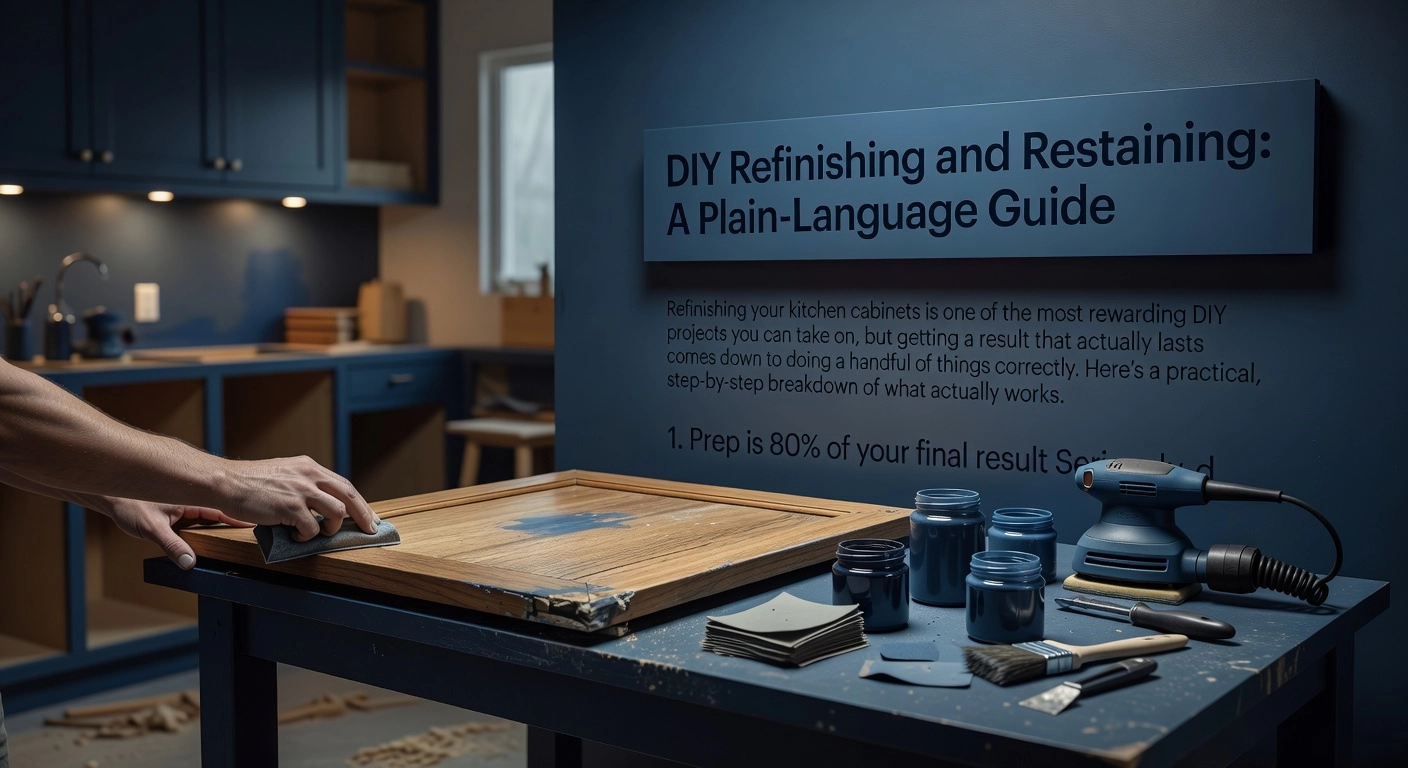
Refinishing your kitchen cabinets is one of the most rewarding DIY projects you can take on, but getting a result that actually lasts comes down to doing a handful of things correctly. Here’s a practical, step-by-step breakdown of what actually works.
1. Prep is 80% of your final result
Seriously, do not skip this part. Start by removing every door, drawer front, and piece of hardware. Label them with painter’s tape and a marker so reassembly is painless later. Then clean every surface with a degreaser to strip away the invisible layers of cooking grease, oil, and residue that build up on kitchen cabinets over time. Even cabinets that look clean usually aren’t. Once everything is clean and dry, sand with 120-grit paper to scuff the existing finish and give the new product something to grip. Follow that with 180-grit for a smoother base. Wipe away all dust with a tack cloth before moving on.
2. Decide on your finish direction before you buy anything
Restaining keeps the natural wood grain visible while updating the color, which fits perfectly with the current trend toward warm wood tones. Painting gives you more color flexibility and a completely different look, but it requires an extra step: a bonding primer specifically formulated for previously finished surfaces. Without it, your paint will peel. Choose your direction first, then shop for products.
3. Use gel stain instead of liquid stain if you’re new to this
Gel stain is thicker and sits on the surface longer than a thin liquid stain. That extra working time is a lifesaver for beginners because it lets you work the product into the grain evenly and wipe it for consistent color without creating lap marks or blotchy patches. You don’t need to strip the existing finish down to bare wood; light sanding and thorough cleaning are usually enough. Apply in thin coats and wait at least 24 hours between each one.
4. Your topcoat choice matters as much as your stain
Polyurethane is the right call for kitchen cabinets. It handles grease, moisture, and heat far better than wax or oil-based finishes, which simply aren’t built for a kitchen environment. Water-based polyurethane is the better choice for most DIY projects: lower VOCs, faster drying times, and a clearer finish that won’t yellow over time the way oil-based products can.
5. Apply topcoat in multiple thin coats, not one thick one
Two to three thin coats of polyurethane will always outperform a single heavy application. Between each coat, do a light pass with 220-grit sandpaper to knock down any dust nibs and help the next coat bond properly. Allow each coat to dry fully, typically 24 to 72 hours depending on the product and your conditions, before rehanging doors.
6. Dry and cured are two completely different things
Your cabinet doors might feel dry to the touch within a couple of hours, but the finish won’t reach its full hardness for up to 30 days. During that window, the surface is still vulnerable to scratches, dents, and chemical damage. Avoid abrasive cleaners, don’t stack anything against the doors, and clean spills gently with a soft cloth and mild soap. Patience during this stage protects all the work you just put in.
How to Paint Kitchen Cabinets Without Making These Common Mistakes
Painting kitchen cabinets can completely transform your kitchen without the cost of a full replacement, but it’s one of those projects where small mistakes create big headaches down the road. Here are the six most common painting mistakes and exactly how to avoid them.
1. Skipping Proper Degreasing and Bonding Primer
Poor adhesion is the number one reason DIY cabinet paint jobs fail, and it almost always comes back to two skipped steps: thorough degreasing and a bonding primer. Even if your cabinets look clean, kitchen surfaces collect an invisible film of grease, cooking oils, and silicone residue that standard cleaning won’t remove. Paint applied over that film simply won’t stick. Use a dedicated degreasing cleaner, scrub every surface including the edges and inside corners, rinse thoroughly, and let everything dry completely. Follow that with a light sand using 220-grit paper to create some texture, then apply a shellac-based or oil-based bonding primer. This combination creates the foundation everything else depends on.
2. Applying Too Much Paint at Once
Thick coats look tempting because they seem like they’ll cover faster, but they cause drips, sags, and brush marks that are frustrating to fix once dry. Use a high-density foam roller on flat surfaces like door panels and cabinet faces. Reserve a quality angled brush only for recessed panel details where the roller can’t reach. Two or three thin, even coats will always produce a smoother, more durable result than one heavy coat.
3. Ignoring Humidity and Temperature
Paint behaves very differently depending on your environment. Painting in conditions above 70% relative humidity or below 55 degrees Fahrenheit creates real problems, including blushing (a milky haze in the finish), slow curing, and a soft final surface that dents and scratches easily. Pick a day when your workspace is between 60 and 80 degrees with moderate humidity, and use a basic hygrometer to check before you start.
4. Not Sanding Between Coats
Fresh paint bonds to a scuffed surface much better than a smooth one. Skipping this step produces results that look fine initially but start peeling along coat lines after a few months of use. A quick pass with 220-grit paper between coats, followed by wiping away the dust with a tack cloth, takes about five minutes per door and makes a significant difference in long-term durability.
5. Choosing the Wrong Paint
Standard latex paint often lacks the hardness kitchen cabinets need. Traditional oil-based paint cures hard and self-levels beautifully, but it takes longer to dry and requires solvent cleanup. Water-based alkyd hybrid paints have closed that gap considerably and are now the preferred choice for DIY cabinet projects. They offer oil-like hardness and self-leveling with easier cleanup and lower odor.
6. Reassembling Too Soon
Paint can feel dry to the touch within hours, but full chemical curing takes anywhere from 7 to 30 days depending on the product and your conditions. Rehanging doors before the paint has fully cured causes them to stick to the frame, peel away, or leave permanent impressions that are genuinely difficult to repair. Leave the doors off, keep hardware out, and wait the full recommended cure time before putting your kitchen back together.

Smart Storage Upgrades You Can Add Without Replacing Cabinet Boxes
Here’s something worth knowing before you spend a single dollar on new cabinet boxes: 94% of updated kitchens in 2026 include specialty storage features like pullouts, drawer organizers, and lazy Susans. That means the biggest visible upgrade trend right now has nothing to do with replacing your cabinet structure at all. It’s about what you put inside.
Pull-Out Shelf Inserts for Base Cabinets
Deep base cabinets are where things go to disappear. Pull-out shelf retrofit kits solve this completely by converting that dark, hard-to-reach space into fully visible, accessible storage. Most kits fit directly inside your existing cabinet box without any structural modification. You’ll need a drill, a tape measure, and about an afternoon. The slides are typically rated for 75 to 100 pounds, so pots, pans, and small appliances are no problem.
Drawer Dividers and Peg Systems
These are genuinely no-tools-required upgrades that make a dramatic everyday difference. Adjustable drawer dividers use spring tension or sliding slots to create dedicated zones for utensils, and peg systems let you customize dish and plate storage by repositioning pegs for different sizes. No drilling, no permanent changes, and you can reconfigure everything the moment your storage needs shift.
Under-Shelf Baskets and Door-Mounted Organizers
Upper cabinets waste a surprising amount of vertical space between shelves. Under-shelf baskets clip directly onto existing shelves to add a whole extra layer of storage for spices, small jars, or pantry overflow. Door-mounted racks and caddies hang over the cabinet door for cleaning supplies or oils. Both options install in seconds and leave zero marks behind.
Soft-Close Hinge and Drawer Slide Retrofits
Swapping standard hinges for soft-close versions is one of the highest-impact, lowest-effort upgrades you can make. Most standard hinges are compatible with soft-close retrofit clips, and the swap takes under an hour with just a screwdriver. The result is cabinets that feel noticeably more premium, quieter, and more durable over time.
Lazy Susans and Corner Pullouts
Corner cabinets are the most frustrating storage spot in most kitchens, and lazy Susans or modern corner pullout systems fix that directly. Retrofit units mount inside your existing corner cabinet box with minimal hardware changes. Items that used to get buried in dead-corner space become fully visible and reachable with a simple spin or pull.
A Practical Maintenance Schedule for Wood Kitchen Cabinets
Staying on top of cabinet maintenance is much easier when you have a clear schedule to follow. Here’s exactly what to do and when to do it.
Monthly: Wipe down all exterior cabinet surfaces using a damp microfiber cloth with a few drops of mild dish soap mixed into warm water. Wring the cloth out well so it’s just barely damp, not wet. Then follow up immediately with a dry cloth to remove any remaining moisture. Pay extra attention to the cabinets above the stove and the ones near the sink. These two zones take the most abuse and are where finish wear, grease cloudiness, and water damage show up first. Catching buildup early means a quick wipe fixes it rather than a deep cleaning project later.
Every 3 to 4 months: Apply a wood-feeding oil or conditioner to any natural wood or oil-finished cabinets to keep the wood from drying out. Work with the grain, use a small amount on a soft cloth, and buff lightly. This also happens to be the perfect time to check every hinge, pull, knob, and drawer slide for looseness. A quick tighten with a screwdriver takes about five minutes and prevents the kind of gradual misalignment that eventually damages the cabinet box itself.
Twice a year: Empty your cabinets completely and wipe the interiors with a dry cloth. While you’re in there, press gently on shelf surfaces to check for soft spots, and look for any staining or discoloration that could indicate a slow leak nearby. Check that every door hangs evenly and adjust hinges as needed.
Once a year: Do a full finish inspection under bright lighting. Look for areas where the topcoat looks thin, where scratches are clustering, or where the stain has started fading. Small spot touch-ups with matched stain and a compatible topcoat now prevent much bigger refinishing jobs later.
After any water event: Move immediately. Dry the wood thoroughly using absorbent towels, then run a fan or dehumidifier nearby. Assess for swelling or soft spots and treat any damaged areas right away. Water that sits in wood fibers causes warping and structural softening that gets much harder to reverse the longer it stays.
When to Call a Professional and What to Ask Them
DIY fixes handle a lot, but there are situations where calling in a professional is genuinely the smarter move, both for your cabinets and your sanity.
When the damage goes beyond surface level, stop and call a pro. If veneer is peeling or bubbling across multiple doors or large sections of your cabinet faces, that’s not a DIY patch job. Widespread delamination points to underlying issues that surface repairs won’t fix long-term. Similarly, if your cabinet boxes show deep structural damage, serious water rot, swollen particleboard, or failing face frames, you need a cabinet installer or carpenter, not just a refinisher. A refinisher works on surfaces. A carpenter fixes the bones. Knowing which one you need saves you from paying for the wrong service.
Full kitchen refinishing is another case where pros earn their fee. Matching a finish consistently across dozens of doors, drawers, and face frames is genuinely difficult without spray equipment and professional experience. Small variations in application, lighting, and wood absorption add up fast. If you want a uniform result across your entire kitchen, hire someone who does this regularly.
When you’re getting quotes, ask these specific questions before you commit:
- Will you handle all prep, including cleaning, sanding, and priming, or is any of that expected from me? Prep quality is the single biggest variable in how long a professional refinish actually holds up. Get a clear answer in writing.
- Can you show me examples of completed work on the same wood species as my cabinets? Oak, maple, and cherry all behave differently when stained or finished. A good contractor will have relevant examples, not just generic portfolio shots.
- What is the curing time before normal use, and what does your warranty cover? Ask specifically what happens if finish adhesion fails within the first year. Reputable professionals will have a defined callback policy.
For smaller, isolated problems like one water-damaged door or a section of warped cabinets, skip the full cabinet company. A skilled finishing contractor or furniture restorer can handle targeted repairs at a fraction of the cost, without the overhead and scope of a complete kitchen project.
The Bottom Line on Kitchen Cabinets
Here’s what it all comes down to: wood kitchen cabinets are a long-term investment, and like any investment, they reward consistent attention. A simple cleaning routine and the occasional refresh can keep them looking great for decades while actively supporting your home’s resale value.
The most encouraging thing for any beginner is that the majority of cabinet problems, whether grease buildup, scratches, water stains, or worn finish, are completely solvable without professional help. You don’t need specialized tools or trade experience. Most fixes require basic supplies you likely already have at home.
The financial case for maintenance and refinishing over replacement is genuinely hard to argue with. Minor refreshes deliver roughly 113% ROI nationally, while full gut renovations return only 36 to 51%. Keeping your existing boxes and updating the surfaces is almost always the smarter financial move.
Prevention beats repair every time. Learning your wood species, identifying your finish type, and following a simple seasonal routine stops the vast majority of damage before it ever needs fixing.
And when you’re unsure where to start, always check the cabinet boxes first. Solid, structurally sound boxes with cosmetic wear are not a reason to replace everything. They’re an opportunity for a high-value DIY project that costs a fraction of full replacement and delivers results you’ll appreciate every single day.
Conclusion
Your kitchen cabinets are one of the most important investments in your home, and now you have the knowledge to make confident decisions. Remember these core takeaways: material quality directly affects durability and cost, style choices should balance aesthetics with everyday function, proper installation prevents expensive problems down the road, and avoiding common beginner mistakes saves you time and money in the long run.
You no longer have to feel overwhelmed when walking into a showroom or browsing options online. You have a solid foundation to ask the right questions and recognize what truly matters.
Ready to take the next step? Start by assessing your current kitchen and identifying your biggest pain points. Whether you’re doing a full renovation or a simple upgrade, use this guide as your reference point. Your dream kitchen is more achievable than you think.


Pingback: Furniture Veneer: What It Is and How to Fix It - WoodStuffHQ
Pingback: Best Furniture Polish for Every Wood Type and Use Case - WoodStuffHQ
Pingback: Gel Stain vs Oil Stain: Which One Is Right for Your Project? - WoodStuffHQ