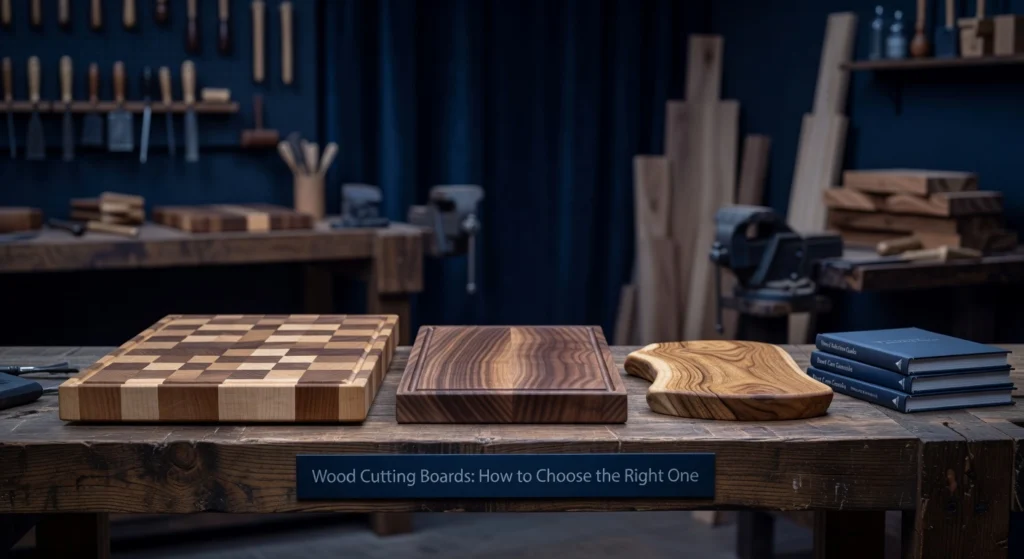

Every home cook deserves a reliable surface to prep their meals, and few tools make a bigger difference than the right cutting board. But with so many options lining store shelves, making the best choice can feel overwhelming, especially when you are just starting to build your kitchen toolkit.
Wood cutting boards have stood the test of time for good reason. They are durable, gentle on knife edges, and bring a warmth to the kitchen that plastic simply cannot match. However, not all wood cutting boards are created equal. The type of wood, the construction method, and the size all play a significant role in how well a board will serve you over the years.
In this guide, we will walk you through the key factors to consider before making your purchase. From understanding the difference between hardwoods and softwoods to knowing which features signal quality craftsmanship, you will come away with the confidence to choose a board that fits your cooking style and your budget. Let us get started.
Why Wood Cutting Boards Outperform Other Materials
When it comes to choosing a cutting board, wood consistently rises above the competition for reasons that go well beyond aesthetics. Here are five compelling reasons why wood cutting boards outperform other materials.
1. Wood Preserves Your Knife Edges Longer
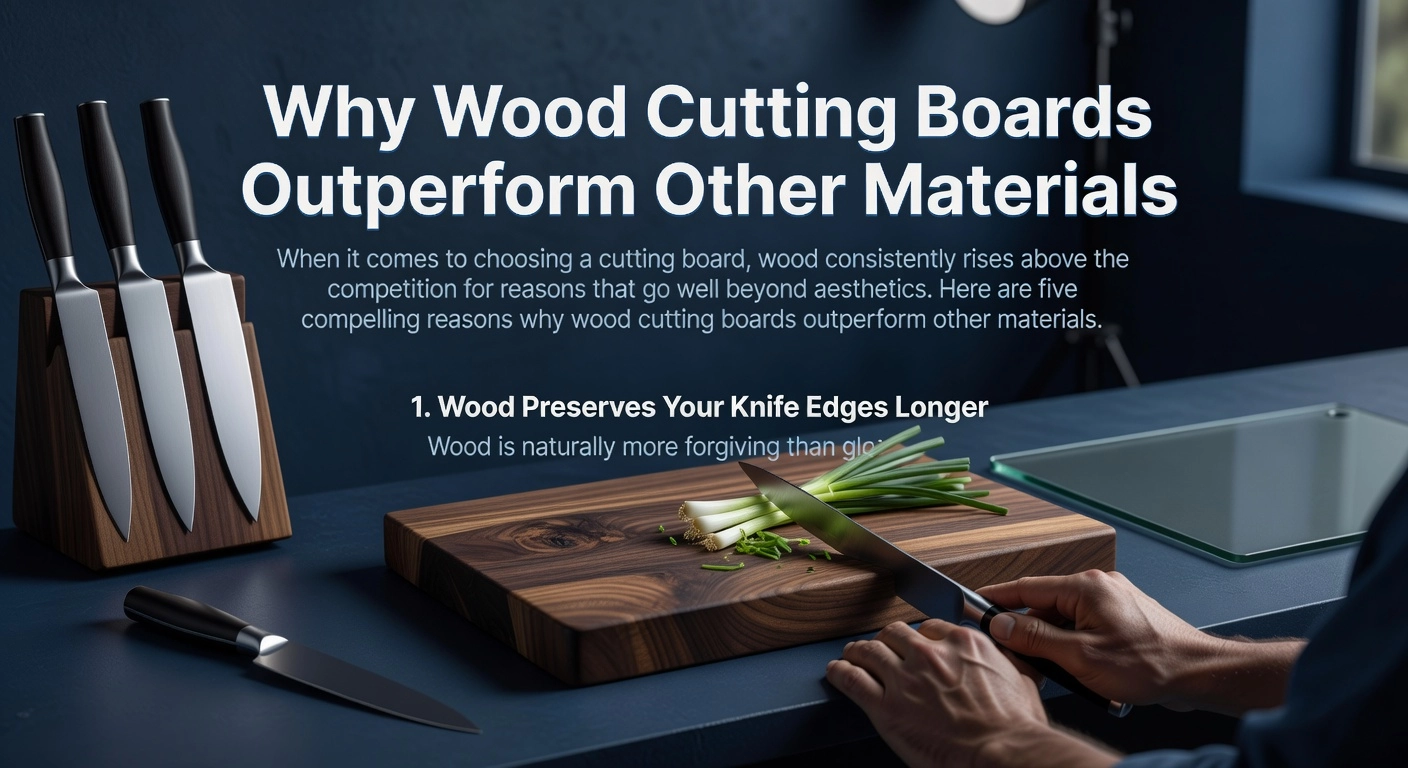
Wood is naturally more forgiving than glass or hard plastic surfaces. When your knife blade meets a wood board, the surface yields slightly, allowing the edge to glide through rather than impact a rigid plane. Glass boards are particularly damaging, capable of dulling a sharp blade within just a few cuts. Quality hardwood boards, especially end-grain maple, let you go significantly longer between sharpenings and reduce the micro-chipping that shortens a knife’s lifespan. For anyone investing in good kitchen knives, this alone makes wood the smarter choice. You can learn more about cutting surfaces and their effects on knife edges to understand the full picture.
2. Closed-Grain Hardwoods Like Maple Offer Natural Antimicrobial Benefits
Maple and similar dense hardwoods have a tight grain structure that limits moisture retention, reducing the environment where bacteria thrive. Studies have shown that bacteria like E. coli and Salmonella die off rapidly on properly dried wood surfaces. This advantage is frequently misrepresented in food safety debates, with plastic often assumed to be the safer option. Proper maintenance, including hand-washing, thorough drying, and regular mineral oil treatment, is what activates and sustains these properties.
3. The USDA Confirms Neither Wood Nor Plastic Is Categorically Safer
According to USDA Food Safety and Inspection Service guidelines, both wood and plastic cutting boards wear out over time and must be replaced once heavily grooved. Deep grooves trap bacteria on any surface material. This directly debunks the long-held assumption that plastic is automatically the hygienic choice, placing wood and plastic on equal footing when both are properly maintained and replaced when worn.
4. Professional Chefs, Including Japanese Knife Experts, Prefer Wood
Japanese chefs consistently choose wood boards, particularly softer varieties, to protect their high-hardness blades and preserve cutting precision. The slight give of wood provides tactile feedback that helps with technique, something harder surfaces simply cannot offer. This preference reflects decades of professional culinary experience prioritizing both tool care and cutting quality.
5. Premium Wood Boards Are a Growing Market Driven by Multifunctional Appeal
Wood cutting boards have expanded beyond the kitchen into entertaining and presentation. Boards doubling as charcuterie and serving pieces are increasingly popular, fueled by social media and home cooking culture. According to Global Growth Insights market data, the wooden boards segment is projected to grow from USD 5.15 billion in 2025 to USD 7.14 billion by 2034, reflecting strong consumer demand for sustainable, premium, and design-forward kitchen tools.
Best Wood Species for Cutting Boards Compared
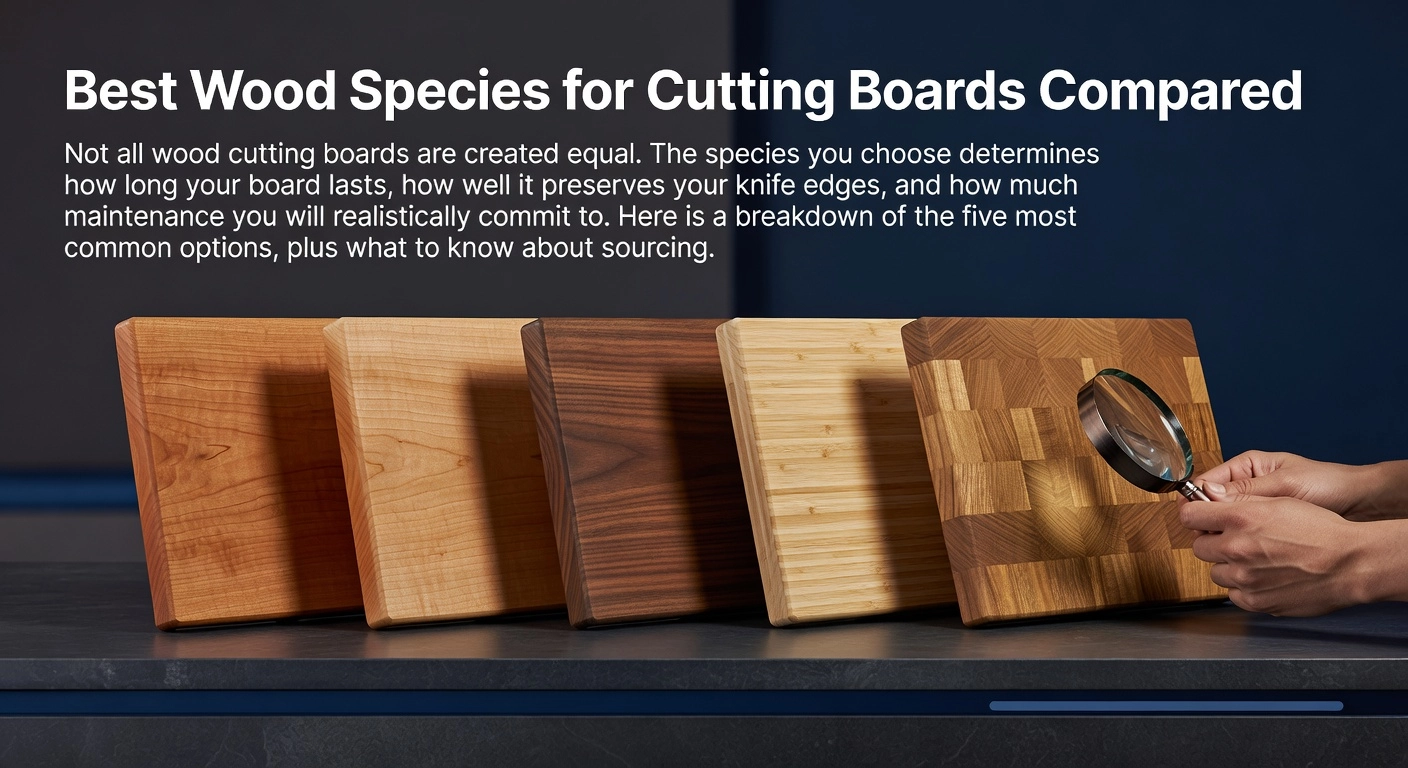
Not all wood cutting boards are created equal. The species you choose determines how long your board lasts, how well it preserves your knife edges, and how much maintenance you will realistically commit to. Here is a breakdown of the five most common options, plus what to know about sourcing.
1. Hard Maple: The Gold Standard
Hard maple earns its reputation as the benchmark cutting board wood for good reason. With a Janka hardness rating of approximately 1,450 lbf, it sits squarely in the expert-recommended sweet spot of 900 to 1,500 lbf, offering a surface that is tough enough for heavy daily use without aggressively dulling knife blades. Its tight, closed grain structure resists moisture absorption and limits bacterial penetration, making it one of the most hygienic options available. Hard maple is also widely grown across the eastern United States, which keeps prices reasonable compared to exotic imports. According to Blade and Burnish’s wood cutting board guide, hard maple consistently ranks as the top recommendation for both performance and value. For beginners building or buying their first serious board, hard maple is the safest starting point.
2. Walnut: Premium Feel, Gentler on Knives
Black walnut sits around 1,010 lbf on the Janka scale, making it noticeably softer than maple. That softness is actually a benefit for your knives, as blades experience less micro-chipping and dulling during regular use. Walnut’s rich, dark grain also does an excellent job of concealing stains and cut marks over time, keeping the board looking presentable. The trade-off is cost; walnut typically runs significantly more expensive than maple. It also requires more frequent oiling to maintain its semi-closed grain structure.
3. Cherry: Beautiful and Practical
Cherry wood falls between maple and walnut in hardness, with Janka ratings commonly cited around 995 lbf. One of its most appealing qualities is the deep reddish-brown patina it develops through natural light exposure and everyday use, making each board visually unique over time. It is a solid domestic hardwood that handles light to medium cutting tasks well. Cherry does require consistent oiling to prevent drying and cracking, so factor that into your maintenance routine.
4. Teak: Low Maintenance, with a Trade-Off
Teak’s natural oil content makes it exceptionally resistant to moisture, warping, and mold, which appeals to cooks who want a lower-maintenance board. America’s Test Kitchen’s heavy-duty cutting board review has highlighted teak edge-grain boards for their durability and stability. However, teak contains natural silica deposits that can accelerate knife dulling faster than maple or walnut. If blade preservation is a priority, weigh that trade-off carefully before choosing teak.
5. Bamboo: Budget-Friendly, but Not True Wood
Bamboo is technically a grass, not a hardwood, yet it dominates affordable cutting board sales online. Despite its popularity, bamboo’s dense fiber structure and silica content make it harder on knife edges than most genuine hardwoods. It is lightweight and budget-friendly, but beginners who invest in quality knives should think twice before defaulting to bamboo purely on price.
Sourcing Matters: Choose Domestic When Possible
Maple, walnut, and cherry are all readily available from US domestic suppliers, many of which operate under strict forestry regulations with FSC certification options. Choosing domestic species supports sustainable purchasing and gives you better transparency over material quality, whether you are buying a finished board or sourcing lumber for a DIY build.
Edge-Grain vs. End-Grain vs. Face-Grain Cutting Boards
Beyond wood species, the way a board is constructed fundamentally changes how it performs in your kitchen. Understanding the three construction types helps you make a smarter purchase decision and set realistic expectations for care and longevity.
Edge-Grain: The Everyday Workhorse
Edge-grain boards are the most common wood cutting boards you will encounter at any price point. They are built by gluing planks together with the long edge of the wood fibers running along the cutting surface, creating that familiar striped or linear appearance. This orientation produces a flat, dense surface that resists warping reasonably well and holds up reliably under daily chopping tasks. Edge-grain boards are more affordable than end-grain options because they require less labor and material to produce. They do show knife marks more visibly over time, since the blade cuts across the fibers rather than between them, but they remain far gentler on knife edges than glass or ceramic alternatives. For beginner woodworkers, edge-grain construction is also the most accessible DIY starting point, requiring basic gluing and clamping skills rather than complex block assembly.
End-Grain: Premium Performance with a Higher Commitment
End-grain boards expose the cut ends of wood fibers across the entire cutting surface, giving them that distinctive checkerboard or block pattern. When a knife blade contacts this surface, it slips between the fibers rather than severing them, which is why end-grain boards are considered the gentlest construction type for knife edges. This separation produces a genuine self-healing effect; the fibers close back after each cut, resulting in fewer visible marks and significantly better long-term surface integrity under heavy use. End-grain boards are the preferred choice among serious home cooks and woodworking enthusiasts who want both outstanding performance and a striking visual aesthetic.
The trade-off is maintenance. Because the fiber ends are exposed and porous, they absorb oil and moisture far more aggressively than edge-grain surfaces. Skipping regular oiling on an end-grain board leads to cracking, splitting, and warped joints. Plan to oil an end-grain board every two to four weeks under regular use, using food-grade mineral oil or a dedicated board cream. This is not optional; it is the core care requirement for keeping an end-grain board functional for years. Detailed guidance on grain orientation and its practical implications confirms that the exposed end-fiber structure demands this consistent attention.
End-grain boards also command noticeably higher retail prices, often ranging from $175 to $230 or more for quality maple or walnut options, reflecting the additional labor involved in cutting, arranging, and gluing dozens of small wood blocks. As a DIY project, end-grain construction requires precision cutting, careful block alignment, and more advanced finishing skills, making it better suited to intermediate or experienced woodworkers rather than beginners.
Face-Grain: Built for Serving, Not Chopping
Face-grain boards use the wide, flat face of the plank as the working surface, showcasing the wood’s natural figure and broad grain patterns most dramatically. This makes them visually stunning, which is exactly why they dominate the charcuterie and serving board category. However, the wide face of a plank is the softer surface orientation under knife contact. Heavy chopping quickly produces deep grooves, visible damage, and a surface that needs resurfacing far sooner than edge-grain or end-grain boards. Use face-grain boards for what they do best: presenting cheeses, cured meats, and snacks. Reserve your edge-grain or end-grain board for actual food prep.
Matching Construction to Your Maintenance Routine
Your maintenance schedule should align directly with the construction type you choose. Edge-grain boards typically need oiling monthly under regular use, or as few as two to three times per year for lighter use. End-grain boards need that two-to-four-week oiling cycle to stay crack-free. A practical rule from expert comparisons of grain types is to oil any wood cutting board whenever the surface looks dry or water no longer beads on contact. Regardless of construction type, avoid soaking, dishwashers, and cooking oils that can turn rancid inside the wood.
Wood Cutting Boards Worth Considering in 2026
Now that you understand the key wood species and construction types, putting that knowledge into practice means knowing which specific boards deliver on their promises. Here are six wood cutting boards worth considering as you build out your kitchen setup in 2026.
1. Thick Hard Maple Edge-Grain Board (The Workhorse Pick)
If you are buying your first serious cutting board, start here. A thick hard maple edge-grain board is the most practical, versatile, and beginner-friendly option available. Maple’s closed-grain structure resists moisture absorption, its hardness rating sits in the ideal range for knife-friendliness, and the edge-grain construction keeps the price accessible without sacrificing durability. Most importantly, if you scratch it, stain it, or let it dry out over the years, you can restore it with a light sand and a fresh coat of food-grade mineral oil. WoodStuffHQ recommends sizing up when in doubt; a board at least 1.5 inches thick gives you the stability and mass that makes daily prep work noticeably more comfortable.
2. John Boos Maple Boards (Best All-Around Value)
John Boos maple boards consistently appear at or near the top of editorial review roundups from Wirecutter, Food and Wine, and Forbes, and for good reason. These boards bring commercial-grade thickness and construction into a home kitchen at a price point most buyers can justify, typically ranging from $60 to $150 depending on size. Reviewers praise the sturdy, reversible design, ample workspace, and heft that keeps the board from sliding during heavy use. They require hand-washing and regular oiling, but that modest maintenance commitment pays off in a board that can realistically last decades.
3. The Boardsmith (Premium Handcrafted Tier)
For buyers ready to invest in a true heirloom piece, The Boardsmith represents the top tier of the handcrafted cutting board market. Their end-grain maple boards are made to order in Texas using FSC-certified domestic wood, and Serious Eats calls them among the best tested for knife performance and aesthetics combined. Prices start around $230 and climb with customization, but the craftsmanship and longevity justify the premium for buyers thinking in terms of lifetime ownership rather than replacement cycles.
4. Proteak Teak Boards (Low-Maintenance Option)
Proteak teak boards suit buyers who want a durable surface without committing to frequent re-oiling. Teak’s natural oil content gives it built-in moisture resistance that maple simply does not have, making it a practical choice for households where consistent board maintenance is unlikely. The important caveat: teak’s higher silica content can accelerate knife-edge wear compared to maple, so buyers who invest in quality knives should weigh that trade-off carefully before purchasing.
5. Totally Bamboo and Similar Affordable Brands (Secondary Boards)
Totally Bamboo and comparable brands make sense as secondary prep boards, dedicated produce surfaces, or serving pieces, but they are not the right primary cutting board if knife preservation matters to you. Bamboo is technically a grass and is harder on knife edges than true hardwood. For the budget, though, they are hard to beat as backups.
6. Epicurean Composite Boards (Convenience-First Households)
Epicurean boards are paper and wood-pulp composites that go straight into the dishwasher, resist warping, and require zero oiling. That convenience makes them genuinely useful in busy households. The limitation is equally straightforward: unlike solid wood boards, you cannot sand them down, refinish them, or restore them after heavy use. They are a complement to a good wood board rather than a replacement for one.
What to Look for When Buying a Wood Cutting Board
With your understanding of wood species and construction types in place, knowing what to evaluate at the point of purchase helps you avoid common mistakes that beginners often regret.
1. Size and Thickness
A board that is too small creates real problems in the kitchen. You should be able to break down a whole chicken or slice a full watermelon without food spilling over the edges. For most home cooks, that means choosing a board at least 18 inches long and 12 inches wide, with larger households benefiting from 20 by 14 inches or more. Thickness matters just as much. A board should be at least 1.5 inches thick, with 1.75 to 2 inches being the sweet spot for resisting the warping that happens when wood repeatedly absorbs moisture and dries out. Thinner boards flex under pressure and rarely recover their shape after heavy use.
2. Juice Grooves
Juice grooves are shallow channels routed around the perimeter of a board to catch liquids during meat carving or fruit slicing. They are genuinely useful, especially on boards that double as serving platters for charcuterie presentations. The trade-off is maintenance. Those channels trap food particles and moisture, and if you do not scrub them thoroughly after each use, bacterial buildup becomes a real concern. Some experienced cooks prefer a reversible board with grooves on one side and a flat surface on the other, giving you flexibility without committing the entire board to a feature that requires extra cleaning discipline.
3. Construction and Dishwasher Safety
The USDA notes that solid wood boards can sometimes tolerate occasional dishwasher cycles, while laminated boards are not dishwasher safe and will crack or delaminate from the heat and moisture. If your household uses a dishwasher even occasionally, stick with solid single-piece construction or well-built end-grain boards rather than glued laminate options. Hand washing with hot soapy water followed by immediate drying remains the safest routine for any wood cutting board regardless of construction type.
4. Rubber Feet and Stability
A sliding board during active cutting is a genuine safety hazard, yet many premium boards skip rubber feet entirely in favor of a cleaner aesthetic. Always check whether a board includes non-slip feet or a textured base. If it does not, self-adhesive rubber pads are an inexpensive fix, but you should factor that into your decision. This is a basic feature that should not be treated as optional, particularly on heavier boards where a sudden shift can cause serious injury.
5. Food-Safe Finishes
Confirm that any board you buy uses food-safe mineral oil, beeswax, or a combination of the two as its finish. These penetrating oils soak into the wood fibers without forming a hard surface film. Varnishes, polyurethane, and lacquers are film-forming finishes that can chip or flake during cutting, contaminating your food. They have no place on a functional cutting board. According to Serious Eats testing of wooden cutting boards, reputable makers consistently disclose their finishing materials, so if a product listing does not mention the finish at all, that is a red flag worth taking seriously.
6. Weight as a Usability Factor
A thick end-grain maple board can easily exceed 15 pounds, and some larger models push past 20 pounds. That kind of weight feels substantial and stable on the counter, but it also means lifting the board in and out of a cabinet repeatedly becomes a chore. Heavier boards often end up living permanently on the counter or getting used less frequently than a lighter option would. Be honest about your kitchen storage situation and how often you actually want to pull the board out. A board that stays in the cabinet is not doing you any favors, regardless of how well it is built.
Should You Build or Buy Your Wood Cutting Board
The decision to build or buy comes down to budget, skill level, available tools, and how much control you want over the final product. Both paths lead to a functional cutting board; the right one depends on your specific situation.
The Cost Case for Building
Building an edge-grain maple cutting board requires roughly USD 20 to USD 50 in materials, which typically covers hardwood stock sourced from a local lumberyard, wood glue, sandpaper, and a food-safe finish like mineral oil or beeswax. Comparable retail options from established brands run between USD 80 and USD 200 or more for similar dimensions and construction quality. That price gap reflects professional milling, quality control, finishing labor, and brand overhead. For a budget-conscious woodworker with access to basic shop tools, including a table saw, clamps, and a sander, the savings are substantial and the material investment is low-risk.
Customization and Control
DIY construction gives you complete authority over every variable that matters: exact board dimensions, wood species, thickness, and grain orientation. If you need an oversized board to span a sink, want a walnut and maple contrast pattern, or require a specific thickness to match existing kitchen fixtures, retail options will rarely accommodate those preferences. Edge-grain and end-grain configurations can be planned from the start rather than accepted as-is from a manufacturer’s standard lineup.
Skill Requirements by Construction Type
Edge-grain boards are the appropriate starting point for beginners. The process involves gluing boards edge-to-edge, basic flattening, and finishing. End-grain boards, where the wood fiber ends face upward, are a different challenge entirely. They require precise block cutting, multi-stage glue-ups with careful sequencing to manage alignment, and additional milling between stages to keep surfaces flat and true. That complexity places end-grain builds firmly at an intermediate skill level. The results are rewarding and the knife-friendly surface is worth the effort, but rushing the process as a first project typically leads to warping or failed glue joints.
WoodStuffHQ offers detailed measured drawings and cut lists specifically designed to remove the guesswork from cutting board builds, giving beginners a reliable starting framework without relying on trial and error.
When Buying Is the Smarter Choice
Purchasing makes clear practical sense for households that need immediate use, lack access to a shop or tools, or want the reassurance of consistent quality and warranty coverage from a known brand. Retail boards arrive ready to use, professionally finished, and backed by manufacturer standards that DIY projects simply cannot replicate out of the gate.
There is also a long-term repairability consideration that often goes overlooked. A board you built yourself carries complete documentation: you know the exact wood species, the glue used, and the finish applied. That knowledge makes future sanding, re-oiling, or refinishing straightforward. A commercially produced board with a proprietary or unknown finish introduces guesswork into restoration, and incompatible products can damage the surface or compromise food safety. For woodworkers who plan to maintain and restore their boards over years of use, the DIY advantage compounds well beyond the initial cost savings.
How to Care for a Wood Cutting Board the Right Way
A quality wood cutting board is a long-term investment, and how you care for it determines whether it lasts five years or five decades. Following a consistent maintenance routine is straightforward once you understand the reasoning behind each step.
1. Wash by Hand and Dry It the Right Way
After every use, wash your board immediately with hot soapy water and a non-abrasive sponge. Prompt cleaning prevents food proteins and juices from soaking deeper into the wood grain. Once rinsed, stand the board upright or prop it on its edge rather than laying it flat. This position allows air to circulate evenly around both faces, which is critical. When a board dries flat, moisture evaporates unevenly, causing one side to expand and contract at a different rate than the other. That imbalance is the primary cause of warping, and it happens faster than most beginners expect.
2. Never Soak or Dishwash a Wood Board
Extended water exposure is the fastest way to destroy a wood cutting board. Never submerge your board in a sink full of water, and never put it in the dishwasher. The combination of prolonged moisture and dishwasher heat breaks down the adhesive in glue joints, which is particularly damaging for edge-grain and end-grain boards constructed from laminated strips. Even boards that appear to be solid wood can develop deep cracks when repeatedly exposed to those conditions. Always confirm the manufacturer’s specific guidance before making any exceptions to this rule.
3. Oil Monthly with Food-Safe Mineral Oil
Once a month under regular use, apply a generous coat of food-safe mineral oil to every surface, including the edges and underside. Pour it on liberally, spread it evenly, and let it penetrate for several hours or overnight. Wipe away any excess with a clean cloth before using the board again. Mineral oil replenishes moisture in the wood fibers, preventing the dryness that leads to cracking and splitting. It is odorless, flavorless, food-grade, and inexpensive, making it the clear standard choice for this purpose.
4. Avoid All Cooking Oils
Olive oil, vegetable oil, and coconut oil should never be used to condition a cutting board. These are organic, unsaturated oils that oxidize inside the porous wood over time, turning rancid. The result is persistent odor, discoloration, and a sticky residue that is difficult to remove. The problem is not immediately obvious, which is why many beginners make this mistake without realizing the damage until it is well established. Mineral oil does not spoil, which is precisely what makes it the right choice.
5. Apply Board Cream Every Three Months
Every quarter, follow your regular oiling session with an application of board cream, a blend of food-grade mineral oil and beeswax. After the oil has fully soaked in, rub a thin layer of board cream across all surfaces and buff away the excess. The beeswax component seals the wood and significantly improves water repellency, so liquids bead up rather than penetrating immediately. This step gives your board a protective barrier that monthly oiling alone cannot provide, and it noticeably improves the surface feel and appearance.
6. Recognize When Restoration Is Needed
Three clear signs indicate your board needs more than routine maintenance: deep knife grooves that visibly trap food debris, stains that do not lift with normal washing, and a rough or raised surface texture. When any of these appear, light sanding followed by a full re-oiling cycle will restore the board to functional condition. Start with 80 to 120 grit sandpaper for deeper marks, progress through 150 to 220 grit, and finish with 220 to 400 grit for a smooth surface. Always sand with the grain and treat both sides equally. Once the dust is wiped clean, apply mineral oil generously and follow with board cream. This process essentially resets the board and can be repeated as many times as needed over the life of the piece.
Restoring a Scratched or Stained Wood Cutting Board
Even a well-loved board can be brought back to full performance with the right restoration approach. Whether your board has developed deep knife grooves, dark staining, or a dry, rough surface, a systematic sanding and oiling process will return it to working condition without replacement.
1. Start with coarse sandpaper to address deep damage. Begin with 80-grit or 100-grit sandpaper to remove deep grooves, knife marks, and surface staining that has penetrated the wood. Sand with the grain across the entire board surface using overlapping passes, covering the top, bottom, and edges evenly. Avoid spot-sanding only the damaged areas, since sanding a small section creates uneven patches and low spots that become obvious once the board is oiled. A sanding block helps maintain consistent pressure and prevents the paper from flexing into grooves rather than leveling them.
2. Progress through finer grits to rebuild a smooth, food-safe surface. Once the coarse grit has removed the visible damage, move to 120-grit and then 180-grit sandpaper, cleaning dust thoroughly between each stage with a tack cloth or damp wipe. Finish with 220-grit to create a clean, smooth surface that accepts oil readily and resists food particles from embedding between fibers. This progressive sequence removes the scratches left by each previous grit without introducing new surface problems, and the final pass leaves the wood fiber intact rather than torn.
3. Remove black stains with salt and lemon before sanding. Black marks on a cutting board are typically caused by mold, mildew, or mineral deposits from standing water. Before reaching for sandpaper, sprinkle coarse kosher salt generously over the affected area, then scrub with the cut face of half a lemon using firm circular motions. Let the paste sit for five minutes, then scrape it away and rinse the board thoroughly. This method lifts surface contamination naturally and leaves no chemical residue on a food-contact surface. For deep or clustered mold growth, the sanding process that follows will remove the affected wood layer entirely.
4. Re-oil the board with multiple coats of food-safe mineral oil. After sanding, ensure the board is completely dry before applying USP-grade mineral oil generously to all surfaces. Allow each coat to absorb for 24 hours, wipe away any excess, and repeat. A depleted or heavily sanded board typically requires three to five applications before the wood stops visibly drawing in oil, which signals the fibers are fully saturated. Using cooking oils like olive or vegetable oil is a common mistake; they go rancid inside the wood and create odor problems over time.
5. A restored board performs identically to a new one. A board that has been sanded back to bare wood and properly re-oiled recovers its smooth texture, rich color, water resistance, and structural integrity. There is no functional difference between a restored board and a new board of the same species and construction. Restoration is a high-value alternative to replacement, particularly for quality hardwood boards where the cost of a new board is significant.
For homeowners who want to go further, WoodStuffHQ’s wood restoration guides cover complete refinishing workflows including seasonal oiling schedules, deep crack repair, and clear evaluation criteria for determining whether a board is worth restoring or has reached the end of its serviceable life due to structural issues like through-cracks or severe warping.
Wood Cutting Boards and Food Safety: What You Need to Know
Food safety is one of the most practical reasons to think carefully about how you use your wood cutting boards, not just which ones you buy. The following five points reflect current USDA guidance and food safety research every home cook should understand.
1. Use Dedicated Boards for Raw Proteins
The USDA recommends keeping at least two separate cutting boards in your kitchen: one exclusively for raw meat, poultry, and seafood, and another for produce, bread, and ready-to-eat foods. This guidance applies regardless of board material. The logic is straightforward; bacteria from raw proteins can transfer directly to foods that will not be cooked further, creating a cross-contamination risk that no amount of high-quality wood eliminates on its own.
2. Color-Code Your Boards Like the Pros Do
Professional kitchens rely on color-coded boards as a standard HACCP-aligned practice, typically using red for raw meat, yellow for poultry, blue for seafood, and green for produce. Home cooks can adopt the same system with an affordable set or by marking boards with a permanent label. The visual cue removes guesswork, especially in households where multiple people prepare food.
3. Surface Condition Matters More Than Material
USDA guidelines confirm that well-maintained wood boards with smooth, intact surfaces are safe for all food categories. The critical variable is surface condition, not the material itself. A smooth hardwood board poses no greater inherent risk than plastic when used and cleaned correctly.
4. Replace Boards with Irreparable Deep Grooves
Sanding can restore minor surface wear on wood boards, but deep, persistent grooves that cannot be fully smoothed must be treated as a replacement trigger. Those grooves trap bacteria that hot soapy water cannot reliably reach, making timely replacement the single most important food safety decision for any board material.
5. Hot Soapy Water and Complete Drying Are Your Primary Defense
Washing your board with hot soapy water after every use, then drying it thoroughly, eliminates the primary contamination risk on wooden surfaces. Research, including a 2025 study comparing sugar maple to HDPE plastic, consistently shows that bacteria decline more rapidly on clean, dry wood than on plastic surfaces with knife scars. There is no credible evidence that properly maintained wood boards carry greater bacterial risk than plastic alternatives.
Choosing and Caring for Your Wood Cutting Board
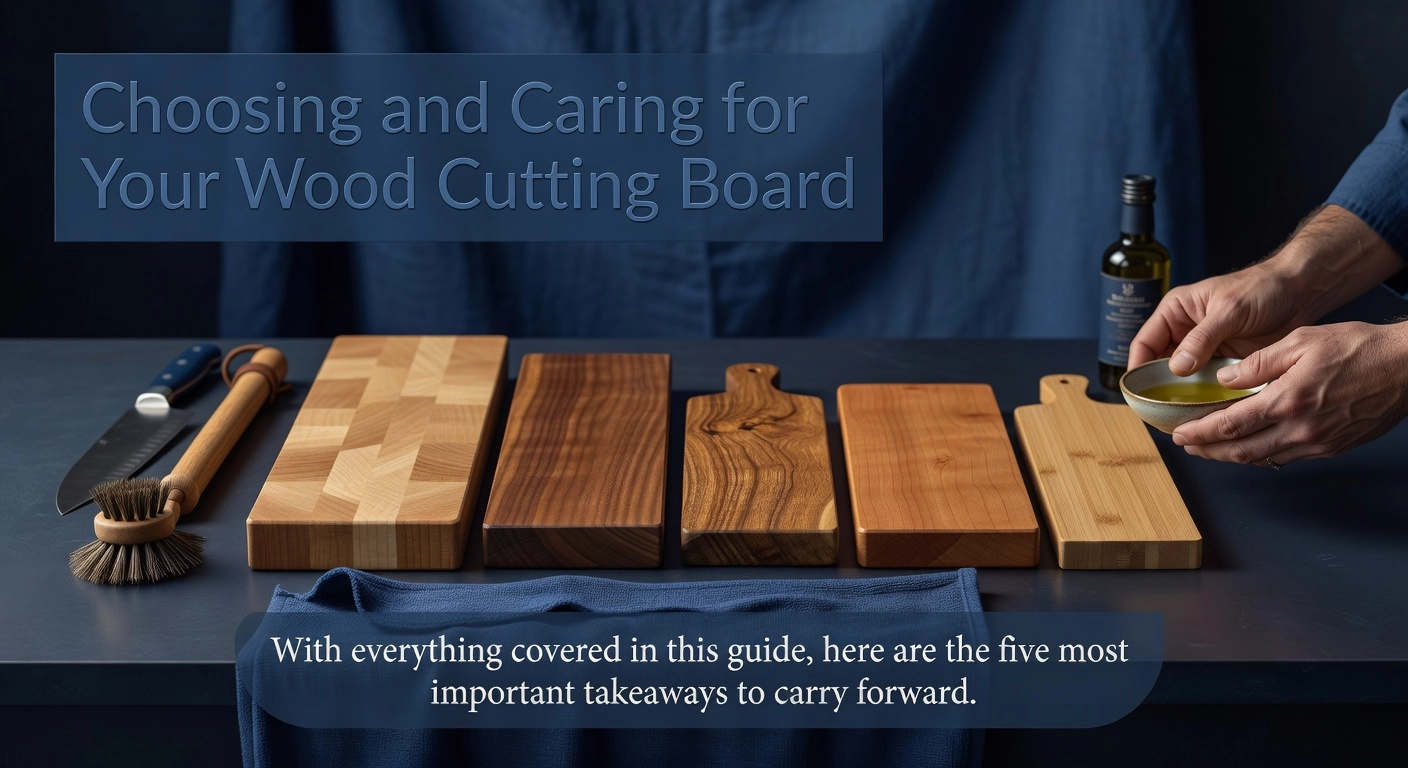
With everything covered in this guide, here are the five most important takeaways to carry forward.
- Hard maple edge-grain is your best starting point. For most home cooks and woodworking enthusiasts, a hard maple edge-grain board delivers the strongest combination of durability, knife-friendliness, easy restoration, and affordability. Its tight closed grain resists moisture and staining, and it handles heavy daily prep without punishing your knife edges.
- End-grain is worth it if you commit to the care. End-grain construction is gentler on blades and visually impressive, but it absorbs more moisture and requires more frequent oiling. If knife preservation is your priority and you will follow a diligent maintenance schedule, the investment pays off over time.
- Monthly oiling and prompt drying are non-negotiable. These two habits, applied consistently, are the difference between a board that cracks within two years and one that lasts two decades. Use food-grade mineral oil, never cooking oil.
- Restore before you replace. Deep scratches and stains respond well to progressive sanding followed by re-oiling. Restoration almost always extends useful life significantly and costs very little.
- Woodworkers should build their own. A DIY board from domestic hardwood gives you full control over species, size, and construction, typically at far less cost than comparable retail options.
Conclusion
Choosing the right wood cutting board does not have to be complicated. By focusing on a few key factors, such as selecting a durable hardwood, understanding the difference between edge grain and end grain construction, and picking a size that suits your cooking habits, you can find a board that will serve you faithfully for years to come.
Remember that quality craftsmanship and proper maintenance matter just as much as the wood itself. A well-cared-for board is truly an investment in your kitchen.
Now it is time to put your knowledge to work. Head to your local kitchen store or browse trusted retailers online, and pick the cutting board that feels right for your needs and budget. The perfect prep surface is waiting for you, and your cooking will be better for it.