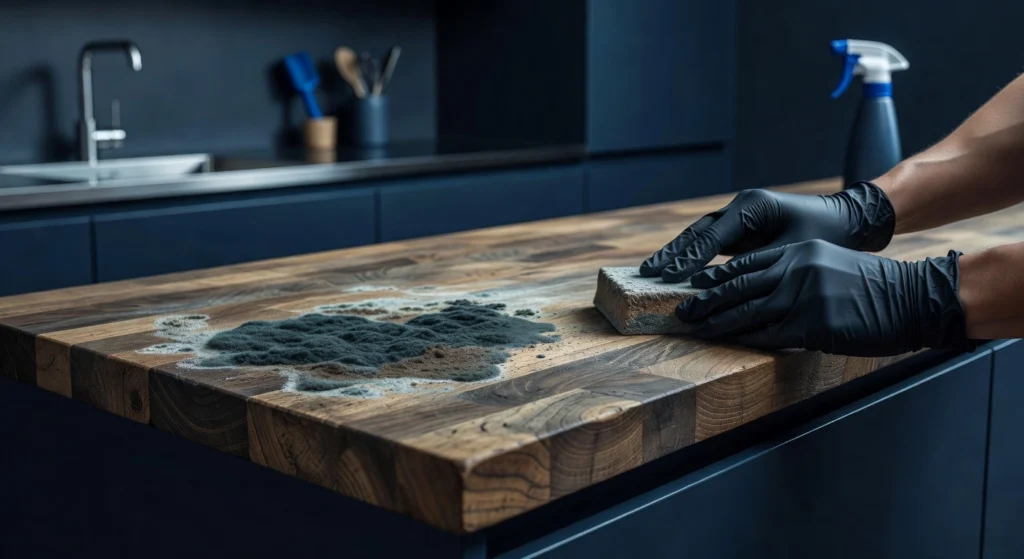

You walk into your kitchen, ready to prep dinner, and then you spot it. That fuzzy, dark patch on your beautiful butcher block countertop. Your stomach drops, and suddenly dinner is the last thing on your mind. Sound familiar?
Dealing with mold on butcher block countertop surfaces is more common than you might think, especially because wood naturally absorbs moisture. The good news? You do not need to panic or rush out to buy a brand new countertop. With the right approach, you can tackle this problem yourself, even if you have never done it before.
In this guide, we are going to walk you through everything you need to know. You will learn why mold grows on butcher block in the first place, what supplies you need to remove it safely, and how to clean it up step by step. We will also share some simple tips to keep mold from coming back. By the end, you will feel confident handling this issue and keeping your countertops looking their best for years to come.
Mold vs. Mildew: What Are You Actually Looking At?
Before you grab the bleach or start sanding, it helps to take a close look at what’s actually growing on your butcher block. Not everything that shows up on wood is the same, and misidentifying the problem can mean either under-treating it or going way harder than you need to.
True mold typically shows up as fuzzy, raised patches in black, green, or blue tones. It has texture to it, almost like a tiny carpet growing on the surface. More importantly, mold does not just sit on top of the wood. It works its way into the wood fibers, which is why it can be stubborn to remove and why identifying mold versus mildew early matters so much. If you catch it late, vinegar alone probably will not cut it.
Mildew, on the other hand, looks flat and powdery, usually white or grayish. It tends to stay closer to the surface, which makes it easier to treat. That said, do not ignore it. Mildew is still a clear sign that moisture is getting trapped somewhere it should not be.
Here is why the distinction matters practically: mildew often responds well to a simple vinegar-and-water solution, while true mold, especially darker fuzzy patches, typically needs a diluted bleach treatment or even light sanding to fully clear it. According to wood care guidance from Eden Oaks Woodware, both issues share the same root causes: trapped moisture, poorly sealed wood, and low airflow around your sink area. Fix the identification first, then match your treatment to what you are actually dealing with.
Is Your Butcher Block Safe to Use Right Now?
Now that you know what you’re looking at, the next question is urgent: should you actually be using this countertop right now? The short answer is no, not until you’ve treated it properly.
Here’s why this matters. Wood is porous, which means mold doesn’t just sit on the surface the way it might on tile or glass. It can work its way down into the grain, below what you can see, sometimes penetrating several millimeters deep before you even notice a problem. That’s a real concern on a food-prep surface, since mold spores can transfer directly to your food during everyday tasks like chopping or rolling dough.
The good news: if you caught this early, you’re likely dealing with surface-level growth that can be fully treated. A countertop with mild mold can absolutely be restored to a safe, usable condition with the right steps. The USDA confirms that wood surfaces are acceptable for food prep when properly cleaned and maintained.
Before you do anything else, run a quick visual and tactile check:
- Press gently on discolored areas. Soft or spongy spots suggest moisture damage has gone deep.
- Look for warping or cracks. These are red flags that structural integrity is compromised.
- Check the color. Staining that looks black or gray well below the surface, even after light cleaning, suggests deeper penetration.
If mold has pushed past roughly 2mm into the wood, or if you’re seeing soft spots and warping together, the countertop may be beyond safe restoration and replacement becomes the smarter, safer call.
Stop using the surface for food prep right now. Keep it off-limits until treatment is finished and the wood has been fully dried and re-sealed with a food-safe finish like mineral oil or a beeswax blend.
Why Butcher Block Countertops Get Moldy
Butcher block is beautiful, but it has one major weakness: wood is thirsty. Whether your countertop is made from end-grain or edge-grain wood, both constructions are full of open pores that soak up moisture fast. Think of it like a sponge sitting on your counter. Without a proper seal or a consistent oiling routine, every splash and drip goes straight into the wood fibers, and that trapped moisture becomes the perfect home for mold.
The most common culprits are surprisingly ordinary. A dish rack sitting in the same spot day after day traps water against the surface and never lets it dry out. Sink splashback during washing hits the counter dozens of times a day. A spill you meant to wipe up but forgot about for an hour can be enough to start the problem. These situations create small, persistently damp zones where mold can take hold quickly, especially in a warm kitchen environment.
Here is something that surprises a lot of people: using olive oil or coconut oil to condition your butcher block actually makes mold worse, not better. These cooking oils go rancid inside the wood fibers over time, and rancid oil actively feeds mold and bacteria rather than protecting against them. Stick to food-safe mineral oil or a beeswax blend instead.
Skipping or delaying your oiling schedule is another big risk factor. Experts recommend oiling high-use countertops every four to six weeks. When that barrier breaks down, every single spill becomes a potential mold event.
If your countertop runs next to the sink, pay extra attention to that section. It faces near-constant moisture from washing, draining, and splashing, making it the first place mold tends to appear.
What You Will Need Before You Start
Before you touch your countertop, gather everything you need so the process goes smoothly from start to finish. Having the right supplies on hand means you won’t have to stop mid-treatment, which can leave your wood exposed and vulnerable.
Here’s exactly what to pull together:
White vinegar and water (1:1 ratio) in a spray bottle. This is your first line of defense. Mix equal parts white vinegar and plain water, then pour it into a clean spray bottle. Vinegar’s natural acidity kills mold spores without introducing harsh chemicals near your food prep surface. This is the go-to starting point recommended by most wood care and cleaning guides.
Household bleach for tougher cases. If vinegar alone doesn’t cut it, you’ll step up to a bleach solution mixed at 1 part bleach to 10 parts water. Never use bleach at full strength on wood, as it can dry out and discolor the grain.
Food-grade mineral oil. Once the mold is gone, your wood needs to be re-oiled to seal the pores back up. Mineral oil is widely available at hardware stores, grocery stores, and pharmacies. Skip olive oil or coconut oil since both go rancid and actually invite more mold over time.
Sandpaper in multiple grits. Keep 220-grit on hand for light surface stains. For deeper discoloration, you’ll want 80-grit and 120-grit as well, so you can work your way up progressively without over-sanding.
Lint-free cloths, rubber gloves, and good ventilation. Protect your hands before applying any solution. Open a window or turn on a fan, especially when working with bleach. Lint-free cloths keep fibers off your freshly cleaned surface and help you apply mineral oil evenly.
Step-by-Step Mold Removal Guide
You’ve got your supplies ready and you know what you’re dealing with. Now it’s time to actually fix it. Work through these steps in order and don’t skip ahead, because each one builds on the last.
Step 1: Clear the Area and Assess the Damage
Start by removing everything from your countertop, including appliances, dish racks, cutting boards, and anything else sitting on the surface. Once it’s completely clear, bring in a bright flashlight or work under strong natural light and get a close look at the full spread of the mold. You want to see the true extent of the growth, not just the obvious patches. Run your fingertips gently over the affected areas and note any spots that feel soft, spongy, or sunken, because those could indicate that mold has worked its way deeper into the wood than a surface clean can fix. Discoloration that fans out beyond the visible mold patch is also worth marking. If the wood feels structurally compromised or the mold covers a very large portion of the surface, check out our earlier section on safety before proceeding, since deep mold penetration beyond a couple of millimeters may point toward replacement rather than restoration.
Step 2: Apply the Vinegar Treatment
Fill a spray bottle with equal parts white vinegar and water, then mist the affected area generously. Let it sit for 5 to 10 minutes so the solution has time to penetrate the wood’s pores and get to work on the mold at a deeper level. White vinegar is mildly acidic, which disrupts the mold’s ability to survive on the surface without soaking the wood with excess moisture the way plain water would. After the dwell time is up, wipe the area clean using a cloth or rag, always moving in the direction of the wood grain. Wiping against the grain can push debris into the wood fibers and leave micro-scratches that trap moisture later. Check the surface after wiping. For many lighter mold cases, this step alone will take care of the problem.
Step 3: Use a Diluted Bleach Solution for Stubborn Patches
If you can still see visible mold patches after the vinegar treatment has dried, it’s time to bring in a mild bleach solution. Mix 1 part household bleach with 10 parts water in a small bowl. Dip a clean cloth into the solution, wring it out so it’s damp rather than dripping, and apply it carefully to the remaining mold spots. Let the solution dwell on the surface for about 5 minutes, then wipe it away and follow up with a second cloth barely dampened with plain water to rinse off any residue. The key word here is minimal water. You are not washing the countertop under a faucet; you are just removing the bleach residue with as little moisture as possible. According to cleaning professionals who specialize in butcher block surfaces, keeping liquid exposure low at every stage is one of the most important habits for protecting wood long term.
Step 4: Dry the Wood Completely
This step is short but absolutely critical, and skipping it is one of the most common mistakes people make. Immediately after wiping off the bleach rinse, go over the entire treated area with a dry, clean towel and absorb as much surface moisture as you can. Then walk away and let the countertop air-dry for a full 24 hours in a well-ventilated space before you do anything else. Open a nearby window, run a ceiling fan, or use a small box fan directed at the counter to move air across the surface. The wood needs to be genuinely dry before you sand or oil it, not just dry to the touch. Applying oil or doing any sanding while moisture is still lurking inside the wood can lock problems in rather than solve them.
Step 5: Sand Out Any Remaining Stains
Even after successful mold removal, black or gray staining often remains in the wood grain. This is normal and does not mean the mold is still active; it’s just discoloration left behind. Start with 220-grit sandpaper and sand the stained area using light, even strokes that follow the grain. If the stain is stubborn and barely fades, step down to 120-grit, and for deeper discoloration that goes a bit further into the wood, drop to 80-grit. Once the stain is gone, work your way back up through 120-grit and finish with 220-grit to smooth the wood fiber back out. This progression is the same approach recommended in professional butcher block restoration guides because it removes material efficiently without leaving deep scratches behind.
Step 6: Remove Dust and Apply Mineral Oil
Wipe the entire sanded area with a cloth that is barely damp, just enough to pick up the fine sanding dust without reintroducing moisture. Let it dry for 15 to 20 minutes, then apply a generous coat of food-safe mineral oil, working it into the wood following the grain direction. Do not be shy here; the wood is thirsty after cleaning and sanding and will absorb more than you expect. Let the oil sit and soak in for at least an hour, then wipe away the excess with a clean cloth. Mineral oil is the right choice for this step because it is food-safe, non-rancidifying, and widely available. Avoid olive oil or coconut oil, which break down over time and can actually contribute to the mold problem you just fixed.
Step 7: Add a Second Protective Layer for High-Moisture Zones
If your mold problem occurred near the sink or on a section of countertop that regularly gets splashed or sits near a dish rack, mineral oil alone may not be enough ongoing protection. Once the mineral oil has fully absorbed, usually after a couple of hours or overnight, apply a coat of beeswax blend or pure tung oil over the same area. These products form a more water-resistant barrier on the surface and give the wood extra defense against the conditions that caused the mold in the first place. According to wood care specialists, combining a penetrating conditioner like mineral oil with a surface-level protectant like beeswax is one of the most effective strategies for keeping butcher block in good shape in moisture-heavy kitchen environments. Going forward, plan to re-oil the entire countertop every four to six weeks to stay ahead of any future issues.
Repair or Replace? How to Decide
Once your mold removal treatment is done and the countertop has dried completely, you’re facing the most important question of the whole process: is this worth saving, or is it time to start fresh? Here’s how to make that call with confidence.
Start by checking how the surface responded to treatment. If the mold wiped away cleanly, the wood feels firm and solid after drying, and there are no soft or spongy spots when you press on it, that’s a genuinely good sign. Surface or cosmetic mold that clears up with cleaning and leaves the wood structurally sound underneath is very much repairable. Most first-time mold issues fall into this category, especially if they were caught early.
The bigger concern is mold that goes deep. To test this, use a knife tip or a screwdriver and gently scratch the discolored area. If the staining disappears after removing just a thin layer of wood, you’re likely dealing with surface contamination. But if the dark discoloration keeps going as you scratch deeper, that’s a warning sign. Mold that has penetrated roughly 2mm or more into the wood fibers is much harder to fully eliminate through cleaning alone. Another red flag is mold that comes back within a few days of treatment even when you’ve dried the surface thoroughly. Quick recurrence almost always means the contamination runs deeper than what you can reach with a cloth or light sanding.
Structural damage is a different problem entirely, and it’s one that restoration simply cannot fix. If your butcher block is visibly warping, has significant cracks running along the grain, or you can see the wood strips separating at the glue joints, those are signs of damage that go beyond mold. Sanding and re-oiling won’t bring a warped countertop back to flat or re-bond failed joints.
Finally, think honestly about how you use this countertop. If you regularly prep raw meat or fresh produce on it and you’re not completely confident the mold is gone, replacement is the right move. As discussed in this home improvement Q&A on mold removal and echoed across DIY restoration forums, porous wood can harbor mold spores deep in its fibers even after surface treatment. When food safety is on the line, the cost of a new countertop is far less than the risk of getting sick.
Best Oils and Sealants to Prevent Mold Coming Back
Once your countertop is clean and dry, keeping mold away comes down to one thing: protecting the wood from moisture. The right oil or sealant creates a barrier that stops water from soaking into the grain, which means mold never gets the foothold it needs. Here is a breakdown of your best options, from budget-friendly basics to premium long-term solutions.
Food-Grade Mineral Oil: Your Go-To Starting Point
Food-grade mineral oil is the most beginner-friendly option on the market, and it should be the first product you reach for. It is inexpensive, completely odorless, and totally food-safe since it is a non-drying petroleum-derived oil that stays stable inside the wood without breaking down over time. Unlike cooking oils, it never oxidizes or goes rancid, so it conditions the wood without creating any new problems. The main trade-off is that it does not form a hard protective film, which means you will need to reapply it roughly every four to six weeks for a high-use countertop. Think of it as regular maintenance rather than a one-and-done fix. You can learn more about food-safe finishes for butcher block to understand how mineral oil stacks up against other options.
Beeswax Blends: Better Protection for Everyday Use
Beeswax blends, often sold as board butter or butcher block conditioner, take mineral oil one step further by adding a natural wax layer on top of the wood. That wax layer does a noticeably better job of repelling surface moisture, so water beads up and wipes away instead of soaking in. These blends are still 100% food-safe and non-toxic, and they give your countertop a soft, attractive sheen as a bonus. They are ideal for regular monthly maintenance once your base coats of mineral oil have fully saturated the wood. Check out this comparison of mineral oil, beeswax, and tung oil finishes if you want a deeper look at how these products perform side by side.
Pure Tung Oil: The Best Choice Near Sinks
If your countertop sits right next to the sink, pure tung oil is worth the extra effort. Unlike mineral oil, tung oil actually polymerizes inside the wood grain, meaning it hardens as it cures and creates a much more water-resistant finish. It is FDA-approved for food contact once fully cured and delivers a natural matte look without a plastic-like coating. Plan for multiple thin coats and a full curing period of around 15 to 30 days before heavy use. The durability payoff is significant for high-moisture zones.
Hardwax Oils: Premium Protection for the Long Haul
Hardwax oils sit at the top of the performance ladder. They combine deep wood penetration with a durable surface film, giving you excellent mold and moisture resistance while still feeling completely natural underfoot. They are food-safe once fully cured and typically only need reapplication once a year or less, making them a smart investment for busy kitchens. The full guide to choosing the right sealer covers hardwax oils in detail if you want to compare specific products. The higher upfront cost reflects genuine long-term value.
The Oils You Should Never Use
Finally, a hard rule: never apply olive oil, coconut oil, vegetable oil, or any other cooking fat to your butcher block. These oils oxidize over time and go rancid inside the wood, creating exactly the warm, damp, organic environment that mold loves. Many homeowners reach for whatever cooking oil is on the counter out of habit, but this shortcut can undo all your cleanup work within a matter of weeks. Stick to products specifically designed for wood care and you will keep that countertop mold-free for the long haul.
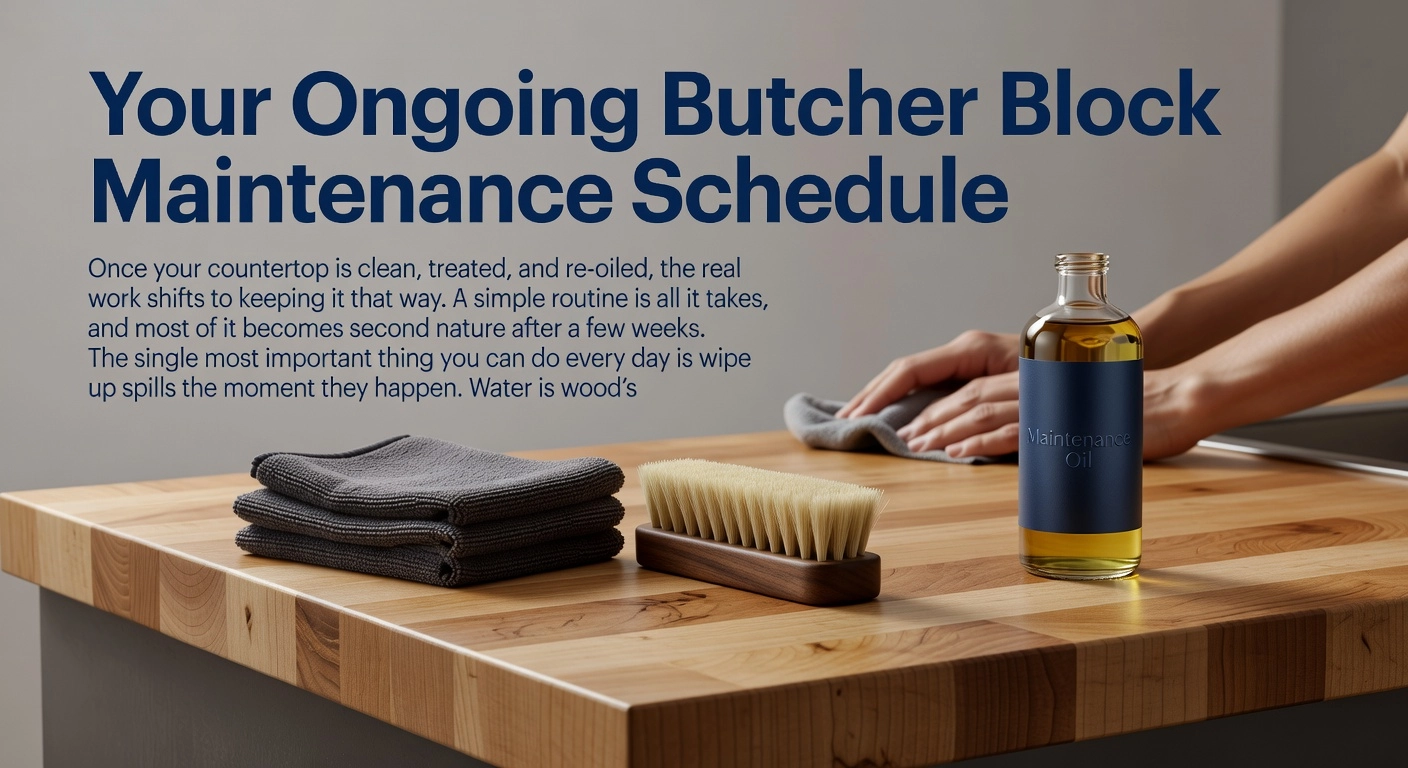
Your Ongoing Butcher Block Maintenance Schedule
Once your countertop is clean, treated, and re-oiled, the real work shifts to keeping it that way. A simple routine is all it takes, and most of it becomes second nature after a few weeks.
Daily Habits That Make a Big Difference
The single most important thing you can do every day is wipe up spills the moment they happen. Water is wood’s biggest enemy, and even a small puddle sitting for an hour can start soaking into the grain. Pay extra attention to anything that sits directly on the surface, like a wet dish rack, a damp sponge, or a dripping bottle. These are the sneaky culprits behind most mold problems because they create constant low-level moisture contact. Move them off the wood or place a dry towel underneath if you need a temporary spot.
Weekly Cleaning Routine
Once a week, wipe down the whole surface using a mild dish soap mixed with warm water. Keep it light; you’re cleaning, not soaking. Wring out your cloth well before it touches the wood. After you’ve wiped it down, go over it again with a barely damp cloth to rinse, then immediately dry the entire surface with a clean towel. Never let any moisture air dry on its own.
Oiling Every 4 to 6 Weeks
For a countertop that gets regular use, plan to oil it with food-grade mineral oil roughly every four to six weeks. Apply it generously along the grain, let it soak in for about an hour, then wipe away any excess. In dry climates or during winter when indoor heating pulls moisture from the wood, you may need to oil more frequently. A quick fingernail scratch test tells you everything; if the surface feels rough or chalky, it is time to oil again.
Climate Considerations
If you live somewhere humid or you’re heading into summer, consider running a dehumidifier in the kitchen and keeping indoor humidity below 60 percent. Excess moisture in the air feeds directly into the wood even when the surface looks dry. On the flip side, dry climates mean the wood drinks up oil faster, so trust that fingernail scratch test and re-oil whenever the surface tells you it needs it.
Special Considerations for Sink-Adjacent Sections
If there is one spot on your butcher block that deserves extra attention, it is the strip of wood running directly beside or behind your sink. This zone gets hit with splashback every time you wash dishes, drips from faucets, and condensation from damp hands and wet items. Unlike the rest of your countertop, it almost never gets a chance to fully dry out between uses, which makes it the single highest-risk area for mold and mildew to take hold.
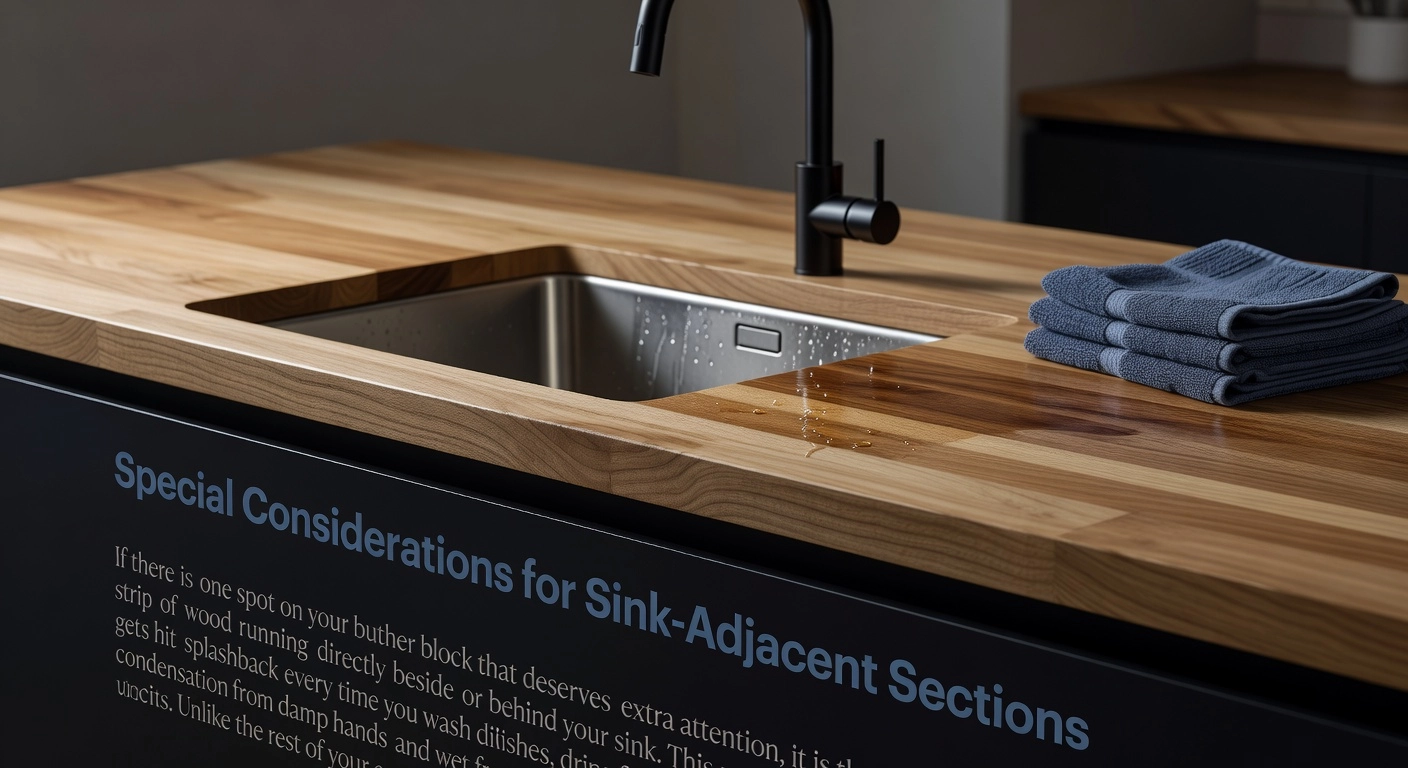
Because of that constant moisture exposure, mineral oil alone is not enough protection here. Mineral oil does not cure hard and it washes away over time, leaving the wood vulnerable. Instead, use tung oil or a hardwax finish for this section specifically. Both options penetrate deep into the wood grain and cure into a more water-resistant barrier that holds up far better against repeated wet contact.
Sealing the edges and the underside of any sink-adjacent section is just as important as the surface. Moisture can wick upward through the bottom of the countertop if those surfaces are left untreated. Apply a waterproof wood sealant to all cut edges and the underside before or during installation to block that upward migration.
You also want to keep this zone completely clear of dish racks and drying mats. Both items trap moisture directly against the wood for hours at a time, which is exactly the condition mold needs to grow.
Finally, bump up your maintenance schedule for this area. While the rest of your countertop needs re-oiling every four to six weeks, the sink zone benefits from a fresh coat every two to three weeks. Do a quick visual inspection monthly and look for any dullness, discoloration, or early mold patches so you can catch problems before they go deep.
Frequently Asked Questions
Can I still use my countertop while treating mold?
No, and this one is non-negotiable. Stop all food prep on the surface the moment you spot mold, and do not resume until the full treatment is complete, the wood has dried thoroughly, and a fresh coat of food-safe mineral oil has been applied and fully absorbed into the grain. Using the surface too early risks transferring mold spores or cleaning residues directly to your food. The entire process, including drying time between steps, can take two to three days, so plan to use another prep surface in the meantime.
Will bleach damage my butcher block?
Not if you use it correctly. A diluted solution of 1 part bleach to 10 parts water, applied sparingly to the affected area, will not cause significant structural damage to the wood. The key is to rinse it off promptly with clean water, let the surface dry completely, and re-oil right away. Bleach is drying to wood fibers, so leaving it on too long or using it at full strength can cause cracking, lightening, and long-term damage. When in doubt, vinegar or hydrogen peroxide are gentler alternatives that still do a solid job on surface mold.
How do I know mold is fully gone?
Look for four things once the countertop is dry. First, no visible black, green, or gray discoloration beyond what sanding has already addressed. Second, the wood should feel firm everywhere, with no soft or spongy patches that suggest deeper penetration. Third, there should be no lingering musty smell once the surface is completely dry. Fourth, check back after a full week of normal use. No regrowth in that window is a strong sign the treatment worked.
What if mold keeps coming back?
Recurring mold almost always points to a moisture problem that was never fully resolved. Common culprits include a slow sink leak, a dish rack sitting directly on the wood, poor ventilation, or an inconsistent oiling routine. Fix the moisture source first, then commit to a regular mineral oil schedule. Avoid using food oils like olive or coconut oil, since these go rancid and actually create conditions that encourage mold rather than prevent it.
Does oiling actually prevent mold?
Yes, it is your single best defense. Consistently applied mineral oil penetrates the wood fibers and creates a barrier that repels surface moisture and slows water absorption. It does not make the surface fully waterproof, so you still need to wipe up spills promptly, but it dramatically reduces the risk of mold taking hold. Aim to re-oil every four to six weeks for a countertop that sees daily kitchen use.
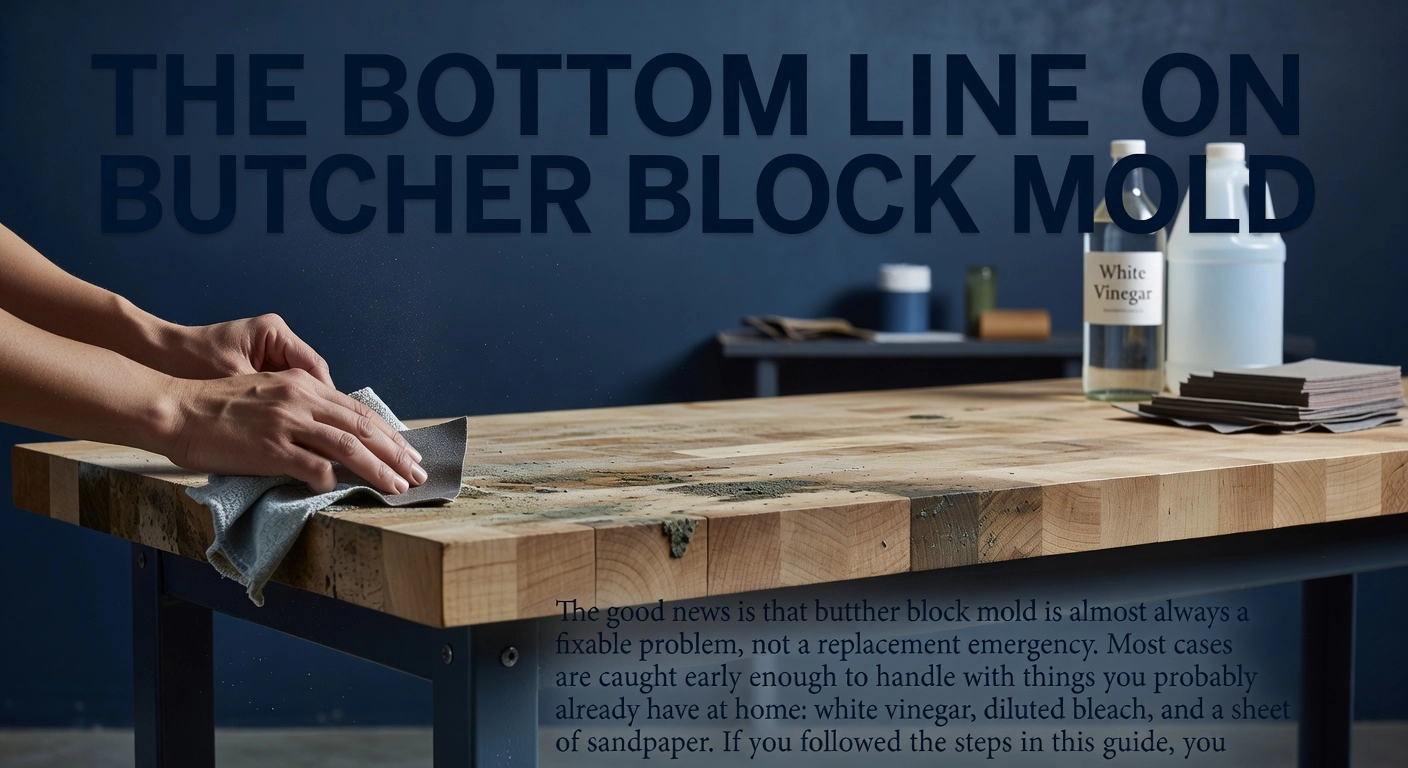
The Bottom Line on Butcher Block Mold
The good news is that butcher block mold is almost always a fixable problem, not a replacement emergency. Most cases are caught early enough to handle with things you probably already have at home: white vinegar, diluted bleach, and a sheet of sandpaper. If you followed the steps in this guide, you already know exactly how to work through the treatment process without tearing out your countertop.
From here, your two biggest priorities are simple. Wipe up spills the moment they happen, and oil your countertop with food-grade mineral oil every four to six weeks. Never substitute cooking oils like olive or coconut oil; they go rancid inside the wood and actually make mold problems worse over time.
Give your sink-adjacent section a little extra love. It takes more moisture abuse than anywhere else on the countertop, so it needs more frequent oiling and a more moisture-resistant finish to stay protected.
If mold keeps coming back or you are unsure how deep it has penetrated, revisit the repair-versus-replace section of this guide. It gives you a clear, honest framework for making that call without guessing.
For deeper dives into oil comparisons, restoration techniques, and full care schedules, the WoodStuffHQ butcher block care guide has everything you need to keep your countertop looking great for years to come.
Conclusion
Mold on your butcher block countertop is a frustrating problem, but it is absolutely one you can solve. Remember the key takeaways: catch mold early before it penetrates deep into the wood, use the right cleaning solutions for the severity of the problem, and always dry your countertop thoroughly after cleaning. Most importantly, regular oiling and moisture control will keep mold from coming back in the first place.
Your butcher block countertop is worth protecting. With a little effort and the right knowledge, you can restore it to its original beauty and keep it that way for years to come.
Now it is time to take action. Grab your supplies, follow the steps in this guide, and reclaim your kitchen. A clean, healthy countertop is closer than you think.