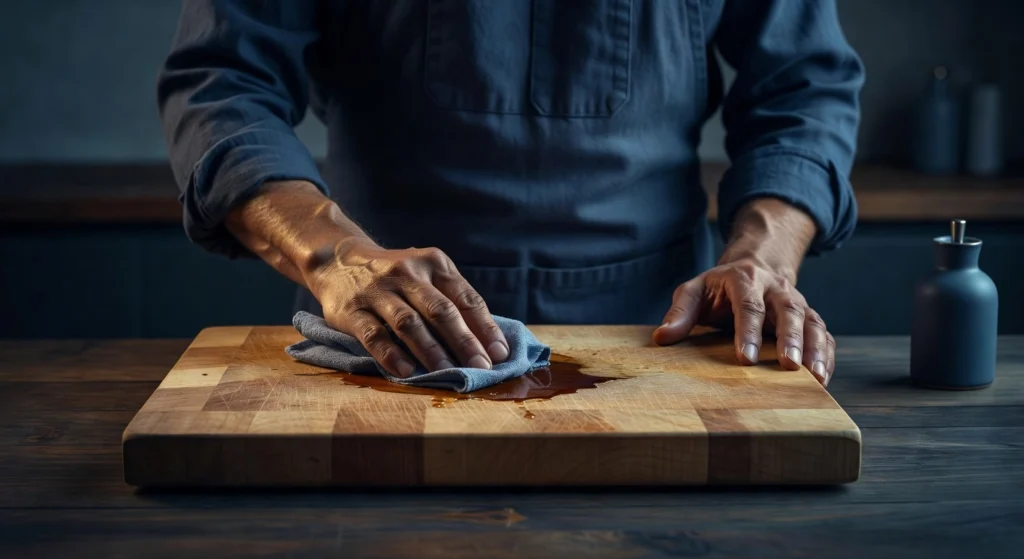

If you’ve ever pulled out your wooden cutting board only to find it looking dry, cracked, or just plain sad, you’re not alone. I’ve been there too, and honestly, I had no idea what I was doing wrong until someone asked me a simple question: “Do you season it?”
Season a cutting board? I had no clue that was even a thing. But once I learned why I season my cutting board regularly, everything changed. My boards started lasting longer, they stopped absorbing odors, and they just looked so much better sitting on my counter.
Here’s the good news: seasoning a cutting board is one of the easiest things you can do to protect your kitchen tools, and you only need one or two simple ingredients to get started.
In this tutorial, I’m going to walk you through exactly what seasoning means, why it matters for your board’s lifespan, and how to do it step by step. Whether you just got your first wooden board or you’ve had one sitting neglected in a drawer, this guide is for you. Let’s get into it!
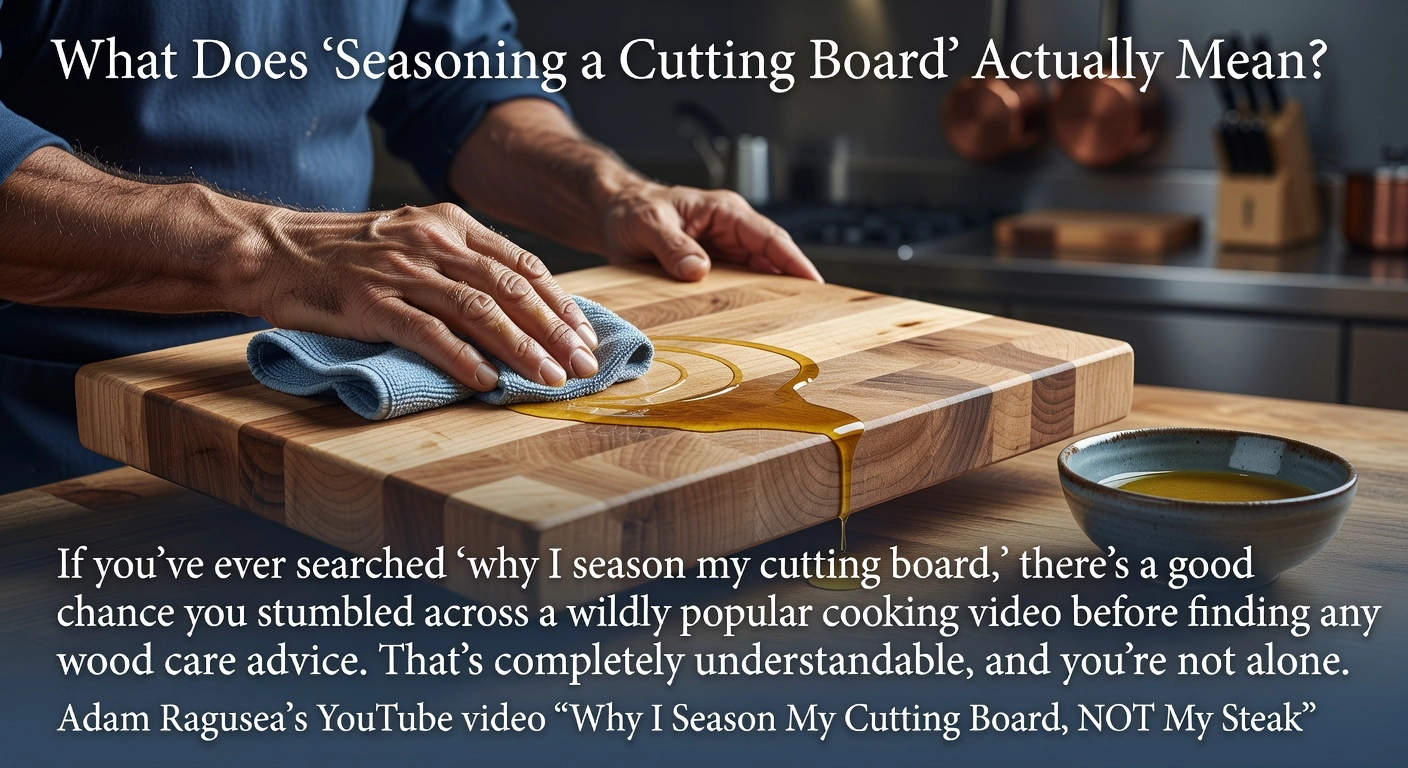
What Does ‘Seasoning a Cutting Board’ Actually Mean?
If you’ve ever searched “why I season my cutting board,” there’s a good chance you stumbled across a wildly popular cooking video before finding any wood care advice. That’s completely understandable, and you’re not alone.
The Viral Cooking Trick You’ve Probably Seen
Adam Ragusea’s YouTube video “Why I Season My Cutting Board, NOT My Steak” introduced millions of home cooks to a clever flavor technique: spreading butter, minced garlic, fresh herbs, and a squeeze of lemon across your cutting board, then resting your freshly cooked steak directly on top. The hot meat acts like a sponge, soaking up all those flavors as it cools. It’s counterintuitive, visually satisfying, and genuinely effective. The technique went viral because it’s low-effort, fun to watch, and produces real results without any extra pans or complicated steps. If you’ve tried it, good on you. It’s a legitimate cooking method worth keeping in your back pocket.
The Meaning That Actually Protects Your Board
Here’s the pivot, though. If you own a wooden cutting board, there’s a second meaning of “seasoning” that matters a whole lot more for your wallet and your kitchen hygiene. Wood is porous, meaning it absorbs moisture, food juices, and odors every single time you use it. Without regular oiling, that absorbed moisture causes the grain to swell, dry out unevenly, and eventually crack or warp. Seasoning, in the wood-maintenance sense, simply means applying a food-safe oil, typically food-grade mineral oil, to hydrate the grain, push out moisture before it penetrates too deeply, and build a light protective barrier across the surface. Board manufacturers consistently recommend this as the single most important care habit for wooden boards.
The best part? It takes about five minutes, costs next to nothing, and done consistently, it can add years of life to a board you’d otherwise replace far too soon. That’s exactly what the rest of this guide is going to walk you through.
Why Wood Needs Oil in the First Place
Here’s the thing about wood that surprises a lot of beginners: it is never truly “sealed” the way plastic or glass is. Wood is a living material (well, formerly living) made up of millions of tiny cellular structures, little tubes and channels that once carried water and nutrients through the tree. When a tree gets milled into a cutting board, those channels don’t disappear. They stay open, and they stay hungry. That means every time something wet touches your board, whether it’s water from the tap, chicken juices, or even strong-smelling foods like garlic and onion, the board is actively pulling that liquid down into its grain through capillary action. Think of it less like a countertop and more like a stack of tiny straws pointed straight up at your food.
This is exactly why an untreated board gets into trouble fast. Every time you wash it and let it dry, the wood swells as it absorbs water, then contracts as it releases it. Do that cycle enough times and the stress builds up unevenly across the board’s surface. The result? Warping, cupping, cracking, and eventually splitting along the grain. Beyond the structural damage, all that deep absorption means liquids and organic matter can work their way into pores that are genuinely hard to clean, creating conditions where bacteria can linger longer than you’d like.
Here’s where the science gets interesting. A 2023 study published in MDPI’s journal Coatings tested oiled versus untreated wood boards inoculated with Listeria and Salmonella. The oiled boards actually showed higher surface bacterial recovery, which sounds alarming until you understand what it means: the oil reduced how deeply bacteria penetrated into the grain. On untreated wood, bacteria got pulled in deep and became harder to recover, but also harder to wash away properly. The oil essentially kept things closer to the surface where your soap and water could actually do their job.
The USDA’s Food Safety and Inspection Service backs this up by specifically recommending food-grade mineral oil for wooden cutting boards. It’s not just marketing advice; it’s practical guidance rooted in how wood actually behaves with food contact.
The best way to picture the difference is this: an untreated board acts like a completely dry sponge dropped into a puddle, it soaks up everything immediately and holds it deep inside. A properly seasoned board behaves more like a well-conditioned leather jacket in the rain. The oil fills enough of those open pores to slow down rapid absorption, so liquids bead up or wipe away instead of disappearing straight into the wood. The board can still breathe and maintain its natural properties, but it stops acting like a sponge on a mission.
What Seasoning Actually Does for Your Board
So now that you know why wood needs oil, let’s talk about what seasoning is actually doing for your board on a practical level. There are five real, measurable benefits here, and once you understand them, you’ll never skip oiling again.
Hydration: Keeping the Wood Flexible and Crack-Free
When you apply food-grade mineral oil to your board, it soaks down into the wood grain and replaces the moisture that evaporates out over time. Think of it like hand lotion for your board. Without that hydration, the wood fibers shrink and pull away from each other, which eventually leads to surface cracks, splintering, and that rough, chalky texture you sometimes see on neglected boards. A properly hydrated board stays supple and smooth, which matters a lot if you want it to last more than a couple of years.
A Moisture Barrier That Actually Works
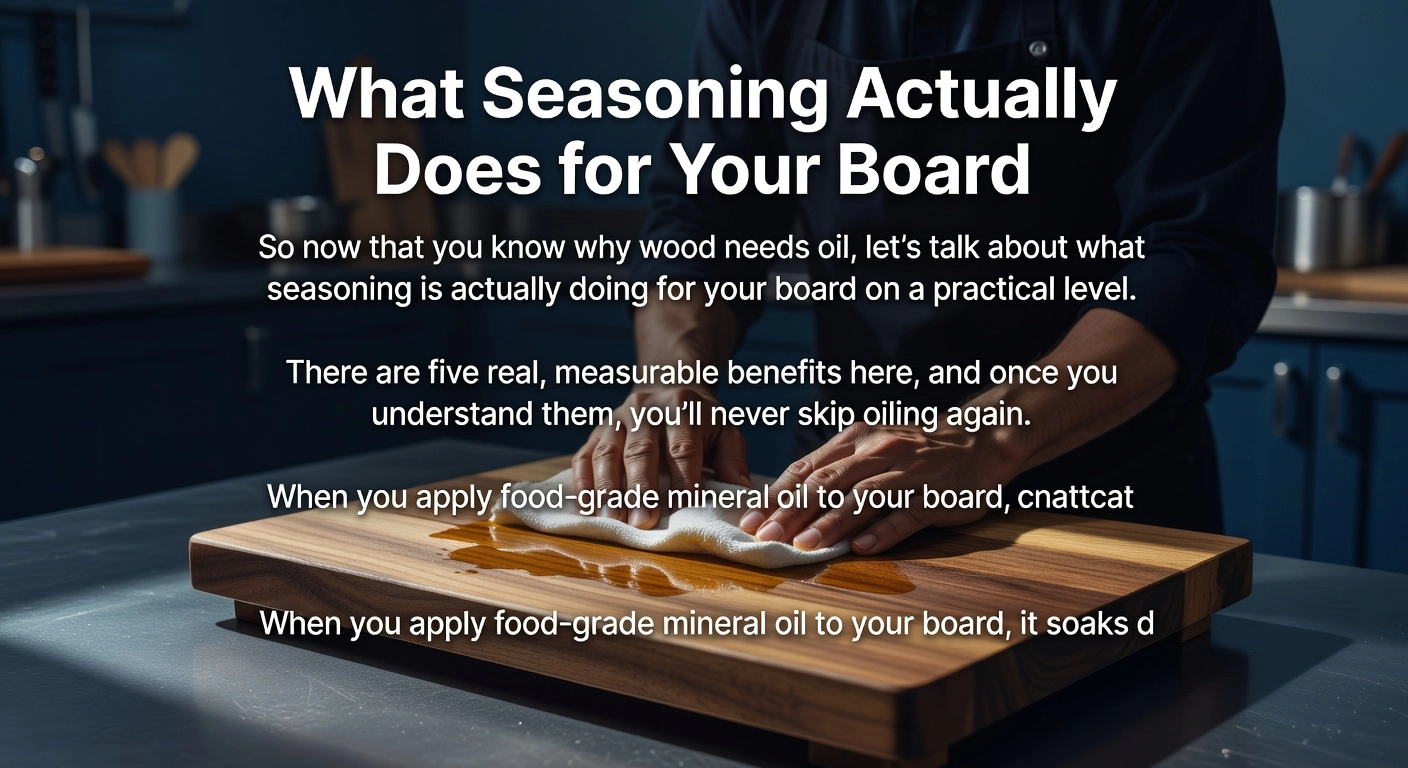
Here is something satisfying to watch: after a good seasoning, water literally beads up on the surface instead of soaking in. That is your moisture barrier doing its job. Each time untreated wood absorbs water and then dries out, it swells and contracts slightly. Repeat that process hundreds of times and the board starts warping, cracking, and splitting along the grain. Regular oiling slows that cycle dramatically by giving water fewer places to penetrate. Serious Eats recommends re-oiling the moment water stops beading and starts spreading, which is a simple visual cue even beginners can use.
Hygiene Support Backed by Research
Wood already has some natural antibacterial properties, but oiling adds another layer of food safety support. A 2023 MDPI study found that oiled wood surfaces showed significantly higher bacterial recovery on the surface compared to untreated wood, meaning bacteria penetrated less deeply into the grain. Bacteria sitting on the surface can be scrubbed away with soap and water. Bacteria trapped deep inside the grain? Much harder to remove. So oiling actually complements wood’s natural defenses rather than replacing them.
Better Knife Glide, Less Wear
A smooth, hydrated board creates noticeably less drag on your knife edges as you chop. That reduced friction protects your blade from dulling faster and reduces the deep gouges that make boards rough over time. Dry, dehydrated wood feels almost grippy against a blade, accelerating wear on both the board and your knives.
Longer Lifespan, Proven by Testing
Consumer Reports 2025 testing put this to the test by subjecting boards to dishwasher cycles, soaking, and heavy chopping, then evaluating how well regular oiling preserved the surface afterward. The results confirmed that consistent oiling routines made a meaningful difference in keeping boards intact and functional after that kind of serious abuse. Untreated boards degraded noticeably faster under the same conditions.
The Right Oils to Use (And the Ones to Skip)
Now that you understand why your board needs oil, the obvious next question is: which oil should you actually use? The answer matters more than most beginners realize, because using the wrong oil can make things worse instead of better.
Your Best Default: Food-Grade Mineral Oil
If you want one simple, no-stress answer, this is it. Food-grade mineral oil is colorless, odorless, tasteless, and most importantly, shelf-stable. It does not oxidize, it does not go rancid, and it will not add any weird flavors to your food. Both the USDA and manufacturers like John Boos explicitly recommend it for wooden cutting boards. You can usually find it at a pharmacy or hardware store for just a few dollars, which makes it one of the most accessible options available.
The Upgraded Option: Mineral Oil and Beeswax Blends
Plain mineral oil penetrates deep into the grain, but it stays liquid and does not form any kind of protective surface layer. That is where beeswax comes in. Blending mineral oil with beeswax creates what the DIY community has started calling “board butter,” and it has become the go-to approach heading into 2025. The beeswax adds a light seal on top of the wood that slows moisture from getting in, reduces the frequency of reapplication, and leaves the surface feeling smooth and conditioned. A popular DIY ratio is roughly four parts mineral oil to one part beeswax, melted together and cooled into a paste you can apply with a cloth.
Food-Safe Alternatives Worth Knowing
Fractionated coconut oil (sometimes labeled MCT oil) is another solid option. Unlike regular coconut oil, which can eventually go rancid inside the wood grain, fractionated coconut oil has been processed to remove the unstable fatty acids, leaving it liquid, odorless, and resistant to oxidation. Some commercial cutting board oils use it as a base ingredient alongside mineral oil and beeswax.
Oils You Should Never Use
This is the part beginners most often get wrong. Olive oil, vegetable oil, and canola oil might seem like logical choices since they are already in your kitchen, but they are a bad idea for your board. These cooking oils oxidize inside the wood grain over time, turning rancid and creating off-smells and a sticky, degraded surface that no amount of scrubbing will fix. Once rancid oil soaks into the grain, you cannot fully reverse it.
Raw linseed oil and raw tung oil are also a hard no, even though they are popular in other woodworking applications. In their unpolymerized form, these oils are not considered food-safe for surfaces that contact food. Boiled linseed oil is even worse, as it often contains metallic drying additives you absolutely do not want near your meals. Stick with food-grade mineral oil or a beeswax blend and you will not go wrong.
How to Season Your Cutting Board: Step by Step
Now that you know which oils to reach for, let’s put it all together. Here is the exact process to follow, whether you are breaking in a brand new board or giving a neglected one some much-needed attention.
Step 1: Clean and Dry the Board Completely
Before a single drop of oil touches your board, the surface needs to be completely dry. This step is non-negotiable. Moisture trapped beneath a layer of oil has nowhere to go, and it can cause the wood to warp, swell, or even begin to rot from the inside out. Wash your board with warm soapy water, rinse it thoroughly, then stand it upright and let it air dry for several hours or overnight. Propping it on its edge allows airflow on both sides, which speeds things up considerably.
Step 2: Apply the Oil Generously, Working With the Grain
Pour a generous amount of food-grade mineral oil directly onto the surface. It might look like way too much at first, and that is exactly right. Using a clean cloth or paper towel, rub the oil into the wood following the direction of the grain rather than going across it. Working with the grain helps the oil travel into the wood’s natural channels for deeper penetration. Cover every surface, including the sides and the bottom, so the entire board gets treated evenly.
Step 3: Let It Soak, Then Repeat
Give the oil time to actually do its job. For a brand new board, leave it to absorb overnight if you can. New boards are thirsty and benefit from three to five full treatments during the first week before you put them to regular use. The Kitchn’s updated wood care guide recommends this repeated initial treatment to fully saturate the wood before it faces daily kitchen wear.
Step 4: Wipe Away Any Excess
After the oil has soaked in, run a clean dry cloth over the surface. Any oil that has not absorbed will sit on top and turn tacky over time, attracting crumbs and debris. You want the board to feel smooth and barely glossy, not slick or sticky.
Step 5: Optional Beeswax Finishing Layer
For extra protection, finish with a thin coat of a mineral oil and beeswax blend, then buff it in lightly. This optional layer sits on top of the oil treatment and creates a gentle moisture-sealing barrier. It is a popular DIY step among home cooks right now, and it genuinely makes a difference on heavily used boards.
Revival Tip for Dry or Neglected Boards
If your board looks grey, feels rough, or has picked up some stubborn stains, start with a salt scrub before oiling. Sprinkle coarse salt over the surface, cut a lemon in half, and use the cut side to scrub in circles. The salt lifts surface grime and opens the grain, while the lemon deodorizes and brightens the wood. Rinse, dry fully overnight, then follow the full oiling process above from the beginning.
How Often Should You Season a Cutting Board?
The frequency question is one that trips up a lot of beginners, so let’s break it down by situation rather than giving you a one-size-fits-all answer.
Brand new boards need the most attention upfront. Before you use a new board for any food prep, give it three to five oil treatments within the first week. The wood is completely dry and thirsty at this stage, and each coat soaks in quickly. Apply a generous layer, let it absorb overnight, then repeat. This initial heavy seasoning builds the protective foundation that all your future maintenance will sit on top of.
For regular home use, once a month is plenty. If you are hand-washing your board and drying it promptly after each use, a monthly oiling routine will keep it in great shape, as confirmed by John Boos’s official care guidelines.
If you use your board heavily or wash it frequently, do a weekly water bead test. Sprinkle a few drops of water on the dry surface. If the water beads up, you are good. If it spreads out or soaks in, it is time to oil.
You can also watch for these visual cues between tests: a dry or chalky appearance, rough texture when you run your hand across the surface, visible grain lifting, or a board that feels noticeably lighter and sounds a bit hollow when tapped.
Finally, where you store your board matters. Boards sitting near the stove, beside a sunny window, or in a warm dry spot will dry out faster than boards kept in a cool, shaded area. Check those boards more frequently, according to Wirecutter’s wood board care guide.
Start Seasoning and Keep Your Board for Years
Seasoning a wooden cutting board is genuinely one of the simplest habits you can build in your kitchen. It takes maybe five minutes once a month, and it protects a tool you reach for almost every single day from cracking, warping, and the kind of deep bacterial penetration that makes boards unsafe and unpleasant to use.
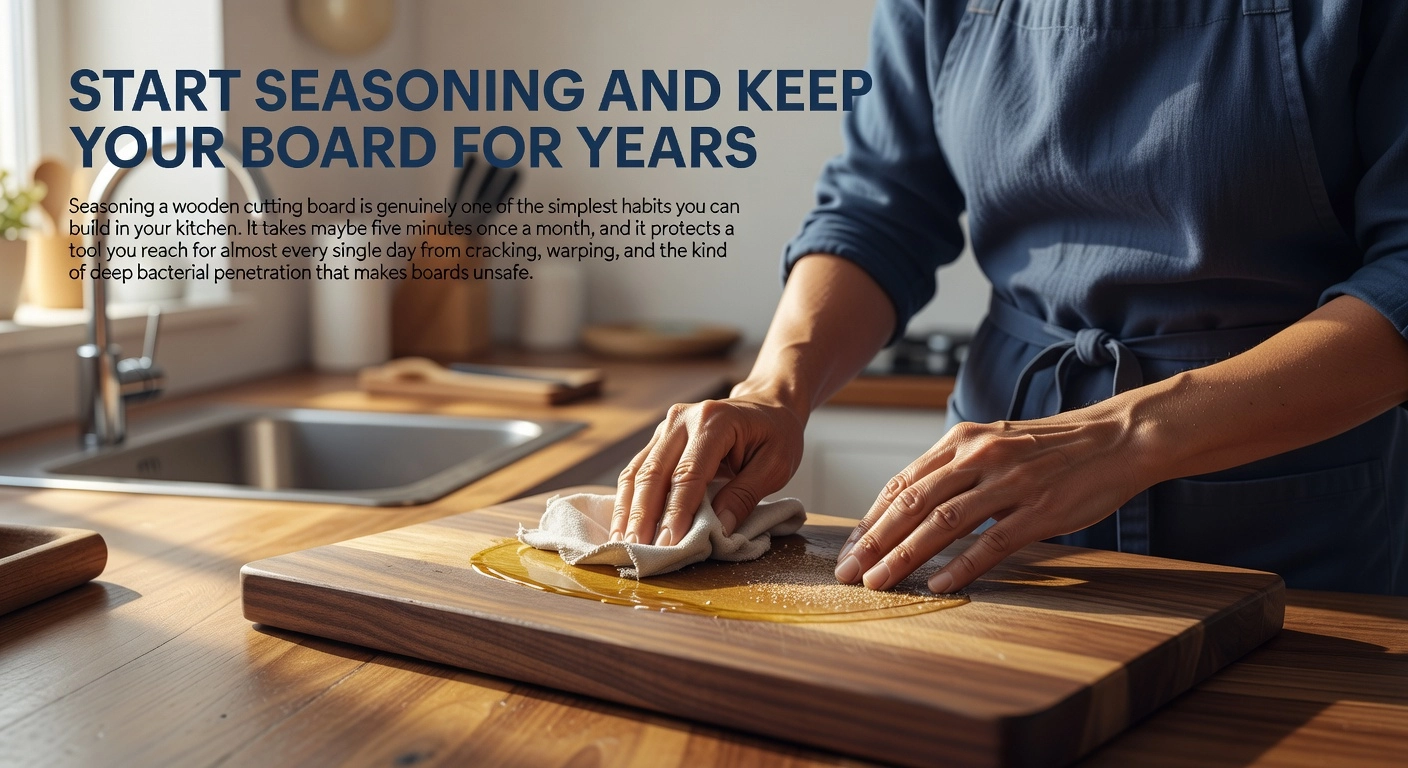
The minimum viable routine comes down to four steps: clean and dry your board thoroughly, apply food-grade mineral oil across every surface, let it soak overnight, then wipe away any excess. Repeat that process monthly or whenever the wood starts looking faded and dry. That is genuinely all it takes to keep most boards in great shape for years.
If your board already looks rough or feels scratchy, do not toss it. A coarse salt scrub with half a lemon will deep-clean the surface, and following that up with three to five mineral oil treatments, each with an overnight soak in between, can bring even badly neglected boards back to life. You can find a full walkthrough in the WoodStuffHQ guide on how to restore a wooden cutting board.
And if you want to carry these same habits over to butcher block countertops or other wood surfaces in your kitchen, WoodStuffHQ has detailed guides covering exactly that.
Finally, remember the three rules that keep everything simple: never put wood in the dishwasher, skip olive and vegetable oils entirely, and check your board monthly. Follow those, and your board will last for years without any drama.
Conclusion
Seasoning your cutting board is one of those small habits that makes a big difference over time. To recap what we covered: regular seasoning prevents cracking and drying, helps your board resist odors and stains, extends the overall lifespan of your wood, and keeps your kitchen looking its best.
The best part? It takes less than ten minutes and costs almost nothing to do.
So here is your call to action: grab your cutting board right now, take a good look at it, and give it the care it deserves. If it looks dry or dull, tonight is the perfect night to start. Once you build this simple habit into your routine, you will never go back to neglecting your boards again.
Your cutting board works hard for you every day. It is time to return the favor.