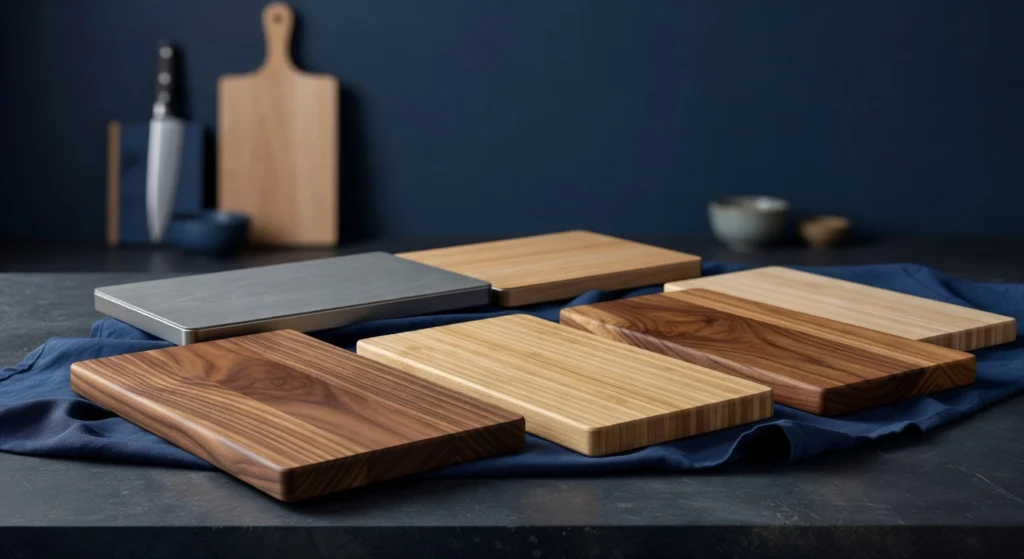

Every kitchen task starts somewhere, and more often than not, it starts on a chopping board. This humble kitchen tool is one of the most used and least thought about pieces of equipment in any home kitchen. Yet choosing the wrong one can lead to dull knives, bacterial buildup, and frustrating cooking experiences.
Whether you are just setting up your first kitchen or looking to replace an old board that has seen better days, understanding your options makes a real difference. Not all chopping boards are created equal. They vary in material, size, weight, and intended purpose, and each type comes with its own set of advantages and drawbacks.
In this guide, we break down everything a beginner needs to know about chopping boards. You will learn about the most common materials, including wood, plastic, bamboo, and glass. You will also discover the different board styles available and get clear, practical advice on how to choose the right one for your cooking habits and kitchen setup. By the end, you will feel confident making a decision that suits your needs perfectly.
Chopping Board Materials Compared
Not all chopping boards are created equal, and the material you choose will directly affect your knives, your food safety, and how much time you spend on upkeep. Here is a clear, side-by-side breakdown of the four main materials so you can make a confident, informed decision.
Wood: The Gold Standard for Home Kitchens
Hardwood boards made from maple, walnut, cherry, teak, or acacia are widely considered the best all-around option for home cooks. The key advantage is grain flex: wood fibers part slightly as a knife blade passes through, then close back around the cut. This self-healing action, most pronounced in end-grain boards where the fibers run perpendicular to the surface, significantly reduces knife dulling compared to rigid surfaces. Walnut (around 1,010 lbf on the Janka hardness scale) and cherry (roughly 950 to 1,000 lbf) are among the gentlest on edges, while maple (approximately 1,450 lbf) offers a firmer, more durable surface that still performs well. Research published in peer-reviewed microbiology journals has also shown that bacteria drawn into wood fibers are naturally reduced over time, giving wood a surprising food-safety edge over plastic. The trade-off is maintenance: wood boards require hand-washing, immediate drying, and regular treatment with food-safe mineral oil or board cream to prevent cracking and warping.
Plastic, Bamboo, and Composite: The Alternatives Explained
Plastic boards dominate roughly 37% of the global cutting board market by volume, largely due to their low price and dishwasher compatibility. However, repeated cutting creates microscopic grooves in the surface that are nearly impossible to clean thoroughly, allowing bacteria to accumulate even after machine washing. Over time, plastic boards also dull knife edges faster than properly maintained wood. Research into safer, non-toxic cutting board options increasingly points away from plastic for primary home use, with microplastic contamination adding a newer layer of concern.
Bamboo is often marketed as an eco-friendly upgrade, but its performance tells a different story. Bamboo is technically a grass, not a hardwood, and its high silica content combined with dense, uneven nodes means it can dull knife edges faster than most true hardwoods. Its environmental appeal is real, but knife preservation is not its strength.
Composite boards, made from compressed wood or paper fibers bonded with resin, offer a practical middle ground. They are fully dishwasher safe and require no oiling, but they lack the self-healing fiber structure that makes end-grain wood so effective at preserving blade edges. According to testing data reviewed by Serious Eats, wood still leads for everyday home performance.
Comparison Table
| Material | Knife-Friendly | Durability | Maintenance Level | Best Use Case |
|---|---|---|---|---|
| Wood (maple, walnut, cherry) | Excellent | High, decades with care | High; hand-wash and oil regularly | Everyday prep, knife preservation, premium aesthetics |
| Plastic | Moderate to poor | Moderate; develops deep grooves | Low; dishwasher safe | Budget use, raw proteins, secondary boards |
| Bamboo | Poor to moderate | Good; scratch and moisture resistant | Moderate; hand-wash recommended | Eco-conscious users, light prep work |
| Composite | Good | High; non-porous and stable | Very low; dishwasher safe, no oiling | Busy households prioritizing sanitation and convenience |
For most beginners setting up a home kitchen, a hardwood board sits at the top of the priority list. If convenience is your main concern or you need a dedicated board for raw meat, composite or plastic serve as practical secondary options. The global cutting board market, projected to grow at 6.4% annually through 2033, reflects exactly this trend: consumers are moving toward premium materials that deliver long-term value rather than cheap boards that need frequent replacement.
End-Grain vs. Edge-Grain vs. Face-Grain: What Actually Matters
Once you understand wood as a material, the next step is understanding how that wood is cut and assembled into your chopping board. The three construction types, end-grain, edge-grain, and face-grain, each tell a fundamentally different story about how your knife will perform, how long the board will last, and what it will cost you.
How to Picture the Difference
Think of a bundle of drinking straws bound tightly together. If you stand the bundle upright and press a knife down into it, the blade slides between the straws with minimal resistance. Now lay that same bundle on its side and drag a blade across it lengthwise. You are cutting across the straws, fraying and severing them with every stroke. This is essentially the difference between end-grain and face-grain construction, and it explains everything that follows.
To visualize how each type is made: face-grain boards use planks laid flat with the broad, decorative surface facing up, showing wide cathedral-like grain patterns. Edge-grain boards rotate those planks onto their narrow sides and glue them together in rows, creating clean parallel lines across the surface. End-grain boards cross-cut the wood into short blocks and reassemble them so the cut ends of the fibers face upward, forming the familiar checkerboard or brick-like pattern most people associate with a butcher block.
End-Grain: The Performance Standard
End-grain construction is widely regarded as the superior choice for serious daily cooking. Because the knife blade passes between the wood fibers rather than across them, cutting action causes far less dulling and leaves the surface looking remarkably clean over time. The fibers flex apart to receive the blade and close back after, which is what gives end-grain boards their well-known self-healing quality. Over years of use, a quality end-grain board made from hard maple or walnut will outlast other constructions significantly.
The tradeoff is cost and weight. End-grain boards typically range from $80 to well over $300 for larger or custom-made pieces, reflecting the additional labor and material required to cut, glue, and finish those blocks properly. They also absorb moisture more readily through the open fiber ends, so regular conditioning with food-safe mineral oil is essential to prevent cracking or warping. For anyone who cooks daily and wants to protect their knives, this investment pays off over time. You can read more about how end-grain compares to edge-grain in practice for a deeper technical breakdown.
Edge-Grain: The Practical Everyday Choice
Edge-grain boards dominate the market for good reason. They strike a reliable balance between performance, price, and ease of maintenance. The knife still encounters fibers at a less forgiving angle than on end-grain, so blades will dull slightly faster and surface scratches accumulate more visibly over years of heavy use. However, for most home cooks who sharpen their knives periodically, this difference is manageable rather than critical.
Edge-grain boards are typically lighter, easier to clean, and more resistant to moisture absorption than end-grain, making them lower-maintenance in day-to-day use. Quality options in hardwoods like maple or cherry are commonly available under $100, making them the most accessible entry point into real wood performance. The full comparison of all three grain types outlines exactly where edge-grain excels for everyday home kitchens.
Face-Grain: Reserve It for the Cheese Board
Face-grain boards are the simplest to produce and the most affordable, but they are the weakest performer as a functional cutting surface. The knife severs wood fibers directly, leading to visible scratching, faster wear, and a real vulnerability to warping or cupping when moisture and heat cycles affect the wide, flat wood surface. For regular chopping, they simply cannot hold up to daily demands.
Where face-grain boards genuinely shine is as serving boards. The broad, expressive grain patterns make them visually striking for charcuterie presentations or bread service, where cutting is minimal and aesthetics matter more than durability.
For a beginner building a kitchen setup, the recommendation is straightforward: start with a quality edge-grain board for daily prep work, and consider stepping up to end-grain once you are ready to invest in long-term performance.
The Best Woods for Chopping Boards
Now that you understand how wood construction affects performance, choosing the right species is your next critical decision. Not all hardwoods behave the same way on a chopping board, and the differences in density, grain structure, and natural composition have real consequences for your knives, your maintenance routine, and how your board looks after years of use.
Hard Maple: The Gold Standard
Hard maple sits at approximately 1,450 lbf on the Janka hardness scale, making it the most widely recommended wood for chopping boards among professional testers and woodworkers alike. Its tight, closed-grain structure limits moisture absorption and bacterial penetration, which matters enormously for food safety and long-term hygiene. In real-world testing across dozens of boards, expert reviewers at Wirecutter consistently rank hard maple at the top for everyday durability, resistance to staining, and the ability to self-heal minor knife cuts over time with regular conditioning. It is also one of the most affordable domestic hardwoods in North America, meaning you get premium performance without paying premium exotic-wood prices. For beginners building or buying their first serious board, hard maple is the safest, most reliable starting point.
Walnut and Cherry: Premium Aesthetics With Real Performance
Walnut registers around 1,010 lbf, placing it noticeably softer than maple, and that softer surface is actually a benefit for your knife edges. Less hardness means the blade loses its edge more slowly with each cut, which is why walnut is the preferred choice for cooks who prioritize knife longevity alongside good looks. Its rich, chocolate-brown color also hides stains and discoloration far better than lighter woods, keeping the board looking clean between oilings. According to Serious Eats testing of wooden cutting boards, walnut offers a balanced combination of durability and knife-friendliness that few other species match.
Cherry comes in slightly softer at around 950 lbf and offers something neither maple nor walnut can: a living, evolving appearance. Cherry starts as a pale, almost peachy tone and deepens into a warm reddish-brown patina over months and years of use and light exposure. This transformation makes cherry boards particularly popular as display pieces, wedding gifts, and heirloom boards. It does show knife marks more readily than harder woods, so it rewards careful use and regular mineral oil maintenance.
Teak and Acacia: Proceed With Caution
Teak has genuine advantages, particularly its natural oils and silica content, which give it exceptional moisture resistance and decay resistance. It requires less frequent oiling than maple or walnut, and it handles humidity swings well. However, that same silica content is a meaningful drawback for anyone who cares about knife performance. Silica is essentially micro-fine sand embedded in the wood fibers, and cutting against it dulls blades faster than softer domestic hardwoods. As Oishya’s wood comparison guide notes, teak also has larger pores than maple, making it somewhat less ideal from a food-safety perspective without rigorous maintenance. For beginners, teak is a functional but compromised choice.
Acacia is common in budget-friendly boards and can look striking with its contrasting grain patterns. The problem is inconsistency. Acacia covers dozens of species with wildly different density levels, and sourcing quality varies significantly depending on origin. Some acacia boards perform adequately for light tasks, while others dull knives quickly and develop deep scratches after moderate use. If cost is your primary concern, acacia offers a starting point, but upgrading to hard maple or walnut will serve most home cooks considerably better over the long run.

Food Safety and Bacteria: What the Research Actually Says
The debate over wood versus plastic chopping boards has generated strong opinions for decades, but the science is clearer than most people realize. Landmark research published in the Journal of Food Protection found that bacteria inoculated onto wood surfaces were drawn into the grain through capillary action within minutes and could not be recovered afterward under normal conditions. At realistic contamination levels typical of raw meat juices, bacterial counts on wood dropped by more than 99.9% within 12 hours. The bacteria entered the wood, stopped multiplying, and died off without returning to the surface. Scarred plastic boards told a very different story. Knife grooves in plastic trapped live bacteria that remained recoverable for hours, multiplied overnight, and resisted manual cleaning, especially when food residues like chicken fat were present. Used wooden boards with heavy knife scarring performed comparably to new ones, while used plastic boards became progressively more hazardous.
What this research also makes clear is that the type of food you are preparing matters far more than the material under your knife. The USDA Food Safety and Inspection Service recommends one straightforward practice above all others: use dedicated boards for raw meat, poultry, and seafood, and keep a separate board for produce, bread, and ready-to-eat foods. This habit eliminates cross-contamination risk regardless of whether your boards are wood or plastic. Color-coded board systems exist precisely for this reason, and a detailed overview from Discover Magazine reinforces that separation and cleaning habits consistently outweigh material choice in real-world kitchen safety.
The “dishwasher-safe” label on plastic boards sounds like a hygiene advantage, but it creates a practical problem. High heat cycles warp thinner boards over time, and as the surface deforms, existing knife grooves deepen and new cracks form. Those crevices become persistent bacterial harbors that neither hot water nor detergent reliably reaches. Commercial dishwashers running at higher temperatures can sanitize plastic effectively, but standard household machines frequently fall short in scarred areas, and repeated heat exposure accelerates the very damage that makes boards unsafe.
Proper maintenance closes the gap for wood boards entirely. Applying food-grade mineral oil regularly, typically monthly or whenever the surface looks dry, seals surface pores and limits moisture absorption. A well-oiled board resists the cracking and deep crevices that create bacterial harborage points in the first place. The USDA explicitly recommends this practice for wooden boards, and the full Cliver research overview confirms that consistent maintenance supports both longevity and hygiene.
The conclusion drawn directly from this body of research is straightforward: a well-maintained wood board is at least as safe as a plastic one, and safer than a worn plastic board that has never been replaced. The deciding factor is not the material itself but how the board is cared for and how it is used. Replace any board, wood or plastic, when grooves become deep and impossible to clean. Oil your wood board consistently, use separate boards for raw proteins, and wash with hot soapy water promptly after use. Following those habits on a quality wood board gives you a surface that actively works against bacterial survival rather than providing it a home.
How to Choose the Right Chopping Board Size
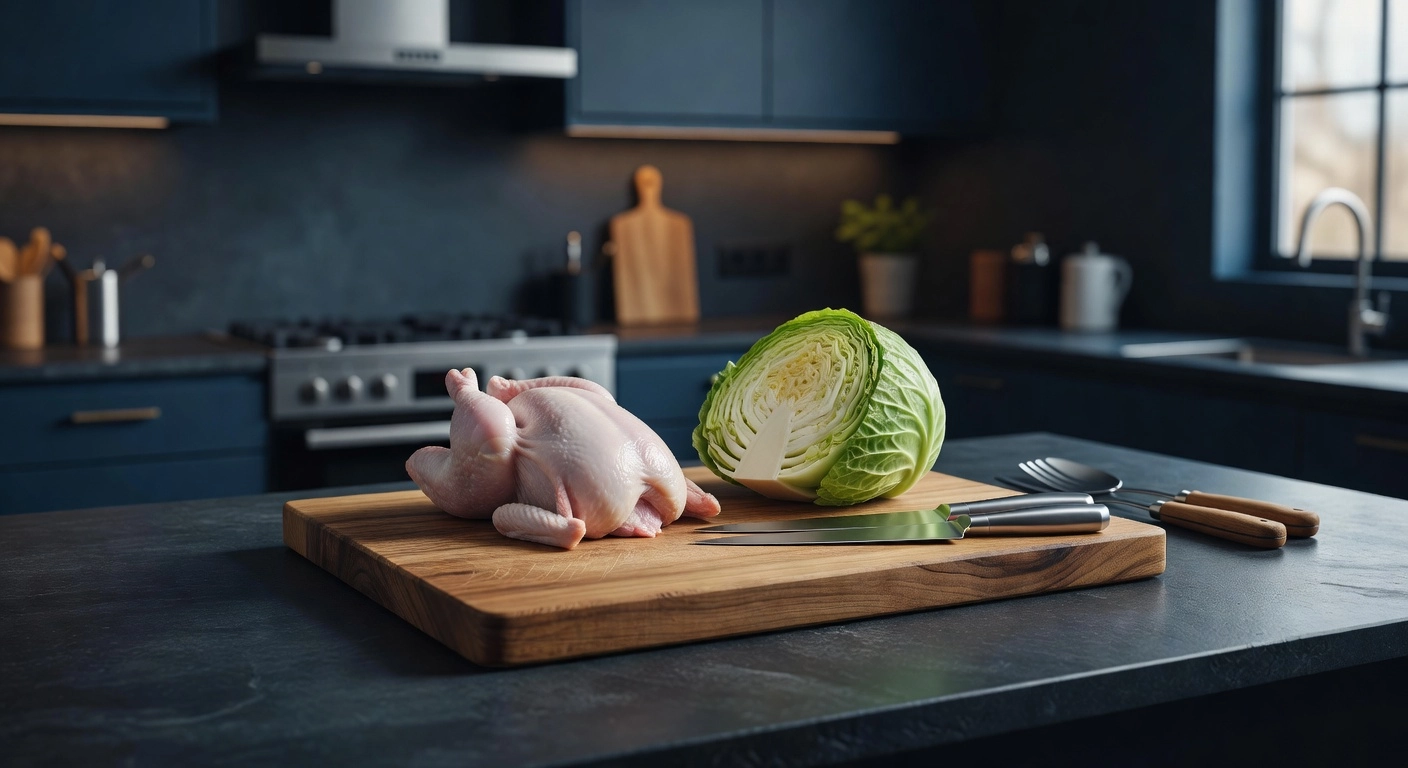
The surface area of your chopping board directly determines what you can actually do with it. A minimum size of 12 x 18 inches is the widely accepted standard for daily home kitchen prep, and for good reason. This dimension gives you enough room to break down a whole chicken, quarter a large cabbage, or work through a pile of root vegetables without ingredients tumbling off the edges mid-cut. Going smaller forces you to work in cramped, inefficient strokes, which increases the risk of knife slips and slows down your prep considerably.
Smaller boards in the 8 x 10 inch range have their place, but that place is not your primary prep surface. Use them as dedicated fruit boards, cheese presentation boards, or quick snack stations. Relying on a small board for full meal prep creates frustrating limitations that even the sharpest knife cannot overcome.
Thickness is just as important as surface area, and it is a spec that beginners frequently overlook. Wood boards thinner than 1.5 inches are far more susceptible to warping because moisture absorbs unevenly across the faces during washing and drying. A board that warps rocks dangerously on the counter and cannot be stabilized with a damp towel alone. Well-built wooden boards typically run between 1.25 and 2 inches thick, with end-grain constructions benefiting most from the fuller 2-inch depth. That extra thickness extends the board’s lifespan significantly, often to 10 years or more with proper oiling and care.
Your kitchen’s physical constraints should also guide your decision. Measure your sink width before committing to a board size, since rinsing a board that does not fit your sink becomes a daily inconvenience. In compact kitchens, a 12 x 18 inch board remains the practical sweet spot, offering genuine versatility without overwhelming a limited prep area. You can review expert sizing frameworks at the Michelin Guide’s comprehensive cutting board resource for additional context on matching board size to cooking habits.
For anyone planning a DIY build, a 12 x 18 x 2 inch end-grain board is the ideal first project. The dimensions keep lumber costs manageable, the glue-up is straightforward for beginners, and the finished board is genuinely useful every single day rather than sitting in a drawer. Starting with this size also teaches the core skills, grain orientation, proper jointing, and final thickness milling, that transfer directly to more ambitious builds later.
Chopping Board Maintenance: Oiling, Waxing, and Cleaning
A well-chosen chopping board is only as good as the care you give it. Wood is a living material that absorbs moisture, expands, contracts, and responds directly to how you treat it. Following a consistent maintenance routine protects your investment, extends the board’s lifespan by years, and keeps it hygienic for everyday food prep.
Start Every Board With a Deep Oil Treatment
Food-safe mineral oil is the non-negotiable foundation of wooden chopping board care. It is odorless, tasteless, and critically, it does not go rancid the way vegetable or olive oils do inside wood fiber. For a new board, apply a generous coat across every surface, including the edges and the underside, using a clean cloth or paper towel. Let the oil soak in for 4 to 6 hours, or leave it overnight for maximum penetration. Wipe away any excess, then repeat the process. A new board needs this treatment 3 to 5 times in its first week to build a strong internal moisture barrier. Once seasoned, a monthly re-oiling keeps the wood hydrated and resistant to the drying effects of regular washing.
Layer a Beeswax Finish Over the Oil
Oil alone conditions the wood from within, but a board cream or beeswax-based finish seals that conditioning and adds a protective surface layer. Apply the wax after your final oil coat has fully absorbed, rubbing it evenly across the surface and buffing lightly with a clean cloth. This wax layer resists moisture penetration at the surface, reduces how readily the wood absorbs odors from garlic, onions, or fish, and creates a smoother finish that is easier to keep clean. The combination of mineral oil plus beeswax is consistently recommended by woodworkers and kitchen professionals as the most effective long-term treatment.
Handle Cleaning With Care
The single biggest mistake wood board owners make is soaking the board in water or running it through the dishwasher. Prolonged moisture causes wood fibers to swell unevenly, which leads to warping, surface cracking, and in edge-grain or end-grain boards, glue joint failure. Hand-wash the board promptly after use with hot water and a small amount of mild dish soap, scrubbing both sides to ensure even moisture exposure. Rinse quickly, towel-dry immediately, and stand the board upright to finish air-drying. Never lay it flat on a wet surface.
For persistent odors or surface stains, a salt and lemon scrub is a simple, chemical-free solution. Scatter a generous amount of coarse kosher salt across the surface, then rub firmly with the cut side of a halved lemon, working the juice and salt into a light paste. Let it sit for five minutes, scrape the residue away, rinse, and dry thoroughly. This method lifts garlic and onion odors and brightens discolored areas without stripping the wood fiber or leaving behind any chemical residue.
Restore Before You Replace
Boards showing deep knife scratches, gray surface discoloration from water exposure, or stubborn odors are not necessarily beyond saving. Sand the surface back to bare wood, starting with 80 to 100 grit sandpaper for heavier damage, then working progressively up to 180 or 220 grit for a smooth finish. Clean off all sanding dust thoroughly, then treat the board exactly as you would a new one: multiple rounds of mineral oil followed by a beeswax finish. Most boards respond well to this process, recovering a clean, fresh surface without any need for replacement.
Should You Buy a Chopping Board or Build One?
The decision to buy or build comes down to three factors: your budget, your tool access, and how much customization matters to you.
The cost gap between retail and DIY is significant. A quality end-grain maple chopping board from a reputable maker typically runs between $100 and $250, with larger or premium configurations pushing well past that range. A comparable DIY build, using the same maple or a mixed hardwood combination, requires roughly $20 to $40 in lumber. Add food-safe glue, sandpaper, and mineral oil, and you are still comfortably under $60 for a board that matches or exceeds retail quality in performance and appearance.
DIY is more accessible than most beginners expect, provided you have the right tools. Building an end-grain board follows a straightforward sequence: rip hardwood into strips using a table saw, flatten and square the stock with a jointer or hand plane, glue up the strips into a long-grain panel using Titebond III, crosscut that panel into sections, rotate each section 90 degrees to expose the end grain, and clamp everything into the final board. A belt sander or hand plane handles flattening after the second glue-up. This process sits comfortably within reach of an intermediate beginner who has basic power tools or access to a community makerspace.
Customization is where DIY genuinely outperforms anything you can buy at a comparable price. When you build your own board, you control the wood species, whether that is maple for durability, walnut for contrast, or cherry for warmth. You control the exact dimensions to fit your prep style and counter space. You also control the pattern layout, choosing from a simple bricklay arrangement, a herringbone design, or a geometric 3D illusion that becomes a focal point in any kitchen. Commercial boards rarely offer this level of choice without charging a significant premium.
WoodStuffHQ provides detailed end-grain cutting board plans with measured drawings and cut lists scaled specifically for home shop setups, so you are not adapting plans designed for professional equipment.
For beginners who do not yet own power tools, buying a quality board is the right call right now. It gets a proven, durable surface into your kitchen immediately. The DIY path then becomes a natural next project as your tool collection and confidence grow together.
Chopping Board Recommendations by Category
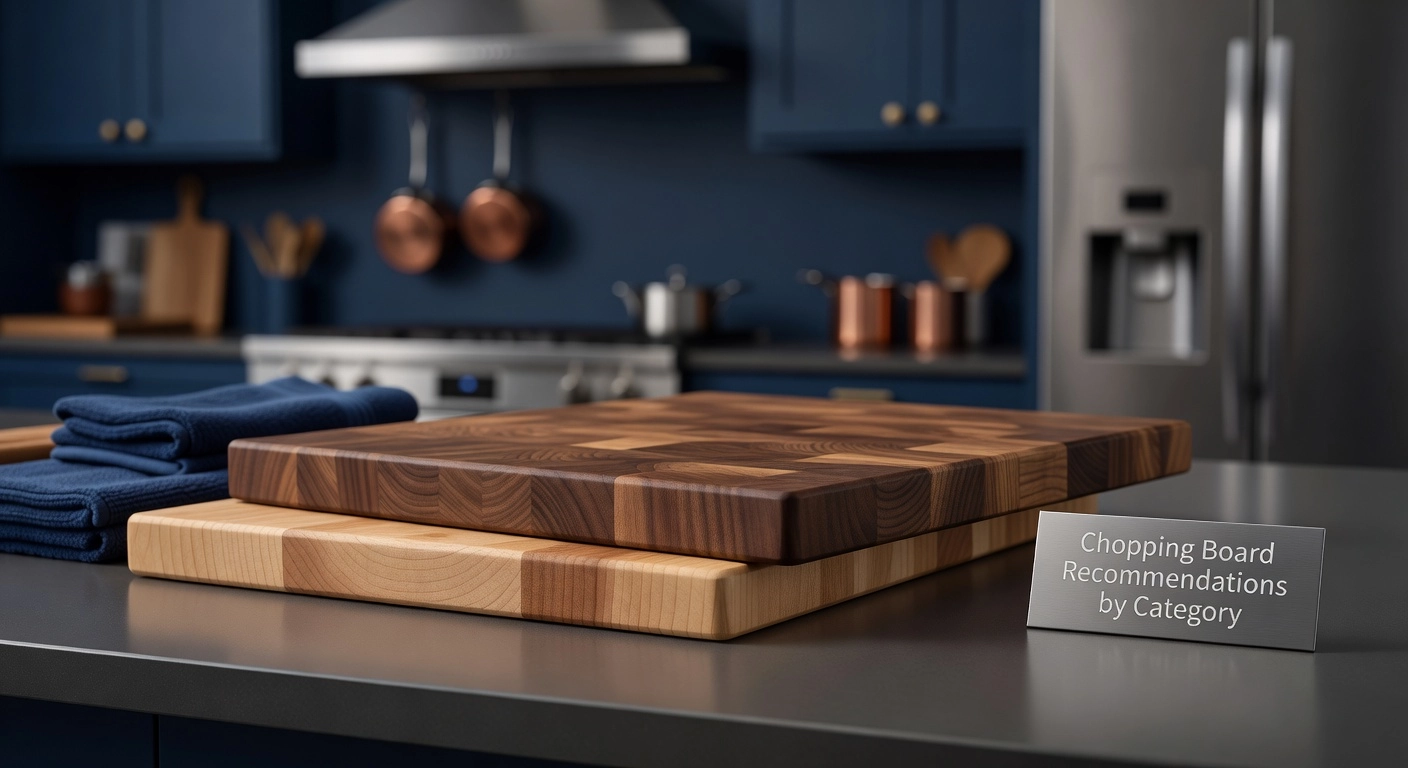
With everything covered in the previous sections, choosing your board comes down to matching the right option to your specific situation. Here are the clearest recommendations across five categories.
Best Overall Wood Board
For long-term kitchen use, a thick end-grain maple or walnut board from a respected domestic maker is the strongest investment you can make. Makers like The Boardsmith and John Boos produce boards that are typically 1.5 to 2 inches thick, built to absorb years of daily prep work without warping or developing deep grooves. End-grain construction allows the knife blade to pass between wood fibers rather than across them, which preserves your edge significantly longer than plastic or face-grain alternatives. With proper oiling and hand-washing, these boards routinely last decades. Expect to spend $175 to $500 or more depending on size, wood species, and custom features like juice grooves or rubber feet.
Best Budget Option
A 1.5-inch thick edge-grain maple board in the $30 to $60 range delivers honest, reliable performance for everyday cooking without the premium price of end-grain construction. Edge-grain boards are more affordable to produce because the manufacturing process is simpler, yet they still outperform thin or low-density boards on durability and knife feel. This category is ideal for beginners who want a genuine wood board experience while keeping costs manageable. Look for boards that are at least 12 x 18 inches and verify the thickness before purchasing, since thinner boards under one inch tend to warp with repeated washing.
Best for Low Maintenance
Epicurean composite boards are the practical answer for households that want durability without the upkeep requirements of wood. Made from resin-infused kraft paper, these boards are dishwasher-safe, non-porous, lightweight, and resistant to warping and cracking. They are gentle enough on knife edges for daily household use, and some users report eight to ten years of heavy use without significant degradation. No oiling schedule, no drying rituals; they clean up quickly and store flat without issue. Prices typically fall in the $30 to $60 range.
Best for DIY Builders
A walnut and maple end-grain board built using WoodStuffHQ plans gives you a premium, custom result at a fraction of what a comparable retail board costs. The contrast between dark walnut and light maple creates a striking visual pattern while both species deliver excellent hardness and knife-friendly properties. The plans include measured drawings and cut lists so you are not guessing at proportions, making this approachable even for builders with modest experience and basic tools.
Best for Gifting
A face-grain walnut or cherry serving and prep board with a juice groove and non-slip feet in the $60 to $100 range strikes the ideal balance between visual appeal and practical function. The warm, rich tones of walnut and cherry photograph beautifully and feel substantial in hand. Juice grooves contain liquids during carving, and rubber feet prevent sliding on the counter. This category makes a genuinely useful gift that doubles as a kitchen display piece, far more personal than a standard kitchen tool.
Choosing the Right Chopping Board: Key Takeaways
Every decision covered in this guide points to the same conclusion: the right chopping board is the one that matches how you actually cook, not the most expensive option or the most popular brand.
Match your material to your kitchen reality. If you cook seriously and frequently, a hardwood board rewards that investment. If you want near-zero maintenance, a composite board handles heavy use without the upkeep commitment. Plastic belongs in almost every kitchen as a dedicated raw-meat board, kept separate and cycled out when it shows deep scoring.
Construction and thickness matter more than the name on the board. A 2-inch end-grain board from any reputable maker will genuinely outlast a thin face-grain board cut from even the most premium species. Prioritize what the board is made of structurally before considering aesthetics or price.
A maintenance routine is not optional for wood boards. Monthly oiling during active use and a seasonal board cream application cost almost nothing and add years of functional life to any wood board.
The DIY path deserves serious consideration if you have basic woodworking tools. The cost savings are substantial, and the result is a durable, heirloom-quality kitchen tool built to your exact specifications.
For step-by-step oiling instructions, end-grain build plans complete with cut lists, and detailed wood species comparisons, the WoodStuffHQ guides give you everything needed to go deeper on any of these topics with confidence.



Pingback: 731 Woodworks: What the Channel Offers and Who It's For - WoodStuffHQ