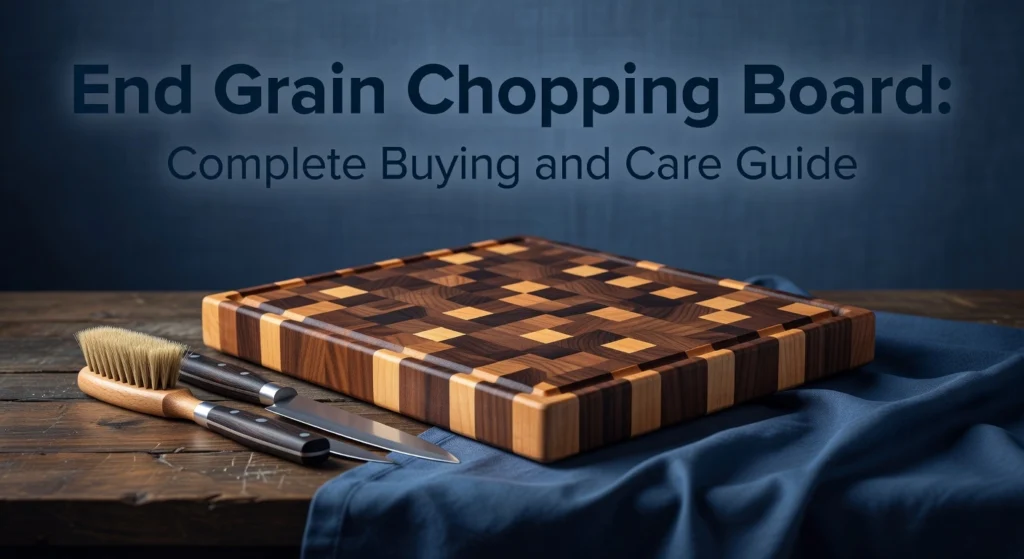

Every serious home cook reaches a point where a basic plastic cutting board no longer cuts it. If you have been researching upgrades, you have likely come across the end grain chopping board, and for good reason. These boards represent the gold standard in kitchen cutting surfaces, combining striking visual appeal with exceptional durability and knife-friendly properties that face grain and edge grain boards simply cannot match.
But not all end grain boards are created equal. With dozens of options spanning different wood species, construction methods, sizes, and price points, choosing the right one requires more than a quick glance at a product listing. And once you have made your investment, proper care becomes essential to protecting it.
In this guide, we break down everything you need to know to make a confident purchasing decision. We compare top-performing boards across key categories, explain what separates a quality build from a substandard one, and walk you through the maintenance routine that will keep your board performing for decades. Whether you are buying your first end grain board or replacing an old one, this guide has you covered.
What Makes an End Grain Chopping Board Different
Not all chopping boards are built the same, and the difference starts at the cellular level. An end grain chopping board is constructed by orienting wood blocks so the cross-section of the wood fibers, the actual ends of the growth rings, face upward as the cutting surface. Think of a bundle of drinking straws standing vertically in a box; when you press a knife down, the blade slips between the straws rather than slicing across them. This vertical fiber orientation is the defining characteristic that sets end grain apart from every other board construction, and it has profound implications for how the board performs and how long it lasts.
The Self-Healing Advantage
Because the knife passes between the vertical fibers rather than severing them, those fibers spring back into position once the blade is lifted. This is the well-documented self-healing property of end grain cutting boards that woodworking enthusiasts and professional kitchens have relied on for generations. Knife marks close up over time rather than accumulating as permanent grooves, keeping the surface smoother, more hygienic, and far more attractive after years of heavy use. A well-maintained end grain board can genuinely become a kitchen heirloom, improving in character rather than deteriorating.
How It Compares to Edge Grain and Face Grain
Understanding end grain requires placing it within the broader three-category grain framework of wood construction. Edge grain boards expose the long lateral sides of the wood fibers running parallel across the surface. Knives cut directly across those fibers, dulling blades faster and leaving more visible scarring over time. Edge grain boards are more affordable and lower-maintenance, making them a solid everyday option, but they cannot match end grain for heavy-use longevity. Face grain boards use the widest flat face of the plank as the cutting surface, showcasing beautiful natural figuring, but the fibers are cut straight across with every chop. Face grain construction is best reserved for light-duty use or serving boards, not serious prep work.
Construction Pattern and Physical Characteristics
The glue-up process behind end grain boards produces their signature checkerboard or bricklayer pattern. Lumber is cut into uniform blocks, rotated so the ends face upward, and glued together in repeating geometric arrangements. Alternating species like walnut and maple create striking visual contrast while adding structural integrity across the seams. This labor-intensive construction is a primary reason end grain boards command prices ranging from $80 to well over $400 for premium examples.
That construction also dictates the physical profile. End grain boards are typically 1.5 to 3 inches thick, with most quality boards sitting closer to 2 inches minimum to keep the short glue joints stable under repeated stress. Larger boards can weigh 15 to 30 pounds or more, noticeably heavier than a comparable edge grain board. For most users, this means designating a permanent spot on the countertop rather than pulling the board in and out of a cabinet. The added mass is a genuine benefit during heavy chopping, anchoring the board firmly in place, but it is a practical consideration worth planning for before purchase.
End Grain vs. Edge Grain vs. Face Grain: Side-by-Side Comparison
Understanding how end grain stacks up against its alternatives comes down to four practical criteria: knife friendliness, durability, price, and maintenance. Each grain orientation makes real trade-offs, and knowing those trade-offs helps you spend your money where it actually matters for your kitchen.
Knife Friendliness and Surface Mark Resistance
End grain leads this category by a clear margin. Because knife blades slice between vertical wood fibers rather than across them, the surface experiences far less micro-damage per cut. Those fibers naturally close back up after each stroke, which is why a well-maintained end grain chopping board can look remarkably clean even after months of heavy use. Edge grain performs respectably; fibers run parallel to the surface, so blades do contact and compress them, but the damage accumulates more slowly than with face grain. Face grain takes the hardest hit here. Cutting across exposed wood fibers leaves visible scratches quickly, and deep gouges become a permanent part of the surface after just a few months of regular chopping. According to The Boardsmith’s detailed breakdown of grain mechanics, this fiber orientation difference is the single biggest reason serious cooks invest in end grain boards.
Price and Why the Gap Is So Large
End grain boards typically range from $80 to $400 or more depending on wood species, size, and craftsmanship. That price premium is not arbitrary. Building an end grain board requires cutting hardwood strips into small blocks, arranging them end-up in precise patterns, gluing dozens or even hundreds of individual pieces together, and then flattening and finishing the entire surface. Edge grain boards, by contrast, use longer strips glued side by side, which is faster and wastes less material. Face grain boards are essentially plank-style builds, which involve the least labor and the fewest cuts. As Serious Eats notes in their tested cutting board reviews, the complexity of end grain construction directly drives the cost, and that construction is what delivers the performance.
Matching Board Type to Actual Use
The most important misconception to correct is that expensive always equals better for your specific situation. If you chop lightly two or three times a week with mid-range knives, a quality edge grain board in the $60 to $120 range will serve you well for years without requiring the investment or maintenance commitment of an end grain option. Heavy daily prep with high-quality knives is where end grain’s self-healing surface justifies the cost by reducing how often you sharpen blades and refinish the board.
Weight and footprint are also worth considering honestly. End grain boards are thick, dense, and heavy, often weighing 10 pounds or more at practical prep sizes. They are not convenient to pull out quickly and put away after a small task. They perform best as a permanent or semi-permanent prep station that stays on the counter, as the wood cutting board grain showdown at Ubaahaus confirms. For quick tasks, a lighter edge grain or face grain board kept nearby often makes more practical sense alongside your primary end grain board.
Best Woods for End Grain Boards: Maple, Walnut, Cherry, and Acacia Compared
Choosing the right wood species is one of the most consequential decisions in end grain board construction, affecting durability, knife performance, aesthetics, and long-term value. The four most commonly used species each occupy a distinct position in the performance-to-price spectrum, and understanding those distinctions will help you make a confident, informed choice.
Hard Maple: The Performance Benchmark
Hard maple (also called sugar maple or rock maple) earns its reputation as the gold standard for end grain chopping boards through a combination of measurable properties that few domestic species can match. At 1,450 lbf on the Janka hardness scale, it sits in the optimal sweet spot: tough enough to resist deep gouges and surface wear over years of heavy use, yet not so hard that it accelerates edge dulling. Its closed, tight grain structure is particularly valuable in an end grain configuration, because the dense fiber arrangement minimizes moisture penetration and reduces the surface pockets where bacteria can establish a foothold. Hard maple is also one of the most abundant domestic hardwoods in North America, which translates directly into competitive pricing at the lumber yard. For DIY builders, this is especially important since a full end grain board requires substantial material volume. For performance-focused projects where budget matters, hard maple is the default starting point for good reason.
Walnut: Premium Aesthetics with a Knife-Friendly Character
Black walnut occupies the premium tier of the end grain wood hierarchy, rated at approximately 1,010 on the Janka scale. That relative softness compared to maple is actually a practical advantage: knife edges experience slightly less resistance with each cut, which can translate to better edge retention over time. The more significant selling point for most builders, however, is visual. Walnut’s rich chocolate-brown heartwood creates dramatic contrast when paired with the pale cream tones of hard maple in checkerboard or bricklayer patterns, and those mixed designs are among the most sought-after end grain boards in the market today. Walnut also contains natural oils that contribute to moisture resistance and have demonstrated meaningful antibacterial properties in laboratory testing. The trade-off is cost. Walnut grows more slowly than maple and commands consistently higher prices at hardwood dealers, making it a deliberate upgrade rather than a standard material. Most experienced builders use walnut strategically, incorporating it for visual impact in mixed-species designs rather than building entire boards from a single species.
Cherry: The Slow-Reveal Wood
American cherry, rating around 950 Janka, sits at the gentler end of the recommended hardness range for cutting boards. Its defining characteristic is a living quality that the other species lack: cherry darkens significantly with light exposure over the first several months, transitioning from pale salmon-pink to a deep, warm reddish-brown patina that only improves with age. This makes cherry boards increasingly attractive as they are used and conditioned, rather than declining in appearance. Cherry pairs exceptionally well with maple in contrast patterns, offering a warm tonal complement to walnut’s cooler chocolate tones. Pricing falls in the mid-range between maple and walnut, and availability at hardwood dealers in 8/4 stock is generally reliable across most regions. Because cherry is softer, it requires consistent oiling and conditioning to maintain surface integrity under heavy use, but it remains an excellent choice for boards that will do double duty as serving pieces.
Acacia: Budget-Friendly with Important Limitations
Acacia is widely sold in retail environments and is frequently the most affordable entry point into end grain boards. However, it carries a specific performance liability worth understanding before committing to it for a primary cutting surface. Acacia contains naturally occurring silica deposits within its wood fibers, and those mineral compounds act as microscopic abrasives against cutting edges. In practice, this means acacia boards can dull knives measurably faster than domestic hardwoods like maple or walnut. Experts consistently recommend reserving acacia for light-use applications, charcuterie presentation, or serving boards rather than heavy daily prep work. Its variable density and inconsistent grain quality also make it a less predictable choice for DIY construction compared to domestic species.
Sustainability and Sourcing Considerations
For eco-conscious builders and buyers, domestic hardwoods offer a clear sustainability advantage over imported alternatives. North American maple, walnut, and cherry are harvested under stricter forestry regulations, and FSC-certified stock is increasingly available through regional hardwood dealers. Producers like EndGrain USA have built their brand positioning around responsible domestic sourcing and transparent supply chains, reflecting a growing consumer expectation in the premium board segment. When sourcing lumber for a DIY build, asking your hardwood dealer specifically about FSC certification or sustainably managed origins adds minimal effort but meaningful accountability to the project.
Practical DIY Sourcing Summary
Maple and cherry are the most accessible choices for DIY projects, available in 8/4 (roughly 2-inch) stock at most hardwood dealers and suitable for the repeated glue-ups that end grain construction requires. Walnut is consistently available but priced at a premium; budget accordingly if you plan to use it beyond accent strips. Acacia is rarely stocked in rough lumber form and is typically encountered only in pre-dimensioned or finished retail products, which limits its usefulness for custom builds.
Top End Grain Chopping Boards Worth Buying in 2026
With wood species and construction quality covered, the next step is knowing which boards actually deliver on those promises in real-world use. Based on extensive expert testing from Wirecutter’s 2026 cutting board reviews and Bon Appétit’s kitchen gear guides, here are the end grain boards that consistently earn top marks across price points.
The Boardsmith: Best Overall
The Boardsmith holds the top position in virtually every serious 2026 roundup, including Serious Eats and Wirecutter, and the reasons are straightforward. Each board is handmade in small batches in Texas from FSC-certified domestic hard maple, using a staggered joint pattern that minimizes seam stress over years of use. Pricing falls between $200 and $350 depending on size and customization options such as rubber feet or juice grooves. For buyers who treat a cutting board as a long-term kitchen investment rather than a disposable tool, this is the benchmark everything else gets measured against.
John Boos: The Reliable Classic
John Boos has been producing American hardwood boards since the late 1800s, and that track record carries genuine weight. Their checkered maple end grain boards are widely stocked at major retailers, which means straightforward returns and readily available replacement boards if needed. Most models sit at 1.5 inches thick, are reversible, and land in the $80 to $250 range depending on size. They are not as finely crafted as small-batch makers, but for buyers who prioritize brand accountability and easy access over artisan credentials, John Boos consistently delivers a durable, professional-quality surface.
Brooklyn Butcher Blocks and Jones Cutting Boards: Premium Direct-to-Consumer Options
These two makers occupy the same premium tier as The Boardsmith and regularly appear alongside it in expert top-ten lists. Jones Cutting Boards, a small Pennsylvania operation, earns particular praise from Wirecutter for its tight joints, self-healing surface, and responsibly sourced domestic maple, with boards priced around $175 to $200. Brooklyn Butcher Blocks brings strong craft credentials and high-quality end grain construction that performs comparably in professional testing. Both brands reward buyers who want handmade quality and are comfortable purchasing directly rather than through a major retailer.
Ironwood Gourmet: Best Budget Pick
For occasional home cooks who want the end grain aesthetic without committing to premium pricing, Ironwood Gourmet’s acacia end grain boards are widely available under $80. Acacia is slightly harder on knife edges than maple due to its natural silica content, but performance in real-world testing is acceptable for lighter use. These boards are a practical entry point into end grain ownership.
What to Look For and What to Avoid
When evaluating any end grain board, prioritize thickness of at least 1.5 inches, tight glue joints with no visible gaps, rubber feet for countertop grip, and a reversible design that doubles usable life. Avoid boards thinner than one inch, which warp under regular moisture exposure. Also steer clear of factory boards showing mismatched grain orientation or any brand that fails to disclose wood species and country of origin, as both are reliable indicators of compromised construction quality.
Should You Buy or Build an End Grain Board? A Practical Cost Breakdown
Once you have a clear picture of what premium end grain boards cost at retail, the natural question becomes whether building your own makes financial and practical sense. The answer depends on three variables: your current tool inventory, how you value your time, and whether you plan to make more than one board.
What It Actually Costs to Build
Material costs for a 12×18 inch end grain board land between $50 and $85 when using domestics like maple or cherry. Rough-cut hardwood for that footprint typically runs $30 to $60 depending on species and your lumber source, with maple sitting at the lower end and cherry pushing toward the top. Add $15 to $25 for consumables: food-safe glue such as Titebond III, mineral oil, and a set of sandpaper grits, and your full material cost is capped well under $100. That puts the DIY version $100 to $300 below comparable retail boards, which routinely sell in the $150 to $400 range for similar dimensions and hardwood construction. If you source offcuts or have scrap hardwood already on hand, costs drop further. That gap becomes even more meaningful when you factor in making three or four boards as gifts, since the per-unit material cost falls sharply after the first build.
Tools You Actually Need (and What You Can Skip)
A first end grain build does not require a fully equipped shop. The minimum toolkit is a miter saw or table saw for ripping uniform strips, at least four pipe clamps for each glue-up stage, a random orbital sander, and a flat reference surface to keep the panel from cupping during clamping. A jointer and thickness planer are helpful for milling rough stock perfectly flat, but they are not required if you buy surfaced lumber (labeled S4S) or select straight, stable boards at the lumber yard. Most beginners substitute a router sled for final flattening with good results. The realistic tool investment for someone starting from scratch is modest, and pipe clamps in particular are an asset that pays off across dozens of future projects.
Time: Two Weekends Is Realistic
Hands-on labor for a first end grain board totals roughly four to eight hours, but the process stretches across two weekends because each major glue-up requires a full 24-hour cure before the next stage begins. Weekend one covers milling, gluing the initial strip panel, and the first cure. Weekend two handles the crosscuts, the second glue-up to establish the end grain face, and sanding through progressive grits before finishing with mineral oil. Experienced builders compress that timeline, but a beginner should expect the waiting periods rather than fight them.
Buy or Build: A Clear Decision Framework
Buy if you want a guaranteed flat, tight-jointed result without trial-and-error, if you do not own clamps and have no interest in acquiring them, or if the $100 to $300 price difference is simply not worth your time. Purchased boards from established makers deliver proven flatness, consistent joint quality, and immediate usability, which has real value for a working kitchen.
Build if you already own a saw and clamps, enjoy the woodworking process, want a specific size, thickness, or pattern that retail boards do not offer, or plan to produce multiple boards. The per-unit cost on a batch of four boards drops to a point where the DIY route becomes almost impossible to justify skipping.
For anyone leaning toward building, WoodStuffHQ’s step-by-step build guides include measured drawings and full cut lists designed specifically for this beginner scenario. The guides remove the guesswork around strip widths, glue-up sequencing, and finishing, making the end grain board build accessible even if this is your first woodworking project.
How to Care for an End Grain Chopping Board
Proper care is what separates an end grain chopping board that lasts decades from one that warps, cracks, or develops deep stains within a year. Because end grain exposes the open ends of wood fibers directly at the cutting surface, it is significantly more porous than edge grain or face grain boards, which means it absorbs both oil and moisture faster. That porosity is an advantage when conditioning, but a liability when the board is exposed to uneven moisture during cleaning and storage.
Initial Conditioning
Before you make a single cut, new end grain boards require thorough saturation with food-grade mineral oil. Apply three to four generous coats, allowing each coat to soak in for a minimum of two hours before adding the next. Because end grain fibers are oriented vertically, oil wicks inward quickly and the board may appear to drink up far more than you expect. That is normal. Work the oil in with a clean cloth, cover all faces including the sides, and wipe away any excess that has not absorbed after the soak period. After the final oil coat, follow up with a beeswax-mineral oil blend rubbed across the surface; this seals the oil beneath a protective wax layer that slows future moisture infiltration. Use only food-safe USP-grade mineral oil for this process. Cooking oils such as olive or vegetable oil will eventually turn rancid inside the wood and create off-flavors and odors that are difficult to reverse.
Ongoing Maintenance
Once your board is in regular use, re-oil every four to six weeks or whenever the surface begins to look dry, pale, or chalky. A simple test is to sprinkle a few drops of water on the surface; if they absorb rather than bead, it is time to oil. A single coat is usually sufficient for maintenance after the initial conditioning. Following the oil with a thin application of a beeswax-mineral oil board cream adds a protective finish layer that extends the interval between treatments. Boards used in dry climates or high-altitude kitchens may need attention more frequently, while boards used occasionally may go longer between sessions. For detailed oiling technique, Serious Eats provides a practical step-by-step guide that covers saturation depth and timing.
Cleaning Rules
Hand washing is non-negotiable for end grain boards. Wash with warm (not hot) soapy water and a soft sponge or brush after each use, scraping off food debris first with a bench scraper if needed. Never submerge the board, soak it in a sink, or place it in a dishwasher; prolonged heat and moisture will swell the fibers unevenly and stress or delaminate the glue joints. Wash both sides even if only one was used, which promotes symmetrical moisture exposure during drying. After washing, towel dry immediately and stand the board upright on its edge or place it on a rack so air can circulate freely across all faces.
Stain and Odor Removal
For stubborn food stains from beets, berries, or turmeric, along with persistent odors from garlic or onion, a simple two-ingredient solution works without damaging the wood or disrupting any glue joints. Sprinkle coarse kosher salt across the affected area, then scrub with the cut side of half a lemon, using it as a natural scrub pad. The salt acts as a mild abrasive while the lemon acid lifts pigment and neutralizes odor compounds. Let the paste sit for up to thirty minutes before scraping it away and rinsing. According to care guidance from end grain board specialists, this method is safe for regular use and avoids the drying effects that bleach or harsh chemical cleaners cause.
Warp Prevention
Moisture imbalance is the primary cause of cupping and warping in end grain boards, and most cases are preventable with consistent storage habits. Never leave the board flat on a wet countertop or propped against a backsplash while damp on one side; uneven moisture causes one face to expand while the other stays dry, which pulls the board into a cup shape. Store the board flat on a dry surface with rubber feet to allow airflow underneath, or stand it upright in a board rack. Avoid placing it near heat sources such as a stove burner, oven vent, or sunny windowsill, as rapid drying on one face creates the same imbalance as uneven wetting. Treat both faces identically during every cleaning and drying cycle, and your board will remain flat through years of heavy use.
Common End Grain Board Problems and How to Fix Them
Even well-maintained end grain boards run into problems eventually, and knowing how to diagnose and fix each issue saves you from replacing an expensive board prematurely. The five most common problems follow predictable patterns, and most can be resolved at home with basic tools and supplies.
Warping or Cupping
Cupping happens when one face of the board absorbs significantly more moisture than the other, causing uneven expansion and a curved surface. To reverse a minor warp, lightly dampen the concave face with a damp cloth, then place the board concave-side down on a flat surface and stack heavy objects on top overnight. The controlled moisture reintroduction encourages the drier, cupped side to expand and flatten. For stubborn cases, repeat the process two or three nights in a row before moving to light sanding to true the surface. Once the board is flat, allow it to dry fully and apply a generous coat of mineral oil on all faces equally to prevent the imbalance from recurring. Boards thinner than 1.5 inches are especially vulnerable to this problem because there is less structural mass to resist movement.
Glue Joint Separation
Hairline gaps along the seams of an end grain board typically signal two things: moisture damage that caused wood movement after the original build, or insufficient clamping pressure during the initial glue-up that left a weak bond. For minor separations, load a syringe tip with food-safe wood glue, work it into the gap carefully, then clamp the board and wipe away any squeeze-out immediately with a damp cloth. Allow the repair to cure for at least 24 hours before putting the board back into service. Gaps wider than roughly 1 mm or separations running deep through the board often require resawing and re-gluing, which is a more involved repair best approached with a router or belt sander to true the faces before re-bonding.
Deep Surface Staining
End grain’s high porosity means pigmented liquids from beets, berries, or red meat can penetrate well below the surface and resist standard cleaning. The most reliable fix is mechanical: sand with 80-grit to remove the stained layer, progress to 120-grit to smooth out the scratches, and finish with 220-grit to restore a clean, close surface. Immediately follow the final sanding pass with two to three coats of food-grade mineral oil applied while the surface is still slightly warm from friction. The fresh end grain will absorb oil aggressively at this stage, and sealing it promptly prevents new stains from penetrating before the fibers can close.
Cracking Across the End Grain Face
Cracks running across the face of an end grain board are almost always a moisture problem in reverse: the board dried out too quickly or too completely, causing the wood fibers to shrink and split. Heat sources such as stovetops, ovens, and sunny windowsills accelerate this dramatically. A board left near a gas burner can lose enough moisture in a single afternoon to develop visible cracks. Prevention is straightforward: oil the board aggressively at the first sign of dryness (when water no longer beads on the surface) and store it away from heat and direct sunlight. Minor cracks sometimes close and stabilize with repeated oiling over several days; deeper cracks that pass through a glue seam typically require the same syringe-and-clamp glue repair described above.
Surface Roughness or Raised Grain
Raised grain after washing is not a defect; it is a normal property of end grain wood responding to water exposure. The open fiber ends absorb water and swell slightly, creating a rough texture that can dull knife edges and catch food residue. A light pass with 220-grit sandpaper, moving with the grain pattern, smooths the surface in under two minutes. Follow immediately with mineral oil to lock the fibers back down. With heavy daily use, plan on this light resurfacing every two to three months. It adds almost no time to a regular maintenance routine and keeps the cutting surface consistently smooth between full reconditioning sessions.
Frequently Asked Questions About End Grain Chopping Boards
Are end grain boards actually better for knives?
Yes, and the reason comes down to fiber orientation. When a blade meets an end grain surface, it slides between the vertical wood fibers rather than cutting across them. The fibers flex slightly, then close back up after the knife passes through. Edge grain and plastic surfaces force the blade to drag across the material, which accelerates microscopic dulling with every stroke. For anyone who owns quality knives and uses them daily, this distinction compounds over months into a measurable difference in how often you reach for the honing rod or send blades out for sharpening.
How thick should an end grain chopping board be?
A minimum of 1.5 inches is required for functional stability during heavy chopping. Below that threshold, boards are more prone to warping and joint stress under repeated impact. The practical sweet spot sits between 2 and 2.5 inches, which provides enough mass to stay planted on the counter, resists cupping as the board expands and contracts seasonally, and still remains manageable to lift and wash. Boards thicker than 3 inches offer diminishing returns for most home kitchens and add unnecessary weight without meaningful performance gains.
Can you put an end grain board in the dishwasher?
No, and this applies regardless of price or wood species. The sustained heat and moisture inside a dishwasher penetrate the glue joints rapidly, causing them to weaken and separate. Severe warping and cracking typically appear within just a few cycles. Hand-wash with hot soapy water, dry immediately with a towel, then stand the board on its edge to allow full air circulation on both faces.
How often should you oil an end grain board?
For boards in regular use, every four to six weeks is the right interval. A simple field test removes any guesswork: sprinkle a few drops of water onto the surface. If the water beads up and sits on top, the board is adequately protected. If it absorbs within seconds, re-oiling is overdue. Use food-grade mineral oil applied generously, allow it to soak in fully, then wipe away any excess.
Is end grain worth the price over edge grain?
For serious home cooks who prep daily and invest in quality knives, the premium is justified. The knife-friendly surface, superior longevity, and self-healing properties deliver long-term value that offsets the higher upfront cost. For occasional use or a secondary board kept near the sink for quick tasks, a well-made edge grain board at roughly half the price performs adequately and requires the same basic maintenance without the added investment.
Final Verdict: Choosing the Right End Grain Board for Your Kitchen
End grain is the clearest long-term investment in this category, particularly for daily-use cooks who value knife preservation and want a board that rewards maintenance rather than punishing neglect. The decision framework throughout this guide comes down to one consistent conclusion: if you cook regularly and care about your knives, no other board type delivers the same combination of fiber self-healing, durability, and longevity.
The buy-versus-build split remains practical and straightforward. Buyers who want a proven, ready-to-use board should prioritize The Boardsmith or John Boos, both of which have earned consistent top rankings in rigorous expert testing. Builders with a table saw, clamps, and basic woodworking experience can match or exceed that retail quality for $50 to $85 in materials, making DIY a genuinely compelling alternative rather than a compromise.
Care is the variable that determines whether your board reaches the 20-year mark or fails within two. Regular oiling with food-grade mineral oil, hand washing only, and flat dry storage are non-negotiable habits that protect the glue joints and wood fibers that make end grain boards perform.
WoodStuffHQ’s guides on mineral oil routines, wood care schedules, and step-by-step DIY end grain builds provide the practical next steps for readers in either camp. Whether you purchase or build, an end grain board maintained properly is genuinely the last chopping board most home cooks will ever need.


Pingback: Best Butcher Block Cutting Boards: What to Buy and Know - WoodStuffHQ