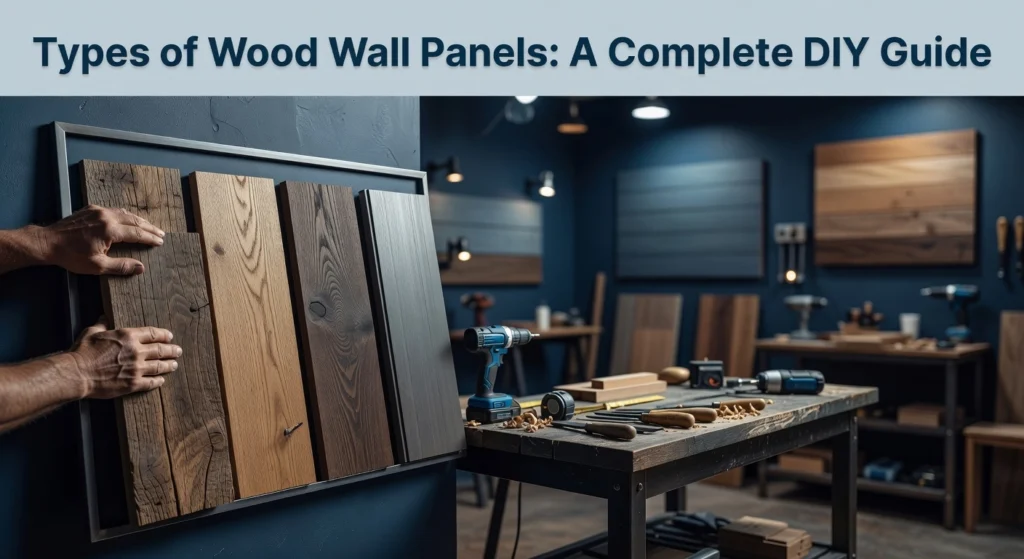

Have you ever walked into a room and instantly felt drawn to the walls? Chances are, wood wall panels had something to do with that warm, inviting atmosphere. The good news is that achieving that same stunning look in your own home is more doable than you might think, even if you have never picked up a power tool before.
Wall panels are one of the most transformative upgrades you can make to any room. They add texture, character, and a touch of elegance without requiring a complete renovation. Whether you are dreaming of a cozy cabin vibe or a sleek modern aesthetic, there is a wood panel style out there that fits your vision perfectly.
In this guide, we are breaking down the most popular types of wood wall panels in a simple, beginner-friendly way. You will learn what makes each type unique, where they work best, and which options are easiest to install yourself. By the end, you will feel confident enough to walk into any hardware store and know exactly what you are looking for. Let’s get started!
Why Wood Wall Panels Are Worth the Project
If you’ve been scrolling through home renovation inspiration lately, you’ve probably noticed wood wall panels popping up everywhere, and there’s a good reason for that. The global wall panels market is projected to grow from around $10.85 billion in 2026 to $18.5 billion by 2035, according to recent market analysis. That kind of growth doesn’t happen by accident. It reflects millions of homeowners making a very deliberate choice to upgrade their walls beyond a simple coat of paint.
A big driver behind this trend is something called biophilic design, which is basically our natural human craving to surround ourselves with, well, nature. Wood fits that perfectly. The wooden wall panels market is growing at roughly 4.2% annually through 2035, fueled by homeowners who want spaces that feel warm, grounded, and alive rather than flat and sterile.
Beyond good looks, wood panels actually work harder than paint ever could. They improve room acoustics by absorbing sound, add a layer of natural insulation to help regulate temperature, and bring texture and depth that genuinely transforms a space. A painted wall is one-dimensional; a wood-paneled wall tells a story.
The best part? You don’t need a big budget to get started. A DIY faux shiplap accent wall can cost as little as $30 in materials using basic underlayment boards cut into planks. That’s an incredibly accessible entry point for beginners.
This guide walks you through the most popular types of wood wall panels, from classic shiplap and wainscoting to modern slat and 3D styles, so you can find the right match for your room, your skill level, and your budget.
Shiplap Panels: The Classic Accent Wall Staple
If you’ve ever wondered what those clean, lined horizontal boards are on a living room accent wall or a cozy bedroom feature wall, that’s shiplap. Shiplap is a style of wooden board traditionally cut with a small rabbet or notch along each edge, so when the boards are installed side by side, they create a consistent gap (usually around 1/8 inch) called a reveal. That tiny gap catches light and casts a subtle shadow line across the wall, giving you a clean, layered look with real visual depth. It’s simple in concept but surprisingly striking in person, which is exactly why it’s become such a go-to for accent walls.
Where Shiplap Works Best
The beauty of shiplap as a wall panel option is how versatile it is when it comes to placement. Living rooms are probably the most popular choice, especially as a feature wall behind a sofa or TV console. Bedrooms work beautifully too, with a shiplap headboard wall adding warmth without feeling heavy. Bathrooms are another solid option, though you’ll want to keep boards away from direct water splash zones. Entryways and mudrooms are also great candidates because a shiplap feature wall instantly adds character to what’s often a plain, overlooked space. The key is picking one wall to highlight rather than covering every surface, since strategic placement is where shiplap really shines in modern interiors.
Tools, Difficulty, and Cost
For beginners, shiplap is one of the more approachable DIY wall panel projects you can tackle on a weekend. You really only need a few basic tools: a miter saw for cutting boards to length, a level to keep your first row perfectly straight (this is critical, since one crooked starting board throws off every row above it), and a nail gun or brad nailer to fasten boards into wall studs. A stud finder and tape measure round out your kit.
On the budget side, you have real options. The most affordable route is faux shiplap using 4×8 sheets of underlayment. Cut each sheet into 6-inch-wide strips and you get roughly 7 or 8 boards per sheet, bringing the cost down to around $2 per board. For a typical accent wall, that can mean as little as $30 in materials total. If you prefer solid wood, pine is the go-to for affordability and workability, especially if you plan to paint it white for that classic farmhouse finish. For bathrooms or other moisture-prone spaces, cedar is the smarter pick since it naturally resists rot and humidity damage better than pine.
Mistakes to Avoid
Two common beginner mistakes trip people up on shiplap projects more than anything else. The first is skipping acclimation time. Wood needs to sit in the room where it will be installed for several days before you cut or nail anything. This lets the boards adjust to the room’s humidity and temperature so they won’t shift, gap, or buckle after installation. The second mistake is not accounting for wood movement over time. Even after proper acclimation, wood expands and contracts with seasonal humidity changes, so leaving that small reveal gap is actually functional, not just decorative. It gives the boards room to breathe. Rushing past either of these steps is the fastest way to end up with a wall that looks great in week one and starts showing problems by winter.
Wainscoting: Timeless Wall Paneling for Any Room
Wainscoting is one of those classic wall paneling styles that never really goes out of fashion. It covers the lower portion of your walls, typically running from the floor up to about 32 to 36 inches high on standard 8-foot ceilings. That height lines up nicely with traditional chair-rail proportions and keeps things visually balanced. You can push it higher in formal spaces or rooms with taller ceilings, but that 32 to 36 inch range is your go-to starting point.
There are three main styles you’ll run into most often. Raised panel wainscoting features panels that actually protrude slightly from the frame, with beveled or profiled edges that create depth and shadow lines. It has a formal, traditional look that suits classic interiors beautifully. Flat panel (or Shaker-style) wainscoting uses clean, recessed panels with simple stiles and rails, giving you a more modern or transitional feel that works in just about any room. Beadboard wainscoting is the most casual of the three, using narrow vertical planks with distinctive grooves between them for that charming cottage, farmhouse, or coastal vibe. You can find it as individual tongue-and-groove boards or as pre-grooved 4×8 sheets, which makes installation much more manageable.
Where Wainscoting Works Best
Wainscoting genuinely shines in spaces that need both personality and protection. Dining rooms are a natural fit because raised or flat panel styles add a layer of sophistication that elevates the whole room. Hallways benefit from it too, since the panels protect walls from the constant scuffs and bumps of daily foot traffic. Staircases are another great option because the paneling follows the architectural flow and handles the wear of a high-use area gracefully. Home offices get a polished, library-like quality that makes the space feel intentional and put-together. If you’re going for a formal or classic look anywhere in your home, wainscoting is worth seriously considering.
DIY Difficulty and What to Expect
Wainscoting falls into the moderate difficulty category for DIYers. Installing wainscoting requires careful layout planning, which means measuring your walls, dividing them into evenly spaced panels (usually 16 to 24 inches wide), and snapping a perfectly level line for the top edge. Beadboard sheets are the most beginner-friendly option since you’re working with large panels rather than individual pieces. Raised panel profiles, on the other hand, require a table saw or router to cut the beveled edges, so that style demands more experience and precision.
MDF vs. Solid Wood: Costs and Trade-Offs
Choosing your material comes down to whether you’re painting or staining. MDF is the go-to for painted wainscoting. It’s smooth, stable, and takes paint exceptionally well, and it typically costs around $5 to $20 per linear foot for materials. The downside is that it swells if it stays wet, so keep it away from unventilated bathrooms or other damp areas. Solid wood is the right call if you want a stained natural finish. Expect to pay $15 to $40 or more per linear foot depending on the species, which is roughly twice the cost of MDF for painted applications.
For paint-grade projects, poplar and MDF are your best picks. Poplar is affordable, easy to work with, and has a smooth enough surface that paint looks crisp and clean. MDF gives you an even more flawless finish if you want zero grain show-through. For stain-grade projects, oak and cherry are excellent choices. Oak takes stain evenly and has that durable, timeless grain pattern; cherry develops a rich, warm tone over time that really does look luxurious.
Getting the Finish Right in High-Traffic Areas
For hallways, staircases, and other busy spots, stick with satin or semi-gloss paint sheens. Both hold up better than flat or eggshell finishes against scuffs, cleaning, and everyday wear. Semi-gloss gives you the best cleanability, which matters a lot in a hallway that gets wiped down regularly. Always prime first, especially over MDF, and apply at least two coats for a durable, even result. White and off-white remain classic wainscoting color choices, but bold colors like navy, forest green, and warm gray are increasingly popular for adding character without a full room renovation.
Wood Slat and Acoustic Panels for Home Offices and Living Spaces
If shiplap gives you that classic farmhouse charm, wood slat panels take things in a decidedly more modern direction. These panels are made up of thin strips of wood, either running vertically or horizontally, that are mounted onto a backing material, usually dense acoustic felt or an MDF substrate. The result is a textured, three-dimensional wall surface that adds depth and visual rhythm to any room. The spacing between each slat is intentional; it lets sound waves pass through to the felt backing behind, which is exactly what makes these panels more than just a pretty face.
The Acoustic Advantage You Probably Didn’t Expect
Here’s where wood slat panels genuinely stand out from other wall panel styles. The felt backing is a real, functional sound absorber, and research from panel manufacturers like Felt Right shows that wood slat panels can absorb 55% or more of the sound waves they contact. In practical terms, that means noticeably less echo and reverberation in rooms with hard floors, lots of glass, or open-plan layouts. For a home office, this translates to cleaner audio on video calls and better focus throughout the day. Media rooms also benefit from tighter, less muddy sound without the need for bulky foam acoustic treatments.
Build Your Own or Buy Pre-Made
When it comes to actually getting these panels on your wall, you have two solid paths to choose from. The DIY route involves ripping hardwood strips on a table saw, then gluing them onto sheets of acoustic felt before mounting the whole assembly to your wall with construction adhesive and screws into studs. It takes time, roughly 10 to 15 hours for a larger feature wall, but it gives you full control over spacing, finish, and depth. Pre-made modular panels from brands like Felt Right come ready to install with consistent spacing and pre-attached felt backing, which is a big time saver if you want clean, professional results without milling your own lumber.
Choosing the Right Wood for Your Budget
For budget-friendly builds, pine is your best friend. Rip it into strips, apply a walnut stain, and you get a look that rivals far more expensive options. If you want the real deal, oak gives you that durable, light-toned grain that photographs beautifully, while walnut brings rich, dark warmth to a space. Both hardwoods hold up well and take finish evenly.
Orientation Changes Everything
Vertical slats draw the eye upward, creating an illusion of height that works especially well in rooms with lower ceilings. Horizontal slats push the eye sideways, making a narrow room feel wider and more expansive. This is a small design decision that makes a surprisingly big difference in how your finished wall reads in the space.
What to Expect on Cost
DIY material costs for roughly 100 square feet typically run between $420 and $750, covering wood strips, acoustic felt, adhesive, and hardware. Pre-made panel systems will generally land you in the $1,000 to $1,500 range for similar coverage once you factor in materials and the convenience markup. If your time is limited and you want consistency across every panel, pre-made is worth the premium. If you enjoy the build process and want to stretch your budget, a well-executed DIY slat wall delivers nearly identical results for significantly less money.
Beadboard Panels: Budget-Friendly and Versatile
Beadboard is one of those wall panel styles that feels instantly familiar, even if you’ve never known its name. It consists of thin panels covered in evenly spaced vertical grooves, sometimes called “beads,” that run from top to bottom. The look is classic cottage or farmhouse, and it adds real texture and charm to a plain wall without requiring a big budget or advanced carpentry skills. Modern beadboard sheets are typically sold in 4×8-foot panels with the groove pattern already pressed or routed into the surface, making the whole process much more approachable than it sounds.
Where Beadboard Works Best
Beadboard genuinely thrives in a handful of rooms. Bathrooms are probably the most popular spot, especially as wainscoting that covers the lower half of the wall up to a chair rail. Laundry rooms and kitchens also benefit from the texture and the easy-to-clean surface once painted. If you’re tackling a wainscoting project like the one covered earlier in this guide, beadboard sheets are one of the fastest ways to fill that lower wall section with character. It pairs beautifully with simple baseboards and a chair rail, giving the space that layered, finished look without custom millwork costs.
DIY Difficulty and Cost
For beginners, beadboard sheets are genuinely one of the easiest wall panel options to work with. You can install beadboard yourself using basic tools, including a circular saw for straight cuts and a jigsaw for any outlets or tricky angles. Measure your walls, cut the sheets with about 10% extra for waste, apply construction adhesive to the back, nail into studs with a brad nailer, then caulk and trim.
On budget, sheet beadboard runs roughly $0.75 to $2.50 per square foot for MDF options, which translates to around $20 to $50 per 4×8 sheet. Individual tongue-and-groove planks cost more per square foot and take longer to install since each plank needs to align with the next. For most beginners, sheets are the smarter starting point.
Matching Material to the Room
Material choice matters a lot depending on where you’re installing. Primed MDF beadboard works well in dry spaces like living rooms, hallways, or laundry rooms away from direct water exposure. However, MDF will swell and deteriorate if it gets wet regularly, so it’s the wrong choice for beadboard in a bathroom near a tub or sink splash zone. PVC beadboard is waterproof and mold-resistant, making it the smarter pick for any wet or high-humidity area. Solid wood can work in damp spaces if properly sealed, but it expands and contracts with moisture changes more than PVC does.
Painting and Finishing Tips
Getting a clean, professional finish on beadboard comes down to a few key steps. Start with a high-adhesion primer, and if you’re working with MDF, use an MDF-specific primer since the material soaks up standard primer quickly and unevenly. Many DIYers find it easier to paint the sheets flat on sawhorses before hanging them, since getting paint into the grooves is simpler when the panel is horizontal.
For application, use a 2-inch angle sash brush to work paint into the grooves first, then follow up with a small foam roller on the flat surfaces. Brush strokes along the grooves rather than across them for a cleaner look. Spray painting is faster for large areas but requires careful masking and thin coats to avoid paint pooling in the grooves. Finish with semi-gloss or high-gloss paint in kitchens and bathrooms since it resists moisture and wipes down easily. Fill any seams or gaps with paintable caulk before the final coat for a seamless result.
Fluted and 3D Panels: The Modern Accent Wall Upgrade
If you’ve worked your way through shiplap, wainscoting, and wood slat panels, fluted and 3D panels are the next level up when it comes to making a bold statement on your walls. These are panels built with repeating ridges, grooves, or geometric profiles cut right into the surface, and the magic is in how they play with light. When light hits those raised and recessed areas at an angle, you get a dramatic shadow effect that makes a flat wall look like it belongs in an architectural magazine. It’s depth and texture without hanging a single piece of art.
Why Fluted Panels Are Everywhere Right Now
Fluted woodwork is genuinely one of the fastest-growing interior design trends heading into 2026, showing up in living rooms, entryways, kitchens, and media walls. The style pulls from classical architecture, think Greek columns and Art Deco buildings, but feels completely fresh in modern and transitional homes. Design experts describe it as one of the biggest moves away from stark minimalism, adding organic warmth and texture without going over the top. If you’re updating a living room or entryway and want something that looks custom and intentional, fluted panels are genuinely worth your attention.
Building Your Own Fluted Panels
The DIY approach here is more straightforward than it sounds. You’re essentially routing a series of evenly spaced grooves into flat boards or MDF sheets using a router table and a straight bit. Set your fence to mark the first groove, then shift it incrementally to cut each additional channel at a consistent spacing. Work slowly, take multiple shallow passes on each groove rather than one deep cut, and sand the routed channels smooth with 120 then 180 grit before finishing. For beginners, pre-made fluted MDF panels with built-in shiplap edges are a faster option that skips the routing step entirely.
Choosing Your Material
MDF is the go-to choice if you plan to paint your panels. It machines cleanly, holds a smooth finish beautifully, and stays dimensionally stable. For a natural stained look, solid oak or walnut adds warmth and real grain character that paint simply cannot replicate. Oak and walnut cost more and need proper acclimation before install, but the result is genuinely stunning.
Installation and Design Tips
Start with a plumb line or level to nail your first panel perfectly vertical, because any drift compounds across the wall fast. Apply construction adhesive in a zigzag pattern on the back, press the panel firmly against the wall, and secure with finishing nails along the edges. For design choices, narrower flute spacing creates a finer, more subtle texture while wider spacing produces bolder shadow lines. Directional lighting, whether a floor lamp or recessed accent light, dramatically amplifies the visual impact, so think about your room’s light sources before committing to a spacing width.
Reclaimed Wood Panels: Sustainable Character for Any Wall
Reclaimed wood panels are exactly what they sound like: wood salvaged from old barns, warehouses, pallets, fences, and deconstructed buildings that gets a second life as wall cladding. Instead of fresh lumber, you’re working with boards that carry real history, knots, nail holes, saw marks, color variation, and a patina that genuinely cannot be faked. That character is the whole point. Beyond the looks, using reclaimed material keeps usable wood out of landfills, which makes this one of the more sustainable wall panel choices you can make.
Where to Find Reclaimed Wood
Sourcing is one of the most enjoyable parts of this project. Local salvage yards and deconstruction companies are great first stops because you can sort through boards in person and pick pieces with the color and texture you actually want. Facebook Marketplace is surprisingly productive for finding barn wood or old fence planks from homeowners who just want the stuff gone, often at low or no cost. If you want something more consistent without the treasure hunt, many suppliers sell kiln-dried, de-nailed reclaimed planks that arrive ready to install. Another option worth knowing about is responsibly harvested new wood with a distressed finish, which gives you that aged look with more dimensional consistency if you need boards that lie flat right out of the gate.
Preparing Reclaimed Boards Before You Install Anything
Raw reclaimed wood needs some attention before it goes on your wall. Start by pulling out any remaining nails or staples, then scrub the boards with a stiff brush, mild soap, and water to remove dirt, mold, and grime. Let them dry fully in a ventilated space before moving on. Kiln drying is the gold standard for eliminating moisture and killing any insects hiding inside the wood; if you can’t kiln dry, a borate-based treatment applied by brush works well as an alternative. Warped boards can sometimes be flattened by stacking them under weight during the drying phase, but set aside anything too twisted to salvage. Finally, seal open grain on particularly porous boards to stabilize moisture content before applying any finish.
Installing Reclaimed Wood Panels the DIY Way
For installation, a random-width plank layout is your best friend. Mix different board lengths and widths from your pile, staggering the joints by at least 8 inches so you avoid that awkward aligned-seam look. Construction adhesive applied in an S-pattern on the back of each board, combined with brad nails at the edges, gives a solid hold. In bathrooms or other humid spaces, add a vapor barrier between the wall and your panels to protect against moisture movement. Always start with a level reference line so your first course sets everything up straight.
Caring for and Finishing Reclaimed Panels
Before installation, address any pre-existing stains or surface checks by lightly sanding problem spots or using a wood filler that matches the patina. After install, weekly dusting with a soft cloth keeps things looking sharp, and an annual re-seal with your chosen finish maintains protection without heavy buildup.
For finishes, you have three solid options depending on how much of that aged look you want to preserve. A penetrating oil like tung or linseed enhances the grain and brings out color contrast while letting the wood breathe naturally. Matte polyurethane adds durable protection with minimal sheen, which reads as clean without looking plastic. Wax finishes are the lightest touch of the three, adding subtle protection and a soft natural feel that suits rustic applications well. Always test your chosen finish on a scrap piece first since reclaimed wood reacts unpredictably, and what darkens one board may barely affect another.
Wood Cladding and Sheathing Panels for Bold Statement Walls
Wood cladding takes things a step further than the panel types we’ve covered so far. While shiplap, beadboard, and slat panels are primarily decorative, cladding refers to thicker, more substantial boards designed for full wall coverage. These are often the same profiles used on exterior siding, adapted for interior use. That extra thickness means more durability, more texture, and a bolder visual impact than lighter decorative panels can deliver.
Popular cladding styles to know:
- Tongue-and-groove boards: Each board has a ridge on one edge and a groove on the other, so they interlock snugly. You can run them horizontal, vertical, or even diagonal for different effects.
- Channel rustic: Overlapping boards with a deliberate gap between them that creates deep shadow lines. It’s especially striking on knotty cedar and gives walls serious rustic character.
- Board-and-batten: Wide vertical boards with narrower strips covering the seams. The result is strong vertical lines that make ceilings feel taller and spaces feel more dramatic.
Best rooms for this treatment include entryways, stairwells, home bars, and mudrooms. These are high-traffic spaces where standard drywall takes a beating, and where a bold wood wall actually solves a practical problem while looking great doing it.
For species, cedar and pine are the beginner-friendly picks. They’re easier to cut and nail, take stain well, and give you that warm, natural look without breaking the bank. If you want more drama, Douglas fir brings a reddish-brown tone with beautiful straight grain, while hickory adds a rugged, high-contrast look that’s hard to replicate with anything else.
On cost, expect to pay significantly more than drywall. Basic drywall materials run roughly $0.30 to $0.50 per square foot, while wood cladding in pine or cedar typically starts around $3 to $8 per square foot for materials alone. Premium species like hickory or custom reclaimed profiles can push $15 to $30 per square foot or higher.
Finishing matters a lot with cladding. Always seal cut end grain before or right after installation using shellac or a dedicated end-grain sealer, since exposed ends absorb moisture unevenly and can cause cracking or blotchy staining. For topcoats, a water-based polyurethane works well for durability in busy areas, while penetrating oil finishes suit spaces where you want a more natural, matte look. Plan to do a light maintenance pass every one to two years, wiping boards down with mild soap, checking for gaps caused by seasonal wood movement, and refreshing your topcoat as needed.
DIY Build vs. Pre-Made Panels: What Actually Saves Money
Now that you’ve explored all the major panel styles, the big question is: should you build your own or buy pre-made? The honest answer depends on a few factors, and getting this right can mean the difference between saving hundreds of dollars and accidentally spending more than you planned.
The Numbers Side by Side
Here’s a quick breakdown of approximate material costs per square foot in 2026, so you can see where the real savings live:
| Panel Type | DIY Materials | DIY with Hidden Costs | Pre-Made Equivalent |
|---|---|---|---|
| Shiplap | $2–$7 | $3–$10 | $7–$16+ |
| Beadboard | $2–$5 | $3–$8 | $6–$15 |
| Wainscoting | $1–$6 | $2–$10 | $10–$25+ |
| Slat Wall | $1–$5 | $2–$8 | $10–$30+ |
For a full room, DIY typically runs $500–$2,000 in materials, while professionally installed pre-made systems can hit $2,200–$10,000 or more. That gap is significant.
Where Building It Yourself Pays Off
DIY wins in a few specific situations. First, custom sizing is a big one. Pre-made panels come in standard dimensions, and walls rarely cooperate perfectly. When you build your own shiplap or wainscoting, you cut every board to fit your exact space with zero awkward gaps or wasted panels. Second, you get full control over species and material. Want white oak slats instead of generic pine? Reclaimed wood for character? You can make that call. Third, quality control sits entirely in your hands. You hand-pick boards, sand them properly, and apply exactly the finish you want. That’s hard to replicate with a factory panel.
Where Pre-Made Makes More Sense
Pre-made panels genuinely shine when time is tight or the profile is complex. Fluted panels, for example, require precise router work to pull off cleanly. A pre-made fluted panel arrives consistent, finished, and ready to install in an afternoon. For beginners who don’t yet own a router or aren’t comfortable making repetitive profile cuts, that consistency is worth the price difference. Pre-made beadboard sheets from a hardware store are also surprisingly affordable, sometimes as low as $23 for 32 square feet, which closes the DIY savings gap considerably.
The Tool Investment Question
A miter saw runs roughly $100–$300, and a router sits in the $50–$200 range. Those feel like big purchases on a single project, but spread across two or three panel projects in different rooms, they pay for themselves quickly through avoided labor and material savings. If you’re planning to tackle multiple walls or rooms over time, buying tools is a smart long-term move. If this is a one-time project, renting makes more sense.
Hidden Costs That Sneak Up on You
This is where a lot of beginners get surprised. Raw lumber is just the starting point. Add sandpaper, primer, paint or stain, wood filler, construction adhesive, brad nails, caulk, and a topcoat sealer, and you’re easily looking at an extra $100–$300 on top of your lumber costs. Beginner cut waste typically runs 5–15%, which means you need to buy more material than your wall measurements suggest. Always pad your budget by at least 20–30% when planning a DIY panel build.
Making the Right Call for Your Project
For beginners with limited tools and a tight weekend schedule, starting with pre-made beadboard sheets or a simple wainscoting kit is a smart entry point. You’ll get a feel for installation without the pressure of milling your own boards. Once you’ve done one project and you’re comfortable with a miter saw and nail gun, DIY builds become genuinely cost-effective, especially for larger walls where material savings compound fast. Match your choice to your current skill level, the time you actually have available, and how many panel projects you realistically plan to do in the next year or two.
How to Restore and Maintain Installed Wood Panels
Once your wood panels are installed, keeping them in great shape is just as important as the installation itself. Over time, even well-installed panels run into problems, and knowing how to handle them without tearing everything out will save you time, money, and a lot of frustration.
Common Problems You’ll Run Into
Most installed wood panels deal with the same handful of issues: surface scratches and nicks from everyday life, water stains or dark discoloration from spills and humidity, graying or fading caused by UV exposure and aged finishes, peeling or cracking varnish, and boards that have worked loose over time. The good news is that most of these are fixable with basic tools and products you can grab at any hardware store.
Fixing Surface Scratches
For minor scratches on stained or painted surfaces, start with a wood fill stick, which is basically a wax crayon in a wood tone. Rub it across the scratch until the groove fills in, then buff it smooth with a soft cloth. For fine hairline scratches, a blending marker or touch-up pen in a matching color works really well. If the scratch is a bit deeper and you need to sand, use 220-grit or finer sandpaper and always move with the grain, never against it. Keep sanding minimal if you have a veneered panel, since those face layers can be very thin and easy to sand through accidentally.
Removing Water Stains and Discoloration
For light water marks or white rings, mix baking soda with just enough water to form a paste, apply it with a soft cloth, rub gently with the grain for a minute or two, then wipe it clean. That handles most mild cases. For stubborn dark stains, especially the black rings you sometimes get on oak or mahogany from iron reacting with tannins, an oxalic acid solution is the go-to fix. Mix the crystals in warm water following package directions, apply to the stained area, let it dry, then neutralize with a baking soda rinse. Always wear gloves, eye protection, and keep the room well ventilated when working with oxalic acid.
Refreshing a Dull or Dry Finish
Before reaching for stripper and sandpaper, try a simpler refresh first. Clean the panels thoroughly with a pH-neutral wood cleaner, wipe with the grain, and let them dry completely. Then do a very light scuff sand with fine-grit paper just to give the surface some tooth. Apply a fresh topcoat in thin coats; a wiping varnish or oil-varnish blend tends to look natural and period-appropriate without the plasticky look of heavy polyurethane.
Tightening Loose Panels
Loose panels usually come down to nail pops, adhesive failure, or warping from humidity swings. For nail pops, countersink a screw near the problem spot, then fill the hole with color-matched wood putty. For panels that have buckled or bowed slightly, improving your room’s humidity control goes a long way; aim for 40 to 50 percent relative humidity indoors. Once the wood stabilizes, you can re-glue and add fasteners to hold things in place.
Restore or Replace: A Quick Checklist
Before putting work into a panel, do a quick condition check. Restore if the finish is mostly intact, the veneer has no bubbling or delamination, damage is localized, and the grain can be color-matched. Consider replacing if there is extensive water damage, the veneer is lifting in large sections, or warping will not settle even with humidity control. Peek behind a switch plate to check veneer thickness and inspect edges for moisture damage before committing either way.
How to Pick the Right Wood Wall Panel for Your Room
With so many panel styles covered, the natural next question is: which one actually belongs in your room? Here’s a practical guide to help you match the right panel to the right space.
Room by Room: Quick Recommendations
For living rooms, acoustic wood slat panels and fluted or 3D panels work beautifully as feature walls, especially behind a TV or sofa. Home offices are another sweet spot for slat panels since they reduce echo on video calls while looking polished. In bedrooms, a simple shiplap or tongue-and-groove accent wall behind the headboard adds warmth without overwhelming the space. For hallways, beadboard or painted MDF shiplap are smart picks because they handle bumps and scuffs while adding character to a tight space. Bathrooms are where you need to pump the brakes on traditional wood.
Moisture Matters More Than You Think
Solid wood and standard MDF absorb moisture, which leads to warping, swelling, and mold in bathrooms and basements. If you want a wood look in wet areas, go with PVC composite or WPC (wood-plastic composite) panels instead. They mimic wood grain convincingly and laugh at humidity. If you’re set on real wood, seal every surface including the back and edges, use moisture-resistant drywall behind it, and stick to half-walls in well-ventilated spaces.
Matching Your Style
Look at what’s already in the room before buying anything. Light oak panels pair naturally with pale flooring and white trim. Walnut tones complement darker furniture and richer floor colors. Painted beadboard or shiplap works when you want texture without competing with bold furniture. When in doubt, grab a sample and hold it against your trim and flooring in your actual lighting.
Skill Level and Budget Snapshot
If you’re a beginner, prefab slat panels and shiplap are your friendliest starting points, requiring little more than a level, brad nailer, and miter saw. Wainscoting and raised panels step up in complexity. Budget-wise, expect roughly $7 to $16 per square foot for basic shiplap installed, and $15 to $30 per square foot for acoustic slat or fluted systems. Always add 15 to 20 percent for trim, fasteners, and finish materials.
| Panel Type | Cost Range | Difficulty | Best Room | DIY Friendly |
|---|---|---|---|---|
| Shiplap | $7-$16/sq ft | Low | Living rooms, hallways | Yes |
| Beadboard | $6-$15/sq ft | Low | Hallways, bathrooms | Yes |
| Wood slat/acoustic | $15-$30/sq ft | Low-Medium | Offices, bedrooms | Yes |
| Fluted/3D | $15-$25/sq ft | Medium | Living rooms, accents | With care |
| Wainscoting | $10-$25/sq ft | Medium-High | Dining rooms, formal spaces | Moderate |
| PVC/composite | $7-$20/sq ft | Low | Bathrooms, basements | Yes |
Final Thoughts on Wood Wall Panels for DIY Homeowners
You’ve now covered eight distinct wood wall panel types, each with its own strengths. Shiplap brings clean, horizontal charm. Wainscoting adds timeless structure. Wood slat and acoustic panels modernize home offices. Beadboard keeps things budget-friendly. Fluted and 3D panels make bold statements. Reclaimed wood delivers character and sustainability. Cladding and sheathing create dramatic, substantial walls. And pre-made panels offer speed when time matters most.
The good news for beginners is that most of these projects are genuinely achievable with basic tools and a free weekend. A miter saw, a nail gun, a level, and some patience will get you surprisingly far.
If you’re feeling unsure where to start, pick one accent wall rather than committing to an entire room. It’s lower risk, lower cost, and gives you real experience before scaling up.
For your next steps, WoodStuffHQ has build guides, measured cut lists, and wood restoration articles to walk you through each stage with confidence.
Finally, remember the three factors that will determine whether your panels look great five years from now: acclimate your wood properly before installation, choose the right finish for your room’s humidity level, and never ignore moisture. Get those three right, and your panels will last beautifully.


Pingback: Bathroom Wall Panels: Real Wood vs. WPC vs. PVC - WoodStuffHQ
Pingback: 15 Bathroom Cabinet Ideas for Every Style and Budget - WoodStuffHQ
Pingback: Console Tables: The Complete Wood-Focused Guide - WoodStuffHQ
Pingback: Solid Wood Wardrobes: How to Choose, Care For, and Restore Yours - WoodStuffHQ