
Choosing the right material for your bathroom renovation can feel overwhelming, especially when the options seem endless. If you have been exploring ways to upgrade your space, you have likely come across bathroom wall panels as a popular alternative to traditional tiles. They are faster to install, easier to maintain, and available in a wide range of styles. But here is where many homeowners get stuck: not all wall panels are created equal.
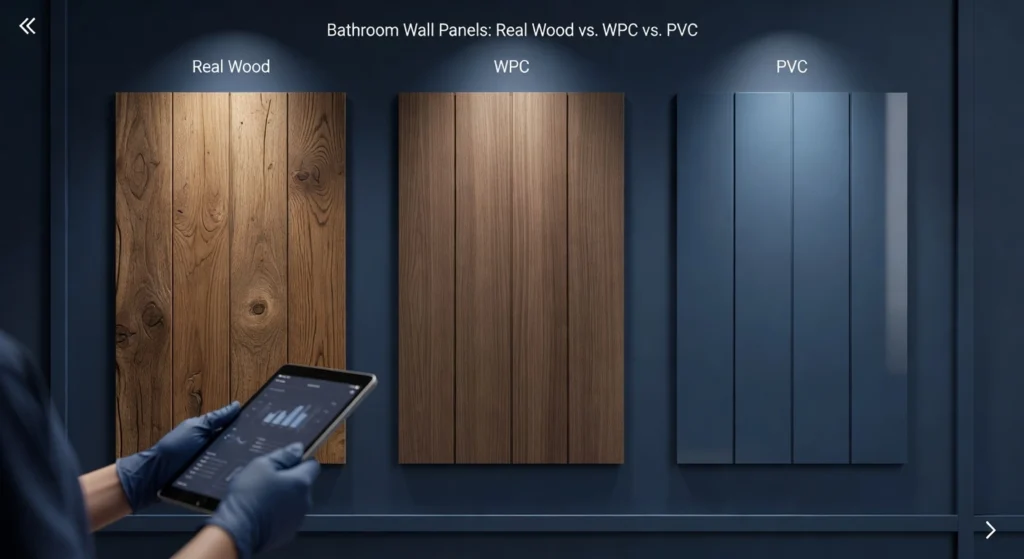
Three materials dominate the market right now, real wood, WPC (Wood Plastic Composite), and PVC (Polyvinyl Chloride). Each one comes with its own set of benefits, drawbacks, and price points. Making the wrong choice could mean dealing with warping, moisture damage, or unexpected costs down the line.
In this guide, we will break down each material in plain, straightforward terms so you can make a confident, informed decision. By the end, you will know exactly which type of bathroom wall panel suits your budget, your lifestyle, and the specific demands of your bathroom environment. Let us get started.
Why Bathroom Wall Panels Are Replacing Tile
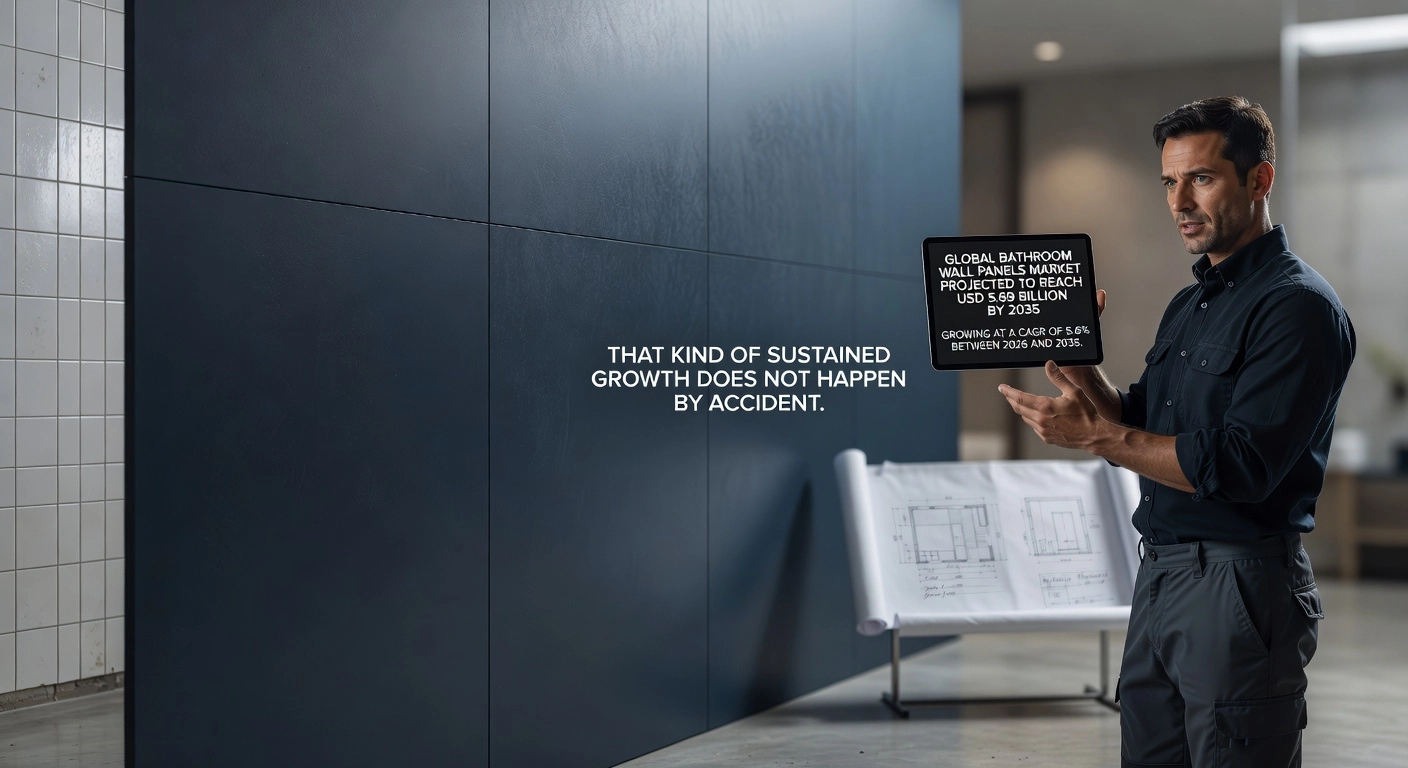
Something significant is happening in the bathroom renovation space, and the numbers tell a compelling story. The global bathroom wall panels market is projected to reach USD 5.69 billion by 2035, growing at a CAGR of 5.6% between 2026 and 2035. That kind of sustained growth does not happen by accident. It reflects a genuine, widespread shift in how homeowners think about bathroom surfaces, driven by real frustrations with traditional tile and a growing awareness of smarter alternatives.
The Cost Case Is Hard to Ignore
For budget-conscious DIY homeowners, the financial comparison alone is often enough to settle the debate. A standard shower stall tiled by a professional typically runs $800 to $5,000 or more, once you factor in materials, labor, grout, sealing, and the inevitable callbacks. Wall panels for the same space typically cost $400 to $2,000, and many systems are designed for straightforward DIY installation. According to a detailed cost breakdown from Block Renovation, panels dramatically reduce labor time, sometimes completing in a single day what tile work stretches over several.
No Grout Means No Ongoing Battles
Anyone who has owned a tiled shower for more than a few years understands the maintenance reality. Grout lines collect soap scum, mold, and mildew relentlessly, and regrouting is a time-consuming, messy job most homeowners dread. Bathroom wall panels eliminate that problem entirely. Their seamless, non-porous surfaces wipe clean in minutes, with no sealing schedule or scrubbing sessions required.
North America Is Just Catching Up
Panels have been a mainstream choice in the UK and Europe for years, but North American adoption is accelerating sharply in 2026. Many first-time renovators are encountering these products for the first time through big-box retailers, and the response has been enthusiastic. Paired with 2026 design trends favoring wood effects, natural stone textures, and quiet luxury aesthetics, panels now deliver the premium look homeowners want at a fraction of the cost of real materials.
The 5 Main Types of Bathroom Wall Panel Materials
Not all bathroom wall panels are created equal. The material you choose determines how well your walls hold up against moisture, how realistic the finish looks, how easy the installation will be, and how much you spend. Here is a clear breakdown of the five main types so you can make an informed decision from the start.
PVC Panels
PVC (polyvinyl chloride) panels are the most affordable and beginner-friendly option on the market. They are 100% waterproof in quality products, lightweight, and simple to cut with basic tools. Printed finishes have improved dramatically, with convincing wood, stone, and marble effects now widely available. Costs typically range from $2 to $8 per square foot for materials, making them a popular choice for rentals, quick refreshes, and utility bathrooms. The main trade-off is that thinner or lower-quality PVC can feel less substantial underfoot or to the touch compared to denser materials. According to a comprehensive bathroom wall paneling guide, PVC remains one of the top recommendations for homeowners prioritizing speed and budget.
WPC (Wood-Plastic Composite) Panels
WPC panels combine wood fiber with polymer binders to create a denser, more tactile product than standard PVC. They deliver a noticeably more realistic feel and appearance, particularly in wood-effect finishes, while still resisting moisture, rot, and mold. Costs generally fall between $5 and $10 or more per square foot. WPC is an excellent middle-ground choice for homeowners who want the warmth of wood aesthetics without the maintenance challenges that real wood brings to wet environments.
Acrylic and Solid Surface Panels
These panels represent the premium tier. Acrylic and solid surface options are non-porous, fully waterproof, and designed specifically for showers and tub surrounds. Their seamless appearance eliminates grout lines entirely, making cleaning straightforward and mold far less likely. Installation requires more care, including proper backerboard preparation, but the long-term durability justifies the higher upfront cost for many homeowners.
Laminate Panels
Laminate offers a mid-range balance of realistic visuals and reasonable cost. High-resolution printed surfaces can closely mimic stone, tile, or wood grain. However, laminate is not inherently waterproof; it requires a moisture-resistant backing, proper vapor barriers, and meticulous sealing at every edge and joint. Skipping those steps in a wet zone can lead to swelling or delamination over time. Laminate performs best in lower-splash areas or when installed with strict attention to sealing details, as outlined in this guide to shower wall panel types.
Real Wood Panels
Real wood delivers unmatched natural beauty and authenticity, but it demands the most preparation and ongoing care. Species selection matters considerably; rot-resistant options like cedar or teak perform better in humid environments. Even with proper sealing using marine-grade varnish or epoxy finishes, real wood should be kept away from direct water contact such as inside showers. It performs best on feature walls or drier bathroom zones with strong ventilation.
Quick-Reference Comparison
| Material | Waterproofing | Cost per Sq Ft | DIY Ease | Aesthetic Authenticity |
|---|---|---|---|---|
| PVC | Excellent | $2 to $8 | High | Good |
| WPC | Excellent | $5 to $10+ | Medium to High | High |
| Acrylic/Solid Surface | Excellent | Premium | Medium | High |
| Laminate | Good (with sealing) | Mid-range | Medium | High |
| Real Wood | Poor to Fair | $4.50 to $38+ | Low | Highest |
Choosing the right material comes down to matching your specific wet-zone exposure, budget, and maintenance willingness before purchasing a single panel.
Real Wood Bathroom Panels: When It Works and When It Doesnt
Real wood in a bathroom is not automatically a bad idea, but it demands the right species, the right finish, and the right location. Get any one of those three wrong, and you will be looking at warped panels and mold within a year or two.
Choosing the Right Species
Not all wood handles humidity equally. Teak is widely regarded as the top choice for moisture-prone environments. Its high natural oil content actively repels water, resists rot, and prevents the swelling that destroys less resilient species. Western red cedar is a more affordable alternative that contains its own natural preservatives, making it a practical option for accent walls and wainscoting. For a panel substrate, marine-grade plywood often outperforms solid wood because its cross-layered construction resists the expansion and contraction cycles that cause solid boards to warp over time. What all three of these options share is a structural or chemical advantage that buys you time against moisture damage.
Finishing Is Non-Negotiable
Species selection alone will not protect your investment. Every piece of real wood installed in a bathroom must be finished on all six sides before it goes on the wall, including the back face, both edges, and both ends. Moisture enters wherever finish is absent, and the back of a panel is the most commonly overlooked surface.
For finish selection, marine varnish and two-part epoxy systems are the two most reliable options. Marine varnish is flexible enough to move with the wood through humidity cycles while maintaining a strong moisture barrier. Two-part epoxy creates a harder, more impermeable seal and works especially well as a base coat beneath a topcoat of spar varnish. Apply finishes in multiple thin coats, sanding lightly between layers, and allow full cure time before installation.
Where Real Wood Belongs (and Where It Does Not)
Placement is the single most important decision you will make. Real wood performs reliably in wainscoting, accent walls, and vanity surrounds where direct water contact is minimal. These lower-risk zones let you enjoy the warmth and texture of natural wood without subjecting it to constant punishment. Direct shower walls are a different story entirely. Repeated soaking, steam exposure, and water pooling at seams will eventually overwhelm even a well-applied marine finish.
Ventilation Is Just as Important as Finish
A bathroom without adequate ventilation will degrade real wood panels regardless of how well they were sealed. Humid air that lingers after a shower penetrates finish over time through microscopic imperfections. An exhaust fan rated for at least 50 CFM, run for 20 to 30 minutes after each shower, is a baseline requirement. Better practice is a humidistat-controlled fan that runs automatically when moisture levels rise.
Recognizing Early Failure
Check your panels regularly for these warning signs: edges that cup or bow outward, soft spots that indicate internal rot, darkening grain lines that signal mold growth beneath the surface, and finish that is peeling or flaking away from the wood. Catching these signs early allows targeted refinishing or section replacement. Left unaddressed, moisture damage spreads into wall framing and creates a far more expensive problem than a few replacement panels.
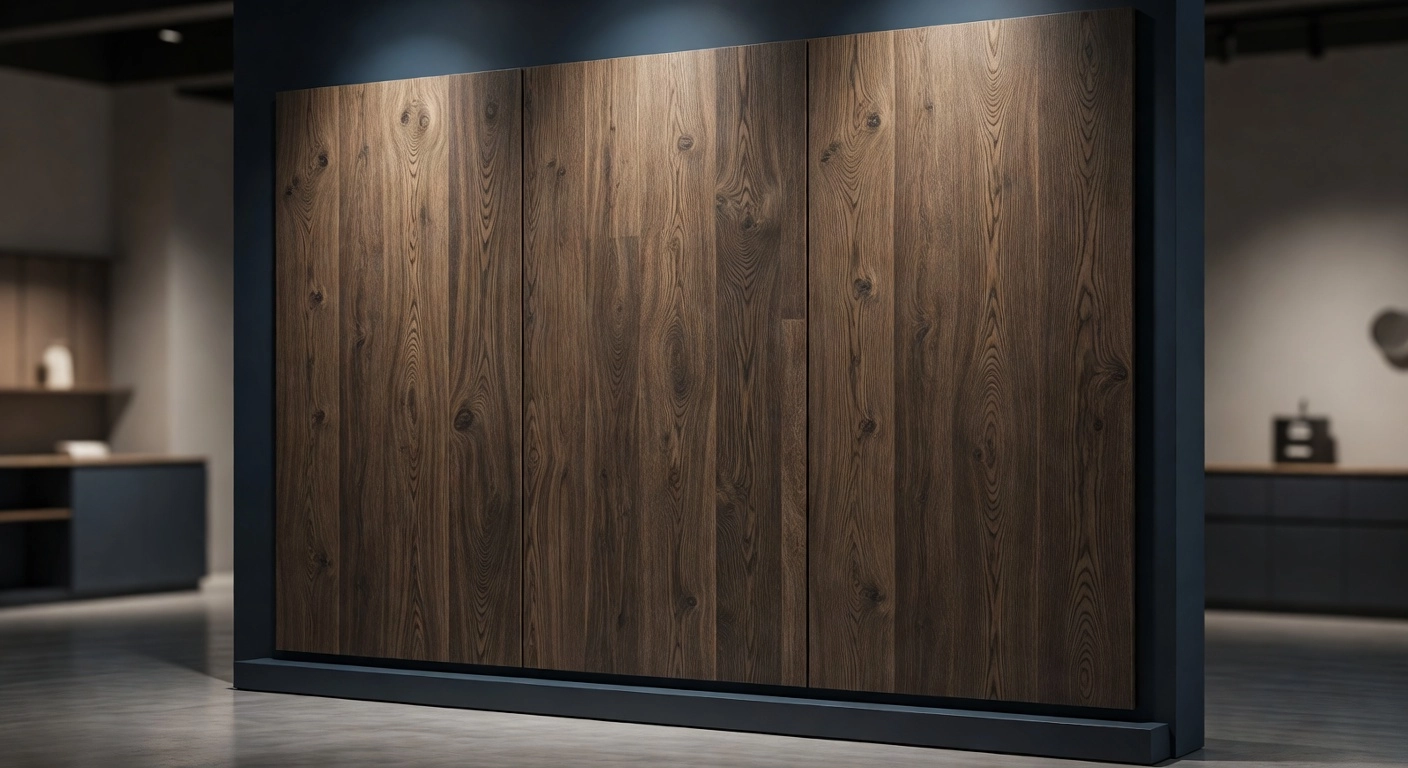
WPC Wood-Effect Panels: The Best of Both Worlds?
If real wood represents the purist’s choice and pure PVC offers maximum practicality, WPC (wood-plastic composite) panels sit in an interesting middle ground that many homeowners find genuinely compelling. These panels typically combine 40 to 60% wood fiber content, usually sourced from recycled wood flour or sawdust, with thermoplastic binders such as PVC or polyethylene. The plastic matrix encapsulates the wood fibers completely, producing a panel that is denser and more dimensionally stable than pure PVC under temperature fluctuations. Where basic PVC can expand and contract noticeably with heat changes, WPC’s hybrid structure resists those shifts more reliably, making it a stronger performer in bathrooms that experience significant temperature swings.
The aesthetic difference between WPC and standard PVC is worth examining closely, especially if the wood look is your primary goal. Flat-printed PVC panels often read as plastic at close range, with a smooth, slightly glossy surface that struggles to convincingly replicate timber grain. High-quality WPC panels, by contrast, incorporate embossed grain textures and realistic color variation that engage both the eye and the hand. The actual wood fiber content contributes a subtle warmth and tactile quality that printed surfaces simply cannot replicate. For anyone wanting a spa-like feature wall or a shiplap-style tub surround without the maintenance demands of genuine timber, premium WPC gets noticeably closer to the real wood aesthetic.
On moisture performance, WPC holds a meaningful advantage over real wood. Because the plastic matrix encapsulates the core completely, the panel maintains its waterproof integrity even when the surface is scratched or edges are cut during installation. With real wood, a failed finish or a compromised seal is a direct pathway for moisture to reach the timber itself, triggering warping, swelling, and eventually mold. WPC eliminates that vulnerability at the structural level, which is a significant practical benefit in wet zones. You can review a detailed breakdown of WPC pros and cons for bathroom applications to understand where its waterproofing holds firm and where proper joint sealing still matters.
The limitation that woodworking enthusiasts will feel most acutely is the material’s complete resistance to repair and refinishing. Real wood can be sanded, re-stained, or restored when it shows wear. WPC cannot. A deep scratch or impact gouge is permanent; the only remedy is replacing the affected panel entirely. Since many WPC systems use interlocking tongue-and-groove installation, even a single panel swap can become a disruptive process. This is a fundamental trade-off the material asks you to accept in exchange for its moisture performance.
For best results, consider WPC for shower surrounds, tub enclosures, and statement feature walls where the wood aesthetic drives the design but sustained water exposure makes real timber impractical. It is a smart solution for these contexts and a realistic option for most DIY-level bathroom renovations.
PVC Panels: The Budget-Friendly Waterproof Choice
PVC panels occupy a well-defined position in the bathroom wall panel market: they are the most affordable fully waterproof option available to DIY renovators. At $2–$5 per square foot for materials, PVC makes large-scale bathroom upgrades genuinely accessible. When you compare that against tile installations that can run $800–$5,000+ for a shower stall alone, the cost difference is difficult to ignore, particularly on multi-bathroom renovations or rental property upgrades where budget control matters most. According to current shower wall panel market data, PVC held an estimated 47.3% market share in the shower panel segment in 2026, which reflects just how widely adopted this material has become.
The installation process is where PVC genuinely earns its beginner-friendly reputation. Most systems use either tongue-and-groove interlocking or straightforward adhesive-direct application onto prepared walls. Neither method requires specialist tools, grouting knowledge, or prior tiling experience. A typical bathroom can be panelled in a single day, with panels light enough for one person to handle overhead without assistance. That speed and simplicity make PVC particularly appealing for rental turnovers or quick refreshes where downtime matters.
The honest trade-off sits in the aesthetics. PVC panels use printed surface effects to mimic wood grain, marble, or stone, and while the visual results have improved considerably, they still lack the tactile depth and grain variation that WPC panels or real wood deliver. In a smaller bathroom where walls are viewed at close range, that printed quality becomes more apparent underhand and eye.
For full wet rooms, shower enclosures, and utility-focused renovations, that trade-off is entirely reasonable. PVC panels resist mold, require nothing more than a wipe-down to clean, and carry a typical lifespan of 15 to 25 years in normal conditions.
One long-term consideration worth noting: standard PVC panels without UV stabilizers can yellow noticeably in bathrooms exposed to direct sunlight through skylights or large windows, sometimes within 6 to 12 months under intense exposure. Thinner, lower-quality panels may also feel hollow or flex slightly under firm pressure. Choosing panels with UV stabilization and a thickness of at least 8mm addresses both concerns before they become problems.
Cost Breakdown: Panels vs. Tile by Bathroom Zone
Understanding exactly where your money goes across different bathroom zones makes the panel-versus-tile decision much clearer. The cost gap between these two options shifts depending on which part of the bathroom you are renovating, and knowing those differences helps you budget realistically from the start.
Shower Stall
For a standard three-wall shower enclosure, bathroom wall panels typically run $400 to $2,000 fully installed for mid-tier acrylic or laminate systems. Tile for the same space averages closer to $800 to $5,000 or more, with that upper range driven by smaller mosaic formats, intricate patterns, natural stone, and the grouting labor those choices demand. According to Gill Construction’s panel versus tile comparison, tile labor alone can represent 40 to 65 percent of the total shower remodel budget, which explains why even modest tile upgrades push costs significantly higher than panel alternatives.
Tub Surround
Tub surrounds are where panels deliver some of their strongest cost advantages. The large, flat alcove surfaces require very few cuts, meaning minimal material waste and a faster installation that often wraps up in a single day. Subway tile or mosaic patterns demand precise trimming around the tub lip, corners, and any fixtures, adding both time and skilled labor expense. Panels sidestep most of that complexity entirely, making them a particularly smart choice for budget-conscious updates or rental property refreshes.
Full Bathroom Wall Coverage
As square footage increases, panels become even more competitive. Panel systems scale almost linearly in cost, with predictable per-sheet pricing and straightforward installation regardless of room size. Tile labor costs, by contrast, tend to climb with room complexity, additional fixture cutouts, and larger grouting volumes. A full bathroom wall project completed with panels in one to two days could take a tile crew three to seven days or longer, and that labor difference compounds quickly.
DIY vs. Professional Installation
Professional tile setters typically charge $5 to $15 per square foot for labor, sometimes higher for walls or intricate designs. Panel systems are engineered for DIY-friendly installation using adhesive, mechanical fasteners, and basic hand tools, meaning a capable homeowner can realistically eliminate that labor cost entirely. Innovate Building Solutions notes that DIY panel installs can cut total project costs by 30 to 50 percent compared to professionally tiled equivalents, provided the substrate is properly prepared beforehand.
Hidden Long-Term Costs
The upfront price comparison only tells part of the story. Tile grout requires sealing every one to two years and regrouting every five to ten years depending on use. Failed or cracked grout creates pathways for water intrusion, and mold remediation behind tiles can cost $3,000 or more when moisture damage goes undetected. Panels feature smooth, non-porous surfaces with minimal seam lines, largely eliminating those recurring expenses and making long-term ownership noticeably less expensive than tile budgets typically reflect.
DIY Installation Overview for Bathroom Wall Panels
Bathroom wall panels generally fall into two installation camps, and understanding which system you are working with changes how you approach the entire project.
Tongue-and-groove click systems, such as Fibo Aqualock, use interlocking profiles that snap or press together without adhesive at the seams. This gives beginners a meaningful advantage: you can slide panels slightly during fitting to correct alignment before everything locks in place. Wall attachment typically uses adhesive applied in strips or dots on the panel back, combined with perimeter trim profiles screwed to studs or battens roughly every 50 cm. Adhesive-direct systems take a simpler approach, bonding panels straight to a prepared wall using a hybrid polymer grab adhesive applied in a zigzag or perimeter-plus-dots pattern. These work particularly well over sound existing tiles or fresh plasterboard, but offer far less forgiveness if you misalign a panel mid-installation.
Surface Preparation Comes First
Regardless of which system you choose, surface preparation determines whether your installation lasts five years or twenty. Walls must be flat within 3mm across any given span, structurally sound, and completely free of grease, loose paint, or dust before a single panel goes up. A long straight-edge and a pencil are your best diagnostic tools here. High spots need sanding down; low spots may need filling with suitable compound. Panels installed over uneven walls will bow, create gaps at joints, or fail to adhere properly. Skipping this step is the single most common reason DIY panel installations look unprofessional.
The Wet Zone Rule You Cannot Ignore
If you are panelling a shower enclosure or any surface that receives direct water spray, most building codes require a tanking membrane or waterproof backer board substrate installed before the panels go up, regardless of how waterproof the panels themselves claim to be. The panels protect the membrane; the membrane protects the structure. Verify your local code requirements, because height specifications for wet zone waterproofing vary by region.
Cutting and Beginner Mistakes
For cutting, use a fine-tooth handsaw, jigsaw, or circular saw fitted with a fine-tooth blade. Always cut PVC and WPC panels face-down to keep chipping on the back surface rather than the visible face. Measure twice, dry-fit every piece before committing adhesive, and use a square to keep cuts true.
Three mistakes trip up nearly every first-timer. First, forgetting expansion gaps of 3 to 6mm at all perimeter edges; panels expand with heat and will buckle without room to move. Second, under-sealing internal corners with silicone; use a flexible, waterproof sealant generously at every internal joint. Third, pressing ahead with adhesive before checking wall flatness with a straight-edge. Each of these errors is easy to avoid at the start and extremely difficult to fix once the panels are bonded in place.
Maintaining and Restoring Wood Bathroom Panels
Wood bathroom panels reward homeowners who treat maintenance as a ongoing process rather than a one-time task. Getting this right means understanding where moisture problems start and addressing them before they escalate into costly repairs or full replacements.
Prevention begins at the installation stage, not after. Every cut edge on a real wood panel must be sealed with marine varnish or waterproof sealant before the panel is fitted to the wall. Raw end grain is highly porous and will absorb moisture rapidly if left exposed, even if the face and back surfaces are fully coated. Once panels are in place, the silicone joints at corners, edges, and transitions to fixtures or adjacent surfaces are your primary defence against water intrusion. These joints should be inspected every two to three years and resealed at the first sign of cracking, shrinkage, or gaps. Maintaining indoor humidity between 30 and 50 percent, using exhaust fans consistently, and ensuring adequate ventilation behind panels where possible will significantly reduce the risk of both mold growth and warping over time.
Water stains are one of the most common issues on sealed wood panels, and the appropriate remedy depends on how deeply the staining has penetrated. Light marks sitting on the finish surface often respond well to a diluted white vinegar solution, applied with a soft cloth, left briefly, then wiped clean and dried thoroughly. Fine 0000 steel wool lubricated with mineral oil is another reliable option for surface-level discolouration; rub gently along the grain and wipe away residue immediately. If staining has penetrated through the finish into the wood itself, those gentler methods will not be sufficient. Deep staining requires light sanding with fine-grit paper to remove the compromised finish layer, followed by reapplication of a compatible sealant or varnish to restore the protective barrier. Always ensure the panel is completely dry before refinishing.
Warping tells you something important about where moisture has been. Minor surface warping caused by temporary humidity fluctuations can sometimes be corrected by stabilising the room environment, then clamping or weighting the panel flat while it slowly re-equilibrates. Significant or persistent warping, however, is a reliable indicator that moisture has reached unfinished back surfaces or edges, causing irreversible fibre damage. At that point, replacement is the more practical path, since forcing a severely warped panel flat risks cracking and may conceal mold in the wall cavity behind it.
When a finish reaches the point of peeling, flaking, or exposing bare wood, full stripping and recoating is almost always the smarter financial decision compared to sourcing and reinstalling replacement panels on solid wood installations. Stripping the old finish chemically or through careful sanding, then applying three or more thin coats of marine varnish or penetrating epoxy, restores a robust moisture barrier at a fraction of the replacement cost. These finishes are specifically formulated for high-humidity environments and provide the flexibility and water resistance that standard interior varnishes cannot match. Replacement makes more sense when the substrate itself, such as particleboard or thin veneer, has absorbed moisture and begun to degrade structurally.
Panels near vanity areas present a different cleaning challenge. Residue from lotions, hairsprays, and grooming products builds up gradually and can dull or soften a wood finish if left unaddressed. A diluted dish soap solution applied with a soft microfibre cloth, followed by a clean water wipe and immediate drying, cuts through product buildup without harming the finish. Abrasive cleaners and scouring pads should be avoided entirely, as they introduce fine scratches that compromise both the appearance and the protective integrity of the coating. Wiping spills promptly and adding a light application of wood-compatible polish after cleaning helps maintain the surface between deeper cleaning sessions.
Which Type Is Right for Your Bathroom?
The right panel material comes down to three factors working together: your budget, your skill level, and which part of the bathroom you are covering.
Budget-first renovators tackling showers or full wet rooms have a clear answer: PVC tongue-and-groove panels. At $2 to $5 per square foot for materials, they are the most affordable fully waterproof option available. Installation requires no specialist skills, no grouting, and no finishing products. A standard shower enclosure can be completed over a weekend using basic measuring and cutting tools, with silicone applied at seams and corners to seal the system completely. If cost efficiency and moisture protection are your two primary concerns, PVC delivers both without compromise.
Homeowners prioritizing aesthetics over cost will find WPC wood-effect panels the most compelling middle ground. These composite panels blend wood fibers with plastic to produce a finish that genuinely replicates natural grain and warmth, something plain PVC cannot match. They handle humidity reliably with water absorption rates below 0.5% in quality grades, require no sealing or periodic refinishing, and carry a lifespan of 20 to 30 years. The material cost runs higher than basic PVC, but the visual payoff in a vanity wall or bath surround is substantial.
Woodworking enthusiasts and experienced DIYers who want authentic results should consider teak or cedar with marine-grade sealing. These species perform reliably in wainscoting, accent walls, and vanity surrounds when properly finished and maintained. The wood develops character over time and can be refinished repeatedly, making it a long-term investment rather than a replacement material.
Skill level matters when planning your timeline. PVC and WPC tongue-and-groove systems are genuinely beginner-appropriate and completable in a single weekend. Real wood paneling is an intermediate project requiring saws, sanders, precise fitting, and at least two days plus curing time.
Use zone logic to finalize your decision. Direct shower contact requires 100% waterproof PVC or high-grade WPC without exception. Wainscoting, vanity walls, and accent features are where real wood earns its place, delivering maximum aesthetic payoff with manageable moisture exposure when properly sealed and ventilated.
Choosing the Right Bathroom Wall Panel for Your Project
The decision comes down to three materials, each with a clear strength. PVC wins on cost and waterproofing simplicity, making it the reliable choice for anyone prioritizing budget and wet-zone performance. WPC balances authentic wood aesthetics with solid moisture resistance, suiting homeowners who want warmth without the maintenance burden. Real wood delivers unmatched authenticity, but it demands careful species selection and a genuine finishing commitment before and after installation.
Above all else, zone placement determines material suitability more than any other single factor. Matching your panel choice to the actual moisture exposure level of each wall area prevents premature warping, mold, and joint failure. A fully waterproof PVC or WPC panel belongs in your shower enclosure; real wood, if used at all, belongs in lower-humidity accent zones.
For DIY homeowners pursuing real wood, seal all six surfaces before fitting and plan to inspect silicone joints and finish condition every few years. WoodStuffHQ’s wood restoration guides and finishing resources provide practical, step-by-step support for keeping those surfaces protected long-term.
Your actionable starting point: walk your bathroom and assess each wall zone for moisture exposure. Then set your budget using the $400 to $2,000 panel benchmark versus $800 to $5,000 or more for tile, and select your material accordingly.
Conclusion
Choosing the right bathroom wall panel does not have to be complicated. Here is what to remember: real wood delivers unmatched natural beauty but requires careful maintenance in wet environments; WPC strikes the ideal balance between durability, aesthetics, and moisture resistance; PVC offers the most budget-friendly and waterproof solution for high-humidity spaces.
Your decision ultimately comes down to three things, your budget, your tolerance for upkeep, and the specific conditions of your bathroom.
Now that you have a clear picture of each material, it is time to take the next step. Measure your space, set your budget, and request samples from suppliers before committing. Seeing and feeling each material in person makes a real difference.
The right wall panels can completely transform your bathroom. Start your renovation with confidence, knowing you have made an informed, smart choice.