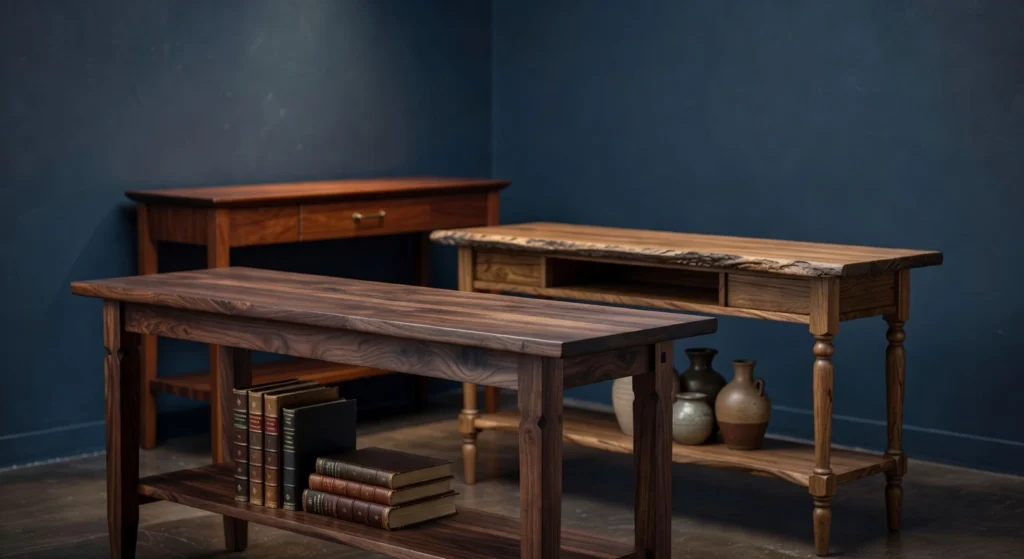

A well-chosen console table can completely transform the look and feel of a room, yet so many people overlook this incredibly versatile piece of furniture. Whether you are styling an entryway, filling an awkward hallway wall, or adding a decorative accent to your living room, the right console table makes all the difference.
Wood console tables, in particular, offer a warmth and character that few other materials can match. From rich mahogany to light-toned oak, the variety of wood options means there is truly something to suit every home and every budget. But with so many choices available, knowing where to start can feel overwhelming, especially if you are new to furniture shopping.
That is exactly why we put together this complete guide. You will learn everything you need to know about wood console tables, including the most popular wood types, key style considerations, sizing tips, and how to match a table to your existing decor. By the end, you will feel confident and informed, ready to find the perfect piece for your space.
What Is a Console Table?
A console table is a long, narrow, wall-hugging piece of furniture designed to sit flush against a wall rather than stand freely in the center of a room. Unlike a side table, which is compact and positioned beside seating for arm’s-reach convenience, or a dining table built for gathering, the console table earns its place through its slim profile and deliberate placement. According to comprehensive console table guides, these pieces typically measure 28 to 32 inches tall, 12 to 18 inches deep, and anywhere from 42 to 72 inches wide, making them ideal for tight transitional spaces without blocking foot traffic.
Three placement zones define how most homeowners use a console table. Entryways and foyers are the most classic choice, where the table becomes an instant drop zone for keys, mail, and bags while setting a welcoming tone for the entire home. Hallways are a close second, breaking up long, bare passages with visual interest and a surface for lamps or small displays. The third zone is directly behind a sofa, where a console table anchors a floating seating arrangement and adds lighting or decorative layers to an open-plan living area.
Beyond placement, the console table serves a dual purpose that makes it especially valuable in smaller homes. It functions simultaneously as a decorative display surface and a practical storage hub, accommodating curated vignettes of lamps, vases, and plants on top while drawers and lower shelves handle hidden storage for everyday clutter.
It is also worth distinguishing the console table from two close relatives. A sofa table is essentially a subcategory, designed specifically to sit behind a sofa and often proportioned to align with the sofa back height. A demilune table, by contrast, features a semi-circular top rather than a rectangular one, giving it a softer, more formal silhouette suited to decorative use in entryways or hallways. The standard rectangular console table remains the most versatile and widely used of the three.
Why Wood Dominates Console Table Design
Walk through the console table market and one pattern becomes immediately clear: wood wins. Whether you are browsing furniture showrooms or scrolling through interior design guides, solid wood and wood-finished pieces dominate the category for reasons that go well beyond simple aesthetics.
How Wood Stacks Up Against Other Materials
When you compare wood against metal, glass, and marble, the differences become practical very quickly. Metal delivers clean, industrial lines, but it reads as cold and rigid in most home settings, making rooms feel more like offices than lived-in spaces. Glass creates an open, airy look that works well in tight spaces, yet it lacks the organic presence that makes a room feel grounded and welcoming. Marble offers undeniable luxury and striking veining, but its visual weight and cool surface temperature can make a piece feel formal rather than inviting. Wood sits in a category of its own because it naturally balances warmth, visual softness, and adaptability across styles ranging from farmhouse to modern minimalist. According to a comprehensive console table material guide, wood’s tactile quality and tonal range allow it to integrate into a room rather than compete with it.
The Refinishing Advantage
Here is where wood pulls decisively ahead on long-term value. When a glass top chips or a marble surface cracks, replacement is typically the only realistic option. Wood behaves differently. Scratches, water rings, and surface wear can be addressed with sandpaper, fresh stain, and a protective topcoat, all without professional help and without removing the piece from your home. This refinishing potential means a quality wood console table can serve a household for decades, making the upfront cost far more justifiable than it might initially appear.
Every Piece Is One of a Kind
Natural grain variation means no two wood console tables are identical. Growth patterns, knots, mineral streaks, and color shifts are determined by how each individual tree grew, and those characteristics carry through into the finished furniture. This stands in direct contrast to laminate, synthetic veneer, or mass-produced alternatives, which replicate the same uniform pattern across thousands of units. For beginners building a home aesthetic, that built-in uniqueness removes the anxiety of buying something everyone else already owns.
Market Data Confirms the Direction
The numbers reflect what designers have known for years. The global console table market is valued at USD 5.44 billion in 2026 and is projected to reach USD 7.96 billion by 2033, growing at a CAGR of 5.6%. Natural material demand, including wood-focused consumer preferences, is identified as a primary growth driver within that expansion.
Wood and the 2026 Design Moment
The timing could not align more cleanly. The dominant 2026 interior trends, including warm minimalism and organic modern styling, are built around exactly what wood provides naturally. As noted in current 2026 interior trend analyses, designers are favoring visible grain, earthy neutrals, and biophilic textures over colder, more uniform surfaces. A wood console table is not just a furniture choice; it is a direct expression of the direction the entire design world is currently moving.
Best Wood Species for Console Tables
Choosing the right wood species sets the foundation for how your console table performs, looks, and ages over time. Each material brings distinct trade-offs between durability, appearance, price, and maintenance demands.
1. Oak
Oak is the go-to hardwood for console tables placed in high-traffic areas like entryways. Red oak registers a Janka hardness of approximately 1,290 lbf, while white oak comes in slightly harder at around 1,360 lbf. That density translates directly into excellent resistance against the daily scrapes, bag drops, and pet activity that entryway furniture endures. Oak’s bold, prominent grain patterns add visual character and help disguise minor surface wear between cleanings. White oak is particularly valued for its natural tyloses, which seal the wood’s pores and provide added moisture resistance. It sits comfortably in a mid-range price bracket, making it one of the best all-around choices for beginners. Learn more about how oak compares to other furniture species.
2. Walnut
American black walnut delivers rich chocolate-brown tones with subtle purple and gray undertones that no stain can fully replicate. Its fine, flowing grain makes it a natural fit for formal living spaces and warm minimalist aesthetics, which are among the strongest interior design trends heading into 2026. With a Janka rating near 1,010 lbf, walnut is durable enough for everyday use, though slightly softer than oak. The premium price point reflects its slower growth rate and limited supply, but for a statement console table where the wood itself is the design feature, walnut justifies the investment.
3. Pine
Pine is the budget-friendly entry point for console table builds. It is lightweight, widely available, and affordable, but its softness, typically ranging from 380 to 870 lbf depending on species, makes it vulnerable to dents and scratches. Its most significant challenge is uneven stain absorption due to inconsistent grain density, so proper surface prep including sanding and applying a pre-stain wood conditioner is essential before finishing. Pine performs best in farmhouse-style or fully painted builds where a protective topcoat compensates for its softness.
4. Teak
Teak’s natural oil content gives it an inherent moisture resistance that no other common furniture wood matches without additional finishing. With a Janka hardness between 1,000 and 1,155 lbf, it handles humidity fluctuations, occasional spills, and entryway conditions exceptionally well. The trade-off is a higher purchase price and added weight. For homeowners dealing with humid climates or a particularly moisture-prone entryway, teak’s low long-term maintenance demands make the upfront cost worthwhile.
5. Reclaimed Wood
Reclaimed wood sourced from salvaged barns, factories, or old structures brings unique character marks, including nail holes, weathering, and natural patina, that no new-cut lumber can replicate. It aligns strongly with 2026’s push toward sustainable console table designs and organic textures. Before using reclaimed wood for furniture, always inspect boards carefully for structural damage, hidden pests, or rot. Proper cleaning, thorough drying, and sealing with a protective finish like polyurethane are non-negotiable preparation steps.
6. MDF and Engineered Wood
MDF and engineered wood products offer budget accessibility and excellent dimensional stability, meaning they resist warping in consistent indoor conditions. They work well for painted console tables with clean, modern lines. However, they come with real limitations: once the surface is damaged, refinishing is not a practical option the way it is with solid wood. More critically, exposed edges and joints absorb moisture rapidly, leading to swelling and surface degradation. Sealing all edges thoroughly during construction or purchase helps extend the lifespan of engineered wood consoles considerably.
Console Table Styles and Base Types Explained
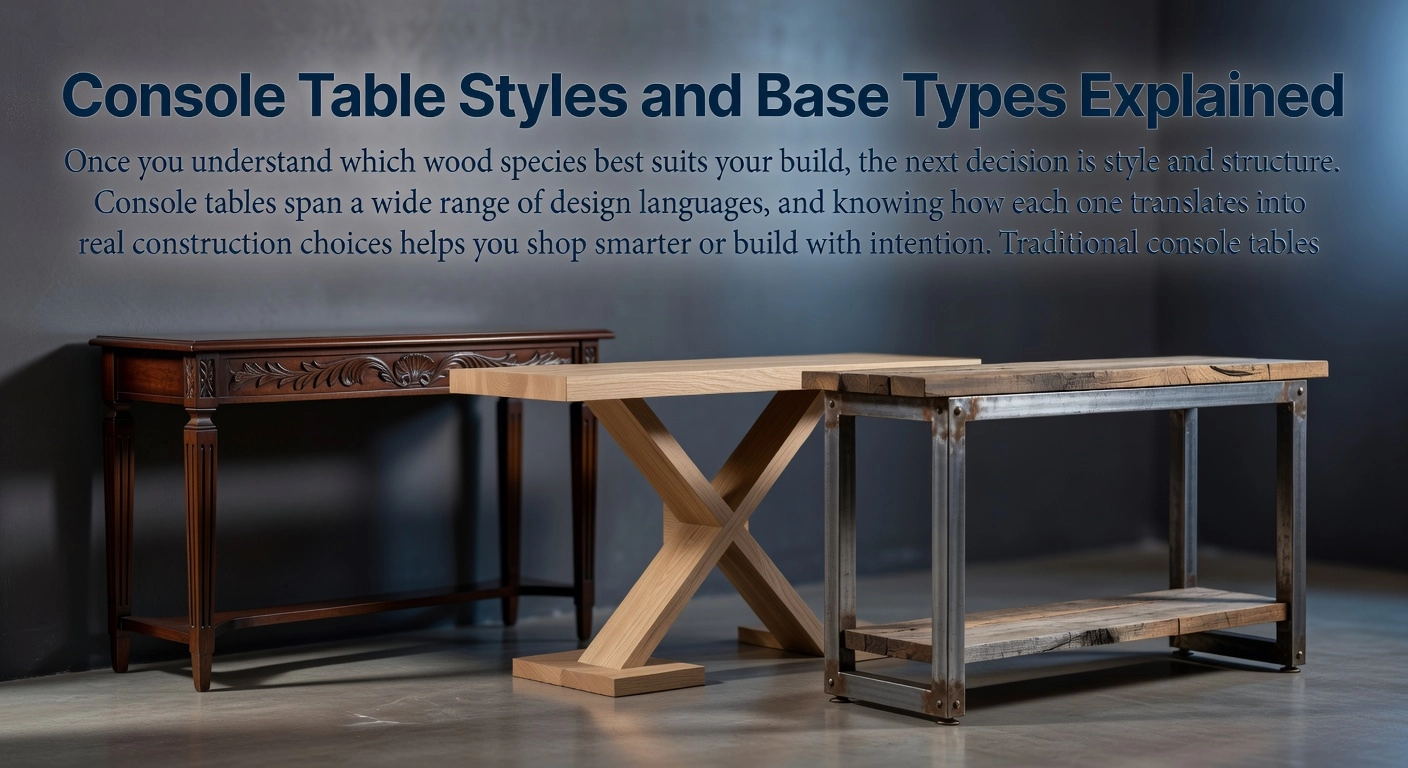
Once you understand which wood species best suits your build, the next decision is style and structure. Console tables span a wide range of design languages, and knowing how each one translates into real construction choices helps you shop smarter or build with intention.
1. Traditional Style
Traditional console tables lean on carved ornamental details, rich dark stains such as mahogany or deep-toned oak, and refined leg profiles. Cabriole legs, with their distinctive S-shaped curve, and tapered legs are the most common profiles in this category. These pieces suit formal entryways where the goal is to make a polished, symmetrical first impression. Drawers are often included, adding practical storage without sacrificing elegance.
2. Farmhouse and Rustic Style
Farmhouse designs prioritize chunky proportions, distressed finishes, and whitewashed or natural wood tones. Pine and reclaimed lumber are the go-to materials here, delivering that handcrafted, imperfect quality that makes rustic furniture feel lived-in and warm. X-leg and trestle bases define this category structurally, creating visual weight that matches the thick tabletops typically used.
3. Modern Minimalist Style
Clean lines, thin legs, and restrained ornamentation define the modern minimalist console table. Light oak and natural walnut finishes align directly with the 2026 warm minimalism trend, which favors organic textures over stark, cold surfaces. This style works well in contemporary hallways and open-plan living spaces where visual clutter competes with the room’s overall calm.
4. Industrial Style
Industrial console tables combine steel or metal frames with wood tops, often reclaimed or raw-edge slabs that emphasize contrast. Pipe legs and exposed hardware reinforce the rugged, loft-inspired aesthetic. This style suits modern apartments and eclectic interiors where durability and material honesty matter as much as appearance.
5. Floating and Wall-Mounted Style
Bracket-supported, shelf-style console tables mount directly to the wall with no floor contact. They are gaining serious traction in small apartments and rentals because they create a minimal visual footprint and make floor cleaning easier. According to Wayfair’s console table guide, floating designs deliver strong style impact in tight spaces where traditional legs would feel crowded.
6. Base Type Overview
Your base choice shapes stability, aesthetics, and build complexity. Here is a quick reference:
- 4-leg: The most stable option and the easiest for DIY builds; suits nearly every style
- X-cross leg: Decorative and visually dynamic, but requires more precise joinery at the intersection point
- Pedestal: A central column or paired columns create a formal, elegant silhouette suited to traditional settings
- Sled base: Continuous runners or U-shaped supports deliver a grounded, modern look with good floor contact
- Floating bracket: Wall-anchored with no legs; ideal for renters and minimalist interiors prioritizing open floor space
Understanding these categories gives you a clear framework before committing to a purchase or a build plan.
2026 Console Table Design Trends Worth Knowing
The console table market is evolving rapidly, and staying ahead of these shifts helps you make smarter buying, building, or styling decisions. Here are the six dominant trends shaping console tables in 2026.
1. Warm Minimalism Less is genuinely more in 2026. Rather than crowding a console surface with layered accessories, designers are pulling back to fewer, higher-quality objects and letting rich wood grain carry the visual weight. A single ceramic vessel, a low-profile lamp, and one natural element like a branch or stone tray create a curated look without clutter. This warm minimalism approach favors cream tones, natural textures, and layered lighting over cold, stark arrangements.
2. Raw and Live-Edge Wood Textures Perfectly uniform manufactured edges are giving way to organic profiles featuring visible knots, natural bark inclusions, and irregular live-edge slabs. These characterful surfaces bring genuine uniqueness since no two pieces are identical. Walnut and dark-toned slabs with matte finishes are particularly prominent, reflecting what designers are calling a bold minimalism rooted in live-edge design trends for 2026.
3. Sustainable and Reclaimed Wood Sourcing Eco-conscious buyers and DIYers are increasingly prioritizing salvaged lumber, reclaimed wood, and FSC-certified stock. The appeal is both ethical and aesthetic; reclaimed wood carries visible grain variation and history that new manufactured boards simply cannot replicate. Sustainability in 2026 also emphasizes traceability, meaning buyers want to know the story behind the specific wood they choose.
4. Storage-Integrated Designs Compact urban living is pushing console table design toward genuine functionality. Drawers, lower shelves, open compartments, and styled baskets now appear regularly in console designs, addressing everyday storage needs for keys, mail, and accessories. A narrow console with two drawers and a lower shelf can replace an entire entryway cabinet in smaller apartments.
5. Floating Wall-Mounted Designs Wall-mounted consoles with no visible legs are gaining traction among renters and small-space dwellers. These pieces maximize floor space, simplify cleaning underneath, and create a modern floating effect. Engineered wood and metal-framed floating consoles suit minimalist and industrial interiors especially well.
6. Multi-Material Combinations Wood tops paired with blackened steel frames, woven rattan shelf inserts, or stone accents reflect a layered natural aesthetic gaining widespread appeal. Mango wood with steel legs, oak tops over rattan shelving, and fluted wood combined with mixed metal finishes all deliver depth and contrast that single-material pieces cannot achieve.
How to Choose the Right Console Table Size
Getting the size right is the single most important decision you will make when selecting or building a console table. A beautiful piece of hardwood means nothing if it blocks a hallway or looks swallowed by an oversized wall. Use these six sizing rules to get it right the first time.
1. Match height to your space and sofa
For entryway use, target a table height of 30 inches, which aligns with standard counter height and makes lamps, keys, and decor easy to reach. When placing a console behind a sofa, aim for a surface sitting 2 to 4 inches below the sofa arm height. This creates a layered, proportional look without the table competing visually with your seating. Measure your sofa arm before shopping or cutting lumber.
2. Protect hallway traffic flow
In any hallway or passage, leave at least 36 inches of clear walking space between the front edge of the table and the opposite wall. This is the minimum safety standard for comfortable movement. For high-traffic entryways, 42 inches is more comfortable, especially if multiple people pass through simultaneously.
3. Scale width to the wall
A console table should cover no more than two-thirds of the wall it sits against. On an 8-foot wall, that limits you to roughly 64 inches of table length. Exceeding this threshold makes the space feel compressed and visually heavy. Per standard console table dimensions guidance, widths between 36 and 60 inches cover the vast majority of residential applications.
4. Size a sofa table precisely
Behind a sofa, match your table length to within 6 inches of the sofa length. A 90-inch sofa pairs well with a console in the 60 to 84-inch range. Keep depth under 15 inches to avoid pushing the sofa forward or blocking foot traffic behind the seating area.
5. Think about what sits on top
Depth directly affects what you can display. A table lamp needs at least 12 inches of depth to sit stably without overhanging the edge. Styled decor groupings, including trays, vases, and stacked books, benefit from 14 to 18 inches of depth. According to the console table placement guide from Loomlan, most entryway and living room placements work best with depths in the 12 to 18-inch range.
6. Measure before you buy or build
Before ordering or starting a build, measure every doorway, stair landing, and hallway the table must pass through. A 60-inch console can get stuck at a 58-inch doorframe. Write down the narrowest point in the delivery path and confirm your table dimensions clear it with room to spare. This step costs you five minutes and can save you hours of frustration.
DIY Console Table Builds: Where to Start
Building your own console table is one of the smartest moves a beginner woodworker can make. Retail console tables typically range from $300 to $600 or more, while a DIY version built from basic lumber often costs between $35 and $140 in materials. That gap means you get a fully custom piece at a fraction of the price, with complete control over wood species, dimensions, and finish from the start.
1. Start with 4-Leg Construction and Pocket Hole Joinery
The most beginner-friendly build method is a simple 4-leg frame joined with pocket holes. A pocket hole jig, such as the Kreg 720, drills angled holes into the back faces of your workpieces so screws pull joints tight without any visible hardware on the finished surface. No mortise-and-tenon work, no complex measuring, no specialized skills required. The result is a structurally solid table that looks professionally made. Practice a few test joints on scrap wood first, and you will be ready to build with confidence.
2. Use Construction-Grade Lumber to Keep Costs Low
For your base structure, construction-grade 2x4s are your best starting point. They are inexpensive, available at every home center, and easy to cut and sand. For the tabletop, use a glued-up panel of 1x boards or a single solid pine board. Pine accepts stain and paint well, making it ideal for beginners who want to experiment with finish options. A complete build using these materials typically stays well under $100.
3. Upgrade to an X-Leg or Trestle Base
Once you are comfortable with the basics, an X-leg console table plan using 2×6 stock adds visual depth and a farmhouse-modern character without demanding advanced tools. A miter saw for angled cuts and a drill are all you need beyond your pocket hole jig.
4. Build for the Finish First
This is the decision most beginners overlook. Wood species selection and surface preparation determine roughly 80 percent of your final visual result. Choose clear pine if you want smooth, even stain absorption. Select knotty pine for a rustic character. Sand through a full grit progression, starting at 80 and finishing at 220, before applying any finish. Place pocket holes on hidden faces or fill them with wood plugs if they will be visible. The full build process shown here demonstrates how finish prep transforms basic lumber into a polished piece.
5. Your Minimum Tool List
You do not need a fully equipped shop to get started. The essential tools for a beginner console table build are a circular saw or miter saw, a drill and driver, a pocket hole jig, at least two clamps for glue-ups, and a random-orbit sander. Add wood glue and a measuring tape, and you have everything required to complete a sturdy, good-looking table in a single weekend.
Finishing Your Wood Console Table the Right Way
Your finish choice will make or break a console table that lives in an entryway. Unlike a bookshelf tucked in a living room corner, an entryway console table faces daily punishment: keys dropped on its surface, bags dragged across its edges, humidity swings every time the front door opens, and direct UV exposure from sidelights or nearby windows. These conditions demand a finish built for real-world abuse, not just aesthetics.
1. Oil-Based Polyurethane
For high-traffic entryway placement, oil-based polyurethane is the most durable finish available to a DIY builder. It cures into a hard, protective film with excellent resistance to scratches, abrasion, and moisture. The amber tones it naturally imparts actually work in your favor on lighter woods like oak or pine, warming up the grain and adding visual richness. The trade-off is ventilation; oil-based poly releases strong solvent fumes, so work in a well-ventilated space or outdoors. Recoat time runs 8 to 12 hours between coats, and cleanup requires mineral spirits.
2. Water-Based Polyurethane
Water-based polyurethane is the better choice when you want to preserve the wood’s natural, unaltered tone. It dries crystal clear without ambering, making it ideal for walnut or naturally dark species where warmth is already built into the wood. Dry time drops to roughly one hour per coat, and cleanup is simple soap and water. The downside is slightly reduced scratch resistance compared to oil-based versions, so expect to apply four to eight coats for comparable protection.
3. Hardwax Oil
Hardwax oils, including products from Rubio Monocoat and Osmo, penetrate the wood fiber rather than sitting on top of it. The result is a tactile, natural finish that showcases raw grain beautifully. The standout advantage for console tables is spot repairability; you can reapply oil to a worn section without sanding down the entire surface and starting over. This makes hardwax oil particularly appealing for natural and Scandinavian-inspired builds.
4. Wax
Paste wax delivers a soft, low-sheen glow that genuinely flatters wood, and it applies easily with a cloth. However, wax offers limited moisture resistance and breaks down faster under the humidity fluctuations typical of entryways. Plan on reapplying every few months, and consider it a topcoat complement to another sealer rather than a standalone protective finish for a console table.
5. Surface Prep Sequence
No finish performs well on a poorly prepared surface. Sand your console table to 150 grit first, working consistently with the grain. Then wipe the surface with a lightly damp cloth to raise the grain fibers. Once dry, sand again to 220 grit for a smooth base. If you built with pine or another softwood, apply a pre-stain wood conditioner before any staining step; this prevents the blotchy, uneven absorption that is extremely common on porous softwoods. Remove all sanding dust with a tack cloth before laying down your first finish coat.
How to Style a Console Table for Maximum Impact
Once your console table is finished and in place, how you dress the surface determines whether the piece looks intentional or accidental. These six principles give beginners a reliable framework for styling with confidence.
1. Apply the Rule of Three Group objects in odd numbers, typically threes, at varying heights to create visual rhythm. Place one tall element such as a sculptural vase or lamp, one medium piece like a stack of books or a framed photo, and one low item like a small bowl or tray. This height variation forms a natural triangle that guides the eye across the surface without creating clutter or a flat, uniform lineup.
2. Layer Your Lighting A table lamp does double duty by adding both warm ambient glow and vertical height to your arrangement. Pair it with a mirror hung four to eight inches above the tabletop, sized to roughly fifty to seventy-five percent of the console’s width. In narrow hallways especially, a well-placed mirror bounces light and creates a sense of depth that makes the space feel noticeably larger.
3. Include at Least One Functional Element Entryways need to work in real life, not just look good in photos. Add a tray for keys, a small dish for loose change, or a woven basket for mail alongside your decorative objects. This designated drop zone keeps surfaces tidy and prevents daily chaos from undoing your styled arrangement.
4. Embrace 2026 Warm Minimalism Limit your surface to three to five objects maximum and let the wood grain itself act as a design feature. Leave negative space visible so the natural figure of oak, walnut, or reclaimed wood reads as a deliberate element rather than a backdrop. Pair with organic companions like a rattan tray or a stone accent to reinforce the warm, textural quality without overcrowding.
5. Rotate Seasonally Keep a stable core of items, your lamp, tray, and mirror, and swap just two or three accent pieces each season. Fresh botanicals in spring, dried grasses in autumn, and metallic accents in winter refresh the look without requiring new furniture or a complete restyle.
6. Ground the Arrangement with a Runner A table runner or mat anchors the vignette visually while protecting your wood finish from scratches caused by keys, vases, and daily contact. Choose a woven or textured option that echoes colors already present in the room to create continuity between the console and its surroundings.
Protecting Your Console Table from Daily Wear
A beautiful finish means nothing if daily habits slowly destroy it. These six protective measures work together to keep your wood console table looking sharp for years, even in a high-traffic entryway.
1. Place Felt Pads Under Every Decorative Object
Stick self-adhesive felt pads to the base of every lamp, vase, bowl, and decorative object sitting on your console table. Each time you shift a lamp to dust or move a vase to make room, the unpadded base drags microscopic grit across the finish. Those micro-scratches are invisible at first, but over six to twelve months they accumulate into a dull, hazy surface that no amount of polishing fully reverses. Felt pads cost almost nothing and take minutes to apply, making this the highest-return protective habit available to any console table owner.
2. Create a Designated Key Drop Zone
Keys, coins, and pocket hardware are finish killers. A decorative tray or shallow bowl placed on one end of the console table creates a landing zone that intercepts metal-on-wood contact before damage occurs. This single habit also keeps your entryway organized, which reinforces the styled look covered in the previous section.
3. Manage Humidity Year-Round
Wood is hygroscopic, meaning it absorbs and releases moisture as indoor humidity fluctuates. Entryways are especially vulnerable because doors open repeatedly throughout the day, pulling in outdoor air. Target 40 to 60 percent relative humidity year-round using a hygrometer to monitor levels. Run a humidifier in dry winter months and air conditioning or a dehumidifier during humid summers. Keeping humidity stable prevents expansion, contraction, cracking, and joint loosening.
4. Block UV Exposure
Sunlight streaming through an entryway window fades wood color and breaks down protective finish coatings faster than almost any other environmental factor. Apply UV-filtering window film to nearby glass, or reposition the table seasonally to keep it out of direct sun paths. Even sheer curtains provide meaningful protection during peak daylight hours.
5. Keep Moisture Sources Off the Surface
Damp umbrellas, wet bags, and potted plants without waterproof saucers introduce standing moisture that penetrates finishes and raises wood grain. Make it a rule that nothing wet touches the surface directly. Use waterproof saucers under every plant and a dedicated umbrella stand near the door instead.
6. Condition the Surface Every 6 to 12 Months
Apply a paste wax or furniture conditioner to finished surfaces once or twice per year. This refreshes the protective film, fills in minor surface scratches, and restores a subtle sheen. Always dust with a soft microfiber cloth first to remove abrasive particles before applying any conditioner.
Fixing Common Console Table Wood Damage
Even well-maintained console tables eventually show signs of wear. Knowing how to address specific damage types saves you the cost and effort of a full refinish or replacement. Here are six common problems and exactly how to fix them.
1. Water Rings
White rings on your console table surface indicate moisture trapped inside the finish layer, not in the wood itself. This is good news because it means the repair is straightforward. Apply a small amount of full-fat mayonnaise or petroleum jelly directly onto the ring, work it gently into the surface with a soft cloth, and leave it overnight. The oils penetrate the finish and displace the trapped moisture. Wipe away the residue the next morning and buff with a clean dry cloth. White rings typically disappear completely with one or two treatments.
Dark rings tell a different story. That discoloration means moisture reached the wood itself, staining the fibers beneath the finish. Fixing dark rings requires lightly sanding the affected area, starting with 220-grit sandpaper, then refinishing to match the surrounding surface. Catch these early because larger dark stains may eventually require stripping the entire top.
2. Surface Scratches in Polyurethane
For light scratches that have not cut through to bare wood, a hardwax fill stick matched to your wood tone is the fastest solution. Press or rub the stick firmly into the scratch until the groove is filled, then buff smooth with a soft cloth. The wax integrates with the existing finish and requires no sanding or stripping. Keep a matching stick on hand because these repairs take under five minutes.
3. Worn Finish Patches
High-traffic zones like tabletop edges and the center surface wear through before the rest of the finish fails. Lightly scuff sand the worn patch with 320-grit sandpaper to create adhesion, clean away dust thoroughly, then brush on a fresh coat of matching finish. Addressing worn patches early prevents the wood beneath from absorbing moisture and dirt, which would force a complete strip and refinish later.
4. Loose Joints
Loose mortise-and-tenon or pocket-hole joints weaken the entire frame over time. Disassemble the joint carefully, scrape all old glue residue from both mating surfaces, apply fresh wood glue evenly, reassemble, and clamp securely. Allow a full 24-hour cure before putting any weight or stress on the piece. Rushing the cure time is the most common reason this repair fails a second time.
5. Veneer Damage on MDF-Core Tables
Delaminated veneer on MDF-core console tables can be reglued using contact cement applied to both surfaces, then clamped flat with weights until fully cured. However, if the MDF core itself has absorbed water and begun to swell or crumble, the damage is typically unrepairable. MDF loses structural integrity once its core is saturated, and no surface treatment will restore it. Recognize this limitation before investing time in a veneer repair over a compromised substrate.
6. Deep Gouges in Solid Wood
Clean the damaged area, then pack it with a two-part epoxy wood filler tinted to closely match your wood tone. Allow the filler to cure fully per the product instructions, then level it flush using progressively finer sandpaper, finishing with 220-grit. Spot-apply a matching finish over the repaired area to blend the sheen. Epoxy fillers are harder and more durable than standard wood putty, making them the right choice for deep structural gouges rather than cosmetic surface marks.
A Seasonal Wood Care Calendar for Console Tables

Protecting your console table is not a one-time effort. Wood responds to every shift in season, and a simple calendar approach keeps small problems from becoming expensive repairs.
1. Spring: Inspect, Clean, and Assess
As temperatures rise and humidity begins climbing, spend a few minutes checking every joint on your console table for gaps or looseness caused by winter contraction. Run your hand along the apron-to-leg connections and gently test each leg for wobble. Clean the entire surface with a diluted wood-safe cleaner applied to a microfiber cloth, never poured directly onto the wood. Finally, examine the finish under good light for worn patches or dull zones, particularly along the front edge and center, before summer moisture has a chance to penetrate compromised areas.
2. Summer: Monitor Humidity and Protect the Surface
Indoor humidity rises significantly in summer, which causes wood fibers to expand and can stress joints over time. A basic hygrometer confirms whether your entryway stays within the ideal 40 to 60 percent relative humidity range. Check that felt pads remain firmly attached under every lamp base, decorative object, and bowl sitting on the table. Bare felt pads deteriorate and fall off without notice, leaving hard surfaces dragging directly across your finish. Keep coasters within reach and avoid setting cold glasses on the wood, as condensation leaves white rings that require sanding to remove.
3. Fall: Condition Before the Heat Comes On
Fall is the single most important conditioning window of the year. Forced-air heating systems drop indoor humidity rapidly once they activate, pulling moisture directly from wood fibers and leaving surfaces brittle and prone to cracking. Apply a quality furniture oil or paste wax before you turn the heat on for the first time. Paste wax adds a protective layer over film finishes; penetrating oils nourish bare or oil-finished wood from within. Apply sparingly, allow proper dwell time, and buff thoroughly.
4. Winter: Control Humidity to Prevent Cracking
If your indoor relative humidity drops below 35 percent during winter, wood contraction accelerates enough to open joints and create visible cracks along the grain. Position a humidifier in or near the entryway and monitor readings consistently. Keep the console table away from heating vents and radiators, as direct heat exposure compounds the drying effect dramatically.
5. Annual Task and Finish Documentation
Once per year, inspect high-traffic zones for finish wear and address them with light fine-grit sanding followed by a fresh compatible coat before bare wood becomes exposed. Catching wear early eliminates the need for a full strip and refinish, which is far more labor-intensive. Equally important, record the exact finish product used during your original build or purchase, including brand, sheen level, and application method. Touch-up coats applied without this information frequently mismatch in sheen or adhesion, making repairs more visible than the original wear.
Reclaimed and Eco-Friendly Console Table Wood
Reclaimed wood brings something to a console table that no amount of skilled craftsmanship with fresh lumber can reproduce. The patina built over decades, the nail holes left by long-removed hardware, the weathering from sun and rain, and the saw marks from century-old mills all combine to create a surface with genuine depth and history. Every board tells a story that factory-new material simply cannot fake. This makes reclaimed wood one of the most visually compelling choices available to DIY builders, and its popularity is only growing as 2026 design trends continue pushing toward natural textures, organic warmth, and authentic materials.
Finding Your Reclaimed Stock
Sourcing is the first practical hurdle. Architectural salvage yards are the most reliable starting point because they specialize in deconstructed building materials like beams, flooring, and barn siding. Deconstruction companies selectively dismantle structures to preserve usable material and often sell directly or through affiliated yards. Craigslist and Facebook Marketplace regularly feature barn wood listings from local sellers, though you should inspect in person before committing. Certified reclaimed lumber dealers offer the most peace of mind since their stock typically arrives kiln-dried, inspected, and traceable by species and origin.
Preparing Reclaimed Wood Safely
Before any milling begins, run a handheld metal detector across every board. Hidden nails, staples, and wire are common in barn wood and will destroy planer blades without warning. After clearing all metal, verify that moisture content sits between 6 and 9 percent for indoor furniture use. Kiln drying achieves this reliably; air drying works but requires months of patient stickered storage.
Inspection and Finishing
Examine every board for rot, insect galleries, and excessive surface checking before assigning it to a visible tabletop. Soft or discolored spots, small holes with fine dust nearby, and deep cracks running along the grain are all disqualifying signs for a primary surface. Reserve compromised pieces for structural components where they will not be seen.
For finishing, penetrating oil outperforms film-forming polyurethane on reclaimed material. Oil soaks into the grain and enhances the existing patina rather than sealing it behind a plastic-looking film. The result is richer color, better texture visibility, and a finish that ages gracefully alongside the wood.
The Sustainability Case
Choosing reclaimed wood for your console table also diverts usable material from landfill and eliminates demand for virgin timber harvest. The reclaimed lumber market was valued at approximately USD 63.61 billion in 2025, reflecting how strongly eco-conscious consumers are embracing circular material choices. For a builder who wants both beauty and a smaller environmental footprint, reclaimed wood remains the most satisfying option available.
Frequently Asked Questions About Console Tables
What is the standard height of a console table?
Most console tables measure between 28 and 32 inches tall, with 30 inches being the most common standard. This range aligns naturally with typical sofa arm heights and makes entryway surfaces comfortable to access while standing. If you are positioning a console behind a sofa, aim for a height that sits at or just below the sofa back for a cohesive look.
Can a console table be used as a TV stand?
Yes, with conditions. The table must have adequate depth and a weight capacity that safely supports your television. Standard console tables are typically 12 to 16 inches deep, while dedicated media consoles run 16 to 20 inches to accommodate equipment and cables. Always verify the manufacturer’s weight rating before placing any electronics on the surface.
What is the difference between a console table and a sofa table?
The two terms are nearly interchangeable, but sofa tables are specifically sized to sit directly behind a sofa. They tend to run longer and occasionally sit slightly lower to align with the sofa back height. A console table is the broader category; a sofa table is simply a console with a specific placement purpose.
Is solid wood or MDF better?
Solid wood wins for long-term value. It can be sanded, refinished, and repaired repeatedly over its lifespan. MDF costs less upfront but chips easily at edges, swells with moisture, and cannot be fully restored once damaged. For a piece that handles daily contact in an entryway, solid wood is the smarter investment.
How do you anchor a console table to prevent tipping?
Wall-mounted consoles require heavy-duty anchors or brackets rated for the table’s full weight, ideally secured into wall studs rather than drywall alone. For freestanding models, anti-tip furniture straps connecting the table to a wall stud provide reliable protection. This step is especially important in homes with young children or pets.
Choosing, Building, and Caring for Your Wood Console Table
Wood console tables reward ownership in ways no other material can match. Solid wood can be sanded, refinished, and repaired repeatedly, meaning a single well-built piece can outlast multiple generations of laminate or metal alternatives that degrade without any recovery path.
The decision framework comes down to two choices. First, match your wood species to traffic level and aesthetic goal: oak or walnut for high-traffic entryways that need durability, pine for low-traffic spots or tight budgets. Second, match your finish to entryway exposure intensity, choosing polyurethane or oil-based options for doors that face moisture and heavy contact.
If budget is the priority, start with pocket hole joinery and pine. It requires minimal tools, builds quickly, and teaches foundational skills. Upgrade to hardwood species as your confidence grows.
Consistent seasonal maintenance prevents roughly 90 percent of the damage scenarios that lead to costly repairs or full refinishing. Routine dusting, humidity control, and periodic conditioning stop problems before they start.
For deeper guidance, WoodStuffHQ guides on water stain removal, scratch repair, and wood finishing provide step-by-step instruction built specifically for home woodworkers. A properly chosen, well-finished, and consistently maintained wood console table does not simply survive daily life; it improves with it.
Conclusion
Choosing the right wood console table does not have to feel complicated. With the right knowledge in hand, the process becomes genuinely enjoyable. To recap the essentials: wood type sets the tone for warmth and durability, style should complement your existing decor rather than compete with it, and sizing matters more than most people realize. Getting these three elements right means finding a piece that feels intentional and cohesive.
Now it is time to put that knowledge to work. Browse your favorite furniture retailers with fresh eyes, take measurements before you shop, and trust your instincts when a piece speaks to you. A well-chosen wood console table is more than just furniture; it is a statement about how you live and what you love. Your perfect table is out there waiting. Go find it.