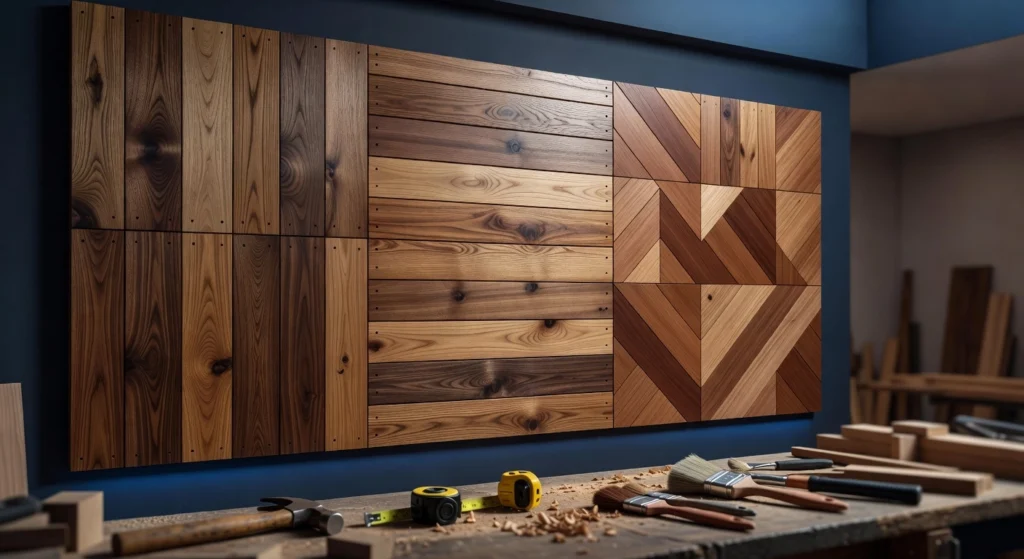

There is a reason why interior designers and home renovation enthusiasts keep coming back to wood wall paneling. It transforms ordinary rooms into warm, character-filled spaces with a timeless appeal that few other materials can match. Whether you are refreshing a living room, creating a cozy bedroom accent wall, or adding architectural interest to a basement, wood wall paneling delivers stunning results that stand the test of time.
But here is the truth: many beginners feel intimidated before they even get started. With so many panel types, installation methods, and finishing options available, it is easy to feel overwhelmed. The good news is that this guide breaks everything down into clear, manageable steps that anyone can follow.
In this post, you will discover the most popular types of wood wall paneling, learn how to approach installation with confidence, and find out which finishing techniques will protect your work and elevate the final look. By the time you finish reading, you will have a solid foundation to tackle your first paneling project from start to finish.
6 Types of Wood Wall Paneling and When to Use Each
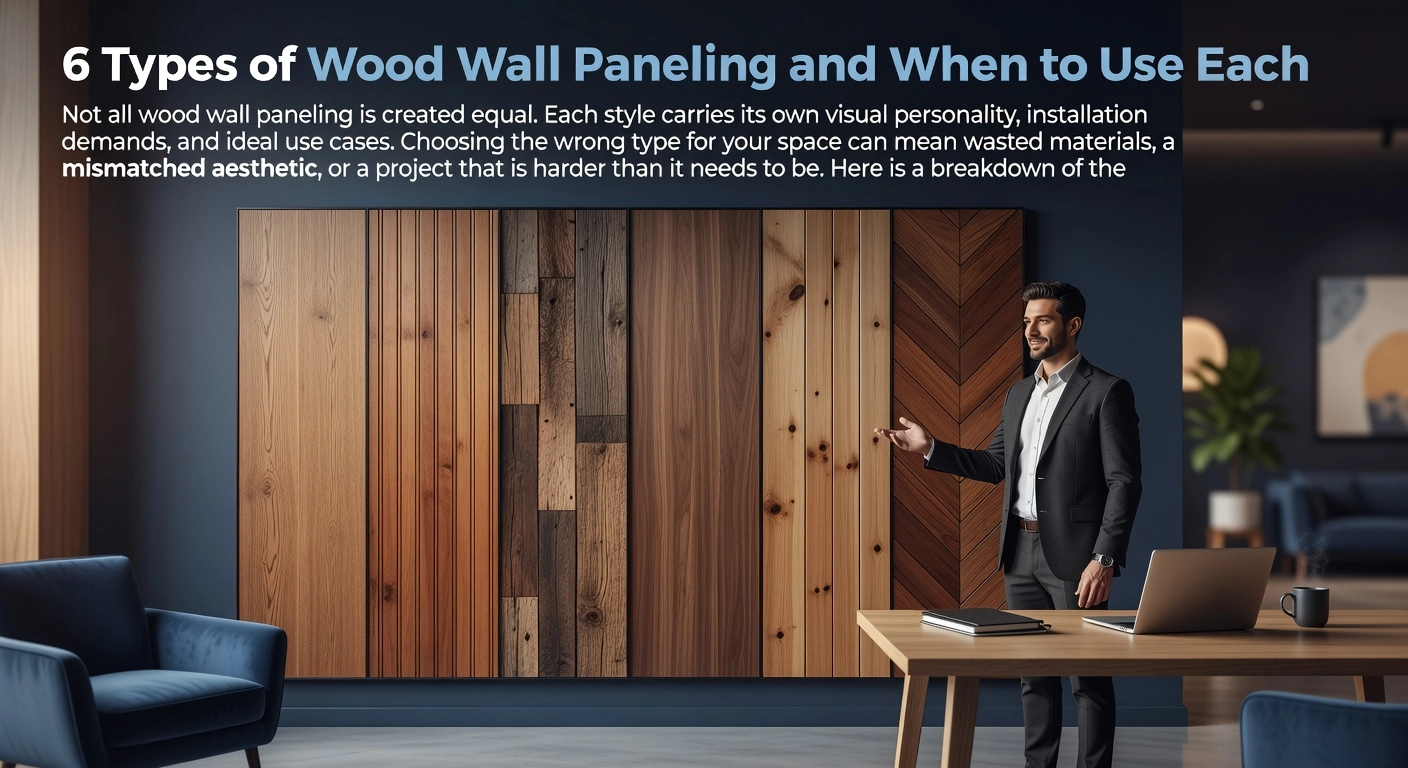
Not all wood wall paneling is created equal. Each style carries its own visual personality, installation demands, and ideal use cases. Choosing the wrong type for your space can mean wasted materials, a mismatched aesthetic, or a project that is harder than it needs to be. Here is a breakdown of the six most common types, what makes each one distinct, and exactly where each one performs best.
1. Beadboard
Beadboard is one of the most recognizable forms of wood wall paneling, defined by its narrow vertical planks featuring evenly spaced rounded grooves called beads. These grooves typically run every inch or two, creating a rhythmic, textured surface that reads as classic, charming, and cottage-inspired. The style has a long history in American homes, particularly in kitchens, bathrooms, and dining rooms where it brings warmth without visual weight.
For beginners, beadboard is approachable because it comes in two formats: individual tongue-and-groove planks (usually 3 to 4 inches wide) and 4×8 sheet panels that mimic the look of individual boards. The sheet version installs faster and requires fewer cuts, making it a practical starting point for a first paneling project. Beadboard works especially well as wainscoting, covering the lower third to half of a wall and capping it with a chair rail. This application adds wall protection in high-traffic areas while delivering a polished, finished appearance. For best durability, paint it with a satin or semi-gloss finish that resists moisture and scuffs.
2. Shiplap
Shiplap has become one of the most searched terms in DIY home improvement for good reason. It consists of planks with rabbeted (overlapping) edges installed horizontally, leaving a narrow reveal gap between each board that casts a subtle shadow line. That gap is what gives shiplap its signature layered, dimensional look without adding bulk to a room.
Originally designed as exterior siding and even used in shipbuilding, modern interior shiplap prioritizes aesthetics over weatherproofing. The farmhouse and coastal aesthetics it delivers have remained popular, and according to Family Handyman’s guide to types of wood wall paneling, shiplap is among the most beginner-friendly options because it is forgiving of minor wall imperfections. The overlapping edges and shadow lines disguise small gaps and uneven surfaces that would otherwise show through. Paint it bright white for a clean coastal look, or leave it in natural pine tones for a warmer farmhouse feel. It works on accent walls, full rooms, and even ceilings.
3. Board and Batten
Board and batten is a style that creates maximum visual impact with a relatively simple concept. Wide vertical boards are installed directly onto the wall, and narrower strips called battens are nailed over the seams and sometimes in between for added pattern. The result is a bold, structured surface with strong vertical lines that draw the eye upward and make ceiling heights feel more generous than they actually are.
This type of paneling is popular in entryways, living rooms, and bedrooms where an architectural statement is the goal. It suits both traditional and contemporary interiors depending on the proportions and finish used. Battens are typically 1 to 2 inches wide and spaced anywhere from 6 to 12 inches apart. One practical advantage is that board and batten is excellent at concealing existing wall damage or imperfections beneath the boards. However, this style requires more precise measuring and cutting than shiplap or beadboard, so beginners should plan carefully and dry-fit pieces before committing to fasteners.
4. Tongue and Groove
Tongue and groove planks interlock using a protruding tongue on one edge that slots into a corresponding groove on the adjacent board. This creates a tight, seamless surface with minimal visible gapping, producing a clean and polished result that looks more custom than it is.
One major advantage of tongue and groove is its versatility in placement. According to The Spruce’s comparison of wainscoting and beadboard paneling, interlocking panel systems offer a more refined finished look than surface-nailed alternatives. Tongue and groove is particularly well suited to ceilings, where a seamless fit matters most, and to moisture-adjacent areas like bathrooms and mudrooms when properly sealed with a waterproof finish or paint. Installing it horizontally visually widens a room, while vertical installation emphasizes ceiling height. The precise fit does make installation slightly slower than shiplap, but the result is a tighter, more professional surface.
5. Raised and Flat Panel Wainscoting
Raised and flat panel wainscoting represents the most formal and architecturally detailed option on this list. Both styles use a framework of horizontal rails and vertical stiles to create framed rectangular panels on the lower portion of a wall. Raised panel versions feature a beveled or profiled center field that projects outward, casting shadows and adding depth. Flat panel versions use a recessed or flush center field for a cleaner, more contemporary look.
These styles are most at home in formal dining rooms, libraries, home offices, and entry halls where a refined, high-end appearance is the priority. As Casa Metier’s guide to wood panel types notes, this style typically demands more precise carpentry skills than simpler options. Pre-made MDF kits have made it more accessible, but solid wood builds remain the premium choice. Beginners with some experience can tackle flat panel wainscoting using kits, while raised panel builds are better approached once foundational skills are solid.
6. Acoustic Slat Panels
Acoustic slat panels are the dominant trend in modern interior design heading into 2026 and represent a meaningful evolution in what wood wall paneling can do. These panels consist of narrow vertical wood slats, typically in oak, walnut, or ash, mounted over a felt or foam acoustic backing. The slats scatter sound waves while the backing absorbs them, with some products rated at up to 85% sound absorption. That combination makes them a functional choice for media rooms, open-plan living areas, home offices, and any space where echo or noise is a concern.
Beyond acoustics, their visual appeal is undeniable. The linear, rhythmic pattern of vertical slats creates texture and warmth while fitting naturally into minimalist, Japandi, and biophilic interiors. These panels align with the 2026 design movement toward organic materials, wellness-focused spaces, and multifunctional surfaces. Many versions come pre-fabricated with peel-and-stick or screw-mount installation, making them one of the more accessible options despite their high-design appearance. They work equally well as full accent walls, headboards, and room dividers.
Each of these six styles solves a different design or functional problem. Matching the right type to your specific room, aesthetic, and skill level is the foundation of a successful paneling project.
Best Wood Species for Wall Paneling
Once you’ve settled on a paneling style, your next decision is equally important: which wood species will you use? The material you choose affects cost, durability, how the surface accepts finish, and how well the paneling integrates with the rest of your room. Here are the six most practical options for DIY homeowners.
1. Pine
Pine is the go-to choice for budget-conscious projects, and it remains widely available at virtually every home center and lumber yard. Its warm, knotty appearance suits rustic, farmhouse, and casual cottage aesthetics beautifully. However, pine is a softwood, which means it dents more easily than hardwood alternatives, making it a poor fit for hallways or entryways where furniture or foot traffic regularly makes contact with the walls. The most important thing beginners need to know about pine is that it absorbs stain unevenly, producing blotchy, inconsistent results without proper preparation. Always apply a wood conditioner before staining pine paneling; this step levels out the absorption rate and produces a far cleaner finish. For painted applications, pine performs exceptionally well and is one of the most cost-effective materials you can choose.
2. Oak
Oak is a hardwood with the kind of strength and longevity that makes it a perennial favorite for interior woodwork. Its prominent open grain adds natural texture and visual depth that looks equally at home in traditional and contemporary spaces. One of oak’s greatest practical advantages is its predictable staining behavior. Unlike pine, oak accepts stain evenly and consistently, giving you reliable results whether you prefer a light natural finish or a deep, rich tone. According to detailed wood paneling guides for 2026, oak pairs especially well with existing oak cabinetry, flooring, or trim, creating a cohesive, built-in aesthetic that feels intentional rather than added on.
3. Walnut
Walnut is the premium choice on this list, and its pricing reflects that. Expect to pay significantly more per square foot compared to pine or oak. What you get in return is a richly colored wood with deep chocolate-brown tones and a fine, elegant grain that simply does not need stain to look spectacular. The best finishing approach for walnut paneling is a clear protective coat, either a matte or satin polyurethane, that preserves the natural color rather than masking it. Because of its cost, walnut works best as an accent wall treatment rather than a full-room application. A walnut feature wall behind a bed, sofa, or fireplace creates a dramatic focal point without stretching the budget too thin.
4. Reclaimed Timber
Reclaimed timber brings something no freshly milled board can replicate: authentic history. The weathered grain, natural patina, and character marks from a previous life in a barn or factory give reclaimed wood a warmth and uniqueness that resonates strongly with biophilic design principles gaining popularity in 2026. It also carries genuine sustainability credentials, since repurposing existing material reduces demand for newly harvested wood. The practical trade-off is installation complexity. Reclaimed boards often have inconsistent widths, thicknesses, and surface conditions, so budget extra time for sorting, milling, and fitting before installation begins.
5. MDF
Medium-density fiberboard deserves a place on this list because it solves a specific problem exceptionally well: achieving clean, crisp painted finishes with routed or fluted profiles at a lower cost than solid wood. Its smooth, consistent surface takes paint beautifully and holds routed details with sharp precision. The critical limitation is moisture. MDF swells and deteriorates when exposed to humidity, so it is not appropriate for bathrooms, laundry rooms, or any wall adjacent to plumbing. Many beginners are also surprised by its weight; MDF panels are heavier than solid wood boards of comparable size, so plan your fastening and handling accordingly.
6. Match Your Species to Your Room’s Existing Woodwork
Regardless of which species you choose, always survey the existing woodwork in the room before purchasing materials. Current interior design guidance for 2026 consistently emphasizes that matching or closely complementing your wall paneling species to existing floors, cabinets, or trim prevents visual conflict and creates a unified, intentional space. Pairing oak paneling with oak flooring, for example, unifies the room and gives the walls a true built-in quality. If you want to mix wood tones deliberately, the key rule is to repeat each tone at least twice around the space and balance light, medium, and dark values so the result feels curated rather than accidental.
Where to Install Wood Wall Paneling in Your Home
Knowing which wood species and paneling styles work best is only half the equation. Placement determines whether your project feels intentional and polished or like an afterthought. Here are five high-impact locations to consider, each with its own practical requirements.
1. Accent Wall Behind a Bed, Sofa, or Fireplace
A single accent wall delivers the strongest visual return for the least material investment. Behind a bed, vertical wood slats or shiplap planks act as a built-in headboard extension, adding warmth and texture without requiring custom furniture. Behind a sofa or media console, fluted panels or acoustic slat designs create depth that flat paint simply cannot achieve. Around a fireplace surround, wood paneling frames the focal point and adds organic contrast to brick or stone. Because you are covering one wall rather than four, this is the most beginner-friendly starting point and an excellent way to test a species or finish before committing to a larger install.
2. Full-Room Coverage or Panel Drenching Extended to the Ceiling
Panel drenching is one of the defining interior trends of 2026. The approach applies consistent paneling across all walls and carries it onto the ceiling, treating the entire room as a unified architectural surface rather than a neutral backdrop. The result feels immersive and intentional, particularly in studies, bedrooms, and living rooms. Use a consistent wood species and finish throughout to avoid visual chaos, and let natural grain variation provide subtle interest on its own.
3. Half-Wall Wainscoting from Floor to Chair-Rail Height
Wainscoting runs from the floor to roughly 36 to 48 inches up the wall, which is the traditional chair-rail zone. It protects high-traffic surfaces in hallways and dining rooms from scuffs and wear while adding classic architectural detail. Because you are working at a comfortable height without overhead lifting, it is significantly easier to DIY than full-height installations. Beadboard, board and batten, and flat-panel styles all work well here.
4. Ceiling Applications Using Tongue-and-Groove or Shiplap Planks
A planked ceiling transforms one of the most overlooked surfaces in any room. Tongue-and-groove boards interlock tightly for a seamless overhead finish, while shiplap creates subtle shadow lines for added dimension. The critical requirement is fastening every plank directly into ceiling joists, not just drywall. Use a stud finder, work with a partner to hold boards overhead, and pre-drill to prevent splitting. This application pairs especially well with wall paneling in a full panel-drenching scheme.
5. Moisture-Adjacent Spaces Such as Mudrooms and Powder Rooms
Mudrooms and powder rooms are excellent candidates for wood wall paneling, provided you choose materials and finishes carefully. Moisture-resistant MDF, engineered wood, or properly sealed solid species handle the humidity levels typical in these spaces without warping. Apply a polyurethane topcoat or moisture-resistant paint as a protective barrier. Powder rooms, in particular, allow bold experimentation since the low shower exposure keeps risk manageable. Avoid installing unsealed solid wood in full bathrooms with showers or tubs; the repeated moisture cycling will cause swelling and joint failure over time.
How to Install Wood Wall Paneling: A DIY Overview
You’ve chosen your paneling style, picked your wood species, and identified the perfect wall in your home. Now comes the part that separates a polished, lasting result from a frustrating redo: the actual installation. These six steps cover what beginners most commonly overlook and give you a reliable framework before your first panel goes up.
1. Prepare Your Wall Thoroughly Before Touching a Panel
Wall preparation does more heavy lifting than most beginners expect, and skipping it causes the majority of installation failures. Start by using a stud finder to locate every framing member behind the drywall, then mark each stud clearly with a pencil line from floor to ceiling. Next, hold a long level or straightedge against the wall to check for flat, plumb surfaces. Walls that bow, dip, or lean will cause panels to rock, gap, or refuse to sit flush. Correct problem areas with shims or furring strips before you proceed. Fill any holes, cracks, or dents with wall filler, let it dry completely, and sand smooth. Finally, turn off power at the breaker and remove all outlet covers, switch plates, and baseboards. A clean, flat, clearly marked wall is the foundation every good panel installation is built on.
2. Use Adhesive Plus Finish Nails for Lightweight and MDF Panels
For lightweight panel systems and MDF products installed over clean, sound drywall, a hybrid adhesive method delivers fast, reliable results. Apply construction adhesive in vertical beads roughly every 8 to 10 inches across the back of the panel, keeping adhesive away from edges to prevent squeeze-out. Press the panel firmly into position, then pull it away briefly to allow the adhesive to become tacky, and press it back into place with firm, even pressure. Follow immediately with finish nails driven into your marked studs for additional holding strength. This combination approach handles the bond while the nails hold the panel in place while the adhesive cures. Always use interior-grade adhesive rated specifically for wood panels, and confirm your drywall surface is free of dust, grease, and loose paint before application. You can learn more about this process from Home Depot’s panel installation guide.
3. Screw or Nail Directly Into Studs for Solid Wood and Heavy Panels
Adhesive alone cannot reliably support solid wood planks or heavier panel products over the long term, especially as seasonal humidity causes wood to expand and contract. Mechanical fasteners driven directly into studs provide the holding power these materials require. For tongue-and-groove planks, blind-nail through the tongue at each stud location so fasteners stay hidden once the next plank interlocks. For face-nailed or screwed installations, drive fasteners at every stud crossing and set nail heads slightly below the surface for filling later. Many experienced DIYers combine adhesive with mechanical fasteners for maximum durability, particularly in rooms with fluctuating humidity like bathrooms or basements. Check this detailed step-by-step installation guide for a thorough breakdown of hybrid fastening approaches.
4. Acclimate Solid Wood Panels for 48 to 72 Hours
Solid wood responds to the temperature and humidity of whatever room it sits in, and panels installed without acclimation will move after mounting. Stand your planks on edge in the installation room, or stack them flat with spacers between each board to allow airflow on all sides. Keep them away from direct sunlight, heating vents, and exterior walls during this period. Forty-eight to seventy-two hours is the standard recommendation for above-grade rooms; below-grade spaces with higher moisture levels may need closer to 72 hours minimum. Panels that have fully adjusted to room conditions will expand and contract far less after installation, reducing gaps, warping, and joint movement. Skipping acclimation is one of the most common and preventable causes of panel problems that show up weeks after a project wraps.
5. Gather the Right Tools Before You Start
Walking through an installation with the wrong tools adds time, increases errors, and produces rough cuts that show in the finished wall. For most wood wall paneling projects, you will need a miter saw or circular saw fitted with a fine-tooth blade, a level (a 48-inch or longer level is ideal for checking plumb), a reliable stud finder, a tape measure, and a nail gun or finish nailer loaded with the correct nail length for your panel thickness. For tongue-and-groove systems, a pull bar is essential for seating each plank tightly without damaging the tongue. A caulking gun, rubber mallet, chalk line, and pencil round out the kit. Investing a few minutes to lay out every tool before the first cut prevents unnecessary stops and keeps your workflow smooth from start to finish.
6. Measure Twice and Plan Every Cut Around Outlets and Corners
Outlets and corners are where beginner installations most often go wrong, and both demand careful planning before a single cut is made. For outlet cutouts, remove the cover plate, press the electrical box lightly against the back of your panel using lipstick or chalk to transfer the outline, then cut carefully with a jigsaw. The opening should sit slightly within the box perimeter so the cover plate fully conceals the gap when reinstalled. For inside and outside corners, decide in advance whether you will use a reveal, a mitered joint, or a trim piece to finish the transition cleanly. Dry-fit every panel before committing to adhesive or fasteners, and maintain a small consistent gap between sheets (roughly the thickness of a coin) to allow for wood movement. Planning your layout from the most visible corner outward ensures symmetry and prevents the awkward scenario of ending a wall with a sliver-thin panel strip.
Finishing Wood Wall Paneling for a Long-Lasting Result
Getting the finish right on your wood wall paneling is what separates a project that looks great for decades from one that fades, warps, or chips within a few years. Follow these six finishing guidelines to protect your investment and achieve professional results.
1. Stain Individual Planks Before Installation
Laying your planks across sawhorses and staining them before they go on the wall is the single most effective way to get clean, consistent coverage. Once paneling is assembled, reaching into gaps, reveals, and inside corners becomes a genuine struggle, and uneven absorption at edges becomes visible and difficult to correct. Working board by board lets you coat all four sides, including the ends, without masking tape gymnastics or accidental staining of adjacent surfaces. Apply a pre-stain wood conditioner first on softwoods like pine to prevent blotchy absorption, then stain evenly and let each plank dry fully before installation. After the panels are up and nail holes are filled, apply one final topcoat to unify the surface and seal any spots disturbed during fastening. This two-phase approach consistently produces cleaner results than trying to stain an entire assembled wall. For additional guidance on working with knotty pine and similar softwoods, this detailed finishing resource covers product selection and application sequence.
2. Choose Water-Based Polyurethane for Natural Wood Clear Coats
Water-based polyurethane has largely replaced oil-based finishes as the preferred clear coat for interior wood wall paneling, and for good reason. It dries in roughly two hours between coats rather than the eight or more hours required by oil-based versions, cleans up with water, emits significantly lower VOCs, and dries crystal clear without the amber yellowing that oil-based formulas develop over time. Two to three coats applied with a quality synthetic brush or foam applicator will protect most residential paneling effectively. Lightly sand with 220-grit paper between coats for a smooth, professional result.
3. Prime First When Painting MDF or Pine
Skipping primer on MDF or pine paneling is a mistake that shows up fast. MDF edges absorb paint like a sponge and can swell when wet, while pine grain raises and knots bleed resin through topcoats if unsealed. Apply one to two coats of a shellac-based or high-quality acrylic primer, sanding lightly between coats, before any paint touches the surface. Follow with two coats of satin or semi-gloss paint for a finish that holds up to cleaning and everyday contact. Semi-gloss is particularly practical in hallways and family rooms where walls take regular bumps and scuffs.
4. Use a Harder Topcoat in High-Traffic Areas
Standard water-based polyurethane performs well in most rooms, but hallways, entryways, and mudrooms demand something tougher. A water-based oil-modified polyurethane delivers the scratch and scuff resistance of traditional oil-based finishes while retaining the fast dry time and low odor of a water-based product. Apply three full coats in these demanding locations rather than the standard two, and allow each coat to cure fully before putting the wall back into service.
5. Seal All Edges Before Installing in Moisture-Adjacent Spaces
Humidity is wood paneling’s most persistent enemy. In bathrooms, laundry rooms, or any space prone to humidity swings, moisture that enters through unsealed backs and edges causes warping, cupping, and delamination over time. Before installation, seal every face, back, and end grain edge of each plank with primer or a moisture-resistant finish. Caulk seams at the floor and ceiling after installation to block humidity infiltration at the joints.
6. Prioritize Low-VOC and Zero-VOC Finishes
In 2026, low-VOC and zero-VOC finishes are no longer a compromise; they perform on par with traditional high-VOC products in most residential applications. Improved waterborne formulations deliver genuine durability while keeping indoor air quality safe during and after application, which matters especially in enclosed rooms with limited ventilation. Survey data shows roughly 80% of consumers are now willing to pay more for eco-conscious products, and finish manufacturers have responded with formulas that deliver on both performance and health priorities. Choosing a low-VOC option is simply the smarter standard practice going forward.
DIY Build vs. Pre-Made Panel Systems: Cost Comparison
Once you understand how to install and finish your panels, the next logical question is: what will this actually cost? The answer depends heavily on whether you build from raw lumber or purchase a pre-made panel system, and the difference is significant.
DIY solid wood shiplap or board-and-batten using pine lumber runs approximately $2 to $6 per square foot in materials. Standard pine boards sourced from a home improvement store typically land at the lower end of that range, while higher-grade or pre-primed boards push toward the upper end. Compare that to pre-made acoustic slat panels, which range from $20 to $60 per square foot depending on wood species, veneer quality, and backing material. The trade-off is installation speed: modular acoustic slat systems often go up in a few hours, while a traditional DIY shiplap or board-and-batten project typically fills a full weekend.
Labor savings are where DIY truly proves itself. Professional installation on a 100-square-foot accent wall can run anywhere from $500 to $1,500 or more in labor alone, based on current US market rates. When you factor in that professional wall paneling installation averages around $7 to $12 per square foot including materials and labor, handling the work yourself on a mid-sized accent wall can eliminate a substantial portion of that total cost.
Beginners frequently underestimate hidden costs. Beyond lumber or panel pricing, budget for primer, stain or paint, sandpaper, construction adhesive, finish nails or screws, and wood filler. If your paneling adds thickness to the wall, outlet extenders are required to bring electrical boxes flush with the new surface, and that is a code requirement, not optional. Trim touchup paint and waste allowance of 10 to 15 percent for cut pieces also add up quickly.
Pre-made systems offer speed and a consistent factory finish, but they limit your choices in profile shape, wood species, and stain color. A custom DIY build lets you match existing trim exactly, select the precise species, and dial in a personalized finish using techniques covered in earlier sections of this guide.
The practical rule of thumb: if you own a miter saw and can commit one weekend, DIY solid wood paneling pays for itself on virtually any accent wall project. The tool investment is minimal if you already have the saw, and the material savings compared to professional installation quotes make the time worthwhile for most budget-conscious homeowners.
Wood Wall Paneling Trends Shaping Interiors in 2026
Wood wall paneling is not standing still. The styles and materials driving residential renovations in 2026 reflect a clear shift toward warmth, texture, function, and environmental responsibility. Here are the six most important trends every DIY homeowner should know before starting a paneling project this year.
1. Acoustic Slat Walls Lead the Modern Look
Acoustic slat and wood slat panels remain the single most popular style in contemporary interiors. Their linear vertical strips create a sense of height and visual rhythm, while a felt or foam backing delivers measurable sound absorption, with some products absorbing up to 85% of ambient sound. This combination makes them especially practical for open-plan living rooms, home offices, and media rooms where echo control matters as much as appearance. The style fits naturally into minimalist, Scandinavian, and Japandi-influenced spaces.
2. Full-Height Panel Drenching Creates Immersive Spaces
Panel drenching, where wood paneling runs floor to ceiling and sometimes wraps onto the ceiling plane itself, is identified as a must-know 2026 interior trend. The technique envelops a room in continuous texture, creating a calm, cocoon-like atmosphere that wallpaper simply cannot replicate. It works particularly well in bedrooms, home offices, and living rooms with high ceilings.
3. Natural and Reclaimed Wood Replaces Cold Minimalism
Oak, walnut, and ash in warm earthy tones are replacing the cool, stark surfaces that dominated interiors a decade ago. Reclaimed timber adds character through unique grain patterns and aligns with biophilic design principles that connect occupants to natural materials.
4. Fluted and Reeded Profiles Add Sculptural Depth
Fluted and reeded panel profiles, executed in MDF or wood veneer, are gaining traction for headboard walls, home office feature walls, and kitchen cabinetry. The ridged surfaces catch light dynamically and introduce organic texture without complex construction.
5. Sustainability Becomes the Standard
FSC-certified wood and low-VOC finishes are no longer premium upgrades; conscious DIYers now treat them as baseline requirements. Responsible sourcing, recycled content, and bio-based adhesives reflect a broader commitment to healthier homes and reduced environmental impact.
6. A Market Built on Lasting Demand
The global wood decorative wall panel market was valued at approximately $11.93 billion in 2024 and is projected to reach $18.41 billion by 2035, confirming that these trends are backed by sustained residential renovation investment worldwide. These numbers signal that the skills and knowledge you build now will remain highly relevant for years ahead.
Common Wood Wall Paneling Mistakes and How to Fix Them
Even experienced DIYers run into problems with wood wall paneling when they skip steps that seem minor but carry major consequences. These six mistakes are the most common sources of rework, and each one is preventable.
1. Skipping Acclimation Solid wood installed straight from a cold garage, delivery truck, or unconditioned storage will absorb the moisture present in your home’s climate-controlled air and expand. That expansion has nowhere to go once the boards are fastened, and the result is buckling, blown joints, and popped fasteners within weeks. The fix is straightforward: stack your boards loosely in the actual installation room with spacers between them for airflow, run your HVAC at normal temperature and humidity, and wait at least 48 to 72 hours. Wider boards and humid climates may require a full week. Aim for 6 to 9 percent moisture content measured with a moisture meter before installation begins.
2. Inconsistent Reveal Gaps in Shiplap or Slat Walls Eyeballing spacing produces gaps that drift and look noticeably uneven from across the room. Cut a small spacer from scrap wood matching your target gap (typically 1/8 inch for modern looks), and use it at both ends of every board rather than estimating by eye. Check alignment every three or four rows with a level to catch drift before it compounds.
3. Not Accounting for Out-of-Plumb Walls A wall that leans even a quarter inch over eight feet will push every subsequent board progressively out of alignment. Never trust the corner as your reference. Instead, scribe and shim your first plank to a true plumb line established with a level or laser, then build outward from there.
4. Applying Finish After Installation on Tongue-and-Groove Panels Film-forming finishes shrink into the joints as the wood moves seasonally, leaving exposed, unfinished lines at every seam. Pre-finish each individual plank before installation, coating all faces and edges evenly. A light touch-up coat after installation is acceptable, but the primary finish should go on before the boards go up.
5. Forgetting to Extend Electrical Boxes Panel thickness of even 3/4 inch pushes outlet and switch boxes behind the finished wall plane, creating a code violation and an obvious visual problem. Install box extenders before the panels go up; fixing this afterward requires removing surrounding boards.
6. Sanding Between Coats on Textured Slat Panels Sandpaper in tight slat gaps rounds over crisp profile edges and creates uneven texture. Use a scotch-brite pad instead. It conforms to the surface, lightly scuffs for adhesion, and leaves sharp details intact.
Choosing and Starting Your Wood Wall Paneling Project
Everything covered so far comes together in how you begin. Start by matching the panel style to your current skill level. Shiplap and board-and-batten are the most beginner-friendly options because they require only basic measuring, cutting, and fastening. Raised panels and custom slat walls involve precise routing, spacing, and backing considerations that reward prior experience.
Your wood species should follow your finish goal. Pine and MDF are ideal for painted surfaces because they accept primer evenly and stay dimensionally stable. Oak and walnut are the right call for natural stain finishes, since their open grain absorbs color beautifully. Reclaimed wood or walnut works best when you want a bold statement accent with built-in character.
Before hanging a single board, prep the wall thoroughly, let your lumber acclimate in the room for at least 48 to 72 hours, and pre-finish your planks on all sides. Skipping these steps is the leading cause of warping, gaps, and uneven finishes that force costly rework.
Begin with a single accent wall rather than a full room. It limits your material investment, lets you refine spacing and fitting techniques, and delivers a confidence-building win before you scale up. WoodStuffHQ provides detailed build guides and finishing tutorials to support every stage, from material selection through final coat.
Conclusion
Wood wall paneling is one of the most rewarding upgrades you can make to any room in your home. To recap the key takeaways: choosing the right panel type sets the foundation for your project, proper installation ensures lasting results, and the right finishing techniques protect your work while elevating the overall look.
The most important thing to remember is that this project is completely achievable, even for first-time DIYers. With the right preparation and a clear plan, you can transform any ordinary wall into a stunning focal point.
Now it is time to take action. Pick one room, choose your panel style, and start planning your project today. The tools, techniques, and inspiration are all within reach. Your dream space is closer than you think, so grab your measuring tape and make it happen.



Pingback: Bathroom Wall Panels: Real Wood vs. WPC vs. PVC - WoodStuffHQ