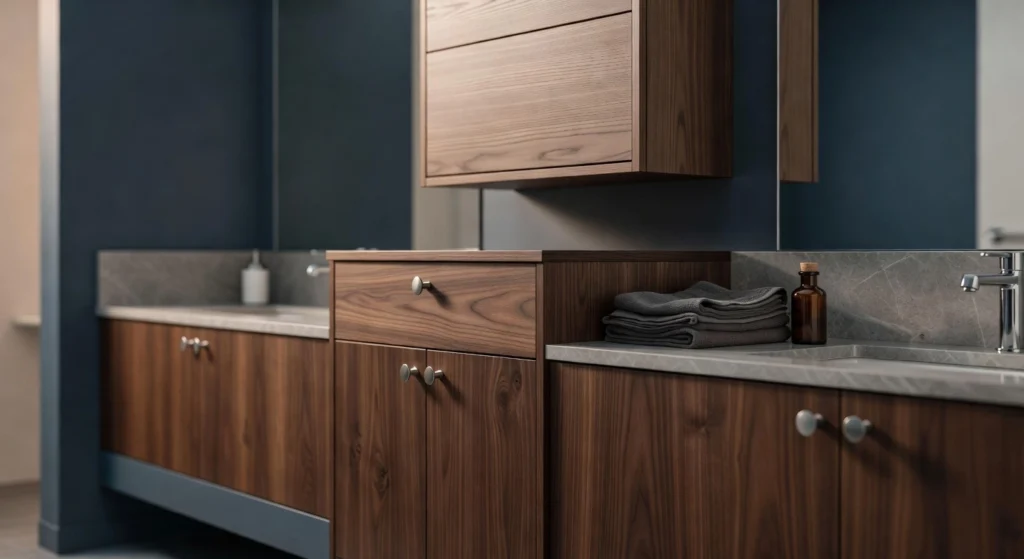

Wood bathroom cabinets have stood the test of time as one of the most sought-after storage solutions in home design, and for good reason. Their warmth, versatility, and natural beauty can transform an ordinary bathroom into a polished, cohesive space. But not all wood cabinets are created equal, and choosing the wrong materials or neglecting proper care can lead to warping, discoloration, and costly replacements down the line.
Whether you are upgrading your current setup or starting fresh with a full renovation, understanding the fundamentals of wood selection, finish types, and maintenance routines is essential. Bathroom cabinets face a uniquely harsh environment, one filled with humidity, temperature swings, and daily moisture exposure. Knowing how different wood species and protective finishes respond to these conditions puts you in a far stronger position when making decisions.
In this guide, we will walk you through the best wood materials available, the most durable finish options on the market, and the care practices that will keep your cabinets looking exceptional for years to come. Let’s get started.
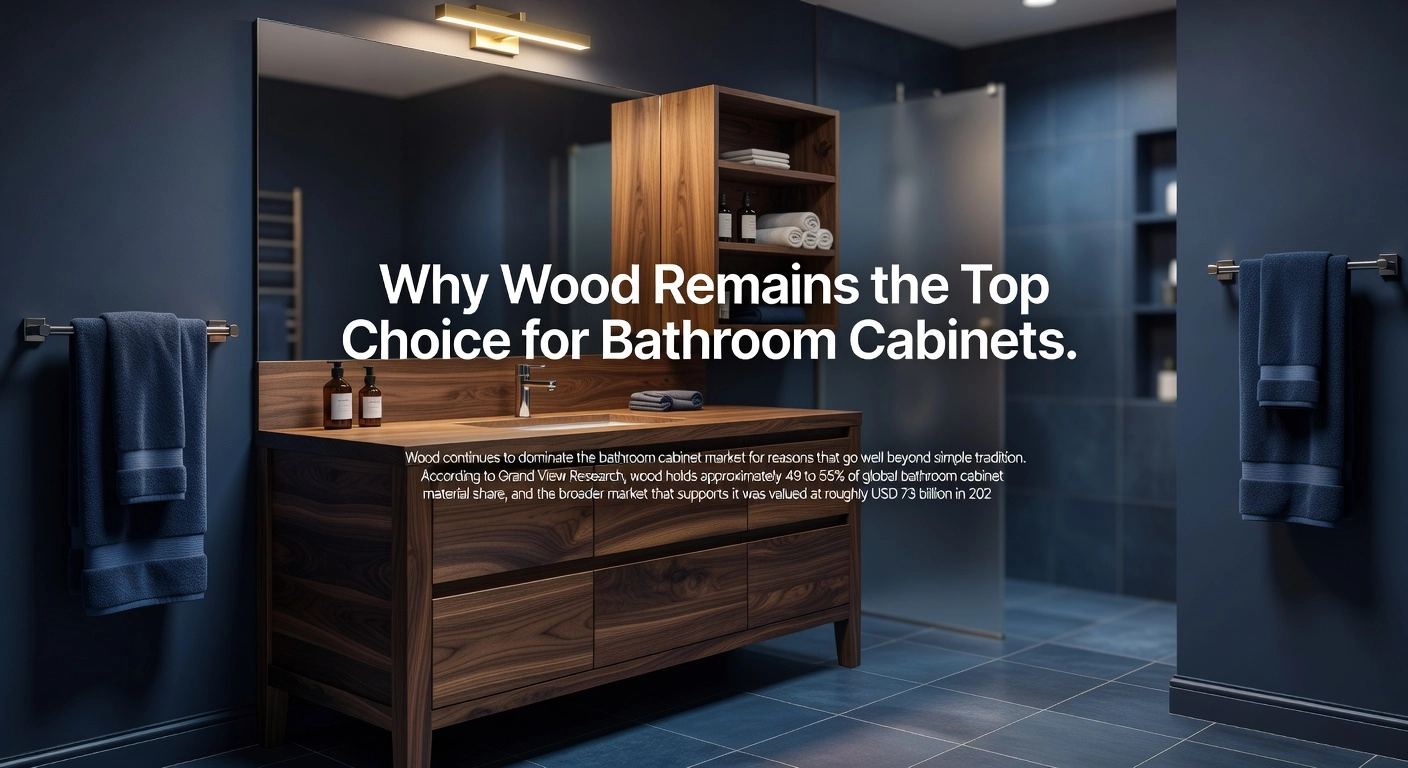
Why Wood Remains the Top Choice for Bathroom Cabinets
Wood continues to dominate the bathroom cabinet market for reasons that go well beyond simple tradition. According to Grand View Research, wood holds approximately 49 to 55% of global bathroom cabinet material share, and the broader market that supports it was valued at roughly USD 73 billion in 2023, with projections reaching USD 135 billion by 2030 at a 9.1% CAGR. That sustained growth reflects genuine consumer preference, not just industry inertia.
Residential homeowners drive roughly 70% of that demand, according to market analysis data, which means wood’s dominance is rooted directly in the priorities of people remodeling existing bathrooms or selecting materials for new construction. Homeowners consistently choose wood because it delivers something MDF, PVC, and metal simply cannot replicate: a living surface with natural grain variation, inherent warmth, and the unique ability to be sanded, stained, and refinished rather than torn out and replaced. A scratched oak vanity can be restored; a warped MDF cabinet typically cannot.
The material advantages are practical as much as visual. Wood accepts a wide range of finishes, from penetrating oils to moisture-resistant polyurethane topcoats, giving it flexibility that engineered alternatives lack. PVC resists humidity well but looks and feels synthetic at close range. Metal handles moisture but introduces an industrial coldness that conflicts with comfort-focused bathroom design.
Biophilic design is amplifying wood’s appeal significantly. The broader shift away from sterile all-white bathrooms toward spa-inspired, nature-connected spaces has placed natural wood grain at the center of 2025 and 2026 trend reports, with Future Market Insights noting renovation-focused consumers actively seeking design-differentiated wood products. Warm walnut tones, textured oak fronts, and earthy stained finishes are replacing painted gray and white cabinets as the defining aesthetic of modern bathroom remodels.
Best Wood Species for Bathroom Cabinets
Not all wood species handle bathroom humidity equally, and choosing the wrong one leads to warped doors, swollen drawers, and costly repairs within just a few years. Selecting the right species from the start is one of the highest-impact decisions you can make for a long-lasting installation.
How the Top Species Compare
When evaluating wood for bathroom cabinets, three criteria matter most: humidity resistance, grain aesthetics, and workability.
Teak sits at the top of the humidity resistance ranking. Its heartwood contains natural oils and resins that actively repel moisture, inhibit mold, and resist rot, which is why it has been trusted in marine applications for centuries. It offers a tight, even grain with a warm golden-brown tone that deepens beautifully over time. The trade-off is workability; teak’s oily surface resists film finishes like polyurethane, making penetrating oils the preferred finish choice.
White oak is the strongest domestic contender. Unlike red oak, white oak contains tyloses, microscopic cellular structures that physically block water from penetrating the wood’s pores. This biological advantage makes it significantly more moisture-resistant than its red counterpart. Its visible ray grain and neutral tone align perfectly with 2026 design trends favoring natural, warm aesthetics. At a Janka hardness of 1,360 lbf, it machines and finishes predictably well.
Maple earns points for its exceptionally tight, closed grain, which limits moisture absorption compared to open-grained species. With a Janka rating of 1,450 lbf, it is one of the hardest domestic options available. Its smooth, consistent surface makes it the go-to choice for painted finishes, though it can stain unevenly without a pre-conditioner.
Cherry offers stunning aesthetics, starting pinkish-red and developing a rich reddish-brown patina over time. However, at a Janka rating of 950 lbf, it is softer and more prone to warping in poorly ventilated bathrooms without thorough sealing. It suits traditional-style bathrooms with good airflow better than high-humidity master baths.

Red oak (when “oak” is listed generically) is the weakest option for bathrooms. Its open-pore structure acts like a network of capillaries, drawing moisture inward and accelerating swelling, staining, and eventual rot.
Why Grain Structure Matters More Than You Think
The science behind tight-grained versus open-grained wood explains a lot about real-world cabinet performance. Open-grained species like red oak and ash have larger vessel pores that absorb moisture readily, leading to dimensional swelling, surface checking, and rot over time. Tight-grained species like maple, cherry, and white oak have denser cellular structures with smaller pores, reducing the rate at which vapor and liquid penetrate the surface. White oak’s tyloses add an extra layer of protection not available in other domestic species. For bathroom applications, choosing the right wood species is not just an aesthetic decision; it directly determines how much dimensional movement your cabinet endures through daily humidity swings.
Marine-Grade Plywood for Cabinet Boxes
For the cabinet box itself (the carcass behind the doors), marine-grade plywood outperforms solid wood, standard plywood, and particleboard in bathroom environments. Its cross-ply construction layers veneers with alternating grain directions, which counteracts the natural tendency of wood to expand and contract along a single axis. This reduces warping, twisting, and delamination significantly. Marine-grade plywood also uses waterproof phenolic or melamine adhesives throughout, and its veneers are void-free and knot-free, eliminating weak spots where moisture typically gains entry. Particleboard, by contrast, swells irreversibly when wet and should never be used in bathroom cabinet boxes. Combining a marine-grade plywood box with solid hardwood doors gives you the best of both worlds: structural stability and visual warmth.
Teak’s Premium Appeal and Sustainability Considerations
Teak’s moisture resistance is unmatched among commonly available species, but it comes at a premium cost, often two to three times that of domestic hardwoods like oak or maple. Responsible sourcing is a genuine concern; always look for FSC-certified or verified reclaimed teak to avoid contributing to illegal tropical logging. Plantation-grown teak and certified suppliers exist and are worth the due diligence.
Quick-Reference Finish Guide
| Species | Best Finish Approach |
|---|---|
| White Oak | Stain or clear coat; showcases ray grain beautifully |
| Teak | Penetrating oil; avoid heavy film finishes |
| Maple | Paint; use pre-conditioner before staining |
| Cherry | Stain or clear coat; enhances natural patina |
| Red Oak | Paint with grain filler; staining highlights open pores |
Regardless of species, seal all surfaces including backs, edges, and interior faces before installation. Exposed end grain is particularly vulnerable and requires extra attention with a quality moisture-resistant topcoat.
How Humidity Damages Wood Bathroom Cabinets
Wood is hygroscopic by nature, meaning its cellular structure continuously absorbs and releases moisture from the surrounding air. In a bathroom, this creates a relentless cycle of expansion and contraction that few homeowners fully appreciate until damage is already visible. Each shower raises relative humidity (RH) to 80-100% temporarily, causing wood fibers to swell across the grain. When humidity drops afterward, those same fibers contract. Repeated daily cycles build cumulative internal stress that eventually overwhelms the wood’s structural integrity, producing hairline cracks in finishes, cupping along panel faces, and outright warping in doors and sides. According to AWINET’s guide to wood movement, stable relative humidity between 30-55% minimizes this movement; fluctuations outside that range accelerate visible failure.
The four most common humidity-related damage types follow a predictable progression. Finish peeling or bubbling occurs when moisture works beneath paint or varnish layers, lifting them from the substrate as the wood beneath swells. Drawer swelling forces drawers to bind, stick, or refuse to close entirely, particularly in cabinets built with particleboard or MDF components. Joint separation develops as glued stile-and-rail connections, mortise-and-tenon joints, and dowel assemblies are stressed by components expanding and contracting at different rates, leaving visible gaps in frames and face surfaces. Mold growth emerges when sustained RH exceeds 60-70% inside or behind cabinets, creating conditions that rot wood fibers from within and introduce serious health risks alongside structural decay.
Steam from hot showers is particularly destructive because it targets the most vulnerable points of any cabinet: end grain and unsealed edges. As steam cools against cabinet surfaces, it condenses into micro-droplets that penetrate far faster through end grain than through face grain, sometimes absorbing moisture at rates several times higher. Cabinets positioned near shower enclosures or directly above countertop sinks face the greatest exposure, as Edgewood Cabinetry’s moisture analysis confirms.
Consistent exhaust fan use is one of the most effective and lowest-cost protections available for wood bathroom cabinets. Industry ventilation guidelines recommend a minimum of 1 CFM per square foot of bathroom floor area, meaning a standard 50-square-foot bathroom requires at least a 50 CFM rated fan. Running the fan during showers and for 15-20 minutes afterward removes moist air before it has time to condense on cabinet surfaces, directly reducing peak humidity exposure. Cabinets in bathrooms with no functional exhaust ventilation can show signs of damage within two to three years in high-use households.
Catching humidity damage early is critical, because surface-level issues become structural problems quickly once moisture reaches core materials. Watch for these warning signs:
- Peeling, bubbling, or cracking in cabinet finish or paint
- Soft, spongy, or discolored wood along cabinet bases or sides near the sink
- Sticking drawers or misaligned doors that previously operated smoothly
- Visible gaps at joints where frame components once fit tightly
- Musty odors inside cabinet interiors, indicating trapped moisture or early mold growth
Any of these symptoms signals that moisture has already penetrated beyond the surface. Early intervention, including resealing edges, improving ventilation, and addressing any plumbing leaks, can prevent full cabinet replacement.
Best Finishes for Wood Bathroom Cabinets
Choosing the right finish is where bathroom cabinet longevity is truly decided. The wrong product turns a beautiful wood vanity into a warping, staining disappointment within a single humid season, while the right one keeps it looking sharp for decades.
The Four Main Finish Categories, Compared Honestly
Oil-based polyurethane remains the most practical choice for most wood bathroom cabinets. It forms a dense, hard film that resists moisture penetration, handles abrasion well, and builds adequate protection in as few as two to three coats. The tradeoffs are real: strong solvent odor during application, slow recoat times ranging from several hours to overnight, and a tendency to amber slightly over time. For most homeowners, those drawbacks are manageable. The reward is a cost-effective, tough finish that outperforms most alternatives in humid environments without requiring specialty products.
Water-based polyurethane dries clear, carries minimal odor, and allows recoating within a few hours. It is the better choice when preserving a lighter wood tone like maple or ash matters. The catch is that it typically requires four to eight coats to match the film build and protection of oil-based versions, and even modern formulas show slightly lower abrasion resistance under heavy daily use. For a secondary bathroom cabinet away from direct splash, water-based polyurethane performs reliably. For a primary vanity with daily water contact, oil-based still has the edge. You can review a detailed breakdown of water-based polyurethane performance to compare formulations.
Marine-grade sealers and spar varnishes deliver the highest level of moisture, humidity, and UV resistance available in a brush-on finish. They flex with wood movement better than standard interior finishes, making them especially effective where thermal and humidity swings are severe. The premium cost is justified for vanities positioned in direct splash zones around sinks, bathrooms without adequate exhaust ventilation, or custom high-end installations where maximum longevity is non-negotiable. For a linen cabinet on a dry wall, however, marine-grade products are unnecessary and more expensive than the situation demands.
Oil and wax finishes, including Danish oil, tung oil, and hardwax blends, are genuinely beautiful on furniture. In a bathroom, they fall short. These are penetrating finishes that enhance wood grain without building a true surface film, meaning water can wick in with repeated exposure. Steam, spills, and ambient humidity will eventually cause staining, swelling, or grain raising. Despite their popularity and ease of application, they belong on living room furniture, not bathroom cabinetry.
Why End Grain Sealing Is Non-Negotiable
The single most overlooked step in finishing bathroom cabinets is properly sealing end grain and exposed edges. End grain is fundamentally more porous than face grain because it exposes the open cellular structure of the wood directly to the environment. Moisture absorbs into end grain at a rate many times faster, making it the primary entry point for water intrusion that leads to swelling, warping, and eventually structural failure. The majority of finish failures on wood bathroom cabinets trace back not to poor face finish, but to inadequately sealed edges, undersides, and cut ends.
The fix is straightforward: apply an extra coat or two of finish specifically to all edges and end grain surfaces before the full finishing schedule begins. Some woodworkers use a thinned first coat as a sealer on end grain to close the pores before building up standard coats. Every surface including the back panel and bottom of cabinet boxes, not just the visible faces, should receive complete finish coverage. Balanced sealing on all sides also prevents uneven moisture exchange, which is a leading cause of warping in otherwise well-built cabinets.
2026 Bathroom Cabinet Trends Worth Knowing
Bathroom design is shifting decisively in 2026, and the changes have direct implications for anyone working with wood cabinets. Understanding where the aesthetic is heading lets you make smarter decisions about refinishing, upgrading, or building rather than replacing.
1. Natural Wood Grain and Stained Finishes Are Taking Over
Painted cabinets, particularly all-white and cool gray, are losing ground fast. Crowe’s Cabinets identifies stained wood as a top 2026 trend, noting that homeowners want finishes that reveal the grain, character, and warmth of the actual material. Porcelanosa echoes this shift, emphasizing how natural wood tones create contrast against lighter tiles while adding organic texture no paint can replicate. White oak and walnut are leading species choices, prized for their pronounced grain patterns and warm undertones.
2. Warm Earth Tones Are Replacing Cool Neutrals
Beige, brown, terracotta, and sage green are now the dominant palette choices in bathroom cabinetry, displacing the cool grays and stark whites that defined the previous decade. Sweeten confirms this directly, listing warm earth tones as a defining 2026 vanity design direction. These shades pair naturally with stained wood finishes and support the wellness-focused, spa-like bathroom aesthetic that is driving remodeling decisions broadly.
3. Fluted Fronts, Soft Curves, and Art Deco Details Are Rising
Flat, featureless cabinet fronts are giving way to texture. Fluted and reeded panel fronts, soft curved silhouettes, and geometric Art Deco details are appearing across vanity designs at every price point. For DIYers, this trend is highly accessible. A router fitted with a fluting bit transforms flat doors into textured statement pieces, and pre-made applied molding from any hardware store achieves similar results without specialized tools.
4. Storage-First Vanities Are Replacing Minimalist Floating Units
Floating vanities with minimal storage are falling out of favor. Furniture-style pieces with deep drawers, organizational inserts, and substantial visual presence are replacing them. The priority has shifted from visual lightness to genuine function.
5. What These Trends Mean for Your DIY Projects
Each of these trends translates directly into achievable at-home upgrades. Stripping paint and applying a quality stain converts outdated painted cabinets into on-trend wood-grain pieces. Adding fluted panels to existing flat-front doors costs a fraction of new cabinetry. Swapping pulls and knobs for mixed-metal hardware in warm brass or brushed finishes instantly updates the look to match earth-tone palettes. These are targeted, budget-conscious improvements that deliver current results without a full renovation.
How to Refinish Wood Bathroom Cabinets Step by Step
Refinishing wood bathroom cabinets is one of the most cost-effective ways to transform your space without a full replacement. Before picking up sandpaper, gather everything you need: sandpaper in 80, 120, 150, 180, and 220 grits; a deglosser (liquid sandpaper) or chemical stripper for thick or heavily layered finishes; a moisture-resistant bonding primer if you plan to paint; your chosen finish (cabinet-grade paint, wood stain, or a moisture-resistant polyurethane topcoat); high-quality angled brushes or foam rollers; and tack cloths for dust removal between every stage. Having all materials ready before you start prevents mid-project delays that can compromise adhesion if surfaces are left exposed too long.
Step 1: Remove Doors, Drawers, and Hardware
Pull every door, drawer, and piece of hardware before touching the surface with sandpaper. Working on assembled cabinets causes uneven coverage, missed edges, and finish buildup at corners. Label each door and drawer with painter’s tape so reassembly is straightforward. Lay doors flat on a clean work surface in a ventilated area, which also reduces the risk of drips and sags during finish application.
Step 2: Sand the Existing Finish
Start with 80 to 120 grit to cut through the old topcoat, remove glossy buildup, and level any surface imperfections. Always sand with the wood grain to avoid cross-grain scratches that become visible under new finish. Once the old coat is fully stripped, switch to 150 to 180 grit to smooth the surface and create the fine tooth that helps primer and finish bond properly. Vacuum thoroughly between grit changes so coarser particles do not contaminate your finer sanding stage.
Step 3: Clean and Acclimate
Wipe every sanded surface with a tack cloth to capture residual dust. Follow up with a TSP substitute or degreaser to remove any grease or soap residue, then allow the wood to dry completely. Let the bare wood acclimate to the bathroom’s typical humidity level for several hours before applying any product. Skipping this step traps moisture beneath the finish.
Step 4: Apply Finish in Thin, Even Coats
Apply primer or your first finish coat in a thin, controlled layer using a foam roller on flat panels and an angled brush for edges and profiles. Once dry, lightly sand with 220 grit to knock down any raised grain or surface nibs, wipe clean, and apply the next coat. Two to three thin coats consistently outperform one thick application in durability and smoothness.
Rushing drying time in a bathroom is where most refinishing projects fail. High humidity from daily showers slows solvent evaporation, traps moisture within the finish film, and prevents proper bonding to the substrate. The result is soft, tacky surfaces, poor inter-coat adhesion, and eventual peeling or bubbling, even if the finish feels dry to the touch. Humidity above 50 to 60 percent can double or triple manufacturer-listed drying times. Run the exhaust fan, open a window when possible, and always follow the product’s recoat window rather than estimating by feel. Allow the final coat to cure fully, often several days to a week, before reinstalling hardware and resuming normal bathroom use.
Fixing the Most Common Bathroom Cabinet Problems
Even well-built wood bathroom cabinets develop problems over time, especially in high-humidity environments. Knowing how to diagnose and fix these issues accurately saves both money and the cabinet itself.
1. Peeling or Bubbling Finish
Finish failure typically starts at edges and around hardware because those spots receive the most mechanical stress, direct water contact, and inadequate sealing coverage. Moisture infiltrates through micro-chips in the finish, lifting it from underneath and creating bubbles or peeling strips. Before attempting repair, assess the substrate by pressing firmly on the affected area. A solid, non-spongy feel confirms the wood or MDF core is still structurally sound and worth repairing. If the core feels soft or crumbles, replacement is the better path. For sound substrates, scrape away all loose material, sand the area smooth progressing from 120 to 220 grit, clean thoroughly with a degreaser, and apply a moisture-resistant bonding primer before recoating with a semi-gloss cabinet enamel formulated for humid spaces. Seal all edges and hardware cutouts meticulously after recoating to prevent moisture re-entry.
2. Water Stains and White Rings
The critical first step is distinguishing where the damage sits. White, cloudy rings are surface stains trapped within the finish layer itself, not the wood. A hair dryer held several inches away and moved in short passes often evaporates the trapped moisture effectively. Alternatively, a paste of baking soda and non-gel toothpaste applied gently and wiped clean frequently clears surface rings without damaging the finish. Dark or gray discoloration signals that moisture has penetrated into the wood fibers, requiring a more aggressive approach. Sand progressively through the finish layers until the stain disappears, apply wood bleach if discoloration persists in the grain, and refinish with matched stain and sealer, sanding lightly between coats for a smooth, uniform result.
3. Swollen or Stuck Drawers
Wood drawers swell when humidity drives moisture into unsealed surfaces, reducing the clearance between the drawer and the cabinet opening. Remove the drawer completely and allow it to dry slowly in a well-ventilated room before attempting any material removal. Once dried, use a sanding block with 80 to 120 grit paper on the sides and bottom edges, checking the fit frequently to avoid over-removing material. Aim to restore roughly one-sixteenth inch of clearance on each side. After fitting correctly, sealing all interior drawer surfaces with polyurethane or a waterproof primer creates a moisture barrier that stabilizes wood dimensions long-term, preventing the swelling cycle from repeating.
4. Warped Cabinet Doors
Mild warping caused by uneven moisture exposure on one face of a door is often reversible. Lay the door on a flat surface, place damp cloths against the concave side, and apply clamps with protective cauls distributing pressure evenly across the full length. Maintaining this for several days while the moisture redistributes through the wood can gradually flatten the door. However, severe warps in thin composite or particleboard doors rarely respond permanently to this treatment. When warping recurs after correction or when the door shows cracking along the grain, replacement with a properly sealed solid wood or marine-grade plywood panel is the practical solution.
5. Joint Separation and Loose Hinges
Separated joints should be cleaned of all old glue residue before repair; fresh adhesive will not bond reliably over failed glue. Apply waterproof wood glue to both mating surfaces, reassemble, and clamp with even pressure for a full 24 hours. For stripped screw holes that leave hinges wobbly, coat several wooden toothpicks in wood glue, pack them firmly into the hole, snap them flush once dry, and reinstall the screw into the reinforced material. This method restores solid thread grip without enlarging the original hole or requiring hardware replacement.
How to Clean and Maintain Wood Bathroom Cabinets
Protecting your investment starts with the right cleaning habits. For daily maintenance, wipe cabinet surfaces with a soft microfiber cloth dampened with warm water and a few drops of mild dish soap or a pH-neutral cleaner in the pH 6 to 8 range. Immediately dry any standing water, splashes, or residue with a clean towel, paying extra attention to edges, joints, and the area surrounding the sink. Weekly, extend this routine to drawer interiors, door faces, and crevices using a soft toothbrush to dislodge dust that traps moisture. Always apply cleaner to your cloth first, never spray directly onto cabinet faces, since overspray seeps into joints and accelerates finish degradation.
Certain bathroom products will destroy a wood finish faster than humidity ever could. Bleach-based sprays corrode the wood’s lignin structure and strip protective coatings on contact. Ammonia-containing glass cleaners chemically break down oil-based polyurethane and varnish, essentially making the finish water-soluble and removable. Abrasive scrubbers, including many marketed as “non-scratch,” create microscopic surface scratches that trap moisture and accelerate wear. Stick exclusively to mild, pH-neutral solutions formulated for wood surfaces.
Periodic maintenance determines whether your cabinets last a decade or several. For wax or oil finishes, reapply a wood-specific conditioner or furniture polish every three to four months, buffing lightly along the grain to restore the moisture barrier. Polyurethane and varnish finishes need annual inspection; when water no longer beads on the surface or dullness appears, schedule a fresh topcoat. Inspect edges, joints, and undersides seasonally for early warning signs including bubbling finish, soft spots, or discoloration.
Hardware deserves its own maintenance schedule. Tighten hinges, drawer slides, knobs, and pulls every three to six months, since seasonal wood movement gradually loosens fasteners. Clean metal hardware using a mild soap solution applied with a soft cloth, keeping chemical metal polishes away from surrounding wood. Apply a silicone-based lubricant to hinges and slides twice yearly for smooth operation.
A simple seasonal checklist keeps you ahead of damage:
- Winter: Inspect joints for gaps caused by wood shrinkage in dry air; condition surfaces more frequently; redirect heating vents away from cabinet faces
- Summer: Run exhaust fans consistently during and after showers; monitor for swelling or finish bubbling; use a dehumidifier if indoor humidity exceeds 55%
- Year-round: Wipe spills immediately, confirm under-sink areas stay dry, and check caulk seals around the sink basin annually
Mold and Mildew on Wood Bathroom Cabinets
Mold establishes on wood bathroom cabinets when three conditions align: relative humidity above 60%, inadequate ventilation, and compromised protective finishes. Bathroom steam from daily showers can push humidity well beyond that threshold in minutes, and without a functioning exhaust fan, moist air lingers against cabinet surfaces long enough for dormant spores to activate. When a finish cracks, peels, or wears thin from repeated moisture cycling, raw wood fiber becomes exposed, giving mold the organic material it needs to colonize within as little as 24 to 48 hours.
Not all mold growth is equally serious, and correctly identifying which type you are dealing with determines your entire treatment approach. Surface mold sits on the finish layer, typically appearing as flat, powdery patches in white or gray tones. It has not breached the protective coating and responds well to topical treatment. Penetrating mold is a different problem entirely. It sends hyphae, the root-like fungal structures, deep into porous wood fibers beneath the finish, producing fuzzy raised growth in darker green or black tones along with a persistent musty odor. Surface treatments cannot reach embedded hyphae, which is why correctly distinguishing between the two before acting matters so much.
For confirmed surface mold, apply undiluted white vinegar or 3% hydrogen peroxide directly to the affected area. Let either solution dwell for at least 10 minutes, then scrub gently with a stiff-bristle brush. Never mix the two solutions together. Work with the exhaust fan running and wear gloves, goggles, and an N95 respirator to avoid inhaling disturbed spores. After scrubbing, dry the area completely using clean towels and a fan, keeping humidity below 60% until the surface is bone dry. Avoid resealing over any area that retains moisture.
When mold reappears quickly after cleaning, the wood emits a persistent musty smell, or you notice softening and discoloration in the grain, the infection has progressed into the substrate. Surface treatments become ineffective at this stage. Aggressive sanding down to clean, unaffected wood is required, followed by thorough HEPA vacuuming to capture dust-bound spores before refinishing. If the affected section has softened significantly or mold has filled internal grain channels, replacing that cabinet section entirely is the more reliable solution. Always address the underlying moisture source before refinishing; otherwise regrowth is inevitable.
Prevention consistently outperforms remediation. Run your bathroom exhaust fan during every shower and for at least 20 to 30 minutes afterward to clear residual steam. Inspect cabinet finishes two to three times per year, paying close attention to interior corners, bottom edges, and areas near the plumbing access. Reapply a moisture-resistant sealer to any spot showing wear before water finds a path to raw wood. Inside cabinet interiors, place silica gel packs in corners to absorb ambient moisture between uses, replacing them every few months. These small, consistent habits keep humidity in check and protect your wood investment far more effectively than reactive repairs.
Build, Buy, or Refinish: Choosing the Right Approach
Every bathroom cabinet project starts with the same fundamental question: build, buy, or refinish? Each path carries distinct cost implications, skill requirements, and long-term outcomes worth understanding before committing to a direction.
Refinishing is the most budget-friendly option, typically ranging from $1,500 to $7,000 for professional work, with DIY costs running considerably lower. It makes the most sense when your cabinet boxes are structurally intact with no rot, swelling, or mold damage, and only the surface finish is failing, fading, or simply outdated. If the wood underneath is solid, refinishing preserves your existing layout and delivers a dramatic visual refresh at a fraction of replacement cost. This approach also aligns well with the 2026 shift toward natural wood grains and warm stained finishes, since refinishing lets you strip tired paint and reveal or enhance the wood underneath.
Buying new cabinets becomes the smarter choice when structural moisture damage has compromised the cabinet boxes themselves. Swollen particleboard, delaminating plywood, or mold penetrating deep into the wood are not refinishing problems; they are replacement problems. New cabinets also make sense when your current layout no longer fits your needs, such as when you want to add a double vanity, incorporate deeper drawers for better storage, or reconfigure the entire footprint of the space.
Building custom offers the highest level of control and is well within reach for intermediate woodworkers. The most humidity-resistant approach combines marine plywood for the cabinet box carcass with solid wood face frames in species like oak, maple, or poplar. Core tools include a circular saw or table saw, a pocket-hole jig for face frame joinery, a drill, clamps, and a random orbital sander. Material costs for a basic 36-inch vanity typically fall between $200 and $600, far below custom cabinet pricing.
Whichever direction you choose, WoodStuffHQ has practical, step-by-step resources to support the work. The site covers refinishing tutorials, repair guides for common moisture damage, and DIY build plans designed for real bathrooms.
Key Takeaways for Wood Bathroom Cabinets
Three decisions define the long-term success of any wood bathroom cabinet project: wood species selection, finish type, and your humidity management strategy. Choose a moisture-resistant species like teak, white oak, or cedar, seal it with a high-quality polyurethane or marine-grade finish, and maintain consistent ventilation, and your cabinets can last decades without significant deterioration.
The good news is that most common bathroom cabinet problems are entirely preventable. Peeling finishes, water stains, and swollen drawers are almost always symptoms of inadequate sealing or a neglected maintenance routine, not inevitable wear. A proper finish applied correctly, combined with monthly inspections and prompt touch-up work, eliminates the majority of issues before they escalate into costly repairs or replacements.
The timing for refinishing existing cabinets has never been better. The 2026 design shift toward natural wood grains, visible texture, and warm earth tones means your existing wood cabinets are closer to on-trend than you might realize. Refinishing rather than replacing is the smarter financial and aesthetic decision this year.
WoodStuffHQ offers deeper guidance across every stage of this process, including detailed finish comparisons, step-by-step repair tutorials, and complete cabinet build plans to support your next project.
Conclusion
Choosing the right wood bathroom cabinets comes down to three essentials: selecting moisture-resistant materials, applying the proper protective finish, and committing to a consistent care routine. Solid hardwoods like teak and oak offer lasting durability, while quality sealants and finishes act as your first line of defense against humidity and water damage. Regular cleaning and prompt attention to moisture buildup will protect your investment for decades to come.
Now that you have a clear picture of what to look for and how to maintain your cabinets, it is time to put that knowledge to work. Browse cabinet options with confidence, ask suppliers the right questions, and never overlook the finish details. Your bathroom deserves storage that is both beautiful and built to last. Start making smarter choices today and enjoy a space that holds up as well as it looks.