

There’s something about walking into a room with a beautifully laid herringbone floor that just stops you in your tracks. That intricate zigzag pattern looks like it belongs in a fancy hotel lobby or a European chateau, right? Here’s the thing though: you can actually achieve that same stunning look in your own home, even as a complete beginner.
Herringbone flooring has been around for centuries, and it’s having a major moment right now in modern home design. The good news is that laying it yourself is totally achievable with the right guidance, a little patience, and some basic tools you probably already own.
In this complete guide, we’re going to walk through everything you need to know to tackle this project with confidence. From choosing the right materials and prepping your subfloor, to mastering that signature pattern and finishing things off like a pro, we’ve got you covered every step of the way. By the end, you’ll have all the knowledge you need to transform any room in your home with a floor that looks like it cost a fortune.
What Makes Herringbone Flooring Different From Other Patterns
If you’ve ever looked down at a floor and felt like it was somehow alive with movement, there’s a good chance you were standing on herringbone. This iconic pattern arranges rectangular planks in a V-shaped interlocking zigzag, where each piece connects to the next at a 90-degree angle in a staggered, broken sequence. The result looks remarkably like the skeleton of a herring fish, which is exactly where the name comes from. You can learn more about how herringbone and chevron differ visually if you want a deeper breakdown, but the short version is this: herringbone is staggered and textured, while chevron uses angle-cut planks that meet point-to-point in clean, unbroken arrows. Straight-lay flooring, on the other hand, simply runs parallel rows in one direction, making it the most straightforward and uniform option of the three.
Herringbone has a surprisingly long résumé. Roman engineers used the pattern in roads over 2,000 years ago because the interlocking layout distributed weight evenly. By the 16th century, French châteaux like Fontainebleau were featuring it in grand salon floors as a symbol of craftsmanship and prestige. Today, it is surging back as one of the top flooring patterns for 2026, blending that old-world European character with modern minimalist sensibilities.
One of the biggest reasons homeowners love herringbone is what it does to a room visually. The 45-degree diagonal lines create optical movement that draws your eye along the zigzags, which makes compact or narrow rooms feel noticeably larger and more dynamic. It essentially tricks your brain into perceiving more depth and space than actually exists.
One thing worth knowing before you install is that herringbone creates more seams and exposed end-grain edges than straight-lay floors. Those extra joints can trap dust and moisture if not properly sealed, so regular sweeping and prompt spill cleanup matter more here.
Classic plank sizes typically run around 3 inches wide by 18 inches long, creating that traditional formal look. Wide-plank variations, trending heavily in 2026, use 5 to 8-inch widths for a bolder, more contemporary feel. Species like white oak offer consistent grain and light tones perfect for bright modern spaces, while walnut delivers rich, dramatic contrast for a more formal aesthetic.
Solid Hardwood vs. Engineered Wood vs. LVP: Which Is Right for You
Once you’ve fallen in love with the herringbone look, the next big decision is what material to actually install. This choice affects your budget, how long the floor lasts, and honestly, how much of the project you can tackle yourself. Let’s break down your three main options in plain terms.
Solid Hardwood: The Real Deal
Solid hardwood herringbone is exactly what it sounds like: full planks of real wood, typically 3/4 inch thick, cut and laid in that classic zigzag pattern. The look is genuinely stunning, with natural grain variation and warmth that’s hard to fake. The biggest long-term perk is that you can sand and refinish it four to six times over its lifespan, which means a solid hardwood floor can last 50 to 100 years with proper care.
The catch? Solid wood and moisture are not friends. Kitchens, bathrooms, basements, and entryways expose your floor to humidity swings that can cause cupping, warping, or gapping over time. Solid hardwood also typically requires nail-down or glue-down installation, which means precise cuts and professional-grade tools. For most beginners, this one is best left to a pro installer.
Engineered Wood: The Smart Middle Ground
Engineered wood has become the dominant choice for good reason. It currently holds about 72% of the hardwood flooring market share and is growing at a 6.05% CAGR, largely because it solves the moisture sensitivity problem that makes solid wood tricky. The construction is a real hardwood veneer bonded over a stable plywood core, so it looks like the genuine article without the seasonal movement issues.
The feature that makes engineered wood genuinely beginner-friendly is the click-lock floating installation system. You don’t need to glue or nail anything down. Many engineered herringbone flooring products are designed specifically for DIY floating installs over concrete or wood subfloors. The trade-off is that refinishing is limited, usually one or two times depending on veneer thickness, so it won’t outlast solid hardwood over decades.
LVP: The Budget DIYer’s Best Friend
Herringbone LVP is the most practical option if you’re working with a tight budget, tackling a moisture-prone room, or just starting out with DIY flooring projects. Luxury vinyl plank is fully waterproof, handles scratches and heavy foot traffic well, and the click-lock system requires nothing more than a utility knife and a tapping block. Materials typically run $2 to $7 per square foot, making it significantly cheaper upfront than wood options.
The honest downside is that LVP cannot be refinished. When it’s worn out after 15 to 25 years, you replace it entirely.
Matching Material to Your Situation
Here’s a simple way to think about it. Choose solid hardwood for dry bedrooms or living rooms where you want maximum long-term value. Choose engineered wood when you want a real wood look with better moisture tolerance and a more manageable DIY install. Choose LVP for kitchens, entryways, or anywhere spills and humidity are a daily reality.
Your subfloor matters too. Solid hardwood usually needs a wood subfloor for nail-down installation, while both engineered and LVP float over concrete or existing subfloors without issue. If you’re new to flooring projects, LVP is the most forgiving starting point, and the herringbone pattern still looks just as impressive regardless of material.
Best Rooms for Herringbone Flooring and What Each Demands
Not every room treats herringbone flooring the same way, and knowing what each space actually demands will save you a lot of headaches down the road. Let’s walk through where this pattern truly shines and what you need to think about before you commit.
Entryways and Hallways
Herringbone is a natural fit for entryways and hallways because the interlocking zigzag pattern visually distributes wear across the surface, making heavy foot traffic less obvious over time. That said, those angled grooves are dirt magnets. Grit and debris settle into the joints faster than they would on straight-laid planks, so plan on sweeping or vacuuming more frequently, ideally every day in a busy household. A protective finish is non-negotiable here; hardwax oil or a UV-cured coating gives you a tough barrier that still looks beautiful. Matte and low-sheen options are smart choices because they hide scuffs without constant polishing.
Kitchens
In the kitchen, spill resistance moves to the top of your priority list. Grease, water, and food debris find their way into the pattern’s grooves quickly, making degreasing trickier than on a flat surface. Stick with pH-neutral cleaners and a microfiber mop rather than anything abrasive, and never use a steam mop since the heat and moisture can push residue deeper into joints and damage your finish. According to 2026 flooring trend forecasts, engineered wood with a moisture-resistant coating or waterproof LVP is the preferred choice for kitchens. Wipe spills immediately, no exceptions.
Living Rooms
Living rooms are the most forgiving environment for herringbone, since foot traffic is lighter and the focus shifts to long-term aesthetics. Design sources consistently recommend matte or satin finishes heading into 2026 because they diffuse light softly, downplay everyday dust, and mask light scratches far better than glossy alternatives. A refinishable engineered wood product can last for decades with basic care, making the living room an ideal place to invest in a slightly wider plank for that relaxed, contemporary feel.
Moisture-Prone Areas
Mudrooms, basements, and laundry areas need engineered wood or LVP herringbone, full stop. Solid hardwood expands and contracts with humidity changes in ways that can buckle or gap a herringbone layout over time. Engineered and LVP options handle moisture swings far better, and many click-lock LVP products are fully waterproof with sealed edges built in.
Room Size and Light Direction
The direction you lay your herringbone pattern genuinely changes how a room feels. Running the planks parallel to the longest wall draws the eye forward and makes narrow hallways feel more open. Pointing the V-shape toward a focal point like a window or fireplace creates natural visual flow. In smaller rooms, lighter wood tones paired with a directional layout can make the space feel noticeably larger. Natural light amplifies the pattern’s texture when the layout aligns with your main light source, while matte finishes help diffuse that light evenly rather than creating distracting glare across the zigzag rhythm.
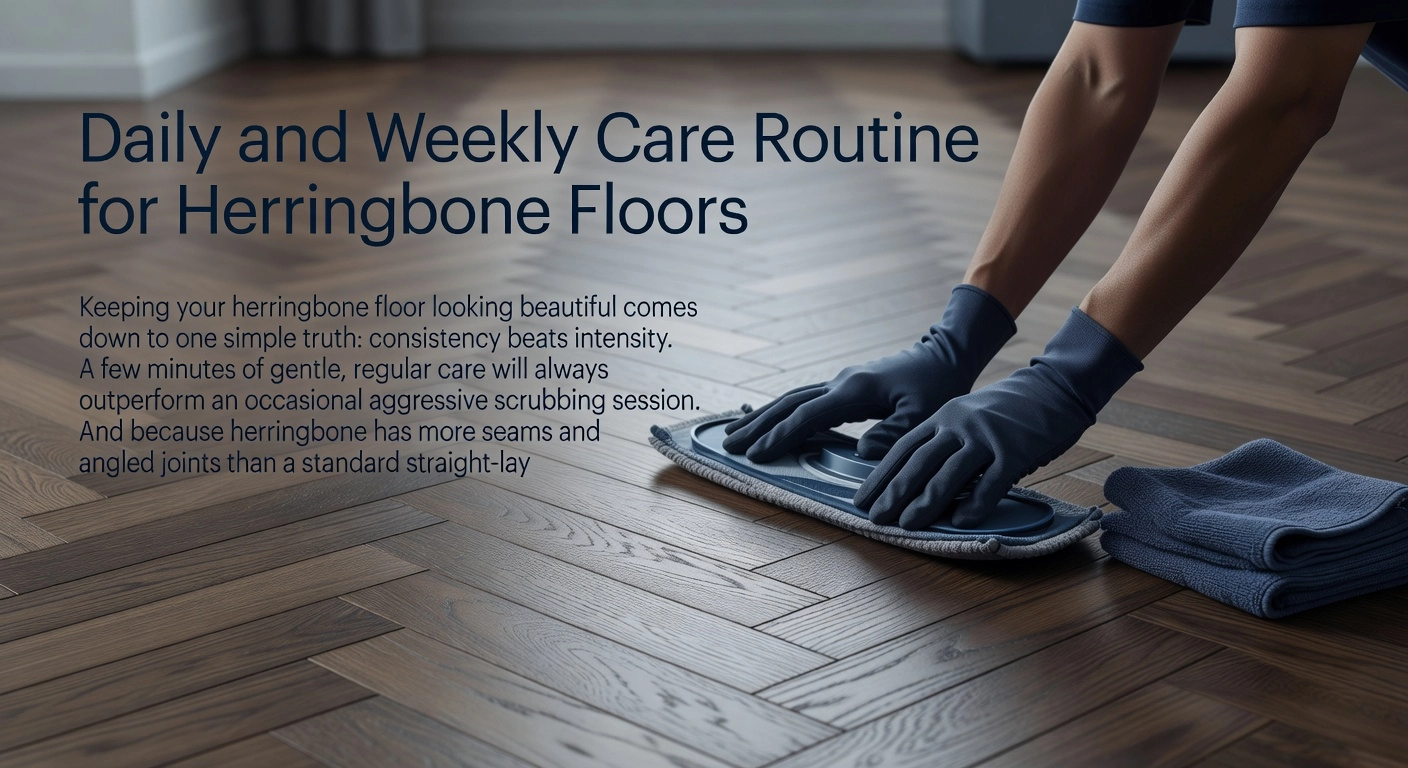
Daily and Weekly Care Routine for Herringbone Floors
Keeping your herringbone floor looking beautiful comes down to one simple truth: consistency beats intensity. A few minutes of gentle, regular care will always outperform an occasional aggressive scrubbing session. And because herringbone has more seams and angled joints than a standard straight-lay floor, a little extra attention to how you clean makes a real difference.
Start with your sweeping technique. Use a soft-bristle broom or a microfiber dust mop, and always sweep in the direction the planks run rather than across the pattern. When you push a broom sideways across those angled joints, you’re essentially shoveling grit and dust deeper into the seams, where it acts like fine sandpaper every time someone walks across the floor. Following the grain keeps debris moving toward you instead of into the cracks.
Vacuuming is safe when you do it right. The key is switching your vacuum to the hard floor or bare floor setting, which disables the rotating beater bar. That spinning brush is great for carpet but will leave fine scratches on your finish over time. Use a soft roller head attachment if you have one, and move along the plank rows rather than across them, just like you would with a broom. This approach lifts fine dust out of the joints cleanly without spreading it around.
For weekly mopping, pH-neutral cleaners are non-negotiable. Acidic cleaners like vinegar and alkaline cleaners like bleach or ammonia-based products both break down your floor’s protective finish. Herringbone floors are especially vulnerable because the angled cuts expose more edge surface area along every seam, giving harsh chemicals more places to do damage. Wring your mop out thoroughly so it’s barely damp, work in small sections, and dry the area immediately with a soft cloth. Think of the mop as slightly moist, not wet.
Skip the steam mop entirely. This is one of the most common mistakes beginners make. Steam forces hot moisture directly into those angled joints at pressure, and those joints are already more open to infiltration than straight-lay seams. The result is swelling, warping, and eventually gap formation that’s expensive to fix.
When spills happen, blot rather than wipe. Wiping a spill spreads liquid outward into the surrounding grooves; blotting pulls it straight up. Grab a clean cloth or paper towel, press down firmly, and repeat with a fresh section until the spot is dry. Acting fast is everything here since even a small splash left sitting can work its way into a seam within minutes.
Oils, Finishes, and Protectants That Work Best on Herringbone
One thing that catches a lot of first-time herringbone installers off guard is how much more finish or oil the floor seems to drink up compared to a simple straight-lay installation. The reason comes down to end grain. Every angled cut in a herringbone pattern exposes the raw ends of the wood fibers, and those ends are essentially open tubes that soak up oil and finish significantly faster than the smooth face grain you see on top of each plank. Plan to budget roughly 10 to 20 percent more product than you would for the same square footage in a straight layout, and work in small sections so you can catch any dry spots before they become uneven patches.
Matte or Satin: Which Finish Makes Sense in 2026
For herringbone specifically, matte finishes have become the go-to recommendation, and for good reason. The busy, zigzag geometry of the pattern already draws the eye constantly. A high-gloss surface adds reflections on top of that visual complexity, which amplifies every scratch, dust particle, and footprint. Matte finishes absorb light rather than bounce it back, so the everyday scuffs and smudges that come with real life simply disappear into the surface. If you want a little more resilience and a very subtle warmth, satin is a solid middle ground. It holds up slightly better in high-traffic zones and is marginally easier to wipe clean, while still keeping that understated, natural look that dominates top flooring trends for 2026. High-gloss is largely off the table for patterned floors right now, and honestly, it is not hard to see why.
Hardwax Oil vs. Polyurethane for Wood Herringbone
These two finishes behave very differently once you factor in all those joints and edges that herringbone creates. Hardwax oil penetrates into the wood fibers rather than sitting on top, which makes it forgiving at the angled cuts and end grain where a surface film would be more likely to crack or peel over time. The big practical win is spot repair: if one section wears down, you can treat that area without touching the rest of the floor. Polyurethane builds a tougher surface film that handles scratches and spills impressively well, but when it eventually wears through on a herringbone floor, it tends to show at the edges and joints first, and a proper repair usually means sanding and recoating a much larger area. As The Wood Whisperer explains with end grain finishing, taking extra care at those exposed cut ends pays off dramatically in the long run.
Protecting LVP Herringbone the Right Way
Vinyl herringbone comes with its own protective wear layer already built in, so your job is really about preserving that layer rather than adding new protection on top. Stick with pH-neutral cleaners made specifically for vinyl or LVP surfaces, applied with a damp microfiber mop. What to avoid is equally important: steam mops, wax-based polishes, ammonia, bleach, and any solvent-based products can cloud, dull, or actively break down the wear layer over time. A lot of homeowners make the mistake of applying sealants marketed for hardwood, thinking they are adding protection, when in reality those products often leave a hazy buildup on vinyl that is surprisingly difficult to remove.
How Often to Reapply and Warning Signs to Watch For
For hardwax oil on solid or engineered herringbone, moderate-traffic rooms like bedrooms or living areas typically need a refresh every one to two years. Kitchens, hallways, and homes with pets or kids may need attention every six to twelve months. Polyurethane is much more hands-off and usually lasts seven to ten years before a full recoat becomes necessary. The early warning signs are pretty easy to spot once you know what to look for: water no longer beads on the surface, the wood starts looking dull or slightly dry, scratches seem to accumulate faster than before, or certain joints and edges look noticeably lighter or rougher than the rest of the floor. Catching those signs early and doing a light maintenance coat will always beat waiting until you need a full sand and refinish.
How to Restore Worn or Discolored Herringbone Floors Yourself
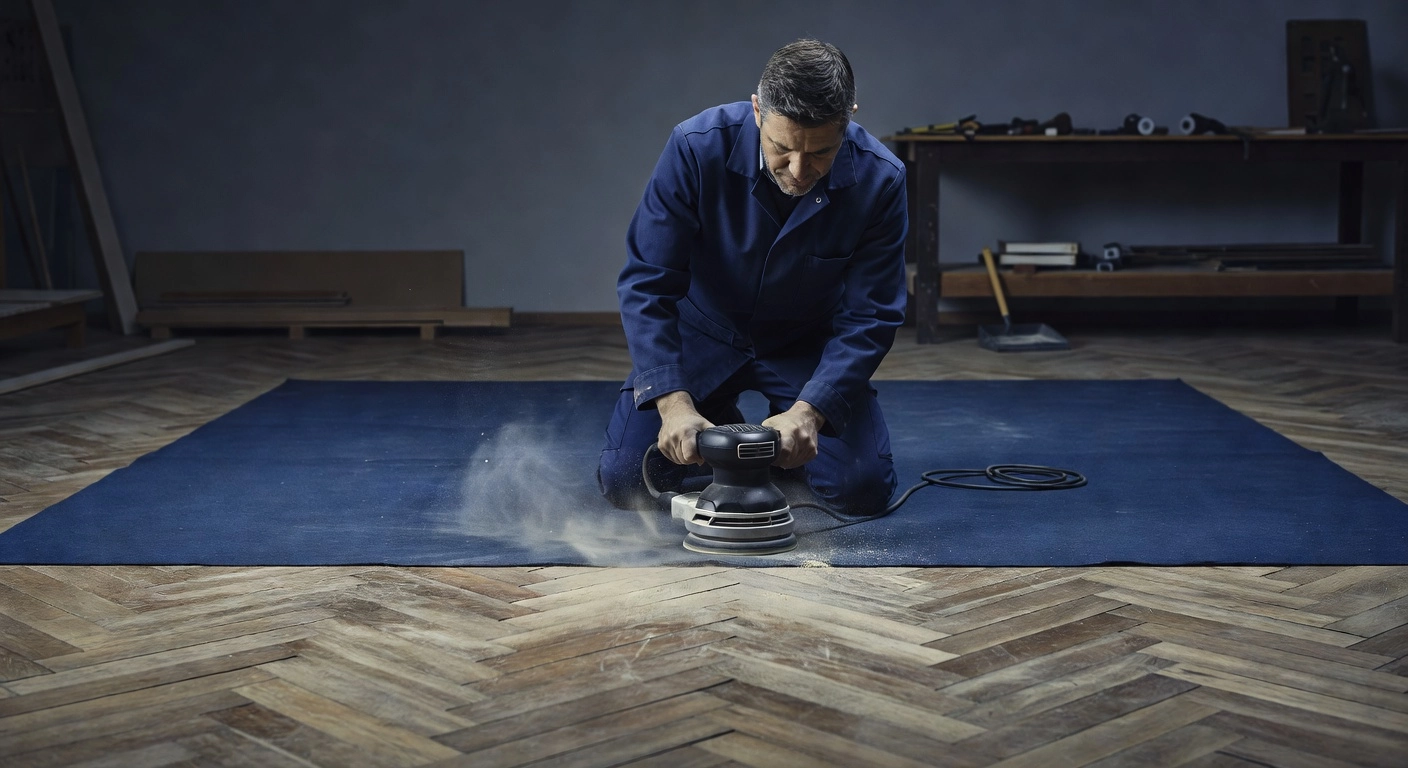
Restoring a worn herringbone floor yourself is absolutely doable, but it does ask a little more of you than refinishing a standard straight-lay floor. The zigzag pattern means every step, from your first inspection to your final buffing pass, needs to account for the way those angled planks interact with each other. Work through this methodically and you will end up with results you are genuinely proud of.
Start With a Thorough Assessment
Before you touch a sander or open a can of filler, get down close to the floor with a bright work light and take stock of what you are actually dealing with. There is a big difference between surface scratches in the finish and deep wear that has cut through to bare wood. Run a fingernail across any suspect areas; if it catches noticeably, you are looking at genuine wear that requires full sanding rather than a simple buff and recoat. While you are down there, check for orange or yellow discoloration, which is almost always a sign that the old oil-based finish has yellowed over time rather than a problem with the wood itself. Also look carefully at the angled joints between planks, since herringbone’s 45-degree seams tend to open up more visibly than gaps in straight floors. Finally, tap across the surface and listen for hollow spots that signal loose planks, and lay a straightedge down to catch any cupping or crowning. Loose or structurally unstable planks need to be glued or re-secured before anything else happens, because sanding over a loose block will only make things worse. According to The Ultimate Guide to Parquet Floor Restoration, floors with widespread instability or severe cupping are worth having a professional evaluate before you commit to a full DIY refinish.
Sanding a Zigzag Pattern Without Leaving Uneven Patches
This is where herringbone restoration genuinely diverges from straight-lay work, and it is the step where most beginners run into trouble. A drum sander moving along a single direction works beautifully on parallel boards, but herringbone has planks running at opposing angles in every row. The standard approach is to sand the entire field at roughly 45 degrees to the overall layout, which means you are cutting across each plank at a shallower angle rather than fighting directly against the grain. Start with a coarser grit (around 36 to 60) to level the surface, then step up through medium and fine grits. Use an orbital or multi-disc sander at the transitions between rows, since these tools are far more forgiving for beginners than an aggressive drum sander on a pattern this complex. Finish the whole surface with a buffer and a 100 to 120 grit screen, working in multiple directions to blend any swirl marks and eliminate the uneven patches that show up at row boundaries. Never let the drum sander sit still even for a second; that is how you get dish-shaped divots that are genuinely difficult to fix.
Filling Angled Gaps the Right Way
Here is something that trips up a lot of first-timers: the gap-filling technique that works perfectly on a straight-floor installation does not transfer directly to herringbone. Because the joints run at angles, any filler that is slightly off in color stands out far more than it would between parallel boards. The best fix is to mix a flexible wood filler with fine sawdust you have collected from your own sanding process, which gives you a color match that is almost impossible to buy off a shelf. Trowel the mixture into the gaps in sections, let it dry for about 45 minutes, then sand the excess flush. For gaps larger than a few millimeters, plan on two applications rather than trying to pack it all in at once.
Correcting Orange Undertones
The warm orange glow that older floors develop is one of the most common complaints homeowners bring up, and it is also one of the most satisfying things to fix. Once you have sanded to bare wood, you can apply a color-neutralizing product specifically designed to tone down red and pink undertones, bringing the floor closer to the light, airy white oak aesthetic that 2026 design forecasts consistently highlight as the dominant direction for herringbone. After neutralizing, a water-based stain in a cool, natural tone can dial things in further. Always test your chosen stain on a small, hidden section first, because the angled grain of herringbone absorbs color differently depending on the direction you are looking from.
Refinishing in the Right Order
Sequence matters more than most beginners expect. Sand first, then vacuum meticulously, paying special attention to the angled crevices where dust settles and hides. Use a crevice tool, a tack cloth, and a barely damp microfiber to pull every particle out, because dust trapped under your finish will show up as bumps that are impossible to ignore. Apply your stain or color neutralizer next, let it cure fully, then lay down your first thin coat of finish. A water-based satin or matte finish is both on-trend for 2026 and genuinely practical, since it hides minor imperfections and does not re-introduce the yellowing that oil-based products tend to add back over time. Buff lightly between every coat using a fine screen, vacuum again, and then apply the next layer. Two to three coats is typically the right range for a floor that sees regular foot traffic. Give the final coat several days to cure before moving furniture back in, and add felt pads under every leg when you do.
Budget DIY Tips for New Herringbone Floors and Simple Repairs
Getting your herringbone floor off to a strong start is mostly about preparation and a little patience, especially when you’re working on a budget without a crew of professionals behind you.
Acclimate your planks before anything else. Wood is hygroscopic, meaning it absorbs and releases moisture based on the environment around it. If you skip proper acclimation and install planks straight from the box, that adjustment happens after the floor is down, and you end up with gaps, cupping, or warping. Herringbone is especially unforgiving here because the angled joints are the first place those changes show up visually. A slight gap along a diagonal seam is far more obvious and disruptive to the pattern than a gap in a straight-lay floor, and correcting it often means touching several interlocking pieces at once. According to Robbins flooring’s acclimation guide, solid hardwood typically needs 3 to 10 days to stabilize, while engineered options and LVP often settle within 48 to 72 hours. Open the boxes, spread or cross-stack the planks in the actual room where they’ll be installed, and let your HVAC run normally.
Replacing a single damaged plank is doable, just slow down. Because herringbone planks interlock at angles, you cannot simply pop one out the way you might with a straight-lay floor. Surrounding pieces grip the damaged plank from multiple directions. The good news is that with an oscillating multi-tool, a utility knife, a mallet, and a tapping block, most DIYers can handle a single plank swap on LVP or engineered herringbone. Cut carefully along the joints, remove the damaged piece in sections if needed, prep the subfloor underneath, and glue or click the replacement into place. Try to source a replacement plank from the same original batch for the closest color and grain match.
For minor edge and corner damage, color-matched wood filler is your best friend. Apply it precisely to chips or worn corners, let it cure fully, then sand flush with 220-grit or finer sandpaper. The key is to feather the edges lightly so the repair blends into the surrounding finish rather than sitting on top of it. Work in small sections and avoid over-sanding, which can scuff adjacent pattern pieces. Wagner Meters notes that addressing minor surface issues early prevents them from becoming larger structural problems down the line.
Protect your new floor immediately after installation. Apply a surface protectant or finish coat as soon as the manufacturer’s timeline allows to build up that first wear layer. Add felt furniture pads to every chair and table leg in the room, and place area rugs at entry points and high-traffic corridors where the pattern takes the most foot traffic. Use a rug pad that will not trap moisture or stain the floor surface underneath.
LVP herringbone saves real money over time. Solid hardwood herringbone can run $14 to $34 per square foot installed or more, while LVP typically lands in the $5 to $14 range. Beyond upfront costs, solid hardwood requires periodic refinishing, careful moisture management, and often professional installation tools. LVP needs none of that. In moisture-prone areas like kitchens or entryways, the risk of cupping with solid hardwood adds potential repair costs that LVP simply avoids. For budget-conscious homeowners who still want that classic herringbone look, LVP is genuinely the smarter long-term investment in most cases.
Common Mistakes That Damage Herringbone Floors
Herringbone floors are beautiful, but their geometry creates some specific vulnerabilities that flat, straight-lay floors just don’t have. Most of these mistakes are easy to avoid once you know what to look for, so think of this as your checklist before cleaning, refinishing, or even just doing routine upkeep.
Over-wetting is the number one cleaning mistake on herringbone floors. Those V-shaped joints that make the pattern so striking also act like tiny channels that pull water down between planks faster than you’d ever see on a straight-lay floor. When moisture sits in those joints, even briefly, it can cause the boards to swell, lift the finish from the edges, or in worst cases lead to cupping and warping in solid wood. Engineered wood and LVP are not immune either since excess water worms its way into seams and causes delamination or buckling. Always wring your mop until it’s barely damp, wipe up spills immediately, and skip the steam mop entirely on herringbone.
Using the wrong finish for your specific floor material is a mistake that shows up weeks or months later, not right away. If you apply an oil-based product to LVP, it won’t bond properly to the synthetic surface and you’ll eventually see peeling, especially along the many angled edges in the pattern. The reverse problem, applying polyurethane over a hardwax-oiled surface, creates a similar failure because the oil-treated wood resists the polyurethane’s adhesion. Always check the manufacturer’s guidance for your exact flooring type before reaching for any finish, and test a small hidden area first.
Skipping gap assessment before refinishing is a shortcut that makes your finished floor look worse than when you started. Running a sander over unfilled gaps doesn’t close them; it actually spreads debris around the void and makes the gap larger and more visible once the finish settles in and dries. Fill gaps with a color-matched resin or a slurry of sanding dust and filler first, let it cure fully, then sand.
Sanding against the grain at the directional shifts in the zigzag leaves scratch marks that no finish coat will hide. Because herringbone alternates grain direction in every plank, a single straight sanding pass will cut with the grain on some boards and directly against it on others. The boards sanded against the grain end up with scratches that catch light and look obvious under any sheen level.
Finally, don’t let the pattern fool your eyes when it comes to finish wear. The busy zigzag is genuinely distracting, and gradual dulling in high-traffic zones can go unnoticed for far longer than it would on a plain floor. By the time you notice it clearly, bare wood may already be absorbing moisture and staining. Make a habit of checking your floor in raking light every few months to catch wear early.
Keeping Your Herringbone Floor Looking Sharp for Years to Come
Everything covered in this guide boils down to a few habits worth locking in for good. Sweep with the grain using a soft-bristle broom, follow up with a damp mop and a pH-neutral cleaner, tackle spills the moment they happen, and refresh your finish on a consistent schedule. Those four steps alone will carry your floor through years of daily life without drama.
When you’re choosing or replacing your herringbone material, let your room’s moisture level and your honest comfort with maintenance drive that decision more than looks alone. A gorgeous solid oak floor in a humidity-prone kitchen will cause you far more stress than a well-chosen engineered or LVP option that handles moisture gracefully.
Restoration is genuinely within reach for most DIYers. Work in the plank direction to avoid cross-grain scratches, fill gaps thoroughly before your final sanding passes, and match your finish to your material type. The pattern looks complex, but the approach is straightforward.
Above all, herringbone rewards you for showing up consistently with low effort. Quick sweeps and prompt spill response will always outperform occasional intensive scrubbing sessions.
For deeper guidance on specific topics, WoodStuffHQ has you covered with dedicated guides on choosing wood oils and finishes, removing water stains from wood floors, and caring for wood surfaces in kitchens. Each one picks up right where this guide leaves off.
Conclusion
Herringbone flooring is one of those rare DIY projects that delivers genuinely breathtaking results without requiring professional expertise. Here are the key things to remember as you move forward:
- Proper subfloor preparation makes or breaks the entire project
- Choosing the right materials saves you time, money, and frustration
- Mastering the pattern layout before you glue or nail a single plank is essential
- Patience and precision are your most valuable tools throughout the process
You now have everything you need to transform an ordinary room into something truly extraordinary. So grab your measuring tape, map out your pattern, and take that first confident step.
Thousands of homeowners have tackled this project successfully, and you absolutely can too. Your dream floor is closer than you think. Start planning your herringbone project today and let the transformation begin.