
There is something undeniably warm and inviting about a wood kitchen island sitting at the heart of a home. Maybe you have been scrolling through home design photos and keep coming back to those beautiful butcher block surfaces and rich wood grains. Or maybe you already have one and are trying to figure out how to bring it back to life. Either way, you are in the right place.
A kitchen island is one of those features that can completely transform how a kitchen looks and functions. But wood, as gorgeous as it is, comes with its own set of quirks. It needs care, it reacts to moisture, and choosing the wrong type or finish can lead to headaches down the road.
The good news? None of this is too complicated once you know what to look for. In this guide, we are breaking everything down into simple, easy-to-follow points. Whether you are buying your first wood island, planning to build one yourself, or trying to restore an older piece, you will walk away knowing exactly what to do next.
What Makes a Wood Kitchen Island Different From Other Materials
When most people picture a kitchen island, they imagine a solid slab of stone or a sleek laminate surface. But wood kitchen islands are their own distinct category, and they behave in ways that make them genuinely different from everything else in the kitchen.
Let’s start with what actually counts as a “wood kitchen island.” The category is broader than you might think. Butcher block tops are probably the most recognizable, built from hardwood strips (usually maple, walnut, or oak) glued together in edge-grain or end-grain patterns to create a tough, knife-friendly surface. Then you have solid hardwood slabs, which are thicker, single-piece tops that carry beautiful natural grain and real visual weight. Some islands are full wood builds, where the cabinet base itself is crafted from solid wood or wood veneer rather than MDF or particleboard. Finally, there are mixed-material designs that pair a wood element (say, a butcher block top) with a painted base, metal legs, or stone accents. Houzz features dozens of examples showing just how varied these combinations can look in real kitchens.
Here is where things get interesting for a beginner: wood is a living material, and it acts like one. Unlike granite, quartz, or laminate, wood is porous and hygroscopic, meaning it absorbs and releases moisture from the surrounding air. When humidity rises, wood expands slightly. When it drops, wood contracts. This seasonal movement is completely normal, but it does mean that wood needs more attention than a “install it and forget it” stone countertop. Country Living’s guide to butcher block puts it plainly: regular oiling and prompt spill cleanup are just part of owning a wood surface. Stone needs an occasional seal at most, and laminate needs basically nothing until it gets damaged permanently.
The upside of that extra care is significant, though. Wood brings a warmth and character to a kitchen that stone and laminate simply cannot replicate. Natural grain variation means no two wood islands look exactly alike. Scratches and surface wear do not mean the island is ruined; you can sand it back and refinish it, sometimes multiple times, essentially giving it a fresh start without a full replacement.
The numbers back up the growing love for wood in kitchens. According to the Houzz 2026 U.S. Kitchen Design Trends Report, wood surpassed white as the most popular cabinet color choice, with 29% of renovating homeowners choosing wood tones compared to 28% for white. Even more striking, when homeowners selected different materials for their island versus their main countertops, butcher block or wood slab topped the list at 44%, a jump of 13 points from the previous year. That is not a niche choice anymore; that is a mainstream preference.
So what does all of this mean for you as a beginner? Wood islands are absolutely manageable. They reward homeowners who take a little time to understand the basics: keeping humidity reasonably stable, wiping up spills quickly, oiling the surface every few months, and using trivets for hot pots. Build those simple habits, and a wood kitchen island will not just survive daily kitchen life; it will actually get better looking over time.
7 Types of Wood Kitchen Islands Worth Knowing
Not all wood kitchen islands are created equal. There are actually several distinct styles and build approaches, and knowing the difference helps you figure out which one fits your kitchen, your budget, and your skill level. Here is a breakdown of the seven most common types you will come across.
1. Butcher Block Top Island
This is probably the most recognized style, and for good reason. A butcher block top island pairs a standard cabinet base with a thick slab of wood, typically made from tightly glued strips or blocks of hardwood. The two main construction styles are end-grain and edge-grain. End-grain butcher block orients the wood fibers vertically, which is naturally gentler on knife edges and has a subtle self-healing quality over time. It tends to be pricier and needs more frequent oiling since the exposed fibers absorb oil quickly. Edge-grain construction runs the fibers horizontally along the length of the surface, which gives it that classic striped wood look. It is more affordable, holds up well under heavy daily use, and is a little easier to maintain.
For wood species, hard maple is the go-to choice for most kitchens because it is dense, light in color, and budget-friendly. Walnut brings a darker, richer grain that looks stunning in modern or transitional kitchens. Teak is the heavy-duty option, naturally resistant to water and wear, making it especially practical in busy cooking households. When properly sealed with food-safe mineral oil or a butcher block conditioner applied regularly, any of these species can handle serious prep work. According to the Houzz 2026 U.S. Kitchen Design Trends Report via Forbes, butcher block and wood slab topped the list as the most popular island counter choice, selected by 44% of renovators, up 13 points from the previous year.
2. Full Furniture-Style Wood Island
This style is having a serious moment right now. Instead of looking like a built-in cabinet, a furniture-style island mimics the look of a standalone piece of antique or vintage furniture, complete with legs, open shelving, carved details, and mixed hardware. The whole point is to make your island feel like it belongs in a curated, lived-in space rather than a catalog showroom. Designers are leaning into this style in 2026 as a direct pushback against years of stark, minimalist built-ins.
Some homeowners source actual antique sideboards or buffets and convert them into functioning islands with added prep surfaces. Others commission custom builds designed to replicate that furniture look. Either way, the result is a warm, personality-driven centerpiece that also works hard. These islands pair beautifully with butcher block or soapstone tops and tend to suit farmhouse, transitional, or eclectic kitchen styles. If your kitchen already has character, this type of island leans right into it.
3. DIY Stock Cabinet Island
If you are working with a tight budget but still want a solid, functional island, this approach is your best friend. The idea is simple: you buy standard off-the-shelf or ready-to-assemble kitchen base cabinets, arrange them into the footprint you want, and top the whole thing with a butcher block slab or hardwood surface. The result looks intentional and polished, but the cost stays surprisingly low compared to custom work.
You get real storage benefits too, since those stock cabinets come with drawer and door configurations built right in. You can paint the base a contrasting color, stain it to match your existing cabinetry, or leave it natural. This is one of the most popular DIY builds you will find across woodworking and home improvement communities, and it scales well whether you want a small prep station or a large 7-foot island with seating. This guide to modern kitchen island styles breaks down how different configurations and top materials affect the overall look and functionality.
4. Workbench or Farm Table Conversion
This one is a favorite for anyone who loves a rustic or industrial feel. If you have an old solid wood farm table or a sturdy workbench sitting in the garage, you may already have the bones of a great kitchen island. The conversion process usually involves adding locking casters for mobility, building in open shelving or baskets underneath for storage, reinforcing any weak joints, and refinishing or sealing the top surface for kitchen use.
The charm here is the built-in character and history of the original piece. No two are exactly alike, and the imperfections in aged wood often add visual interest that you simply cannot replicate with new materials. This approach also fits naturally into smaller kitchens where a permanent, built-in island would feel overwhelming.
5. Thrift and Vintage Flip
Similar in spirit to the workbench conversion, this approach starts at thrift stores, estate sales, or online marketplaces. You are looking for a solid wood dresser, hutch, china cabinet, or buffet with good bones and decent construction. Once you find the right piece, the project involves structural reinforcement, leveling the piece for kitchen use, and finishing the top with a food-safe sealant or adding a new butcher block surface altogether.
The appeal is obvious: you end up with a completely unique island at a fraction of the cost of buying new. It also fits the 2026 design shift toward collected, sustainable, and furniture-inspired spaces. The main thing to watch for is structural stability. You want to make sure the piece can handle daily kitchen activity before you commit to the project.
6. Mixed-Material Island With Wood Accents
This type keeps things practical while adding serious visual contrast. The perimeter countertops in the kitchen use stone or quartz for durability, while the island specifically features a wood or butcher block top. The difference in material immediately draws the eye to the island, making it a natural focal point. It also makes functional sense since wood is gentler for chopping and food prep, while stone handles heat and moisture near the stove.
Per 2026 kitchen island style trends, this mixed-material approach ranks as one of the top design choices among homeowners renovating their kitchens this year. It works across almost every kitchen aesthetic and is a smart way to bring warmth into an otherwise neutral or cool-toned space.
7. Painted Wood Base With Natural Wood Top
This high-contrast combination has become one of the most consistently popular looks in kitchen renovation. The concept is simple: the cabinet base gets painted in a bold or deep tone, think navy blue, forest green, charcoal, or even black, while the top stays as natural hardwood or unfinished butcher block. The result is a two-tone island that feels layered and intentional without being overdone.
What makes this approach so accessible is that you can achieve it with a DIY stock cabinet build, a thrift flip, or a fully custom island. The painted base does the visual heavy lifting, and the natural wood top brings in warmth and texture. It also happens to be one of the most forgiving combinations when it comes to matching existing kitchen finishes, since the neutral wood tone tends to work with almost anything around it.
How to Care for a Wood Kitchen Island the Right Way
Getting a wood kitchen island is the easy part. Keeping it looking great for years is where most homeowners get tripped up. The good news is that proper wood care is not complicated once you know the basics. Here are five practical things you should be doing to protect your investment.
1. Clean It the Right Way Every Single Day
The products you use for daily cleaning matter more than most people realize. Stick to mild dish soap mixed with warm (not hot) water, applied with a soft cloth or microfiber sponge. Wipe in the direction of the wood grain, rinse your cloth, and then do one final wipe with a clean damp cloth. The most important step comes next: dry the surface immediately and completely. Do not let water sit there, even for a few minutes.
There are several things you should never put on a wood island surface. Bleach and ammonia-based cleaners break down wood fibers and strip the protective finish you have worked hard to build up. Abrasive scrubbers and scouring pads leave micro-scratches that become entry points for moisture and bacteria. Soaking the surface or leaving wet sponges sitting on the wood is just as damaging over time. If you have a light stain, a simple paste of baking soda and water wiped gently along the grain is a safer first step before reaching for anything stronger.
2. Oil the Surface on a Regular Schedule
Wood is porous, and without regular oiling, it will dry out, crack, and eventually warp. Food-grade mineral oil is the go-to choice for most homeowners because it is affordable, colorless, odorless, and completely safe for food-contact surfaces. According to guidance from woodworking care experts, new butcher block surfaces need the most attention: oil daily for the first week, then weekly through the first month, then drop to monthly once the wood is well-saturated.
For an island that is already in good shape, a quarterly conditioning session is usually enough, though heavy use or dry climates may call for oiling every four to six weeks. The application process is simple. Make sure the surface is clean and fully dry, then pour mineral oil directly onto the wood and spread it with a cloth, covering the top, edges, and sides. Let it soak in for at least an hour, or leave it overnight for best results. Once the wood stops absorbing oil quickly between coats, you know it is well-conditioned. Wipe away any excess with a lint-free cloth and you are done.
3. Follow Up with Beeswax or Board Cream
Mineral oil does the deep moisturizing work, but it does not create much of a surface barrier on its own. That is where beeswax or a board cream comes in. These products, often sold as a blend of mineral oil and beeswax, go on after the oil has soaked in and create a soft protective layer on top. That layer resists moisture intrusion, adds a gentle sheen, and reduces how often you need to do a full reconditioning session. Apply a small amount with a soft cloth, rub it into the grain, and buff away any residue. A little goes a long way here.
4. Choose the Right Finish for Your Surface
Not all finishes work the same way, and the right choice depends on how you actually use your island. Food-safe finish options vary significantly in terms of durability and maintenance requirements. Food-grade mineral oil is the easiest and most forgiving option for active food-prep surfaces; it requires frequent reapplication but is simple and reversible. Pure tung oil is a step up in durability. It penetrates deeply and actually hardens as it cures, creating a more resilient finish that suits high-traffic surfaces well. Just make sure the label says 100% pure tung oil, because many “tung oil finishes” on store shelves contain added solvents and are not truly food-safe. Blended products that combine mineral oil and beeswax offer a solid middle ground for most homeowners who want convenience without sacrificing protection. Decorative islands that are rarely used for food prep have more flexibility, but for anything near cutting or cooking, stick to clearly labeled food-safe options.
5. Protect the Wood from Heat, Water, and Knife Damage
Three things accelerate wood surface damage faster than almost anything else: heat, standing water, and direct knife work. Always use trivets or heat pads under hot pots and pans; direct contact scorches the finish and dries out the wood fibers underneath. Wipe up spills the moment they happen, and use coasters under glasses and bottles. Even a well-oiled surface can warp or develop glue joint failure if water is allowed to pool.
Knife damage is the one most homeowners underestimate. Wood is actually gentler on knife blades than stone, which leads people to cut directly on the island top without thinking twice. The problem is that every knife stroke creates tiny grooves in the surface that trap food debris and wear down the finish rapidly. Butcher block care experts consistently recommend using a dedicated cutting board for all heavy prep work, even on a butcher block island. You will still get the beauty and warmth of the wood surface, but you will dramatically extend the time between sanding and reconditioning sessions.
Common Wood Island Problems and How to Fix Them at Home
Even well-maintained wood islands run into trouble eventually. The good news is that most common problems are completely fixable at home with basic tools and a little patience. Here are the five issues you are most likely to encounter, and exactly what to do about each one.
1. Surface Scratches and Knife Marks
Shallow scratches and knife marks are probably the most common complaint from wood island owners, especially on butcher block tops that see regular meal prep. The fix is simpler than most people expect. Start by sanding with 120-grit sandpaper, moving in the direction of the wood grain as much as possible. This knocks down the rough edges of the scratch and blends the damaged area into the surrounding surface. Then switch to 220-grit paper to smooth everything out and remove any roughness left behind by the coarser grit. Once the surface feels even, wipe away all the dust, and apply food-safe mineral oil or a butcher block conditioner in thin coats, letting each coat absorb fully before adding the next. Two or three coats is usually enough to bring the surface back to life. For deeper gouges that do not sand out completely, you can fill the void with a mix of wood glue and fine sawdust before sanding. Regular oiling after that keeps the wood flexible and less likely to pick up new marks easily.
2. Water Rings and Dark Stains
Not all water stains are the same, and treating them correctly depends on identifying which type you are dealing with. A white or grayish ring usually means moisture got trapped just at the surface level, often from a wet glass or a damp cloth left sitting too long. These lighter stains often respond well to a gentle scrub with a lemon and salt paste or a mild cleaner, followed by re-oiling once the surface is dry. A dark brown or black ring is a different story. That color signals water that soaked deeper into the wood, sometimes reacting with tannins in the wood or minerals in the water to leave a stubborn discoloration. For black water stains, oxalic acid is your best tool. Mix it into a paste with water, apply it directly to the stain, and let it sit for several hours. You may need to repeat the process a couple of times for tough stains. After the stain lightens, neutralize the area, rinse it clean, sand lightly, and finish with a fresh coat of oil. Always test oxalic acid in a hidden spot first since it can lighten the surrounding wood slightly. You can read more about common butcher block problems and their treatments to understand why prevention matters just as much as the fix.
3. Heat Marks and Discoloration
Heat damage happens when hot pots, pans, or small appliances sit directly on the wood surface. Wood simply does not handle high temperatures the way stone does, and the result is usually a darkened scorch mark or a patch of discoloration that looks rough and uneven. Mild burn marks can often be sanded out using the same progression described for scratches, starting around 100 to 120-grit and working up to 220-grit, then re-oiling. The key is to sand until you reach wood that looks clean and consistent in color. If the burn has gone deep into the surface and the discolored area is still visible after sanding several passes, you are likely looking at a full refinishing job for that section or the entire top. At that point, the DIY fix becomes less about a quick repair and more about committing to a larger project. Always keep trivets and heat pads on hand near the stove to prevent this problem from coming back.
4. Dry, Cracking, or Splitting Wood
When your island top looks dull, feels rough, or starts showing thin cracks along the grain, the culprit is almost always one of two things: not enough oiling over time, or low indoor humidity pulling moisture out of the wood. Dry winter air is especially harsh on butcher block. If cracks appear mostly in the colder months, humidity is likely the main issue. If the surface has just been neglected, more frequent oiling is the answer. To rescue a severely dried-out top, clean the surface thoroughly first, then apply multiple generous coats of food-grade mineral oil over several days, giving each coat time to soak in completely before adding the next. Beeswax-based conditioners work well after the initial oiling to seal in moisture. For existing cracks, work wood glue into the gap, clamp the area if possible, sand smooth once cured, and follow up with heavy oiling. Keeping indoor humidity between 40 and 60 percent and sticking to a regular oiling schedule prevents this from becoming a recurring problem.
5. Edge Delamination and Lifted Seams on Laminated Butcher Block
Laminated butcher block is made from strips of wood glued together, and over time those seams can lift, especially along the edges where moisture exposure is highest. Minor lifting along an edge is very fixable at home. Clean out any debris or old glue from the gap, then work fresh wood glue, ideally a waterproof type rated for kitchen use, into the seam as deeply as possible. Use a syringe or small brush to get good coverage inside the gap. Clamp the area firmly using wood blocks as cauls to distribute pressure evenly, and leave it clamped for a full 24 hours. Sand the repaired area smooth once the glue cures, then re-oil the edge. This repair holds well when the surrounding wood is still in good shape. If multiple seams are lifting, or if water damage has softened the wood around the joints, the repair is unlikely to last and replacement becomes the smarter choice. Sealing all edges and the underside of your top during installation, and keeping up with regular maintenance, goes a long way toward preventing delamination from starting in the first place.
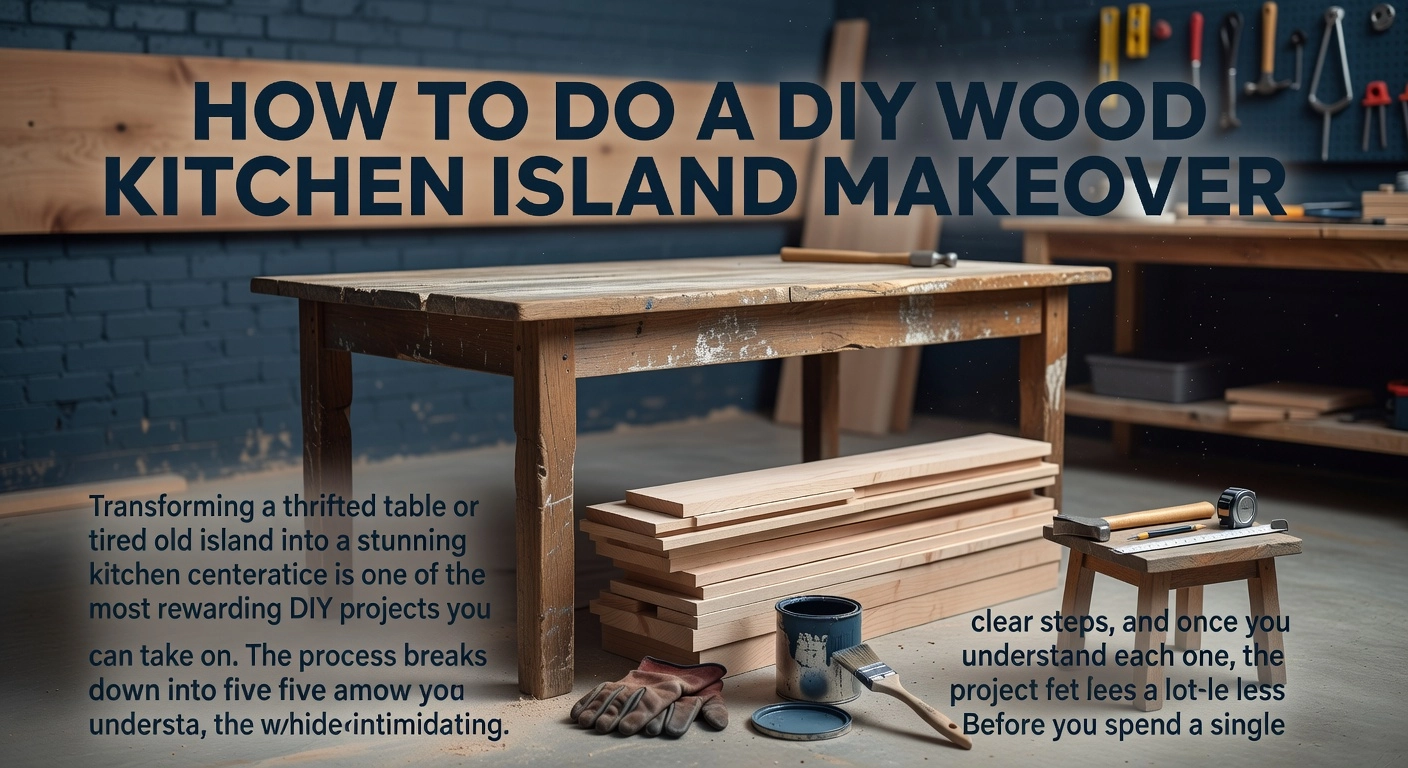
How to Do a DIY Wood Kitchen Island Makeover
Transforming a thrifted table or tired old island into a stunning kitchen centerpiece is one of the most rewarding DIY projects you can take on. The process breaks down into five clear steps, and once you understand each one, the whole project feels a lot less intimidating.
1. Start by Assessing What You Have
Before you spend a single dollar on sandpaper or paint, take a good hard look at the piece you are working with. Structural soundness matters more than surface condition, because you can fix scratches and peeling finishes easily, but a wobbly frame or rotted leg is a much bigger problem. Grab the piece and give it a firm shake. If joints flex or you hear creaking, those areas need wood glue and clamps before anything else. Check legs and corner blocks for soft spots, cracks, or signs of insect damage, especially on thrift store finds that may have spent time in garages or barns. Look at the top surface for delamination, which shows up as bubbling or peeling layers, since this often signals plywood or MDF construction that may not hold up well to heavy refinishing. Pieces with solid wood tops and hardwood frames are your best candidates. Good bones plus a little reinforcement equal a great island.
2. Strip and Sand the Wood Top Correctly
The right grit progression is what separates a smooth, professional-looking finish from one that looks amateur. Start with 80-grit sandpaper to cut through old finishes, paint layers, and surface damage. This is your workhorse grit, so do not skip it even if the surface looks okay. Move to 120-grit next to level out the surface and erase the coarse scratches left behind by the 80-grit. Finish with 180-grit, then 220-grit, to smooth everything out and prep the wood for your chosen finish. Always sand with the grain, never across it, and vacuum or use a tack cloth between each grit change to clear out debris.
As for renting a belt sander, it is worth it if you are dealing with a large top covered in thick, old finish or heavy staining. A belt sander removes material fast. However, it requires a steady hand because it can gouge soft wood if you linger too long in one spot. For lighter refinishing jobs or the final smoothing passes, a random orbital sander or even hand sanding gives you much better control and a cleaner result.
3. Choose the Right Finish for Your Top
Kitchen island tops take a beating, so your finish choice really matters here. According to trending kitchen island ideas for 2026, warm natural wood tones are leading the way in kitchen design, which makes choosing a finish that enhances rather than obscures the grain a smart move.
Hard wax oil is a standout option for high-use surfaces. It penetrates the wood, provides solid water and scratch resistance, and is easy to spot-repair by applying a fresh coat to a worn area without refinishing the whole top. Food-grade mineral oil is the simplest and cheapest option, but it offers minimal protection and needs reapplication constantly, making it better suited for cutting boards than a full island top. Polyurethane creates a hard film coating with excellent durability, but repairs mean sanding everything back and starting over, and the plastic-like finish is not for everyone. Danish oil sits in the middle of the pack; it gives a nice satin look and is easy to apply, but it does not hold up to heavy kitchen abuse as well as hard wax oil or polyurethane. For most beginners, hard wax oil is the best balance of durability, natural appearance, and easy maintenance.
4. Paint or Refinish the Cabinet Base
The base is where you can really transform the whole look of the island. Start with a thorough cleaning using a degreaser, since kitchen grime and grease will prevent paint from sticking no matter what you do afterward. Sand the entire surface with 120 to 150-grit to degloss it and give the primer something to grip. Fill any holes or dings with wood filler, let it dry fully, then sand smooth.
Primer selection is critical if you are working over previously painted or stained wood. A bonding primer handles glossy or tannin-rich surfaces that standard primers slide right off. Apply one to two coats and let each dry completely. For the topcoat, a foam roller handles flat cabinet panels beautifully, leaving almost no texture, while an angled brush handles edges, corners, and recessed details. Apply thin coats rather than one thick one, and lightly sand between coats with 220-grit for that clean, factory-like result. Two to three thin coats of a quality cabinet enamel in semi-gloss will hold up to daily kitchen use.
5. Finish Strong With Final Assembly
Once your finishes have cured, the final assembly stage pulls everything together. If you want mobility, install heavy-duty locking casters rated for the full weight of the island including the top. Locking wheels let you slide the island out of the way when needed but keep it rock solid during meal prep. A lower shelf adds both storage and structural support; cut plywood to fit between the legs and secure it with brackets or pocket screws for a sturdy, finished look.
Before you call the project done, set the island in its final spot and check it with a level in all directions. Adjust caster heights or add shims as needed until it sits perfectly flat and stable. Load it with some weight and check for any wobble. Tighten every fastener one final time. A level, stable island is the difference between a piece that feels custom-built and one that feels like a DIY project that is not quite finished.
Why Wood Kitchen Islands Are Having a Major Moment in 2026
If you have been noticing more wood islands popping up in kitchen inspiration boards and renovation reveals, you are not imagining things. The numbers actually back it up. According to the Houzz 2026 U.S. Kitchen Design Trends Report, 29% of renovating homeowners added a brand new island to their kitchen, and another 29% updated an existing one. That means more than half of all kitchen renovators in the study were doing something with their island. Among those making changes, 80% chose a rectangular shape, and 52% went with islands longer than 7 feet. Kitchens are clearly being built around bigger, bolder islands, and wood is leading the charge as the material of choice.
A big part of why wood is winning right now comes down to a broader shift in how people want their kitchens to feel. The all-white, perfectly minimal kitchen that dominated the last decade is losing its grip. Homeowners want spaces that feel warm, lived-in, and personal rather than sterile and showroom-perfect. The Houzz 2026 kitchen remodeling trends coverage confirms this shift, noting that wood actually surpassed white as the top cabinet color choice, with 29% of renovators selecting wood tones compared to 28% choosing white. A wood island anchors this warmer aesthetic beautifully, acting as the natural, grounding centerpiece that ties the whole kitchen together.
Another trend making wood islands feel so fresh right now is the move toward furniture-style and freestanding designs. Think less “built-in kitchen fixture” and more “piece I inherited from my grandmother.” The dairy table revival is a great example of this, bringing back classic table-style prep surfaces with ornate turned legs, open shelving underneath, and details that look more like a custom dining table than a standard kitchen cabinet. These islands feel collected and personal rather than constructed, which fits perfectly with the shift toward kitchens that reflect individual personality instead of following a cookie-cutter template.
You also do not need to gut your entire kitchen to get in on this trend. One of the smartest moves in 2026 kitchen design is pairing a wood island top with stone or tile on the perimeter counters. This mixed material approach creates visual depth and contrast without requiring a full renovation. Butcher block and wood slab tops are leading this pairing trend, chosen by 44% of renovators who used different materials for the island versus the surrounding counters, a jump of 13 percentage points year over year. It is an easy way to introduce warmth and texture as a focal point while keeping your existing counters intact.
Finally, wood islands are not just sitting there looking pretty. With 53% of renovators adding an appliance like a dishwasher or microwave to their island, these surfaces are working harder than ever. That increased workload makes the material you choose genuinely important. A properly finished wood surface, whether sealed butcher block or a treated hardwood slab, holds up well to daily use when cared for correctly, making it a smart practical choice as much as an aesthetic one.
What to Look for When Buying a Wood Kitchen Island
Shopping for a wood kitchen island involves more than picking one that looks pretty in a showroom. There are five key things every beginner should evaluate before spending their money.
1. Wood Species and Construction Quality
Start by checking the butcher block thickness. For any island you plan to actually use for food prep, look for a top that is at least 1.5 inches thick. Thinner tops are fine for decorative purposes, but they will not hold up well under daily chopping and cutting. You will also want to understand the difference between edge-grain and end-grain construction. Edge-grain tops have wood strips running horizontally across the surface, making them more affordable, easier to maintain, and perfectly durable for most home kitchens. End-grain tops have the wood fibers facing upward in that classic checkerboard pattern, which is gentler on knife edges and somewhat self-healing over time, but they cost more and need more frequent oiling. Finally, always check that the wood is kiln-dried. This controlled drying process removes excess moisture so the wood stays stable in your kitchen instead of warping, cracking, or shifting with seasonal humidity changes.
2. Pre-Finished vs. Unfinished Tops
A pre-finished top is ready to use right out of the box, which is genuinely convenient. The factory coating provides immediate protection and often uses food-safe sealers. The downside is less flexibility; you cannot easily change the color or switch to a custom finish later. An unfinished top gives you full control. You can apply a pure mineral oil finish for a cutting surface, or choose a harder sealer for a lower-maintenance option if you mostly use the island for homework and snacks. The tradeoff is that you need to finish it yourself before using it, which takes some time and effort. For most beginners, pre-finished works well as a starting point.
3. Base Construction and Storage
The base is where a lot of budget islands quietly cut corners. Look for plywood or solid wood construction in the cabinet box. Plywood resists warping and handles weight well, making it a better long-term choice than MDF, which can swell around moisture and dent more easily. For storage, test the drawer slides. Full-extension and soft-close slides feel noticeably smoother and last far longer than basic side-mount hardware. Adjustable shelves are a small detail that makes a big practical difference, letting you reconfigure storage as your needs change.
4. Size and Kitchen Fit
Bigger islands are trending hard right now. According to the Houzz 2026 U.S. Kitchen Design Trends Report, 52% of renovating homeowners chose islands longer than seven feet. That is a real shift, but it does not mean you should automatically go large. The rule to follow is the 42-inch minimum clearance on all walkable sides of the island. This gives you comfortable room to move, open cabinet doors, and work alongside another person without feeling cramped. Measure your kitchen carefully before settling on a size, because a gorgeous oversized island in a small kitchen creates more frustration than function.
5. Freestanding vs. Built-In
For beginners and renters especially, freestanding islands are worth a serious look. They install without major renovations, can be repositioned when you rearrange the kitchen, and are much easier to refinish or repair because you can simply move them to a garage or outdoor space to work on them. Built-in islands look more polished and integrate better with plumbing or electrical needs, but they come with higher installation costs and less flexibility down the road. If you are not sure how long you will stay in your current home, a high-quality freestanding island gives you most of the benefits with far fewer complications.
Frequently Asked Questions About Wood Kitchen Islands

Got a question about your wood kitchen island? You are not alone. These are the five questions beginners ask most often, and the answers are simpler than you might expect.
How Often Should You Oil a Butcher Block Kitchen Island?
For a brand new or freshly sanded island, oil it frequently in the first month, think every few days for the first couple of weeks, then taper down to weekly. After that initial break-in period, aim for once a month during the first year. Once the wood is well-conditioned, you can stretch that to every two or three months depending on how much you use it and where you live. Dry climates and heated winter air pull moisture out of wood faster, so you may need to oil more often in cold months. The easiest test is to drip a few drops of water on the surface. If the water beads up, you are good. If it soaks right in, it is time to oil.
Can You Use a Butcher Block Island as a Cutting Surface?
Yes, especially if you have an edge-grain or end-grain top finished with a food-safe oil. Butcher block was literally designed for chopping, and dense hardwoods like maple hold up well to knife work over time. That said, most experts still recommend using a separate cutting board for raw meat and fish. The reason is simple: deep cuts from heavy knives can harbor bacteria, and raw proteins need extra caution. For bread, vegetables, and general prep work, cutting directly on a well-oiled butcher block surface is perfectly fine and honestly quite satisfying to use.
What Is the Best Oil for a Wood Kitchen Island?
Food-grade mineral oil is the go-to starting point for most beginners. It is affordable, odorless, widely available, and safe for food contact surfaces. Many homeowners pair it with a beeswax conditioner to add a light protective layer on top. If you want something more durable, pure tung oil is worth considering. It creates a harder, more water-resistant finish and holds up better under heavy daily use. The tradeoff is that it takes significantly longer to cure, sometimes up to a month for full hardness. Stick with mineral oil for easy regular maintenance, and consider tung oil if you want longer-lasting protection between applications.
How Do You Get Water Stains Out of a Wood Kitchen Island?
The treatment depends on the type of stain. White rings and light surface marks usually respond well to gentle sanding with 180 to 220 grit sandpaper followed by a fresh coat of oil. For mild cases, a paste of baking soda and water can sometimes lift the mark without sanding at all. Dark black stains are a different story. Those typically mean water has penetrated deeper into the wood, often reacting with tannins or iron. You will need an oxalic acid treatment, sometimes sold as wood bleach, to neutralize the stain before sanding and refinishing. Always test in a hidden spot first, and wipe spills promptly to avoid stains forming in the first place.
Can You Refinish a Wood Kitchen Island Without Removing It From the Kitchen?
For light touch-ups like spot sanding and re-oiling, absolutely yes. You can handle routine refreshing right in place with minimal mess if you use a vacuum sander and lay down drop cloths. A full strip-and-refinish job, where you sand down to bare wood and apply a fresh finish, is much easier if your island is freestanding and can be rolled or carried to a garage or outdoor workspace. Better ventilation makes the process cleaner and safer. The good news is that wood islands can be sanded and refinished multiple times over their lifespan, which gives them a major long-term advantage over stone or laminate surfaces that you simply cannot renew the same way.
Your Wood Kitchen Island Will Last Decades With the Right Care
A wood kitchen island is one of the most valuable things you can add to your home, and with the right habits in place, it genuinely can last for decades. The key takeaway from everything covered in this guide is simple: wood requires specific care, but that care is completely manageable for any homeowner. You do not need to hire a professional or buy expensive equipment to keep your island in great shape.
Most of the problems you will encounter, including scratches, water stains, and dryness, are fixable right at home using the methods outlined above. A little mineral oil, some sandpaper, and a consistent routine go a long way.
For deeper guidance, WoodStuffHQ has dedicated guides on butcher block oiling routines, scratch repair tutorials, and full DIY island makeover walkthroughs worth bookmarking.
When evaluating your current island or shopping for a new one, think beyond how it looks. Focus on wood species, finish type, and how it will hold up to daily use in your kitchen.
Your practical next step is simple: do the water-drop test on your island top today. If the water soaks in quickly, your wood is thirsty and needs oiling right now. That one small check tells you everything about where your island stands.
Conclusion
A wood kitchen island is more than just a surface; it is a centerpiece that brings warmth, function, and character to your home. As you move forward, keep these key points in mind: choose a wood species that fits your lifestyle and kitchen conditions, seal and finish it properly to protect against moisture and daily wear, and commit to a simple maintenance routine that keeps it looking its best for years.
Whether you are buying new, building from scratch, or breathing life back into an older island, the right knowledge makes all the difference. You do not need to be an expert carpenter or designer. You just need a clear plan.
Now it is time to take that next step. Measure your space, explore your options, and start building the kitchen you have always imagined. Your perfect wood island is closer than you think.