

Picture this: you walk into a bedroom and spot a beautiful dressing table sitting in the corner, perfectly crafted from rich, warm wood. It feels timeless, doesn’t it? Now imagine building one yourself. Sounds intimidating, but here’s the good news: with the right wood knowledge, it’s totally achievable even for a complete beginner.
Whether you’re dreaming of a rustic farmhouse style or a sleek modern finish, choosing the right wood is the very first step toward creating a dressing table you’ll love for years to come. And that’s exactly what this guide is here to help you with.
What Is a Dressing Table and Why Wood Matters
A dressing table (also called a vanity or vanity table) is a dedicated piece of bedroom furniture built around one simple idea: giving you a comfortable, organized spot to get ready. At its core, every dressing table shares three key components: a flat working surface, drawers or compartments for storing cosmetics, brushes, and jewelry, and a mirror that is either built in, attached, or freestanding. Modern versions often go further, adding LED lighting, charging ports, and flip-top storage to keep your routine clutter-free.
The history of the dressing table stretches back to the 17th century, when small “toilet tables” first appeared in European bedrooms. By the mid-1700s, mirrors had become standard, and craftsmen like Thomas Chippendale were designing elaborate versions with hidden compartments and folding tops.
The Art Deco era of the 1920s and 1930s transformed them into glamorous statement pieces featuring sleek veneers, chrome accents, and beveled mirrors. Mid-century modern design stripped things back to clean, minimal lines, and today’s versions focus on compact, multifunctional designs that work even in small spaces.
Here is where wood choice becomes genuinely important. A dressing table faces daily exposure to perfumes (which contain alcohols and acids), liquid foundation, moisturizers, humidity, and constant surface contact. These conditions are far more demanding than what a bookshelf or side table endures. Choosing the right wood species, whether oak, walnut, or mahogany, and pairing it with a durable protective finish can mean the difference between a surface that lasts decades and one that stains within months.
This growing demand is reflected in the numbers. According to market research from Intel Market Research, the global dressing table market was valued at roughly USD 1.85 billion in 2025 and is projected to reach USD 2.75 billion by 2034, fueled largely by social media beauty culture and the rise of dedicated “get ready” spaces at home. As covered on Britannica, these pieces have always reflected the culture around personal grooming, and right now, that culture is booming.
Throughout this guide, we will walk you through everything you need to know: how to buy the right dressing table, how to build one yourself, how to restore a vintage piece, and how to protect your investment long-term.
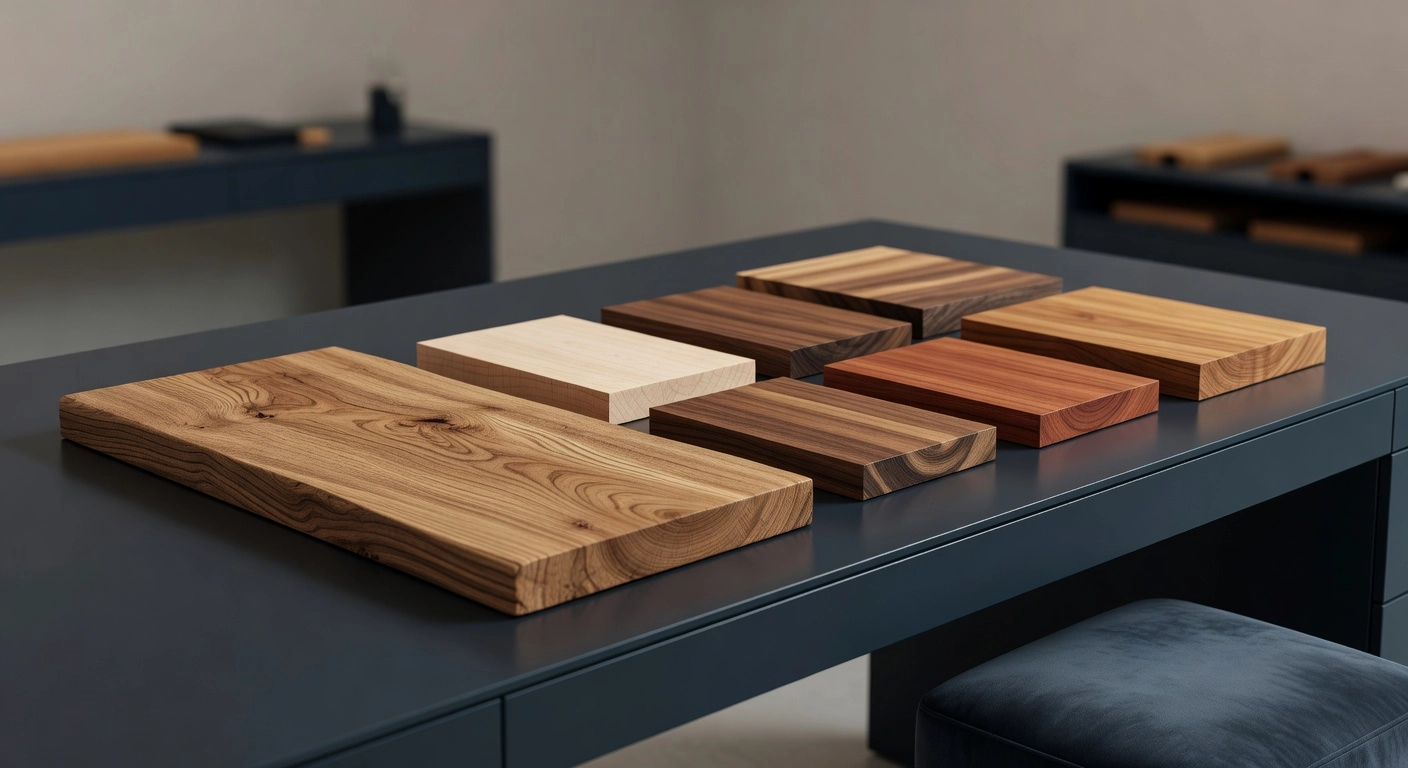
Best Wood Species for a Dressing Table Top
Not all wood is created equal when it comes to a dressing table top, and the species you choose makes a real difference in how your vanity holds up to daily use. Here is a breakdown of the best options, from beginner-friendly picks to premium trending choices.
1. Oak: Durable, Widely Available, and DIY-Friendly
Oak is one of the most popular choices for dressing table tops, and for good reason. It is easy to find at most lumber yards, works well with standard DIY tools, and holds up to everyday wear once properly finished. The key thing to know is the difference between red oak and white oak. Red oak has a more open, porous grain that soaks up moisture and cosmetics if you skip the sealing step. White oak, on the other hand, has natural microscopic structures called tyloses that block water penetration at the cellular level, making it a much smarter pick for a vanity surface.
White oak is also a major trend in 2026, showing up in modern, Scandinavian, and transitional bedroom designs. According to our cabinet finishing experts, it ranks highly for moisture resistance, hardness, and beginner workability.
2. Maple: The Best Natural Defense Against Cosmetic Spills
If you are serious about a surface that resists staining from foundations, serums, and nail polish, hard maple deserves your attention. Its tight, closed grain means liquids have far less opportunity to soak in compared to open-grain species. Hard maple is also one of the hardest domestic wood options available, which translates to excellent scratch and dent resistance during daily use. It finishes beautifully for contemporary and minimalist designs, though you will want to use a wood conditioner before staining to avoid blotchy results.
3. Mahogany and Teak: Built for Humidity and Long-Term Beauty
These two tropical hardwoods have been favorites for vintage and luxury vanities for generations, and they still earn that reputation today. Teak contains natural oils that repel moisture, resist warping, and protect against mold without relying entirely on a topcoat finish. Our marine wood specialists highlight teak as a top performer in humid environments, with a potential lifespan of 30 to 50 years or more. Mahogany is slightly softer but highly stable, ages with a gorgeous reddish-brown patina, and refinishes easily. Both species are worth the higher price tag if you want a piece that improves with age.
4. Plywood and Engineered Wood: The Smart Budget Option
For DIY builds, furniture-grade plywood is genuinely a great choice, as long as you pick the right kind. Options like Baltic birch or cabinet-grade plywood with waterproof adhesives offer excellent dimensional stability, meaning they resist warping as humidity changes. The critical rule: never use construction-grade plywood for a dressing table top. It often contains voids in the core and uses adhesives that break down with moisture exposure. Top your plywood surface with a quality finish, a hardwood veneer, or even a laminate layer for a polished look without the solid-wood price.
5. Burl Veneers and Fluted Oak Panels: The 2026 Aesthetic Upgrade
Burl veneers and fluted oak panels are having a major moment right now. The swirling, organic patterns of burl wood and the tactile texture of fluted panels add a designer-quality look to any vanity. Veneer is actually a smart choice over solid wood in several situations: it costs less, uses premium species more efficiently, and the engineered core underneath stays more stable in fluctuating humidity. The tradeoff is that veneer edges need careful sealing and protection from chips or peeling. For a statement dressing table that looks expensive without the full solid-wood price, a quality burl veneer over a plywood substrate is hard to beat.
Quick Species Comparison for Beginners
| Species | Cosmetic Resistance | Humidity Tolerance | DIY Workability | Relative Cost |
|---|---|---|---|---|
| White Oak | High (with sealing) | Very High | Good | $$ to $$$ |
| Hard Maple | Very High | Medium-High | Good | $$ to $$$ |
| Teak | High | Highest | Moderate | $$$$ |
| Mahogany | High | High | Good | $$$ to $$$$ |
| Furniture-Grade Plywood | High (with finish) | High | Excellent | $ to $$ |
| Burl Veneer | High (aesthetic) | High (core) | Good | $$ to $$$ |
For most beginners, white oak or hard maple offer the best balance of performance, availability, and workability. If budget is the priority, furniture-grade plywood with a quality topcoat is a completely legitimate choice that many professional vanity builders use regularly.
Dressing Table Styles Worth Knowing Before You Buy or Build
Before you spend a single dollar or cut a single board, it helps to know which dressing table style actually speaks to you. Style shapes everything downstream, from the wood species you choose to the finish you apply and the hardware you bolt on. Here is a quick tour of the five styles worth knowing right now.
Classic and Traditional This is the dressing table most people picture first. Think carved legs, ornate drawer pulls, a large framed mirror, and rich wood tones. Mahogany and walnut are the go-to species here because their deep grain and warm color suit polished or lightly distressed finishes beautifully. Traditional tables tend to have multiple drawers for serious storage, and they pair naturally with a cushioned stool. If your bedroom leans formal or heritage-inspired, this style fits right in.
Mid-Century Modern Clean lines, tapered legs, minimal hardware, and just enough warmth to feel inviting without feeling fussy. Teak and walnut finishes define this look, and both are making a strong comeback heading into 2026 as part of the broader natural wood trend. Mid-century modern dressing tables work well in contemporary bedrooms because they feel timeless without trying too hard. According to current dressing table trend analysis, natural wood tones and streamlined silhouettes are among the top-performing aesthetics right now.
Art Deco Bold geometric inlays, high-gloss lacquered surfaces, and chrome hardware give Art Deco pieces an unmistakable glamour. This style is especially popular for upcycling vintage finds because the strong shapes hold up well even when the original finish needs replacing. If you spot an old vanity with dramatic lines at a thrift store, there is a good chance it has Art Deco bones worth restoring.
Compact and Multifunctional Desk-vanity hybrids with flip-top lids, fold-out mirrors, and hidden compartments are one of the biggest dressing table trends for 2026. Design roundups for 2026 point to these space-saving pieces as essential for smaller bedrooms and apartments. They look like a regular desk when closed and transform into a full vanity setup when opened.
Minimalist Warm Wood Fluted panels, rounded edges, and organic forms are replacing the sharp geometry of earlier minimalist designs. Reclaimed and eco-friendly wood options are gaining serious traction here, making this style a strong choice if sustainability matters to you.
Knowing your style upfront prevents costly mismatches. Heavy ornate hardware looks out of place on a minimalist piece, just as a sleek lacquered finish undercuts a traditional carved frame. Nail the style first, and the right wood, finish, and hardware choices follow naturally.
How to Choose a Dressing Table Worth Buying
Picking a dressing table that actually holds up takes a little more than browsing photos online. Once you know what to look for under the surface, you will be far less likely to end up with something that wobbles, peels, or falls apart after six months of daily use. Here are the six most important things to check before you buy.
1. Surface Quality Check
The top of your dressing table takes a beating every single day. Nail polish remover, moisturizer, hairspray, and the occasional hot styling tool all add up fast. That is why you want a solid wood top or at minimum a furniture-grade veneer with real wood slices over a stable plywood core. Foil-wrapped MDF and paper laminate look fine in the store, but both materials peel, bubble, and discolor with regular cosmetic exposure. A quick test: run your finger along the edges and underside. Quality pieces feel solid and show consistent grain without any plastic sheen or obvious seams.
2. Drawer Construction
A dressing table drawer gets opened dozens of times a week, so construction quality matters more here than almost anywhere else. Dovetail joints and full-extension drawer slides are the gold standard; the interlocking dovetail pattern resists racking and loosening over time, while full-extension slides let you actually reach items at the back without digging around. Stapled or glued box drawers, which are common in budget particleboard pieces, tend to sag and pull apart within a year or two of regular use. Also check that drawers have stops so they cannot be yanked completely out by accident.
3. Mirror Stability
Tilt-adjust, fold-out, and LED-integrated mirrors all need secure locking hardware to stay in position during use. A mirror that wobbles or drifts mid-application is genuinely frustrating. For freestanding tall mirrors or units with a full-length panel, wall anchoring is not optional; it is a safety requirement. Furniture tip-overs are a real hazard, especially in homes with kids or pets. Check that the piece either includes an anchor kit or has the hardware provisions to add one. As a bonus, LED-integrated mirrors with adjustable color temperature have become a popular upgrade in 2025 and 2026 because they give you accurate, shadow-free lighting.
4. Sizing for Your Space
Standard seated height for a dressing table sits around 29 to 30 inches, which allows your knees to fit comfortably under the surface while using a stool with a seat height of roughly 17 to 18 inches. Before you buy, measure your available wall space and then account for the stool pulled out plus at least two feet of clear walking space behind it. A width of 30 inches or more gives you enough surface area and storage without crowding a smaller room. Painter’s tape on the floor is a genuinely useful trick for visualizing the footprint before committing.
5. Budget Tiers
Your budget shapes what you can realistically expect from materials and construction. Entry-level options from IKEA and Target typically land under $400 and use basic particleboard or simple wood with minimal hardware; fine for occasional use but not built for the long haul. Mid-range picks from Wayfair and West Elm step up to better wooden styles, improved drawer hardware, and more thoughtful storage layouts, usually in the $400 to $900 range. For genuine vintage teak, mahogany, or antique solid wood pieces with real craftsmanship, platforms like Chairish or 1stDibs are worth browsing, though prices vary widely depending on age and condition.
6. Red Flags to Avoid
A few quick warning signs can save you a lot of regret. Foil-wrapped or paper-laminate MDF edges are the biggest one; they look fine new but fail quickly with any moisture or cosmetic contact. Non-adjustable mirrors that are glued or pinned in a fixed position offer no flexibility for different lighting angles or seated heights. Drawers without stops are both annoying and a spill risk. And any tall freestanding design that ships without wall-anchor hardware or at least provisions for it should give you serious pause. These red flags often cluster together in the same pieces, so spotting one usually means it is worth looking more carefully at the rest of the construction before buying.
Building a Wooden Dressing Table: A Beginner Overview
Building your own wooden dressing table might sound intimidating at first, but the truth is that plywood carcass construction keeps things surprisingly manageable for a first-time builder. The basic idea is straightforward: you are assembling a sturdy box using flat panels, fastened together with pocket screws or simple butt joints reinforced with wood glue. You do not need a workshop full of expensive machinery. A circular saw, a drill, a sander, and a handful of clamps will get you most of the way there. The result is a solid, fully customizable piece that you can size to fit your specific space and style, which is something you simply cannot do when buying off the shelf.
Plan These 5 Components Before You Cut a Single Board
Getting organized before you pick up a saw will save you a lot of frustration and wasted material. Here are the five key components to nail down early:
- Carcass box: This is the main plywood shell, made up of the sides, top, bottom, back panel, and any interior dividers. Getting the dimensions right here sets the tone for everything else.
- Drawer boxes and slides: Decide how many drawers you want and what hardware you will use. Soft-close full-extension slides are worth the small extra investment for a premium feel.
- Leg or base style: Tapered wood legs give a mid-century look, hairpin legs keep things modern, and a solid base panel works well for a built-in vibe.
- Mirror mounting method: More on this below, but decide early because it affects how you build the back and top of the carcass.
- Surface finish: Paint, stain, or a clear protective topcoat. This choice will influence which wood species you select for visible surfaces.
Sketching your design on paper, or using a free online planner, before cutting helps you build an accurate materials list and avoid costly mistakes. You can find solid inspiration and step-by-step approaches in resources like this beginner DIY furniture restoration guide to see how real builders tackle the planning phase.
Choosing Wood for Your First Build
For the carcass, furniture-grade 3/4-inch birch plywood is the go-to choice. It is stable, resists warping, takes paint and finish beautifully, and is easy to find at most home centers. For a more polished look on visible parts, pair your plywood carcass with solid hardwood drawer faces and edge banding along the top. Oak, maple, and poplar all work well. Poplar is especially beginner-friendly for painted projects because it is affordable and takes primer evenly.
Getting Drawer Depth Right for Cosmetics
Shallow drawers in the 2 to 3 inch depth range are ideal for keeping palettes, brushes, and small items visible at a glance without digging. Plan on at least one deeper drawer, somewhere in the 6 to 10 inch range, for bulkier items like a hair dryer, large bottles, or styling tools. This simple combination covers almost every storage need without overcomplicating the build. Check out this DIY furniture restoration guide for a practical example of how smart storage layout comes together.
Mirror Options That Keep Things Simple
Mirrors can trip up beginners if you try to overengineer them. The three most practical approaches are:
- A piano hinge flip-top that lifts to reveal hidden storage underneath, a clever and functional option
- A French cleat surface mount, which lets you hang and remove the mirror easily without permanent attachment
- A freestanding mirror purchase, which skips integration entirely and keeps your build focused on the carcass and storage
For a first build, the freestanding option is often the smartest call. It removes one variable from a project that already has plenty of moving parts.
When you are ready to move from overview to actual construction, the detailed build guides at WoodStuffHQ have full cut lists, joinery breakdowns, hardware recommendations, and finishing instructions written specifically for builders at the beginner level.
How to Protect Your Dressing Table Surface from Makeup and Perfume
Your dressing table faces a tougher daily grind than almost any other piece of furniture in your home. Think about everything that lands on that surface: nail polish remover loaded with acetone, perfumes built on an alcohol base, thick moisturizers and serums packed with oils, and fine powder pigments from eyeshadow and blush that drift into every tiny crevice in the wood grain. Each of these substances attacks an unprotected or lightly finished surface in a different way, etching the finish, leaving white rings, or staining pores in ways that are genuinely permanent if you let them sit. Everyday furniture finishes simply were not designed with this kind of chemical exposure in mind, which is why a dressing table needs deliberate protection from day one.
Choose the Right Finish for Cosmetic Resistance
When it comes to picking a finish that holds up against the cosmetic gauntlet, not all products perform equally. Conversion varnish and catalyzed lacquer sit at the top of the list because they cure into an extremely hard, chemically bonded film that resists alcohol, acetone, and oils far better than standard finishes. These are typically applied by professional finishers, but if you are refinishing from scratch, they are worth the effort. For a DIY-friendly option that still gives solid protection, water-based polyurethane is a great middle-ground choice. It dries clear, has low odor, and applies well with a brush or foam applicator. Standard oil-based polyurethane works too, though it tends to amber slightly over time and offers less chemical resistance than its catalyzed counterparts.
How to Add a Protective Topcoat to Your Existing Vanity
If your dressing table already has a finish but it feels vulnerable, you can add protection without starting over. Begin by lightly sanding the entire surface with 220-grit sandpaper, just enough to scuff the existing finish and give the new coat something to grip. Then clean the surface thoroughly with a tack cloth to remove every trace of dust and oil. Apply two to three thin coats of your chosen topcoat, allowing each coat to dry fully before moving on. Lightly sand between coats with 320-grit paper for a smooth, professional feel. Thin coats beat thick ones every single time, since thick coats trap bubbles and dry unevenly.
Do Not Skip Grain Filler on Oak or Ash
If your vanity is made from an open-grain species like oak or ash, grain filler is not optional. Those wide, visible pores act like tiny traps for makeup pigments, and once powder or foundation works its way in, no amount of cleaning gets it back out. Apply a water-based grain filler after any staining but before your topcoats, sand it smooth once cured, and then proceed with your finish layers as normal.
Simple Daily Habits That Make a Big Difference
Protecting your finish does not have to be complicated. Place a glass or acrylic tray under your perfume collection and makeup palettes so spills are contained before they reach the wood. Keep a heat-resistant mat on the table for styling tools like curling irons and straighteners, since direct heat can blister even a well-cured finish quickly. Most importantly, wipe any liquid spill within seconds using a soft cloth. Acetone from nail polish remover can dissolve many finishes almost on contact, so speed matters more than technique when something gets away from you.
For your everyday cleaning routine, a soft microfiber cloth handles dust without scratching. When you need a deeper clean, use a small drop of mild dish soap in warm water, wring the cloth almost dry, wipe the surface, and dry it immediately. The one product category to avoid entirely is ammonia-based cleaners, including many glass and multi-surface sprays. These cleaners cloud and degrade lacquer and polyurethane finishes over repeated use, slowly stripping away the very protection you worked to build up. Gentle and consistent beats harsh and occasional every time.
Fixing Common Dressing Table Wood Damage
Even with the best protection habits in place, accidents happen. Nail polish remover gets knocked over, a cold glass leaves a ring overnight, or years of daily use catch up with the finish. Before you reach for any product, the single most important step is figuring out exactly what kind of damage you are dealing with. Treating the wrong problem the wrong way can make things significantly worse.
Here is a quick breakdown of the four main damage types you will encounter on a wooden dressing table top:
- White haze or milky rings are caused by moisture getting trapped in the finish layer, not the wood itself. The surface looks cloudy or foggy, often in a ring shape from a glass or bottle.
- Dark rings or stains mean water has pushed through the finish and reached the wood beneath. These are a step more serious.
- Etched or cloudy patches from alcohol or acetone look similar to moisture haze but feel rougher to the touch. These solvents actually dissolve many finish types on contact.
- Scratches need to be assessed by depth. A scratch through the topcoat only looks lighter or shinier than the surrounding area. A scratch that has gone through to bare wood will feel rough and may show exposed grain.
Fixing White Haze and Moisture Rings
For dressing tables finished with an oil-based or penetrating finish like Danish oil or tung oil, try applying a small amount of paste wax with a pad of 0000 steel wool. Rub gently with the grain using light, even pressure. The steel wool provides just enough abrasion to break up the haze while the wax fills in and polishes the surface. Buff it out with a clean cloth and the milky appearance often lifts completely.
For polyurethane finishes, this wax trick is less reliable. The better approach is to lightly sand the affected spot with 220 to 320 grit sandpaper, just enough to scuff the surface, then apply a thin spot coat of matching polyurethane. Feather the edges as you apply so the patch blends in rather than sitting on top like a patch.
Fixing Alcohol and Acetone Damage
Alcohol and acetone etching is the most frustrating type of finish damage because there is no quick surface fix. These solvents dissolve lacquer, shellac, and many varnishes at the molecular level, leaving behind a rough, compromised area that wax and polish simply cannot restore. The reliable fix involves sanding the affected area back to bare wood, restaining if needed to match the surrounding color, and then refinishing. This sounds like a lot of work for one small spot, but a surface-only treatment will just fail again quickly.
Scratch Repair by Depth
Shallow scratches that only cut through the topcoat are an easy fix. A furniture touch-up marker or wax fill stick in a matching color will fill the scratch and blend it visually. These are inexpensive and widely available. Apply, let it set, then buff lightly with a soft cloth.
Deeper gouges that reach the wood itself need a bit more attention. Clean the area, press in wood filler or epoxy wood putty, and let it cure fully before sanding smooth. Then apply a matching wood stain and recoat with your finish of choice. Work in thin layers and sand lightly between coats for the cleanest result.
When to Spot Repair Versus Refinish the Whole Top
Spot repairs make sense for isolated damage. But if more than roughly 30 percent of your dressing table top is damaged, multiple spot repairs will end up looking patchy and inconsistent. At that point, a full strip and refinish of the entire top delivers a cleaner, more uniform result that actually holds up better over time.
For detailed, step-by-step instructions on tackling scratches and water stains specifically, the guides at WoodStuffHQ on scratch repair and water stain removal walk you through each method with clear instructions designed for home use without professional tools.
Restoring a Vintage or Secondhand Dressing Table
Picking up a secondhand dressing table is one of the smartest moves a beginner can make, and here is why. Older pieces, especially those built before flat-pack furniture took over, were often made from solid teak, mahogany, walnut, or oak. Those hardwoods are genuinely denser and more durable than the particleboard cores hiding inside most budget vanities today. A particleboard piece might last 5 to 10 years before the joints swell and crumble; a well-made vintage hardwood piece can last generations with the right attention. Teak and mahogany are particularly rewarding to restore because both species take finishes evenly, repair without crumbling, and develop a warm patina that modern furniture simply cannot replicate.
Start With a Thorough Assessment
Before you buy anything or pick up a single tool, walk through this quick checklist. Look for veneer lifting or bubbling along edges and corners, which is extremely common on older pieces. Wiggle the legs and joints gently to check for looseness or structural damage. Inspect the mirror hardware for cracked supports or stripped screws. Pull out every drawer and check for missing pulls or damaged runners. Finally, look at the legs closely for water damage, splits, or evidence of old insect activity. Photographing everything before you start gives you a reference point and helps you source matching hardware later.
Tackle Veneer Issues Before Anything Else
Veneer repairs need to happen before any sanding or finishing, because surface work on a lifted edge will only make things worse. For small lifted sections, slide a thin bead of wood glue underneath, press the veneer flat, and clamp it down using a piece of scrap wood as a caul to distribute pressure evenly. Let it dry fully overnight. For missing patches, source a veneer sheet in the same species as your piece, cut a clean patch slightly larger than the damaged area, glue it down, then trim it flush with a sharp chisel. Finish by feathering the edges with fine sandpaper, working gently to avoid sanding through the surrounding original veneer.
Stripping, Refinishing, and Blending
When it comes time to strip the old finish, let the piece guide your method. Carved, fluted, or detailed profiles common on Art Deco and Victorian vanities should be stripped with a chemical stripper rather than sanded, because sandpaper rounds off crisp details that define the piece’s character. Flat surfaces can be sanded directly. Once repairs are done, you will likely notice color mismatches between old wood and new patches. A tinted shellac wash coat solves this beautifully. Mix in a small amount of alcohol-soluble dye to match the surrounding tone, brush it on thinly, and it acts as a blending layer before your topcoat goes on.
Respect the Era When Finishing
For Art Deco or mid-century pieces, authenticity matters more than convenience. Preserve original hardware wherever possible; original pulls and handles are part of what makes a vintage dressing table worth restoring. When choosing a topcoat, reach for shellac or lacquer rather than polyurethane. Polyurethane looks plasticky on older wood and is difficult to repair spot by spot if it gets scratched later. Shellac and lacquer both repair easily, look period-correct, and are fully reversible if you ever want to refinish the piece again down the road. Patience with the process pays off every time.
How to Turn an Old Dresser into a Dressing Table
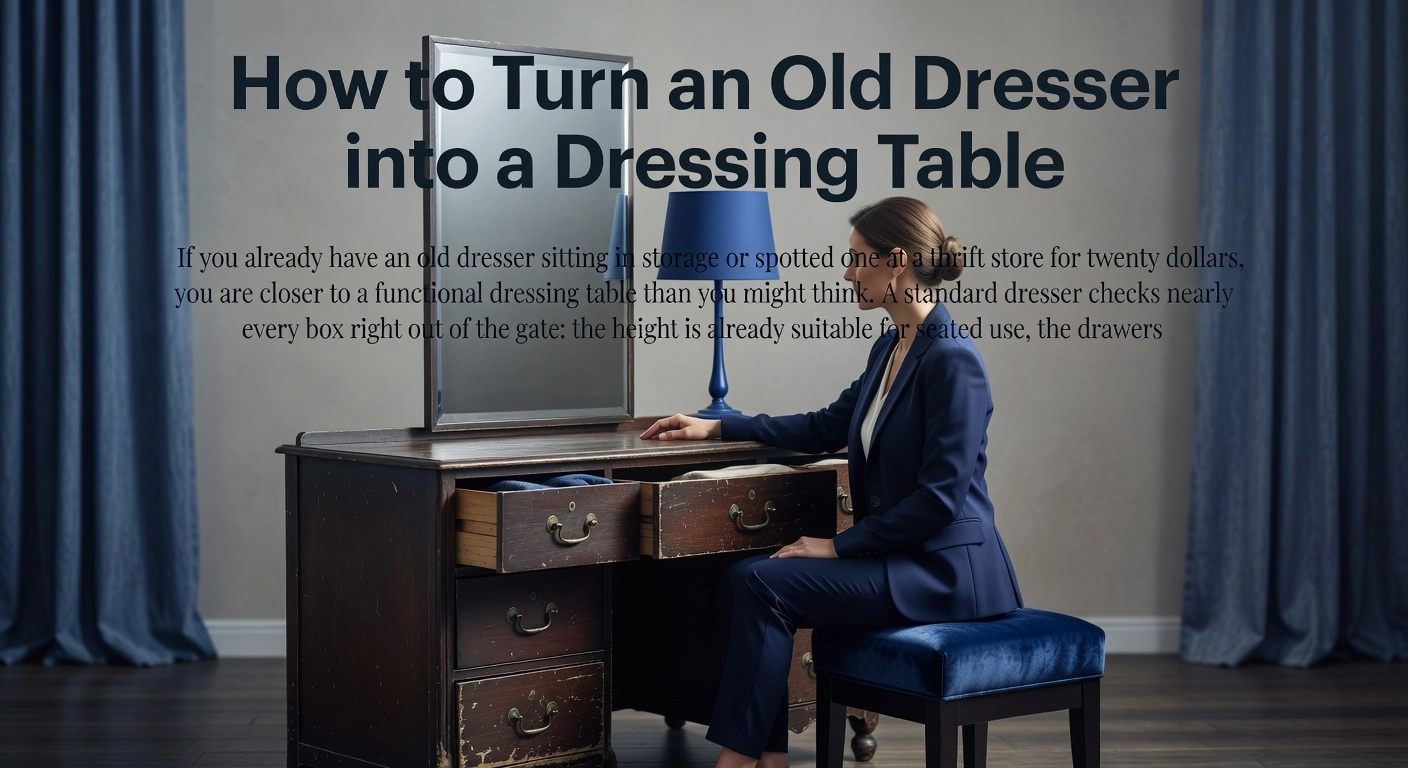
If you already have an old dresser sitting in storage or spotted one at a thrift store for twenty dollars, you are closer to a functional dressing table than you might think. A standard dresser checks nearly every box right out of the gate: the height is already suitable for seated use, the drawers give you built-in storage for makeup, skincare, and jewelry, and solid wood construction means you have a sturdy foundation that just needs some cosmetic attention. The two things most dressers are missing are a mirror and a refreshed surface finish. That is a much shorter to-do list than building something from scratch.
Picking the Right Dresser to Start With
Not every dresser makes a good candidate, so it pays to be selective before you commit. Look for a piece with a flat, level top that has no major warping or soft spots. Open and close every drawer; they should slide without sticking or falling off their tracks. A quick fix with paste wax often solves minor sticking, but severely broken drawer slides are a headache you do not need on a first project. Structurally, check that the legs are solid, the joints are tight, and there is no significant rot or water damage to the carcass. Thrift stores, estate sales, and online marketplace listings are great hunting grounds, and solid wood pieces are worth prioritizing over particleboard for long-term durability.
Three Easy Ways to Add a Mirror
The mirror is what transforms a dresser into a true dressing table, and you have three beginner-friendly options. The simplest approach is a freestanding floor or tabletop mirror placed directly behind the dresser; no tools required and you can reposition it anytime. The second option is attaching a mirror panel to a back board secured to the rear of the dresser, which creates a more built-in, intentional look. The third option, and arguably the easiest of all, is a trifold tabletop mirror that sits right on the surface. Many trifold mirrors include built-in LED lighting, which is a practical bonus for applying makeup in any light.
Surface Prep and the Hardware Trick That Changes Everything
Before any paint or stain goes on, the surface needs proper prep. Start with a degreaser wash to strip away old wax, oils, and grime. Follow that with a light scuff sand using 120 to 150 grit sandpaper to give the new finish something to grip. If you are painting, a coat of primer prevents bleed-through and improves adhesion. If you want to switch from paint to natural wood, a chemical stripper removes the old finish before you sand smooth up to 220 grit.
Once the prep is done, do not overlook the hardware. Swapping dated brass or plastic pulls for brushed brass or matte black replacements costs as little as ten to thirty dollars for a full set and requires nothing more than a screwdriver. The visual difference is significant enough that many people describe it as the single biggest upgrade for the least effort.
The Two-Tone Finish That Is Trending Right Now
One finishing approach that fits perfectly with 2026 interior design direction is treating the top differently from the body of the dresser. Strip and refinish the top to showcase natural wood grain or seal it with an epoxy coat for serious cosmetic resistance; then paint the base and drawers in a solid color. This two-tone look adds visual contrast and, more practically, gives you a top surface that resists the spills, nail polish smudges, and perfume drips that a painted surface would struggle with over time. It is a smart combination of style and function that works especially well with warm neutrals or deep moody tones on the base.
Dressing Table Trends Shaping 2026 Builds and Makeovers
If you want your next dressing table build or makeover to feel current, it helps to know where design is heading. These six trends are shaping what people are building, buying, and restoring right now, and most of them are completely doable at home without a professional workshop.
1. Sustainable and Reclaimed Wood
Eco-friendly sourcing has moved well past the “niche” stage. Reclaimed oak and pine are showing up in vanity builds everywhere because they bring something no fresh-cut board can replicate: instant warmth, patina, and character. Beyond the look, pairing reclaimed lumber with a low-VOC or water-based finish means fewer harsh chemicals off-gassing in your bedroom. If you are sourcing new wood, look for FSC-certified boards as a straightforward way to know your materials were harvested responsibly.
2. Fluted and Curved Details
Flat, plain drawer faces are giving way to routed fluting, and the good news is that this upgrade is far more beginner-friendly than it looks. A basic router fitted with a straight bit can cut clean, evenly spaced channels across a drawer front in an afternoon. Running three or five flutes down each drawer face adds real tactile interest and a furniture-quality finish without requiring advanced joinery skills. Soft curved edges and rounded cabinet corners are following the same trend, replacing sharp 90-degree angles with shapes that feel a little more organic and inviting.
3. Smart Functionality
LED mirror strips, USB-C charging ports routed neatly into drawer interiors, and pull-out organizer trays are the features people are requesting most in 2026 builds. These additions cross over from “nice to have” into genuinely practical territory, especially in smaller rooms where every surface and every outlet counts.
4. Warm Minimalism
Natural wood tones, clean silhouettes, and minimal hardware are replacing high-gloss or heavily ornamented styles. White oak, walnut, and reclaimed pine all fit this look perfectly because the grain does the decorative work for you.
5. Desk-Vanity Hybrids
Flip-top designs that hide a mirror and storage compartments underneath a flat surface are gaining real traction for apartments and multifunctional rooms. Closed, it reads as a regular desk. Open, it becomes a full vanity setup.
6. Two-Tone Color Finishes
Pairing a natural wood top with a painted base in sage green, warm white, or charcoal is one of the most-pinned dressing table looks right now. It is a simple way to add visual depth and works especially well when you are refreshing an older piece rather than starting from scratch.
Pulling It All Together for Your Dressing Table Project
You have covered a lot of ground in this guide, so let’s bring it all together. The four paths explored here each solve a different problem: buying smart helps you avoid flimsy construction before you spend money, building from scratch gives you full control over size and materials, restoring a vintage piece turns a thrift store find into something genuinely special, and protecting or repairing what you already have keeps a good dressing table performing well for years.
If there is one thing to hold onto from all of this, it is that your wood species and finish choice matters more than almost anything else. Those two decisions determine how well your dressing table survives daily contact with makeup, perfume, and moisture.
Even if you bought a finished piece yesterday, start a surface protection plan today. A simple tray for bottles and a quality topcoat applied early will prevent far more damage than any repair tutorial can fix later.
For next steps, WoodStuffHQ has you covered with veneer repair guides, scratch and water stain removal tutorials, and wood finishing guides walking you through specific topcoat application techniques.
Now we want to hear from you. Drop a comment below sharing your dressing table project, whether it is a smart buy, a DIY build, a vintage rescue, or a quick repair win. Questions are welcome too!
Conclusion
Building your own dressing table is more achievable than you might think, and it all starts with choosing the right wood. To recap the key points from this guide: softwoods like pine are budget-friendly and beginner-approved; hardwoods like oak and walnut offer lasting durability and timeless beauty; sheet materials like plywood provide stability at a lower cost; and matching your wood choice to your style and skill level makes the entire process smoother.
Now it is time to take action. Head to your local lumber yard, touch the materials, ask questions, and pick the wood that speaks to your vision. Whether this is your first build or your fifth, the right knowledge turns an intimidating project into an exciting one.
Your perfect dressing table is closer than you think. Start with the wood, and everything else will follow.