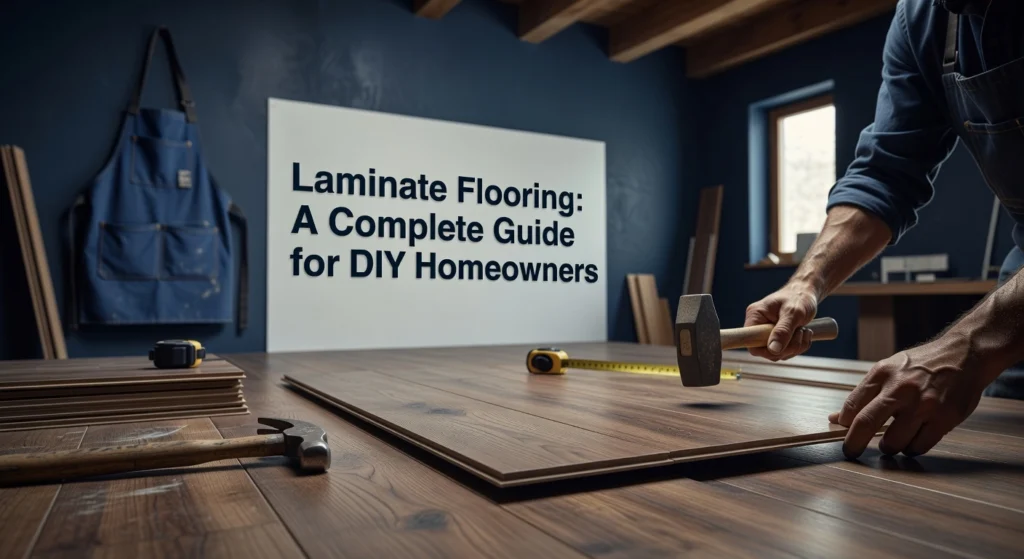

Transforming your home with new floors does not have to mean hiring expensive contractors or spending weeks on a complicated renovation. Laminate flooring has become one of the most popular choices for DIY homeowners, and for good reason. It is affordable, durable, and surprisingly straightforward to install, even if you have never tackled a flooring project before.
Whether you are updating a single room or refreshing your entire home, this guide will walk you through everything you need to know. From choosing the right product for your space to preparing your subfloor and completing a professional-looking installation, we have broken the entire process down into simple, manageable steps.
By the time you finish reading, you will understand the different types of laminate flooring available, the tools required for the job, and the most common mistakes beginners make and how to avoid them. No prior experience is necessary. With the right information and a little patience, installing laminate flooring is a project any motivated homeowner can complete with confidence. Let us get started.
What Is Laminate Flooring? A Layer-by-Layer Breakdown
Laminate flooring is a multi-layer synthetic product engineered to replicate the look of real wood, stone, or tile at a fraction of the cost. Understanding its construction helps you make smarter buying decisions and set realistic expectations before your first installation.
The Four Layers That Make It Work
Every laminate plank is built from four distinct layers, each serving a specific purpose.
1. The Wear Layer sits on top and is your floor’s first line of defense. It consists of a clear melamine resin coating embedded with aluminum oxide particles, the same ultra-hard mineral used in sandpaper. This layer resists scratches, stains, and everyday abrasion. Its thickness and aluminum oxide concentration determine the floor’s AC (Abrasion Class) rating, with AC3 recommended for heavy residential use and AC4 suited for light commercial settings.
2. The Photorealistic Image Layer lies just beneath the wear layer. This is a high-resolution photographic print on paper or foil, capturing detailed wood grain, stone veining, or tile patterns with striking accuracy. Premium planks use embossed-in-register (EIR) technology, aligning physical surface texture directly with the printed grain for a convincingly natural look and feel.
3. The HDF Core forms the structural backbone of the plank. High-density fiberboard, compressed to roughly 800 to 1,000 kg per cubic meter, delivers rigidity, impact resistance, and the precise machined edges that enable click-lock installation. Budget options sometimes use lower-density particleboard, which is less stable and more moisture-sensitive.
4. The Backing Layer balances the plank from below, preventing warping by counteracting the tension from the top layers. It also provides a basic moisture barrier and contributes to sound dampening.
These four layers are fused together in a direct-pressure laminate (DPL) process, bonded under intense heat near 350°F and pressures exceeding 300 PSI, producing a single rigid, stable plank. You can explore a detailed layer-by-layer breakdown of laminate flooring to understand exactly how each component contributes to the finished product.
Thickness: Why It Matters More Than You Think
Laminate planks range from 6mm at the budget end to 12mm and beyond at the premium tier. Thickness primarily reflects core depth and has a direct impact on three things: how the floor feels underfoot, how well it absorbs sound, and how forgiving it is over imperfect subfloors.
Thin 6mm to 7mm planks feel noticeably hollow and amplify footstep noise. They also require a near-perfectly level subfloor, since the rigid core has almost no tolerance for dips or bumps. Mid-range 8mm to 10mm options strike a practical balance for most residential rooms. Premium 10mm to 12mm planks feel genuinely solid underfoot, significantly reduce echo and clicking sounds, and can bridge minor subfloor irregularities more effectively. That said, thickness alone does not guarantee quality; a dense HDF core and a high AC wear rating matter just as much.
Click-Lock Installation: Built for DIYers
One of laminate’s greatest practical advantages is its click-lock tongue-and-groove floating floor system. Planks interlock along their long and short edges by angling or snapping them together, with no glue or nails required to fix them to the subfloor. The entire floor essentially floats as one connected surface, typically over a thin foam or cork underlayment. The only tools you genuinely need are a saw for trimming, a tapping block, and a pull bar. This makes laminate one of the most accessible flooring projects a first-time DIYer can tackle in a weekend.
A Brief History Worth Knowing
Laminate flooring was invented in 1977 by Perstorp, a Swedish company that later spun off the flooring division under the Pergo brand name. The first commercial product launched around 1980, reached European markets through the mid-1980s, and arrived in the United States during the 1990s. Early versions relied on glue for installation; click-lock technology came later and transformed it into the DIY staple it is today. By 2026, the category has expanded considerably into hybrid and waterproof formats, featuring moisture-resistant core treatments and tighter locking systems that make laminate a viable choice even in kitchens and mudrooms.
The Real Advantages of Laminate Flooring
Now that you understand how laminate is built, it is equally important to know why so many homeowners choose it over other flooring types. The advantages go well beyond price, covering everything from installation ease to long-term hygiene.
1. Serious Cost Savings From Day One
Laminate flooring is one of the most budget-friendly hard-surface options available. Installed pricing typically ranges from $1 to $7+ per square foot, which is significantly less than solid hardwood (which can exceed $10 to $20+ per square foot installed) or natural stone. For a 200-square-foot room, that difference can amount to thousands of dollars in savings. Even premium laminate with realistic textures and thicker planks stays competitive, making it an accessible upgrade for nearly any budget.
2. Beginner-Friendly DIY Installation
Click-lock tongue-and-groove systems allow planks to snap together without glue, nails, or adhesives. This floating-floor approach means most beginners can complete a standard room installation in a single day or weekend. Basic tools, a level subfloor, and a 48-hour acclimation period are all you really need to get started. According to industry analysts tracking 2025 and 2026 flooring trends, DIY demand is one of the key drivers behind laminate’s continued popularity.
3. Durability Built for Real Life
Laminate wear layers are infused with aluminum oxide, one of the hardest materials used in flooring. Products rated AC3 through AC5 on the international Abrasion Class scale can withstand heavy foot traffic, pet claws, dropped toys, and everyday scuffs without showing visible damage. Families with kids or pets can rely on AC4 or AC5-rated laminate for consistent performance over years of use.
4. Low-Effort, Long-Term Maintenance
No waxing, oiling, sanding, or refinishing is ever required. Regular sweeping and occasional damp mopping with a manufacturer-approved cleaner is sufficient to keep laminate looking fresh. This low-maintenance profile makes it a practical choice for busy households that want attractive floors without ongoing upkeep costs.
5. Cleaner Air, Healthier Home
Unlike carpet, laminate’s hard surface does not trap pet dander, dust mites, pollen, or allergens in its fibers. Debris stays visible on the surface and is easily removed with a quick sweep or vacuum pass. For households with allergy sufferers, asthma, or respiratory sensitivities, this hygienic advantage is a meaningful quality-of-life improvement.
6. Photorealistic Visuals That Fool the Eye
Modern embossed-in-register (EIR) printing technology aligns surface texture precisely with the printed wood grain or stone image beneath it, creating depth and realism that is genuinely difficult to distinguish from natural materials. Matte finishes, hand-scraped textures, and wide-plank formats popular in 2026 take this realism even further, delivering the aesthetic of high-end hardwood or natural stone at a fraction of the price.
The Honest Drawbacks You Should Know Before Buying
Laminate flooring offers compelling value, but being an informed buyer means understanding its real limitations before you commit. Here are six honest drawbacks worth weighing carefully.
1. Moisture Sensitivity Is the Biggest Weakness
The HDF core at the heart of most laminate planks is highly vulnerable to water. Standing water, persistent humidity, or even repeated spills that are not cleaned up immediately can cause the core to swell, warp, buckle, or delaminate. Unlike solid hardwood, which can often be dried out and refinished after water exposure, laminate damage is almost always permanent. Once the core absorbs moisture, the affected planks typically need full replacement. This makes laminate a risky choice for bathrooms, laundry rooms, or kitchens near sinks and dishwashers, even when products are labeled water-resistant. According to Mordor Intelligence’s laminate flooring market report, moisture sensitivity remains a leading restraint on market growth despite improvements in sealing technology.
2. Cannot Be Sanded or Refinished
Once the thin wear layer is scratched through or worn down from years of foot traffic, there is no option to sand and refinish the floor as you would with hardwood. The plank must be replaced entirely. Solid hardwood floors can often be refinished five or more times over their lifetime, extending their life for generations. Laminate simply does not offer that long-term flexibility, which affects its overall value over decades.
3. Hard and Cold Underfoot
Laminate’s rigid composite construction lacks the natural warmth and slight give of real wood or cork. In rooms where you stand for extended periods, such as kitchens or home offices, this hardness becomes noticeable and can cause foot fatigue. It also feels colder than wood, particularly in winter months.
4. Acoustic Issues
Because laminate is installed as a floating floor, it can produce a hollow, echo-prone sound with each step. Without high-quality underlayment, this clicking or clacking noise becomes especially obvious in open-plan living spaces or upper-floor rooms. As The Spruce notes in their laminate flooring overview, proper underlayment helps reduce but does not fully eliminate the problem.
5. Visible Seams and Edge Chipping Over Time
Lower-quality laminates are prone to seam separation, edge chipping, and gapping, particularly in high-traffic corridors or moisture-prone zones. The locking joints and core material can degrade with wear, leaving visible imperfections that are difficult to repair seamlessly. Investing in higher AC-rated products reduces this risk, but it does not eliminate it entirely.
6. Resale and Buyer Perception
Some homebuyers and real estate professionals still view laminate as a budget material, especially when compared to hardwood or natural stone. While laminate flooring pros and cons analyses suggest it can offer a reasonable return as an upgrade over old carpet, it rarely commands the same resale premium as natural materials. In higher-end markets, buyers may factor the cost of eventual replacement into their offer. Understanding this perception upfront helps you set realistic expectations for your investment.
How to Choose Laminate Flooring: Key Buying Criteria
Knowing what separates a durable floor from a disappointing one comes down to six measurable criteria. Work through each one before you buy, and you will match the right product to your household with confidence.
1. AC Ratings: Match Durability to Your Lifestyle
AC (Abrasion Class) ratings are the single most important number on any laminate product label. Established through standardized testing under EN 13329, the scale runs from AC1 through AC5 and measures resistance to wear, scratches, impact, and staining. AC1 suits only very low-traffic spaces like rarely used guest rooms. AC2 works for bedrooms with moderate foot traffic. AC3 covers heavy residential use, making it appropriate for living rooms, kitchens, and hallways. AC4 adds a stronger margin for busy households or light commercial settings. AC5 is reserved for high-traffic retail and public spaces. For most homes, especially those with pets or children, AC3 and AC4 represent the sweet spot, delivering proven durability without the unnecessary cost of a commercial-grade product.
2. Wear Layer Performance and Long-Term Longevity
In laminate, the wear layer is a resin-infused overlay embedded with aluminum oxide particles that shields the decorative image layer beneath. Unlike luxury vinyl plank, where wear layer thickness is measured in mils, laminate durability is quantified primarily through the AC rating rather than a standalone thickness measurement. A higher-performing wear layer resists daily abrasion and foot traffic far longer before the pattern beneath begins to show through. Quality AC3 and AC4 products regularly achieve 15 to 25 or more years of useful life in residential settings when properly maintained. Overall plank thickness, typically 8 to 12 mm, contributes to stability and underfoot comfort, but it is wear layer quality and AC rating that determine how long the surface itself holds up.
3. Waterproof vs. Water-Resistant vs. Standard Laminate
Standard laminate tolerates minor spills if wiped promptly but becomes vulnerable when moisture penetrates the HDF core, causing swelling and edge damage. Water-resistant products use improved surface treatments or sealed edges that extend tolerance to 24 to 72 hours of spill exposure. Waterproof-rated formats go further, using technologies such as HydroSeal or H2O Plus that apply hydrophobic treatments to core edges and locking joints, blocking moisture intrusion for extended periods. These hybrid formats are well suited for kitchens and pet households. However, no laminate withstands flooding or constant submersion the way rigid-core vinyl does, so avoid installation in full bathrooms regardless of the marketing language.
4. EN 13329 and NALFA Certifications: Why They Matter
Third-party certification removes guesswork from your purchase. EN 13329 is the European standard governing laminate performance, testing abrasion, impact resistance, staining, dimensional stability under humidity, and surface soundness. NALFA LF-01 is the North American equivalent, accredited through ANSI, with independent testing across wear, moisture, fading, and structural integrity. Certified products must meet verified minimum thresholds, providing protection against poorly manufactured imports that carry inflated claims. The slight price premium for certified flooring is consistently justified by real-world performance and reduced risk of early failure.
5. Underlayment: Attached Pad vs. Separate Options
Underlayment controls sound absorption, moisture protection, and tolerance for minor subfloor imperfections. Pre-attached foam pads are convenient and reduce installation steps, but they offer limited acoustic dampening and incomplete vapor protection since seams allow moisture passage. Separate underlayment options including dense foam with an integrated vapor barrier, cork, or felt perform significantly better on all three measures. Cork is especially effective at reducing impact noise and resisting compression over time. Over concrete subfloors, a dedicated vapor barrier within the underlayment is not optional; it is essential for protecting the floor’s core from ground moisture.
6. Warranty Terms and What Voids Them
Leading brands offer residential warranties ranging from 15 to 30 or more years covering wear, staining, fading, and joint integrity. However, understanding what cancels that coverage matters just as much as the warranty length itself. Steam mops, jet mops, and excessive wet mopping are among the most common warranty-voiding mistakes, along with standing water, improper acclimation, missing vapor barriers, and subfloor preparation failures. Always read the fine print before purchasing, since most warranties are non-transferable and require documented proof of proper installation and maintenance practices.
Laminate vs. Other Flooring Types: Side-by-Side Comparison
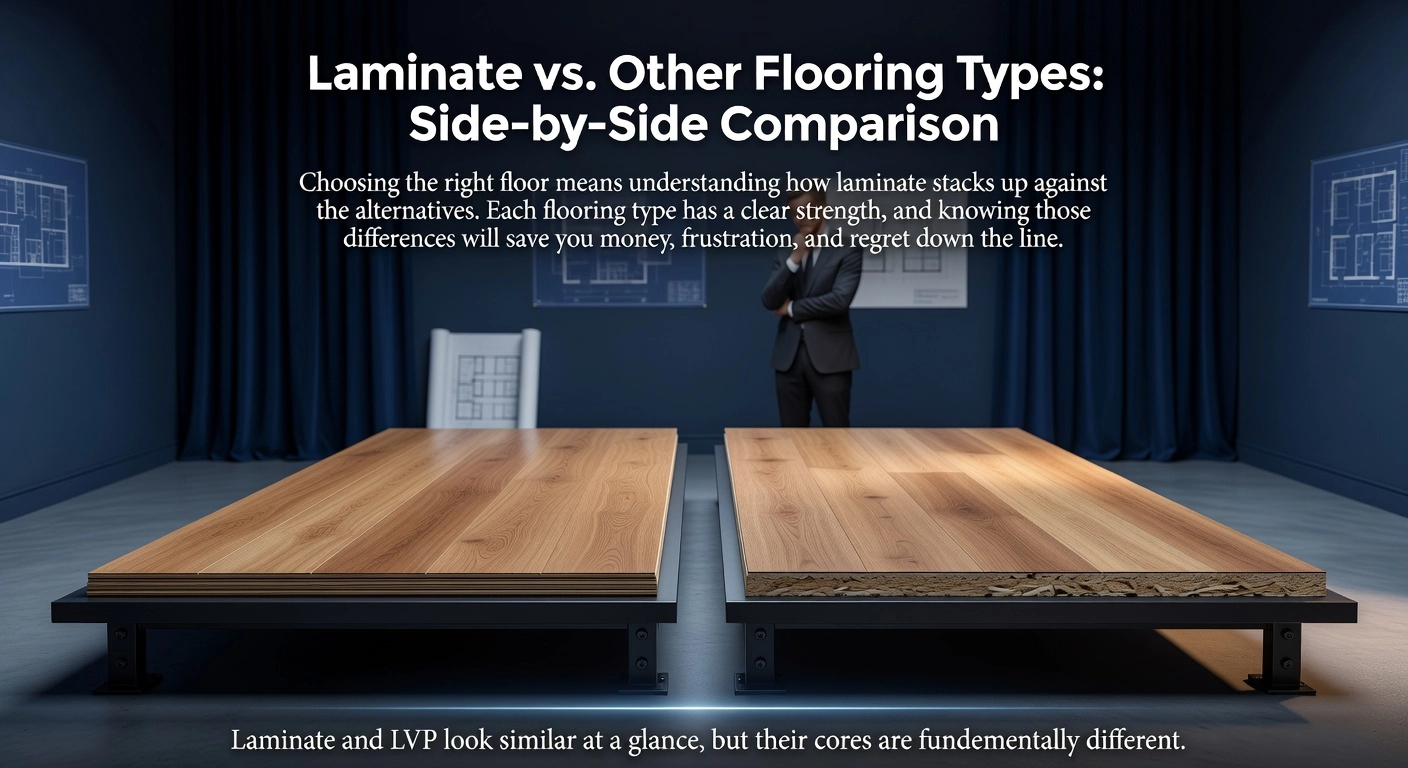
Choosing the right floor means understanding how laminate stacks up against the alternatives. Each flooring type has a clear strength, and knowing those differences will save you money, frustration, and regret down the line.
1. Laminate vs. Luxury Vinyl Plank (LVP)
Laminate and LVP look similar at a glance, but their cores are fundamentally different. Laminate is built around a wood-based HDF core, which gives it a firmer, more solid feel underfoot and strong scratch resistance. LVP uses a plastic-based core, making it 100% waterproof throughout every layer. That single distinction determines where each belongs in your home. Laminate is well-suited for living rooms, bedrooms, and hallways where moisture is not a concern. LVP is the correct choice for bathrooms, basements, kitchens, and laundry rooms where spills, humidity, and standing water are realistic risks. On cost, laminate typically runs $1 to $6 per square foot for materials, while mid-range LVP averages $2 to $4 per square foot, making laminate the budget winner in dry applications.
2. Laminate vs. Solid Hardwood
Solid hardwood is a premium, long-lasting product that can be sanded and refinished multiple times over its lifetime. It adds measurable resale value and carries an authenticity that no synthetic product fully replicates. However, hardwood materials routinely cost $8 to $15 or more per square foot, and proper installation typically requires professional nail-down or glue-down methods with specialized tools. Laminate costs a fraction of that, installs as a floating click-lock floor that most beginners can complete in a weekend, and delivers a visually convincing result. The trade-off is permanent: once a laminate floor’s wear layer is gone, the floor must be replaced rather than refinished. For budget-focused DIY projects or rental properties, laminate is the practical choice. For a forever home where long-term investment matters, hardwood earns its premium.
3. Laminate vs. Engineered Wood
Engineered wood and laminate share a layered construction philosophy, but their top layers are entirely different materials. Engineered wood uses a real hardwood veneer, typically two to six millimeters thick, bonded over a plywood core. That veneer can be lightly sanded and refinished once or twice, preserving the floor’s appearance for longer. Laminate replaces that real wood veneer with a high-resolution photographic image layer, which is why it costs less and resists scratches more consistently. Both support floating installation, making either accessible for a capable DIYer. Engineered wood materials run approximately $3 to $10 per square foot, while laminate stays at $1 to $6. If owning a floor with genuine wood on its surface matters to you and your budget allows it, engineered wood is worth the step up. If maximum scratch resistance and cost savings are the priority, laminate delivers.
4. Laminate vs. Tile and Stone
Ceramic, porcelain, and natural stone tile are fully waterproof, extremely hard-wearing, and built to last decades in demanding environments. They suit kitchens, bathrooms, and entryways better than almost any other material. The downsides are real, though. Tile is cold and hard underfoot, requires proper subfloor preparation, grout maintenance, and professional installation in most cases, with material costs ranging from $1 to $30 or more per square foot before labor. Laminate installs faster, feels warmer and softer underfoot (especially with a quality underlayment), and is far more beginner-friendly as a floating floor DIY project. For living spaces where comfort matters more than waterproofing, laminate is the more livable choice.
5. Quick Decision Matrix
Use this summary to match flooring type to your specific situation.
- Laminate: Dry rooms, beginner DIY installs, tight budgets, households with pets and kids needing scratch resistance
- LVP: Any room with moisture risk, including bathrooms, basements, and laundry rooms
- Solid Hardwood: High-budget projects, low-moisture homes, homeowners prioritizing refinishing potential and resale value
- Engineered Wood: Spaces with moderate humidity variation where real wood aesthetics and light refinishing matter
- Tile and Stone: Wet, high-traffic areas where waterproofing and long-term durability outweigh comfort and installation cost
The right floor is always the one matched to the room’s conditions, your household’s demands, and your realistic budget.
What Does Laminate Flooring Actually Cost in 2026
Understanding the full cost picture before you buy laminate flooring prevents budget surprises and helps you compare products accurately. Costs break down across four distinct categories, each affecting your final number.
Material-Only Costs
Budget laminate starts around $1 per square foot and typically features thinner cores with basic wear ratings suited to low-traffic areas. Mid-range AC3 products, the most popular choice for everyday living spaces, average $2 to $4 per square foot and handle moderate foot traffic well. Premium AC4 or AC5 products, including waterproof hybrid formats, can reach $5 to $7 or more per square foot. Thicker planks (10 mm and above), enhanced surface textures, and improved moisture resistance all push prices toward the higher end of that range.
Professional vs. DIY Installation
Professional installation adds $2 to $8 per square foot in labor, plus costs for underlayment, trim pieces, and transition strips. A 500-square-foot room professionally installed can easily run $3,000 to $6,000 or more depending on your market. DIY installation using click-lock floating floors dramatically changes that math; you pay only for materials, underlayment, and trim, potentially saving several dollars per square foot. That said, complex room shapes or subfloor problems can make professional help worth every dollar.
Hidden Costs That Surprise Buyers
Subfloor leveling is one of the most common budget busters, adding $1 or more per square foot when repairs are needed. Removing existing flooring typically costs $1 to $2 per square foot, with glued-down materials or tile running higher. Disposal fees commonly range from $150 to $400, and furniture moving may carry additional charges from your installer.
Long-Term Value Thinking
Laminate cannot be refinished once its wear layer is gone, meaning a full replacement is eventually required. Solid hardwood, by contrast, can be sanded and refinished multiple times over 50-plus years. Over a 20-year period, laminate may require one or two complete replacements, narrowing its initial cost advantage considerably.
Budgeting by Room Size
Measure length by width, subtract permanent fixtures, then multiply your total by 1.10 to account for a standard 10 percent waste allowance covering cuts and mistakes. A 200-square-foot bedroom needs roughly 220 square feet of material ordered, while a 500-square-foot living area requires about 550 square feet. Divide your adjusted total by the coverage listed per box and always round up to avoid running short mid-project.
Laminate Flooring Installation: What Every DIYer Needs to Know
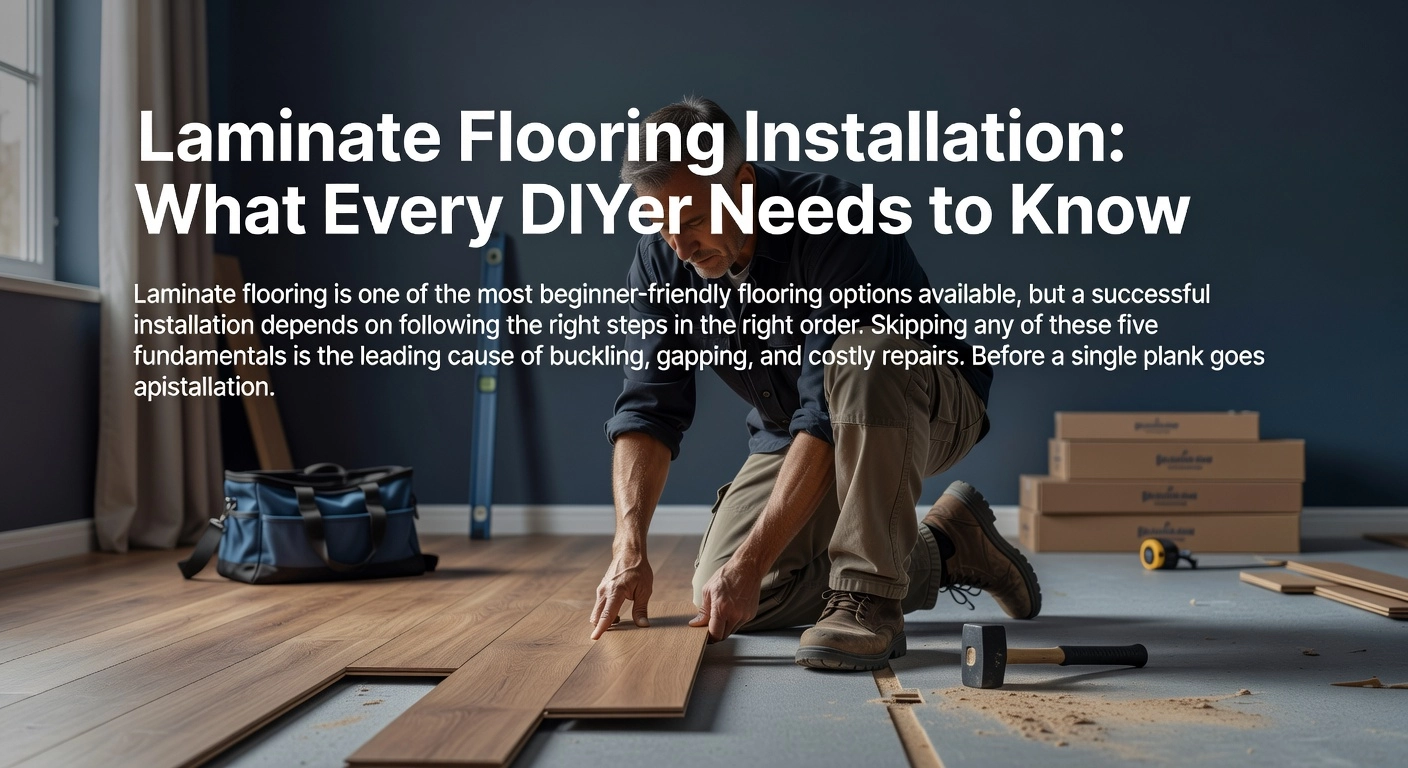
Laminate flooring is one of the most beginner-friendly flooring options available, but a successful installation depends on following the right steps in the right order. Skipping any of these five fundamentals is the leading cause of buckling, gapping, and costly repairs.
1. Prepare Your Subfloor First
Before a single plank goes down, your subfloor must be flat, clean, and completely dry. Laminate is a floating floor, meaning it is not fastened to the subfloor, so any imperfection underneath will telegraph through the finished surface and stress the locking joints over time. The flatness standard is strict: no more than 3/16 inch variation over any 10-foot span. Use a long straightedge to find high and low spots, fill low areas with leveling compound, and grind or sand down high ridges. Vacuum the surface thoroughly to remove all dust and debris. If you are installing over concrete, test for moisture before proceeding, since a wet slab is one of the most common causes of laminate failure. Compatible substrates include plywood, OSB, concrete, and most existing hard flooring such as vinyl or tile with flat grout lines. Do not install over carpet.
2. Leave an Expansion Gap Around Every Fixed Object
Laminate expands and contracts with seasonal changes in temperature and humidity. Without room to move, the floor has nowhere to go except upward, and buckling is the result. A minimum 1/4-inch gap is required around all walls, door frames, cabinets, pipes, and any other fixed object in the room. Place plastic spacers along the perimeter as you work to maintain consistent spacing throughout the installation. Once the floor is complete, baseboards, quarter-round molding, or transition pieces cover the gap neatly. The critical rule: never nail trim directly through the laminate planks, as this pins the floor and eliminates the gap you just created.
3. Install Underlayment Before Laying Planks
Most laminate products require a separate foam or cork underlayment, typically 2 to 3 mm thick, rolled out over the prepared subfloor before any planks are installed. This layer provides cushioning, sound absorption, and minor surface leveling. Butt the seams together without overlapping and tape them securely. If your laminate has pre-attached underlayment, skip the separate roll, but still install a 6-mil polyethylene vapor barrier over any concrete slab, lapping it a few inches up the walls. Over wood subfloors, the underlayment alone is generally sufficient.
4. Follow the Click-Lock Sequence and Protect the Edges
Laminate planks connect using a tongue-and-groove click-lock system that requires no glue or nails. Start in a corner with the tongue side facing the wall, use spacers to hold the expansion gap, and work row by row across the room. Stagger end joints by at least 6 inches between adjacent rows; this distributes stress evenly and prevents visible weak lines across the floor. Always use a tapping block and mallet to seat planks together, never strike a plank edge directly with a hammer. Use a pull bar to draw the final plank in each row into place without damaging the edge profile.
5. Acclimate the Planks Before You Start
Unopened cartons of laminate should sit flat in the installation room for 24 to 72 hours before you begin. This allows the planks to reach the room’s ambient temperature and humidity level, reducing movement after installation. Ideal conditions are 65 to 75 degrees Fahrenheit with 30 to 60 percent relative humidity. Skipping this step, particularly in climates with wide seasonal swings, is a frequent cause of post-installation gapping and buckling that could have been entirely avoided.
For complete room-by-room instructions, including how to handle transitions, doorways, and complex layouts, visit WoodStuffHQ’s full step-by-step laminate installation guide at woodstuffhq.com.
How to Care for Laminate Floors and Keep Them Looking New
Laminate floors are remarkably low-maintenance, but they do require consistent, correct care to stay looking sharp over the long term. Follow these six practices and your floor will hold its appearance for decades.
1. Sweep or Vacuum Daily in High-Traffic Areas
Grit, sand, and fine debris are the silent enemies of laminate flooring. These particles behave like sandpaper underfoot, grinding against the wear layer with every step and creating micro-scratches that accumulate into a dull, hazy surface over time. Sweep with a soft-bristle broom or a microfiber dust mop every day in busy areas such as entryways, kitchens, and hallways. If you prefer vacuuming, always switch to the hard floor setting and disable the beater bar; a rotating brush roll can scratch and scuff the surface finish. Pay extra attention to pet areas and doorways where grit concentrates most.
2. Damp Mop with the Right Cleaner
For a deeper clean, use a well-wrung damp mop paired with a manufacturer-approved laminate cleaner or a simple solution of a few drops of dish soap diluted in a gallon of warm water. Microfiber mop heads are ideal because they trap particles effectively without holding excess moisture. Spray the cleaner onto the mop head rather than directly onto the floor, and work in the direction of the planks. The mop should feel barely damp, never wet. Water pooling near seams or edges is one of the fastest ways to cause long-term damage, so wring thoroughly every time.
3. Know What to Avoid Completely
Steam mops are one of the most damaging tools you can use on laminate. The pressurized moisture forces water into seam gaps and swells the HDF core, causing warping, buckling, and permanent damage. Wet mops carry the same risk. Beyond moisture, avoid abrasive scrubbers, steel wool, and scouring pads that scratch the wear layer. Wax-based polishes and oil-based soaps leave a residue that dulls the finish and attracts dirt over time. Ammonia, bleach, and vinegar-heavy solutions can etch or cloud the surface and may void your warranty.
4. Respond to Spills Immediately
Blot any spill the moment it happens using a dry, absorbent cloth or paper towels. Do not wipe or rub, as that spreads the liquid and can push it toward seams. The HDF core is especially vulnerable at edges and seam lines, where moisture can migrate inward and cause swelling or cupping that is difficult or impossible to reverse. After blotting, dry the area completely. For sticky residue from food or beverages, use a small amount of manufacturer-approved spot cleaner applied to a cloth rather than poured directly onto the floor.
5. Build Preventive Habits That Protect the Floor Long-Term
Attach felt pads or furniture glides to the legs of chairs, tables, and sofas before placing them on the floor. Place area rugs in high-traffic zones, under pet bowls, and near sink areas to catch moisture and reduce wear. Maintain indoor relative humidity between 35 and 65 percent year-round; fluctuations outside this range cause the core to expand and contract, leading to gapping, lifting, or buckling over time. Use a humidifier in dry winter months and a dehumidifier during humid summers. Lift heavy furniture rather than dragging it across the surface.
6. Get Product-Specific Guidance from WoodStuffHQ
Choosing the right cleaner for your specific laminate product matters more than most homeowners realize. WoodStuffHQ’s wood floor cleaner reviews cover pH-neutral, no-rinse formulas tested for use on laminate surfaces, with clear guidance on what to avoid and why. Their laminate-specific cleaning guide walks through product selection, application methods, and maintenance schedules tailored to different household situations. Before buying any cleaner, cross-reference it with your flooring manufacturer’s approved product list, and always test in an inconspicuous area first.
2026 Laminate Flooring Trends Worth Knowing Before You Buy
The laminate flooring market is not standing still. If you are shopping for floors in 2026, understanding what has changed in product design and technology will help you choose something that looks and performs better for the long term. These six trends are reshaping what laminate can do.
1. Ultra-Realistic Wood and Stone Visuals Manufacturers have refined embossing-in-register technology, which aligns the printed grain pattern precisely with the physical surface texture beneath your feet. The result is a floor that looks and feels convincingly like real hardwood or stone, especially in matte finishes. Deep embossing and advanced digital printing have made high-end 2026 laminate nearly impossible to distinguish from natural materials at a glance. If lifelike appearance matters to you, today’s options are significantly better than what was available even three years ago.
2. Longer and Wider Plank Formats Wide-plank laminate, starting at five inches and often running wider, mirrors the look of premium hardwood without the premium price tag. Longer plank lengths reduce the number of seams across a floor, creating a cleaner, more expansive appearance that works especially well in open-concept rooms. For DIY renovators, these formats are just as easy to install as traditional sizes.
3. Hybrid and Waterproof Innovation Brands have developed resilient-laminate hybrids that address the traditional moisture vulnerability of laminate cores without fully crossing over into luxury vinyl plank. Tighter locking systems, waterproof core treatments, and protective coatings now make certain laminate products viable for kitchens and basements where moisture is a real concern.
4. Nature-Inspired Color Palettes The 2026 EPLF trend report identifies warm, organic, and balanced aesthetics as the defining design direction. Natural oak tones, warm grays, greige, honey, and muted stone effects are leading the market, while cool grays and high-contrast finishes have faded.
5. Sustainable and Eco-Friendly Production Responsible sourcing certifications, recycled content, and low-VOC finishes are increasingly standard among premium laminate lines, making sustainability a genuine buying criterion rather than a marketing footnote.
6. Pet- and Kid-Friendly AC4 and AC5 Lines High-durability laminate rated AC4 or AC5 is one of the fastest-growing retail categories in 2025 and 2026. These products offer serious scratch, stain, and impact resistance, making them a smart investment for active households.
Top Laminate Flooring Brands and What Sets Them Apart
Not all laminate flooring brands are created equal, and knowing what each one specializes in helps you spend your budget where it actually matters. Here are the five brands most consistently recommended by flooring professionals and DIY experts, plus a practical rule for choosing between them.
1. Pergo (under Mohawk)
Pergo invented laminate flooring in Sweden in 1977, and it remains the benchmark that other brands measure themselves against. Its HydroSeal technology seals plank edges and joints against moisture intrusion, making it a strong choice for kitchens and basements. Residential warranties reach up to 30 years on select collections, covering wear-through, staining, and moisture damage. If you want the original laminate expertise backed by decades of refinement, Pergo delivers proven performance at a premium price point.
2. Shaw Floors
Shaw builds some of the most versatile product lines in the mid-to-premium range, with strong AC4 and AC5 options that handle heavy residential traffic comfortably. The brand offers an exceptionally broad style library, making it easier to find a look that fits your space without compromising on durability. Competitive warranties and reliable construction make Shaw a dependable choice for active households with kids or pets.
3. Mohawk
Mohawk covers the widest price spectrum of any major brand, from budget-friendly entry options to fully waterproof premium lines. Its ArmorMax scratch-protection technology and waterproof core products are specifically marketed toward pet owners, addressing the two most common damage sources in those households. The brand also holds strong sustainability credentials through NALFA certification.
4. Mannington
Mannington stands out for producing some of the most realistic surface textures available in laminate, using embossing-in-register techniques that closely follow the grain pattern printed beneath. The brand manufactures domestically, which supports tighter quality control and earns it strong sustainability credentials, including FloorScore certification and high recycled content in several collections.
5. Quick-Step
Quick-Step is a Belgian-origin brand with a premium design focus that appeals to buyers who prioritize aesthetics. Its H2O Plus water-resistance technology and patented Uniclic locking system make installation beginner-friendly while delivering high-end visual results. Ultra-realistic embossed surfaces and European styling give it a distinctive edge for design-conscious homeowners.
Matching Brand to Budget and Use Case
The most important takeaway here is straightforward: buy for your actual conditions, not for brand prestige. An AC3-rated product from any of these certified brands is entirely sufficient for standard residential rooms with normal foot traffic and no pets. Reserve the higher AC ratings and premium waterproof technologies for rooms that genuinely need them, such as kitchens, bathrooms, or pet-heavy living areas. Spending more than your use case demands rarely improves the outcome.
Making the Right Laminate Flooring Decision for Your Home
Making the right laminate flooring decision starts with one non-negotiable question: how much moisture does the room see? Bathrooms, basements, and laundry rooms require waterproof luxury vinyl plank or a hybrid waterproof format, since standard laminate cores can swell and warp under prolonged moisture exposure. For every other room in the house, laminate is a serious contender.
Once moisture suitability is confirmed, match your AC rating to your household. AC3 handles most living rooms, bedrooms, and kitchens with confidence. AC4 adds extra protection for entryways, multiple pets, or heavier foot traffic. That pairing of the right AC rating with quality underlayment delivers outstanding cost-to-performance value, often between one and three dollars per square foot.
Here is the insight most beginners overlook: proper installation and consistent maintenance matter more than brand name or price point. Acclimating planks, maintaining expansion gaps, cleaning with laminate-safe products, and responding to spills quickly are what separate floors that last decades from floors that disappoint within years.
For hands-on project support, WoodStuffHQ’s laminate installation guide, scratch repair guide, and safe cleaning guide walk you through each stage with practical, beginner-friendly steps. The site’s deep wood care expertise translates directly to laminate maintenance, and the floor cleaner reviews identify laminate-safe products that protect your investment without causing damage.
Conclusion
Laminate flooring is one of the smartest upgrades a DIY homeowner can make. It delivers the look of premium flooring at a fraction of the cost, and with the right preparation, virtually anyone can achieve professional results. Remember the key takeaways: choose the correct laminate type for your space, always prepare your subfloor properly, use the right tools, and take your time to avoid common beginner mistakes.
You now have everything you need to move forward with confidence. Start by measuring your room, setting a budget, and picking up a few sample planks from your local flooring store. See how they look in your space before committing.
Your dream floors are closer than you think. With patience, preparation, and this guide by your side, you are fully equipped to transform your home one plank at a time.