

Few furniture choices stand the test of time quite like oak. For centuries, craftsmen and homeowners alike have turned to this remarkable wood for its unmatched durability, natural beauty, and timeless appeal. Whether you are furnishing your first home or looking to make a smart long-term investment, oak furniture deserves a serious place in your decision-making process.
But with so many varieties, finishes, and care requirements to consider, knowing where to start can feel overwhelming. That is exactly why we created this complete guide. Inside, you will discover the most popular types of oak furniture, learn how to properly care for and maintain each piece, and understand what factors influence the value of oak over time.
This guide is designed with beginners in mind, breaking down everything in clear, straightforward terms so you can shop and maintain your furniture with confidence. By the time you finish reading, you will have a solid foundation of knowledge to make informed choices and keep your oak furniture looking beautiful for generations to come.
Why Oak Dominates the Solid Wood Furniture Market
When shopping for solid wood furniture, the numbers tell a clear story: oak commands more than 40% of all solid wood furniture sales globally, making it the undisputed leader among hardwoods. No other single species comes close to matching that market share. Alternatives like walnut, maple, cherry, and teak each have devoted followings, but none have achieved the widespread, consistent demand that oak sustains across residential and commercial markets worldwide.
The financial scale of this preference is striking. According to global oak furniture market research, the market was valued at $18.6 billion in 2025 and is projected to reach $31.4 billion by 2034, growing at a steady 6.0% compound annual growth rate. That growth is driven by rising residential renovation spending, urbanization in emerging economies, and a hospitality sector that prizes oak for its long-term durability and low replacement costs. North America currently holds the largest regional share, while Asia-Pacific is expanding fastest, signaling that oak’s appeal is genuinely global rather than regionally concentrated.
Consumer preferences reinforce the market data. Research from solid wood furniture industry analysts shows that roughly 60% of premium household buyers specifically choose oak for its durability. These buyers prioritize furniture that lasts decades, retains refinishability, and holds long-term value, qualities oak consistently delivers. Its Janka hardness rating of approximately 1,290 lbf means it resists denting and daily wear far better than softer species, while its natural tannins offer built-in resistance to moisture and insects.
What truly separates oak from every competing hardwood is the combination of strengths it brings together in one package. Its prominent, characterful grain provides visual appeal that works equally well in farmhouse, traditional, and modern interiors. Its open grain structure accepts stains, oils, and clear finishes exceptionally well, giving buyers broad customization options. It can be sanded and refinished multiple times over its lifespan. No competing hardwood fully replicates this balance of hardness, aesthetics, workability, and cost-effectiveness.
For anyone considering a significant furniture purchase, understanding oak’s dominant market position is genuinely useful. It explains why oak pieces carry premium price tags, and it sets realistic expectations: you are investing in a material with a proven, multi-generational track record rather than paying for a trend.

Red Oak vs. White Oak vs. Quarter-Sawn: Which Type Should You Choose?
Not all oak furniture is created equal. The species and cut you choose will directly affect how your piece looks, how it holds up over time, and how much you spend. Here is a breakdown of the three most common options so you can make a confident decision before you buy.
1. Red Oak: Affordable, Bold, and Easy to Customize
Red oak is the most widely available oak variety in North America, and for good reason. It features an open, porous grain with warm pinkish or reddish undertones that give it a bold, pronounced look straight out of the workshop. Because its pores are open, red oak accepts stain readily and evenly, which means you can take it from a light honey tone all the way to a deep espresso finish without much difficulty. This stain versatility makes it a popular choice for buyers who want to match existing furniture or experiment with different looks. Red oak is also the most budget-friendly option, making it ideal for bedroom sets, living room bookshelves, and general indoor furniture where moisture exposure is minimal. According to Fine Woodworking, red oak is a practical, high-value choice for most standard indoor projects.
2. White Oak: Moisture-Resistant and Versatile
White oak takes durability a step further. Its grain is noticeably tighter because the wood’s pores are naturally plugged with structures called tyloses, which block moisture absorption. The result is a wood that resists water, humidity, and even mild rot far better than red oak can. The color is slightly cooler, leaning toward olive-beige and light brown tones, which pairs well with both traditional and contemporary interiors. White oak suits kitchen tables, dining pieces, and any room where spills or humidity are a regular concern. Its subtler grain also makes it a favorite in modern, minimalist spaces. As DutchCrafters notes, white oak’s closed-pore structure gives it a clear performance edge in high-moisture environments.
3. Quarter-Sawn White Oak: Premium Stability and Distinctive Beauty
Quarter-sawn white oak is cut perpendicular to the growth rings rather than straight through the log. This technique exposes the wood’s medullary rays, producing a striking fleck pattern sometimes called “tiger oak.” Beyond aesthetics, this cut also makes the board significantly more dimensionally stable; it resists warping, cupping, and seasonal movement better than plain-sawn lumber. These qualities make quarter-sawn white oak the top choice for heirloom-quality dining tables, cabinet doors, and furniture that needs to stay flat and true for decades. The trade-off is cost; quarter-sawn white oak typically commands a 20 to 40% premium over comparable red oak grades, reflecting both the higher milling waste and the strong demand for its figure.
4. Matching the Right Oak to the Right Room
The room where your furniture will live should drive your variety choice. White oak belongs in kitchens, breakfast nooks, and humid spaces. Red oak performs beautifully in bedrooms, home offices, and living rooms where dry indoor conditions are the norm. Quarter-sawn white oak is worth the investment for showpiece furniture or built-ins that need to remain warp-free through seasonal humidity changes.
5. Understanding the Price Gap
Budget matters, and the price differences between these varieties are real. Red oak sits at the most accessible price point. Standard white oak costs moderately more. Quarter-sawn white oak sits at the top of the range due to its milling complexity and visual appeal. If budget is tight, red oak with a good-quality finish will serve most indoor applications well for years to come.
Solid Oak vs. Oak Veneer: How to Tell the Difference
Once you understand which type of oak you are buying, the next critical distinction is whether that oak is solid or veneered. These two products look nearly identical on a showroom floor, but they perform very differently over time, and knowing how to tell them apart can save you from a costly mistake.
Solid oak furniture is milled entirely from oak lumber, meaning every board, panel, and component is genuine oak through and through. This construction method delivers maximum durability, full repairability, and a lifespan that routinely exceeds 50 years with proper care. Because the wood runs the full thickness of each piece, you can sand and refinish solid oak multiple times, removing scratches, water rings, and surface damage without ever hitting a substrate. For a dining table or bedroom dresser expected to serve multiple generations, solid oak justifies its higher price point.
Oak veneer, by contrast, consists of a thin layer of real oak, typically between 0.5 and 3 mm thick, bonded to a core substrate such as MDF, plywood, or particleboard. Veneer is not a cheap imitation; it uses genuine oak and can look identical to solid wood on flat surfaces. It also offers real advantages, including lower cost (often 40 to 65 percent less than solid), greater dimensional stability in humid or variable environments, and lighter overall weight. The key limitation is refinishing potential. Sanding through the veneer layer exposes the substrate beneath, which means your repair options are far more restricted than with solid oak.
How to Identify Solid Oak vs. Veneer in 4 Steps
- Examine the edges. Run your finger along any exposed edge or corner. Solid oak displays continuous, natural grain that wraps consistently around the piece. Veneer pieces typically reveal a glue line, a visible substrate layer, or an applied edge banding at cut points.
- Check the weight. Lift a drawer or smaller component. Solid oak is significantly heavier relative to its size than MDF or plywood-core veneer furniture.
- Inspect hidden areas. Flip the piece over or look inside drawer boxes and along back panels. Solid construction shows matching grain and uniform material throughout; veneer construction reveals layered edges or repeating grain patterns that betray engineered cores.
- Follow the grain around corners. On solid oak, grain variation flows naturally and continuously. On veneered pieces, the grain pattern may shift abruptly or show seams where sheets meet.
According to Petalwood Interiors’ detailed solid oak vs. veneer guide, even high-quality veneer that looks flawless on its face will betray itself at the edges and construction details. Learning to look at these overlooked areas is the most reliable identification skill a beginner buyer can develop.
Neither option is universally the better choice. Veneer suits budget-conscious buyers, larger fitted furniture pieces, and spaces with fluctuating humidity where solid wood might warp or crack. Solid oak earns its premium for high-wear, freestanding pieces, such as dining tables and bedroom furniture, where long-term repairability and heirloom quality matter most. The right choice depends on your environment, your budget, and how long you expect the piece to remain in your home.
The Real Pros and Cons of Owning Oak Furniture
Before you invest in oak furniture, it helps to understand exactly what you are signing up for. Oak delivers genuine advantages, but it also comes with specific ownership requirements that beginners often overlook. Here is an honest breakdown of both sides.
1. Exceptional Durability That Outlasts Most Alternatives
Oak’s durability is not just marketing language; it is backed by measurable data. Red oak scores approximately 1,290 on the Janka hardness scale, while white oak reaches around 1,360. To put that in perspective, pine typically scores around 420, meaning oak is roughly three times harder under direct impact. This translates to real-world resistance against dents, scratches from daily use, and structural wear on high-traffic pieces like dining chairs and tables. Oak’s strength and workability make it a standout choice among domestic hardwoods, and solid oak pieces routinely last decades without requiring structural repairs.
2. Open Grain Requires Consistent Cleaning Attention
Oak’s prominent open grain is part of what gives it that distinctive, character-rich appearance. However, those same open pores trap fine dust, crumbs, and debris more readily than tighter-grained woods like maple or cherry. A quick wipe-down that works perfectly on a smooth surface may leave residue behind in oak’s grooves. Plan on weekly dusting with a soft microfiber cloth, always moving in the direction of the grain. Use a mildly damp cloth for spills and avoid soaking the wood or applying silicone-based polishes, which can interfere with future refinishing. It is not a burdensome routine, but it does require more consistency than some owners expect.
3. Humidity Changes Affect Oak More Than You Might Expect
Oak is a hygroscopic material, meaning it absorbs and releases moisture from the surrounding air. When indoor humidity drops in winter, oak contracts. When it rises in summer, oak expands. If your home’s relative humidity swings outside the recommended range of 35 to 55 percent, you may notice joints beginning to loosen, small surface cracks developing, or gaps appearing between boards. A basic hygrometer costs very little and helps you monitor conditions year-round. Pairing it with a humidifier in dry winter months and a dehumidifier during humid summers keeps your oak furniture dimensionally stable and structurally sound for the long term.
4. Surface Scratches Are a Moderate Reality
Oak’s hardness does not make it scratch-proof. Sharp objects such as keys, pet claws, or coarse debris dragged across the surface can leave visible marks, particularly on lacquered finishes where scratches catch the light. Comparing oak to other hardwoods confirms it performs well but requires realistic expectations around surface care. Using felt pads under objects, coasters on tables, and placemats during meals reduces the risk significantly. Minor surface scratches can often be addressed with touch-up markers or light buffing, making oak more forgiving to maintain than finishes on engineered wood products.
5. Strong Long-Term Value That Rewards Patient Owners
Solid oak furniture consistently holds resale value in ways that particleboard and veneer products simply cannot match. The global oak furniture market was valued at approximately $18.6 billion in 2025 and is projected to grow at a 6.0% compound annual growth rate through 2034, driven largely by consumer demand for durable, long-lasting hardwood pieces. A well-maintained solid oak dining table purchased today can be refinished, repaired, and resold decades from now. Engineered alternatives degrade at the joints and surface layer over time and rarely justify refinishing. With oak, the investment pays dividends across years of daily use and retains appeal in a secondary market that increasingly values craftsmanship and natural materials.
Which Furniture Pieces Are Best Suited to Oak?
Oak’s versatility as a material means it genuinely excels across several distinct furniture categories, though some applications suit it better than others. Understanding where oak performs at its highest level helps you make smarter purchasing decisions from the start.
1. Dining Tables: Oak’s Strongest Use Case
If you could only choose one furniture piece in oak, a dining table should be it. The combination of hardness, prominent grain character, and the ability to be sanded and refinished multiple times makes oak an exceptional surface for daily family use. Solid oak tables handle heavy loads, resist the inevitable scratches and dings of mealtime, and actually develop more visual richness over years of use rather than looking worn out. Tables represent the single largest product segment in the oak furniture market, accounting for roughly 28% of sales, which reflects how naturally the material suits this application. When the surface eventually shows its age, a light sand and fresh oil finish can restore it to near-original condition, something engineered wood simply cannot offer.
2. Kitchen and Bathroom Cabinets: Choose White Oak
For cabinetry in moisture-prone rooms, white oak is the clear choice over red oak. White oak has a closed-grain structure, meaning its pores are naturally sealed with tyloses, a cellular growth that fills the wood’s vessels. This gives white oak significantly better resistance to moisture absorption, warping, and staining compared to red oak’s more open, porous grain. In high-humidity environments like steamy bathrooms or busy kitchens, that structural difference translates directly into long-term cabinet stability. White oak also carries a slightly higher Janka hardness rating, around 1,370 compared to red oak’s 1,290, adding extra durability against daily wear around handles and edges.
3. Bedroom Furniture: Strength Without the Stress
Bed frames, wardrobes, and dressers represent an ideal low-pressure environment for oak. The structural demands are real, solid bed frames carry significant weight nightly, but the absence of moisture extremes means you avoid oak’s one genuine vulnerability. Oak’s visual warmth creates a calming, grounded atmosphere in bedroom spaces, aligning well with 2026 interior trends favoring organic and natural materials. Maintenance requirements are minimal compared to kitchen applications, making oak bedroom furniture a practical long-term investment that ages gracefully.
4. Bookshelves and Storage Units: Built for Load
Oak’s density makes it one of the most reliable hardwoods for load-bearing storage. A solid oak bookshelf handles the static weight of hundreds of books without the sagging or flexing common in softwood or MDF alternatives. The open grain of red oak, which can be a drawback in humid environments, actually becomes an advantage on shelving and storage pieces because it responds beautifully to penetrating oil finishes. A well-applied oil soaks into the grain and highlights the natural figure of the wood, producing a depth of character that film finishes sit on top of rather than reveal. For home offices and living room storage, this combination of strength and visual reward is hard to beat.
5. Console Tables, Sideboards, and Media Units: 2026 Trend Leaders
Accent and storage pieces in living spaces are where oak’s alignment with current design trends becomes most visible. Warm natural oak tones are driving strong demand for sideboards, console tables, and media units as consumers move away from the cooler gray and whitewashed finishes that dominated the previous decade. Organic forms, subtle curves, and a sense of natural warmth are defining living room aesthetics heading into 2026, and oak delivers all three. These pieces also benefit from oak’s versatility; a single sideboard can anchor a Scandinavian-minimal room just as effectively as a rustic-modern or contemporary space. For beginners building out a cohesive home, starting with an oak accent piece in the living area is a practical entry point that complements broader furniture trends without requiring a full room commitment.
How Oak Fits 2026 Interior Design Trends
Oak furniture is not just holding its position in modern interiors; it is actively shaping what 2026 looks like across design publications, showrooms, and renovation projects. Five distinct trends confirm that oak is precisely the right material for where interiors are heading right now.
1. Warm Tones Are Back, and Gray Is Out
If you have been hesitant about honey-toned or amber oak because it felt dated, 2026 is the year to reconsider. Interior designers are moving sharply away from gray and whitewashed finishes, which dominated the modern farmhouse and Scandinavian-minimalist waves of the past decade. Warm honey, caramel, and natural amber oak tones are returning as the dominant aesthetic choice, now described as the new neutral across major design outlets. Bleached or ashy oak finishes are widely described as feeling “stale,” while richer, warmer expressions of the same wood feel fresh, grounded, and inviting. For beginners buying their first solid oak piece, this shift means choosing a natural or lightly oiled finish over any gray-washed option is both timeless and trend-forward at the same time.
2. Mix Your Wood Tones Instead of Matching Them
One of the most liberating 2026 design rules is that your furniture does not need to match. Pairing light oak with darker walnut accents, whether through a dining table with walnut chairs or an oak console against walnut shelving, creates visual depth and a curated, collected feel that uniform sets simply cannot achieve. Wood tone mixing is cited repeatedly as a defining look for 2026, and oak works particularly well as the lighter, neutral anchor in these layered schemes. The key is harmonizing undertones; warm oak pairs naturally with the rich brown warmth of walnut without clashing. This approach actually makes buying oak furniture easier, since you are not locked into finding perfect matches for every future purchase.
3. Curved and Sculptural Forms Suit Oak Perfectly
Rounded sideboards, arched headboards, curved dining chairs, and biomorphic table bases are replacing rigid, angular silhouettes in contemporary interiors. Oak is exceptionally well-suited to these sculptural forms because it machines, bends, and carves reliably while maintaining structural integrity throughout the process. Its prominent grain becomes a visual feature rather than a background detail when used in rounded or live-edge applications, adding tactile warmth that softer or more uniform materials cannot replicate. For beginners, this means an oak curved dining chair or an arched oak headboard is both a design-forward choice and a practical, long-lasting investment.
4. Reclaimed Oak and Character Wood Are Mainstream
Knots, mineral streaks, natural patina, and varied grain are no longer considered flaws; they are selling points. Reclaimed oak aligns directly with the 2026 preference for authentic, imperfect materials, and it also reduces new timber demand, lowers carbon footprints, and introduces historical character that new wood simply cannot replicate. This type of “character wood” has moved from niche specialty into mainstream residential and contemporary projects. When shopping, look specifically for pieces that describe their knots and natural markings as features rather than masking them with heavy stain.
5. FSC Certification Is Now a Purchase Factor
Environmentally conscious buyers are increasingly requesting FSC-certified oak and asking for sourcing documentation before completing a purchase. This shift means certification is no longer a marketing footnote buried in a product description; it is a genuine decision-making factor. FSC certification confirms the oak was harvested from responsibly managed forests, and when paired with low-VOC finishes, it supports a fully considered approach to sustainable interiors. When evaluating oak furniture, ask suppliers directly for certification details, because brands that provide transparent sourcing documentation consistently demonstrate stronger craftsmanship standards across their entire range.
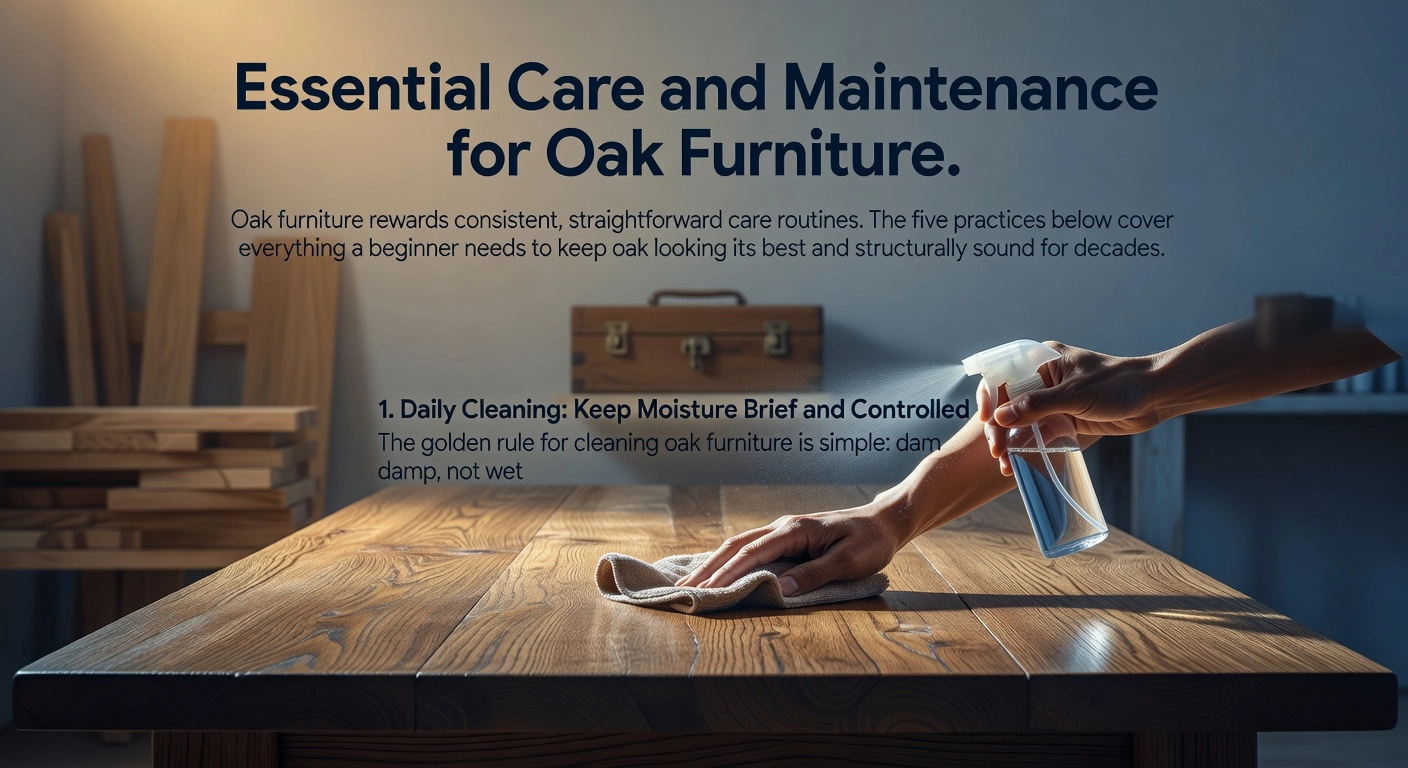
Essential Care and Maintenance for Oak Furniture
Oak furniture rewards consistent, straightforward care routines. The five practices below cover everything a beginner needs to keep oak looking its best and structurally sound for decades.
1. Daily Cleaning: Keep Moisture Brief and Controlled
The golden rule for cleaning oak furniture is simple: damp cloth first, dry cloth immediately after. Use a slightly damp microfiber cloth to wipe down surfaces, always moving in the direction of the grain, then follow with a dry cloth to remove any remaining moisture. This step matters more than most beginners expect because oak is a porous hardwood, and natural or oiled finishes absorb water quickly. Even small amounts of standing moisture can raise the grain, cause cloudy patches, or lead to warping over time. Avoid harsh chemical cleaners, abrasive sponges, and spray polishes for routine maintenance. For sticky spills, blot immediately rather than wiping, which can spread the mess further into the grain. A weekly dry dusting with a soft cloth keeps surface buildup from dulling the finish between deeper cleans.
2. Oiled Finishes: Retreat Every 6 to 12 Months
If your oak furniture has an oiled finish, periodic re-treatment is not optional; it is the entire maintenance strategy. Plan to reapply oil every 6 to 12 months, with high-use pieces like dining tables potentially needing attention every 3 to 6 months in the first year. The clearest sign that re-oiling is overdue is a gray, chalky, or dull appearance, which means the wood’s natural moisture barrier has dried out. Use food-grade oils or dedicated wood furniture oils such as Danish oil or penetrating hardwax oils. Clean and dry the surface thoroughly before application, work thin coats into the grain with a lint-free cloth, allow full absorption, and buff away any excess. Most oils require 24 to 48 hours to cure properly before the piece returns to regular use. This finish type is particularly forgiving because it can be spot-repaired without refinishing the entire surface.
3. Waxed Finishes: Annual Buffing and the Silicone Warning
Waxed oak surfaces need buffing and fresh wax applied roughly once a year to maintain their protective layer. Use a natural beeswax or hardwood-specific paste wax, apply a thin coat with a lint-free cloth working with the grain, allow it to haze, then buff to a gentle sheen. One product to avoid entirely is silicone-based polish. Silicone builds up invisibly on the surface and actively prevents future refinishing products from bonding correctly, which can turn a simple touch-up job into a full stripping project. Stick to natural wax products and the results will remain easy to manage year after year.
4. Water Rings and Stains: Reversible With the Right Approach
Water marks are among the most common complaints from oak furniture owners, but they are also among the most fixable. Light rings caused by glasses or mugs often respond well to gentle low-heat treatment; hold a hairdryer on its lowest setting several inches above the mark, or use a warm iron pressed briefly through a dry cloth. Follow up with a light application of oil or wax to restore the finish. Deeper stains that have penetrated the surface may require light sanding with progressively finer grits, always working with the grain, followed by finish reapplication. WoodStuffHQ’s restoration content covers these stain and finish repair processes in step-by-step detail for those dealing with more serious damage. Prevention remains the best strategy: use coasters, placemats, and trivets consistently, and address any spills within seconds rather than minutes.
5. Humidity Management: The Long-Game Factor
Of all the care practices covered here, controlling indoor humidity delivers the greatest long-term protection for oak furniture. Wood expands and contracts as moisture levels in the air rise and fall, and oak is no exception. Without stable humidity, this seasonal movement gradually causes joint gaps, surface cracking, and veneer delamination on even well-made pieces. The target range is 35 to 55 percent relative humidity indoors. A basic hygrometer, available inexpensively at most hardware stores, lets you monitor levels accurately. Run a humidifier during dry winter months when indoor heating drops humidity sharply, and use air conditioning or a dehumidifier during humid summers if levels climb above 55 percent. Keep oak furniture away from radiators, heating vents, and direct sunlight, all of which create localized dry zones that accelerate damage. Maintaining stable humidity consistently is the single habit that separates oak furniture lasting a decade from oak furniture lasting a lifetime.
How to Update and Refinish Dated Oak Furniture
That dated oak dresser or dining set sitting in your spare room is almost certainly worth refinishing rather than replacing. Oak pieces from the 1980s and 1990s were typically built with genuine solid wood and robust joinery that outperforms most contemporary flat-pack alternatives. The orange, honey, or reddish tones that make them feel dated come almost entirely from the original stain and lacquer applied at the factory, not from the wood itself. Strip that finish away, and you typically find excellent raw oak ready to accept an entirely new look.
1. Understand What You Are Actually Working With
The heavy cathedral grain patterns and warm amber glow on older oak pieces are products of their era’s finishing trends, not permanent characteristics of the wood. The underlying oak is often dense, well-dried, and structurally sound in ways that newer manufactured furniture simply cannot match. Before spending money on new furniture, inspect your piece closely for solid wood construction, tight joints, and minimal warping. Most pieces that pass that inspection are genuinely worth the effort of refinishing.
2. Strip the Old Finish Before Restaining
For a true color change, gel strippers are the most beginner-friendly approach. Apply a thick, even coat, allow it to work for the recommended dwell time, then scrape away the softened lacquer. Multiple applications are often needed for thick factory finishes. Follow up with progressive sanding through 120, 150, and finally 220 grit to smooth the surface and open the grain evenly. Contemporary stain colors including gray-greige, warm linen, and natural honey all work beautifully on freshly prepared oak. Always test your chosen stain on an inconspicuous area first, since oak’s natural tannins can pull warmer undertones even through cooler stain choices.
3. Use Grain Filler for a Modern, Smooth Surface
Red oak has a notably open, porous grain that telegraphs texture through any topcoat. If you want the flat, refined appearance common in contemporary furniture, apply a water-based grain filler before your final finish coats. Work the filler across the grain with a plastic spreader, allow it to haze slightly, then sand back smooth. This single step transforms the finished surface from visibly rustic to sleek and polished.
4. Choose Your Topcoat Based on Lifestyle and Aesthetics
Hard wax oil delivers a natural, low-sheen result with straightforward maintenance; spot repairs are possible without full refinishing. Water-based lacquer or polyurethane provides a harder, more protective film with excellent clarity and suits high-traffic pieces like dining tables. Traditional penetrating oils offer a beautiful tactile finish but require more frequent reapplication. Each option changes both how the piece looks and how you care for it long-term, so match your choice to your household’s actual use patterns.
5. Consider the Environmental and Financial Case
Refinishing a solid oak piece costs a fraction of replacing it with comparable quality furniture. The wood itself can realistically support three, four, or more complete refinishing cycles across its lifetime. With the U.S. sustainable furniture market growing steadily and consumer demand for reclaimed and restored materials at record levels, choosing to refinish aligns with both practical budgeting and responsible consumption. An updated oak piece with a contemporary stain and a quality hard wax oil finish will look indistinguishable from newly purchased furniture at a fraction of the cost and environmental footprint.
Oak vs. Pine, Maple, and Walnut: An Honest Comparison
Choosing oak furniture becomes much easier once you understand how it stacks up against the three most common alternatives. Each wood has genuine strengths, but the comparison reveals why oak consistently wins for practical, everyday household use.
Oak vs. Pine
Pine is a softwood with a Janka hardness rating of roughly 870 for common varieties, compared to red oak’s 1,290. That gap translates directly into real-world performance: pine dents and gouges from routine impacts that oak shrugs off, including dragged chairs, dropped utensils, and pet activity. A pine dining table in a busy household will show its age within a few years, while an equivalent oak piece can serve decades of identical use with minimal visible wear. Pine does offer genuine advantages in cost (often substantially cheaper due to faster growth and wider availability) and is lighter and easier to cut or shape by hand, making it appealing for budget projects or beginner woodworkers. Aesthetically, pine’s knotty, warm appearance suits rustic, farmhouse, or cabin-style spaces where character marks read as charm rather than damage. For high-use furniture in active households, however, oak’s durability advantage is decisive.
Oak vs. Maple
Hard maple sits at a Janka rating of 1,450, making it slightly harder than red oak and an excellent choice for kitchen cabinets, countertops, and cutting boards where extreme wear resistance matters. Maple’s tighter, more uniform grain produces a clean, refined surface that many designers favor for modern or painted applications. The tradeoff is real, though: maple’s subtle grain provides little visual drama compared to oak’s bold, open pattern, and maple is notoriously difficult to stain evenly. Mineral streaks and blotchiness are common problems, which is why maple furniture is often finished with paint or clear coats rather than stain. Oak, by contrast, accepts a wide range of stains and finishes consistently, giving you far more flexibility to match existing decor or update the look over time. For most living spaces where both visual appeal and durability matter, oak offers the better combination.
Oak vs. Walnut
Walnut’s Janka rating of 1,010 places it softer than oak, meaning it accumulates scratches and dents more readily under daily household stress. Despite that, walnut commands a noticeably higher price, driven entirely by its rich chocolate-brown color and premium aesthetic appeal. Walnut is genuinely stunning in showpiece applications: accent tables, statement desks, and decorative shelving where visual impact is the priority and traffic is light. For workhorses like dining tables, kitchen cabinets, and bookshelves that absorb daily punishment, oak delivers superior durability at a lower cost per decade of use. This distinction points toward a practical strategy supported by 2026 interior design trends: use both woods in the same space rather than choosing one exclusively. Place oak in high-traffic, high-use roles (dining tables, cabinet carcasses, flooring) and bring in walnut for accent pieces and decorative elements where its visual richness gets maximum attention without bearing maximum wear.
Why Oak Wins on Practical Value
Across four key metrics, oak outperforms all three alternatives for most homeowners. On longevity, oak’s density supports 50 or more years of heavy use. On repairability, its open grain structure sands and refinishes evenly through multiple restoration cycles, something pine handles poorly and maple inconsistently. On cost-per-decade value, oak’s higher upfront price is offset by a lifespan that outlasts pine furniture many times over and avoids walnut’s premium pricing for everyday pieces. On finish versatility, oak accepts everything from light natural oils to dark espresso stains with consistent, attractive results. Pine prioritizes affordability, maple prioritizes hardness and uniformity, and walnut prioritizes aesthetics; oak is the only option that performs competently across all four categories simultaneously, which is the core reason it accounts for over 40% of solid wood furniture sales worldwide.
Choosing and Caring for Oak Furniture: Key Takeaways
Five core principles should guide every oak furniture decision you make.
- Match the oak variety to the environment. White oak belongs in kitchens, bathrooms, and any room with elevated moisture because its closed grain structure resists water absorption. Red oak suits bedrooms and living rooms where moisture is less of a concern. Quarter-sawn oak is the right choice when you want maximum stability and a distinctive ray-fleck grain pattern that justifies a higher price point.
- Verify solid versus veneer construction before purchasing. Solid oak warrants its premium cost for anyone planning long-term ownership. Veneer is a practical choice for tighter budgets or humidity-prone spaces.
- Start a care routine immediately. Consistent humidity management, periodic oiling or waxing, and prompt treatment of water marks will extend both the appearance and structural integrity of any oak piece significantly.
- Evaluate dated oak before discarding it. Most oak furniture from the 1980s and 1990s contains structurally sound, fully refinishable solid wood beneath outdated finishes.
- Understand why oak leads the market. Oak holds over 40% of solid wood furniture sales because its performance characteristics, strength, grain stability, and finish compatibility, deliver genuine, lasting value rather than temporary trend appeal.
Conclusion
Oak furniture is more than a purchase; it is a long-term investment in quality, beauty, and lasting value. Throughout this guide, you have learned how different oak varieties offer unique characteristics, how proper care keeps your pieces looking their best for decades, and how key factors influence oak’s value over time.
The right knowledge truly makes all the difference. With a clear understanding of wood types, finishing options, and maintenance routines, you can shop with confidence and protect your investment for years to come.
Now it is time to put that knowledge to work. Browse our curated collection of premium oak furniture, or revisit any section of this guide whenever you need a refresher. Your ideal piece is out there waiting. Take the first step today and bring the timeless warmth of oak into your home.



Pingback: How to Care for a Wood Dining Table: Complete Guide for Beginners (2026)