
There is something undeniably warm and inviting about a wooden bed frame. It anchors a bedroom, adds character, and somehow makes the whole space feel more like home. But here is the thing most people do not realize until after they bring one home: not all wood is created equal, and caring for your bed frame the wrong way can lead to scratches, warping, or a finish that looks worn way too soon.
Whether you just picked up your first solid oak piece or you are eyeing a gorgeous walnut frame online, knowing how to properly care for different wood types will save you a lot of headaches down the road. The good news is that it is not as complicated as it sounds.
In this guide, we are breaking everything down into simple, easy-to-follow tips so you can keep your bed frame looking beautiful for years to come. From pine to mahogany, you will learn exactly what each wood type needs to stay in great shape. Let’s dive in!
Why the Wood Species in Your Bed Frame Actually Matters
Here’s something most people never think about: not all wood beds want the same care. Grabbing a bottle of furniture oil and going to town on every wooden surface in your bedroom sounds logical, but it can actually backfire depending on what species your frame is made from.
Wood is a living material, even after it’s been cut and shaped. Different species absorb moisture, oil, and finish at completely different rates because of variations in cell structure, natural resin content, and porosity. A dense hardwood like walnut has tightly packed grain that resists penetration, so layering on oil too frequently leads to sticky buildup rather than a healthy finish. On the flip side, a porous softwood like pine drinks up moisture fast, and skipping a proper sealant leaves it vulnerable to swelling, staining, and even mold over time. One routine does not fit all here.
Humidity is another factor where species really start to behave differently. Hardwoods like oak and walnut handle seasonal humidity swings with more stability than softwoods. In a heated bedroom during winter, where indoor air can get very dry, pine frames are more likely to dry out, crack, or develop rough patches. Oak and walnut hold their own better in those conditions. Keeping your room’s relative humidity between 40 and 60 percent helps all wood species, but knowing your frame’s specific species tells you how urgently that matters for your situation.
Grain density also controls how often you need to reapply any finish or protective treatment. Open-grained woods absorb finishes quickly and may need attention every few months in dry conditions. Tighter-grained woods take product more slowly and hold it longer, which means less frequent upkeep but more careful application to avoid blotchy results.
Before you reach for any product, identifying your wood type is genuinely the most useful thing you can do. Here are some simple clues to get you started:
- Color: Oak runs light brown to reddish; walnut is a rich chocolate brown; pine shows pale yellow tones and visible knots
- Grain pattern: Oak has an open, pronounced grain; walnut is smoother with a subtle wave; pine is straight but knotty
- Weight: Pick up a spare slat or piece. Hardwoods like oak and walnut feel noticeably heavier than pine or cedar
For a deeper look at how wooden bed frames vary by material and construction, this breakdown of wooden bed frame market trends is a solid reference. You can also check out a practical comparison of oak, walnut, and pine for bed frames to see how each species stacks up in real-world use. Once you know what you are working with, every care decision you make gets a whole lot easier and more effective.
Oak Bed Frames: Durable, Forgiving, and Easy to Restore

Oak is one of those wood species that just keeps showing up in quality bed frames, and for good reason. Its tight grain structure and impressive load-bearing strength make it genuinely resistant to the dents, scratches, and everyday wear that bedroom furniture takes over the years. A well-made solid oak bed frame can last anywhere from 15 to 25 years with proper care, which makes it one of the better long-term investments you can make for your bedroom. Oak also happens to be a forgiving wood to maintain. You do not need professional tools or specialty products to keep it looking great, just a little consistency and the right approach.
Common Issues to Watch For
Even with its toughness, oak is not completely immune to problems. The three most common issues you will run into with an oak bed frame are surface drying, grain raising after water exposure, and the gradual dulling of the finish from skin oils and dust buildup. Surface drying happens when the wood loses moisture over time, often from low humidity or simply from age. The frame starts to look dull and feel slightly rough to the touch. Grain raising is that fuzzy, slightly bumpy texture that appears after water hits unprotected or worn wood, because the wood fibers absorb moisture and swell. Finish dulling is slower and sneakier; it builds up quietly from everyday contact and dust settling into the surface.
Your Ongoing Oak Care Routine
Keeping these issues at bay does not require much time at all. Dust your oak frame monthly using a dry microfiber cloth, which lifts particles without scratching the surface. Every three months or so, apply a light penetrating wood oil or beeswax polish to feed the grain and restore that natural warmth. Avoid silicone-based products, which can build up over time and actually make future restoration harder.
Spotting Finish Failure Before It Gets Worse
The early warning signs of finish failure on oak are easy to catch once you know what to look for. Run your hand across the surface; if it feels chalky, rough, or noticeably dry, the finish is wearing thin. The simplest test is the water bead check. Splash a few drops of water on the wood. If they bead up and sit on the surface, you are fine. If they absorb quickly and leave a dark mark, it is time to act.
Quick Spot Restoration, Step by Step
The good news is that you can fix most localized wear on an oak bed frame without stripping the whole thing. Start by lightly sanding the affected area with 220-grit sandpaper, always moving with the grain and never against it. Wipe the area clean with a dry cloth to remove all dust. Then apply a thin layer of penetrating oil, working it into the wood following the grain direction. Let it absorb for the time recommended on the product label, then buff gently with a clean cloth until you see a natural, even sheen come back. The restored spot should blend right into the surrounding finish. This simple process handles most surface-level wear on oak without any major effort or expense, which is exactly what makes oak such a beginner-friendly wood to work with.
Walnut Bed Frames: Protecting That Rich Dark Tone
If oak is the reliable workhorse of bed frame woods, walnut is the showstopper. Furniture trend reports for 2026 consistently highlight rich walnut as one of the most sought-after choices for bedroom furniture, thanks to its deep chocolate tones, striking visible grain, and that almost velvety warmth it brings to a room. But here is the catch: walnut is also one of the more demanding wood species when it comes to upkeep. That gorgeous dark color does not just stay that way on its own. Without the right care routine, walnut can fade, gray out, and lose everything that made you fall in love with it in the first place.
The Sneaky Threat You Might Not Expect
The single biggest enemy of a walnut bed frame is UV exposure, and the tricky part is that you do not need direct sunlight to cause damage. Even indirect light coming through a bedroom window is enough to gradually break down the lignin in the wood, which is essentially the compound responsible for holding that rich, dark pigment together. Over months and years, this shows up as a washed-out, grayish surface that looks nothing like the original finish. If your bed sits anywhere near a window, consider UV-filtering window film or heavier curtains as your first line of defense. It is a simple, inexpensive step that does a lot of heavy lifting for walnut preservation.
Oil vs. Wax: You Actually Need Both
When it comes to treating walnut, oils and waxes are not competing options; they work as a team. Penetrating oils like tung oil or Danish oil soak directly into the wood fibers, feeding the grain from the inside out and actively deepening that dark, warm tone. Think of it as moisturizer for the wood. Paste wax, particularly carnauba or beeswax-based formulas, works differently. It sits on the surface and creates a thin barrier that repels dust, moisture, and minor spills while giving the wood a soft, natural sheen. Design and wood care experts recommend using an oil base first, then following up with wax for the best long-term results on walnut furniture.
For a practical schedule, apply a full coat of penetrating oil every six months. In between those oil treatments, give the surface a light paste wax buff every one to three months, or whenever the wood starts looking a little dull or dry. This two-step rhythm keeps the frame protected without over-treating it.
Restoring a Walnut Frame That Has Already Gone Dull
If your walnut bed frame has already started to gray or look lifeless, do not panic. Restoration is straightforward for a beginner. Start with a gentle clean using a mild soap solution or a dedicated wood cleaner, avoiding anything harsh or chemical-heavy. Once dry, lightly sand the surface with 220-grit sandpaper, always moving in the direction of the grain. You are not trying to strip anything aggressively; you just want to remove the oxidized outer layer and smooth things out. Then apply a single thin coat of tung oil, let it penetrate for the recommended time on the label, and wipe away any excess.
One important warning: never reach for a silicone-based furniture spray on walnut. These products feel convenient, but silicone builds up over time, creates a hazy film, and makes any future refinishing extremely difficult by causing fisheye defects in new finishes. Stick with natural oil- and wax-based products and your walnut frame will reward you with years of that deep, rich character that makes it worth every bit of the extra care.
Pine Bed Frames: Softwood Care Tips That Actually Work
Pine is the budget-friendly superstar of bed frames, showing up in dorm rooms, kids’ bedrooms, and modern minimalist setups everywhere. But here’s the honest truth: pine’s naturally soft cell structure means it needs more attention than the oak and walnut frames we covered earlier. With a Janka hardness rating of around 380 lbf compared to oak’s 1,290 lbf, pine dents and scratches from everyday use far more easily. A dropped book, a dragged suitcase, even a pet’s claws can leave visible marks. That softness is the tradeoff for pine’s light weight and affordable price tag, so going in with realistic expectations helps a lot.
Why Sealing Pine Is Non-Negotiable
Unlike hardwoods with their tight, dense grain, pine’s open and porous structure acts almost like a sponge when moisture gets involved. Spill a glass of water near an unsealed pine frame and the wood can absorb it within seconds, leading to swelling, staining, or warping over time. Humidity from an open window or a humidifier nearby causes the same creeping damage. Hardwoods are far more dimensionally stable, giving you a little breathing room if you miss a spill. Pine does not offer that luxury. Applying a protective finish shortly after purchase, or right after a refinish, is genuinely the single most effective thing you can do to extend the life of a pine bed frame.
5 Practical Care Tips for Pine Bed Frames
1. Clean gently and dry immediately. Use a barely damp cloth with a few drops of mild dish soap, wiping along the grain. Follow immediately with a dry cloth. Pine cannot sit with moisture on its surface even briefly without risk.
2. Apply a wax or polyurethane finish every few months. Paste wax or water-based polyurethane in thin coats creates a reliable moisture barrier. Buff the wax gently after it hazes over. With polyurethane, two to three thin coats beat one thick coat every time.
3. Fix small dents with steam, not sandpaper. Place a damp cloth over the dent, press a hot iron on top in slow circles for a few minutes, and watch the compressed wood fibers rise back up. This works remarkably well on fresh dents because you are rehydrating fibers rather than removing wood. Let the area dry fully before touching it.
4. Use pre-conditioner before staining. Pine blotches badly with oil-based stains because its earlywood and latewood absorb color at completely different rates, creating a streaky, uneven finish. Brushing on a pre-stain wood conditioner and waiting 10 to 15 minutes before applying stain solves this problem for most DIYers. Gel stains are another solid option since they sit on the surface rather than soaking in unevenly.
5. Keep pine away from heat and direct sunlight. Radiators, heating vents, and sunny windows cause pine to dry out and crack faster than almost any other wood. A small humidifier in the bedroom during winter months can genuinely protect your frame during dry heating season.
Pine rewards consistent, gentle care more than any other bed frame wood. Treat it well from the start and it will stay looking sharp for years without needing a full restoration project.
Bamboo Bed Frames: What Makes Them Different to Maintain
If you’ve been following along through oak, walnut, and pine, here’s a curveball: bamboo isn’t actually wood at all. Bamboo belongs to the grass family, which sounds like a fun trivia fact until you realize it completely changes how you should be caring for your bed frame. Its fibrous, tubular cellular structure absorbs and releases moisture differently than the uniform grain of a true hardwood, and it reacts to heat, humidity, and finishing products in ways that can catch you off guard if you’re treating it like oak or walnut.
The Eco Appeal Is Real, But So Are the Quirks
Part of bamboo’s growing popularity in 2026 is its sustainability story. Bamboo matures in just three to five years compared to decades for most hardwoods, regenerates from its existing root system without replanting, and generally requires fewer pesticides during growth. For buyers who want non-toxic, eco-conscious bedroom furniture, it checks a lot of boxes. That’s a genuinely great reason to own one, but the maintenance approach needs to match the material.
Humidity Is Your Biggest Enemy
Moisture fluctuations hit bamboo hard, sometimes harder than most hardwoods. When indoor air gets too dry, bamboo fibers contract and can split or crack along the grain. When humidity spikes, swelling and warping become real risks. Keeping your bedroom between 40 and 60 percent relative humidity is the single most impactful thing you can do for a bamboo frame. Keep it away from heating vents, fireplaces, and windows with direct sun exposure. A basic hygrometer costs very little and takes the guesswork out of this completely.
How to Actually Clean and Protect It
Skip the hardwood oil conditioners. Products formulated for dense wood grain don’t suit bamboo’s grass-like fibers and can leave residue or fail to penetrate properly. Instead, wipe the frame down regularly with a soft microfiber cloth, and for deeper cleaning, use a diluted mild soap solution on a damp (not wet) cloth. Dry it immediately afterward. For protection, reach for a bamboo-specific wax, food-safe mineral oil, or a beeswax blend. Apply a thin coat, buff it in gently, and repeat every few months.
Spotting Early Warning Signs
Catch problems early and they’re usually simple fixes. Hairline cracks running along the grain point to dryness and need conditioning soon. Surface fading suggests UV damage and means it’s time to reapply a protective finish. If the frame feels rough or slightly splintery in spots, the outer layer has worn thin and needs light sanding along the grain followed by a fresh coat of mineral oil or wax. Acting at the first sign of any of these keeps small issues from becoming structural problems.
Reclaimed and Antique Wood Bed Frames: Restoration Without Damage
Reclaimed and antique bed frames are in a category all their own. Unlike fresh-milled oak or new pine, these pieces carry genuine history in every surface: hand-cut tool marks, nail holes patched decades ago, weathered grain variations, and a patina that took generations to develop. That character is precisely what makes them so desirable right now, with reclaimed wood segment growth running at roughly 9.3% CAGR as eco-conscious buyers chase authenticity over uniformity. The hard truth is that aggressive sanding or harsh commercial strippers can permanently erase all of it in an afternoon. Over-sanding flattens the surface texture entirely, while solvent-heavy strippers can etch, discolor, or bleach wood that survived a century of use. The rule with antique frames is simple: do less, not more.
Start With a Gentle Clean Before You Assess Anything
Before you decide your reclaimed bed frame needs stripping or refinishing, clean it properly first. Decades of grime, wax buildup, and residue can make wood look far worse than it actually is underneath. Mix a diluted Murphy Oil Soap solution (roughly a tablespoon per quart of warm water) or a 1-to-2 ratio of white vinegar and water, then apply it with a soft cloth or 0000-grade steel wool, always moving with the grain. Wipe everything dry immediately and let the piece breathe for a day. You will often find that what looked like permanent damage is just surface dirt, and the actual wood condition is surprisingly solid. Only after this step can you honestly assess whether any further restoration is even necessary.
Removing Old Finish Without Destroying the Surface
If finish removal is genuinely needed, reach for low-impact methods first. A heat gun set to its lowest setting, held at least six inches from the surface, softens old varnish or paint so you can lift it away with a plastic scraper or dedicated hand scraper, preserving the original surface texture underneath. Citrus-based gel strippers are another excellent option; apply a generous layer, cover with plastic wrap, wait at least 30 minutes, then scrape gently and clean residue with mineral spirits. Both approaches protect the original tool marks and wood character that power sanding would obliterate in seconds.
Test for Lead Paint Before You Do Anything Else
Any bed frame made or painted before 1978 could carry lead paint, and this is a safety check that beginners absolutely cannot skip. Visual clues include a crackled or alligatoring surface, chalky texture, and multiple paint layers. Affordable DIY lead test swabs (around $15 to $20 at any hardware store) give you a reliable answer in under a minute: dampen the swab, rub firmly across the surface for 30 to 60 seconds, and a red or pink color change signals lead is present. Test multiple spots, including layers visible at edges or chips. If the result is positive, wet-sanding methods, full containment, and proper PPE are non-negotiable; for extensive lead work, calling in a professional is genuinely the safer call.
Seal It With an Finish That Respects the Age of the Wood
Once your reclaimed frame is clean and any necessary restoration is complete, the sealing choice matters enormously. A penetrating oil or hard wax oil soaks directly into the wood fibers rather than sitting on top as a film, enhancing the natural grain and allowing the surface to continue developing its lived-in character over time. Spot repairs are simple: clean the area and reapply oil, no full sanding required. Polyurethane, by contrast, creates a plastic-like surface coating that can look artificially shiny on aged wood, trap moisture in older grain, and show every scratch prominently. For a reclaimed or antique bed frame that you want to keep looking authentically aged, a hard wax oil finish is almost always the right answer. Plan to reapply it every 12 to 18 months in a bedroom setting to keep the wood nourished and protected without ever losing that warm, organic feel.
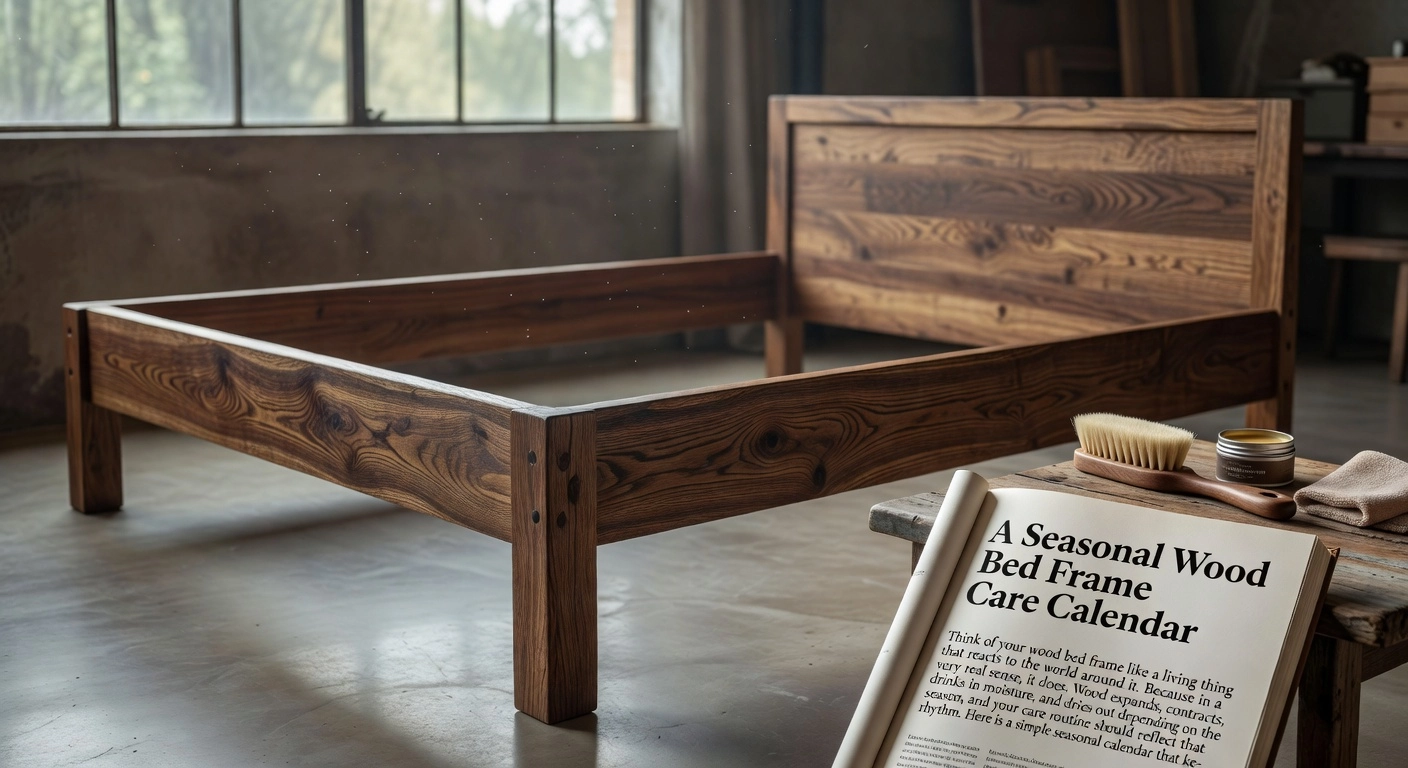
A Seasonal Wood Bed Frame Care Calendar
Think of your wood bed frame like a living thing that reacts to the world around it. Because in a very real sense, it does. Wood expands, contracts, drinks in moisture, and dries out depending on the season, and your care routine should reflect that rhythm. Here is a simple seasonal calendar that keeps things easy without requiring much time at all.
Winter: Fight the Dryness Before It Fights Your Frame
Indoor heating is one of the sneakiest enemies of wood furniture. When your furnace or radiator kicks on, indoor humidity can plummet to somewhere between 20 and 30 percent, well below the ideal 40 to 60 percent range that keeps wood stable. That dry air pulls moisture out of the wood fibers, causing them to contract and stress at the joints. Over time, you get cracks, gaps, and squeaks.
Your winter move is to oil or wax your frame once a month during peak heating season. A simple paste wax or wood conditioning oil takes about 20 minutes and puts back what the heating system takes away. Pair that with a bedroom humidifier positioned reasonably close to the frame, and you give the wood a fighting chance against stress fractures. Keep the frame away from heat vents and radiators too, since direct heat accelerates drying significantly.
Spring: Inspect, Clean, and Refresh
Spring is your reset season. As humidity climbs back up, wood fibers relax and any tight gaps from winter may start to close again. Walk around the frame and check every joint and fastener; tighten anything that has worked loose. Then do a proper clean with a wood-safe cleaner like diluted mild soap on a barely damp cloth, followed immediately by a dry cloth. If the surface looks dull, patchy, or uneven after cleaning, apply a fresh protective coat of oil. Spring is honestly the most important season for a thorough once-over.
Summer: The Best Time to Refinish
Higher summer humidity makes wood slightly more pliable, which means it sands more smoothly and absorbs finish more evenly. If you have been thinking about a light sanding project or want to refresh a worn finish, summer is your window. Just keep indoor humidity below 60 percent using air conditioning or a dehumidifier, since too much moisture causes its own problems with swelling and finish adhesion.
Fall: Address Problems Before Winter Locks Them In
Before temperatures drop and heating season starts again, do a full inspection. Look for scratches, water rings, or worn patches. Fix any damage you find now, because winter dryness will only make existing problems worse. Apply a thin coat of paste wax after cleaning to create a protective barrier heading into the colder months. Think of fall as your preventive maintenance window.
The Two-Minute Monthly Habit That Changes Everything
Regardless of season, a quick wipe-down with a dry microfiber cloth once a month is genuinely one of the highest-return habits you can build. Skin oils, dust, and airborne particles settle on the finish and slowly break it down over time. Removing them regularly means your full oil or wax treatments can stretch further apart, saving both time and product. Two minutes, once a month, and your frame stays looking noticeably better between deeper care sessions.
Eco-Friendly Finishes for Wood Bed Frames Worth Knowing About
Here is something worth pausing on before you refinish or restore your wood bed frame: your bedroom is the one room in your home where you spend roughly eight hours every night with your face close to the furniture. That changes the conversation around finishes entirely.
Conventional oil-based polyurethanes are tough, durable, and widely available, but they release volatile organic compounds (VOCs) during application and for days afterward. In a living room or kitchen, that is manageable. In a closed bedroom where you sleep with limited ventilation, those fumes become a genuine indoor air quality concern. Symptoms like headaches, eye irritation, and dizziness are commonly linked to VOC exposure, which is why low-VOC and non-toxic finishes are no longer a niche preference in 2026. They are simply the smarter choice for any wood surface near your sleeping area.
1. Beeswax Polish
Beeswax polish is one of the oldest wood finishes around, and it holds up remarkably well against modern alternatives for certain applications. It is completely non-toxic, food-safe, and biodegradable, making it ideal for headboards and the visible surfaces of oak, walnut, and reclaimed wood frames. The finish produces a soft, warm sheen that highlights natural grain without any synthetic chemistry involved. It does not offer the hard protection of a film-forming finish, so you will need to buff and reapply it periodically, but that maintenance process takes only minutes and keeps the wood genuinely nourished.
2. Tung Oil
Tung oil comes from the seeds of the tung tree and is one of the few truly penetrating finishes that cures completely free of VOCs once dry. It soaks deep into wood fibers, cures to a hard yet flexible finish, and works beautifully on walnut, cherry, and maple. Plan for three to five thin coats for solid protection, allowing full cure time between each application. The payoff is a finish that is safe enough for children’s furniture and durable enough for a bed frame that sees daily use.
3. Water-Based Polyurethane
Water-based polyurethane sits in a practical middle ground: it is genuinely durable and protective while carrying VOC levels significantly lower than oil-based versions (often under 150 g/L compared to 450 to 550 g/L for solvent-based formulas). It dries faster, typically recoatable within two hours, and stays crystal clear without the amber tint that oil-based poly adds over time. That clarity is particularly valuable on walnut and lighter wood species where you want the natural color preserved exactly as it is.
4. Hard Wax Oil
Hard wax oil blends natural oils like linseed or tung with waxes to create a hybrid finish that is gaining serious traction in the U.S. market after decades of popularity in Europe. Many formulations carry low or zero VOC ratings, and the finish produces a matte, natural look that lets wood grain breathe visually. The standout advantage is repairability. If a section of your bed frame gets scratched or worn, you can sand and re-oil just that spot without stripping the entire piece, which is a huge practical benefit for a beginner working with existing furniture rather than starting fresh.
Fixing the Most Common Wood Bed Frame Problems
Even the most well-maintained wood bed frame will eventually throw a problem your way. The good news is that most common issues are completely fixable at home, often with supplies you already have in your kitchen or tool drawer. Here are the five problems that come up most often, and exactly what to do about each one.
1. Water Rings on the Headboard
Water rings form when moisture sneaks beneath the top layer of your finish, whether from a glass of water on your nightstand that got bumped, or just humid air settling on the surface. The moisture gets trapped in the finish itself, turning it cloudy or milky. If you have a darker wood like walnut or stained oak, these rings tend to look especially obvious because the pale cloudy mark contrasts sharply against the deep tone. The good news is that most white or light rings haven’t reached the wood at all, which means they’re very fixable.
For the iron method, lay a clean, dry cotton cloth over the ring and press a warm iron (set to low, no steam) over it in short bursts of a few seconds at a time. The gentle heat pulls the trapped moisture up into the cloth. Check progress frequently and never let the iron sit still. The mayonnaise technique works differently: dab a small amount of full-fat mayo onto the ring, leave it overnight, and wipe clean in the morning. The oils in the mayo displace the moisture and restore clarity. About 70% of minor rings respond well to one of these two methods. Always test on a hidden spot first, and if the ring looks dark or black rather than white, that signals deeper damage that may need a full refinish.
2. Squeaky Wood Joints
Before you fix a squeak, figure out where it’s actually coming from. Shift your weight around on the frame while someone else watches and listens. Wood-on-wood friction tends to produce a slow, creaking groan, while loose metal hardware clicks or grinds with a sharper sound. Tighten any visible bolts or screws first, since loose hardware is often the entire problem.
If the squeak persists after tightening, the friction is happening between wood surfaces. The fix is wonderfully simple: rub a block of beeswax or a plain bar of soap directly onto the joint surfaces. Beeswax is the best option for wood frames because it lubricates without staining, doesn’t attract dust, and leaves a subtle protective coating. Reassemble, test, and repeat if needed.
3. Scratches and Gouges
Not every scratch needs the same treatment, and starting too aggressively is the most common mistake beginners make. For light surface scratches, a wood touch-up marker is all you need. These come in multipacks with a range of wood tones, so you can blend to match your frame. Color in the scratch, let it dry, and buff lightly.
For deeper gouges or nicks that a marker won’t fill, switch to a wax fill stick. Press the wax into the damage, smooth it flat with your finger or a putty knife, and buff away the excess. Most repair kits combine both markers and wax sticks and cost very little. Reserve spot sanding with fine-grit sandpaper (120-grit or higher) only for severe damage where neither marker nor wax can restore the surface. Sanding changes the surrounding finish, so always follow up with a matching touch-up coat on the sanded area.
4. Peeling or Flaking Finish
Peeling finish is usually caused by moisture exposure, age, or a finish that was applied over a surface that wasn’t properly prepped in the first place. When the topcoat starts lifting, it stops protecting the wood underneath, so acting quickly matters. For a small area, spot repair works well: carefully scrape the loose finish with a plastic putty knife, feather the edges with fine steel wool, clean the area, and apply a fresh coat of matching finish or clear lacquer. A full refinish makes more sense when the peeling is widespread, or when you want to update the look entirely. Stripping the entire frame, sanding with 60-grit to bare wood, and sealing with polyurethane is a realistic weekend project that costs far less than buying a replacement frame.
5. Mold or Mildew Spots
Humid bedrooms and poor airflow create the perfect conditions for mold to develop on wood frames, particularly on the underside of slats or at the base near the floor. Mix equal parts white vinegar and water in a spray bottle, apply it to the affected areas, and let it sit for at least 15 minutes. Vinegar kills roughly 80% of common mold species and won’t damage wood fibers the way bleach can. Wipe clean, then repeat if spots remain.
Drying the frame completely after cleaning is critical. Use a fan, a dehumidifier, or move the frame to a sunny spot if possible. Once dry, apply a mold-resistant oil finish or a penetrating sealer to create a barrier against future moisture. Improving room ventilation and keeping a dehumidifier running during humid months will go a long way toward preventing the problem from returning.
Keeping Your Wood Bed Frame Beautiful for Decades
Here is the big takeaway from everything you have read: the species determines the care routine. Oak wants occasional polishing and humidity control. Walnut thrives on periodic oiling. Pine needs consistent wax protection. Bamboo prefers a light, gentle touch. Get that match right, and a small amount of consistent maintenance keeps expensive restoration projects firmly off the table.
Choosing a solid wood bed frame over fast furniture is also one of the smartest financial and environmental decisions you can make as a homeowner. Particleboard pieces rarely last beyond five years. A well-maintained solid wood frame can serve your household for decades and still look beautiful doing it.
Here is a quick-reference cheat sheet to take with you:
- Oak, maple, cherry: Polish two to four times per year; refinish every ten to twenty years
- Walnut, teak: Oil every three to six months; dust weekly
- Pine, cedar: Wax or oil every three to six months; spot-treat scratches promptly
- All varnished or polyurethane finishes: Deep clean monthly; recoat every five to ten years
For deeper dives, explore WoodStuffHQ’s guides on removing water rings, restoring wood furniture, and choosing wood-safe finishes.
If you are just starting out, do not overthink it. No professional tools required. Pick one seasonal treatment this weekend, and you will already see a difference.
Conclusion
Caring for a wooden bed frame does not have to feel overwhelming. The key is understanding what type of wood you have, using the right products, and staying consistent with basic maintenance. A few simple habits, like dusting regularly, avoiding excess moisture, and conditioning the wood seasonally, can make a dramatic difference in how long your frame stays beautiful.
Different wood species have different needs, but every type rewards attentive care with lasting durability and timeless good looks. Your bed frame is an investment worth protecting.
Now that you know what your wood needs, take action today. Check your frame, identify your wood type, and start a simple care routine. A little effort now means years of enjoying a bedroom centerpiece that only gets better with time. Your future self will thank you.