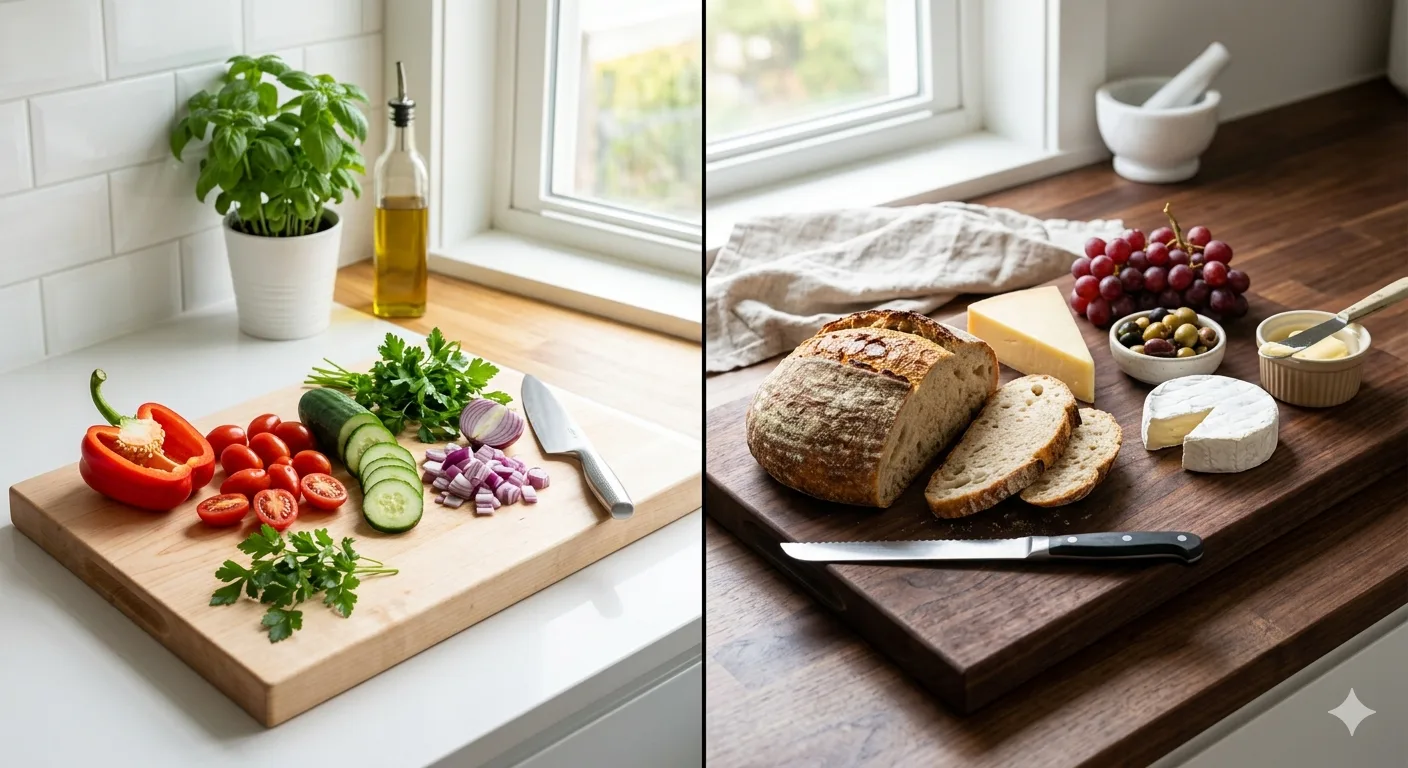
Walnut vs Maple Cutting Board: Which Hardwood Is Better for Your Kitchen?
You can see a great example of this in the [Bevel & Bond End-Grain Maple Cutting Board]
Choosing between a walnut vs maple cutting board is one of the most common dilemmas for home cooks and professional chefs. Both are premium hardwoods, but they behave very differently under a knife. Maple is the industry standard for durability and sanitation, while walnut wins on aesthetics and knife forgiveness. This guide breaks down every factor—hardness, grain, maintenance, cost, and longevity—so you can buy the right board once and use it for 20 years.
Ready to Upgrade Your Board?**
If you want a board that lasts a lifetime, check out the [Bevel & Bond End-Grain Maple Cutting]
Table of Contents
Quick Overview: Maple vs Walnut at a Glance
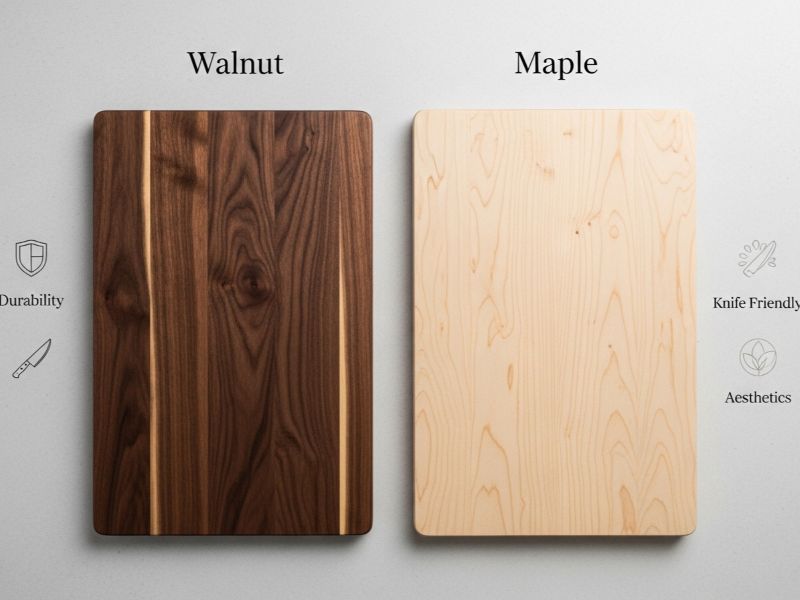
Before diving into the science, here is how these two hardwoods compare side-by-side:
| Feature | Hard Maple | Black Walnut |
|---|---|---|
| Janka Hardness | 1,450 lbf | 1,010 lbf |
| Color | Creamy white to light amber | Chocolate brown to dark purple-brown |
| Grain | Fine, tight, mostly uniform | Straight to wavy, open pores |
| Knife Impact | Harder on edges, more durable | Softer, gentler on knives |
| Sanitation | Excellent (tight pores resist bacteria) | Good (open pores need more attention) |
| Maintenance | Monthly oiling | Monthly oiling + more frequent cleaning |
| Price (End-Grain, 12×18) | $80 – $150 | $100 – $180 |
Janka Hardness: Which Wood Is Tougher?
The Janka hardness scale measures how many pounds of force (lbf) are required to embed a steel ball halfway into a wood sample. This number predicts how well a board resists dents, scratches, and deep knife marks.
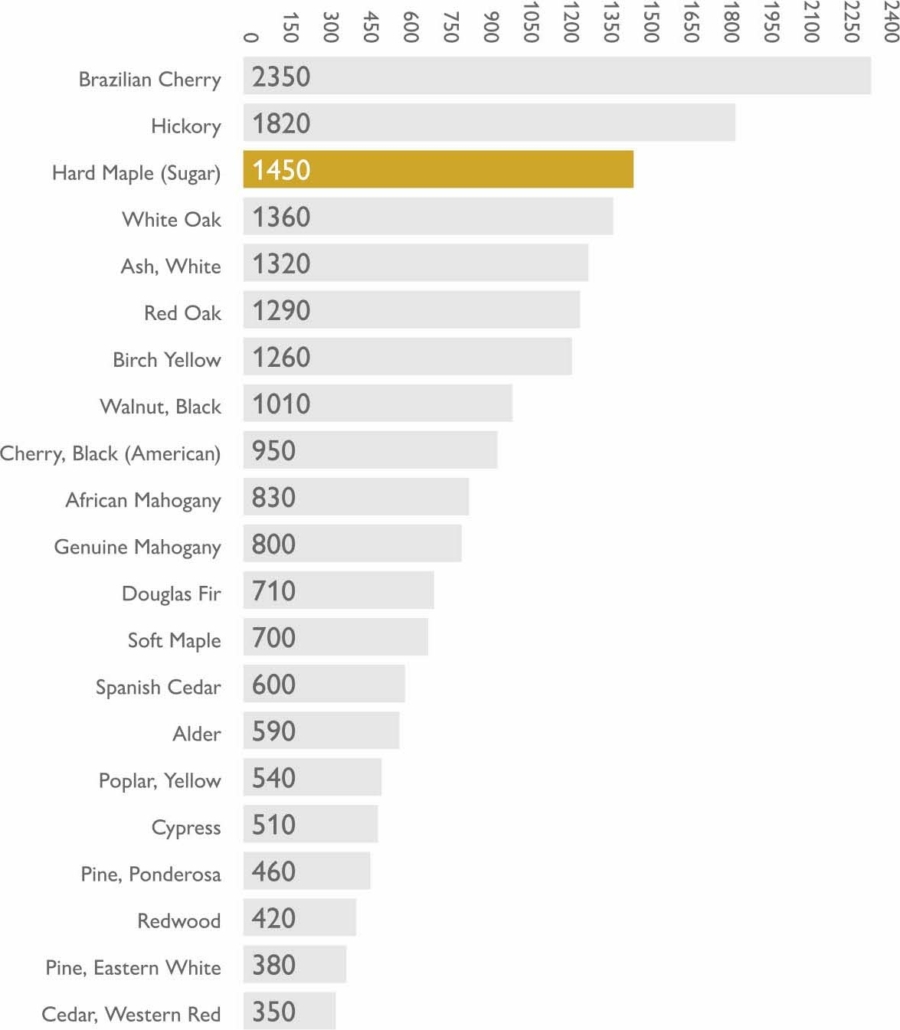
Hard maple (Acer saccharum) scores 1,450 lbf. This makes it one of the hardest domestic hardwoods suitable for cutting boards. The high density means:
- Knife marks are shallower and less frequent.
- The surface stays smoother for longer between sandings.
- Less wood fiber is displaced with each cut, reducing bacterial hiding spots.
Black walnut (Juglans nigra) scores 1,010 lbf. While still classified as a hardwood, it sits noticeably lower on the scale:
- Knives sink slightly deeper, creating more visible grooves over time.
- The surface requires light sanding more often to stay smooth.
- The softer feel is gentler on high-end Japanese knives and carbon steel blades.
Durability and Knife-Friendliness
Durability and knife-friendliness are opposing forces in cutting board design. Harder woods last longer but dull knives faster. Softer woods spare your blades but wear out quicker.
Maple: The Marathon Runner
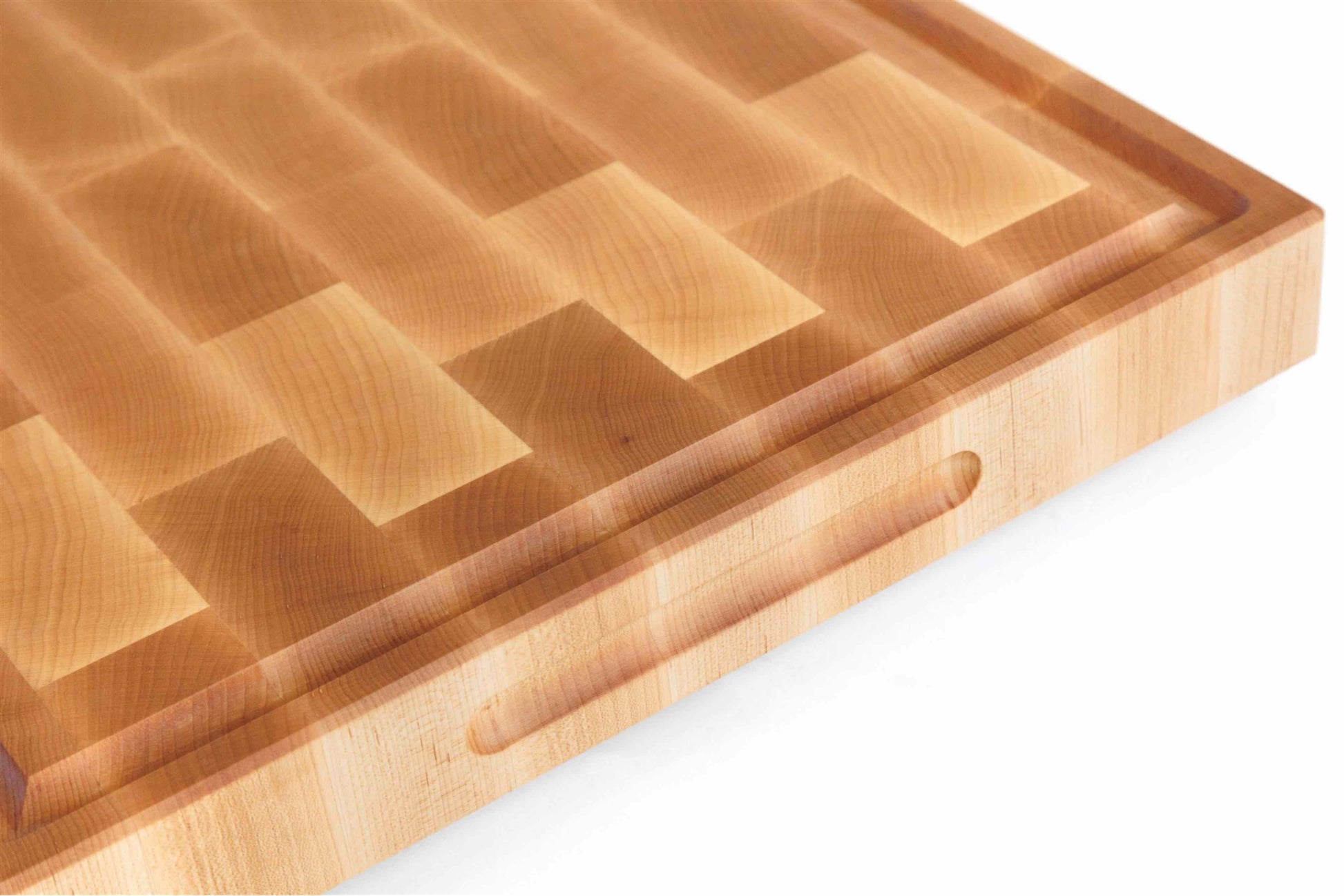
A quality end-grain maple board can withstand 10–15 years of daily home use before needing significant restoration. The tight grain structure springs back after knife impact, a property called self-healing. End-grain maple is particularly impressive: the vertical wood fibers separate under the blade and close back up like a brush bristle.
Walnut: The Gentle Giant
Walnut is the preferred choice for chefs who own expensive knives. The lower Janka rating means less impact resistance on blade edges. Carbon steel knives, which chip easily on glass or bamboo, glide into walnut with minimal dulling. However, walnut boards develop visible knife marks within 6–12 months of regular use and benefit from annual light sanding.
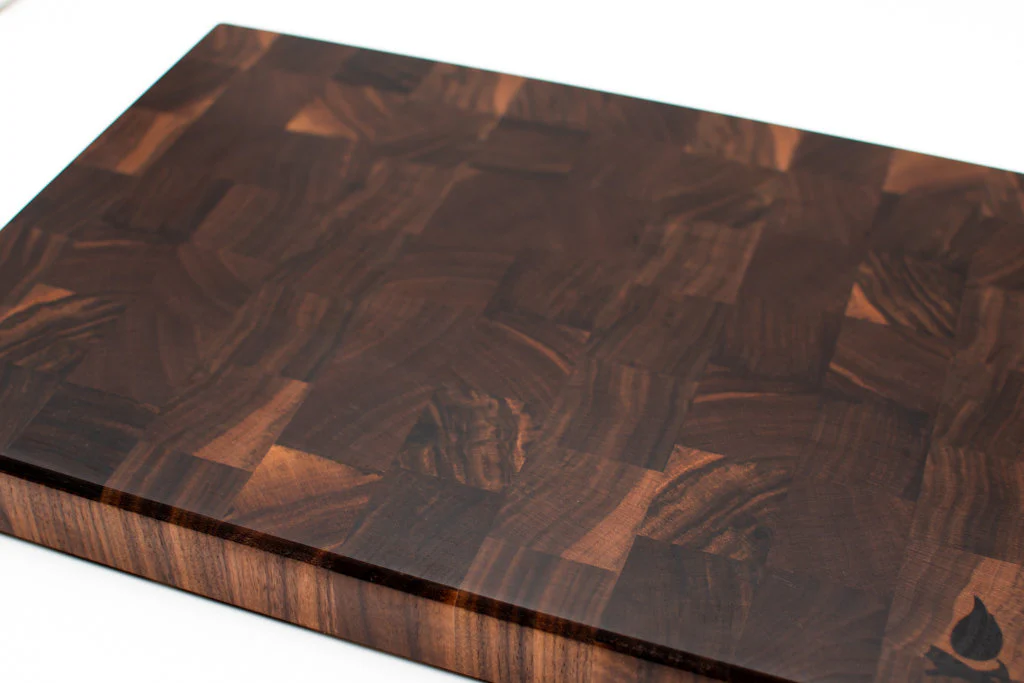
Grain Structure and Sanitation
Wood grain determines how easily bacteria can hide and multiply. This is where maple pulls ahead decisively.
Maple has a fine, tight grain. The pores are so small that bacteria cannot easily penetrate below the surface. A landmark study published by the National Institutes of Health confirmed that bacteria die on maple surfaces within 3–5 minutes as the wood draws moisture away from them. The USDA Food Safety Guidelines specifically recognize hard maple as an ideal material for food-contact surfaces because of this natural antimicrobial property.
Walnut has a more open, porous grain. While still safe, the larger pores provide more real estate for bacteria to lodge if the board is not cleaned promptly. Walnut boards demand stricter cleaning discipline:
- Wash immediately after cutting raw meat.
- Disinfect with white vinegar weekly if used daily.
- Oil more frequently to fill open pores and create a bacteria-resistant barrier.
Maintenance and Oiling Requirements
Both woods require monthly oiling with food-grade mineral oil, but maple is more forgiving if you forget.
Maple Maintenance
- Oiling: Once per month, or when water stops beading on the surface.
- Deep cleaning: Lemon + salt scrub every 2–3 weeks.
- Sanding: Only every 2–3 years for home use.
- Stain resistance: Light color shows stains (turmeric, berries, beets) more easily, but they sand out quickly.
Walnut Maintenance
- Oiling: Once per month, but the dark color makes it harder to see when the board is dry.
- Deep cleaning: Weekly vinegar spray is recommended due to open grain.
- Sanding: Every 12–18 months to remove visible knife marks.
- Stain resistance: Dark color hides stains beautifully—an aesthetic advantage.
For detailed oiling instructions, see our step-by-step oiling guide. If your board already has deep odors or stains, our deep cleaning tutorial covers restoration methods for both wood types.
Appearance and Kitchen Aesthetics
If durability were the only factor, maple would win unanimously. But kitchens are also living spaces, and aesthetics matter.
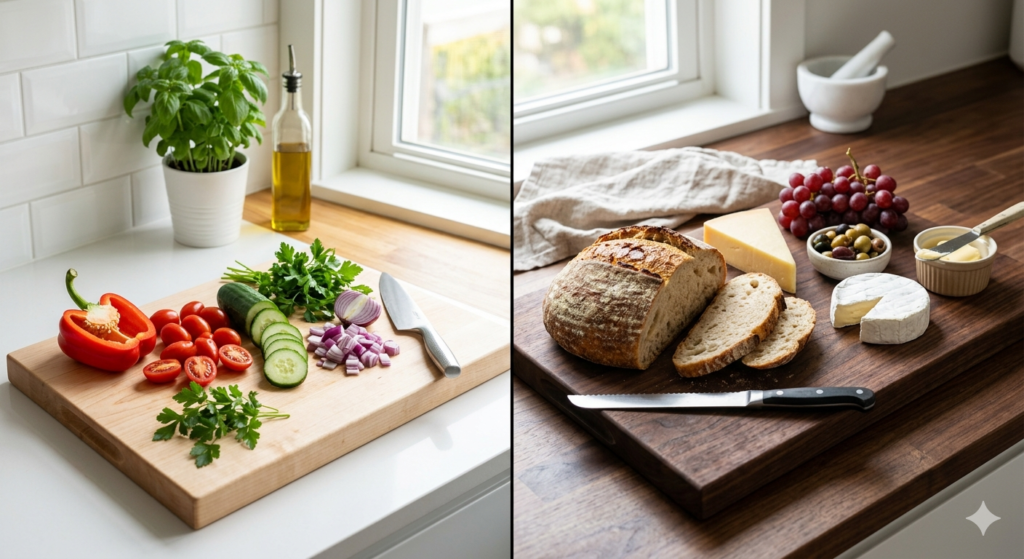
Maple offers a bright, clean, Scandinavian-inspired look. It photographs well for food styling and matches light countertops, white kitchens, and stainless steel appliances. Over time, maple develops a warm honey patina that many users find attractive.
You can see a great example of this in the [Bevel & Bond End-Grain Maple Cutting Board]
Walnut is the luxury choice. Its deep chocolate-brown color with occasional purple or gray streaks creates a dramatic contrast against light countertops. Walnut boards often serve double duty as serving platters for cheese and charcuterie because they look stunning on a dining table. If you want a board that doubles as kitchen decor, walnut is unbeatable.
Price Comparison
End-grain construction is the gold standard for both woods because it is gentler on knives and more durable. Here is what you can expect to pay for a quality 12×18-inch end-grain board:
| Wood Type | Entry-Level | Mid-Range | Premium/Custom |
|---|---|---|---|
| Hard Maple | $80 – $100 | $100 – $140 | $150 – $250 |
| Black Walnut | $100 – $120 | $120 – $160 | $180 – $300+ |
Walnut commands a 15–25% price premium for two reasons: slower growth rate (walnut trees take 30–50 years to mature vs. 20–30 for maple) and lower lumber yield per tree due to branching patterns. If budget is tight, maple offers better value per dollar of durability.
Final Verdict: Which Should You Buy?
Choose Hard Maple If…
You cook daily, prioritize sanitation, want maximum durability, own standard stainless steel knives, prefer a light/bright kitchen aesthetic, or want the best long-term value. Maple is the workhorse that professional kitchens trust.
Choose Black Walnut If…
You own expensive carbon steel or Japanese knives, want a board that doubles as a serving piece, prefer dark luxury aesthetics, or are willing to trade some durability for knife-edge preservation. Walnut is the beauty queen that demands gentle care.
Frequently Asked Questions
Is walnut or maple better for knives?
Walnut is better for knives because its lower Janka hardness (1,010 lbf) creates less impact resistance on blade edges. However, the difference is minor for home cooks. Professional chefs using maple report knife sharpening every 3–4 months instead of every 5–6 months with walnut.
Does maple or walnut last longer?
Maple lasts longer. Its 43% higher hardness rating means it resists deep grooves and fiber displacement. A maple board typically lasts 15–20 years with maintenance, while walnut averages 10–15 years before significant restoration is needed.
Can I use both maple and walnut cutting boards?
Absolutely. Many home cooks keep a maple board for heavy daily prep (vegetables, meat) and a walnut board for serving cheese, bread, and charcuterie. This strategy gives you the durability of maple and the beauty of walnut without compromising either.
Does walnut stain food or countertops?
No. Finished walnut boards do not bleed color onto food or counters. However, raw walnut sawdust can stain skin and clothing. Once sealed with mineral oil, the board is completely food-safe and non-transferring.
Which wood is more sanitary: maple or walnut?
Maple is more sanitary due to its fine, tight grain. Bacteria cannot penetrate as deeply and are killed by wood’s natural antimicrobial properties within minutes. Walnut is still safe but requires more diligent cleaning because of its open pores.
Is end-grain or edge-grain better for these woods?
End-grain is better for both. End-grain construction exposes the vertical fibers of the wood, which separate under knife pressure and close back up. This “self-healing” property makes end-grain boards last 3–5 times longer than edge-grain boards, regardless of wood species.
Related Guides from WoodStuffHQ
- 🧽 How to Clean a Wooden Cutting Board: Deep Clean Guide 2026 — Keep your maple or walnut board bacteria-free.
- 🛢️ How to Oil a Wooden Cutting Board: Step-by-Step Guide — Proper oiling extends the life of either wood by decades.
- 🔧 How to Restore a Wooden Cutting Board — Revive an old maple or walnut board with sanding and refinishing.
External Sources & References
- 📋 FDA Safe Food Handling Guidelines — Official government standards for wooden food-contact surfaces.
- 🔬 NIH Study: Antibacterial Effects of Wood vs. Plastic — Peer-reviewed research on wood’s natural bacteria-killing properties.
- 🌡️ USDA Food Safety and Inspection Service — Best practices for cutting board sanitation and cross-contamination prevention.
Got water stains on your walnut or maple board? Learn how to remove water stains from wood here.
1 thought on “Walnut vs Maple Cutting Board: Which Hardwood Is Better?(2026)”