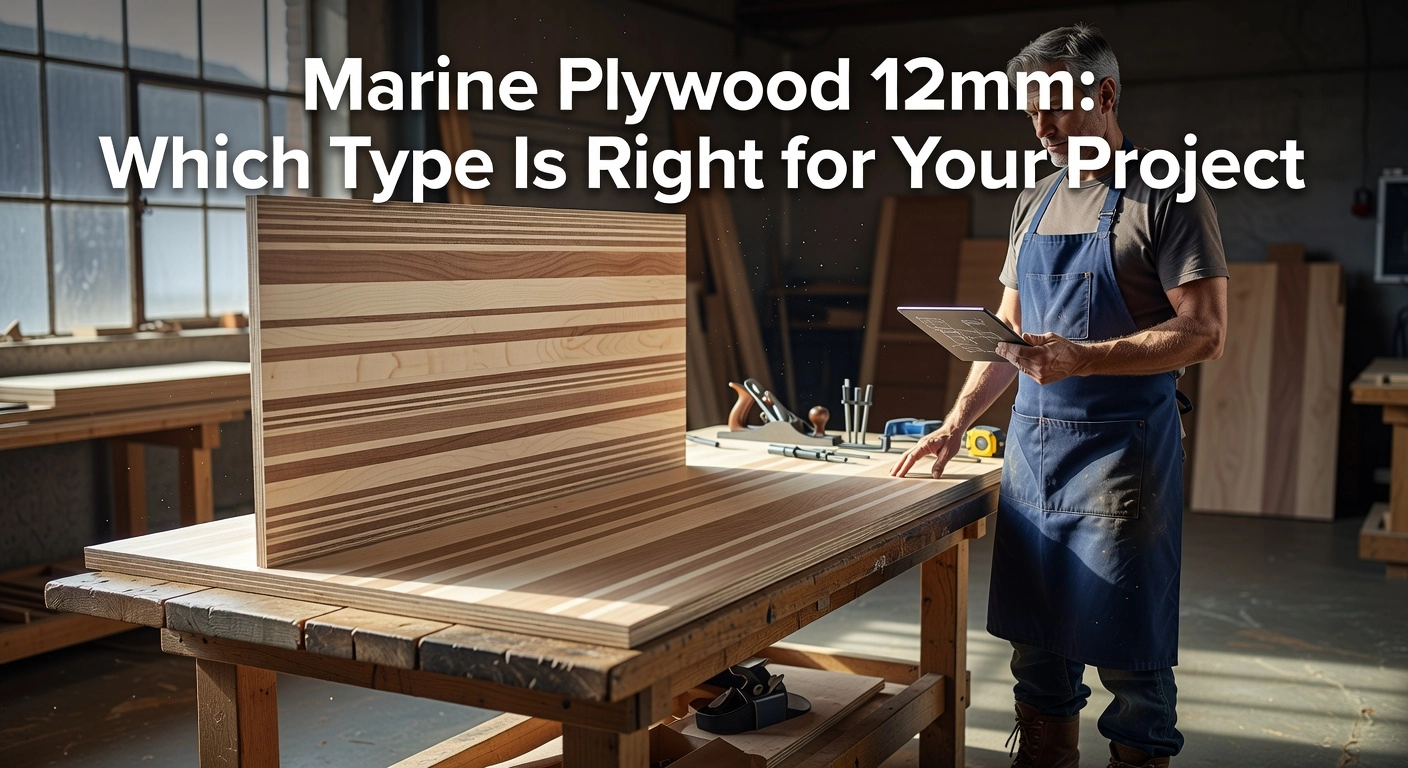
So you’ve got a project in mind that needs to stand up to moisture, and someone mentioned marine plywood. Now you’re staring at options online and wondering what the difference actually is. Sound familiar?
Here’s the thing: not all marine plywood is created equal, and choosing the wrong type can mean warped panels, delamination, or wasted money down the road. When it comes to marine plywood 12mm specifically, there are several varieties available, and each one has its own strengths depending on what you’re building.
Whether you’re working on a small boat, outdoor furniture, a bathroom renovation, or a garden shed, picking the right sheet from the start makes a huge difference. The good news is that you don’t need to be an expert to make a smart choice. You just need to know what to look for.
In this post, we’re going to break down the most common types of marine plywood 12mm, compare their features side by side, and help you figure out which one suits your specific project and budget. Let’s make this simple.
What Makes Marine Plywood 12mm Different From Regular Plywood
If you’ve ever grabbed a sheet of regular plywood from the hardware store and wondered why marine plywood costs noticeably more, the answer comes down to what’s happening inside the panel, not just on the surface.
Regular plywood often uses interior-grade glue that works fine in dry conditions but breaks down when moisture gets involved. Marine plywood uses waterproof phenolic or exterior-grade adhesive bonded through every single veneer layer, not just on the outer faces. This matters because water is sneaky. It finds its way in through cuts, edges, and fastener holes. When the glue holding the inner layers is waterproof all the way through, the panel stays together instead of delaminating into a soggy mess.
The other big difference is what’s hiding inside the core. Standard construction plywood can have gaps, voids, and defects buried in the inner layers. A 12mm sheet (roughly half an inch thick) of true marine plywood contains none of those voids. No gaps means no pockets where water can pool and start rotting the wood from the inside out.
When you’re shopping, look for the BS 1088 certification stamp on the panel. It’s the industry benchmark confirming the product meets strict standards for glue quality, veneer grade, and core consistency. Not every product labeled “marine” actually meets this standard, so the stamp matters.
For planning your project, standard sheets come in 4×8 ft (2440x1220mm), which lines up perfectly with most DIY cutting layouts.
One thing that surprises beginners: even with all that waterproof construction, marine plywood still needs sealing on all edges and end grain before installation. End grain absorbs moisture far faster than the face, so skipping this step invites problems down the road. A coat of epoxy or exterior varnish on every cut edge keeps the panel performing the way it was designed to.
Is 12mm the Right Thickness for Your Application
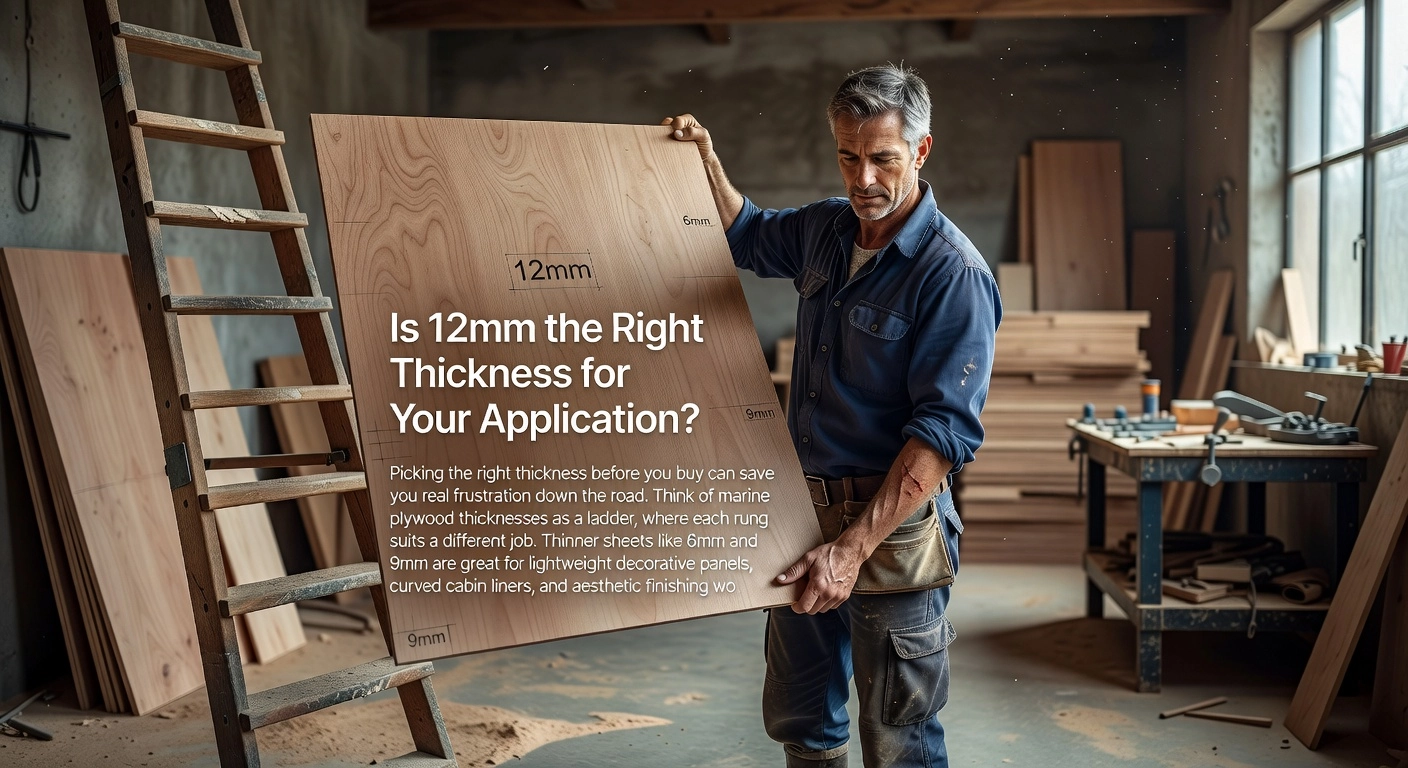
Picking the right thickness before you buy can save you real frustration down the road. Think of marine plywood thicknesses as a ladder, where each rung suits a different job.
Thinner sheets like 6mm and 9mm are great for lightweight decorative panels, curved cabin liners, and aesthetic finishing work inside a boat. They bend more easily and keep weight down, but they simply don’t have the rigidity needed for anything that has to hold a load or resist regular pressure.
12mm is widely considered the sweet spot for most practical projects. It handles structural panels, seat bases, cabinetry, and boat interior repairs without pushing your weight budget or your wallet too hard. If you’re replacing a berth platform, fitting a new locker lid, or rebuilding a bulkhead, 12mm gives you the stiffness and durability you need while staying manageable to cut and install. For outdoor furniture like garden benches or storage boxes, 12mm holds its shape under normal use without flexing noticeably, especially when the piece is properly framed. You can read more about common thickness applications for marine plywood to see how each size stacks up.
Once you step up to 18mm and beyond, you’re in heavy-duty territory. Hull planking, transoms, and thick workbench tops benefit from that extra strength, but the added weight and cost aren’t worth it for lighter jobs.
Choosing the wrong thickness is one of the most common beginner mistakes. Going too thin risks sagging panels over time. Going too thick wastes money and adds unnecessary bulk. Match your thickness to the actual load, span, and support your project requires, and you’ll get the best results. Check out this beginner’s guide to marine plywood for a helpful thickness reference table.
Okoume vs. Meranti vs. Birch: Which Species Should You Choose
Once you’ve settled on 12mm as your thickness, the next big decision is which wood species to use. This choice matters more than most beginners expect, so let’s break down the three most common options in plain terms.
Okoume is the go-to choice when weight is your top concern. A standard 12mm Okoume sheet runs roughly 25 to 30 percent lighter than a comparable Meranti sheet, and newer lightweight variants push that figure up to 38 percent while still meeting BS 1088 marine plywood standards. If you’re fitting out a boat interior, building cabinetry that needs to move around, or working on a trailerable boat where every pound affects performance, Okoume is hard to beat. It’s also softer and more flexible, which makes it easier to bend around curves during a project.
Meranti takes a different approach. It’s denser, harder, and tougher on the surface, which means it handles bumps, scuffs, and heavy use far better than Okoume can on its own. That makes it a smarter pick for outdoor furniture, high-traffic wall panels, or structural sections that need to hold up to regular contact. It’s also typically the most budget-friendly of the three, which is worth knowing if you’re covering a large surface area. For a deeper look at how Meranti and Okoume compare across real projects, the differences in density and hardness are well documented.
Birch marine plywood stands out for one specific reason: its face veneer is incredibly smooth and tight-grained. If your finished project needs to be painted or covered with a veneer, birch gives you the cleanest starting surface of the three. It sands down evenly, holds paint without blotching, and looks polished even before you apply a finish. The tradeoff is cost, as birch tends to sit at the higher end of the price scale depending on your supplier and the certification level of the sheet.
As a quick rule of thumb: choose Okoume for lightweight builds, Meranti for durability on a budget, and birch when the surface finish is the star of the show.
Marine Plywood vs. Exterior Plywood: When Is the Extra Cost Worth It
Both marine plywood and exterior plywood use waterproof glue that resists moisture, so the question isn’t really about the adhesive. The real difference is what’s going on inside the core layers. Exterior plywood allows core voids, which are small gaps or knots hidden between the inner veneers. Those voids might sound harmless, but once moisture finds its way in through a cut edge or a crack in your finish, those hollow pockets trap water with nowhere to go. Over time, that leads to internal rot and delamination, even on sheets that looked perfectly fine when you bought them. Marine grade, by contrast, is built with tight, void-free cores that give moisture no place to hide.
The cost difference is significant and worth knowing upfront. A 4×8 ft sheet of 12mm marine plywood typically runs anywhere from $70 to $180 USD, depending on the species (Okoume, Meranti, or Birch) and whether it carries a certification like BS 1088. Exterior plywood of the same size often comes in at $30 to $80. That gap adds up fast when you’re buying multiple sheets, so the decision really comes down to what your project demands.
For a one-season planter box, a temporary outdoor shelf, or a dry-area project with a solid paint job, exterior plywood is genuinely fine. The savings are real, and the performance will meet your needs. You can learn more about how marine and exterior plywood compare for specific applications before making your final call.
For anything involving prolonged water contact, though, those core voids become a real liability. Boat hulls, dock surfaces, wet-area cabinetry, and transom repairs all put wood in situations where moisture is persistent and drying time is limited. In those cases, exterior grade is a gamble that often leads to expensive repairs within just a few seasons.
A simple rule that works well: if the wood will be submerged, regularly splashed, or enclosed in a boat cavity with limited airflow, marine grade is worth every extra dollar you spend on it.
Marine Plywood vs. Composite Board: The Lifespan Tradeoff
Here’s where the comparison gets really interesting, especially if you’re weighing your options before committing to a purchase.
Properly sealed marine plywood 12mm typically lasts somewhere between 5 and 15 years before you start seeing real problems like rot, soft spots, or delamination. That’s a decent run, but it’s not forever, and it requires you to stay on top of maintenance. Composite marine boards, on the other hand, are marketed with lifespans of 25 to 50-plus years. That’s a massive difference, and it comes down to the material itself. Composite boards made from high-density polyethylene (HDPE) simply don’t absorb water. They won’t rot, they won’t delaminate, and they don’t need periodic re-sealing. You install them and largely forget about them, which is a genuine advantage for exposed areas like swim platforms or hatches that get hammered by water constantly. You can learn more about how marine board stacks up against plywood in real applications if you want a deeper dive.
That said, marine plywood wins in one very important category for beginners: workability. You can cut it, shape it, and fasten it with the same saws, drills, and screws you probably already own. Composite board requires a bit more care with tool selection and fastener technique, and it can feel less intuitive if you’ve never worked with plastic sheeting before.
Cost is the other big factor. Marine plywood 12mm sheets run roughly $70 to $145 per sheet at most suppliers, and you can usually find them locally. Composite boards cost noticeably more upfront and can be harder to source in a 12mm equivalent thickness without special ordering. According to a complete guide to marine composite boards, pricing and availability vary significantly by region.
The bottom line is pretty simple. If you’re working on a budget project, a learning build, or something with a short to medium lifespan, marine plywood is the smart, practical choice. If you’re building something you genuinely never want to repair again, composite board is worth paying extra for.
What to Expect to Pay for 12mm Marine Plywood in 2026
Budget is probably the first thing on your mind after reading about species and grades, so let’s get into actual numbers.
A standard 4×8 ft sheet of 12mm marine plywood typically runs somewhere between $70 on the low end and $180 or more on the higher end, depending on species, certification, and where you buy. Meranti grades tend to land closer to that lower figure, making them a solid starting point if you’re budget-conscious but still need genuine marine-grade construction. Certified Okoume and Birch push toward the upper range, and for good reason. You’re paying for lighter weight, cleaner veneers, and often a Lloyd’s or BS 1088 stamp that verifies void-free cores and waterproof bonding. Boulter Plywood’s marine price list gives a real-world snapshot of how these species compare side by side from a specialty supplier.
If your project requires multiple sheets, buying in bulk from a wholesale source can shave 10 to 20 percent or more off the per-sheet price. That adds up quickly on a boat floor replacement or a full cabin rebuild.
One more thing worth knowing: the global marine plywood market was valued at roughly $14 billion in 2025 and is projected to climb to $15.62 billion in 2026. That kind of demand growth means prices are unlikely to drop anytime soon.
Finally, don’t forget to budget for sealing materials. Epoxy resin, marine varnish, or fiberglass cloth can easily add $50 to $150 or more to your total cost. Hydrotek marine plywood from Public Lumber is a good example of a premium sheet that still needs proper sealing before installation. Skipping that step undermines everything you paid for.
Why Sealing Still Matters Even with Marine Grade Plywood
Here’s something a lot of beginners get wrong: they assume “marine grade” means waterproof. It doesn’t. Marine plywood 12mm is highly moisture resistant, but the moment you cut into a sheet, you expose raw wood fibers along every edge and end grain surface. Those exposed fibers act like tiny straws, pulling water straight into the core through capillary action. Without sealing, that moisture has a direct path to the glue lines and inner veneers, no matter how good the construction is.
Your choice of sealer depends on where the plywood will actually live. For boat repairs and anything below the waterline, epoxy resin is the right answer. It fully encapsulates the wood, shutting down moisture migration through even the most absorbent end grain. Many experienced builders follow up epoxy with a UV-resistant topcoat, since epoxy alone breaks down in sunlight over time. For above-deck surfaces, outdoor furniture, or decorative builds where you want a natural wood look, marine varnish or exterior polyurethane are solid alternatives. They offer flexibility and UV protection, and they’re easier to reapply on a regular maintenance schedule.
Pay extra attention to your edges. A single unsealed edge on a 12mm panel is enough to start the delamination process within one wet season. Water wicks inward, the veneers begin separating, and the damage spreads from the inside out before you ever notice anything on the surface.
Plan on applying at least two to three coats of sealer, with a light sand between each coat using 180 to 220 grit paper. This is the step beginners most consistently skip, and it’s exactly why so many projects fail ahead of schedule. Thin, even coats with proper prep beat one thick coat every single time.
Quick Guide: Which 12mm Marine Plywood to Use for Common DIY Projects
Not sure which species or grade to reach for? Here’s a simple project-by-project breakdown to make the decision faster.
Boat interior repairs and berth panels: Go with Okoume, specifically BS 1088 certified. It’s lightweight, bends well for curved surfaces, and takes epoxy cleanly. Seal every surface, edge, and cut with epoxy resin for the best moisture protection. If you’re working on a performance boat or a racing craft where every pound counts, look for the newer lightweight Okoume variants that can weigh up to 38% less while still meeting BS 1088 standards.
Outdoor bench or storage box: Meranti marine grade is your best friend here. It’s denser and tougher than Okoume, handles impact well, and costs noticeably less per sheet. Seal it with exterior polyurethane or marine varnish, paying extra attention to end grain, and it will handle years of outdoor exposure without complaint.
Wet-area cabinetry (bathrooms, laundry rooms, outdoor kitchens): Birch marine grade gives you a smooth, clean face that paints beautifully. It holds screws well and resists warping in humid environments. The key step is sealing every edge before installation, since cut edges are where moisture sneaks in first and causes problems down the line.
Dock or pontoon decking: Unless budget is genuinely tight, consider composite board alternatives for this application. Marine plywood works, but constant submersion and foot traffic are harsh conditions. Composites typically outlast sealed plywood significantly in this kind of high-exposure environment.
Repairing a damaged panel: Before you bond anything, clean and degrease the surface completely. Remove old finishes, oils, and loose material. Proper prep is honestly what separates a repair that holds for years from one that fails before the next season even starts.
Final Thoughts on Buying and Using 12mm Marine Plywood
Buying 12mm marine plywood doesn’t have to be complicated once you have a clear picture of what your project actually demands. Match your species and certification to the job at hand rather than automatically reaching for the most expensive option on the shelf. A BS 1088 Okoume sheet is ideal for a boat repair, but it’s overkill for a backyard storage cabinet that stays mostly dry.
Always factor sealers, primers, and surface prep into your total budget from the start. Many beginners price just the sheet and get surprised at the register when epoxy and marine varnish add another $30 to $60 to the bill.
When you’re torn between marine and exterior grade, remember that replacing a failed panel mid-project costs far more in time, materials, and frustration than the upfront price difference ever would.
Finally, clean and sand your surfaces before cutting or bonding anything. Proper prep is the single step beginners skip most often, and it’s the one that determines whether your finished project holds up for years or starts showing problems within a season.
1 thought on “Marine Plywood 12mm: Which Type Is Right for Your Project”