
There’s something incredibly satisfying about transforming a tired, outdated piece of furniture into something that looks brand new. And one of the easiest ways to do that? Painting it white.
If you’ve been eyeing a dull wooden dresser sitting in your bedroom or spotted a secondhand bargain at a thrift store, turning it into a beautiful white chest of drawers might be easier than you think. Whether your piece is made from solid oak, pine, MDF, or even that mystery wood from a flat-pack kit, this guide has you covered.
In this post, I’ll walk you through the entire process step by step, from prepping the surface all the way to applying that final coat. You don’t need fancy equipment or years of DIY experience to get a smooth, professional-looking finish. Just a little patience, the right materials, and this guide by your side.
By the end, you’ll know exactly how to tackle any wood type with confidence and walk away with a crisp, clean white chest of drawers you’ll actually be proud to show off.
Why Paint Your Chest of Drawers White Instead of Buying New
Before you pull out your credit card and browse for a replacement, it’s worth doing some quick math. A new solid wood dresser in 2026 can set you back anywhere from $300 on the budget end to well over $1,200 for a larger or higher-quality piece. Paint a dresser you already own (or one you picked up secondhand for next to nothing), and your total supply cost typically lands under $80. That’s primer, paint, sandpaper, and a brush. Many DIYers finish the job for closer to $40 to $50. The savings alone make this project a no-brainer for anyone watching their budget.
Then there’s the style factor. White is consistently one of the top-selling dresser finishes, and it’s easy to see why. A white chest of drawers fits effortlessly into farmhouse, Scandinavian, coastal, and minimalist bedrooms without missing a beat. It’s the rare furniture choice that works with bold accent walls, natural wood floors, rattan accessories, and linen bedding all at once. If your room style evolves over the next few years, your white dresser will keep up without complaint.
The color trend world is backing this up too. Pantone named Cloud Dancer, a soft and airy white, as its 2026 Color of the Year, and designers have embraced it as a calming, versatile neutral for bedroom refreshes. Painting your dresser white right now isn’t just practical; it’s genuinely on-trend.
Beyond cost and style, older solid wood pieces are often worth preserving. Many vintage or hand-me-down dressers feature dovetail joinery and genuine hardwood construction that flat-pack alternatives simply can’t match. That kind of quality lasts decades with proper care. A coat of fresh white paint protects and modernizes it rather than sending it to landfill. Keeping one dresser in circulation for 10 or more additional years is a meaningful sustainability win, and a satisfying one at that.
What You Need Before You Start
Good news: you don’t need a garage full of specialized equipment to pull this off. Everything on this list is available at your local hardware store, and most of it costs less than you’d expect.
Your essential materials list:
- TSP substitute or wood-safe degreaser (Simple Green or Krud Kutter work well): strips grease, wax, and old residue so your primer actually sticks
- Medium and fine grit sandpaper (120 and 220 grit): 120 grit breaks down the existing finish; 220 grit smooths between coats
- Stain-blocking primer: more on why this is critical in just a moment
- White paint in your chosen finish: satin or semi-gloss hold up best on furniture
- Quality synthetic brush (angled) and a small foam roller: the combo gives you smooth coverage on flat drawer faces and crisp edges on details
- Painter’s tape, a drop cloth, and clean rags: the unglamorous essentials that protect everything around your project
No professional tools required here. A screwdriver to remove hardware, a sanding block for hand sanding, and the items above are genuinely all you need. An electric palm sander speeds things up, but it is completely optional.
A word on stain-blocking primer. If your chest of drawers is pine or oak, this product is non-negotiable. Both woods are loaded with tannins that bleed straight through regular primer and turn your crisp white finish yellow within weeks. Shellac-based formulas are the gold standard for blocking this. Standard primer will not do the same job, which is why it gets its own line on this list.
Oil-based vs. water-based: decide now. This single choice shapes your entire workflow. Oil-based products deliver exceptional durability and a glass-smooth finish, but they require mineral spirits for cleanup and need hours between coats. Water-based formulas dry in one to two hours, clean up with soap and water, and are much more beginner-friendly. Trending paint choices for 2026 lean toward warm, soft whites, and water-based paints handle those tones beautifully without yellowing over time.
Optional but worth grabbing:
- Deglosser/liquid sandpaper: a shortcut if you want to skip aggressive sanding on a piece in decent condition
- Wood filler: fills dings and scratches on drawer faces before priming
- Tack cloth: lifts fine dust before every single coat for a noticeably smoother result
Oak, Pine, or Maple? Why Your Wood Type Changes Everything
Not all wood is created equal, and when it comes to painting a white chest of drawers, the material you’re working with will shape almost every decision you make. Getting this step right before you even open a can of paint can mean the difference between a flawless, professional result and a frustrating yellow-stained mess that has you redoing everything from scratch.
Pine: The Most Common and the Most Stubborn
If your chest of drawers is older, there’s a good chance it’s made from pine. Pine was the go-to wood for furniture makers for centuries because it was cheap, easy to work with, and widely available. The problem? Pine is loaded with resins, saps, and tannins, particularly around knots, and these natural compounds bleed straight through standard primers and white paint. What starts as a crisp white finish can turn a dingy yellow within days or weeks if you don’t address this upfront.
The fix is straightforward once you know about it. Skip the standard water-based primer and reach for a shellac-based stain-blocking primer instead. Shellac-based primers create a hard seal over the wood’s surface, locking those tannins and resins in place so they can’t migrate into your topcoat. Apply one to two coats, paying extra attention to any knots or darker patches. This is genuinely the single most important call you’ll make when painting a pine piece white, and understanding how to prevent and troubleshoot bleed-through before it happens saves a huge amount of rework.
Oak: Beautiful Grain, But It Needs Filling
Oak is a hardwood with a bold, open grain pattern that gives it a lot of character in its natural state. That same texture, however, can be a headache when you want a smooth, contemporary white finish. If you paint directly over oak without addressing the grain, the texture telegraphs through every coat of paint, leaving you with a bumpy, uneven surface instead of the clean look you’re going for.
The solution is grain filler. Apply a water-based grain filler before you prime, working it into the surface and wiping back the excess. Once it dries, sand lightly and repeat if needed. Alternatively, you can build up multiple thin coats of primer with sanding in between, though grain filler is faster and more reliable. Oak is absolutely paintable; it just needs that extra preparation step.
Maple: The Easy Win (With One Catch)
Maple is a dense, smooth hardwood with a closed grain, which makes it the most forgiving wood to paint white. It doesn’t bleed tannins, and it doesn’t have deep grain texture to worry about. Paint glides on evenly and covers well.
The one catch is that maple’s smooth, non-porous surface doesn’t give paint much to grip onto. If you skip scuff sanding, your paint may look great initially but start chipping or peeling with regular use. A light pass with 180 to 220 grit sandpaper creates just enough surface texture for the primer and paint to bond properly. That small step makes a big difference in how long your finish holds up.
Veneer and MDF: Handle With Care
Flat-pack furniture and many budget pieces use veneer over particleboard or MDF rather than solid wood. These surfaces are actually quite easy to paint since they only need a light scuff sand to take primer well. The critical thing to watch here is moisture. MDF and particleboard absorb water aggressively and can swell, bubble, or delaminate if they get too wet during cleaning or priming. Use a barely damp cloth to clean these surfaces, avoid water-heavy products, and keep your primer coats thin. A shellac-based primer works brilliantly here too, bonding well without saturating the surface.
Not Sure What You’ve Got? Here’s How to Tell
Flip open a drawer and look at the sides, bottom, and the inside of the carcass. Unfinished areas reveal a lot. Pine tends to be soft, light, and sometimes has visible knots or a yellowish tone. Oak has a distinctive ray pattern and a coarser feel. Maple is very smooth and dense, almost heavy for its size. If the end grain is visible anywhere, look at the cell structure: large visible pores point to oak, while tighter, finer patterns suggest maple or pine.
If you genuinely can’t identify the wood, treating bleed-through as a real risk rather than a hypothetical one is the smarter call. Default to a shellac-based stain-blocking primer across the whole piece. It works across virtually every wood type and engineered surface, blocks tannins and resins, and promotes adhesion even on tricky surfaces. Think of it as your insurance policy for an unknown material.
Step 1: Clean and Degrease the Surface Properly
Here’s something most beginners don’t realize until it’s too late: the paint job on your white chest of drawers lives or dies based on what you do before you ever open a can of paint. Skipping or rushing the degreasing step is the single most common reason painted furniture starts peeling within the first year. All that prep work you’re about to do with sandpaper and primer? It counts for nothing if there’s a layer of body oils and furniture polish sitting between the wood and your paint.
Start by removing all hardware and drawer pulls. Pull out every drawer and set them aside. Before you do, grab a piece of masking tape and label each drawer on the inside back panel, “top left,” “middle right,” and so on. It takes thirty seconds and saves you a frustrating puzzle during reassembly. Painting with hardware still attached is one of the most common mistakes beginners make, and it leaves you with drips around knobs and missed spots underneath pull plates.
Now for the actual cleaning. Mix a wood-safe degreaser or TSP substitute into warm water following the product’s dilution instructions. Work with a lint-free cloth rather than a sponge. Sponges hold excess moisture and can push it into the wood grain rather than lifting dirt away. Wipe in long, smooth strokes following the direction of the grain, and swap out your cloth frequently as it picks up grime. You’ll be surprised how much residue comes off even furniture that looks clean. Proper furniture prep makes the difference between a finish that lasts years and one that chips within months.
Give extra time to the high-touch zones. Drawer fronts, top edges, and the areas directly around handles collect years of body oils, fingerprints, furniture polish, and cleaning product residue. These spots are where adhesion failure starts. Scrub them thoroughly and don’t rush through. According to research on paint failure causes, surface contamination is consistently identified as a leading factor in early coating breakdown.
Once you’re satisfied everything is clean, resist the urge to move forward quickly. Allow the entire piece to dry for at least 24 hours in a well-ventilated room. Trapped moisture under paint causes bubbling and poor adhesion, two problems that are almost impossible to fix without stripping everything back and starting over. Open a window, point a fan toward the piece if needed, and let it breathe. Your next step, sanding, only works properly on a completely dry surface.
Step 2: Sand, Prime, and Paint for a Flawless White Finish
Now that your chest of drawers is clean and completely dry, it’s time for the step that separates a paint job that lasts from one that chips and peels within a few months. Sanding, priming, and painting in the right sequence is everything here, so let’s walk through each stage carefully.
Sand First, Then Sand Again
Start with 120-grit sandpaper and work your way across every surface you plan to paint. This first pass scuffs the existing finish, breaks down any glossy sheen, and smooths out high spots, bumps, or rough patches left behind from your cleaning step. You’re not trying to strip the piece down to bare wood here; you’re just giving the surface enough texture for primer to grip onto. Always sand in the direction of the wood grain to avoid cross-grain scratches that can show through your final coat.
Once you’ve finished with 120-grit, switch to 220-grit sandpaper for your second pass. This finer grit refines the surface and removes the light scratches left by the coarser paper. The goal is a smooth, even base that feels almost silky under your fingertips. After each sanding stage, wipe everything down with a tack cloth or a lightly damp microfiber cloth to pull up every bit of dust. Dust left on the surface will get trapped under your primer and create a gritty texture you’ll feel in the final finish.
You can find a helpful walkthrough of this prep sequence in this furniture painting preparation guide from Meg Del Design, which covers sanding and surface prep in practical detail.
Never Skip the Stain-Blocking Primer
This is the step most beginners skip, and it’s the reason so many DIY paint jobs turn yellowish or blotchy after a few weeks. White paint is far more transparent than it looks in the can, and tannins from wood or residue from old stains will bleed right through it. Even two full coats of white paint won’t stop tannin bleed if you haven’t used a stain-blocking primer underneath. Apply one thin, even coat and let it dry fully according to the manufacturer’s instructions before you go anywhere near your paint.
If your chest of drawers is made from pine, this step becomes even more critical. Pine contains natural resins that love to push through water-based primers and topcoats, leaving yellow or orange streaks across your beautiful white finish. Water-based stain blockers often struggle with pine resin, so reach for a shellac-based primer instead. Zinsser BIN is one of the most widely recommended options among furniture refinishers, and it’s available at most hardware stores. It seals pine knots, resin pockets, and tannins far more reliably than its water-based counterparts. One or two thin coats applied with a brush or roller is usually enough to fully seal the surface.
For a broader look at how primer choice affects your final result on a dresser project, this dresser refresh guide from KILZ is worth a quick read before you buy your supplies.
Apply Paint in Thin, Patient Coats
Once your primer is fully dry, you’re ready to paint. The biggest mistake beginners make at this stage is applying too much paint at once, trying to get full coverage in a single coat. Thick coats sag, drip, and leave brush marks baked into the finish. Instead, apply two to three thin coats of white paint, allowing each coat to dry to the touch before moving on.
Between coats, do a light pass with 220-grit sandpaper to knock down any texture or raised grain, then wipe the surface clean again before applying the next coat. This between-coat sanding is what produces that smooth, almost factory-like result. It feels like extra work, but it’s what separates a furniture makeover that looks professional from one that looks homemade.
Dry Versus Cured: A Critical Difference
Here’s something worth knowing before you rush to style your finished white chest of drawers. Water-based paints feel dry within a couple of hours, but they don’t reach full hardness for up to 30 days. During this curing window, the surface is still soft enough to dent, scratch, or pick up impressions from objects placed on top. Avoid stacking anything heavy on the surface, dragging items across the top, or loading the drawers with their full weight for at least a week after your final coat. Give it the full cure time if you can. Patience at this stage protects all the work you’ve just put in.
Matte, Eggshell, or Gloss? Picking the Right White Finish
Once your surface is clean, sanded, and primed, you’re facing one more decision before you crack open that paint can: which sheen level is actually right for your white chest of drawers? This choice matters more than most beginners expect, so let’s break it down simply.
Matte white is the most forgiving finish when it comes to hiding surface flaws, small dings, and even fingerprints. Because it absorbs light rather than reflecting it, your eye doesn’t get drawn to every little imperfection underneath. That makes it a popular pick for children’s rooms or busy households where perfection isn’t the priority. The catch is that matte finishes are genuinely harder to clean. Scrubbing too enthusiastically can create shiny burnish marks on the paint film, and the finish tends to be softer overall. If you go matte, consider sealing it with a water-based satin polyurethane on the top surface and drawer fronts for extra protection.
Eggshell is the sweet spot for most bedroom furniture, and it’s the finish we’d recommend to almost any beginner. It sits just above matte on the sheen scale, offering a soft, subtle glow that makes white feel warm and clean without looking plasticky or reflective. The practical advantage is real: a damp cloth wipes it down easily, it resists everyday stains better than flat finishes, and it holds up well to regular use. According to Benjamin Moore’s paint finish guide, eggshell is specifically recommended for high-touch surfaces in living spaces and bedrooms, which describes a dresser perfectly.
Gloss and semi-gloss create a crisp, polished look that bounces light beautifully in smaller or darker bedrooms. The trade-off is unforgiving: every brush stroke, sand scratch, or surface flaw becomes visible under that shine. If you want to go gloss, budget extra time for thorough prep and at least two to three sanding passes between coats. According to The Spruce’s furniture paint overview, gloss is the most durable option but the most prep-intensive, so beginners should approach it with patience.
For a distressed or whitewashed look, popular in farmhouse and coastal interiors, the technique is surprisingly approachable. Apply diluted white paint or use a dry-brush method over a darker base coat, let it dry fully, then lightly sand strategic areas like edges and corners to reveal the wood grain beneath. Chalk paint works especially well here because it distresses easily without heavy prep.
Finally, regardless of sheen, use a furniture-specific paint rather than standard wall paint. Products like Benjamin Moore Advance are water-based alkyd hybrids that cure to a noticeably harder film, resisting chips and scuffs far better on high-touch surfaces. The price premium is real, but on a dresser you’ll use daily, it’s absolutely worth it. Check Sherwin-Williams’ sheen guide for additional guidance on matching finish levels to specific furniture applications.
The Two-Tone Look: White Body With a Natural Wood Top
If you’ve made it through the painting process and are happy with your crisp white body, here’s a bonus upgrade worth considering before you call the project done. Pairing that freshly painted white base with a refinished natural wood top is genuinely one of the strongest furniture styling trends heading into 2026. Interior designers are leaning hard into the idea of warm, organic accents sitting alongside clean neutral bases, and a two-tone dresser hits that sweet spot perfectly. Pantone’s 2026 Color of the Year, “Cloud Dancer,” is basically a blueprint for this look: soft, airy white balanced by warmer, earthier elements. Your dresser can embody exactly that.
How to Mask and Separate the Two Surfaces
The key to pulling this off cleanly is keeping the two finishes completely separate during application. Before you prime or paint the body, lay painter’s tape firmly along the edge where the top meets the sides, then drape a drop cloth or plastic sheeting over the entire top surface. This protects the wood from any primer or paint overspray while you work on the body. Once the body is fully painted and cured, remove the tape carefully and slowly to avoid pulling up any edges.
Then you treat the top as its own separate mini-project. Sand it back to bare wood starting with 80-grit paper, which is coarse enough to cut through the original finish without taking forever. From there, step up to 120-grit to smooth out the scratches, then finish with 220-grit for a surface that’s ready for stain or a clear topcoat. A water-based polyurethane in satin gives you solid protection without looking plasticky, and a light warm-toned stain underneath it adds depth that complements most bedroom color palettes beautifully. According to 2026 interior design trend roundups, mixing visible wood grain with neutral finishes is one of the defining looks of the year.
One Important Caveat About Veneer
This approach works best on dressers with solid wood tops, which are common in older, quality-built pieces. Solid wood can be sanded down and refinished multiple times without any issues. Veneer tops are a different story; they’re typically too thin to sand back repeatedly without risking damage or an uneven result. If you tap the top and it sounds hollow, or if you can see a paper-thin edge at the sides, you likely have veneer. In that case, skip the sanding and opt for a gel stain or a tinted topcoat applied directly over the existing surface instead.
The best part of this whole project is that it genuinely fits into a single weekend. You’re combining the white chest of drawers painting process with the wood top refinishing into one satisfying sequence, and the finished result photographs beautifully for before-and-after documentation.
How to Keep a White Chest of Drawers Looking Fresh Long-Term
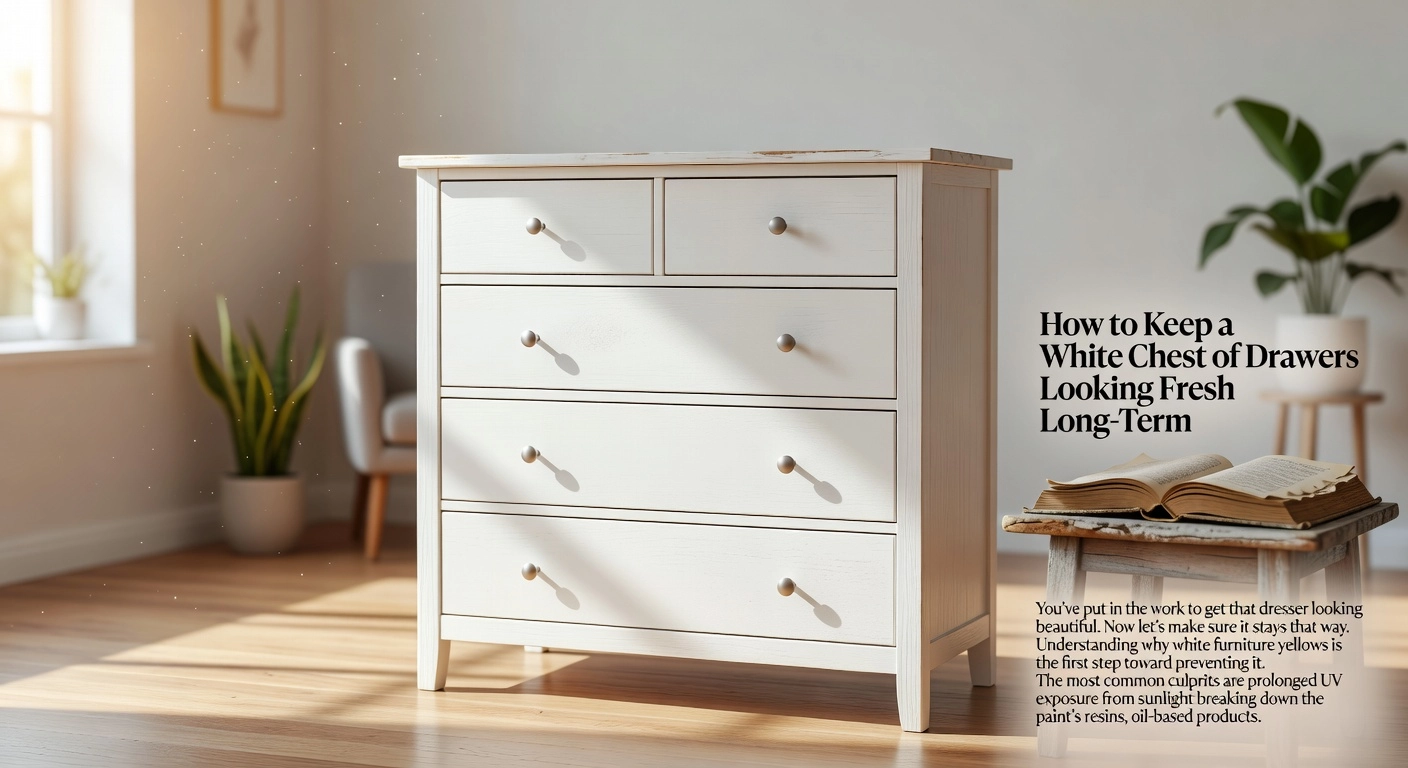
You’ve put in the work to get that dresser looking beautiful. Now let’s make sure it stays that way.
Understanding why white furniture yellows is the first step toward preventing it. The most common culprits are prolonged UV exposure from sunlight breaking down the paint’s resins, oil-based products in the original finish oxidizing over time, and tannins bleeding up through the wood from below. This is exactly why using a water-based topcoat over a properly primed surface matters so much. If you followed the earlier steps in this guide and used a shellac-based primer before painting, you’ve already done the most important work. Position your dresser away from direct sunlight if possible, since even a window across the room can cause gradual yellowing over a few years.
Routine Cleaning
For monthly maintenance, keep it simple. Dampen a lint-free cloth with warm water and add just a few drops of mild dish soap. Wring it out well so it’s barely damp, not dripping, then wipe down the surfaces gently and follow immediately with a dry cloth. This removes hand oils, dust, and light grime without damaging the paint film. Avoid multi-surface spray cleaners entirely, since many contain alcohol or citrus solvents that gradually dull the finish. The same goes for furniture polishes and vinegar-based sprays, which seem harmless but can break down a painted surface over time.
Touch-Up Technique
Before you put away your supplies after this project, pour a small amount of leftover paint into a sealed jar and label it. This becomes your secret weapon for future touch-ups. When a chip or scratch appears, lightly scuff just that area with 220-grit sandpaper, wipe away the dust with a tack cloth, and apply one thin coat using a small brush. Feather the edges outward so the repair blends into the surrounding finish. One thin coat always looks better than one thick coat on white surfaces, where buildup becomes noticeable quickly.
Surface and Hardware Care
White finishes show water rings more visibly than dark ones because of the contrast, so use coasters under glasses and felt pads under lamps, vases, and anything else sitting on the top surface. This single habit prevents most of the marks that make a white dresser look aged before its time.
For hardware, do a quick check each season and tighten any loose screws before they work themselves free and damage the wood around them. If you ever swap out the hardware for a new style, fill the original screw holes with wood filler first, let it cure fully, sand smooth, and then drill fresh pilot holes. Skipping the filler and drilling straight into an existing hole is one of the fastest ways to split a drawer face.
Common Questions About Painting a Chest of Drawers White
A few quick questions come up again and again from beginners tackling this project for the first time. Here are honest, straightforward answers to the ones that matter most.
Can you paint a chest of drawers white without sanding? Technically yes. A liquid deglosser chemically dulls the existing surface and improves paint adhesion without the dust and effort of sanding. It works reasonably well on pieces with intact, undamaged finishes. That said, sanding consistently produces better long-term adhesion and a smoother final result, particularly on glossy, sealed, or lacquered surfaces. If your dresser has peeling spots, thick buildup, or a very shiny finish, sanding is the smarter choice. Think of deglossing as a helpful shortcut rather than a true replacement.
How many coats of white paint does a dresser need? Plan for two to three thin topcoats over your primer. White paint often needs more coverage than darker colors, especially over stained or dark wood. Thinner coats level better, show fewer brush marks, and cure more evenly than one or two thick applications. Lightly sanding between coats with 220 grit sandpaper removes any dust nibs and helps each layer bond properly.
Do you need to remove the drawers before painting? Yes, always. Painting drawers while they are inside the carcass is one of the most common beginner mistakes. You risk painting them shut, missing the edges entirely, and creating an uneven finish. Pull every drawer out, set them on a drop cloth, and paint the drawer faces, edges, and the main carcass separately.
What white paint resists yellowing best? Water-based acrylic or alkyd-hybrid paints formulated specifically for furniture and cabinets are your best option. Standard wall paint is not designed to handle the wear furniture receives and tends to yellow or chip faster. Look for labels that say “furniture,” “cabinet,” or “trim enamel” when choosing your product.
How long does the whole project take? Budget two to three days. Day one covers cleaning, deglossing or sanding, and priming. Day two handles your first and second paint coats with drying time between them. Day three is for your final coat and full curing before reassembly.
Your White Chest of Drawers Transformation Starts With the Right Prep
If there’s one thing this entire guide keeps coming back to, it’s this: the prep stage is everything. The single biggest predictor of a lasting white finish on your chest of drawers isn’t the paint brand you choose or how many coats you apply. It’s what you do before the first drop of paint ever touches the wood. Degreasing thoroughly, identifying whether you’re working with tannin-prone pine or open-grain oak, and matching your primer to that specific wood type will determine whether your finish holds up for a decade or starts chipping within the first year.
White is a forgiving color for imperfect rooms. It brightens dim corners, balances busy decor, and makes small spaces feel larger. But white paint is completely unforgiving of imperfect surfaces underneath it. Every shortcut in cleaning or priming shows up clearly in the final result.
Before committing to the full piece, test on your smallest drawer front first. It’s a low-stakes way to check for tannin bleed or grain telegraphing before you’ve painted six drawer faces.
Set a reminder for the six-month mark after you finish. That’s typically when DIY paint jobs first show wear at drawer edges and corners, making it the ideal time for a quick touch-up check.
Conclusion
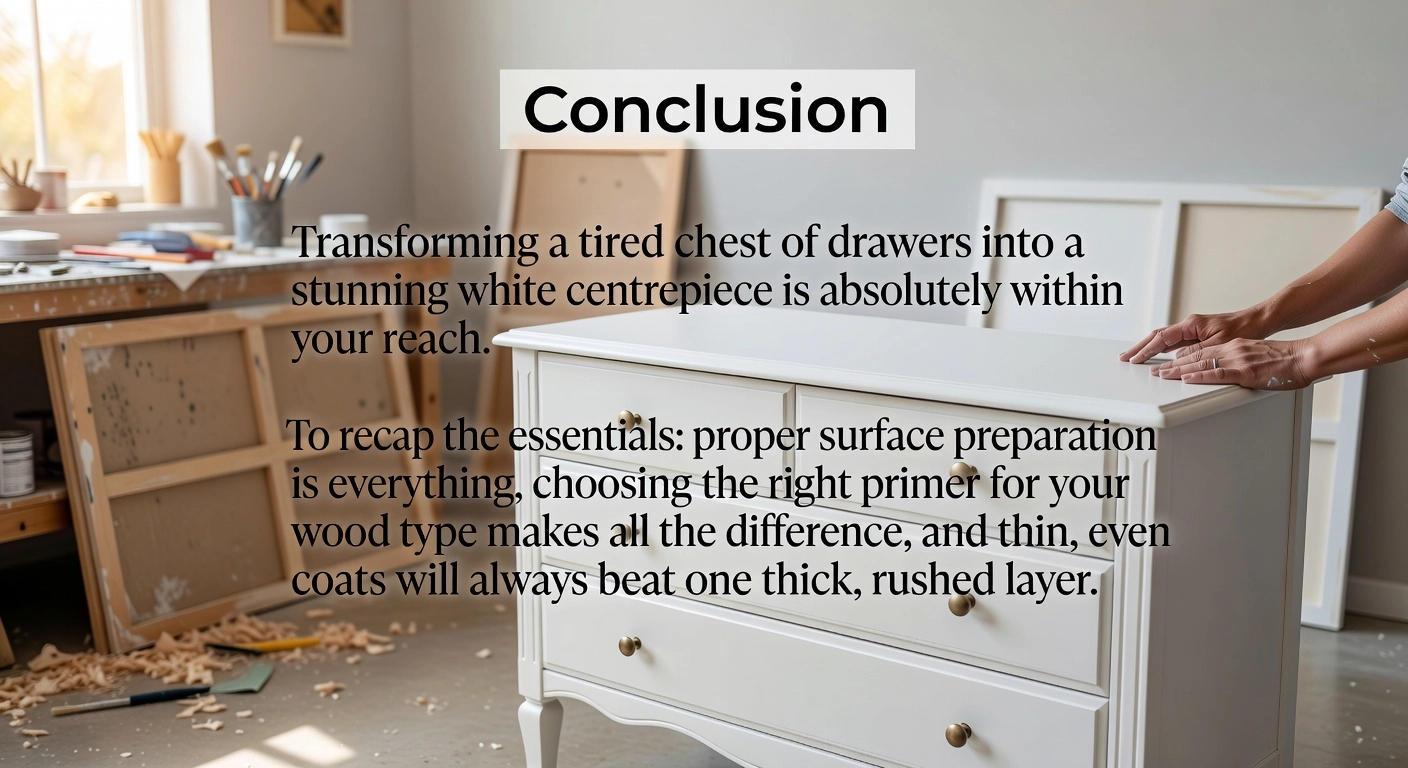
Transforming a tired chest of drawers into a stunning white centrepiece is absolutely within your reach. To recap the essentials: proper surface preparation is everything, choosing the right primer for your wood type makes all the difference, and thin, even coats will always beat one thick, rushed layer. Finishing with a protective topcoat ensures your hard work lasts for years to come.
Now it’s your turn. Dig out that old dresser, grab your sandpaper, and get started. Whether you’re working with solid oak, flat-pack MDF, or something in between, you now have the knowledge to tackle it with confidence.
The best part? A fresh white finish doesn’t just update a piece of furniture. It transforms an entire room. So stop waiting for the perfect moment. Pick up a brush and create something you’re genuinely proud to show off.