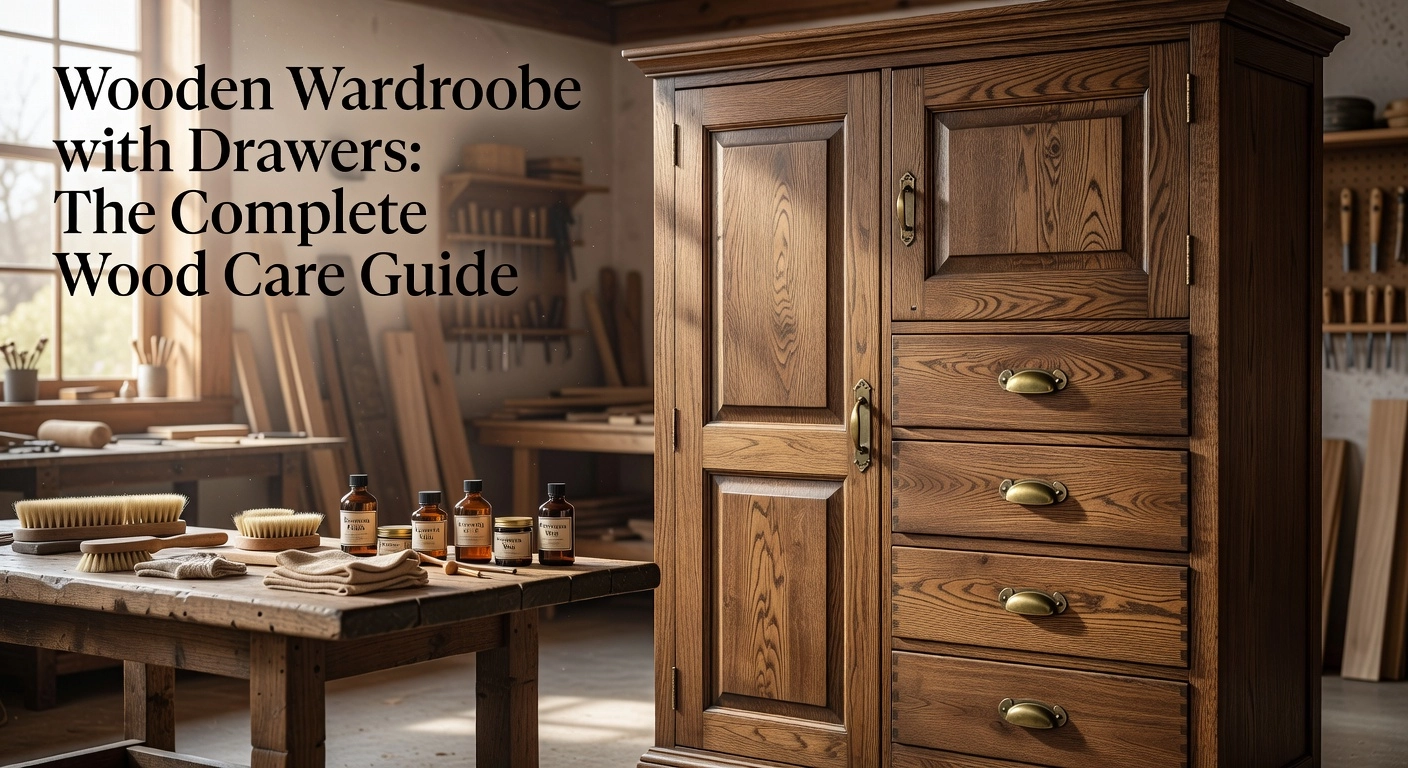
Picture this: you finally invested in that beautiful wooden wardrobe with drawers you’ve been eyeing for months. It looks stunning in your bedroom, the wood grain is rich and warm, and everything has its perfect place. But fast forward a year, and suddenly the drawers are sticking, the finish looks dull, and you’re noticing some worrying scratches and dry patches. Sound familiar?
Here’s the good news. Taking care of your wooden wardrobe with drawers is so much simpler than most people think, and you definitely don’t need to be an expert to keep it looking gorgeous for decades. A little bit of the right knowledge goes a long way.
In this guide, we’re breaking everything down into easy, beginner-friendly steps. You’ll learn how to clean different wood finishes without causing damage, how to condition and protect the wood, what common mistakes to avoid, and how to tackle those annoying drawer issues. Whether your wardrobe is brand new or has been in the family for years, this guide has everything you need to keep it in top shape.
Why the Wood Species in Your Wardrobe Actually Matters
Not all wardrobes with drawers are built the same, and the material underneath the finish makes a bigger difference than most people realize. Whether you’re shopping for a new piece or thinking about restoring an old one, understanding what your wardrobe is actually made of will save you money, frustration, and a lot of wasted effort down the road.
Solid oak sits at the top of the material hierarchy for good reason. It’s a hardwood with a Janka hardness rating of around 1,290, which means it resists dents, scratches, and daily wear far better than softer options. Oak develops a rich patina over time and stays structurally sound for decades. Solid pine, on the other hand, is softer and more affordable. It looks charming with its knotty grain, but it dents easily, especially around drawer edges and corners where your hands and belongings make the most contact. Even a well-finished pine wardrobe will show wear faster than oak. MDF (medium-density fiberboard) and veneer are common in budget furniture. MDF offers a smooth, paintable surface but swells with moisture, chips at edges, and typically lasts only a few years in high-use spots like drawers. Veneer mimics real wood’s appearance at a lower price, but the thin surface layer can peel or bubble, and you can’t sand it down deeply without going right through it. You can read more about how solid wood, veneer, and MDF compare before making a purchase decision.
Wood density also affects how your wardrobe handles everyday conditions. Denser hardwoods like oak have tighter grain, so they expand and contract less when humidity or temperature shifts. This matters if your bedroom runs warm in summer or your wardrobe sits near an exterior wall. Pine’s looser grain absorbs and releases moisture more readily, which can cause drawers to stick or joints to loosen over time. MDF cores under veneer are even more vulnerable, often showing durability problems within just a few years of regular use.
Restoration is another major factor worth thinking about before you buy. Solid hardwoods can be sanded, restained, and refinished multiple times without losing structural integrity. That vintage oak wardrobe from a thrift store? Totally worth restoring. Pine can be repaired to a degree, but softer wood doesn’t hold repairs as cleanly and shows wear again quickly. MDF and veneer pieces are largely non-refinishable; once the surface is damaged, replacement is usually the only real option.
Finally, watch out for vague labeling. “Solid wood” should mean natural lumber throughout, but some manufacturers use that term loosely when only the frame qualifies. Before you spend money on a piece you expect to last, check for end grain on the edges (real solid wood shows wood rings running through), test the weight (solid hardwood feels noticeably heavy), and look at how the drawers are joined. Dovetail joints signal quality construction. The 2026 trend toward heirloom-quality solid hardwoods reflects what smart buyers already know: paying more upfront for the right material saves you far more in the long run.
How to Tell Solid Wood from Veneer and MDF Before You Buy
Now that you know which wood species hold up best, the next skill worth developing is spotting what a wardrobe is actually made of before you hand over your money. Marketing language can be slippery, but a few simple checks will tell you the truth pretty quickly.
Physical Tests You Can Do Right in the Store
Start with weight, but don’t rely on it alone. Solid wood is generally heavier and more substantial feeling, but dense MDF can fool you. The more reliable check is the edge inspection. Flip open a drawer and look at the sides and bottom edges. Solid wood shows natural end grain, those small ring-like lines running through the full thickness of the wood. Veneer shows a thin top layer with a different material underneath. MDF looks completely smooth and uniform with no grain at all, almost like compressed cardboard. You can also check grain consistency across panels. Real solid wood has subtle, natural variation that wraps continuously around corners. If you notice a repeating pattern or grain that stops abruptly at an edge, that is a strong sign of veneer or printed laminate. For a helpful breakdown of these hands-on checks, this guide from Luke’s Furniture Company walks through exactly what to look for.
Veneer Is Not the Enemy (If the Substrate Is Solid)
Here is something a lot of beginners get wrong: veneer is real wood. It is just a thin slice of it, typically around 0.6 to 1.2 mm thick, bonded over a substrate. The substrate is where things get interesting. Veneer over high-quality plywood is actually a smart, durable choice. Plywood resists warping and handles humidity better than solid wood in some situations. Veneer over cheap MDF or particleboard is a different story. This detailed comparison on veneer versus solid wood furniture explains why many high-end mid-century pieces used veneer and have lasted for decades without any issues.
Why MDF Wardrobes Struggle Near Drawers
MDF looks polished and smooth when new, and budget-friendly wardrobes often use it specifically because it photographs beautifully. The problem shows up over time, especially in bedrooms with any humidity variation. MDF is made from compressed wood fibers and resin, and those fibers absorb moisture readily, particularly at unsealed edges and around drawer openings where there is constant movement and occasional contact with damp hands or clothing. You will start to see swelling, bowing, or a bubbling finish around drawer fronts after a year or two in a humid room. If you live somewhere with seasonal humidity swings, or if your bedroom shares a wall with a bathroom, MDF wardrobes are a higher risk.
Price Signals Worth Paying Attention To
Genuine solid wood construction requires more material, more skilled labor, and better hardware. A large wardrobe with drawers made entirely from solid oak or walnut will cost significantly more than a similar-looking piece built from MDF with a wood-effect finish. If a roomy, attractive wardrobe is priced far below what you’d expect, that gap usually reflects engineered wood cores, partial solid construction (solid wood only on visible fronts), or very thin veneer over a cheap substrate. That is not always a dealbreaker, but you should know what you are buying.
Questions to Ask and Red Flags to Spot Online
When talking to a retailer or seller, skip vague questions and get specific. Ask which components are solid wood, what the substrate is under any veneer, and whether the piece can be refinished if the surface gets damaged. Online, watch out for listings that use terms like “wood effect,” “hardwood frame,” or just “wood” without specifying a species or construction method. Also be cautious when product descriptions focus entirely on appearance and color options without any mention of materials or build specs. Cabinfield’s comparison of solid wood and veneer furniture has a useful breakdown of what legitimate product descriptions should include, which makes spotting the vague ones much easier.

The Most Common Problems with Wooden Wardrobes with Drawers
Even the best wooden wardrobes with drawers will run into trouble at some point. Wood is a natural, living material that reacts to everything around it, from the seasons changing to a cup of tea left too close to the edge. Knowing what to watch for helps you catch problems early and fix them before they turn into bigger headaches.
1. Sticking or Jamming Drawers
This is probably the most frustrating issue people deal with, and it happens more often than you’d think. Wood is hygroscopic, which is a fancy way of saying it absorbs and releases moisture from the air. When humidity levels rise above 50 to 60 percent, drawer sides swell and push against the frame, making them feel glued shut. Worn drawer slides, paint buildup, and overloaded drawers make the problem worse. The fix is usually simpler than it sounds. Sanding down the friction points lightly and rubbing paraffin wax or a candle along the drawer edges often solves it right away. For ongoing prevention, managing indoor humidity with a hygrometer and keeping levels between 35 and 55 percent is the most effective long-term approach.
2. Water Rings and Moisture Damage
That white ring left behind by a cold glass or a vase sitting on top of your wardrobe is one of the most common cosmetic complaints with wooden furniture. Moisture sneaks under the finish and gets trapped, causing cloudy spots or white rings on the surface. Drawer fronts are also vulnerable, especially in bedrooms with higher humidity levels. The good news is that white rings are usually reversible. Rubbing a small amount of mayonnaise or a mixture of vinegar and olive oil into the spot overnight often draws the moisture back out. For anything deeper or darker, light sanding followed by a fresh coat of finish does the job. The key habit to build is wiping up spills immediately rather than letting them sit.
3. Dry, Cracking Wood
On the opposite end of the humidity scale, air that is too dry is just as damaging. Central heating during winter pulls moisture out of wood, causing it to shrink, crack along the grain, and develop loose joints. Older wardrobes that have lived through many winters without proper care are particularly prone to this. Furniture restoration specialists consistently point to low humidity and proximity to heat sources as the leading causes of cracking and veneer lifting in antique and vintage pieces. The fix involves reintroducing moisture with a room humidifier, moving the wardrobe away from radiators and air vents, and conditioning the wood periodically with a quality furniture oil or wax. Small cracks can often be filled with wood filler or a matching furniture repair stick.
4. Musty Odors Inside Drawers and Enclosed Sections
If you open your wardrobe and get hit with a stale, musty smell, you are not alone. Enclosed spaces trap air, and porous wood absorbs odors from mold, mildew, mothballs, and years of stored clothing. Wardrobes that sat in storage or were purchased secondhand often carry this issue. Start by removing everything from the wardrobe and wiping the interior down with a diluted white vinegar solution, then let it air out completely for a day or two. Placing an open box of baking soda or a few pieces of activated charcoal inside the drawers absorbs lingering smells over time. If the odor keeps coming back, the root cause is usually trapped moisture, and addressing ventilation and humidity control will solve it for good.
5. Scratches, Dents, and Finish Wear
The areas around drawer pulls, edges, and door frames take a beating from daily use, and the finish wears down faster there than anywhere else. Keys, rings, and general contact all leave their mark over time. Minor surface scratches can often be buffed out with a dab of furniture oil or by rubbing a shelled walnut along the scratch, which sounds unusual but genuinely works. Shallow dents sometimes lift when you hold a damp cloth over them and apply gentle heat from an iron. Deeper wear usually calls for light sanding and a fresh application of stain or finish to match the surrounding wood. Adding felt pads inside drawer openings and behind hardware slows this kind of wear down significantly going forward.
How to Fix Sticking Drawers in a Wooden Wardrobe
A sticking drawer is one of the most frustrating day-to-day annoyances a wooden wardrobe can throw at you, but the good news is that most cases are totally fixable at home with basic supplies. Here is how to work through it step by step.
Figure Out Why It Is Sticking First
Before you grab the candle wax or the sandpaper, take a few minutes to diagnose the real cause. Pull the drawer out completely, empty it, and look at the contact points where wood meets wood. If the sticking gets noticeably worse in summer or after rainy weather, humidity swelling is almost certainly your culprit. Solid wood absorbs moisture from the air and expands, which tightens the fit inside the drawer opening. You might also see a warped drawer box, where the wood has twisted or bowed slightly over time, creating uneven pressure at one corner. Debris buildup is another sneaky cause; old soap residue, dust, and grime collect on runners and create drag. Slide the drawer back in and pay attention to exactly where it catches, whether at the top, bottom, or along the sides. That tells you where to focus your fix.
The Candle Wax Trick (Start Here)
For most sticking drawer problems in a wardrobe with drawers, this is your first move. Grab a plain white paraffin candle, a block of beeswax, or even a dry bar of soap and rub it firmly along the drawer’s bottom edges, the sides, and the wooden runners inside the wardrobe itself. Apply it to both surfaces, not just one. Push the drawer in and out several times to spread the lubricant evenly, then wipe away any excess so it does not collect dust. This quick wax fix for wooden drawers costs almost nothing and solves minor friction issues in minutes. Reapply every few months, especially heading into humid seasons.
When Sanding Is the Right Call
If wax does not fully solve it, a small amount of swelling or surface roughness may need light sanding. Use 180 to 220 grit sandpaper wrapped around a sanding block and focus only on the contact points you identified during diagnosis. Sand in the direction of the wood grain, make a few passes, and then test the fit before sanding any more. The goal is to remove the absolute minimum amount of material needed for a smooth slide. Taking off too much leaves the drawer loose and wobbly, which is just as annoying as sticking. Once you are happy with the fit, wipe away all the dust and apply a coat of wax or a light sealer to help resist future moisture absorption.
Adjusting Metal Drawer Slides
If your wardrobe uses metal ball-bearing slides rather than wood-on-wood runners, the fix looks a little different. Remove the drawer and inspect the slides for loose screws, dirt buildup, or visible misalignment. Many modern metal drawer slides have small adjustment screws in elongated mounting holes that let you shift the slide up, down, or sideways. Loosen them, nudge the slide into alignment, and retighten. Clean the tracks with a dry cloth and apply a light silicone spray or paste wax rather than a thick grease, since heavy lubricants attract debris and clog the mechanism over time.
When the Problem Is Something More Serious
Occasionally, a sticking drawer is a symptom of a bigger issue worth paying attention to. If the wardrobe frame has shifted out of square due to settling floors or loose joints, drawers will bind no matter how much wax you apply. Check for racking by measuring the diagonal corners of the wardrobe opening; they should match. Also look for signs of water damage underneath or at the back: soft or discolored wood, a musty smell, or bubbling finish are all warning signs. Address any moisture source first before attempting repairs, since wood that stays wet will keep swelling regardless of what you do to the drawer itself. If these structural red flags are present, it is worth consulting a furniture restorer rather than fighting the symptom repeatedly.
How to Remove Water Rings and Moisture Damage from Wardrobe Surfaces
Water rings are one of the most common complaints with wooden wardrobes, and they usually show up at the worst times, right on the top surface where everyone can see them. Understanding why they form in the first place makes them a lot easier to tackle.
When moisture from a spill, a sweating glass, or even a humid room sits on finished wood, it can work its way into or beneath the protective coating. What happens next depends almost entirely on your finish type. A hard surface finish like lacquer or varnish tends to trap moisture just below the coating, which shows up as a cloudy white ring that is often reversible if you catch it early. Oil-based or wax finishes are more porous, so water can sink deeper into the wood fibers, where it reacts with natural tannins and creates a much more stubborn stain. Knowing your finish helps you choose the right fix.
Method 1: The Mayo or Petroleum Jelly Trick for Fresh White Rings
For white rings that appeared recently, full-fat mayonnaise or petroleum jelly is a surprisingly effective first step. The oils in both products slowly work into the finish and help push the trapped moisture out. Dab a generous amount directly onto the ring, spread it gently with a soft cloth, then leave it for at least two to eight hours. Overnight works even better for more stubborn spots. Cover it with plastic wrap if you are worried about it drying out. Wipe everything clean with a soft cloth and buff the surface. Repeat the process if the ring has faded but not fully disappeared.
Method 2: The Warm Iron for Stubborn Rings on Wardrobe Tops
When mayo does not quite do the job, a warm iron often finishes it off. Lay a clean, dry cotton cloth or thin towel flat over the ring, making sure there are no wrinkles. Set your iron to a low-to-medium heat setting with the steam function switched off completely. Press the iron gently over the cloth in slow circles for about ten to fifteen seconds at a time, then lift and check the surface. The dry heat evaporates the trapped moisture from below. Do not leave the iron sitting in one spot, and always test on a hidden area of the wardrobe first. Finish with a light coat of furniture polish or wax to restore the sheen. This is one of the fastest methods for removing white water rings from flat surfaces like wardrobe tops and wide drawer fronts.
When the Ring Has Gone Dark or Black
A dark brown or black ring is a different problem entirely and signals that the water has moved well past the finish and into the wood itself. At this stage, mold or mildew may be developing beneath the surface, and surface-only treatments will not touch it. You will need to lightly sand back the affected area using fine-grit sandpaper, working carefully with the grain, until the discoloration is gone. This is more involved than the quick fixes above, but it is necessary to stop the damage from spreading further.
Sealing the Surface After Any Repair
Once you have dealt with the ring, do not skip the finishing step. Applying a fresh topcoat, wood oil, or furniture wax after any repair is what keeps the problem from coming back just as quickly. A wax layer applied every six months or so creates a buffer between everyday moisture and the wood beneath. Pairing this with basic habits like using coasters and wiping spills immediately makes a real difference over time.
For a full breakdown of every method with tested results and step-by-step photos, the complete water ring removal guide at WoodStuffHQ covers white rings, dark stains, baking soda paste, and prevention tips in detail.
How to Condition Dry or Cracked Wood in an Older Wardrobe
Dry wood is easy to overlook until the damage becomes obvious. Before you reach that point, it helps to know the warning signs. Surface cracking is usually the first red flag, showing up as fine splits running along the grain on drawer sides or panel faces. Grey or ashy undertones mean the wood’s natural oils have depleted and the fibers are essentially thirsty. Run your hand across the surface and if it feels rough, splintery, or almost chalky, that is another clear indicator. On veneered pieces, watch for lifting veneer edges, where the thin top layer starts to curl or peel away as the wood underneath shrinks unevenly. Catching these signs early makes a real difference, because left alone, dry wood progresses to warping, joint failure, and splits that are much harder to reverse.
How Conditioning Oils Actually Work
The reason wood oils work so well on older wardrobes is that they penetrate rather than coat. Products like boiled linseed oil, tung oil, or hemp oil soak into the wood’s porous structure and rehydrate the dried-out fibers from the inside, restoring flexibility and color without leaving a thick surface film. On very dry wood, thinning your first coat slightly helps the oil absorb even deeper. Once the carrier evaporates, the oil stays behind to nourish the wood and buffer it against future moisture swings. This is fundamentally different from a varnish or sealer, which only addresses the surface appearance.
Step-by-Step Application
Grab a clean, lint-free cotton cloth and start with the parts that are least visible and often driest, specifically the drawer interiors and back panels. Wipe the surfaces down first to remove dust, then apply the oil generously, working it in with circular motions along the grain. Dry wood will drink it up quickly. After about 15 to 20 minutes, buff off any excess with a fresh cloth so the surface does not go tacky.
For moderately dry wood, two to three coats is usually enough. Severely dry pieces may need four or more, spaced a few hours to overnight apart depending on how fast each coat absorbs. A good rule of thumb: wait until the surface looks dull again before adding the next coat.
Keeping the Wood Healthy Long-Term
Prevention is honestly easier than restoration. Solid wood furniture does best when indoor humidity stays between 40 and 60 percent, so a basic humidifier in dry winter months goes a long way. Keep your wardrobe away from radiators, heating vents, and direct sunlight. After the initial restoration, a single maintenance coat of conditioning oil once or twice a year is all it takes to keep the wood in good shape going forward.
How to Get Rid of Musty Smells Inside a Wardrobe with Drawers
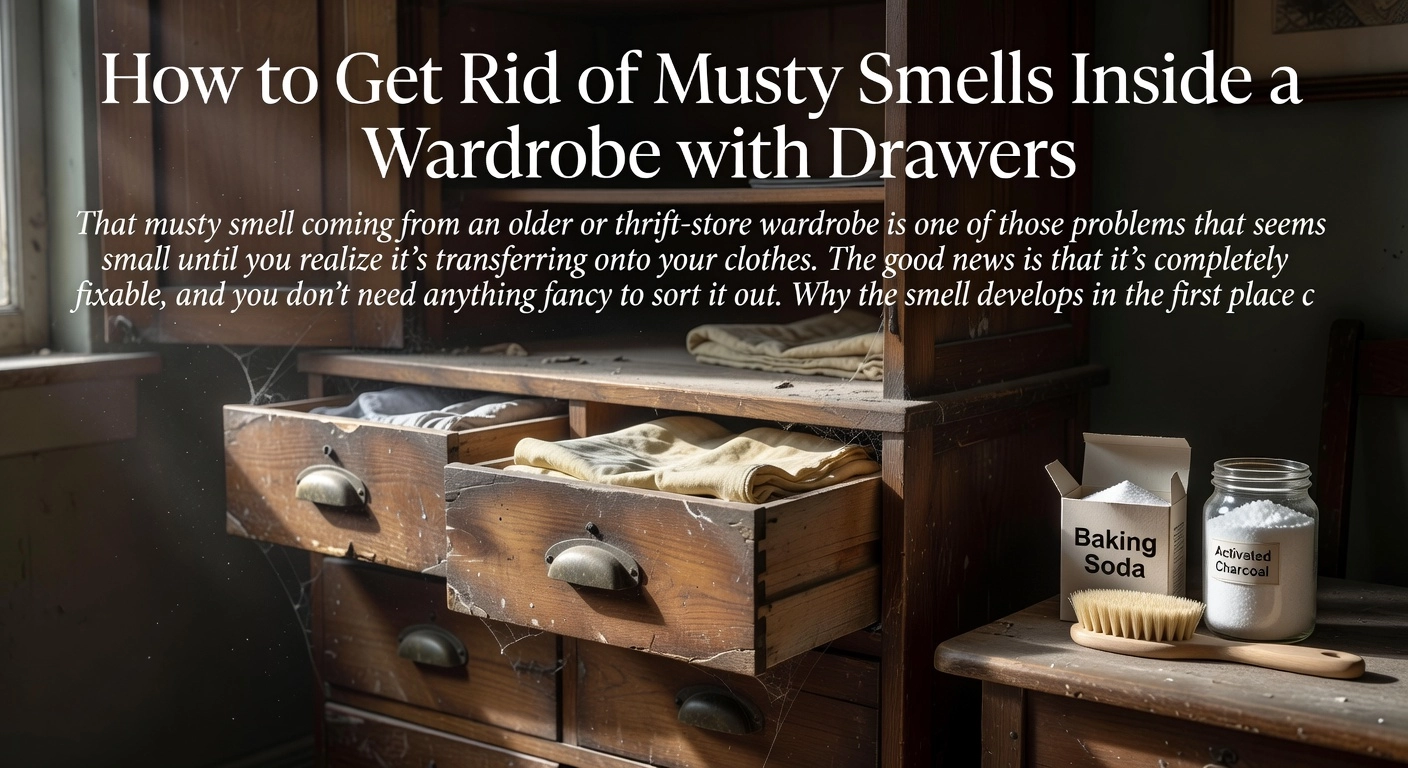
That musty smell coming from an older or thrift-store wardrobe is one of those problems that seems small until you realize it’s transferring onto your clothes. The good news is that it’s completely fixable, and you don’t need anything fancy to sort it out.
Why the smell develops in the first place comes down to a few things working against you at once. Porous wood absorbs moisture over years, and trapped humidity creates the perfect environment for mold spores and mildew to grow quietly inside drawers and corners. Old cedar linings, which were once great at absorbing moisture, eventually lose their effectiveness and can actually become part of the problem. Thrift-store pieces often carry layers of absorbed smells from previous owners, think smoke, perfume, or years of stored clothing, baked into the grain over time.
Your first move is a full wipe-down. Empty everything out completely, then mix a simple solution of equal parts white vinegar and water. Wipe every interior surface with a slightly damp cloth, covering the drawer bases, sides, back panel, and corners. Don’t soak the wood; you just want enough to neutralize the odor. Vinegar kills surface bacteria and mold and evaporates cleanly without leaving residue behind.
Before you close anything up, check for visible mold. Look at the drawer bases and interior corners for white or gray fuzzy patches, black spotting, or any discoloration. If you spot light surface mold, treat it with your diluted vinegar solution and let it sit for a few minutes before wiping clean. According to restoration experts at Mumford Restoration, gentle cleaning followed by thorough drying is the key step most people skip.
Once cleaned, place odor absorbers inside each drawer and compartment. Activated charcoal sachets are excellent because they trap both moisture and odor without masking it. Baking soda in a small open tray works well too, just swap it out every week or two. Cedar blocks add a fresh scent and help deter pests as a bonus.
Finally, leave the whole wardrobe open in a well-ventilated room for at least 24 to 48 hours. Point a fan toward the interior if you can. Skipping this drying step is the most common mistake, because closing it up too soon traps any remaining moisture and restarts the cycle.
How to Restore a Thrift-Store or Inherited Wardrobe with Drawers
Getting a thrift-store find or inherited piece back into shape is one of the most satisfying DIY projects you can tackle. Before you reach for sandpaper or a paintbrush, though, there is a smart order of operations to follow that will save you time and prevent costly mistakes.
Start with triage before anything else. Pull out all the drawers, remove the hardware, and label everything so reassembly is straightforward. Look for loose joints, cracked panels, warped drawer bottoms, and any signs of water damage or mold. This inspection phase tells you what you are actually working with before you commit to a restoration approach. Vacuum out every corner, then air the piece outside in sunlight for several hours. Musty odors are extremely common in older wardrobes, and sunlight does a surprising amount of heavy lifting. Sprinkle baking soda inside the drawers and cabinet interior while it airs out, and wipe all surfaces down with a mild solution of white vinegar, a small drop of dish soap, and warm water. Dry everything thoroughly before moving on.
Cleaning comes next, and it matters more than most beginners expect. Decades of polish buildup, cooking grease that drifted through the house, and general grime can sit invisibly on a wood surface and interfere with every step that follows. Mix a gentle degreaser solution and apply it with a microfiber cloth, working in the direction of the grain. For sticky wax buildup or heavy residue, mineral spirits on a soft rag will dissolve the mess without stripping the underlying finish. Work in small sections and dry as you go. Skip anything ammonia-based or overly harsh, since those can lift a finish you might actually want to save.
Once the piece is clean, assess the existing finish honestly. Run a small test in a hidden spot using denatured alcohol. If the finish softens, it is shellac and can often be revived rather than stripped. A dull but intact finish is usually worth refreshing with a color-matched reviving product followed by a coat of paste wax. This approach takes a few hours, preserves the original patina, and leaves the piece looking genuinely beautiful. If the finish is peeling, cracking, or flaking, you will need to strip it using a chemical stripper, following the product instructions carefully in a well-ventilated space.
Repair scratches and dents before any finishing work. For shallow dents, place a damp cloth over the spot and press a warm iron on top for a few seconds. Steam often raises the wood fibers enough to eliminate the dent entirely. For deeper damage, wood filler does the job, and color-matched wax sticks or burn-in sticks let you blend repairs almost invisibly once the filler is dry and sanded smooth.
Choosing between a light refresh and a full refinish really comes down to one question: does the finish still have life in it? If it is just dull and tired, a clean and revive job is the right call. If it is structurally compromised, a full strip-and-refinish gives you a fresh canvas to work with.
Here is the honest truth about why this whole process is worth it. A solid-wood vintage wardrobe built with dovetail joinery and dense hardwood will outlast almost any flat-pack alternative on the market today. Restored vintage case goods can hold 50 to 80 percent of current retail value, while flat-pack pieces typically hold just 10 to 35 percent. You end up with something genuinely better while keeping a quality piece out of the landfill.
Refinishing or Painting a Wooden Wardrobe to Make It Last Longer
Refinishing a wooden wardrobe is one of the smartest moves you can make when a piece has good bones but looks tired, scratched, or just plain outdated. Before you pick up a brush though, you need to make an honest call about whether your wardrobe is actually worth the effort.
Is Your Wardrobe Worth Refinishing?
A solid wood piece with cosmetic issues like faded finish, minor scratches, or a color that feels stuck in the past is a great candidate. Refinishing typically costs 30 to 50 percent less than buying a replacement, and it keeps a quality piece out of landfill, which aligns with the sustainability push that is very much part of how people are thinking about furniture in 2025 and beyond. However, if the frame is warped, the joints are falling apart, or the whole thing is built from swelling particleboard that has already started crumbling, walk away. No amount of paint will save a structurally compromised piece. Do a quick check: push on the frame, slide the drawers, and look closely at any veneer edges. If it feels solid and the wood is not delaminating, you have a good candidate.
Preparing the Surface the Right Way
Good prep is the difference between a finish that lasts years and one that peels within months. Start by removing all hardware and drawers, then wipe every surface down with a degreaser to clear away oils, dust, and grime before you ever touch sandpaper. Once clean and fully dry, begin sanding with 120 grit to cut through the old finish, then move to 180 or 220 grit to smooth everything out. Always sand with the grain, never across it. Going against the grain leaves scratches that show right through your final finish. Use an orbital sander on flat panels and hand-sand corners, moldings, and drawer fronts by feel. After each sanding stage, vacuum thoroughly and wipe with a tack cloth before moving on.
Picking the Right Finish for Your Goals
The finish you choose depends on the look you want and how much wear the wardrobe will see. Oil finishes like tung oil penetrate the wood and bring out the natural grain beautifully, but they need occasional reapplication. Wax gives a soft, vintage sheen and works well as a topcoat over chalk paint, though it is not the most durable option for high-touch areas like drawer fronts. Polyurethane, especially water-based, forms a tough protective film that resists scratches and moisture, making it the best pick if longevity is your priority. Chalk paint is beginner-friendly, covers without priming on most surfaces, and suits the earthy, matte aesthetics trending right now, but always seal it with polyurethane or wax afterward.
Painting Step by Step
Once prepped, apply a bonding primer in one thin, even coat using a brush on edges and a foam roller on flat panels. Let it dry fully, sand lightly with 220 grit, and dust clean. Then apply your paint in thin coats rather than one thick one. Drawer fronts specifically need two to three coats because they get handled constantly. Use a foam roller for smooth, brush-mark-free coverage on flat areas and an angled brush for detail work. Sand lightly between coats and allow proper drying time between each one.
Protecting Hardware, Mirrors, and Glass
The simplest approach is to remove hardware entirely before you start and store it somewhere safe. For mirrors and glass panels built into the wardrobe, skip the complicated masking tape setups. A thin layer of petroleum jelly along the glass edges works surprisingly well because paint simply will not stick to it, and you wipe it off cleanly afterward. Sliding a few playing cards behind mirror frames during painting keeps edges tidy without any tape frustration. Once everything is fully cured, reinstall your hardware and enjoy a wardrobe that looks and feels completely renewed.
A Simple Maintenance Routine to Keep Your Wardrobe in Good Shape
Once you have put in the work to restore, refinish, or simply set up your wardrobe with drawers, keeping it in good shape comes down to a few simple habits. None of these steps require special tools or professional skills, just a little consistency.
1. Monthly Quick-Clean Routine
Once a month, give your wardrobe a light once-over. Start by dusting all exterior surfaces, the top, sides, and drawer fronts, using a dry or lightly damp microfiber cloth. Then wipe down the handles and drawer pulls with a slightly damp cloth to lift fingerprints, oils, and everyday residue. Dry the hardware thoroughly afterward so moisture does not sit against the metal or wood. While you are at it, give each drawer a quick open-and-close test. If anything feels slightly stiffer than usual, note it. Catching small changes early is much easier than dealing with a fully stuck drawer later.
2. Seasonal Deep Clean
Every three to six months, go deeper. Empty out all the drawers completely, wipe the interiors with a soft damp cloth, and let everything dry fully before putting items back. This is also the right moment to inspect for any moisture staining, discoloration, or signs of pest activity like moths or mildew. Once the interior is clean and dry, apply a wood conditioner to nourish any exposed wooden surfaces and restore a light layer of protection.
3. Humidity Management
Wood swells in humid conditions and cracks in dry ones. Aim to keep your indoor humidity between 40 and 55 percent using a basic hygrometer to monitor levels. In humid climates, a small dehumidifier near the wardrobe helps. In winter, when central heating dries the air out significantly, a humidifier keeps the wood from shrinking and cracking. Keep the wardrobe away from heat vents, radiators, and direct sunlight regardless of season.
4. Protecting the Top Surface
The top of your wardrobe takes a beating from jewelry boxes, perfume bottles, baskets, and decorative items that sit there daily. Use felt pads or small trays under anything that sits directly on the wood. Perfume bottles in particular can leave chemical rings if they drip or tip. A periodic application of furniture wax or polish adds a sacrificial layer that takes the wear instead of the finish underneath.
5. Spotting Early Warning Signs
A slightly stiff drawer is usually a humidity issue, not a structural one, but it is worth addressing before it becomes impossible to open. A faint musty smell when you open the drawers points to trapped moisture or poor ventilation inside the wardrobe. Both of these are easy fixes when caught early. Left alone, they can develop into mold, warped wood, or damaged clothing. Trust your senses during your monthly routine and act on anything that seems off rather than waiting to see if it gets worse.
What Wood Quality Really Means When Buying a Wardrobe with Drawers
The global wardrobe market is on track to hit $74 billion in 2026, and that growth sounds like great news for shoppers. More options, more price points, more styles to choose from. But there is a flip side to that expansion. When manufacturers race to meet rising demand, a lot of them cut corners on materials and construction to compete on price. Knowing what actually separates a quality piece from a cheap one saves you from making a costly mistake.
Start with the Drawers
The drawers are the single best place to inspect build quality. Pull one out and look at the corners. Dovetail joints look like interlocking wedges cut into the wood, and they form a mechanical connection that holds together under years of daily use. A well-made dovetail drawer can realistically last 20 to 30 years without coming apart. Stapled chipboard drawer boxes, on the other hand, rely on glue and metal fasteners that gradually loosen under the weight of folded clothes. Most budget drawer boxes built this way start showing wear within five to seven years.
Check the Hardware and the Base
Soft-close drawer slides are worth paying attention to beyond just the satisfying feel. Every time a drawer slams shut, that impact stresses the slides, the drawer box, and the surrounding frame. Soft-close hardware absorbs that force, which meaningfully reduces wear over time. Its presence in a wardrobe usually signals that the manufacturer cared about the whole build, not just appearances.
For the drawer base, the flat panel sitting at the bottom of each drawer, plywood or solid wood holds up far better than hardboard. Hardboard is thin and brittle, and it sags or cracks under heavier loads. Plywood flexes less and stays strong.
Think Long-Term on Budget
A solid wood wardrobe with drawers costs more upfront, but a cheap particleboard piece that needs replacing every five to seven years quietly costs more over a decade. Solid wood can also be sanded, refinished, and restored, which extends its life almost indefinitely.
Making Your Wooden Wardrobe Last for Decades
The good news after everything covered in this guide is that keeping a wooden wardrobe with drawers in great shape for decades really does come down to three things: starting with solid wood, catching problems early, and sticking to a simple maintenance routine. Solid hardwood like oak or maple can be refinished repeatedly, handles daily wear far better than flat-pack alternatives, and actually improves in character over time. Small issues like water rings, dry patches, or sticky drawers are much easier to fix when you tackle them early rather than letting them develop into bigger structural problems.
Restoration skills are genuinely a game-changer here. A thrift-store or inherited wardrobe built from solid wood will almost always outlast a brand-new flat-pack piece, because the bones are better and the wood can be brought back to life with basic supplies.
If you want step-by-step help for specific problems, WoodStuffHQ has beginner-friendly guides covering water stain removal, restoring dry wood furniture, and degreasing wood surfaces, all designed with no professional tools required. Most fixes take under 30 minutes.
Conclusion
Your wooden wardrobe with drawers is more than just furniture; it is an investment worth protecting. By following the right care routine, you can keep it looking beautiful for generations to come.
Here are your key takeaways: clean regularly using the correct products for your specific wood finish, condition the wood a few times a year to prevent drying and cracking, address drawer issues early before they become bigger problems, and always control moisture and humidity in the room.
The effort required is genuinely minimal once you build these habits into your routine. A few minutes of consistent care will save you from costly repairs or replacements down the line.
Start today. Pick one tip from this guide and put it into action this weekend. Your wardrobe has the potential to last a lifetime, and now you have everything you need to make that happen.
Frequently Asked Questions
How do I stop my wooden wardrobe drawers from sticking in humid weather?
Sticking drawers in humid weather are caused by wood absorbing moisture and swelling. Start by rubbing a plain paraffin candle, beeswax, or dry bar of soap firmly along the drawer edges and wooden runners inside the wardrobe. Reapply every few months, especially heading into humid seasons. If wax alone doesn't solve it, lightly sand the friction points with 180 to 220 grit sandpaper, always working with the grain, removing only the minimum material needed. For long-term prevention, keep indoor humidity between 35 and 55 percent using a hygrometer to monitor levels and a dehumidifier when needed.
What is the best way to remove white water rings from the surface of a wooden wardrobe?
White water rings form when moisture gets trapped beneath the wood's finish and can usually be reversed if caught early. Try dabbing full-fat mayonnaise or petroleum jelly directly onto the ring, leaving it for two to eight hours or overnight, then wiping clean and buffing the surface. If that doesn't fully work, lay a clean dry cotton cloth over the ring, set an iron to low-to-medium heat with steam off, and press gently in slow circles for ten to fifteen seconds at a time. Always test on a hidden area first. After removing the ring, apply a fresh coat of furniture wax or polish to protect the surface going forward.
How can I tell if a wardrobe is made from solid wood, veneer, or MDF before buying?
Start by inspecting the edges of a drawer. Solid wood shows natural end grain, which looks like small ring-like lines running through the full thickness. Veneer shows a thin top layer with a different material underneath, while MDF looks completely smooth and uniform with no grain at all. Check grain consistency across panels too; real solid wood has natural variation that wraps continuously around corners, whereas a repeating pattern or grain that stops abruptly at an edge signals veneer or printed laminate. Also test the weight, since solid hardwood feels noticeably heavy, and look for dovetail joints on drawers, which indicate quality construction.
How do I get rid of musty smells inside an old or thrift-store wardrobe with drawers?
Musty smells come from porous wood absorbing moisture over years, which creates conditions for mold and mildew to grow. Start by emptying the wardrobe completely and wiping every interior surface, including drawer bases, sides, back panel, and corners, with a solution of equal parts white vinegar and water using a slightly damp cloth. Check for visible mold and treat any patches with the vinegar solution before wiping clean. Place activated charcoal sachets or an open tray of baking soda inside each drawer to absorb lingering odors, swapping out baking soda every week or two. Most importantly, leave the wardrobe fully open in a well-ventilated room for at least 24 to 48 hours, pointing a fan toward the interior if possible, since skipping this drying step is the most common reason the smell returns.
How often should I condition and maintain my wooden wardrobe to keep it in good shape?
A simple routine is all you need. Once a month, dust all exterior surfaces with a dry or lightly damp microfiber cloth, wipe down handles and drawer pulls, and do a quick open-and-close test on each drawer to catch stiffness early. Every three to six months, do a deeper clean by emptying all drawers, wiping interiors with a soft damp cloth, and applying a wood conditioner to nourish exposed wooden surfaces. Keep indoor humidity between 40 and 55 percent year-round, using a humidifier in dry winter months and a dehumidifier in humid conditions. Apply furniture wax or polish to the top surface periodically to protect against everyday wear from items that sit on it.
2 thoughts on “Wooden Wardrobe with Drawers: The Complete Wood Care Guide”