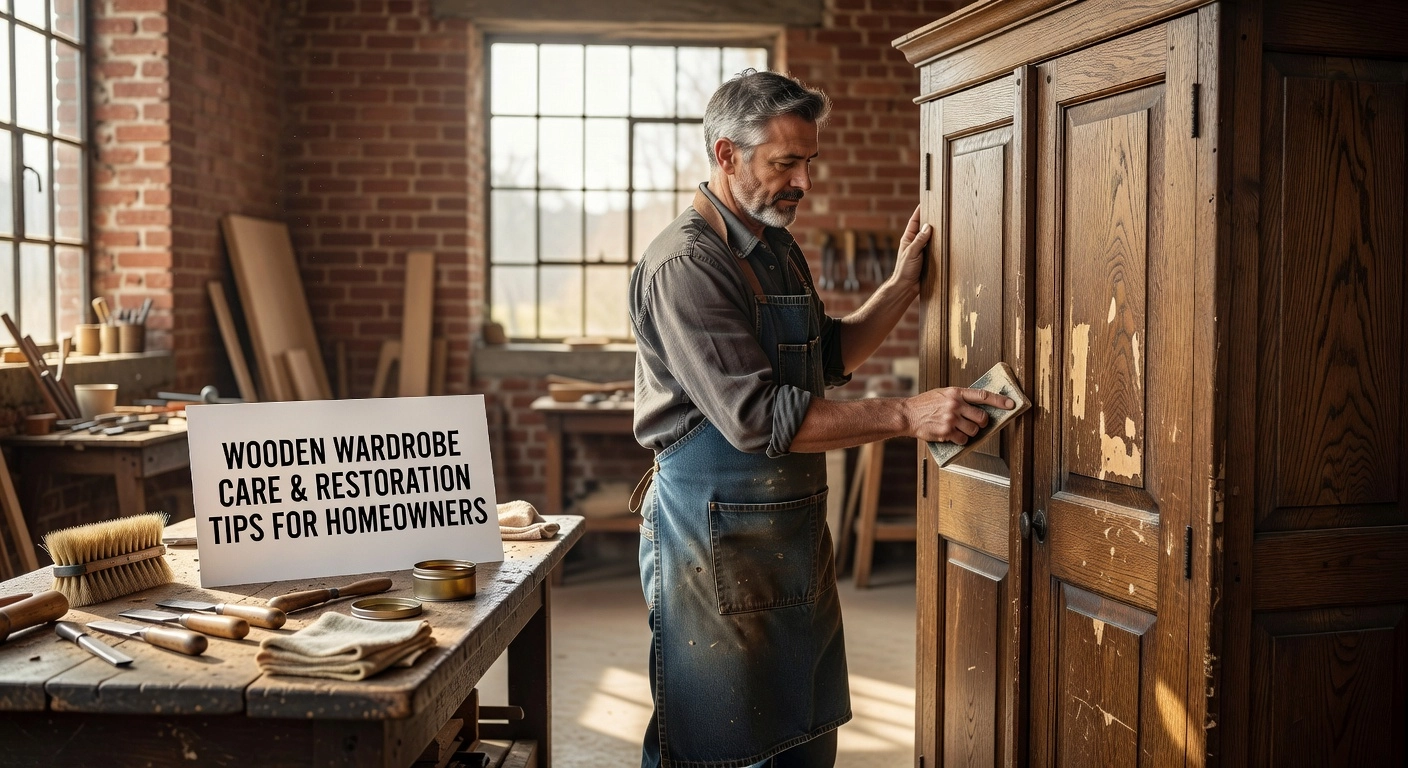
There’s something truly special about a wooden wardrobe. It holds your clothes, sure, but it also holds memories, character, and a warmth that no flat-pack furniture can replicate. But what happens when your beloved piece starts showing its age? Maybe the doors are squeaking, the finish looks dull, or you’ve spotted a few scratches that weren’t there before.
The good news is that caring for and restoring a wooden wardrobe is much easier than most people think, and you definitely don’t need to be a professional carpenter to do it. With a little know-how and some basic supplies, you can bring your wardrobe back to life and keep it looking beautiful for years to come.
In this guide, we’ve pulled together practical, beginner-friendly tips to help you clean, maintain, and restore your wooden wardrobe like a pro. From tackling everyday dust and grime to fixing more noticeable damage, we’ve got you covered. Let’s dive in and give that wardrobe the love it deserves!
Why Your Wooden Wardrobe Needs More Attention Than You Think
Here’s something most people don’t realize: wood-based wardrobes hold about 65% of the global wardrobe market, and the reason is simple. Wood looks beautiful, lasts for decades, and can be customized to fit almost any space. But here’s the catch: that long-lasting durability isn’t automatic. It depends almost entirely on basic, consistent care.
Not all wooden wardrobes are the same, and this matters more than you’d think. Solid wood wardrobes (think oak or walnut) are sturdy and can even be sanded and refinished, but they’re very sensitive to humidity changes and can warp or crack if moisture levels swing too much. Engineered wood wardrobes are more stable day-to-day but can swell badly if water gets into the edges. Veneer wardrobes look like solid wood but have a thin surface layer that scratches easily and can’t handle aggressive scrubbing or soaking. Using the wrong cleaner on any of these can do real damage fast. Solid wood and veneer respond very differently to moisture and cleaning products, so knowing your wardrobe type is step one.
The most common mistakes are also the easiest to overlook: skipping regular dusting, ignoring seasonal humidity shifts, letting hinges and handles go loose, and grabbing whatever cleaning spray is nearby. Over time, these habits lead to warping, swelling, cracking, musty odors trapped inside, and a dull or peeling finish. The good news is that most of this is completely preventable with the right approach for your specific wardrobe type, which is exactly what the tips below will help you figure out.
Step One: Know What Your Wardrobe Is Actually Made Of
Before you reach for any cleaner, oil, or polish, you need to answer one simple question: what is your wardrobe actually made of? This single step changes everything that comes after it, and skipping it is how people accidentally ruin perfectly good furniture.
Solid Wood vs. Veneer vs. MDF: How to Tell the Difference
Start by checking the edges. On a truly solid wood wardrobe, the grain runs continuously through the piece, wrapping naturally around corners and cut edges. Flip open a door or look at a shelf edge closely. If you see a thin decorative layer sitting on top of a noticeably different material underneath, that is veneer, typically less than 3mm thick. MDF and engineered board edges look completely different: smooth, uniform, and fibrous with no visible grain at all. They are often covered with edge banding or paint to hide this.
Weight and sound also give useful clues. Solid hardwood feels dense and produces a satisfying resonant knock when you tap it. MDF is heavy but gives a dull, flat thud. Combining these checks with a visual inspection of edges, grain patterns, and construction gives you a reliable answer most of the time.
Common Wood Species and What They Mean for Care
Not all wood wardrobes behave the same way, even among solid wood pieces. Oak is a hardwood that resists dents and takes finishes well, making it quite forgiving for everyday care. Pine is a softwood that scratches and dents easily, so it needs gentler handling. Walnut and mahogany are denser species that hold up better against moisture and humidity, which is why they are popular for higher-end or antique-style wardrobes.
Why Getting This Wrong Can Cost You
Using an oil-based product on a veneer panel is one of the most common and avoidable mistakes. The oil can penetrate the thin decorative layer, affect the adhesive beneath, and cause bubbling or delamination that is nearly impossible to reverse at home. According to comprehensive guides on identifying solid wood, MDF is equally vulnerable to moisture, swelling up when exposed to excess liquid. Solid wood, on the other hand, can often be sanded, oiled, or refinished multiple times.
Every tip in this guide depends on what your wardrobe is made of. Knowing your material upfront keeps you from making a small cleaning task into an expensive repair job.
How to Remove Musty and Mothball Odors From Inside a Wardrobe
Wood is naturally porous, which means the interior surfaces of your wardrobe act almost like a sponge for smells. The enclosed space limits airflow, humidity builds up over time, and odors from clothing, moisture, and storage products get absorbed deep into the wood grain. Once those smells are locked in, simply airing the wardrobe out for an afternoon usually isn’t enough to shift them.
Here are the most effective methods to tackle musty and mothball odors, step by step.
The White Vinegar Method (Best for Musty Smells)
This is the go-to fix for that damp, stale smell that comes from moisture and age. Start by emptying the wardrobe completely, including shelves, drawers, and any hanging rods. Mix a 1:1 solution of white vinegar and water, then wipe down every interior surface: walls, shelves, the floor of the wardrobe, and any drawers. Vinegar’s natural acidity neutralizes odor-causing bacteria and helps tackle light mildew. According to Salvaged Inspirations, this approach works well on wood furniture and doesn’t leave a strong vinegar smell once fully dry. Leave the doors wide open for at least 24 hours in a well-ventilated room. A small fan nearby speeds things up considerably.
Activated Charcoal for Mothball Odors
Mothball smell is a different beast entirely. Those chemical odors from naphthalene penetrate porous wood deeply and linger for months. Place activated charcoal sachets inside the closed wardrobe for 48 to 72 hours. The charcoal’s porous structure physically traps and absorbs the chemical residue without masking it with fragrance. Repeat if needed, and recharge the sachets by leaving them in direct sunlight.
The Baking Soda Alternative
If you don’t have activated charcoal handy, baking soda works as a gentler option. Leave an open container inside the empty wardrobe for 2 to 3 days. Once the odor clears, swap the baking soda out for cedar blocks, which absorb lingering moisture and keep the interior smelling naturally fresh on an ongoing basis.
Simple Habits That Prevent Odors From Coming Back
Prevention honestly saves more effort than any odor-removal method. Swap chemical mothballs for cedar rings or cedar hangers; cedar’s natural oils repel moths just as effectively without the toxic chemical smell. Always make sure garments are clean and completely dry before hanging them up, since damp or worn clothing is one of the biggest sources of wardrobe odor. Finally, try cracking the wardrobe door open for an hour or two a few times a week. That small habit, combined with expert-backed advice from The Spruce, goes a long way toward keeping your wooden wardrobe smelling clean year-round.
Controlling Humidity to Stop Warping and Swelling
Solid wood is a living, breathing material, even after it’s been turned into a wardrobe. It naturally absorbs and releases moisture from the air around it, expanding when humidity rises and contracting when it drops. This constant movement is completely normal, but when humidity swings too far in either direction, your wardrobe starts to show the damage. The sweet spot for wood furniture is an indoor relative humidity of 35 to 55 percent. Stay within that range consistently, and your wardrobe stays stable. Drift outside it repeatedly, and you are looking at real structural problems over time.
Spot the Warning Signs Early
Humidity damage rarely announces itself all at once. The early signs are subtle: a wardrobe door that used to swing shut cleanly now catches on the frame, or drawers that glide smoothly in winter suddenly feel like they are jammed in July. That sticky drawer in summer and the slightly rattling one in winter? That is wood responding to seasonal humidity shifts. Visible bowing or cupping in a door panel is a more advanced signal, and at that point, the fix gets harder. Catching these early signs in the first season saves you from much bigger headaches later.
Practical Ways to Control Humidity
The fix does not have to be complicated. In humid climates or during muggy summer months, a small dehumidifier placed near your wardrobe pulls excess moisture from the air before the wood can absorb it. In homes with dry forced-air heat during winter, a humidifier does the opposite, adding moisture back to prevent cracking and shrinkage. A basic hygrometer, often available for just a few dollars, lets you monitor your room’s humidity so you are not guessing.
Placement and Seasonal Upkeep
Where you put your wardrobe matters just as much as the humidity level itself. Positioning it against an exterior wall, near a radiator, or in direct sunlight exposes one side of the wood to very different conditions than the other, and that uneven moisture distribution is what causes warping. Keep it on an interior wall with a couple of feet of clearance from any heat source.
For seasonal upkeep, check door and drawer alignment every spring and fall, since those are the transition periods when humidity shifts hit hardest. Before winter arrives, apply a paste wax to the exterior surfaces of your wardrobe. It acts as a light moisture barrier, slowing down the rate at which the wood absorbs and releases humidity during those dry heating months.
How to Clean Your Wooden Wardrobe Without Damaging the Finish
Cleaning your wooden wardrobe the right way comes down to five simple habits. Get these right and your finish stays intact for years.
1. Start Inside With a Vacuum, Then a Barely Damp Cloth
Always vacuum the interior shelf surfaces first using a soft brush attachment. This lifts loose dust and debris before any moisture touches the wood. Follow up with a microfiber cloth wrung out until it’s barely damp, not wet. Wood interiors typically have minimal protective coating compared to exterior surfaces, so excess moisture seeps in fast and causes swelling or warping. Wipe in the direction of the grain, then immediately dry the surface with a separate dry cloth.
2. Match Your Exterior Cleaning Method to Your Finish
Oiled wood finishes, like tung or linseed oil, need gentle soap and water followed by thorough drying and a fresh coat of oil to restore protection. Lacquered or polyurethane-coated surfaces (the most common on modern wardrobes) respond well to a diluted mild dish soap solution. A few drops of dish soap in warm water applied with a damp microfiber cloth is all you need. Always test on a hidden spot first.
3. Avoid These Products Completely
Keep ammonia-based all-purpose sprays away from your wardrobe entirely, as they etch and dull finishes over time. Silicone-based polishes create a sticky buildup that attracts dust and becomes nearly impossible to remove. Bleach-based cleaners strip protective coatings and can permanently discolor the wood.
4. Clean on a Simple Schedule
Wipe down the exterior monthly, do a full interior clean quarterly, and clean the hardware every six months using mild soap and a dry cloth finish.
5. Beginner-Safe Products WoodStuffHQ Recommends
For safe, finish-friendly wood furniture cleaning, WoodStuffHQ recommends a simple mix of one tablespoon of mild dish soap, one cup of warm water, and a splash of white vinegar for general cleaning and light degreasing. This method is tested, low-cost, and beginner-friendly. For oiled surfaces, food-grade mineral oil works well after cleaning. These approaches are covered in detail across WoodStuffHQ’s DIY wood care guides, which are built specifically for beginners who want results without risking damage.
Removing Water Rings and Surface Stains From Wardrobe Panels
Water rings are one of the most common complaints wooden wardrobe owners have, and the good news is that most of them are completely fixable at home. Understanding what’s actually happening helps you choose the right fix.
Why Water Rings Appear
When moisture from a glass, a damp cloth, or even a humidifier sitting nearby contacts your wardrobe’s finish, it gets trapped inside the topcoat rather than evaporating cleanly. That trapped moisture scatters light differently than the surrounding finish, which creates that familiar cloudy white ring. The top panel of your wardrobe is the most vulnerable spot because it’s horizontal and often used as a surface. The important thing to note: a white or cloudy ring usually means the damage is still in the finish layer, not the wood itself. That’s actually great news.
The Mayo Method for Fresh Rings
For recent water rings on wax or oil-finished wood, the mayo method from Southern Living is surprisingly effective. Apply a small amount of full-fat mayonnaise or petroleum jelly directly onto the ring, spread it gently with a soft cloth, and leave it overnight. The oils work by displacing the trapped moisture and restoring the finish’s clarity. In the morning, buff off the residue with a clean microfiber cloth and follow up with a light wood polish. Test on a hidden area first, as results can vary by finish type.
Stubborn Rings and Interior Stains
For older rings that haven’t responded to the mayo method, try 0000-grade steel wool (the finest available) rubbed very lightly with the grain. Never go against the grain and never use a coarser grade, as you’ll risk scratching the surface. Wipe clean immediately and apply wood polish to restore the sheen.
For ink, makeup, or product spills on interior shelves, dab a small amount of rubbing alcohol onto a cotton ball and press it gently onto the stain. Blot rather than rub to avoid spreading it further. Wipe the area with a barely damp cloth afterward and dry immediately.
Surface Stain vs. Penetrated Damage
Knowing when a simple surface treatment will work versus when you need to sand and refinish is the key skill here. As Architectural Digest explains, white or cloudy marks almost always mean finish-level damage that responds to gentle treatments. Dark brown or black stains, however, indicate moisture or tannins that have sunk past the finish and into the wood fibers themselves. Surface treatments won’t fully resolve those. That type of damage requires light sanding with the grain down to bare wood, followed by spot staining and refinishing to match the surrounding panel. When in doubt, start with the gentlest method first and work your way up gradually.
How to Fix a Split or Cracked Wardrobe Door Without Professional Tools
A cracked wardrobe door looks alarming, but in most cases it’s a completely fixable DIY job. You don’t need professional tools or any special skills. Here’s exactly how to handle it.
Why the Door Cracked in the First Place
Wood moves. It expands when humidity is high and contracts when the air is dry, and this constant cycle puts stress on wide flat panels like wardrobe doors. In winter especially, indoor heating pulls moisture out of the air, dropping humidity well below the ideal 40-60% range that wood prefers. Over time, that repeated shrinking creates tension that the wood eventually releases as a crack. Impact damage is the other common culprit; a door slammed hard enough, or a heavy object bumped against a panel, can initiate a split that slowly works its way deeper.
Surface Check or Structural Split?
Before you grab the glue, run your finger along the crack. A surface check is shallow, hairline-thin, and doesn’t affect how the door hangs or swings. It’s purely cosmetic and easy to fix. A structural split is wider, runs deeper into the wood, or sits near a hinge; you may notice the door sticking, sitting unevenly, or the hinge feeling loose. Surface checks get glue. Structural splits near hinges need filler and possibly hinge repositioning before the crack is addressed.
Fixing a Surface Crack Step by Step
Start by sweeping the crack clean with a dry brush to remove any dust or debris. Then use a toothpick or a syringe applicator to work wood glue deeply into the crack, getting it all the way to the bottom. Press the sides of the crack firmly together and hold them in place with painter’s tape or a clamp. Leave it for a full 24 hours without disturbing it. Once dry, sand the repaired area flush using fine-grit sandpaper, working with the grain.
Handling Wider Splits
For gaps too wide for glue alone, reach for a two-part wood filler in a tone that matches your wardrobe. Apply it in thin layers using a putty knife, letting each coat dry completely before adding the next. Sand between coats for a smooth, flush surface. Rushing this step and applying one thick layer leads to shrinkage and uneven results.
Finishing So the Repair Disappears
Blend the repaired area using a wood stain marker or a small brush dipped in diluted wood stain. Test the color on an inconspicuous spot first, then feather it into the surrounding wood. Once the stain is dry, apply a thin layer of clear furniture wax over the repair. This seals the area, protects it from future moisture fluctuations, and gives it a finish that matches the rest of the door.
Fixing Sticky or Swollen Wardrobe Drawers
Sticky drawers are one of those frustrating problems that seem to appear out of nowhere, usually right when you’re in a rush. The good news is that most cases are completely fixable at home, and you don’t need any special tools to get started.
Why Your Drawer Is Sticking in the First Place
Wood naturally absorbs moisture from the air around it. When humidity rises, whether from seasonal changes, a nearby bathroom, or just a damp bedroom, the wood in your wardrobe drawers expands slightly. That tiny expansion is enough to eat up the small gap between the drawer and its runner or frame, turning what was once a smooth glide into a frustrating tug-of-war. This is especially common in older solid-wood wardrobes where the wood has had years to respond to changing conditions.
The Quickest Fix: No Tools Needed
Before you do anything else, try the candle or soap trick. Pull the drawer fully out and rub a plain white candle or a basic bar of soap firmly along the side edges, the bottom edges, and the wooden runners inside the cabinet. You want to leave a light, visible residue on every contact point. Slide the drawer back in and out a few times to spread it. This lubricates all the wood-on-wood friction points instantly and works surprisingly well for most sticky drawers. Avoid using oily products, as these attract dust and make the problem worse over time.
Swelling vs. Warping: How to Tell the Difference
Set the drawer on a flat, level surface and see if it sits evenly without rocking. If it lies flat but still sticks in the cabinet, humidity-driven swelling is almost certainly the cause. Try the lubricant fix first, and consider running a dehumidifier nearby. If the drawer rocks or bows, it has warped, which requires more patience and incremental sanding to correct.
When to Sand
For drawers that still stick after lubrication, reach for 120-grit sandpaper. Look for shiny rub marks on the sides and bottom edges, as these show exactly where the wood is catching. Sand those spots lightly, wipe away the dust, and test the fit before sanding again. Removing material is permanent, so work in small passes and stop the moment the drawer moves smoothly. Finish by reapplying wax or soap to protect the freshly sanded wood.
Check Your Hardware First
Before assuming the wood itself is the problem, inspect the metal runners. Loose screws cause runners to shift out of alignment, which mimics swelling symptoms almost perfectly. Tighten every screw along both runners and confirm they sit parallel to each other. This five-minute check resolves a surprising number of sticky drawer complaints with zero sanding required.
Repairing Loose Hinges and Hardware on a Wooden Wardrobe
Loose hinges and wobbly hardware are frustrating, but here’s the reassuring news: most of these problems have nothing to do with the wood itself. When a wardrobe door starts sagging, a handle spins freely, or a drawer pull wobbles with every tug, that’s your hardware talking, not a structural wood failure. Start your diagnosis with a simple test: open the door halfway, grip the handle, and give it a gentle upward pull. If the hinge leaves shift or the screws turn endlessly without biting, you’ve got stripped screw holes, which is by far the most common hardware issue on wooden wardrobes.
The toothpick-and-glue fix is your best friend here. Remove the screw completely, then coat several wooden toothpicks in wood glue and pack them tightly into the stripped hole. Snap or trim the excess flush with the surface, let everything dry for at least an hour, then re-drive the screw. The glued toothpicks give the threads fresh wood fibers to grip, and the hold is surprisingly strong. This works on solid wood and MDF alike.
For doors that look slightly off or no longer close evenly, don’t assume you need new hinges. Most modern wardrobes use European-style concealed hinges, and these come with three built-in adjustment screws controlling height, depth, and side-to-side position. A few small turns with a Phillips screwdriver is usually all it takes to bring everything back into alignment.
While you have the screwdriver out, consider a quick hardware refresh. Swapping out dated brass knobs for matte black or brushed nickel pulls is one of the easiest ways to modernize a wooden wardrobe without touching the finish at all. Both finishes are strong 2026 choices that complement deeper wood tones beautifully.
That said, not everything should be repaired. Hinges showing visible stress fractures, heavy rust, or bending should be replaced outright. On a heavy wardrobe door, a compromised hinge is a genuine safety risk, and no amount of tightening will fix metal that’s structurally failed.
How to Revive a Dull or Faded Finish on an Older Wardrobe
Before you reach for any product, take two minutes to look closely at your wardrobe’s finish in good light. Run your hand across the surface. What you’re seeing and feeling tells you exactly what kind of work lies ahead.
Revival is the right call when you notice dullness, a chalky or hazy appearance, light surface scratches that haven’t cut through to the wood, or faded color that still has an intact base beneath it. These are surface-level issues, and they respond beautifully to simple restoration. Full refinishing becomes necessary when you’re dealing with deep gouges, significant staining that won’t lift, or peeling and cracking where the finish is separating in large sections. Getting this diagnosis right saves you hours of unnecessary work.
Reviving an Oiled Wood Finish
Older wardrobes with oiled finishes are some of the easiest to bring back. Start by cleaning the entire surface thoroughly with a mild soapy solution to remove dirt, old wax, and built-up polish. Let the wood dry completely for a full 24 hours before moving on.
Once dry, apply a thin coat of oil using a lint-free cloth. Danish oil works well for most hardwoods and gives a natural satin result. Tung oil is the better choice if water resistance is a priority. Apply it generously, let it sit until slightly tacky, then wipe away every bit of excess. Less is genuinely more here.
Reviving a Lacquered or Polyurethane Finish
Lightly scuff the surface with 400-grit sandpaper, working with the grain, then wipe it completely clean. Apply one thin coat of a matching clear finish. One coat transforms the appearance without building up a thick, cloudy layer.
The Paste Wax Finishing Step
Regardless of your finish type, paste wax makes a noticeable difference as a final step. Apply a thin layer with a soft cloth, let it haze for a few minutes, then buff with a clean cloth. Within about 30 minutes, the wood looks richer, feels smoother, and has a fresh protective layer over it.
At WoodStuffHQ, the tested approach focuses on beginner-friendly products and restraint. The single most common mistake people make is applying too many coats, which creates a thick, plastic-looking buildup that actually makes older wood look worse. Thin applications, proper drying time between steps, and patience consistently produce far better results than layering on product after product.
A Simple Seasonal Care Checklist for Wooden Wardrobe Owners
Think of this checklist as your yearly rhythm for keeping a wooden wardrobe in great shape. Each season brings different challenges, so knowing what to do and when makes the whole process much easier.
🌱 Spring: Check Door and Drawer Alignment
After winter’s dry heating season, wood contracts and joints can loosen without you noticing. Then spring arrives and humidity rises, causing those same loose joints to shift further. Walk through every door and drawer now, before summer expansion adds more stress. Tighten any loose hinges, test that drawers slide smoothly, and address small alignment issues while they’re still small.
☀️ Summer: Monitor Humidity Inside the Wardrobe
High summer humidity is where interior wood damage quietly begins. Consider placing a small desiccant pack or compact moisture absorber inside the wardrobe if you live in a humid climate. This protects both the wood lining and your stored clothing. A simple hygrometer (an inexpensive tool) can tell you if interior humidity is creeping too high.
🍂 Fall: Apply a Protective Wax or Oil Treatment
Before indoor heating kicks in and dries everything out, give the exterior surfaces a coat of paste wax or a suitable wood oil. This creates a protective barrier heading into the harshest season for wood. While you’re at it, go around and tighten all hardware, because temperature swings loosen screws gradually.
❄️ Winter: Watch for Cracks in Dry-Heat Homes
Central heating pulls moisture from wood fast. If you notice fine cracks forming, a room humidifier placed nearby (never aimed directly at the wardrobe) helps maintain stable moisture levels and prevents serious splitting.
📋 Annual Task: Full Clean-Out and Level Check
Once a year, empty everything out. Wipe down the interior, then inspect the back panel closely for moisture stains or mold. Also check that the wardrobe sits level on the floor; an uneven base puts constant uneven stress on the frame, accelerating door misalignment and joint wear. A few shims under a low corner fixes this immediately.
Refreshing an Older Wardrobe to Match 2026 Wood Aesthetics
If your wooden wardrobe has a light, bleached oak or ash finish, here’s something worth knowing: that look is quietly becoming dated. Interior design heading into 2026 is making a decisive shift toward richer, deeper wood tones like walnut, mahogany, smoked oak, and warm espresso browns. Designers are describing this as a return to depth, warmth, and timeless character, and a light-toned wardrobe sitting in a room styled around these richer palettes can suddenly feel out of place.
The good news is that you don’t need to refinish the whole piece to close that gap.
Add Depth With a Tinted Oil or Gel Stain
One of the most effective beginner-friendly updates is applying a gel stain in a warm walnut tone directly over an existing oil finish. Gel stains have a thick, pudding-like consistency that sits on the surface rather than soaking deep into the wood, which means you can apply them without stripping the old finish first. Clean and degrease the surface thoroughly, give it a light scuff with fine sandpaper for adhesion, apply the gel stain in sections, wait a couple of minutes, then wipe away the excess. A second coat after drying deepens the result. Finish with a clear topcoat to seal everything in. The visible grain stays intact, but the tone shifts noticeably toward that richer walnut aesthetic.
Mix Textures to Layer the Look
Swapping out glossy hardware for matte black or antique brass is a small change that makes a surprisingly big visual difference. Pair that with woven basket inserts on any open shelving sections to bring in organic texture. If your wardrobe has a lacquered surface, a natural wax finish applied after light prep creates a softer, hand-rubbed look that feels far more current.
Update the Interior Shelves
Lining interior shelves with earthy-toned fabric or cork sheet adds a tactile, crafted feel that fits neatly within 2026’s organic, nature-inspired direction. Cork is especially practical; it’s mildew-resistant, provides natural grip for folded items, and installs easily in adhesive rolls.
One important note on sequencing: at WoodStuffHQ, we always recommend restoring the structure and finish before touching the styling details. Cosmetic updates on a wardrobe with loose joints, cracked panels, or a failing finish will look worse over time, not better. Get the foundation right first, then layer in the aesthetic refreshes.
Eco-Friendly and Natural Cleaning Products Safe for Wood Finishes
Most people don’t think twice before spraying an all-purpose cleaner on their wardrobe and wiping it down. The problem is that many standard household cleaners are quietly working against your wood finish every single time you use them.
Why Common Cleaners Are Hard on Wood
Ingredients like ammonia, chlorine bleach, and synthetic fragrances are the main culprits. Ammonia reacts with varnishes and lacquers, causing discoloration and gradual breakdown of the protective coating. Bleach makes wood more porous over time, which leaves it vulnerable to staining and water damage even after it dries. Synthetic fragrances and harsh solvents leave residue that builds up with repeated use. None of this happens dramatically after one wipe. It’s a slow, cumulative process that eventually leaves your finish dull, patchy, or flaking.
Natural Alternatives That Actually Work
The good news is that effective, gentle options are easy to find or make at home. Diluted white vinegar (mixed 1:1 with water) cuts through light grime on sealed wood without stripping the finish. A simple mixture of olive oil and lemon juice cleans the surface while conditioning the wood and adding a subtle natural shine. For sealed or oiled finishes that need extra protection, a beeswax-based polish creates a barrier without the synthetic buildup that commercial sprays can leave behind.
What to Look for on Product Labels
When buying a commercial cleaner, scan the label for three things: ammonia-free, oil-free (or low-oil), and pH-neutral. These formulations are safe for both oiled and lacquered wood surfaces. Bonus points if the product lists plant-based or biodegradable ingredients, carries an EPA Safer Choice certification, or has a verified EWG rating. Skip anything with phthalates, synthetic dyes, or vague terms like “fragrance.”
A Simple DIY Recipe for Your Wardrobe
Mix one teaspoon of castile soap into four cups of warm water. Add ten drops of lemon or lavender essential oil if you like a light scent. Apply with a barely damp microfiber cloth, always wiping in the direction of the grain, and buff the surface dry immediately. Never let moisture sit on the wood. This recipe is gentle enough for finished and oiled wardrobes alike, and it cleans effectively without touching the protective coating underneath.
At WoodStuffHQ, we’ve tested several commercial products against these same criteria on wardrobe surfaces specifically. The ones that consistently performed well shared the same qualities: plant-derived ingredients, no ammonia, balanced pH, and a residue-free finish after buffing. Reaching for a generic all-purpose spray might feel convenient, but it’s one of the fastest ways to dull a finish that would otherwise last for years.
Keeping Your Wooden Wardrobe in Great Shape for Years to Come
The three habits that make the biggest difference are ones you’ve seen throughout this guide: keeping humidity stable, cleaning regularly with the right products, and fixing small issues before they turn into big ones. None of these require professional tools, specialty equipment, or any woodworking background. A microfiber cloth, a basic hygrometer, and a little consistency go a long way.
Before you apply any tip from this guide, make sure you’ve identified your wood type first. Solid oak, walnut, pine, and veneered engineered wood all respond differently to cleaners and conditioners. Working through the relevant tips for your specific material gives you much better results than applying every technique blindly.
For deeper dives on specific problems, the WoodStuffHQ guides on water ring removal, scratch and finish restoration, and wood furniture cleaning walk you through each repair step by step with tested methods.
Here’s the most encouraging part: a well-maintained wooden wardrobe genuinely improves with age, developing richer character and a beautiful patina over time. The effort involved is far less than most homeowners expect, and starting with just one or two habits builds momentum naturally from there.
Conclusion
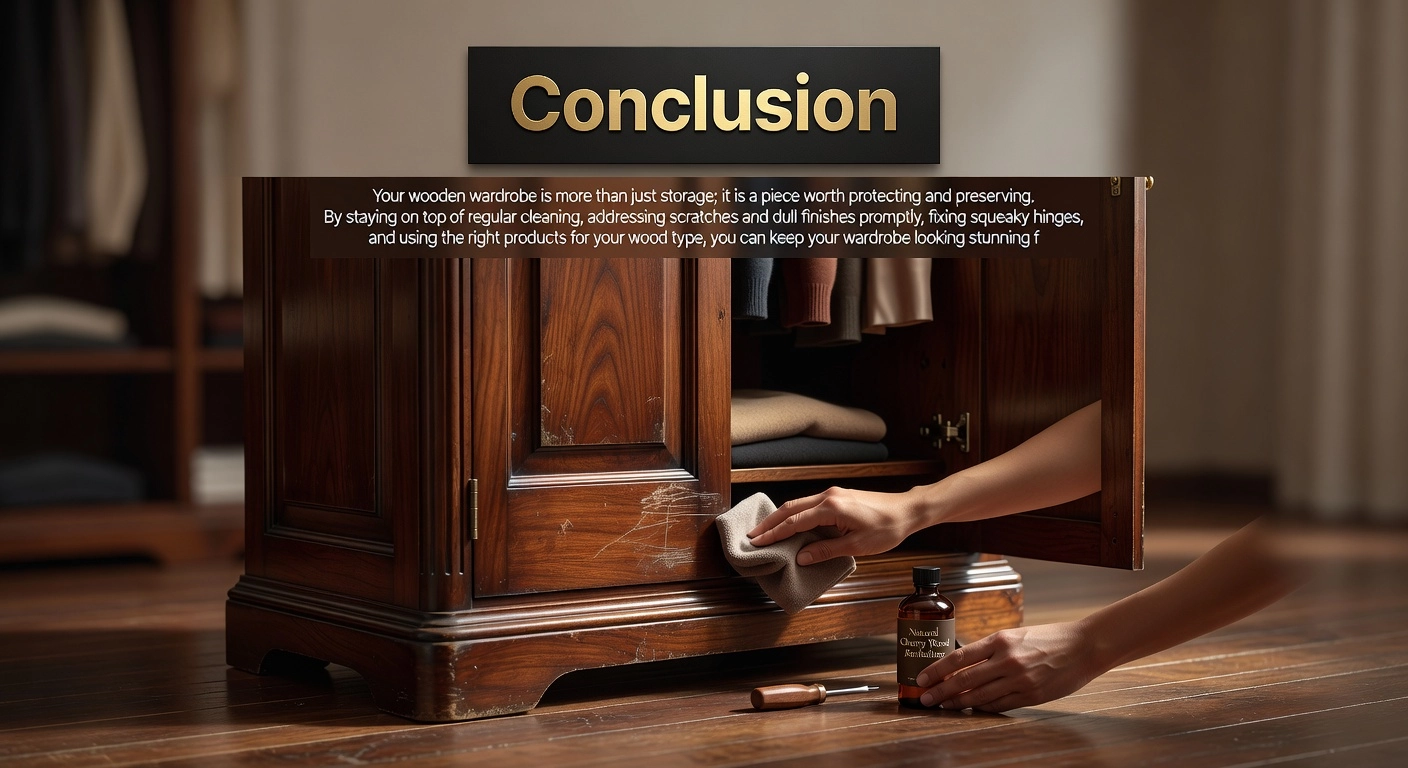
Your wooden wardrobe is more than just storage; it is a piece worth protecting and preserving. By staying on top of regular cleaning, addressing scratches and dull finishes promptly, fixing squeaky hinges, and using the right products for your wood type, you can keep your wardrobe looking stunning for decades to come.
The best part? None of this requires professional skills or expensive tools. A little routine care goes a long way, and even significant wear can often be reversed with some patience and the right approach.
So do not wait until the damage becomes overwhelming. Start small, pick one task from this guide, and work your way through it. Your wardrobe has already stood the test of time; with the right care, it will continue to do so for generations ahead.
Frequently Asked Questions
How do I know if my wooden wardrobe is made of solid wood, veneer, or MDF?
Check the edges of your wardrobe carefully. Solid wood will show continuous grain that wraps naturally around corners. Veneer has a thin decorative layer (less than 3mm) sitting on top of a different material underneath. MDF and engineered board edges look smooth, uniform, and fibrous with no visible grain. You can also test by tapping the surface: solid hardwood produces a resonant knock, while MDF gives a dull, flat thud. Identifying your material is essential before cleaning or treating your wardrobe, as using the wrong products can cause irreversible damage.
What is the safest way to clean a wooden wardrobe without damaging the finish?
Start by vacuuming interior surfaces with a soft brush attachment, then follow up with a microfiber cloth that is barely damp, never wet. For the exterior, match your cleaning method to your finish type: oiled finishes need mild soap and water followed by a fresh coat of oil, while lacquered or polyurethane surfaces respond well to a few drops of dish soap diluted in warm water. Always wipe in the direction of the grain and dry the surface immediately afterward. Avoid ammonia-based sprays, silicone polishes, and bleach-based cleaners entirely, as these strip protective coatings and dull the finish over time.
How do I get rid of musty or mothball smells inside my wardrobe?
For musty smells caused by moisture and age, mix equal parts white vinegar and water and wipe down every interior surface, then leave the doors open for at least 24 hours in a well-ventilated room. For stubborn mothball odors, place activated charcoal sachets inside the closed wardrobe for 48 to 72 hours, as the charcoal physically traps and absorbs the chemical residue. Baking soda left in an open container for 2 to 3 days is a gentler alternative. To prevent odors from returning, swap chemical mothballs for cedar hangers, ensure all garments are clean and dry before hanging, and crack the wardrobe door open for an hour or two a few times a week.
Why do my wardrobe doors and drawers stick in summer but feel loose in winter?
This is wood responding to seasonal humidity changes. Solid wood naturally absorbs moisture from the air, expanding when humidity rises in summer and contracting when indoor heating dries the air in winter. That small expansion eats up the gap between your drawer and its runner, causing sticking, while contraction in winter loosens joints and causes rattling. The ideal indoor humidity range for wood furniture is 35 to 55 percent. Use a dehumidifier near the wardrobe during humid summer months and a humidifier during dry winter heating seasons. A basic hygrometer lets you monitor your room's humidity so you can take action before the wood shows visible damage.
Can I fix a cracked wardrobe door or water rings on the surface myself without professional help?
Yes, both are very manageable DIY repairs. For a surface crack, clean out the crack with a dry brush, work wood glue deep into it using a toothpick or syringe applicator, clamp or tape the sides together, and leave it for 24 hours. Sand flush once dry, then blend with a stain marker and seal with clear furniture wax. For water rings, start with the mayo method: apply full-fat mayonnaise or petroleum jelly to the ring, leave it overnight, then buff it off. The oils displace trapped moisture and restore the finish. If the ring persists, lightly rub the area with 0000-grade steel wool along the grain, then apply wood polish. Note that dark brown or black stains indicate deeper damage that may require light sanding and refinishing rather than surface treatments.